The post Vitalik Buterin Lays Out Plans to Regain Blockchain Sovereignty appeared on BitcoinEthereumNews.com. Vitalik Buterin wants to return sovereignty and trustlessnessThe post Vitalik Buterin Lays Out Plans to Regain Blockchain Sovereignty appeared on BitcoinEthereumNews.com. Vitalik Buterin wants to return sovereignty and trustlessness

Vitalik Buterin Lays Out Plans to Regain Blockchain Sovereignty

  • Vitalik Buterin wants to return sovereignty and trustlessness to Ethereum in 2026.
  • No more making compromises in the pursuit of mainstream adoption.
  • Regaining sovereignty on the Ethereum blockchain is a gradual process.

According to Ethereum co-founder Vitalik Buterin, 2026 is the year the blockchain community takes back lost ground in terms of self-sovereignty and trustlessness. In his latest post on X, Buterin highlighted developments with the blockchain ecosystem that he thinks will promote this idea.

How to Regain Sovereignty of Ethereum

Buterin identified the return of full nodes via the Zero Knowledge Ethereum Virtual Machine (ZK-EVM) and Balancer (BAL), a DeFi protocol on Ethereum that functions as a decentralized exchange (DEX) and automated market maker (AMM), citing them as developments that will allow Ethereum users to run nodes locally on personal computers.

The prominent blockchain expert cited other protocols, including Helios, a Layer 1 blockchain that enables data verification and a privacy-enhancing cryptographic system, highlighting their potential benefits for blockchain users and the solutions they bring to the current dispensation of the decentralized ecosystem.

No More Compromise

Other elements identified by Buterin that will contribute to the return of sovereignty and trustlessness in the blockchain space include Social Recovery Wallets, Privacy UX, Privacy Censorship Resistance, and Application UIs. Buterin noted that the Ethereum community has underperformed in these areas over the past decade, with nodes becoming difficult to run, alongside other complications. 

According to Buterin, the Ethereum ecosystem will adjust in 2026, with the community no longer compromising its protocol in the pursuit of mainstream adoption. He promised an era of constant improvements via a series of changes, beginning with the recently launched Kohaku update and other hard forks that will follow.

Related Articles: Ethereum Launches Kohaku, an Open-Source Privacy SDK for Web3 Wallets

Ethereum community members responding to Buterin’s post highlighted specific areas of concern, with one user noting that the ability to run individual nodes and verify one’s own data is a crucial aspect of blockchain that most people ignore. 

Another user supporting this view noted that self-sovereignty is not optional for tokenized financial assets. According to him, investors should be able to verify positions without trusting a blackbox RPC or hosted UI.

Meanwhile, one user sought more clarification from Buterin on how to make the proposed social recovery wallets and timelocks work. The user demanded more clarification of Buterin’s initial explanation about users not losing their funds after misplacing the seedphrase to their wallets.

Related Articles: Vitalik Buterin Says Core Web3 Vision Is Reemerging as Ethereum Scales

Disclaimer: The information presented in this article is for informational and educational purposes only. The article does not constitute financial advice or advice of any kind. Coin Edition is not responsible for any losses incurred as a result of the utilization of content, products, or services mentioned. Readers are advised to exercise caution before taking any action related to the company.

Source: https://coinedition.com/vitalik-buterin-lays-out-plans-to-regain-blockchain-sovereignty-on-ethereum-in-2026/


Market Opportunity
ZKsync Logo
ZKsync Price(ZK)
$0.02949
$0.02949$0.02949
-0.33%
USD
ZKsync (ZK) Live Price Chart
Disclaimer: The articles reposted on this site are sourced from public platforms and are provided for informational purposes only. They do not necessarily reflect the views of MEXC. All rights remain with the original authors. If you believe any content infringes on third-party rights, please contact [email protected] for removal. MEXC makes no guarantees regarding the accuracy, completeness, or timeliness of the content and is not responsible for any actions taken based on the information provided. The content does not constitute financial, legal, or other professional advice, nor should it be considered a recommendation or endorsement by MEXC.

You May Also Like

Best Crypto to Buy as Saylor & Crypto Execs Meet in US Treasury Council

Best Crypto to Buy as Saylor & Crypto Execs Meet in US Treasury Council

The post Best Crypto to Buy as Saylor & Crypto Execs Meet in US Treasury Council appeared on BitcoinEthereumNews.com. Michael Saylor and a group of crypto executives met in Washington, D.C. yesterday to push for the Strategic Bitcoin Reserve Bill (the BITCOIN Act), which would see the U.S. acquire up to 1M $BTC over five years. With Bitcoin being positioned yet again as a cornerstone of national monetary policy, many investors are turning their eyes to projects that lean into this narrative – altcoins, meme coins, and presales that could ride on the same wave. Read on for three of the best crypto projects that seem especially well‐suited to benefit from this macro shift:  Bitcoin Hyper, Best Wallet Token, and Remittix. These projects stand out for having a strong use case and high adoption potential, especially given the push for a U.S. Bitcoin reserve.   Why the Bitcoin Reserve Bill Matters for Crypto Markets The strategic Bitcoin Reserve Bill could mark a turning point for the U.S. approach to digital assets. The proposal would see America build a long-term Bitcoin reserve by acquiring up to one million $BTC over five years. To make this happen, lawmakers are exploring creative funding methods such as revaluing old gold certificates. The plan also leans on confiscated Bitcoin already held by the government, worth an estimated $15–20B. This isn’t just a headline for policy wonks. It signals that Bitcoin is moving from the margins into the core of financial strategy. Industry figures like Michael Saylor, Senator Cynthia Lummis, and Marathon Digital’s Fred Thiel are all backing the bill. They see Bitcoin not just as an investment, but as a hedge against systemic risks. For the wider crypto market, this opens the door for projects tied to Bitcoin and the infrastructure that supports it. 1. Bitcoin Hyper ($HYPER) – Turning Bitcoin Into More Than Just Digital Gold The U.S. may soon treat Bitcoin as…
Share
BitcoinEthereumNews2025/09/18 00:27
Trump's border chief insists Americans support ICE – and is shut down by host: 'Come on!'

Trump's border chief insists Americans support ICE – and is shut down by host: 'Come on!'

Border Patrol Chief Greg Bovino was shut down Friday during an appearance on NewsNation after suggesting that federal immigration officials enjoyed widespread support
Share
Rawstory2026/01/23 22:36
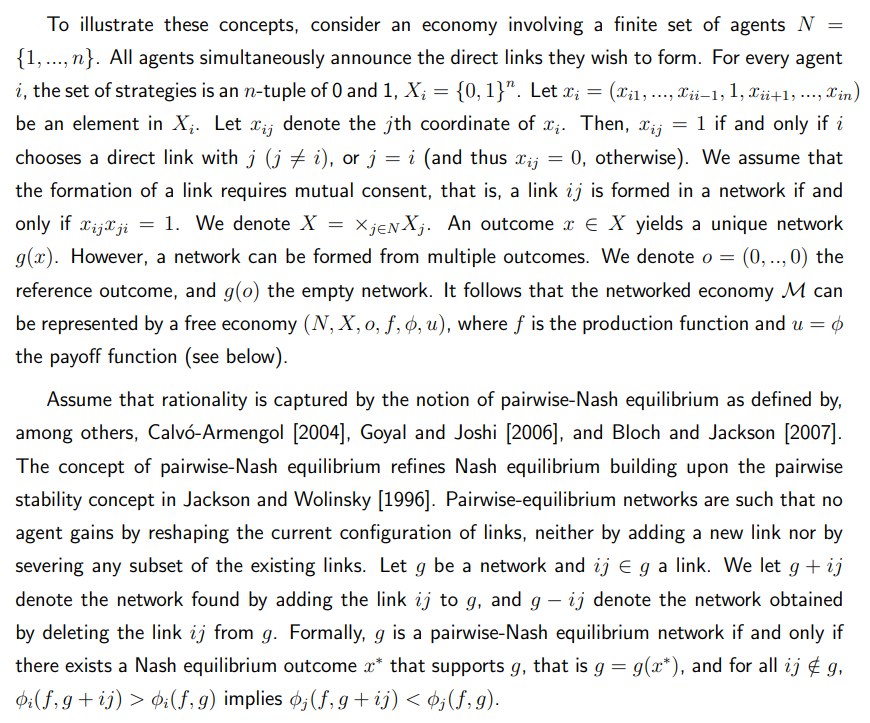
The Economics of Self-Isolation: A Game-Theoretic Analysis of Contagion in a Free Economy

The Economics of Self-Isolation: A Game-Theoretic Analysis of Contagion in a Free Economy

Exploring how the costs of a pandemic can lead to a self-enforcing lockdown in a networked economy, analyzing the resulting changes in network structure and the existence of stable equilibria.
Share
Hackernoon2025/09/17 23:00