


New Definitions
If you had been away from the world for just two or three years, on a solitary retreat, completely disconnected, you would be returning to a vocabulary that was in its infancy when you left. Terms like real world asset tokenization, on-chain settlement, and DeFi integration now appear in financial news without explanation, treated as assumed knowledge. The definition of something as foundational as a “share of stock” is quietly being renegotiated. Technology is not just changing what we do. It is changing the language in which finance, law, and ownership are discussed.
Tokenized stocks are one of the clearest examples of that shift.
What Is a Tokenized Stock?
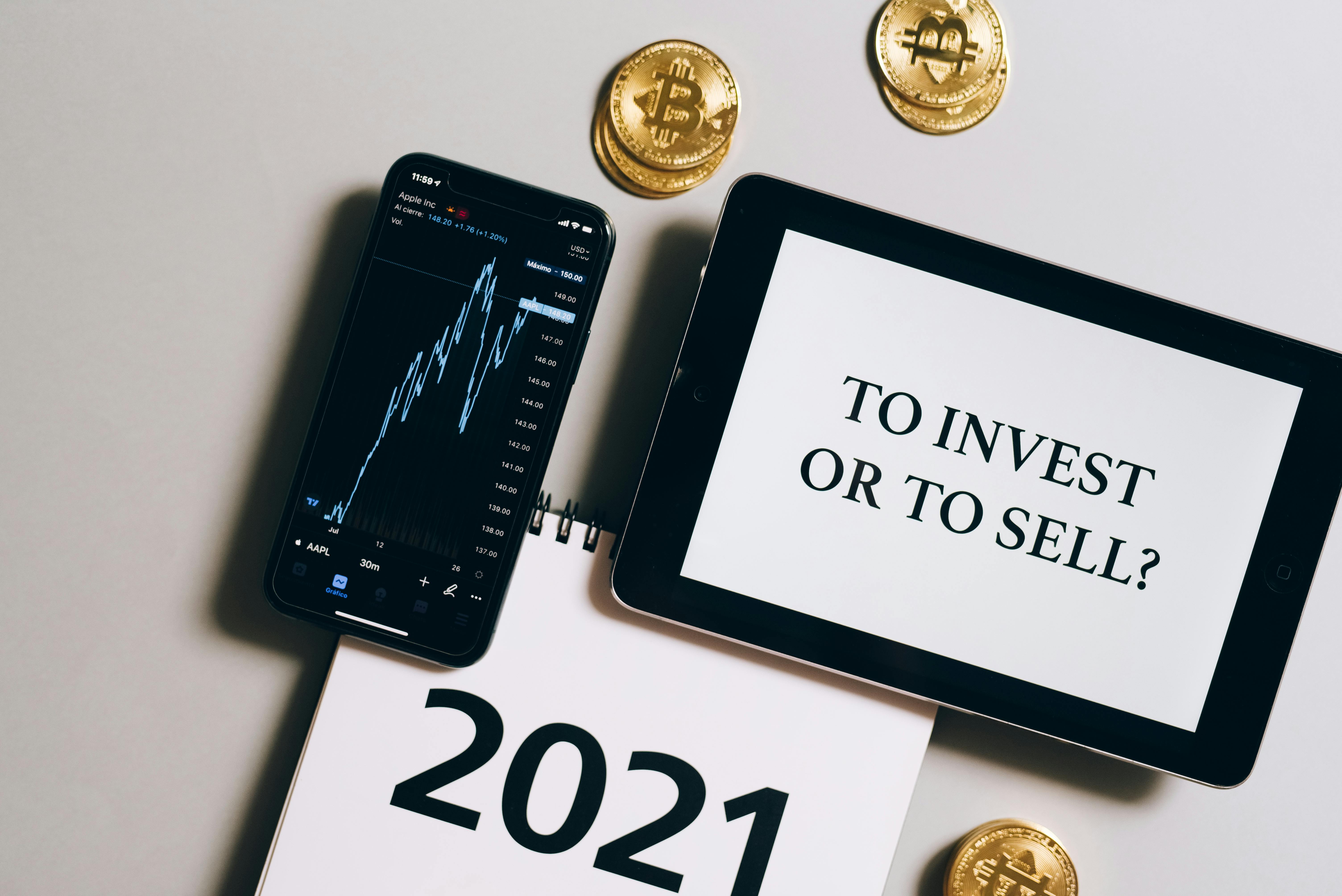
A company buys real shares of Apple through a conventional brokerage. It holds those shares. It then issues a corresponding number of digital tokens on a blockchain, one token for every share it holds. You buy a token. The token’s value moves with Apple’s stock price.
That’s it. A real share sits in a real account. A digital token, tied to that share, sits in your digital wallet. When Apple goes up, your token goes up. When Apple goes down, your token goes down.
Because the token is digital and lives on a blockchain, it can be divided into fractions. There is no minimum. You can own $3 worth of a $200 stock. You can transfer it instantly, at any hour, to anyone in the world with a digital wallet.
The building blocks are familiar. The delivery mechanism is new.
Here is where it gets important. The custodian holds the shares. You hold a token that tracks them. The custodian retains legal ownership of the underlying equity. Depending on the structure, they can sell those shares, hedge against them, use them as collateral, or wind down entirely. If they do, your token’s connection to the underlying equity depends entirely on the terms of that relationship. Those terms vary significantly across platforms, and they are not always disclosed clearly.
Token holders are not on the share register. They have no direct claim to the underlying equity. They have a claim against an intermediary who does. That gap, between a conventional share in a brokerage account and a token on a blockchain, is where both the opportunity and the risk live.
The Good
Universal access. For hundreds of millions of people, accessing U.S. equity markets means navigating foreign brokerage requirements, banking infrastructure gaps, minimum deposits, and currency conversion costs. Many never do. Tokenized stocks significantly reduce barriers that traditional equity markets were not built to address. With tokenized stocks, anyone with internet access and a digital wallet can, in principle, gain exposure to the world’s most valuable companies for $2 or $5 at a time. That is a meaningful equalizer in terms of who gets to participate in wealth creation.
24/7 trading. Blockchains don’t close. Tokenized markets run around the clock, every day of the year. The artificial constraints of exchange hours disappear.
Fractional ownership. Want $5 of Nvidia instead of $900? Tokenization makes it technically trivial. The barrier to entry drops to nearly zero.
Faster settlement. Traditional settlement takes one to two business days. Blockchain settlement is near-instant. Less time in limbo means less counterparty risk, less capital locked up, more efficiency across the board.
DeFi integration. This is where the implications expand significantly. Tokenized stocks can plug into decentralized finance protocols, used as collateral for loans, incorporated into yield strategies, or traded automatically through smart contracts. Smart contracts are self-executing programs on a blockchain that carry out financial transactions automatically when preset conditions are met. The equity markets and the emerging DeFi ecosystem begin to converge. New financial products become possible that simply don’t exist today.
The Not-So-Good
Regulatory Uncertainty. Tokenized equities often exist in gray zones of securities law. The SEC hasn’t finished deciding what they are or how they’re governed. Many platforms ban U.S. users entirely to avoid the exposure. Cross-border compliance remains a genuine minefield.
Custodian Risk. Most tokenized stocks work like this: a company holds the actual shares and issues tokens against them. If that custodian fails, if the shares aren’t actually held, if the transparency is inadequate, the token may be worth exactly nothing. This is not hypothetical. It has happened in adjacent markets.
Shareholder Rights often don’t transfer. Token holders frequently receive price exposure only, with no voting rights, dividends, or legal protections that come with actual share ownership. You’re tracking the stock, not owning it in any traditional sense. That distinction can be material.
Platform Risk is concentrated. Tokenized stock markets depend on specific platforms. If the platform shuts down, gets hacked, or becomes insolvent, the tokens may be worthless. Decentralization has its own fragilities.
Smart Contract Risk. The same code that removes intermediaries also introduces new failure points. Smart contracts, once deployed on a blockchain, are difficult or impossible to modify. A bug in the code is not a clerical error that gets corrected on Monday morning. It can be permanent, and it can be exploited. In decentralized finance, significant sums have been lost to smart contract vulnerabilities. The absence of a middleman cuts both ways.
Liquidity is still thin. These markets are young. Wide spreads, shallow order books, and difficult exits are the current reality.
The Bigger Picture: Real World Asset Tokenization
Tokenized stocks are one piece of a broader movement called Real World Asset (RWA) tokenization, the migration of traditional assets onto blockchain rails. Stocks, bonds, real estate, commodities, private credit. The financial infrastructure of the analog world, rebuilt in digital form.
Major financial institutions that spent years dismissing this space are now actively building in it. BlackRock. JPMorgan. Franklin Templeton. Not because they love crypto, but because the efficiency gains are real and the competitive pressure is mounting.
Analysts have projected this market growing into the trillions. The directional bet, that traditional assets will increasingly be represented on blockchains, looks increasingly difficult to debate.
What This Means for You
If you are an investor, it is important to understand what you’re holding. Tokenized stocks are not the same as stocks. It is imperative to understand the custody structure, the regulatory status, and the platform risk; technological novelty should not be mistaken as a substitute for due diligence.
If you are an attorney, compliance professional, or advisor, your clients are going to encounter this. The frameworks we apply to traditional securities don’t map cleanly onto tokenized equivalents. Advisors familiar with participation agreements in syndicated loans, ADRs, prime brokerage arrangements, or beneficial interests in structured vehicles will recognize the pattern: the client holds an indirect interest governed by a contract with an intermediary, not a direct claim on the underlying asset. The critical details live in that contract, including restrictions on transfer and pledge by the legal holder, and those details are not always surfaced in the marketing materials. The regulatory gap will narrow, probably in ways that create both obligation and opportunity.
If you’re a business leader, the underlying technology, programmable assets, instant settlement, 24/7 markets, will eventually reshape how equity and capital formation work, even inside regulated structures.
The Only Real Question
The people who take time to understand a development before it fully matures are consistently better positioned when it does. Tokenized stocks are not ready for every investor. The risks are genuine. The regulatory environment is unsettled. But the underlying premise, that blockchain rails can make capital markets more accessible, more efficient, and more open, is real.
The market is going on-chain. The vocabulary is already changing. The real question is how well we’ll understand and engage with it as it arrives.
https://nybusiness.law/
https://nybusiness.law/artificialintelligence/
I write regularly at the intersection of law, technology, and finance. Follow along or reach out directly if you’d like to talk through how these developments affect your specific situation.



