Bitcoin Miners Are Becoming Key Players in AI’s Power Race, Says Bernstein
TLDR
- Bitcoin miners control over 27 gigawatts of planned power capacity, giving them a major advantage in the AI infrastructure buildout.
- Bernstein says miners have announced more than $90 billion in AI-related deals, covering 3.7 gigawatts of capacity.
- Securing a gigawatt of power can take up to 50 months in the US, making miners’ existing grid connections highly valuable.
- IREN, Riot Platforms, CleanSpark, and Core Scientific all received “outperform” ratings from Bernstein with some targets implying near-100% upside.
- Miners with active AI contracts trade at roughly double the valuation of pure Bitcoin miners, at around $6 million per planned megawatt.
Bitcoin miners are quietly becoming some of the most valuable players in the AI infrastructure supply chain. A new report from investment firm Bernstein argues that access to electricity — not chips — is now the biggest constraint on building AI data centers. That puts Bitcoin miners in a uniquely strong position.
Why Power Is the Bottleneck
Bernstein analysts estimate it takes a median of around 50 months to secure a single gigawatt of grid power in the US. Even in states that are friendly to data center development, like Texas, utilities are processing requests in batches, creating long queues.
This delay is a serious problem for AI companies trying to scale fast. Bitcoin miners, by contrast, already sit on grid-connected sites with large power substations and existing infrastructure.
That head start is why Bernstein now describes miners as owners of “warm powered shells” — industrial sites with land, power, and buildings ready to house GPUs.
According to the report, publicly traded Bitcoin miners control more than 27 gigawatts of planned power capacity. Roughly 3.7 gigawatts of that is already tied to announced AI deals worth over $90 billion.
The Deals Reshaping the Sector
IREN is one of the clearest examples of this pivot. The company signed a major partnership with Nvidia to deploy up to 5 gigawatts of AI infrastructure using Nvidia’s DSX AI Factory architecture. The deal includes a 2 gigawatt campus in Sweetwater, Texas. Nvidia also received a five-year option to buy up to 30 million IREN shares at $70 each, and committed to roughly $3.4 billion in GPU cloud spend over five years.
Riot Platforms agreed a 10-year, $311 million lease with AMD. It starts at 25 megawatts and can scale to 200 megawatts at Riot’s 700 megawatt site in Rockdale, Texas.
Bernstein gives IREN a price target of $100, implying about 98% upside from recent levels. CleanSpark gets a $24 target, roughly 78% above where it currently trades.
IREN Limited, IREN
How the Market Is Pricing This Shift
Miners with active AI contracts are trading at around $6 million per planned megawatt of capacity. That is roughly double the $3 million per megawatt implied for miners without AI exposure.
For Core Scientific, Bernstein estimates 86% of its target enterprise value comes from its AI business, with only 14% tied to Bitcoin mining.
Despite that, Bernstein says miners as a group still trade at roughly a 90% discount to established AI data center operators, suggesting the market has not fully priced in their infrastructure value.
Bernstein attributes $3 billion of enterprise value to Riot’s planned 1 gigawatt Corsicana site alone, even though the facility has yet to generate meaningful revenue.
Risks to Watch
The shift is not without risk. Bernstein warns that new AI campuses still face environmental reviews, local opposition, and permitting delays. Miners that move too far away from Bitcoin production could also miss out if Bitcoin mining economics improve after a future halving event.
Soluna Holdings reported a 58% rise in first-quarter revenue, driven mainly by its data center hosting business, showing the financial rewards of this strategy already taking shape.
The firm’s overall message is straightforward: miners sitting on cheap, switchable power are well placed in the AI arms race, and the market is only starting to price that in.
The post Bitcoin Miners Are Becoming Key Players in AI’s Power Race, Says Bernstein appeared first on CoinCentral.


You May Also Like

PMI-ACP Exam Preparation: How to Use a Simulator and Practice Questions Effectively
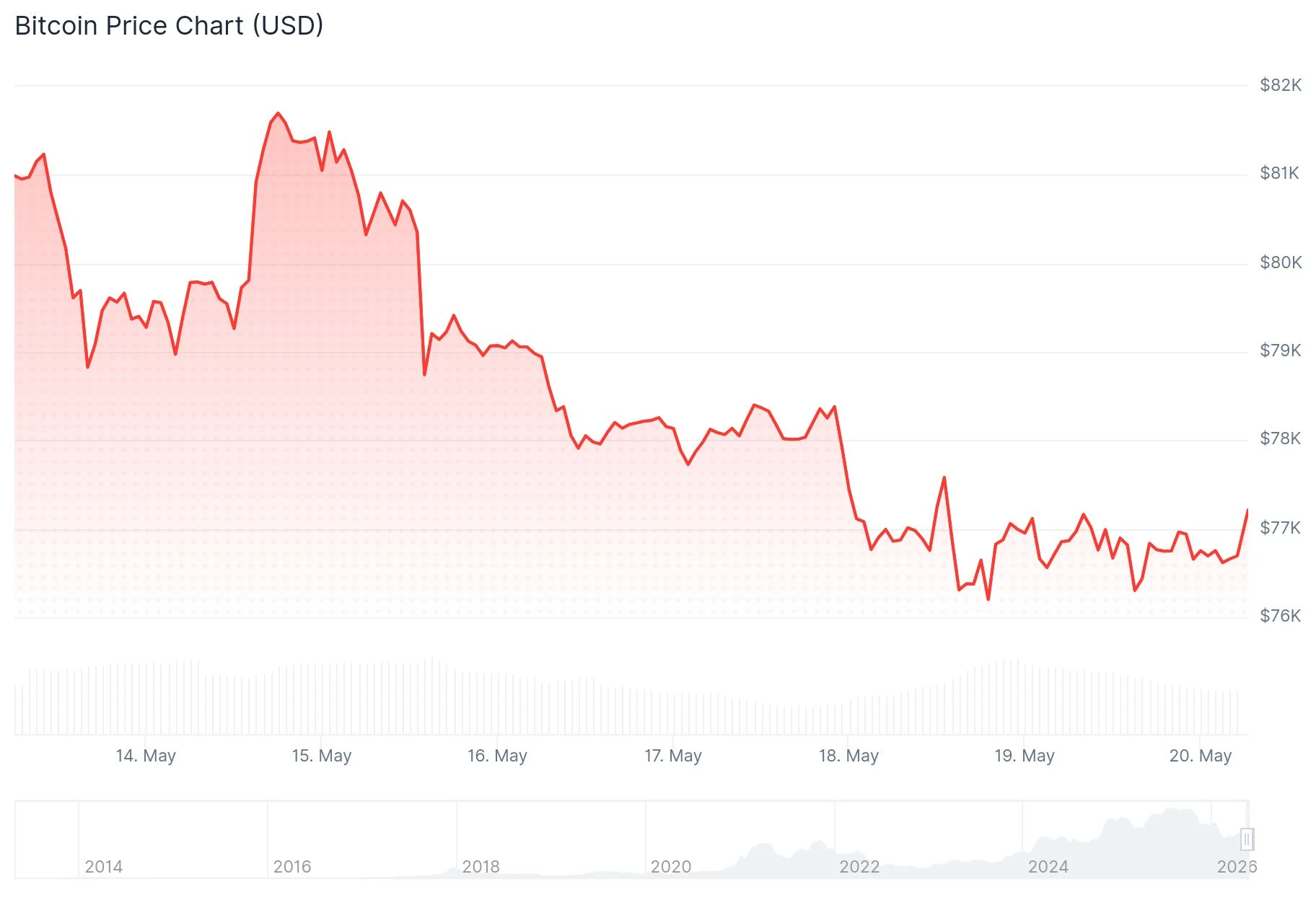
Bitcoin (BTC) Hovers Above $77K Amid Iran Diplomacy and Rising Treasury Yields