Perp DEX Market Structure Evolves As Capital Flows Diversify Beyond Single Venues
The decentralized perpetual futures market is no longer focused on a few venues. With the increase in liquidity and traders now looking to find an alternative to centralized exchanges, capital is starting to spread to several decentralized derivatives exchanges. This innovation represents a maturation of the perp DEX ecosystem, as more liquidity, visible execution, and risk control are now considered by traders as a priority. On-chain perpetual futures trading protocols like HFDX, structured DeFi plans, are under consideration by market actors that seek to move more sophisticated flows and activity off-exchange.
The changing structure of the perp DEX market can be applied to volatility management, price efficiency, and the allocation of capital. Traders are becoming more decentralized, with multiple protocols being distributed depending on their design, liquidity depth, and risk controls; traders are no longer concentrating in one market. This diversification tendency suggests that the market members are in need of a wider range of tools and environments to trade and hedge efficiently.
How Perp DEX Market Structure Is Changing
Traditionally, centralized exchanges were the best in perpetual futures trading because of the deep liquidity and order book depth. Nonetheless, with the emergence of decentralized finance (DeFi), on-chain alternatives emerged, and they seized small segments of the market. With time, the development of decentralized protocols, oracle integrations, automated risk management, and third-party tools has enabled decentralized perpetual futures markets to be more attractive to more participants.
The trend today is that decentralized perpetual DEX activity is being diversified across different platforms, each with different liquidity and execution architectures. This transformation gives the traders the opportunity to use alternative strategies and risk preferences without having to stick to one exchange. This change is caused by the inflow of capital that seeks to hedge volatility or gain more exposure to digital assets, at least to minimize custodial risks.
Also, distributing the trading practice among various decentralized markets will increase market resiliency because excessive dependence on a single trading system is likely to cause systemic risks in the event of structural problems or liquidity crunches. Interestingly, the rate of funding and open interest in non-centralized exchanges gives ideas about the value and risk perception of traders and platforms with a competitive price and a predictable risk profile will be participated in regularly. This has seen a more subtle market in which traders choose locations due to structural benefits and not promotion.
Why HFDX Matters in a Diversifying Perp DEX Landscape
HFDX is an example of how next‑generation perp DEXs are contributing to diversifying capital flows. As market participants allocate activity beyond a single venue, they are increasingly evaluating platforms on factors that support sustained usage and transparent execution.
HFDX’s design emphasizes infrastructure integrity, non‑custodial control, and verifiable risk mechanics, which can appeal to both active leveraged traders and liquidity providers seeking stable participation environments. Its on‑chain architecture enables perpetual futures trading without relying on centralized intermediaries, offering traders a way to engage with derivative markets while keeping custody of their assets.
Two key elements where HFDX contributes to market diversification are transparency and risk management. By providing decentralized oracle pricing and consistent risk parameters, HFDX allows traders to compare execution quality and capital efficiency across venues. This comparability encourages diversification as traders allocate capital to protocols that align with their hedging or directional strategies.
Here are structural features that support this diversification:
- Shared liquidity model supports deeper execution across varied trading conditions while distributing risk across pool participants.
- Non‑custodial execution enables traders to retain control of assets while accessing perpetual markets on multiple venues.
- Decentralized pricing sources provide transparent data that traders can rely on when evaluating execution across protocols.
- Smart contract enforced risk mechanics offer predictable leverage and liquidation behavior, making risk management more consistent.
- Activity‑based protocol economics tie liquidity provider returns to real market activity such as fees and funding rates, rather than reliance on token rewards.
These features help traders allocate capital more confidently across multiple perp DEXs, contributing to a more diversified market structure.
What This Diversification Means for the Perp DEX Market
The decentralized perpetual futures markets are changing drastically, with diversified capital flows that minimize the reliance on single trading venues. Structural integrity, sustainability of liquidity, and transparent risk management are the factors that traders are considering when choosing platforms.
The trend provides competition amongst decentralized exchanges (DEXs), as the ones with deep liquidity and stable execution appeal to more traders. For example, platforms like HFDX offer alternatives that prioritize custody control and transparency. As capital distribution across various venues increases, the market is anticipated to become more resilient and efficient, thereby improving risk management and trading opportunities.
Make Your Money Work Smarter And Unlock A Wealth Of Opportunities With HFDX Today!
Website: https://hfdx.xyz/
Telegram: https://t.me/HFDXTrading
X:https://x.com/HfdxProtocol
Disclaimer: This is a paid post and should not be treated as news/advice. LiveBitcoinNews is not responsible for any loss or damage resulting from the content, products, or services referenced in this press release
The post Perp DEX Market Structure Evolves As Capital Flows Diversify Beyond Single Venues appeared first on Live Bitcoin News.


You May Also Like

What a $900 Investment in New Crypto Protocols Could Become by Late 2027
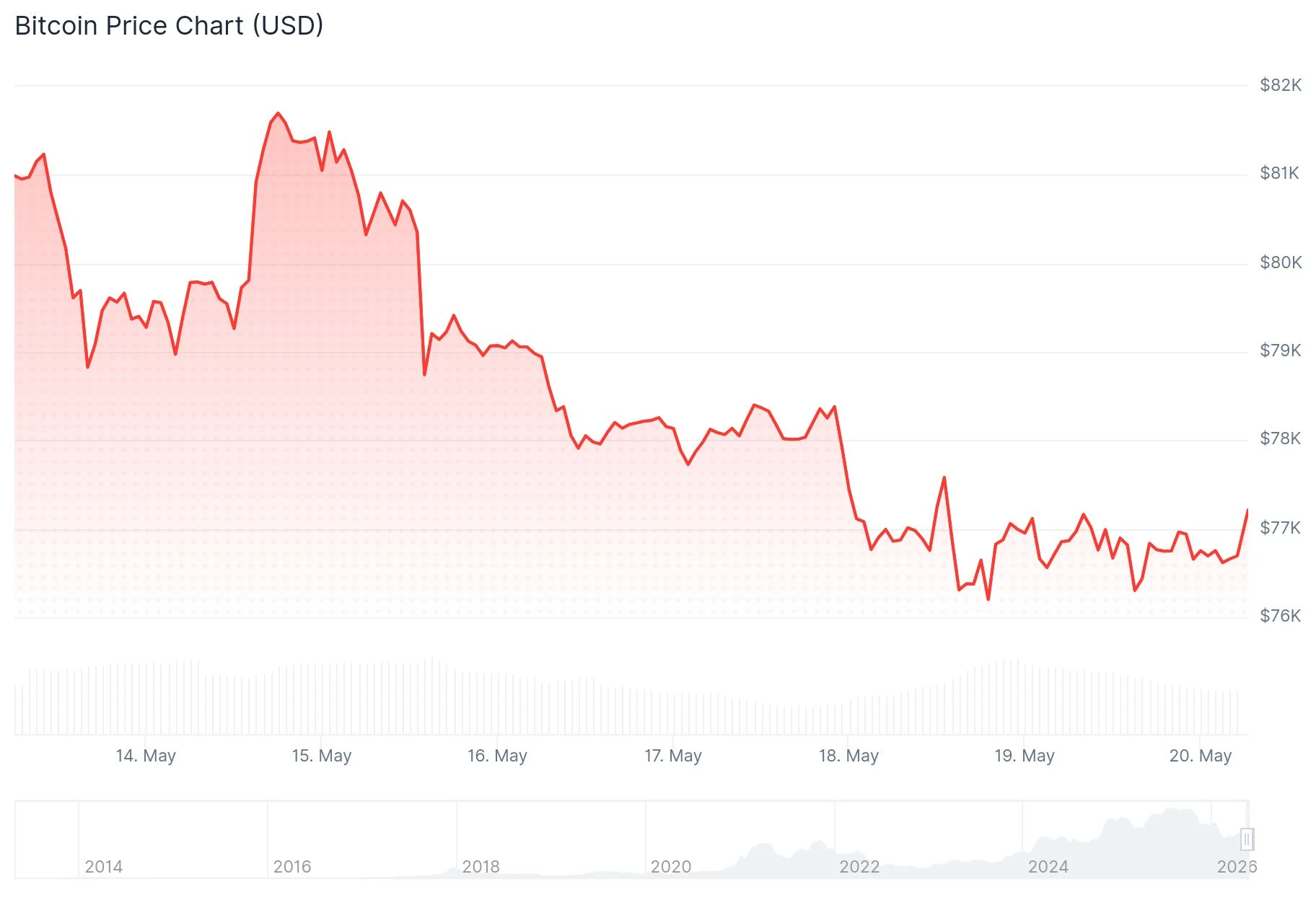
Bitcoin (BTC) Hovers Above $77K Amid Iran Diplomacy and Rising Treasury Yields