Airdrop

An Airdrop is a distribution of free tokens to a community, typically used as a marketing tool or a reward for early protocol adopters and testers. In 2026, the "points-to-airdrop" model has matured into merit-based incentive programs that utilize Sybil-resistance and Proof-of-Humanity to filter out bots. Airdrops remain a primary method for decentralized governance (DAO) bootstrapping. Follow this tag for the latest on retroactive rewards, eligibility criteria, and how to participate in the most anticipated token distributions in the ecosystem.

5443 Articles
Created: 2026/02/02 18:52
Updated: 2026/02/02 18:52
PA Daily | Seven Chinese associations jointly issue risk warning for virtual currencies; US September core PCE falls short of expectations, paving the way for further Fed rate cuts.

PA Daily | Seven Chinese associations jointly issue risk warning for virtual currencies; US September core PCE falls short of expectations, paving the way for further Fed rate cuts.

Today's top news highlights: 1. Seven departments, including the National Internet Finance Association of China, issued a risk warning regarding preventing illegal activities involving virtual currencies. 2. The US September core PCE figure fell short of expectations, paving the way for further interest rate cuts by the Federal Reserve. 3. Coinbase: Crypto market expected to recover in December. 4. Jupiter: The HumidiFi (WET) token public sale will resume at 23:00 on December 8th. 5. Glassnode: The current rebound in the crypto market remains fragile due to a lack of dedicated catalysts. 6. BlackRock's Bitcoin ETF recorded its longest consecutive week of net outflows, accumulating $2.7 billion over five weeks. 7. Metaplanet raised $50 million by staking Bitcoin to purchase more Bitcoin. Macro Europol: International operation dismantles cryptocurrency scam network suspected of laundering over €700 million. Europol announced on Thursday that a large-scale international operation successfully dismantled a major cryptocurrency fraud and money laundering network, involving over €700 million. The operation, spanning multiple jurisdictions and conducted last month and earlier this week, marks the successful conclusion of a years-long investigation, effectively thwarting criminal activity across Europe and other regions. The criminal network operated numerous fake cryptocurrency investment platforms, attracting thousands of victims with advertisements promising high returns. Subsequently, a criminal call center used social engineering techniques to show victims inflated returns on these fake trading platforms, pressuring them to make further payments. Once funds were transferred, they were stolen and laundered through multiple blockchains and exchanges. The investigation revealed that the network involved multiple fraudulent platforms and a complex financial structure. On October 27, 2025, the first phase of the operation commenced, with police from Cyprus, Germany, and Spain conducting coordinated raids at the request of French and Belgian authorities. Nine suspects were arrested, and assets worth millions of euros were seized. From November 25 to 26, the second phase focused on the alliance's marketing infrastructure, with law enforcement teams from Belgium and other countries conducting operations supported by Europol. Investigative agencies will continue to track the criminal organization's assets. Seven departments, including the China Internet Finance Association, issued a risk warning regarding preventing illegal activities involving virtual currencies. According to the official website of the China Futures Association, the China Internet Finance Association, the China Banking Association, the Securities Association of China, the Asset Management Association of China, the China Futures Association, the China Association of Listed Companies, and the China Payment and Clearing Association jointly issued a risk warning regarding the prevention of illegal activities involving virtual currencies. I. Correctly understand the essential attributes of virtual currencies, real-world asset tokens, and related activities: Virtual currencies are not issued by monetary authorities, are not legal tender, do not have the same legal status as legal tender, and cannot be used as currency within my country. Stablecoins currently cannot effectively meet the requirements for customer identification and anti-money laundering, and pose a risk of being used for money laundering, fundraising fraud, and illegal cross-border fund transfers. Real-world asset tokenization involves financing and trading activities through the issuance of tokens or other rights and bonds with token characteristics, which carries multiple risks, including the risk of fictitious assets, business failure, and speculative activities. Currently, my country's financial regulatory authorities have not approved any real-world asset tokenization activities. Domestic institutions and individuals engaging in activities such as exchanging legal tender for virtual currencies, issuing and financing real-world asset tokens, etc., within China are suspected of illegal financial activities including illegally issuing token vouchers, illegal fundraising, unauthorized public offerings of securities, and illegal operation of futures businesses. Overseas virtual currency and real-world asset token service providers, whether directly or indirectly providing services to my country for related business activities, also constitute illegal financial activities. Domestic staff of relevant overseas virtual currency service providers, as well as domestic institutions and individuals who knowingly or should have known that they are engaged in virtual currency-related business and still provide services to them, will be held legally accountable. II. Relevant institutions are prohibited from conducting business related to virtual currencies and real-world asset tokens. III. The public should be highly vigilant against all forms of virtual currency and real-world asset token business activities. Related reading: Seven industry associations issue risk warnings: Beware of illegal fundraising, pyramid schemes, and other fraudulent activities using virtual currencies as a pretext. U.S. prosecutors recommended a 12-year prison sentence for Do Kwon. According to Bloomberg, U.S. prosecutors, in court filings with a New York federal judge Thursday night, stated that Terraform Labs Pte. co-founder Do Kwon's fraudulent activities were "massive" and should be severely punished, recommending a 12-year prison sentence. Prosecutors noted that Do Kwon lied to customers, triggering a chain reaction of crises in the cryptocurrency space, including the collapse of SBF's FTX exchange. U.S. District Judge Paul Engelmayer is scheduled to sentence Do Kwon on December 11. The weaker-than-expected US core PCE figures for September have given the green light for further interest rate cuts by the Federal Reserve. According to Jinshi News, a key inflation indicator released by the U.S. Commerce Department on Friday showed that September's inflation rate was lower than expected. This report, delayed due to the government shutdown, further signals a potential interest rate cut by the Federal Reserve. The core PCE price index, excluding volatile food and energy prices, rose 0.2% month-on-month and 2.8% year-on-year. The monthly rate met expectations, but the year-on-year rate was 0.1 percentage points lower than expected. Furthermore, according to data from the U.S. Commerce Department's Bureau of Economic Analysis, overall personal consumption expenditures rose 0.3% month-on-month, and the annual inflation rate was also 2.8%. Both figures were in line with expectations. Federal Reserve officials use the PCE price index as a primary policy tool for measuring inflation. While officials consider both overall and core data, they generally believe that the core data is a better indicator of long-term inflation trends. The report was delayed for several weeks due to the government shutdown, during which all data collection and economic reporting were suspended. Wu Qing, Chairman of the China Securities Regulatory Commission: We need to conduct in-depth analysis and treat new business models such as crypto assets with caution. According to the Shanghai Securities News, Wu Qing, Chairman of the China Securities Regulatory Commission (CSRC), stated at the 8th Member Congress of the Securities Association of China that it is necessary to strengthen risk prevention in key areas. For businesses requiring close attention, such as margin trading, over-the-counter derivatives, and private asset management, as well as institutions with headquarters and subsidiaries in different locations, key risks such as credit, liquidity, and compliance must be closely monitored and prevented before they occur. New business models such as crypto assets should be thoroughly analyzed and treated prudently; businesses that are unclear or unmanageable should not be allowed to operate, and illegal or irregular activities should be resolutely avoided. Opinion Fidelity's CEO stated that he holds Bitcoin and believes it will play an important role in the savings system. Fidelity CEO Abigail Johnson said, "I like Bitcoin. I hold Bitcoin. It will play an important role in the savings system." Wang Yongli, former vice president of the Bank of China: Promoting a stablecoin for the RMB has no advantages both domestically and internationally. Wang Yongli, former vice president of the Bank of China, published an article titled "Why Did China Resolutely Halt Stablecoins?" The article points out that China already possesses a global leading advantage in mobile payments and the digital yuan. Promoting a stablecoin for the yuan offers no advantage domestically and has little room for development or influence internationally. Furthermore, China should not follow the path of dollar-denominated stablecoins in vigorously promoting the development of both onshore and offshore yuan stablecoins. Following the path of dollar-denominated stablecoins in developing a yuan stablecoin not only fails to challenge the international status of dollar-denominated stablecoins but may even turn the yuan stablecoin into a vassal of dollar-denominated stablecoins, impacting national tax collection, foreign exchange management, and cross-border capital flows, posing a serious threat to the sovereignty and security of the yuan and the stability of the monetary and financial system. Faced with a more acute and complex international situation, China should prioritize national security and exercise high vigilance and strict control over the trading and speculation of crypto assets, including stablecoins, rather than simply pursuing increased efficiency and reduced costs. Of course, while resolutely halting stablecoins and cracking down on virtual currency trading and speculation, we must also accelerate the innovative development and widespread application of the digital yuan at home and abroad, establish the international leading advantage of the digital yuan, forge a Chinese path for the development of digital currency, and actively explore the establishment of a fair, reasonable and secure new international monetary and financial system. SlowMist: A user's $27 million worth of crypto assets were stolen, possibly due to a virus attack on his computer leading to the leakage of his private key. SlowMist's Cosmos posted on the X platform that user Babur disclosed the theft of $27 million worth of crypto assets. Analysis revealed the stolen assets primarily involved two addresses: Solana address 91xu and Ethereum Safe multisignature address 0xD2. The two largest thefts totaled over $18 million. The hacker addresses were 71fM (Solana) and 0x4f (Ethereum), and some funds had already been transferred to the Ethereum network. The incident is suspected to have been caused by a computer malware infection; the user's private keys were leaked after double-clicking a malicious file, including the two Safe multisignature signature private keys, which may have been stored on the infected computer. Glassnode: The current rebound in the crypto market remains fragile due to a lack of dedicated catalysts. Glassnode published an analysis on the X platform stating that while the price trend in the crypto market has stabilized, this rebound lacks strong cryptocurrency-specific catalysts and remains fragile. In the options market, despite the calm in Bitcoin trading, option open interest remains dominated by call options. The put/call ratio has declined significantly over the past two weeks, indicating that traders expect to profit from the year-end rally. Options trading volume has slowed significantly over the past seven days, showing weakening confidence in supporting the upward trend. Focusing on the $95,000 call option strike price, the net call option premium in the short to medium term has continued to decline in recent days, highlighting the lack of upward momentum in the market. Implied volatility across all maturities continues to decline, indicating reduced market demand for near-term protective strategies or leveraged buying, with traders expecting prices to stabilize. When implied volatility declines and call options dominate open interest, position positioning is relatively passive. The 25-Delta skewness indicator remains positive in the bearish zone, indicating that the market is still pricing in potential continued downside risks. Such a skewness structure usually does not predict a price breakout. At the macro level, market expectations for a December rate cut are the core driver supporting the current price. If expectations change or a "hawkish rate cut" occurs, it will immediately trigger a synchronized repricing of implied volatility and the spot market. CoinShares: The DAT bubble has largely burst; the solution lies in structural reforms. James Butterfill, Head of Research at crypto asset management firm CoinShares, stated in a report that the digital asset reserve (DAT) bubble has largely burst. Companies that traded at 3 to 10 times their market capitalization-to-net-asset value (mNAV) in the summer of 2025 have now fallen to around 1 times or less, marking a sharp correction in the trading model that once viewed token vaults as growth engines. The next move depends on market behavior: either a price drop triggers a disorderly sell-off, or companies maintain their positions and await a rebound. Butterfill suggests he leans towards the latter, citing an improving macroeconomic environment and a potential interest rate cut in December, which would support cryptocurrencies. Butterfill points out that the bigger challenge lies in structural issues. Previously, a number of companies amassed massive vault assets through public markets without building sustainable businesses, resulting in reputational damage. Today, investors are less tolerant of equity dilution and excessive concentration of single assets in the absence of real operating revenue. There are already signs that stronger companies are incorporating Bitcoin into rigorous vault and foreign exchange management strategies, demonstrating a healthier development trend. The concept of digital asset vaults is not dying out, but rather being reclassified. The next generation of companies needs fundamental support, credible business models, stricter governance structures, and realistic expectations, using digital assets as tools, not the entirety of their business. Coinbase: Crypto market expected to recover in December Coinbase Institutional published an article on its X platform, stating that signs of market recovery are becoming increasingly apparent. They believe that with improved liquidity, a surge in the probability of a Federal Reserve rate cut to 92% (as of December 4th), and strengthening macroeconomic factors, cryptocurrencies are poised for a recovery in December. The reasons are as follows: Liquidity is recovering The so-called "artificial intelligence bubble" has not yet burst (there is still room for growth). Shorting the US dollar at current prices is quite attractive. Coinbase previously predicted a weak market in November and a rebound in December. This could be the starting point for a renewed momentum in the cryptocurrency market. Yi Lihua: Ethereum Fusaka upgrade caused blob base fees to surge 15 million times due to the addition of a "guaranteed return mechanism" in EIP-7918. Liquid Capital founder Yi Lihua published an article on the X platform stating that the Ethereum Fusaka upgrade caused a 15 million-fold surge in blob base fees. The core reason is the new "minimum guarantee mechanism" for blob fees added in EIP-7918. Previously, blob fees had no minimum limit and were consistently stuck at 1 wei (almost free), causing nodes to bear costs such as KZG verification without reasonable returns. After the upgrade, blob fees must be ≥ 1/15.258 of the L1 execution base fee, directly anchoring to real network costs. This design allows prices to reflect actual resource consumption (preventing L2 from occupying network resources for free) and can regulate blob traffic and prevent congestion through price fluctuations. At the same time, PeerDAS technology increases blob storage capacity. In addition, blob fees are included in the ETH burning mechanism, which is estimated to burn up to 8 times more ETH in the future, potentially contributing 30-50% of the total burned amount by 2026 (depending on the growth of L2 transaction volume). Project Updates Bloomberg: HashKey will begin accepting subscription orders from investors next week for its Hong Kong IPO, aiming to raise at least $200 million. According to Bloomberg, sources familiar with the matter said that cryptocurrency trading operator HashKey Holdings Ltd. may begin accepting subscription orders from investors as early as next week for its Hong Kong initial public offering (IPO). HashKey aims to raise at least $200 million in the IPO and plans to list as early as this month, although details such as the IPO size and timing are still subject to change. HashKey did not immediately respond to requests for comment. Binance Futures will delist several USDT-margined perpetual contracts, including SKATEUSDT and REIUSDT. According to the official announcement, Binance Futures will automatically liquidate the U-margin perpetual contracts of SKATEUSDT, REIUSDT, FISUSDT and VOXELUSDT on December 10, 2025 at 17:00 (UTC+8), and will delist the above perpetual contract trading pairs after the liquidation is completed. The price of PIGGY tokens plummeted by 90% due to a suspected Rug Pull. The PIGGY token appears to have been subject to a Rug Pull. In the past 10 minutes, nearly $4 million worth of PIGGY tokens were newly minted and immediately dumped on the market. The token's price plummeted by 90% in an instant. CEA Industries responds to YZi Labs: Reaffirms commitment to BNB's treasury strategy BNB treasury company CEA Industries (NASDAQ: BNC) responded to YZi Labs' statement, saying that since its PIPE funding round in July, BNC has never considered choosing other tokens for its digital asset reserve strategy, nor has it launched a competing DAT project. As of December 4, 2025, the company held 515,554 BNB tokens, with a market capitalization of approximately $464.6 million. Two days before YZi issued its press release, it submitted a preliminary consent statement proposing to expand and restructure its board of directors. Currently, the company's board of directors is predominantly composed of independent directors, meeting Nasdaq rules, and all directors possess the knowledge and experience necessary to effectively oversee the company's operations and create value for shareholders. The company values shareholder input and always welcomes feedback and constructive suggestions for improvement. The company's board of directors has contacted YZi directly to establish an open dialogue channel regarding YZi's concerns and potential solutions, and to review the issues raised by YZi. At this time, shareholders do not need to take any action. Previously, YZi Labs sought to expand the board of directors of BNB's treasury company, CEA Industries, to improve strategy execution and oversight . YZi Labs also issued a notice of action to 10X Capital, warning CEA Industries shareholders of its "disruptive behavior." Coinbase has included ImmuneFi (IMU) and Sentient (SENT) in its listing roadmap. According to a Coinbase Markets announcement, Coinbase has added ImmuneFi (IMU) and Sentient (SENT) to its asset listing roadmap. The listing of these assets will depend on market-making support and sufficient technical infrastructure. A separate announcement will be issued once these conditions are met. Grayscale filed an S-1 registration statement with the SEC, applying to launch the SUI ETF. Grayscale has filed an S-1 registration statement with the U.S. Securities and Exchange Commission (SEC) to apply for the launch of the Grayscale Sui Trust (SUI) ETF. Jupiter: The HumidiFi (WET) token public sale will resume at 23:00 on December 8th. Jupiter announced on its X platform that the WET public sale phase will restart on December 8th at 11 PM (UTC+8). The public sale phase scheduled for December 4th at 10 AM (Eastern Time) has been cancelled, and all addresses that participated in that phase will receive a refund in USDC. New WET tokens will be deployed, and old WET tokens will become invalid. Users who successfully participated in the Wetlist and Jup Stakers phases will retain their allocated shares and can claim them on TGE day through the DTF claim page. Previously, it was reported that HumidiFi would restart its public sale and airdrop new tokens next Monday, distributing them proportionally to Wetlist and JUP staking users. Blockchain analytics platform Bubblemaps published an article on its X platform stating that it has identified the WET token snipeer, "Ramarxyz," who used over 1000 wallets to purchase 70% of the HumidiFi presale tokens and subsequently demanded refunds. Binance Futures will launch POWERUSDT U-margined perpetual contracts. According to the official announcement, Binance Futures will launch POWERUSDT perpetual contracts on December 6th at 17:00 (UTC+8), with a maximum leverage of 20x. Important data BlackRock's Bitcoin ETF recorded its longest consecutive week of net outflows, accumulating to $2.7 billion over five weeks. According to Bloomberg, BlackRock's iShares Bitcoin Trust (IBIT) has recorded its longest streak of consecutive weekly net outflows since its launch in January 2024, indicating that institutional interest in Bitcoin remains weak even as prices stabilize. Data shows that investors redeemed over $2.7 billion from the ETF in the five weeks ending November 28. With another $113 million in redemptions on Thursday, the ETF is now heading for its sixth consecutive week of net outflows. A recent report from Glassnode noted that this trend "marks a clear reversal of the sustained inflows that previously supported price increases, reflecting a cooling of new capital allocation to the asset." Ethereum spot ETFs saw a net outflow of $75.2065 million yesterday, with none of the nine ETFs experiencing net inflows. According to SoSoValue data, the Ethereum spot ETF saw a total net outflow of $75.2065 million yesterday (December 5th, Eastern Time). The Ethereum spot ETF with the largest single-day net outflow yesterday was the BlackRock ETF ETHA, with a single-day net outflow of $75.2065 million. Currently, the total historical net inflow of ETHA is $13.091 billion. As of press time, the Ethereum spot ETF has a total net asset value of $18.936 billion, an ETF net asset ratio (market capitalization as a percentage of Ethereum's total market capitalization) of 5.19%, and a historical cumulative net inflow of $12.879 billion. Bitcoin spot ETFs saw net inflows of $54.7896 million yesterday, with only BlackRock ETF IBIT experiencing net outflows. According to SoSoValue data, yesterday (December 5th, Eastern Time), Bitcoin spot ETFs saw a total net inflow of $54.7896 million. The Bitcoin spot ETF with the largest single-day net inflow yesterday was ARKB, an ETF from Ark Invest and 21Shares, with a net inflow of $42.7938 million. ARKB's total historical net inflow has now reached $1.75 billion. The second largest inflow was into the Fidelity ETF FBTC, with a net inflow of $27.2884 million in a single day. The total historical net inflow of FBTC has reached $12.091 billion. The Bitcoin spot ETF with the largest single-day net outflow yesterday was BlackRock ETF IBIT, with a net outflow of $32.4928 million. IBIT's total historical net inflow has reached $62.517 billion. As of press time, the total net asset value of Bitcoin spot ETFs was $117.109 billion, with an ETF net asset ratio (market capitalization as a percentage of Bitcoin's total market capitalization) of 6.57%, and a historical cumulative net inflow of $57.617 billion. Investment and financing/acquisition N3XT, a blockchain-based bank, has raised $72 million in three rounds of funding, with Paradigm and others participating. According to Crunchbase data, blockchain-based bank N3XT has completed three rounds of financing, raising a total of $72 million, with the most recent round completed in October. The company has received backing from several venture capital firms, including Paradigm, HACK VC, and Winklevoss Capital. Previously, it was reported that a former Signature Bank executive founded N3XT, a blockchain-based bank . N3XT was founded by Scott Shay, the founder and former chairman of Signature Bank. Jeffrey Wallis, formerly the head of digital asset and Web3 strategy at Signature Bank, will serve as the CEO of N3XT. SpaceX plans to sell internal shares at an $800 billion valuation and goes public in the second half of next year. Sources familiar with the matter revealed that SpaceX is in talks to sell internal shares in a deal that would value Elon Musk's rocket and satellite manufacturer at $800 billion. If confirmed, this new deal would make SpaceX the world's most valuable startup again, surpassing the previous record of $500 billion set by OpenAI in October. This valuation represents a significant increase from the $212 per share valuation set in July, when the company raised funds and sold shares at a $400 billion valuation. Two people familiar with the discussions revealed that SpaceX has informed investors and representatives of financial institutions that the company plans to conduct its initial public offering (IPO) in the second half of next year. These talks come as SpaceX is considering selling shares held by investors. Institutional holdings Metaplanet raised $50 million by staking Bitcoin to purchase more Bitcoin. According to BitcoinTreasuries.NET, Japanese publicly listed company Metaplanet announced that it has raised $50 million using Bitcoin as collateral to purchase more Bitcoin. Bitmine purchased approximately 22,700 ETH within four hours, worth nearly $69 million. According to Lookonchain, Bitmine purchased another 22,676 Ethereum (worth $68.67 million) four hours ago. National Bank of Canada disclosed that it purchased approximately $273 million worth of Strategy shares. According to BitcoinTreasuries.NET, the National Bank of Canada has just disclosed that it has purchased 1.47 million shares of Bitcoin finance company Strategy (MSTR), worth approximately $273 million.

Author: PANews
Solana’s WET Presale Relaunches After Bot Farm Snipes Supply

Solana’s WET Presale Relaunches After Bot Farm Snipes Supply

The post Solana’s WET Presale Relaunches After Bot Farm Snipes Supply appeared on BitcoinEthereumNews.com. A Solana presale event encountered distribution issues after a bot farm reportedly used over 1,000 wallets to snipe nearly the entire Wet (WET) token sale in seconds.  Hosted through the decentralized exchange aggregator Jupiter, the presale sold out almost instantly. But genuine buyers effectively had no chance to participate because a single actor dominated the presale, according to organizers. Solana automated market maker (AMM) HumidiFi, the team behind the presale, confirmed the attack and scrapped the launch entirely. The team said it would create a new token and hold an airdrop to legitimate participants while explicitly excluding the sniper.  “We are creating a new token. All Wetlist and JUP staker buyers will receive a pro-rata airdrop. The sniper is not getting shit,” HumidiFi wrote. “We will do a new public sale on Monday.”  Source: Jupiter Bubblemaps identifies alleged sniper after tracing over 1,000 wallets On Friday, the blockchain analytics platform Bubblemaps announced that it had identified the entity behind the presale attack, having observed unusual wallet clustering during the token sale.  In an X thread, the company reported that at least 1,100 out of the 1,530 participating wallets displayed identical funding and activity patterns, suggesting that a single actor controlled them.  Bubblemaps CEO Nick Vaiman told Cointelegraph that their team analyzed presale participants using their platform and saw patterns, including new wallets with no prior onchain activity, all being funded by a handful of wallets. These also received funding in a tight time window with similar Solana (SOL) token amounts.  “Despite some of the clusters not connected together onchain, the behavioral similarities in size, time, and funding all point to a single entity,” Vaiman told Cointelegraph. Bubblemaps said that the sniper funded thousands of new wallets from exchanges, which had received 1,000 USDC (USDC) before the sale. The analytics company…

Author: BitcoinEthereumNews
Jupiter: The HumidiFi (WET) token public sale will resume at 23:00 on December 8th.

Jupiter: The HumidiFi (WET) token public sale will resume at 23:00 on December 8th.

PANews reported on December 6th that Jupiter announced on its X platform that the WET public sale phase will restart on December 8th at 11 PM (UTC+8). The public sale phase scheduled for December 4th at 10 AM (Eastern Time) has been cancelled, and all addresses that participated in that phase will receive a refund in USDC. New WET tokens will be deployed, and old WET tokens will become invalid. Users who successfully participated in the Wetlist and Jup Stakers phases will retain their allocated shares and can claim them on TGE day through the DTF claim page. Previously, it was reported that HumidiFi would restart its public sale and airdrop new tokens next Monday, distributing them proportionally to Wetlist and JUP staking users. Blockchain analytics platform Bubblemaps published an article on its X platform stating that it has identified the WET token snipeer, "Ramarxyz," who used over 1000 wallets to purchase 70% of the HumidiFi presale tokens and subsequently demanded refunds.

Author: PANews
Corporate Ether Acquisitions Fall 81% as Top Holders Persist in Buying Amid Crypto Consolidation

Corporate Ether Acquisitions Fall 81% as Top Holders Persist in Buying Amid Crypto Consolidation

The post Corporate Ether Acquisitions Fall 81% as Top Holders Persist in Buying Amid Crypto Consolidation appeared on BitcoinEthereumNews.com. Corporate Ether acquisitions dropped 81% in the past three months amid market consolidation, yet top holders like BitMine Immersion Technologies added billions in ETH. Bitcoin held above $90,000 as investors await Federal Reserve rate decisions, with DeFi facing regulatory pushback. Ethereum treasury buys fell from 1.97 million ETH in August to 370,000 in November, signaling an unwinding trend. Key players continue accumulating despite the slowdown, including BitMine nearing 5% of ETH supply. Crypto lending market reached $25 billion in Q3 2025, up 200% year-to-date, led by transparent platforms like Tether and Nexo. Explore the latest crypto weekly news: Ethereum acquisitions decline 81%, Citadel urges DeFi regulation, Arthur Hayes warns on Monad, and $25B lending boom. Stay informed on market shifts—discover key insights today. What is happening with Ethereum corporate acquisitions in late 2025? Ethereum corporate acquisitions have significantly declined, with monthly buys by digital asset treasuries dropping 81% over the past three months from August peaks. This unwinding reflects broader market caution, though major holders persist in building positions. Investors eye Federal Reserve moves for further direction amid Bitcoin’s stability above $90,000. How has the Fear and Greed Index influenced crypto sentiment? The Fear and Greed Index, tracked by CoinMarketCap, rose marginally from 20 to 25 this week, indicating persistent fear among investors despite Bitcoin’s hold above the $90,000 mark. This sentiment aligns with consolidation following recent recoveries, as traders brace for macroeconomic cues. Data from the index’s all-time chart shows volatility tied to policy expectations, with current levels suggesting caution rather than outright panic. Cryptocurrency markets entered another week of sideways movement after last week’s rebound. Bitcoin maintained its position above the critical $90,000 threshold, a psychological barrier that has bolstered confidence. However, overall sentiment remains subdued, dominated by fear as measured by established metrics. In the Ethereum ecosystem,…

Author: BitcoinEthereumNews
Is Cardano Price at Risk of a 50% Crash Ahead of the Midnight Launch?

Is Cardano Price at Risk of a 50% Crash Ahead of the Midnight Launch?

The post Is Cardano Price at Risk of a 50% Crash Ahead of the Midnight Launch? appeared on BitcoinEthereumNews.com. In theory, the upcoming Midnight launch should benefit the falling Cardano price. However, technicals suggest that the ADA token may be on the verge of a bearish breakout in the coming days or weeks. Cardano Price Technicals Suggest it May Crash Soon The daily timeframe chart reveals that the ADA price has remained under pressure in the past few months as it plunged from a high of $1.0160 to the current $0.4300.  Cardano price has continually formed a series of lower lows and lower highs as bears prevailed each time it attempted to rebound. It formed a death cross pattern on October 22nd when the 50-day and 200-day Exponential Moving Averages (EMA) crossed each other. This pattern confirmed the bearish outlook, and it partially explains why it remains in a deep bear market. Most importantly, the value of ADA has now formed an inverse cup-and-handle pattern whose lower side is at $0.5015 and upper side is at $1.0183. It has also moved below the lower side, confirming its potential bearish breakout. ADA price is also forming a bearish pennant pattern, which is made up of a vertical line and a triangle consolidation pattern. Therefore, there is a risk that the coin will continue its freefall in the coming days.  One way of finding the target price is to measure the distance from $1.0183 to the cup’s lower side. After that, one measures the same distance from the cup’s lower side, which, in this case, brings the target price to $0.2495, which is about 50% below the current level. Cardano Price Chart The bearish ADA price forecast will become invalidated if it moves above the key resistance at $0.50. Why Midnight Launch May Not Boost ADA Token  The main catalyst for the Cardano price is that the developers will launch the…

Author: BitcoinEthereumNews
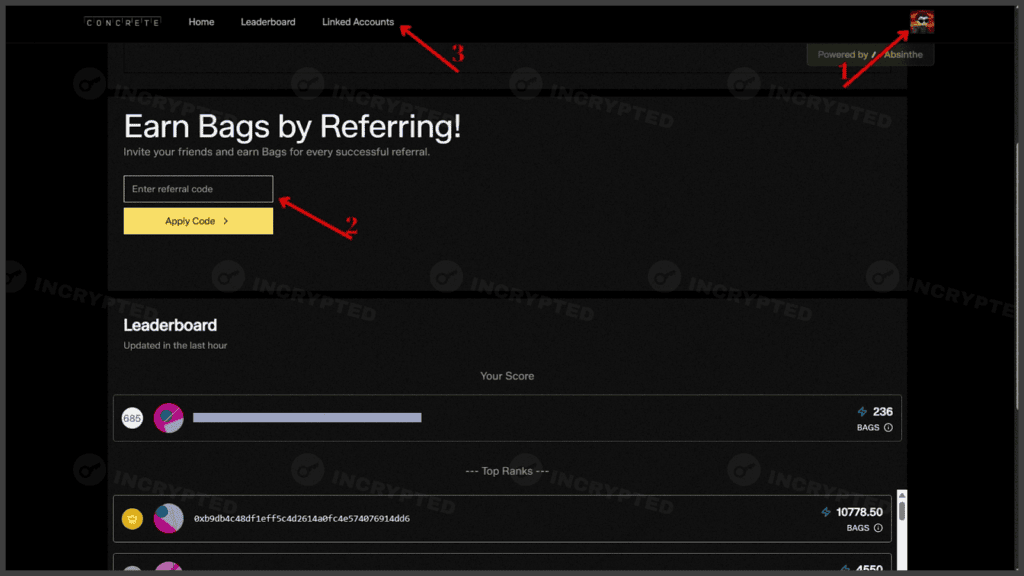
Concrete — farming points with an eye on a future airdrop

Concrete — farming points with an eye on a future airdrop

Concrete is a DeFi yield infrastructure that provides stable income and new derivatives for assets. At the time of writing, the project is running the Concrete Social Bags campaign, in which you need to complete tasks and be active on X (Twitter) and Discord to earn points. The project attracted $17 million in investments from […] Сообщение Concrete — farming points with an eye on a future airdrop появились сначала на INCRYPTED.

Author: Incrypted
Next Crypto to Explode? Crypto with Most Potential Analysis Points Directly to NNZ Token

Next Crypto to Explode? Crypto with Most Potential Analysis Points Directly to NNZ Token

A growing wave of traders searching for the next crypto to explode has shifted its attention toward early presale data showing unusual acceleration. Over the past week, several independent trackers recorded a sharp rise in presale participation across emerging projects, with some reporting daily increases of more than 14% in new buyer activity and a […] The post Next Crypto to Explode? Crypto with Most Potential Analysis Points Directly to NNZ Token appeared first on TechBullion.

Author: Techbullion
Exposed: “Ramarxyz” Sniped 70% of $WET Presale With 1,000+ Wallets – Then Demanded Refund

Exposed: “Ramarxyz” Sniped 70% of $WET Presale With 1,000+ Wallets – Then Demanded Refund

A chaotic token launch on Solana has placed decentralized finance platform HumidiFi and Jupiter Exchange under intense scrutiny after blockchain investigators

Author: CryptoNews
Looking for the Cheapest Meme Coin to Buy? Meet the Next Penny Cryptocurrency to Boom

Looking for the Cheapest Meme Coin to Buy? Meet the Next Penny Cryptocurrency to Boom

Many traders looking for the cheapest meme coin to buy are turning their eyes toward a project that has been climbing fast through its early stages. Noomez entered Stage 6 only days ago, and the price is still just $0.0000283. The presale keeps attracting new buyers every hour, and the next jump arrives as soon […] The post Looking for the Cheapest Meme Coin to Buy? Meet the Next Penny Cryptocurrency to Boom appeared first on Live Bitcoin News.

Author: LiveBitcoinNews
$1 miljoen Polymarket winst op Google trends veroorzaakt rel

$1 miljoen Polymarket winst op Google trends veroorzaakt rel

Een Polymarket trader wint $1 miljoen met nauwkeurige Google Search-voorspellingen, wat leidt tot verdenkingen van insider trading en groeiende zorgen over prediction markets. Wat is er aan de hand?  Check onze Discord Connect met "like-minded" crypto enthousiastelingen Leer gratis de basis van Bitcoin & trading - stap voor stap, zonder voorkennis. Krijg duidelijke uitleg & charts van ervaren analisten. Sluit je aan bij een community die samen groeit. Nu naar Discord $1 miljoen Polymarket winst op Google trends veroorzaakt rel De voorspellingsmarkt Polymarket ligt onder een vergrootglas nadat een gebruiker bijna $1 miljoen winst behaalde met uitzonderlijk nauwkeurige weddenschappen op Google’s Year in Search 2025-ranglijsten. De ongebruikelijke prestatie leidt tot felle discussies over mogelijke insider trading op prediction markets. De discussie komt op een saillant moment: Polymarket heeft net zijn officiële herlancering in de Verenigde Staten afgerond. De wallet 0xafEe, eerder bekend onder de naam AlphaRaccoon, behaalde de winst door bijna alle uitkomsten van de Google-zoektrends correct te voorspellen. De trader kocht onder meer “Yes”-posities op d4vd, een 20-jarige singer-songwriter die slechts 0,2% kans had om de ‘meest gezochte persoon van 2025’ te worden. Een inzet van $10.647 veranderde in bijna $200.000 winst. De grootste opbrengsten kwamen echter uit “No”-bettingen op favorieten zoals Pope Leo XIV, Bianca Censori en Donald Trump. Volgens Meta-engineer Jeong Haeju, die de analyse op X deelte, behaalde de trader een 22-uit-23 score. Blockchain-gegevens tonen dat de wallet afgelopen vrijdag $3 miljoen stortte en direct begon te handelen. Hetzelfde adres verdiende eerder ruim $150.000 met het exact voorspellen van de releasedatum van Gemini 3.0 Flash. “Dit is geen geluk. Hij voorspelde eerder al de vroege Gemini-release. Het is duidelijk: dit is iemand binnen Google die Polymarket leegtrekt,” aldus Haeju. Bewijs daarvoor ontbreekt echter, de beschuldigingen zijn vooralsnog speculatief. A Google insider has officially been exposed on Polymarket. This dude just profited $1,000,000 in a single day betting on the Google search markets. Google accidentally pushed the results early, then removed them, but not before it revealed he went 22/23 on his bets and… pic.twitter.com/44raBXoD4x — haeju.eth (@JeongHaeju) December 4, 2025 Welke crypto nu kopen?Lees onze uitgebreide gids en leer welke crypto nu kopen verstandig kan zijn! Welke crypto nu kopen? De langste government shutdown in de geschiedenis van de VS is eindelijk achter de rug. Dat zorgt ervoor dat er eindelijk weer vooruitgang geboekt kan worden. Dit is erg bullish voor crypto, en dus gaan wereldberoemde traders ineens all-in op altcoins als XRP. Eén vraag komt telkens terug: welke crypto moet… Continue reading $1 miljoen Polymarket winst op Google trends veroorzaakt rel document.addEventListener('DOMContentLoaded', function() { var screenWidth = window.innerWidth; var excerpts = document.querySelectorAll('.lees-ook-description'); excerpts.forEach(function(description) { var excerpt = description.getAttribute('data-description'); var wordLimit = screenWidth wordLimit) { var trimmedDescription = excerpt.split(' ').slice(0, wordLimit).join(' ') + '...'; description.textContent = trimmedDescription; } }); }); Is insider trading een probleem of juist het doel van prediction markets? De ontwikkelingen creëren verdeeldheid binnen de crypto community. Sommige gebruikers stellen dat prediction markets juist functioneren dankzij insiderkennis. “Het hele nut van prediction markets is insider trading. Bij aandelen mag het niet, hier hoort het erbij,” schrijft X-gebruiker WiiMee. Anderen vrezen dat de geloofwaardigheid van Polymarket onder druk komt te staan, zeker nu het platform opnieuw actief is in de VS na goedkeuring door de CFTC. Polymarket groeit explosief, token in 2026 In november verwerkte Polymarket meer dan $3,7 miljard aan handelsvolume, zo blijkt uit cijfers van Dune. De populariteit nam verder toe nadat Intercontinental Exchange (ICE), moederbedrijf van de NYSE, tot $2 miljard investeerde in het platform. Polymarket is nu gewaardeerd op circa $9 miljard, met plannen om extra kapitaal op te halen tegen een waardering van $12 miljard. CMO Matthew Modabber bevestigt dat het platform een POLY-token en airdrop zal lanceren, waarschijnlijk in 2026, wanneer de Amerikaanse operatie volledig gestabiliseerd is. Miljardenbedrijf Het incident rond de Google-searchmarkten fungeert als testcase voor de rol van prediction markets in de VS. De vraag is of deze platforms dienen als efficiënte informatieaggregatoren of als instrumenten voor insiders om te profiteren van niet-openbare data. Hoe Polymarket met deze vermoedens omgaat, kan bepalend zijn voor zijn toekomstige regulatoire positie. Hoe is Polymarket ontstaan en hoe is de marktwaarde van 9 miljard dollar te verklaren? Hoeveel gebruikers heeft het platform? Polymarket is in opgericht in 2020 door Shayne Coplan. Je kunt op deze “prediction market” op basis van blockchain, waarbij gebruikers met crypto (vaak USDC via het Polygon-netwerk) kunnen handelen op de uitkomst van echte wereld gebeurtenissen. Je kunt ook geld storten via een creditcard of PayPal, maar vooralsnog niet via iDeal omdat de Nederlandse overheid het gebruik ook wilt weren. Zoals gezegd haalde Polymarket een forse investering van Intercontinental Exchange (ICE, eigenaars van de NYSE). Die investering gaf het bedrijf volgens bronnen een waardering van rond de 8–9 miljard dollar. Daarnaast is Polymarket, mede dankzij crypto-adoptie en toegenomen belangstelling voor “event-bets”, explosief gegroeid in volume: in sommige maanden verwerkt de markt miljarden aan handelsvolume. Volgens data uit oktober 2025 had Polymarket een record aantal maandelijkse actieve traders: 477.850. Dat was een sterke stijging ten opzichte van augustus 2025 (toen veel lager), wat duidt op hernieuwde interesse en gebruikersgroei. De toestroom van nieuwe accounts is groot: in mid-2024 is een flinke toename gemeld, duizenden nieuwe geregistreerde accounts per maand, vooral tijdens grote gebeurtenissen zoals verkiezingen of andere media-georiënteerde markten. Best wallet - betrouwbare en anonieme wallet Best wallet - betrouwbare en anonieme wallet Meer dan 60 chains beschikbaar voor alle crypto Vroege toegang tot nieuwe projecten Hoge staking belongingen Lage transactiekosten Best wallet review Koop nu via Best Wallet Let op: cryptocurrency is een zeer volatiele en ongereguleerde investering. Doe je eigen onderzoek. Het bericht $1 miljoen Polymarket winst op Google trends veroorzaakt rel is geschreven door Wessel Simons en verscheen als eerst op Bitcoinmagazine.nl.

Author: Coinstats