Airdrop

An Airdrop is a distribution of free tokens to a community, typically used as a marketing tool or a reward for early protocol adopters and testers. In 2026, the "points-to-airdrop" model has matured into merit-based incentive programs that utilize Sybil-resistance and Proof-of-Humanity to filter out bots. Airdrops remain a primary method for decentralized governance (DAO) bootstrapping. Follow this tag for the latest on retroactive rewards, eligibility criteria, and how to participate in the most anticipated token distributions in the ecosystem.

5473 Articles
Created: 2026/02/02 18:52
Updated: 2026/02/02 18:52
$SPY Presale Among the Top Cryptos to Buy in 2025, Countdown to Close

$SPY Presale Among the Top Cryptos to Buy in 2025, Countdown to Close

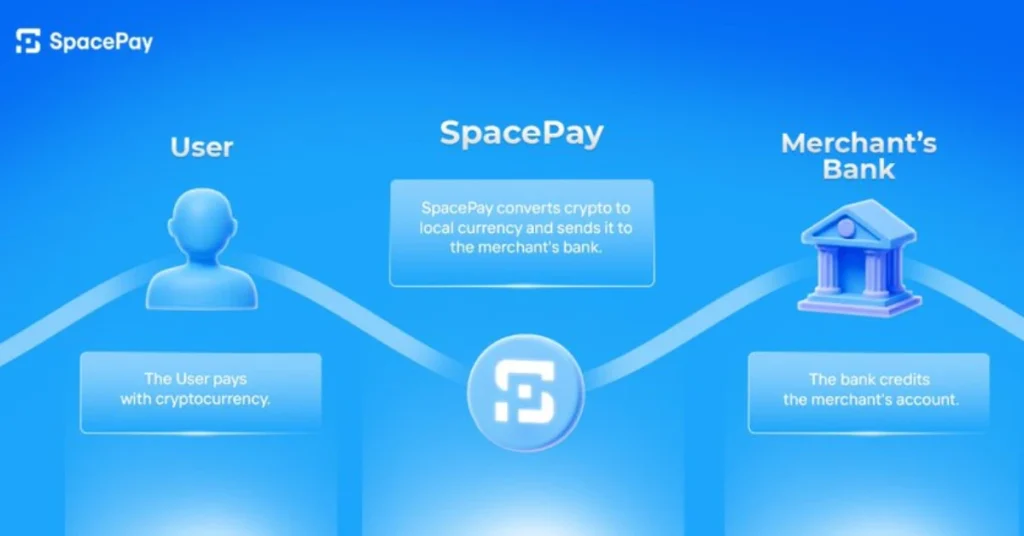
The post $SPY Presale Among the Top Cryptos to Buy in 2025, Countdown to Close appeared first on Coinpedia Fintech News November marks the final chapter for SpacePay ($SPY) presale access before mainnet deployment begins. The window to secure tokens at current prices narrows each day, and once the presale ends by the end of November, this entry point disappears. What positions $SPY among projects worth attention as 2025 approaches? SpacePay delivers a payment solution that …

Author: CoinPedia
IOSG: Prediction markets are hot, but we still need to pour some cold water on them.

IOSG: Prediction markets are hot, but we still need to pour some cold water on them.

Prediction markets are undoubtedly one of the most watched sectors in the crypto industry. Leading project Polymarket boasts over $36 billion in cumulative trading volume and recently completed a strategic funding round at a valuation of $9 billion. Meanwhile, platforms including Kalshi (valued at $11 billion) have also received substantial capital injections. ▲Source: Dune However, behind the continuous influx of capital and impressive data growth, we find that prediction markets, as a type of trading product, still face many problems. In this article, I attempt to set aside the mainstream optimism and offer some different perspectives. 01 Prediction is event-based—events are inherently discontinuous and non-replicable. Unlike the price fluctuations of assets such as stocks and forex over time, market prediction relies on a finite number of discrete events in the real world. It is low-frequency compared to trading. In the real world, there are very few events that truly garner widespread attention, have clear outcomes, and are settled within a reasonable timeframe—presidential elections are held every four years, the World Cup every four years, the Oscars every year, and so on. Most social, political, economic, and technological events do not generate sustained demand for transactions. These events are limited in number and frequency each year, making it difficult to build a stable trading ecosystem. In other words, the low-frequency nature of prediction markets cannot be easily changed by product design or incentive mechanisms. This fundamental characteristic determines that, in the absence of major events, the trading volume of prediction markets will inevitably not remain at a high level. 02 Unlike the stock market, prediction markets do not rely on fundamentals: the stock market's value comes from a company's intrinsic value, including its future cash flow, profitability, assets, and so on. Prediction markets, however, ultimately point to an outcome and depend on users' "interest in the outcome of the event itself." In this context, the amount people are willing to bet on is significantly positively correlated with the importance of the event, market attention, and time frame: scarce and high-profile events such as the finals and presidential elections attract a large amount of money and attention. Naturally, an average fan would be more concerned about the outcome of the annual finals and would place heavy bets on it, rather than performing the same way during the regular season. On Polymarket, the 2024 presidential election accounted for over 70% of the platform's total online activity (OI). Meanwhile, the vast majority of events remained in a state of low liquidity and high bid-ask spreads for extended periods. From this perspective, it's difficult for the prediction market to expand exponentially. 03 Prediction markets have a gambling nature, but they are unlikely to generate the retention and expansion that gambling does. We all know that the real mechanism of gambling addiction lies in instant feedback—slot machines go every few seconds, Texas Hold'em is played every few minutes, and contracts and memecoin transactions change rapidly every second. However, the feedback cycle in prediction markets is very long, with most events taking weeks to months to resolve. Events with rapid feedback may not be interesting enough to warrant a large bet. Immediate positive feedback significantly increases dopamine release frequency and reinforces user habits. Delayed feedback, on the other hand, fails to create stable user retention. 04 In some types of events, there is a high degree of information asymmetry among the participants. In competitive sports, in addition to the teams' theoretical strength, the outcome largely depends on the athletes' performance on the day, which means there is still considerable uncertainty. However, political events involve opaque processes involving inside information, channels, and connections. Insiders have a significant information advantage, making their bets much more certain. Just like the vote counting process in elections, internal polls, and organizational details in key areas, it's difficult for outsiders to obtain this information. Currently, there is no clear definition of "insider trading" in prediction markets from regulatory bodies, leaving this area in a gray area. In general, in these types of events, the party at an informational disadvantage is more likely to exit liquidity. 05 Due to the ambiguity of language and definitions, it is difficult to be completely objective in predicting market events. For example, whether Russia and Ukraine will cease hostilities in 2025 depends on the statistical methodology used; whether a cryptocurrency ETF will be approved at a certain time can be determined by factors such as full approval, partial approval, or conditional approval. This raises the issue of "social consensus"—when both sides are evenly matched, the losing side will not readily concede defeat. Such ambiguity necessitates the establishment of a dispute resolution mechanism on the platform. However, once prediction markets encounter linguistic ambiguity and dispute resolution, they cannot rely entirely on automation or objectivity, leaving room for human manipulation and corruption. 06 The main value proposition of prediction markets in the market is "collective intelligence," which means that, compared to the low level of trust in the media and mainstream discourse, prediction markets can gather the best information from around the world, thereby achieving collective consensus. However, before prediction markets achieve widespread adoption, this "information sampling" will inevitably be one-sided and the sample will not be diverse enough. The user base of prediction market platforms may be highly homogeneous. For example, in the early stages of a prediction market, it is certainly a platform mainly composed of cryptocurrency users whose views on political, social, and economic events may be highly convergent, thus forming an information cocoon. In this situation, the market reflects the collective bias of a specific group, and is still quite far from "collective wisdom". Conclusion The core message of this article is not to predict a bearish market, but rather to encourage us to remain calm amidst heightened FOMO, especially after the ups and downs of popular narratives like ZK and GameFi. Over-reliance on special events like elections, short-term sentiment on social media, and airdrop incentives often amplifies the superficial aspects of data and is insufficient to support judgments about long-term growth. Nevertheless, from the perspective of user education and user acquisition, prediction markets will remain important in the next three to five years. Similar to on-chain yield savings products, they have an intuitive product format and a lower learning curve, making them more likely to attract users from outside the crypto ecosystem than on-chain transaction protocols. Based on this, prediction markets are highly likely to develop further and, to some extent, become an entry-level product for the crypto industry. Future prediction markets may also occupy certain vertical sectors, such as sports and politics. They will continue to exist and expand, but they do not have the fundamental conditions for exponential growth in the short term. We should consider investing in prediction markets from a cautiously optimistic perspective.

Author: PANews
Who's making a fortune in a bear market? Unveiling the money-printing logic of CEXs, stablecoins, and KOLs.

Who's making a fortune in a bear market? Unveiling the money-printing logic of CEXs, stablecoins, and KOLs.

Author: Viee, a core contributor to Biteye Edited by: Denise, a core contributor to Biteye After the bubble bursts, what will be the bottom line for the survival of crypto projects? In an era where anything could be told a story and anything could be overvalued, cash flow didn't seem essential. But things are different now. Venture capitalists are withdrawing, and liquidity is tightening. In this market environment, the ability to make money and generate positive cash flow has become the first sieve to test the fundamentals of a project. In contrast, other projects rely on stable income to weather economic cycles. According to DeFiLlama data, in October 2025, the top three highest-grossing crypto projects generated $688 million (Tether), $237 million (Circle), and $102 million (Hyperliquid) respectively in a single month. In this article, we'll discuss projects with real cash flow. They mostly revolve around two things: transactions and attention. These two fundamental sources of value in the business world are no exception in the cryptocurrency arena. 01. Centralized Exchanges: The Most Stable Revenue Model In the cryptocurrency world, it's no secret that "exchanges are the most profitable." Exchanges primarily generate revenue from transaction fees and listing fees. Take Binance, for example; its daily spot and futures trading volume has consistently accounted for 30-40% of the entire market. Even in the sluggish market of 2022, its annual revenue reached $12 billion, and during this bull market cycle, revenue will only be higher. (Data from CryptoQuant) In short: as long as there are transactions, the exchange can generate revenue. Another example is Coinbase, which, as a publicly traded company, has clearer data disclosure. In the third quarter of 2025, Coinbase's revenue was $1.9 billion, with a net profit of $433 million. Transaction revenue was the main source, contributing more than half, with the remaining revenue coming from subscriptions and services. Other leading exchanges such as Kraken and OKX are also steadily making money; Kraken reportedly had revenue of approximately $1.5 billion in 2024. The biggest advantage of these centralized exchanges (CEXs) is that trading naturally generates revenue. Compared to many projects that are still struggling to make their business models viable, they are already genuinely charging for services. In other words, in this phase where storytelling is becoming increasingly difficult and hot money is becoming increasingly scarce, CEXs are among the few players who can survive on their own without needing to raise funds. 02. On-chain projects: PerpDex, stablecoins, public chains According to DefiLlama data as of November 27, 2025, the top ten on-chain protocols with the highest revenue over the past 30 days are shown in the figure. This reveals that Tether and Circle firmly hold the top positions. Leveraging the interest rate spread between US Treasury bonds and USDT and USDC, these two stablecoin issuers earned nearly $1 billion in a single month. Hyperliquid follows closely behind, firmly holding the title of "most profitable on-chain derivatives protocol." Furthermore, the rapid rise of platforms like Pumpfun further validates the old logic that "selling coins is worse than trading them, and selling tools is worse than selling shovels" still holds true in the crypto industry. It is worth noting that some dark horse projects, such as Axiom Pro and Lighter protocols, have already shown positive cash flow paths, even though their overall revenue is not large. 2.1 PerpDex: Real-world returns from on-chain protocols This year, the best performing PerpDex is Hyperliquid. Hyperliquid is a decentralized perpetual contract platform with its own independent blockchain and built-in matching mechanism. Its explosive growth was quite sudden; in August 2025 alone, it completed $383 billion in transactions and generated $106 million in revenue. Furthermore, the project uses 32% of its revenue to buy back and burn platform tokens. According to a report yesterday by @wublockchain12, the Hyperliquid team unlocked 1.75 million HYPE tokens (out of 60.4 million), without external funding or selling pressure, using protocol revenue to buy back tokens. For an on-chain project, this is approaching the revenue efficiency of a centralized exchange. More importantly, Hyperliquid actually earns money and then gives it back to the token economy system, establishing a direct link between protocol revenue and token value. Let's talk about Uniswap. In recent years, Uniswap has been criticized for taking tokens for free, for example, charging 0.3% on each transaction but giving it all to LPs, and UNI holders receiving no income at all. Until November 2025, Uniswap announced plans to implement a protocol fee-sharing mechanism and use a portion of its historical revenue to buy back and burn UNI tokens. Calculations suggest that if this mechanism had been implemented earlier, the funds available for burning in the first ten months of this year alone would have reached $150 million. Upon the announcement, UNI surged 40% that day. Although Uniswap's market share has fallen from a peak of 60% to 15%, this proposal could still reshape UNI's fundamentals. However, after the proposal was released, @EmberCN detected that an investment institution (possibly a Variant Fund) transferred millions of $UNI ($27.08 million) to Coinbase Prime, suggesting a possible pump-and-dump scheme. Overall, the old DEX model that relied on airdrops to hype up prices is becoming increasingly unsustainable. Only projects that truly generate stable revenue and complete their business cycle are likely to retain users. 2.2 Stablecoins and Public Blockchains: Earning Money Passively Through Interest Beyond transaction-related projects, a number of infrastructure projects are also attracting investment. Among these, stablecoin issuers and frequently used public blockchains are the most typical examples. Tether: The Giant That Continues to Print Money Tether, the company behind USDT, has a very simple profit model: whenever someone deposits $1 in exchange for USDT, Tether uses that money to buy low-risk assets such as government bonds and short-term notes to earn interest, which it keeps for itself. As global interest rates rise, Tether's profits also increase. Its net profit reached $13.4 billion in 2024 and is projected to exceed $15 billion in 2025, approaching that of traditional financial giants like Goldman Sachs. @Phyrex_Ni recently posted that despite its rating downgrade, Tether remains a cash cow, earning over $130 billion in collateral from US Treasury bonds. While USDC issuer Circle has a slightly smaller circulating supply and net profit, its total revenue in 2024 still exceeded $1.6 billion, with 99% coming from interest income. It's worth noting that Circle's profit margin isn't as exorbitant as Tether's, partly due to its revenue-sharing partnership with Coinbase. In short, stablecoin issuers are essentially money-printing machines; they don't raise funds through storytelling, but rather by having users willing to deposit their money with them. In a bear market, these savings-oriented projects actually thrive. @BTCdayu also believes stablecoins are a good business, printing money and collecting interest worldwide, and is optimistic that Circle will be the king of passive income in the stablecoin market. Public blockchains: Relying on traffic, not incentives. Looking at the mainnet public blockchain, the most direct way to monetize is through gas fees. The data in the following chart is from Nansen.ai: Looking at total transaction fee revenue across public blockchains over the past year provides a clearer picture of which chains have truly generated practical value. Ethereum's annual revenue was $739 million, remaining its primary source of income, but it declined by 71% year-over-year due to the Dencun upgrade and L2 cache diversion. In contrast, Solana's annual revenue reached $719 million, a 26% increase year-over-year, driven by the popularity of memes and AI agents, resulting in a significant boost in user activity and interaction frequency. Tron's revenue was $628 million, an 18% increase year-over-year. Bitcoin's annual revenue, however, was only $207 million, primarily affected by a decline in inscription trading activity, resulting in a significant overall drop. BNB Chain's annual revenue reached $264 million, a year-on-year increase of 38%, ranking first among mainstream public chains in terms of growth rate. Although its revenue scale is still lower than ETH, SOL, and TRX, the growth in its transaction volume and active addresses indicates that its on-chain use cases are expanding and its user structure is becoming more diversified. BNB Chain as a whole demonstrates strong user retention and genuine demand. This stable revenue growth structure also provides clearer support for the continued evolution of its ecosystem. These public blockchains are like "water sellers"; whoever is panning for gold in the market will always need their water, electricity, and roads. While these infrastructure projects may not have short-term explosive growth potential, their strength lies in their stability and resilience to economic cycles. 03. Businesses surrounding KOLs: Attention can also be monetized If transactions and infrastructure are the overt business models, then the attention economy is the "hidden business" in the crypto world, such as KOLs and agencies. This year, crypto KOLs have become the center of attention and traffic. Influential figures active on platforms like Twitter, Telegram, and YouTube leverage their personal influence to develop diversified revenue streams: from paid promotions and community subscriptions to monetizing courses. Industry rumors suggest that mid-tier and above crypto KOLs can earn up to $10,000 per month through promotions. Meanwhile, audiences are demanding higher-quality content, so KOLs who weather economic cycles are often those who have earned user trust through professionalism, sound judgment, or deep engagement. This has also subtly reshaped the content ecosystem during bear markets, eliminating those who are short-sighted and retaining those who prioritize long-term commitment. Of particular note is the third layer of attention monetization: KOL (Key Opinion Leader) funding rounds. This makes KOLs key participants in the primary market: acquiring project tokens at a discount, undertaking traffic exposure tasks, and exchanging "early-stage leverage through influence"—a model that bypasses venture capital. A whole suite of matchmaking services has emerged around KOLs themselves. Agencies have begun to act as traffic intermediaries, matching projects with suitable KOLs, making the entire process increasingly resemble an advertising placement system. If you are interested in the business models of KOLs and agencies, you can refer to our previous long article, "Unveiling the KOL Round: A Wealth Experiment Driven by Traffic" (https://x.com/BiteyeCN/status/1986748741592711374), to gain a deeper understanding of the true profit structure behind it. In short, the attention economy is essentially a monetization of trust, and trust is even scarcer in a bear market, making the threshold for monetization even higher. 04. Conclusion Projects that have managed to maintain cash flow during the crypto winter largely demonstrate the two cornerstones of "transactions" and "attention". On the one hand, whether centralized or decentralized, trading platforms can generate continuous revenue through transaction fees as long as they have stable user trading activity. This direct business model allows them to remain self-sufficient even when capital exits. On the other hand, KOLs (Key Opinion Leaders) who focus on user attention monetize user value through advertising and services. In the future, we may see more diverse models, but in any case, projects that have accumulated real revenue during periods of poor market conditions will have a greater chance of leading new development. Conversely, some projects that rely solely on storytelling and lack the ability to generate revenue may experience a short-term surge in popularity, but ultimately they may be forgotten.

Author: PANews
Important news from last night and this morning (December 1st - December 2nd)

Important news from last night and this morning (December 1st - December 2nd)

Coinbase executive and director Marc Andreessen is being sued by shareholders for alleged $4.2 billion in insider trading. According to Decrypt, several Coinbase shareholders have filed a lawsuit in Delaware against company executives and director Marc Andreessen, accusing him of concealing KYC, anti-money laundering loopholes, and data breach risks, and of cashing out $4.2 billion in stock before the information was made public. The plaintiffs are seeking substantial damages and board seats. Coinbase had previously announced its relocation to Texas, citing the "unpredictability" of Delaware court precedents as one reason. Vanguard has launched cryptocurrency ETF trading, supporting major assets such as BTC and ETH. According to Bloomberg, Vanguard, the world's second-largest asset manager, announced it will allow trading on its platform of ETFs and mutual funds that primarily hold crypto assets such as Bitcoin, Ethereum, XRP, and Solana, breaking its long-standing stance of rejecting crypto assets. This move will give its more than 50 million brokerage account users access to compliant crypto fund products, but funds related to memes are still excluded, and there are currently no plans to launch its own crypto products. The FDIC plans to release its first draft regulation on stablecoin issuance under the GENIUS Act this month. According to CoinDesk, Acting Chairman Travis Hill of the Federal Deposit Insurance Corporation (FDIC) will state at a congressional hearing that the FDIC will release its first draft implementation of the GENIUS Act this month, outlining the federal regulatory application process for stablecoin issuance, and plans to introduce subsequent regulatory provisions, including capital and liquidity requirements, early next year. Hill also stated that the FDIC is developing regulatory guidelines for tokenized deposits. DeepSeek releases version 3.2, enhancing its inference and tool-calling capabilities. According to DeepSeek's official WeChat account, V3.2 and V3.2-Speciale models have been officially released. V3.2 achieves GPT-5 level performance on inference benchmarks, supports tool calls in thinking mode, and significantly improves agent generalization ability. V3.2-Speciale focuses more on mathematics and programming scenarios, achieving top-ten human performance in competitions such as IMO and IOI. The web, app, and API have been upgraded, with the Speciale model API temporarily open until December 15th. Coinbase will launch spot trading for Plasma (XPL). According to Coinbase Markets, Plasma (XPL) will launch the XPL-USD trading pair at 1:00 AM Beijing time on December 3 (9:00 AM PST on December 2), subject to liquidity requirements. XPL runs on the Plasma network and is limited to transfers within this network; cross-chain transactions may result in fund loss. XPL will be available on the Coinbase website, app, and Advanced platform, and institutional users can access it through Coinbase Exchange. SEC Chairman Paul Atkins will deliver a speech tonight at the NYSE, focusing on his vision for the 250th anniversary of reforms to the U.S. capital markets. According to the SEC website and Atkins' personal X account, at 10:15 PM Beijing time on December 2nd (9:15 AM Eastern Time), SEC Chairman Paul Atkins rang the opening bell at the New York Stock Exchange and delivered a keynote speech entitled "Revitalizing America's Markets at 250" at 11:00 AM Beijing time, outlining future reforms to strengthen the U.S. capital markets. He will also be interviewed by CNBC's "Squawk Box" at 8:30 PM Beijing time. Kalshi blockchained thousands of prediction markets onto Solana According to The Block, US prediction market platform Kalshi has tokenized thousands of prediction markets through Solana, promoting the open monetization of its global liquidity pools. Kalshi has also partnered with DFlow and Jupiter to launch "Builder Codes," allowing users to build applications and earn rewards based on trading volume. US stocks closed lower: all three major indexes fell, with blockchain concept stocks experiencing significant declines. U.S. stocks closed lower on Monday, with the Dow Jones Industrial Average down 0.9%, the S&P 500 down 0.53%, and the Nasdaq Composite down 0.36%. Blockchain-related stocks all saw significant declines, with CRCL (Circle) down about 5%, MSTR (Strategy) down about 3.25%, and COIN (Coinbase) down about 4.76%. The probability of the Federal Reserve cutting interest rates by 25 basis points in December is 87.6%. According to CME's "FedWatch": the probability of the Federal Reserve cutting interest rates by 25 basis points in December is 87.6%, and the probability of keeping rates unchanged is 12.4%. The probability of the Fed cutting rates by a cumulative total of 25 basis points by January next year is 69.3%, the probability of keeping rates unchanged is 9.3%, and the probability of a cumulative rate cut of 50 basis points is 21.3%. Bloomberg: Stablecoin company First Digital plans to go public via SPAC merger. According to Bloomberg, sources familiar with the matter revealed that Hong Kong-based First Digital Group is planning a public listing through a merger with a blank check company. The company is expected to announce the signing of a non-binding letter of intent outlining its plans to merge with CSLM Digital Asset Acquisition Corp III (CSLM), a New York-listed special purpose acquisition company. First Digital Group is the issuer of the stablecoin FDUSD, which has a market capitalization of approximately $920 million, down from its peak of approximately $4.4 billion in April 2024. As trustee, First Digital Group also manages reserves for TrueUSD, a stablecoin operated by Techteryx, whose advisor is Justin Sun. Polygon Co-founder: Hopefully Strategy won't become the LUNA of this cycle. Sandeep Nailwal, co-founder of Polygon and CEO of the Polygon Foundation, posted on the X platform: "Hopefully, Strategy (MSTR) won't become the protagonist of this cycle's 'LUNA disaster.' This industry can't afford another publicly staged death spiral involving Wall Street and retail investors. Hopefully, Michael Saylor can use some of Wall Street's 'magic' to stabilize the top." Jared Grey announced his resignation from leadership of Sushi and his transition to an advisory role; Sushi also received a significant investment from Synthesis. Sushi CEO Jared Grey announced that he will be stepping down from his leadership role (Head Chef of SushiSwap and Managing Director of Sushi Labs) to become an advisor. Synthesis, led by Alex McCurry, has made a significant capital investment in Sushi to support its long-term development and operations. Alex has also joined Sushi as Managing Director, leading the company into a new era. Grey stated, "While I will be stepping down from my leadership role, I will continue to provide strategic guidance to Alex and the team." Bitnomial to launch the first CFTC-regulated spot cryptocurrency trading platform According to Crypto In America, Bitnomial is poised to become the first derivatives exchange in the U.S. to offer spot cryptocurrency trading. The Chicago-based company filed for self-certification last month under Section 40.6(a) of the Commodity Futures Trading Commission (CFTC). This section allows registered Designated Contract Markets (DCMs) to implement new rules after demonstrating compliance with the Commodity Exchange Act (CEA). Bitnomial's self-certification covers the listing of "spot" products, including retail leveraged spot trading under Section 2(c)(2)(D) of the CFTC, allowing clients to buy directly on the exchange. Analysis: The crypto market is nearing a local bottom, and a sustainable recovery is expected in the fourth quarter. Bitfinex Alpha's latest report indicates that the market is nearing a local bottom from a time perspective, although whether the price level has bottomed out remains to be seen. However, given the extreme deleveraging, short-term holder selling, and signs of exhausting selling pressure, the market is poised to enter a stabilization phase. On-chain data further supports this view: the adjusted realized loss margin has fallen below 1 for the third time since early 2024, dynamically consistent with the loss realization at the cycle lows of August 2024 and April 2025. The current depth of realized losses is also reflected in the entity-adjusted realized losses, which have surged to $403.4 million daily, exceeding levels seen at previous major lows. Such a scale of realized losses typically indicates that the sell-off is nearing its end, rather than the start of a new round of declines. Meanwhile, derivatives data also shows a similar orderly adjustment pattern: total open interest (OI) in Bitcoin futures has fallen to $59.17 billion, far below the peak of $94.12 billion, indicating that leverage has been systematically cleared. The continued contraction in open interest coupled with rising spot prices indicates that short covering rather than new speculative risk-taking is driving the market, further reinforcing the view that the market is transitioning to a more stable consolidation phase. Market vulnerability has decreased, and a sustainable recovery is expected to take shape in the fourth quarter. Over the past week, institutional consolidation in Bitcoin has deepened significantly. BlackRock's latest filing with the SEC shows that its Strategic Income Opportunities Portfolio increased its holdings in the Bitcoin Investment Trust (IBIT) by 14%, bringing total holdings to 2.39 million shares. This move highlights that even traditionally conservative bond funds are beginning to use Bitcoin ETFs as a diversification tool, echoing the increasing structural support for IBIT, including plans to increase option position limits to accommodate larger-scale institutional strategies. BitMine currently holds over 3% of the total ETH token supply, with total assets of $12.1 billion. According to PR Newswire, Nasdaq-listed Ethereum treasury company BitMine disclosed that it currently holds over 3% of the Ethereum token supply. BitMine's total cryptocurrency, cash, and "Moonshots" holdings amount to $12.1 billion, including approximately 3.73 million ETH, $882 million in uncollateralized cash, and other cryptocurrency assets. As of November 30th, Eastern Time, the company's cryptocurrency holdings included 3,726,499 ETH and 192 BTC. In addition, the company also holds $36 million worth of Eightco Holdings shares and $882 million in uncollateralized cash. Bitmine increased its holdings by 96,798 ETH in the past week, worth approximately $272.3 million. According to Onchain Lens monitoring, Bitmine increased its holdings by 96,798 ETH in the past week, worth approximately $272.3 million. The company currently holds a total of 3,726,499 ETH, with a total value of approximately $10.48 billion. Strategy updates its fiscal year 2025 earnings forecast: If BTC is between $85,000 and $110,000 by the end of the year, revenue could reach $7 billion to $9.5 billion. Strategy updated its fiscal year 2025 earnings guidance, estimating that if the Bitcoin price ranges from $85,000 to $110,000 by the end of 2025, the target range for Strategy's fiscal year 2025 revenue, net income, and diluted earnings per share is as follows: fiscal year 2025 revenue is estimated to be between $7 billion and $9.5 billion, fiscal year 2025 net income is estimated to be between $5.5 billion and $6.3 billion, and fiscal year 2025 diluted earnings per share are estimated to be between $17.00 and $19.00 per common share. Huang Licheng's ETH long positions were liquidated, with another 400 ETH being liquidated, leaving him with a position of $4.52 million. According to on-chain analyst Yu Jin, Huang Licheng (Maji)'s ETH long position was liquidated at $2792, with 400 ETH ($1.11 million) liquidated. He now has a position of $4.52 million. Of the $1 million he deposited last week, only $140,000 remains. Gleec acquires Komodo's cross-chain DeFi stack for $23.5 million According to CoinDesk, digital asset platform Gleec announced the acquisition of the entire Komodo platform ecosystem for $23.5 million, bringing one of the earliest atomic swap and cross-chain technology stacks in the cryptocurrency space under the umbrella of a licensed financial services provider. This acquisition encompasses the Komodo brand, technology suite, token infrastructure, and core development team, giving Gleec full control of a system that already powers some of its DEXs and accelerating integration with its crypto debit cards, Virtual International Bank Account Numbers (IBANs), and fiat currency deposit and withdrawal gateways. Gleec also plans to provide white-label DEXs and blockchain services to institutions seeking cross-chain capabilities without relying on custodial cross-chain bridges. Currently, the Komodo ecosystem and KMD token will continue to operate under Gleec, and their future direction will determine whether they are merged into the GLEEC token or remain independent. Gleec expects to fully integrate the Komodo technology stack by early 2026 and continue to expand its B2B infrastructure. Strategy has established a $1.44 billion dollar reserve for dividends. Strategy announced the establishment of a $1.44 billion US dollar reserve specifically for paying preferred stock dividends and interest on existing debt. The reserve will be funded by proceeds from the sale of Class A common stock under the company's market offering plan. Strategy currently plans to maintain a reserve size sufficient to cover at least 12 months of dividend payments and intends to gradually increase its size, with the ultimate goal of creating a buffer pool capable of covering dividend payments for 24 months or more. The continuation, terms, and size of the reserve are entirely at the company's discretion, and Strategy will dynamically adjust the reserve size based on market conditions, liquidity needs, and other factors. Strategy spent $11.7 million last week to acquire 130 bitcoins. According to official sources, Strategy (formerly MicroStrategy) purchased 130 Bitcoins between November 17 and November 30, for a total of $11.7 million, at a price of approximately $89,960 per Bitcoin. As of November 30, Strategy held 650,000 Bitcoins, with a total value of approximately $48.38 billion and a price of approximately $74,436 per Bitcoin. PyShield: Yearn has recovered $2.4 million by destroying pxETH held by hackers. According to PyShield's monitoring, Yearn has recovered $2.4 million by destroying the pxETH held by the hackers, and the same amount of pxETH has been reminted and returned to the Redacted Cartel multisignature wallet. Europol: Cross-border operation in Germany and Switzerland dismantles $1.4 billion worth of cryptocurrency mixers. According to Decrypt, European authorities have dismantled the cryptocurrency mixing service Cryptomixer, which had laundered over $1.4 billion (€1.3 billion) through Bitcoin since 2016. In a joint operation in Switzerland, law enforcement seized over $27 million (€25 million) worth of Bitcoin and 12 TB of data. With the support of Europol and the European Judiciary, German and Swiss law enforcement agencies carried out the raid last week in Zurich, seizing three servers and the cryptomixer.io domain. According to a Europol press release, the service operated on both the surface and dark web, and law enforcement placed a seizure banner on its website after the service was shut down. According to relevant agencies, Cryptomixer provided a money laundering channel for ransomware groups, underground forums, and dark web markets by blocking the tracing of funds on the blockchain, helping them launder illicit proceeds from drug trafficking, arms sales, ransomware attacks, and payment card fraud. The "1011 insider whale" withdrew 77,385 ETH (approximately $218 million) from Binance through a newly linked wallet. According to Onchain Lens monitoring, in the past 3 hours, a Bitcoin OG whale (1011 Insider Whale) deposited 180,438 ETH (approximately $512.37 million) into the Aave V3 protocol and borrowed 220 million USDT as collateral, subsequently transferring the loan to Binance. Following this, a newly created wallet associated with the whale withdrew 77,385 ETH (approximately $218 million) from Binance at an average price of $2,843. Bloomberg analyst: Bitcoin may retest $50,000, Bitcoin/gold ratio could fall to 13x. Mike McGlone, senior commodities strategist at Bloomberg Intelligence, wrote on the X platform that Bitcoin may retest $50,000, and the Bitcoin/gold ratio could fall to 13. Extreme market complacency suggests further downside for risk assets, with Bitcoin potentially bearing the brunt. He stated that Bloomberg's economic model shows the Bitcoin/gold ratio was around 20 on December 1st, while its fair value should be closer to 13—a key driver of this return to normalcy is that the S&P 500's 120-day volatility is approaching its lowest year-end level since 2017. A new address withdrew 56,291 ETH from Binance to the blockchain in nearly 2 hours, equivalent to approximately $160 million. According to on-chain analyst Ember, in the past two hours, a newly created address withdrew 56,291 ETH ($160 million) from Binance to the blockchain. Zama: A public auction will be launched on January 12, 2026, to sell 10% of ZAMA tokens. According to official news, crypto company Zama has announced the official launch of a public auction. It will sell 10% of the ZAMA supply through a secret Dutch auction on Ethereum, using the Zama protocol itself to ensure the confidentiality of bids and FHE (Fully Homomorphic Encryption). Key features include: guaranteeing fair allocation and true price discovery; preventing bot attacks or gas wars; and immediate token unlocking. The auction will run from January 12th to 15th, 2026; the claim period ends on January 20th, 2026. ZAMA is the utility token of the Zama protocol, which acts as a confidentiality layer on top of existing L1/L2 protocols: paying encryption and decryption fees, staking or delegating to operators, and helping to protect FHE coprocessors and KMS nodes. The mainnet is expected to launch before the end of the year, and the ZAMA token will be fully functional before the auction. Previously, in June of this year, Zama completed a $57 million Series B funding round at a $1 billion valuation, led by Pantera Capital and others. Aster: S3 airdrop price query is now online. Aster announced on the X platform that the Season 3 airdrop eligibility check is now live, but the airdrop has not yet begun. This page currently only supports eligibility verification. Collection period: December 15, 2025, 20:00 (Beijing time) to January 15, 2026, 20:00 (Beijing time). BlackRock deposited 2,156 BTC, worth approximately $186 million, into Coinbase. According to Onchain Lens, BlackRock deposited 2,156 BTC, worth approximately $186.25 million, into Coinbase. A trader liquidated their entire Pippin token position, making a profit of $3.65 million, a return of 4066%. According to Lookonchain monitoring, "diamond" trader 2Gc2Xg recently liquidated all 24.8 million Pippin tokens (worth approximately $3.74 million) he held for over a year, locking in a profit of $3.65 million, a return of 4066%. This trader purchased these tokens a year ago for only 450 SOL (approximately $90,000). On January 11th of this year, his unrealized profit reached approximately $7.6 million, but he did not sell. Subsequently, the market value of Pippin tokens fell below $10 million. With the recent market rebound, the trader finally liquidated his position for 29,527 SOL (approximately $3.74 million). The "1011 Insider Whale" has borrowed a total of 220 million USDT from Aave and transferred them to Binance. According to Bubblemaps monitoring, the three addresses 0xf6fd, 0xF744 and 0x4116, which were associated with the "1011 flash crash insider whales", have borrowed a total of 220 million USDT from Aave and sent them to Binance. These addresses still hold more than $500 million in assets on-chain. Analysis: With whale buying slowing and retail investor interest surging, Bitcoin faces "late-cycle vulnerability." According to The Block, Bitcoin prices plunged below $86,000 on Monday morning, coinciding with a shift in wallet behavior. This suggests that large holders slowed their accumulation pace as smaller retail wallets accelerated their buying. Analysts warn that this pattern often foreshadows increased vulnerability in the later stages of a cycle. On-chain data shows a significant slowdown in the pace of accumulation by long-term holders and large wallets in recent weeks. In contrast, smaller wallets holding less than one Bitcoin accelerated their buying during the recent price drop. Timothy Misir, Head of Research at BRN, stated that the market structure is at a delicate stage, and this divergence is already evident. He said, "Whales slowing their buying while retail wallets are accumulating is a typical late-cycle pattern that exacerbates short-term vulnerability. This morning's sell-off is a typical liquidity and positioning event; the market isn't signaling a trend reversal, but rather a stress signal." He added that short-term holders experienced a surge in losses during the sell-off, indicating a "sentiment reset" in the market. Exchange balances and stablecoin inflows suggest that the market has both buying power and potential selling liquidity. The "October 11 insider whale" has deposited a total of $170 million worth of stablecoins into Binance in the past 7 hours. According to on-chain analyst @ai_9684xtpa, the "whale that opened short positions after the flash crash on October 11" has deposited a total of $170 million worth of stablecoins into Binance in the past 7 hours. It has currently pledged 126,232.16 ETH and borrowed 160 million USDT. The Central Bank of Kazakhstan will use up to $300 million of its gold and foreign exchange reserves to invest in crypto assets. According to RBC, the National Bank of Kazakhstan is preparing to invest up to $300 million in cryptocurrency instruments. Timur Suleimenov, head of the country's regulatory body, revealed this at a press conference on November 28. Zakon.kz quoted Suleimenov as saying, "This doesn't mean we've already put $300 million into the investment; the amount could be limited to $50 million, $100 million, or even $250 million. Given the overall decline in the cryptocurrency market, people are rethinking the prospects for monetization, profitability, etc., which is a very challenging task." Suleimenov cautioned that the funds are not from the Kazakhstan National Fund, but rather from the central bank's gold and foreign exchange reserves. Within this reserve framework, an investment portfolio has been created for investing in high-tech stocks and other financial instruments related to digital financial assets, but the regulator is not in a hurry to invest. Suleimenov stated, "We will not rush into these decisions until good investment opportunities emerge. After the current decline in all digital, financial, and crypto assets, we need to wait and see before making investment decisions. We will not rush into anything." Binance Wallet now supports creating multiple private keyless wallets. According to the official announcement, Binance Wallet has launched a new feature allowing users to create and manage multiple keyless wallets under the same account. This upgrade provides users with a more flexible and efficient wallet management experience while maintaining the security protection of Binance MPC (Multi-Party Secure Computation) without private keys. Key features include: 1. Multiple Keyless Wallet Support: Up to 5 keyless wallets can be created under the same account. 2. Personalized Management: Users can customize the name and avatar of each wallet and manage them uniformly in the "My Wallets" panel. 3. One-Click Creation: Create keyless wallets with a single click using your device's Passkey. 4. No Mnemonic Phrase Required: Keyless security protection based on MPC technology eliminates the need to save any mnemonic phrases. A new wallet withdrew 42,225 ETH from Binance, worth approximately $120 million. According to Lookonchain, a newly created wallet address, 0x36ED, just withdrew 42,225 ETH (worth approximately $120 million) from Binance. CoinShares: Digital asset investment products saw net inflows of $1.06 billion last week. According to CoinShares' latest weekly report, digital asset investment products saw a total inflow of $1.06 billion last week, reversing four consecutive weeks of outflows (cumulative outflows of $5.7 billion). This shift in market sentiment stemmed from comments by Federal Open Market Committee (FOMC) member John Williams, who stated that monetary policy remains tight, boosting market expectations for an interest rate cut this month. Due to the Thanksgiving holiday, trading volume for digital asset ETPs this week was only $24 billion, a stark contrast to the record $56 billion trading volume of the previous week.

Author: PANews
$BEST Token Price Prediction, Next Crypto to Explode

$BEST Token Price Prediction, Next Crypto to Explode

The post $BEST Token Price Prediction, Next Crypto to Explode appeared on BitcoinEthereumNews.com. The $BEST token has officially hit the market, completing its first full day with strong momentum. It launched on major exchanges like KuCoin, MEXC, and Uniswap, securing tier-1 support within 24 hours, a clear signal that the team is serious about a professional and credible rollout, even in a slightly bearish market. After such a successful presale and immediate listing, investors are already looking for the next token ready to make a big impact at launch. Best Wallet Token Price Analysis $BEST opened its trading sessions with sharp volatility, typical for newly listed tokens. After an initial spike, the market corrected, with selling pressure pushing the price downward. This decline eventually found support around $0.00510–$0.00515, where buyers stepped in with conviction. From this support level, $BEST rebounded toward $0.00530, establishing the early trading floor and signaling buyer confidence. Following the bounce, a resistance zone formed slightly above the rebound peak, acting as the immediate ceiling. Until a breakout occurs, upward movement may remain limited, as sellers defend this barrier. This interplay between support and resistance defines the token’s short-term structure. If $BEST holds the trading floor while gradually pressing into resistance, momentum could shift and open the path for the next leg upward. How Best Wallet Stands Out Among Leading Crypto Wallets BEST currently has a modest circulating market cap, with a fully diluted valuation near $50 million. In its early stages, $BEST exhibits growth patterns similar to Trust Wallet Token, a prominent competitor in the wallet sector. While $TWT now has over 25.89k holders, $BEST has already surpassed 14,000 holders shortly after launch, reflecting strong initial adoption. This early distribution, combined with robust exchange support, positions $BEST for long-term growth. The token’s potential extends beyond market metrics. Best Wallet operates as a fully functional crypto wallet within an active…

Author: BitcoinEthereumNews
PIPPIN AI Token Rallies to February Levels Amid Whale Activity and Selling Pressure

PIPPIN AI Token Rallies to February Levels Amid Whale Activity and Selling Pressure

The post PIPPIN AI Token Rallies to February Levels Amid Whale Activity and Selling Pressure appeared on BitcoinEthereumNews.com. The PIPPIN token has staged a notable recovery in December 2025, surging from $0.023 to $0.18 amid renewed whale interest and rising trading volumes on Raydium. This AI agent token now ranks among the top performers in its sector, with daily volumes exceeding $154 million, though analysts caution about potential profit-taking. PIPPIN token recovery highlights: Surged over 600% from recent lows, driven by AI agent hype without official announcements. Whale activity intensified, with major holders realizing profits up to $3.74 million after long-term accumulation. Trading volumes hit $154 million in 24 hours, capturing over 50% of Raydium’s activity; market cap for AI agents remains under $3 billion. Discover the PIPPIN token recovery: From $0.023 lows to $0.18 highs in December 2025. Explore whale moves, volume spikes, and AI agent trends. Stay ahead in crypto—read now for investment insights! What is Driving the PIPPIN Token Recovery in December 2025? The PIPPIN token recovery in December 2025 stems from a sudden surge in trading activity and whale accumulation, pushing the price from a local low of $0.023 to a peak of $0.18. This movement occurred without any official announcements from the project’s team or confirmed airdrop details, relying instead on market speculation within the AI agent sector. Despite broader sector stagnation, PIPPIN’s performance has outpaced peers, drawing significant volumes to decentralized exchanges like Raydium. PIPPIN rallied in the past week, but fell after one of the major whales realized profits through Raydium. | Source: Coingecko The token’s ascent reflects a broader, albeit limited, revival in AI-driven cryptocurrencies, where total sector capitalization hovers just above $3 billion. PIPPIN, as one of the leading AI agent tokens, has captured over 47% of its trading volumes on Raydium, briefly dominating more than half of the platform’s activity on December 1. This consolidation at higher levels…

Author: BitcoinEthereumNews
Cardano-oprichter hint op XRP-plan voor 2026: impact uitgelegd

Cardano-oprichter hint op XRP-plan voor 2026: impact uitgelegd

Charles Hoskinson, oprichter van Cardano, heeft zijn positieve relatie met XRP naar buiten gebracht. Hij heeft een interessant plan opgesteld voor 2026. Maar wat zijn zijn plannen voor XRP? En wat betekent het voor de bredere cryptomarkt? Check onze Discord Connect met "like-minded" crypto enthousiastelingen Leer gratis de basis van Bitcoin & trading - stap voor stap, zonder voorkennis. Krijg duidelijke uitleg & charts van ervaren analisten. Sluit je aan bij een community die samen groeit. Nu naar Discord Charles Hoskinson deelt plan voor XRP Cardano oprichter Charles Hoskinson heeft zijn plan voor XRP gedeeld. In een livestream op social media platform X deelde hij dit: Timestamp: 1h 29mhttps://t.co/9AQTW8kqB5 — Angry Crypto Show (@angrycryptoshow) November 29, 2025 In de livestream spreekt hij over de vriendelijkheid van de XRP gemeenschap. Hierdoor wil hij samenwerken met XRP. Hier heeft hij een bijzonder plan voor gemaakt. Voor wat extra context, Hoskinson heeft XRPL, de blockchain achter XRP, gekozen voor de airdrop van Midnight. XRPL was één van de acht blockchains voor de airdrop. Van de 24 miljard NIGHT tokens zijn 1,2 miljard tokens naar gebruikers die meer dan $100 aan XRP vasthielden gegaan. Dit laat zien hoeveel waarde Hoskinson hecht aan de XRP gemeenschap. Dit is voor november 2024 anders geweest. Hoskinson maakte een aantal mensen uit de XRP community uit voor ‘complotdenkers’. Dit komt doordat ze dachten dat Ethereum de Securities and Exchange Commission (SEC) had opgezet voor de rechtszaak. In november 2024 bood hij hier zijn excuses voor aan. Sindsdien noemt hij de XRP gemeenschap ‘erg vriendelijk’. Ook werkt hij steeds meer samen met Ripple door te meeten met leiders van het bedrijf en de genoemde airdrop. Hoskinson’s plannen voor XRP in 2026 In de livestream deelt Hoskinson zijn plannen voor XRP in 2026. Hierbij laat hij weten dat hij een Decentralized Finance (DeFi) laag wil bouwen voor XRP. Dit moet ervoor zorgen dat holders yield kunnen krijgen. Er zijn al opties voor XRP DeFi, zoals Flare Network. Toch wil Hoskinson dat er meer DeFi mogelijkheden voor het netwerk zijn. Toch heeft hij niet veel details gedeeld over de plannen. Hij zegt dat hij zijn plannen later in 2026 verder zal delen. Het kan een grote impact hebben op de adoptie van XRP. Door meer DeFi mogelijkheden te bouwen, kunnen beleggers extra rendement behalen op hun holdings. Dit vergroot ook het gebruik van XRP. Op de lange termijn kan dit de waarde van de coin verder omhoog drijven. Het bericht Cardano-oprichter hint op XRP-plan voor 2026: impact uitgelegd is geschreven door Marijn van Leeuwen en verscheen als eerst op Bitcoinmagazine.nl.

Author: Coinstats
Morning Minute: Over $650M Liquidated as BTC Erases Last Week’s Gains

Morning Minute: Over $650M Liquidated as BTC Erases Last Week’s Gains

The post Morning Minute: Over $650M Liquidated as BTC Erases Last Week’s Gains appeared on BitcoinEthereumNews.com. Morning Minute is a daily newsletter written by Tyler Warner. The analysis and opinions expressed are his own and do not necessarily reflect those of Decrypt. Subscribe to the Morning Minute on Substack. GM! Today’s top news: Crypto majors selloff, reverse week of gains; BTC at $85,700 Tether founder Paolo defends against insolvency concerns (again) China’s central bank confirms crypto’s illegal status, signals crackdown Saylor teases green dots for first time, raising speculation around BTC selling Hyperliquid token unlocks begin, 1.75M distributed across team 📈 📉 Crypto Recovers, Then Reverses Whale accumulation and ETF inflows had paused the Bitcoin selloff. At least temporarily. But a Sunday night selloff has renewed worries around market conditions. 📌 What Happened After weeks of heavy selling pressure, Bitcoin spent the back half of the holiday week doing something it hasn’t done in a while: recovering. The driver – multiple large BTC holder cohorts flipped from net distribution to net accumulation for the first time in months. On-chain data showed that the 10,000+ BTC “mega-whale” cohort shifted into positive accumulation territory for the first time since August. Their accumulation-trend score jumped toward the high end of the range, signaling that the biggest balance sheets were finally adding rather than trimming. Right behind them, the 1,000-10,000 BTC cohort registered a similar flip into net buying after weeks of steady outflows. And retail holding < 1 BTC showed the strongest accumulation since July. At the same time, ETF outflows slowed meaningfully and flipped to net inflows. The BTC ETFs saw $70M in net inflows on the week, the first week of inflows since Oct 24. Even stronger, the ETH ETFs saw a whopping $312M in net inflows (their strongest since Oct 10). All resulting in a 10% gain across the board for crypto majors on the week. Until last…

Author: BitcoinEthereumNews
Best Altcoins to Buy Now: 7 Tokens That Solve Real Problems (And Why $NNZ Coin Is #1).

Best Altcoins to Buy Now: 7 Tokens That Solve Real Problems (And Why $NNZ Coin Is #1).

Cryptocurrency markets are constantly evolving, and knowing the best altcoins to buy now can make all the difference between missing out and finding the next big winner.  While many investors chase trends, smart buyers focus on tokens that solve real problems, have strong communities, and show signs of sustainable growth.  We’ll explore altcoins and the […] The post Best Altcoins to Buy Now: 7 Tokens That Solve Real Problems (And Why $NNZ Coin Is #1). appeared first on TechBullion.

Author: Techbullion
Best Crypto To Buy Now: $BEST Token Price Prediction, Next Crypto to Explode

Best Crypto To Buy Now: $BEST Token Price Prediction, Next Crypto to Explode

The $BEST token has officially hit the market, completing its first full day with strong momentum. It launched on major exchanges like KuCoin, MEXC, and Uniswap, securing tier-1 support within 24 hours, a clear signal that the team is serious about a professional and credible rollout, even in a slightly bearish market. After such a […]

Author: The Cryptonomist