Airdrop

An Airdrop is a distribution of free tokens to a community, typically used as a marketing tool or a reward for early protocol adopters and testers. In 2026, the "points-to-airdrop" model has matured into merit-based incentive programs that utilize Sybil-resistance and Proof-of-Humanity to filter out bots. Airdrops remain a primary method for decentralized governance (DAO) bootstrapping. Follow this tag for the latest on retroactive rewards, eligibility criteria, and how to participate in the most anticipated token distributions in the ecosystem.

5368 Articles
Created: 2026/02/02 18:52
Updated: 2026/02/02 18:52
What traders need to know in 2025

What traders need to know in 2025

The post What traders need to know in 2025 appeared on BitcoinEthereumNews.com. Overview of tax regulations in India For the financial year 2024-2025, Indian tax law treats cryptocurrencies as virtual digital assets (VDAs) under the Income Tax Act, 1961. Section 2(47A) spells out what that means: Any code, number, token or piece of information created through cryptography counts as a VDA. The only exception is money itself — Indian rupees or any other country’s fiat currency. VDAs include cryptocurrencies like Bitcoin (BTC) and Ether (ETH), as well as non-fungible tokens (NFTs) and similar digital tokens. While it is legal to buy, sell and hold VDAs, they are not recognized as valid payment methods.  In other words, crypto operates in a legally ambiguous space in India in 2025. It is permitted but closely monitored for taxation and anti-money laundering (AML) purposes. Several agencies in India oversee crypto transactions. The Income Tax Department enforces tax compliance, guided by the Central Board of Direct Taxes (CBDT) under the Ministry of Finance, which sets tax policies.  Meanwhile, the Financial Intelligence Unit (FIU-IND) ensures platforms meet AML standards, while the Reserve Bank of India (RBI) and the Securities and Exchange Board of India (SEBI) shape broader regulatory policies.  These bodies work together to oversee crypto taxation in the country. The Income Tax (No. 2) Bill, 2025, received presidential assent on Aug. 22, 2025, thereby replacing the Income Tax Act, 1961. Taxable events for crypto traders in India India places crypto transactions under a specific tax framework, with a flat 30% tax on gains from transfers and a 1% tax deducted at source (TDS) applied to all transfers, whether profitable or not. A taxable event in crypto is any activity that creates a tax liability under Indian law. This includes transactions that produce income, gains or measurable benefits in fiat money. If you trade or invest, knowing what…

Author: BitcoinEthereumNews
Syndicate start distributie van 1 miljard SYND via airdrop

Syndicate start distributie van 1 miljard SYND via airdrop

Connect met Like-minded Crypto Enthusiasts! Connect op Discord! Check onze Discord   Syndicate rolt zijn eigen token verder uit. In totaal gaat het om 1 miljard SYND-tokens, waarvan iets meer dan de helft naar de community gaat. Al in augustus vond een eerste airdrop plaats van 2% van de supply. De vraag is nu welke rol SYND kan spelen in DeFi en of het bestaande governance-tokens kan uitdagen. Tokenomics en distributie Volgens de Litepaper van het project komt er een totale voorraad van 1 miljard SYND-tokens op Ethereum. Daarvan gaat 50,12% naar de community, bovenop de 2% die al via een airdrop is verdeeld. De rest wordt verdeeld onder de treasury (25,87%), investeerders (15,89%) en het team (24,99%). Team- en investeerders­tokens worden pas na een lange lock-upperiode vrijgegeven. Opvallend is dat Syndicate met een model van “emissions” werkt. Elke 30 dagen worden gedurende vier jaar nieuwe tokens uitgegeven, samen goed voor zo’n 80 miljoen extra coins. Daarmee wil het project groei en activiteit blijven stimuleren. SYND. Launching in SEPTEMBER. ↓ pic.twitter.com/faz0dQgMzL — Syndicate (@syndicateio) September 3, 2025 Functie van het SYND-token SYND wordt ingezet als gas token binnen het netwerk en speelt daarnaast een rol bij staking en incentives. Wie deelneemt aan het ecosysteem kan beloond worden in SYND. Volgens de oprichters moet dit ervoor zorgen dat waarde terugvloeit naar de community. Ook heeft het project gekozen voor een juridische structuur in Wyoming (DUNA), waardoor het als een van de eerste “decentralized nonprofit associations” in de VS opereert. Dat geeft het een duidelijk kader richting toezichthouders, zonder afstand te doen van het decentrale karakter. Beste AltcoinsBekijk onze lijst met de beste altcoins van dit moment en profiteer mee! Wat zijn de beste altcoins in 2025? Het zijn prima tijden voor crypto. Bitcoin haalde een aantal weken terug een nieuwe all-time high en lijkt voor nieuw definitief boven de $100K te blijven. Na een flinke stijging van Bitcoin volgen vaak de altcoins. Maar wat zijn nu de beste altcoins met potentie in 2025? In dit… Continue reading Syndicate start distributie van 1 miljard SYND via airdrop document.addEventListener('DOMContentLoaded', function() { var screenWidth = window.innerWidth; var excerpts = document.querySelectorAll('.lees-ook-description'); excerpts.forEach(function(description) { var excerpt = description.getAttribute('data-description'); var wordLimit = screenWidth wordLimit) { var trimmedDescription = excerpt.split(' ').slice(0, wordLimit).join(' ') + '...'; description.textContent = trimmedDescription; } }); }); Syndicate geeft ontwikkelaars via SYND meer zeggenschap over hoe transacties worden verwerkt op appchains. Het token krijgt functies als gas, staking en beloningen binnen het netwerk. Meer dan de helft van de supply gaat naar de community, waarmee de nadruk duidelijk ligt op gebruik en betrokkenheid. Of dit ook echt aanslaat, hangt af van gebruik in de praktijk. Als bouwers, developers en gebruikers het token oppakken, kan SYND zich in korte tijd misschien een plek veroveren in DeFi. Best wallet - betrouwbare en anonieme wallet Best wallet - betrouwbare en anonieme wallet Meer dan 60 chains beschikbaar voor alle crypto Vroege toegang tot nieuwe projecten Hoge staking belongingen Lage transactiekosten Best wallet review Koop nu via Best Wallet Let op: cryptocurrency is een zeer volatiele en ongereguleerde investering. Doe je eigen onderzoek. Het bericht Syndicate start distributie van 1 miljard SYND via airdrop is geschreven door Raul Gavira en verscheen als eerst op Bitcoinmagazine.nl.

Author: Coinstats
New DeFi Airdrop Opportunity Goes Live for Early Users

New DeFi Airdrop Opportunity Goes Live for Early Users

The post New DeFi Airdrop Opportunity Goes Live for Early Users appeared on BitcoinEthereumNews.com. Altcoins Yei Finance is taking a decisive step in the Sei ecosystem with the launch of Clovis (CLO), its long-awaited native token. On September 4, registration officially opened for users and liquidity providers who want eligibility for the upcoming airdrop. The registration period runs until September 30, giving participants nearly a month to secure their place. Afterward, Yei Finance will confirm token allocations before finally allowing claims. Once this process is complete, CLO will go live across the Clovis ecosystem, setting the stage for active use in DeFi products. A Bigger Role for Sei’s Leading Protocol Clovis is more than just a token drop — it represents Yei Finance’s evolution from being the largest dApp on Sei into what the team calls a “cross-chain operating system.” The project’s ambition is to create a seamless liquidity hub that integrates multiple blockchains, moving far beyond its original roots. The pre-deposit vault for CLO will reopen next week, offering another opportunity for early adopters to position themselves before wider circulation begins. For many, this marks one of the most important token launches in the Sei ecosystem to date, with potential to attract liquidity from outside chains as well. Community and Market Expectations Community anticipation is running high, as CLO is expected to become a cornerstone token within Sei’s expanding DeFi ecosystem. With more protocols looking to build on Sei, CLO could emerge as both a governance asset and a gateway to deeper liquidity. Speculation is already heating up about its market debut. While Yei Finance has not disclosed exact distribution figures, analysts note that strong participation in the pre-deposit vault could set the tone for early price action. Some observers expect CLO to mirror the launch momentum seen by tokens like SEI itself — rapid volatility followed by gradual consolidation as utility expands.…

Author: BitcoinEthereumNews
With the fee switch activated and weekly buybacks, Resolv is more than just an Ehena imitation.

With the fee switch activated and weekly buybacks, Resolv is more than just an Ehena imitation.

Author: Castle Labs Compiled by AididiaoJP, Foresight News What is Resolv Resolv is an overcollateralized, interest-earning stablecoin protocol that mints USR and RLP. The USR stablecoin earns interest through delta-neutral strategies; RLP is a liquidity token that earns leveraged returns by assuming the risks inherent in these strategies. USR and RLP users earn income from the liquidity staking income generated by ETH liquidity staking tokens (LST) and the funding rate obtained from shorting ETH on centralized exchanges. Resolv now has its own governance token, RESOLV, which can be staked to earn rewards. The token’s airdrop was not well received by the market, and many long positions were quickly liquidated, causing the TVL to drop by more than 50% from its all-time high (ATH) within a few months. Then the Resolv team started announcing new partnerships, strategies, and protocol integrations, as well as fee switches (and token buybacks), and the price and TVL rebounded from recent lows. Resolv Buyback Program Last week, the Resolv Foundation launched a program to buy back RESOLV tokens, using revenue from the protocol on a weekly basis. But where does this revenue come from? The protocol earns 10% from interest paid to the staking pool, as well as incentives from external participants like EtherFi, thanks to their fee switch enabled in July. To date, the project has generated over $22 million in interest for its depositors, and since the fee switch went live, the protocol has accumulated $226,000 in fees, 75% of which has been used to buy back RESOLV. Benefits of the Program Not only are buybacks effective for token price growth because they reduce the circulating supply, but they are also important for what they represent to the community: the protocol is sacrificing some of the revenue that would have been earned by the team in favor of the project’s token. These repurchased tokens will then be allocated to future initiatives to drive ecosystem development, effectively re-entering the protocol’s economics. Supporting their tokens for the long term through buybacks is a reliable way to increase trust among community members and plan for the future of the token, effectively retaining more supply in the long term. Final Thoughts Redirecting a small portion of proceeds toward staking and buybacks is a necessary step to support a token that has yet to find its purpose, as stakeholders currently have no say in the future of the protocol. While this move makes sense, I have some concerns about how these buybacks are executed. Weekly buybacks don't always align with market conditions (such as liquidity, volume, and spreads), so they could end up filling pending orders during price increases and provide limited support to prices when needed. On the other hand, there are ways to improve this, such as developing a strategy that uses market maker (limit) orders to support prices when necessary, such as during cyclical declines, prolonged downturns, or when low liquidity conditions cause prices to fall. Fluid and Raydium have already used this strategy.

Author: PANews
Linea token launch and airdrop to take place on Sept. 10

Linea token launch and airdrop to take place on Sept. 10

The post Linea token launch and airdrop to take place on Sept. 10 appeared on BitcoinEthereumNews.com. Ethereum layer 2 Linea has announced the launch of its long-awaited token with a community-first model that rejects venture capital allocations. Summary Linea token launch will take place on Sept. 10, with 85% allocated to ecosystem growth and no VC or team share. 9% of supply goes to early users through fully unlocked airdrops; 75% enters a 10-year ecosystem fund. ETH remains the sole gas token, while both ETH and LINEA will be burned under the dual-burn model. Linea is preparing to launch its native token on Sept. 10, in what it calls the most significant issuance since Ethereum’s (ETH) own debut. The rollout echoes Ethereum’s genesis allocation, with 85% of the 72 billion LINEA tokens earmarked for ecosystem growth and no allocation to the founding team or venture capital firms. Linea token model and airdrop Linea’s distribution centers on community ownership. Around 9% of the supply, or 6.48 billion tokens, will go to more than 780,000 eligible users via airdrop, fully unlocked at launch. Another 1% will be allocated to strategic builders, such as decentralized applications and infrastructure partners. The remaining 75% is placed in an ecosystem fund managed by the Linea Consortium, which includes ConsenSys, Eigen Labs, ENS Labs, SharpLink, and Status. This fund will be deployed over 10 years to support liquidity, builders, and public goods. Five weeks ago, Ethereum celebrated 10 years of zero downtime. Next week, LINEA becomes the most significant token to enter the ecosystem since ETH itself. The eligibility checker is now live ahead of the September 10 TGE. Check yours at https://t.co/GDV3kRe0Kf pic.twitter.com/emB8WlqCNF — Linea.eth (@LineaBuild) September 3, 2025 The airdrop eligibility checker opened in early September and will remain live until Dec. 9. Linea says eligibility is based on authentic usage, measured through Linea Experience Points and the LXP-L campaigns, with…

Author: BitcoinEthereumNews
Ethereum layer 2 Linea to launch token on Sept. 10

Ethereum layer 2 Linea to launch token on Sept. 10

Linea token launch has been scheduled for Sept. 10, with 85% allocated to ecosystem growth and no team or VC allocations.

Author: Crypto.news
Poseidon, the AI voice input project led by a16z, is a great way to practice speaking and get free airdrops.

Poseidon, the AI voice input project led by a16z, is a great way to practice speaking and get free airdrops.

Author: Umbrella, Deep Tide TechFlow In recent days, there has been a trend of practicing spoken English in the crypto community. An AI voice input project called Poseidon has officially launched. At the current stage, users can obtain their points through voice input every day and obtain future airdrop shares. As a star project incubated by Story Protocol and led by a16z, Poseidon targets the currently scarce high-quality and clear AI voice data, and is committed to helping train AI to understand speech in different languages, dialects and environments. After the experience, the author summarized the background of the Poseidon project and how to participate. Perhaps there is the next opportunity to "make a lot of money for free" hidden in it. Project Background According to its official website, the project's chief scientist, Sandeep Chinchali, holds a Ph.D. from Stanford and is currently an assistant professor at the University of Texas at Austin, specializing in edge computing, artificial intelligence, and generative AI. Poseidon product manager Sarick Shah was a software engineer at LotusFlare and Roadz. He has a background in Johns Hopkins University and was responsible for Story's AI engineering before joining the Poseidon team. LJW, the head of operations for the Poseidon project, was formerly the co-director of Harvard University's Crypto Lab and a senior researcher at Harvard Business School. He has extensive experience in operating AI and Web3 business models. SY Lee, head of the Poseidon project, is also the founder and CEO of Story Protocol. His first entrepreneurial project, Radish, is a mobile serial novel application with millions of downloads. It was sold to South Korean technology giant Kakao for US$440 million in 2021. He then served as the global strategy officer of Kakao Entertainment and is also a venture partner of Hashed Ventures, South Korea's largest blockchain fund. Poseidon's significant attention is also due to the incubation and support of Story Protocol. As an ecosystem focused on on-chain IP, Story Protocol has provided significant support for Poseidon's future development. The connection between the two extends beyond incubation. Story Protocol founder SY Lee's personal involvement as Poseidon project leader underscores its significant role within the Story ecosystem. The financing information announced by Poseidon a few days ago also brought market attention and confidence to this project. On July 23, the Poseidon team announced that its seed round was led by the well-known crypto investment institution a16z, with an amount of US$15 million. Why did a16z take a fancy to such a voice data collection project? The answer to this question begins with one of the core challenges facing the AI industry today: available data. In a research report on Poseidon, a16z partner Chris Dixon pointed out that the AI industry is facing a bottleneck of "data exhaustion," which is precisely the core problem Poseidon aims to solve. Specifically, current AI training faces three major data dilemmas: Slowing Data Growth: The current rate of internet content data production is far slower than the rate at which AI can learn and digest it. The dilemma of AI running out of data to learn from may loom in the near future. In 2024, former OpenAI scientist Sutskever noted that the growth rate of internet content data is slowing, and this "fossil fuel" that has fueled AI's rapid growth is gradually running out. High-quality data is scarce: Compared to text data, clear multilingual language data is an even more scarce resource. Higher-quality voice content data can enable AI to understand what we express more quickly in voice conversations, thereby improving efficiency. Lack of diversity: Most of the existing voice data materials on the Internet are "Mandarin versions", and language data in different dialects, accents and environments are seriously lacking in this field. Poseidon's solution addresses this data demand pain point by encouraging users to contribute multilingual voice data from real scenarios, providing AI models with richer and higher-quality training materials. This model of "everyone contributes data and everyone gets rewards" not only solves the data needs of AI companies, but also creates opportunities for ordinary users to participate in the dividends of AI development. Participate in the tutorial In addition to the web version, Poseidon has also launched a mini-App store within the mobile World Coin App. Users can add applications to log in within the World Coin App. However, this method is more complicated than the official website participation process. This article will use the web version interaction process as an example. Poseidon official website link After entering the project's official website, you can complete the registration via email. Currently, there is no need to bind an encrypted wallet, which is very user-friendly for new users. The first login requires you to enable microphone permission and read a few English words. After passing, you can enter the main interface of the project and select the language you want to input in the "Home" column in the left navigation bar. Currently, Poseidon supports 16 languages including English, Chinese, German, Japanese, etc. The English language, which has the largest number of participants, has more than 24,000 users. After selecting the language you want to input, you can enter the material reading interface. Click "Start Recording" to start reading. After recording for at least 10 seconds, you can click "Submitting" to submit and get 10 points. After submitting the recording, AI will conduct a voice review. If the voice review is passed, you can get an additional 50-250 points. Points acquisition strategy According to the current language reward information on the Poseidon website, English, which has the most participants, receives the lowest points: 10 (for submission) + 50 (for review). Other languages, including Chinese, receive 10 + 250 points. Therefore, for users in the Chinese-speaking region, choosing Chinese voice input is both simpler and more rewarding. It should be noted that the daily recording submission limit is 5 times. Through active interaction (such as submitting high-quality recording content), users can obtain up to 20 recording submissions per day. At the same time, after the author's testing, if the recording is not clear or a blank recording is submitted, the full points reward cannot be obtained, and the daily submission times will also be consumed. Through the "Profile" interface on the left side of the official website, users can view their points acquisition details and exclusive invitation links. The leaderboard interface on the left navigation bar allows you to view the points rankings. It can be seen that there are not many participants at present. The author obtained a total of 3985 points in two days of interaction and ranked 435th on the leaderboard. As the number of participating users increases in the future, the competition may become more and more competitive. Airdrop Expectations Although Poseidon has not yet announced the token issuance time, its official website shows that points for participating in interactions will be converted into rewards or token airdrops after the token economy is determined. With the rapid development of AI in recent years, related encryption projects have emerged in an endless stream, and the basic data for AI development is being continuously consumed. AI urgently needs high-quality voice data in real scenarios. This demand has given birth to the Poseidon project. From the user's perspective, this may be an early opportunity with low risk and high potential. Currently, you only need to invest time and voice to obtain future airdrop expectations.

Author: PANews
What if Governance Felt Like a Game?

What if Governance Felt Like a Game?

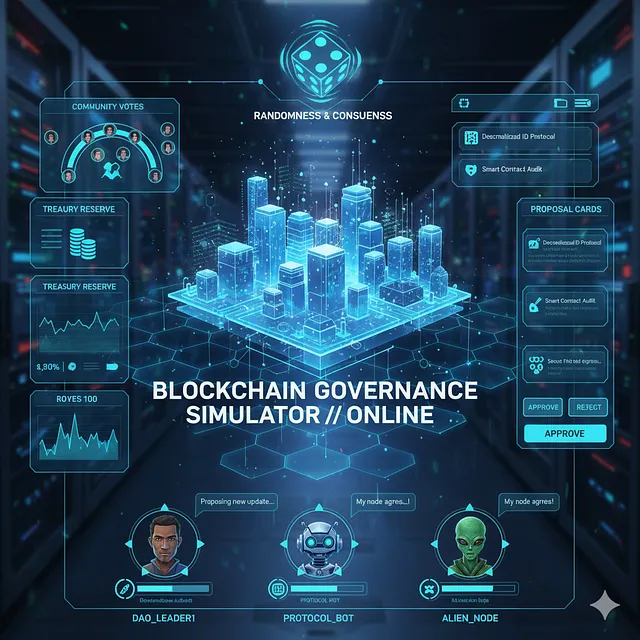
Ask most crypto users about governance, and you’ll get a shrug. Voting feels abstract, slow, and disconnected from everyday use of the protocol. Proposals are written like legal briefs. Turnout is abysmal. For a space obsessed with “community,” governance often feels more like filing taxes than shaping the future of the network. But what if governance felt like a game? Not in the trivial sense of turning votes into leaderboards or airdropping badges for showing up, those are shallow skins. I mean governance as a lived, playable system: one where mechanics, feedback loops, and incentives mirror the dynamics of a multiplayer game. The Problem: Governance as Homework Current on-chain governance designs assume participation = duty. You stake, you delegate, you read the forums, you vote. It’s a moral responsibility more than an engaging activity. The trouble is: duty doesn’t scale. People optimize for convenience, not civic virtue. That’s why most users passively delegate, and a handful of whales set direction. If participation feels like homework, it’s rational to skip class. The Shift: Governance as a Playable System Games thrive because they’re designed around feedback: you act, the system responds immediately, and your choices have visible consequences. Governance could borrow this logic. Progression mechanics: Voting earns XP toward new roles — not just cosmetic, but unlocking different governance powers. Dynamic arenas: Instead of every vote looking the same, high-stakes proposals could play out in unique formats — multi-round decisions, alliances, or even simulations. Narratives: Protocol decisions aren’t just numbers. They’re part of an evolving story — “This DAO is pivoting from stability to growth” — and players (voters) shape the arc. The idea isn’t to trivialize governance. It’s to recognize that humans engage when systems feel alive, responsive, and participatory. The Risk: When Games Corrupt Play Of course, games can also distort. If governance becomes too gamified, you risk replacing civic engagement with dopamine loops. Players might vote not because they care, but because they’re chasing XP or leaderboard status. Worse, gaming mechanics can be exploited: coordinated guilds farming governance rewards, whales buying influence disguised as “progression.” The challenge isn’t adding points and badges. It’s designing meaningful play mechanics that deepen engagement without hollowing out legitimacy. The Future: Playable Politics Imagine a future where joining a protocol feels like joining a guild in an MMO. You start small — a foot soldier voting on micro-decisions. Over time, your contributions, consistency, and alignment with community goals level you up into more influential roles. Governance ceases to be a burden and becomes a living arena where decisions are experienced, not just recorded. This doesn’t mean turning DeFi into Candy Crush. It means treating governance as design: balancing fairness, incentives, feedback, and narrative. In a world where most protocols struggle to get 5% turnout, maybe the radical path forward is not another governance framework PDF — but a game worth playing. What if Governance Felt Like a Game? was originally published in Coinmonks on Medium, where people are continuing the conversation by highlighting and responding to this story

Author: Medium
Details of the Expected Airdrop Have Been Announced – Here’s the Distribution Date

Details of the Expected Airdrop Have Been Announced – Here’s the Distribution Date

The post Details of the Expected Airdrop Have Been Announced – Here’s the Distribution Date appeared on BitcoinEthereumNews.com. Yei Finance, one of the leading protocols in the Sei ecosystem, has published the official Token Generation Event (TGE) registration page. Users and liquidity providers can register for airdrop eligibility starting at 4:00 PM on September 4, 2025. The symbol for the new token is CLO (Clovis). Clovis is a new cross-chain DeFi protocol developed by Yei. The company announced that the Clovis pre-deposit vault will reopen next week. In the statement made by Yei Finance, it was stated that the TGE process will operate in three stages: Phase 1 (Registration): This will continue until 4:00 PM on September 30, 2025. Late registrations will not be accepted for TGE claims. Phase 2 (Allocation Confirmation): The Yei team will finalize the airdrop distribution. Phase 3 (CLO Claim): Users will be able to claim CLO tokens and begin using them in the Clovis ecosystem. The Yei Finance team argued that Clovis has evolved from being merely the largest dApp on Sei to a comprehensive DeFi operating system that integrates cross-chain liquidity. *This is not investment advice. Follow our Telegram and Twitter account now for exclusive news, analytics and on-chain data! Source: https://en.bitcoinsistemi.com/details-of-the-expected-airdrop-have-been-announced-heres-the-distribution-date/

Author: BitcoinEthereumNews
PANews August 2025 columnist influence and column article popularity rankings released

PANews August 2025 columnist influence and column article popularity rankings released

PANews' TOP 5 influential columnists and TOP 10 column article popularity rankings for August 2025 (hereinafter referred to as the "Double List") were released today. We conducted a comprehensive assessment of the publication status of all columnists and the popularity of all column articles on the PANews platform in August to produce the Double List. Top 5 Most Influential Columnists We conducted a comprehensive assessment based on the frequency of publication, quality of publication, and readership to create the TOP 5 influential columnists for August. As shown in the figure above, the 5 columnists on the list are: No.1 Chain View Lianshangguan is a self-media brand focusing on blockchain data, security insights, and hot topics. During August, the columnist frequently published content, which generally received considerable attention. Click here to visit the author's homepage . No. 2 Bowen Notes The author of Bowen Notes, a self-proclaimed "non-tech guy," is highly skilled at writing in-depth reports . In August, he published two AI-related articles and one ZK-related article. Click here to visit his homepage. No.3 BlockSec BlockSec is a Web3 security firm specializing in security incident analysis and coverage of the crypto crime industry . In August, the author focused on Hong Kong regulation. Click here to visit the author's homepage . No.4 Biteye Biteye is a blockchain research organization and community focused on L1/L2, DeFi, NFT, and Web3. In August, the author published several articles exploring potential projects, which were highly read and in line with market trends. Click here to visit the author's homepage . No.5 Mankiw Blockchain Mankiw's Blockchain explores hot topics in the blockchain space from a legal perspective. In August, he published several articles on crypto law and regulation, which generally received a good amount of readership. Click here to visit his homepage . Column article popularity ranking TOP10 Based on a comprehensive evaluation of content quality and article readership , we compiled the TOP 10 column articles for August. As shown in the figure above, the 10 column articles on the list are: No.1 " Strip, Circle, and Tether have successively launched their own dedicated chains. What impact will this have on Ethereum and L2? " by ChainView Will this wave of blockchain launches by financial giants be a "watershed" for the Ethereum ecosystem? No.2 “ Is the Era of Machine Collateral Coming? Explaining How USD.AI Financializes GPUs ” by Cabin VC USD.AI is positioned as a decentralized credit agreement: emerging AI companies can obtain loans by using their GPU hardware as collateral. No.3 " Crypto Treasury: Wall Street's "Emperor's New Clothes," the Crypto Market's "Historical Reversal" " by Chain View While everyone is celebrating Wall Street’s “financial alchemy” DAT model, has anyone ever considered whether DATs are actually “reversing the trend” and reversing history? No.4 Circle and Coinbase: Compasses by Xiaozhu Web3 Circle and Coinbase have formed a symbiosis around USDC. No.5 " Zero-cost AI projects? 10 free AI projects " by Biteye No gas fee is required and the airdrop expectations are maximized. No.6 " Three Evolutions of Hong Kong's OTC Regulation: From "Coin Shops" to Comprehensive Regulation " by Blocksec In three years, Hong Kong's supervision has moved from the OTC "vacuum zone" to full-chain supervision. No.7 " The Intelligent Evolution of DeFi: The Evolutionary Path from Automation to AgentFi " by Bowen Notes This article will focus on the integrated evolution path of DeFi and AI, sorting out its development stages from automation to intelligence, and analyzing the infrastructure, scenario space and key challenges of strategy execution agents. No.8 " Crypto Upstarts and Power Game: The Trump Family's Rise to the USD1 " by FinTax Despite some controversies, USD1 still provides crypto asset investors with more optional trading media, creates a more convenient market environment, and is increasingly favored by investors. No.9 " When AI projects talk about decentralization in vain, why can FLock win real orders from the United Nations? " by Chain View What FLock has been doing in the past few months is actually "pragmatic", so in the end, while many projects can only talk about the "decentralized AI narrative", FLock has actually gained real use cases from UN customers, technical verification of Alibaba Cloud's Qwen model, user base in the Korean market, etc. Isn't this what everyone wants to see the project party "doing"? No. 10. “ This Year’s Ethereum Is Last Year’s Bitcoin Plus ” by W3C DAO Research The price soared from $1,385 to $4,788, a quarterly increase of more than 245%, driven by the dual flywheels of Ethereum technology upgrades, Ethereum ETFs, and corporate capital formation. at last Congratulations to the five columnists and ten authors of the featured articles. Thank you to all columnists! Your support makes PANews even more exciting. August marked a pivotal market turn, with attention and capital pouring into large, blue-chip cryptocurrencies like Ethereum and Solana, while Bitcoin's appeal gradually waned. According to past market trends, subsequent capital will gradually flow into small-cap altcoins, signaling the arrival of the altcoin season. If this happens, new narratives and tokens will emerge in droves, benefiting everyone. We hope you'll join us in documenting the next chapter: If you have deep insights into the market, industry, and crypto space , and are skilled at writing about hot topics, emerging projects, in-depth research, and industry observations , please don't hesitate to contact us. PANews will feature high-quality content on our homepage, pin it to the top, promote it in our app, place it on banners, and share it on social media . Outstanding authors will also be featured on our homepage . The September double list will be announced around October 5, 2025. We look forward to seeing more new faces. Scan the QR code to add the PANews column leader, open a column, and build Web3:

Author: PANews