CEX

CEXs are platforms managed by centralized organizations that facilitate the trading of cryptocurrencies, offering high liquidity and user-friendly fiat on-ramps. Leaders like Binance, OKX, and Coinbase serve as the primary gateways for institutional and retail entry. In 2026, the industry focus is on Proof of Reserves (PoR), enhanced regulatory compliance, and hybrid models that offer self-custody options. This tag provides updates on exchange security, listings, and global market trends.

4166 Articles
Created: 2026/02/02 18:52
Updated: 2026/02/02 18:52
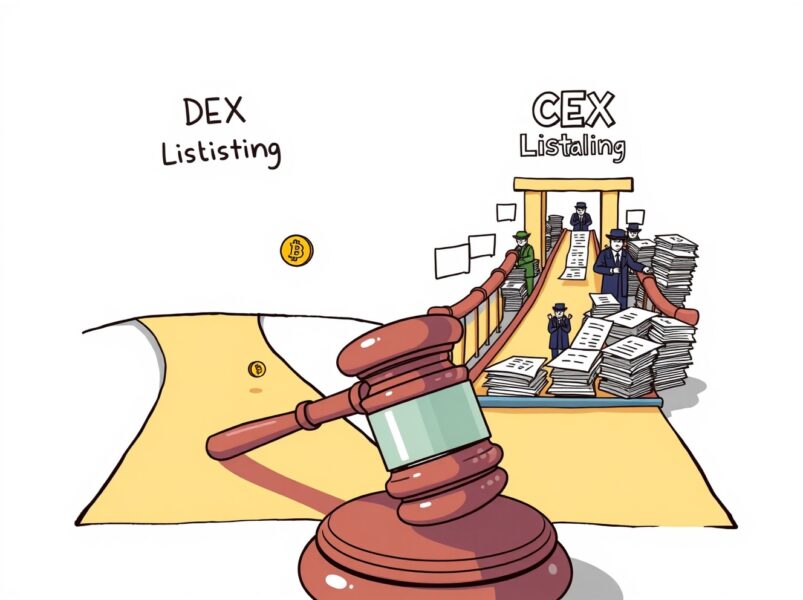
DEX CEX Listing: South Korean Court Issues Crucial Ruling on Exchange Difficulty

DEX CEX Listing: South Korean Court Issues Crucial Ruling on Exchange Difficulty

BitcoinWorld DEX CEX Listing: South Korean Court Issues Crucial Ruling on Exchange Difficulty The world of cryptocurrency is constantly evolving, bringing with it new legal precedents and clarifications. A recent landmark decision by a South Korean court has provided crucial insight into the distinct challenges involved in DEX CEX listing. This ruling formally recognizes the significant difference in difficulty between getting a token listed on a decentralized exchange (DEX) versus a centralized exchange (CEX), a distinction that could profoundly impact how projects approach their market entry and contractual agreements. Why is DEX CEX Listing So Different? Understanding the Core Divide Understanding the court’s perspective requires a closer look at the fundamental operational models of these two primary types of cryptocurrency exchanges. The South Korean court’s ruling underscores that the process for a DEX CEX listing varies dramatically, primarily due to their underlying structures and regulatory environments. On one hand, centralized exchanges (CEXs) act as gatekeepers in the crypto world. They operate with strict regulatory compliance, extensive due diligence, and often demand a lengthy, rigorous review process for any token seeking a listing. This comprehensive evaluation typically includes assessing the project’s legitimacy, its technological innovation, the credibility of its development team, market potential, and adherence to various legal frameworks. Conversely, decentralized exchanges (DEXs) function on a permissionless model. This means that virtually anyone can initiate trading for a token by simply creating a smart contract and establishing a liquidity pool. This design inherently removes the need for a central authority’s approval, making the barrier to entry significantly lower and the process far more accessible for new tokens. The Seoul Court’s Definitive Stance on DEX CEX Listing Requirements The specific case that brought this crucial distinction to light involved a dispute over a performance bonus tied to a cryptocurrency listing contract. A plaintiff argued that listing a carbon credit-linked token on a DEX fulfilled a contractual requirement for an “overseas exchange” listing. They sought a substantial payment of six million tokens, firmly believing their actions had met the agreement’s terms. However, the 33rd Civil Affairs Division of the Seoul Central District Court, on September 4th, rendered a definitive verdict that challenged this interpretation. The court decisively rejected the plaintiff’s claim. It explicitly emphasized that the ease of creating a smart contract and establishing a liquidity pool on a DEX cannot be equated with the stringent, multi-faceted review process required by a CEX. This landmark ruling sets a clear precedent for how “exchange listing” might be interpreted in future contractual agreements, especially concerning DEX CEX listing conditions and their associated rewards. What Are the Far-Reaching Implications for Crypto Projects and Contracts? This South Korean court ruling carries significant weight for cryptocurrency projects, developers, and investors, not just locally but across the global blockchain ecosystem. It underscores the critical importance of clear, precise language in any contracts related to token listings and performance metrics. Key takeaways and actionable insights for the industry include: Enhanced Contractual Clarity: Future agreements should explicitly define whether a “listing” refers specifically to a CEX, a DEX, or encompasses both. Ambiguity, as seen in this case, can lead to costly and time-consuming legal disputes. Strategic Listing Planning: Projects aiming for broader market adoption and perceived legitimacy might still prioritize CEX listings, despite their higher barrier to entry. However, DEX listings remain an invaluable initial step for establishing early liquidity and community engagement. Refined Investor Perception: Investors and institutional players are likely to view CEX listings as a stronger validation of a project’s credibility, stability, and long-term viability, given the rigorous vetting process involved. This could influence investment decisions and project valuations. Regulatory Scrutiny: The ruling highlights the increasing legal and regulatory scrutiny on the crypto space, pushing for more defined terms and responsibilities for all participants. Ultimately, the ruling provides a robust legal framework that distinctly separates the two types of listings, impacting how performance bonuses, equity releases, and other contractual obligations tied to DEX CEX listing are viewed and enforced. Navigating the Future of DEX CEX Listing: A New Standard? The Seoul Central District Court’s decision is more than just a verdict in a single case; it represents a foundational clarification for the entire crypto ecosystem. By formally acknowledging the vast disparity in difficulty for DEX CEX listing, the court has provided much-needed legal precedent that the industry must heed. This ruling encourages greater precision and accountability in legal and business dealings within the blockchain space. It serves as a powerful reminder that while decentralization offers incredible accessibility and innovation, the path to mainstream acceptance often involves navigating the more stringent requirements of traditional financial gateways. Cryptocurrency projects and stakeholders must now carefully consider these distinctions when drafting contracts, setting development milestones, and strategizing their market presence. This decision sets a new standard for understanding the value and effort associated with different types of exchange listings. Frequently Asked Questions (FAQs) Q1: What is the main difference between a DEX and a CEX, according to the court’s ruling? A1: The court ruled that CEXs require a rigorous review process for token listings, involving extensive due diligence and compliance. In contrast, DEXs allow anyone to easily initiate trading by creating a smart contract and liquidity pool, making the listing process significantly simpler and permissionless. Q2: Why did the South Korean court rule that DEX listings are easier? A2: The court’s reasoning was based on the operational models. CEXs have central authorities that vet projects, while DEXs are decentralized, allowing anyone to list tokens without approval, simply by setting up the necessary smart contracts and liquidity. Q3: How does this ruling impact cryptocurrency project contracts? A3: This ruling emphasizes the need for extreme clarity in contracts. Agreements involving token listings should explicitly state whether a “listing” refers to a CEX, a DEX, or both, to avoid future legal disputes over performance bonuses or other obligations. Q4: Does a DEX listing provide the same benefits as a CEX listing? A4: While DEX listings offer accessibility and early liquidity, CEX listings often provide broader market reach, increased investor trust due to rigorous vetting, and perceived legitimacy. The court’s ruling suggests they are not equivalent in terms of the effort and validation they represent. Q5: Is it always better to list on a CEX than a DEX? A5: Not necessarily. The “better” option depends on a project’s goals. DEXs are excellent for early-stage projects seeking immediate liquidity and community engagement. CEXs are often preferred for projects aiming for mainstream adoption, institutional investment, and higher visibility, despite the more challenging DEX CEX listing process. Was this article helpful in understanding the crucial distinctions in cryptocurrency exchange listings? Share your thoughts and this article with your network on social media to keep the conversation going and inform others about these vital legal developments in the crypto world! To learn more about the latest explore our article on key developments shaping cryptocurrency exchange price action. This post DEX CEX Listing: South Korean Court Issues Crucial Ruling on Exchange Difficulty first appeared on BitcoinWorld.

Author: Coinstats
Stablecoin Titan Tether Seeks $500 Billion Valuation on $20 Billion Raise: Report

Stablecoin Titan Tether Seeks $500 Billion Valuation on $20 Billion Raise: Report

Tether would potentially join the ranks of OpenAI and SpaceX, which received similar valuations.

Author: Coinstats
Tether seeking up to $20B in new funding round at a valuation of $500B

Tether seeking up to $20B in new funding round at a valuation of $500B

The post Tether seeking up to $20B in new funding round at a valuation of $500B appeared on BitcoinEthereumNews.com. Tether is pursuing talks with investors to raise between $15 billion and $20 billion for approximately 3% of its equity through a private placement, Bloomberg News reported on Sept. 23. The deal could position the crypto firm among the world’s most valuable private companies, with a valuation of around $500 billion. This would place it alongside OpenAI and Elon Musk’s SpaceX in terms of private company valuations. By comparison, publicly traded rival Circle was worth about $30 billion as of Sept. 23. One of the people familiar with the matter cautioned that the figures represent top-end targets, with eventual numbers potentially significantly lower. According to sources not authorized to speak publicly, talks remain in the early stages, and details are subject to change. Cantor Fitzgerald is reportedly serving as the lead adviser on the potential deal. Strategic expansion plans Tether Strategic Adviser Bo Hines denied fundraising plans during a Seoul conference interview on Sept. 23, stating that the company has no plans to raise money. The fundraising discussions coincide with Tether’s efforts to re-enter the US market under President Donald Trump’s pro-crypto policies. The company recently unveiled plans for a US-regulated stablecoin and appointed Hines, a former White House crypto official, to lead American operations. Tether has avoided the US market following regulatory clashes, including a 2021 settlement where the company paid $41 million to resolve allegations of misrepresenting its reserves. The stablecoin issuer reported $4.9 billion in profit during the second quarter, with CEO Paolo Ardoino claiming a 99% profit margin. However, Tether’s financial disclosures do not meet the same reporting standards required of publicly traded companies. Prospective investors have accessed a data room over recent weeks to evaluate participation in the fundraising, with sources expecting the deal to be completed by year-end. The transaction would involve new equity rather…

Author: BitcoinEthereumNews
Tether seeks up to $20 billion in funding at a $500 billion valuation

Tether seeks up to $20 billion in funding at a $500 billion valuation

PANews reported on September 24 that Tether Holdings, the issuer of the world's largest stablecoin, is in talks with investors to raise up to $20 billion, according to two people familiar with the matter. This deal could make the cryptocurrency company one of the world's most valuable private companies. Tether hopes to raise $15 billion to $20 billion through a private placement, representing approximately 3% of the company's shares. Negotiations are in the early stages. Depending on the proportion of shares offered, the deal could value Tether at approximately $500 billion, putting it on par with OpenAI and SpaceX. Its most direct competitor, Circle, had a market capitalization of approximately $30 billion on Tuesday afternoon. Tether is at the forefront of the stablecoin market. Its USDT token, pegged to the US dollar, has a market capitalization of $172 billion, making it the largest stablecoin, while Circle's second-largest stablecoin, USDC, has a market capitalization of approximately $74 billion.

Author: PANews
Tether Seeks $500 Billion Valuation, Aims to Join Top Private Firms

Tether Seeks $500 Billion Valuation, Aims to Join Top Private Firms

TLDR Tether is in discussions to raise between $15 billion and $20 billion. The company aims for a valuation of approximately $500 billion. If successful, Tether will rank among the world’s most valuable private firms. Tether intends to offer new equity instead of selling existing stakes. Cantor Fitzgerald is advising on the potential deal with [...] The post Tether Seeks $500 Billion Valuation, Aims to Join Top Private Firms appeared first on Blockonomi.

Author: Blockonomi
Tether Seeks $500 Billion Valuation, Seeks To Raise $20B

Tether Seeks $500 Billion Valuation, Seeks To Raise $20B

The post Tether Seeks $500 Billion Valuation, Seeks To Raise $20B appeared on BitcoinEthereumNews.com. Tether Holdings SA, the issuer of the world’s largest stablecoin, is reportedly in talks with investors to raise as much as $20 billion in new capital, a deal that could propel the firm into the ranks of the world’s most valuable private companies. According to people familiar with the discussions, Tether is seeking between $15 billion and $20 billion in exchange for roughly a 3% stake through a private placement.  That would imply a valuation near $500 billion, putting the company in the same league as SpaceX and OpenAI.  Talks remain in the early stages and details may shift before any deal closes, according to Bloomberg reporting. Cantor Fitzgerald is said to be advising on the transaction, which would involve new equity rather than existing shareholders selling their stakes.  Tether and Bitcoin’s relationship The fundraising effort comes as Tether has steadily expanded beyond stablecoin issuance, building itself into a broader reserve-backed financial powerhouse. Earlier this year, CEO Paolo Ardoino revealed that Tether now holds over 100,000 BTC — worth more than $11 billion — alongside more than 50 tons of gold as part of its reserves. Those holdings make Tether one of the largest corporate owners of Bitcoin globally, a fact that further ties the fate of its business to the world’s leading digital asset. Earlier this year, the company also began minting its stablecoin on the Bitcoin Lightning Network.  Tether announced it will launch its stablecoin on RGB, a next-generation protocol that enables native stablecoin issuance directly on Bitcoin. This move made Tether more Bitcoin-native, underscoring its bet on Bitcoin as the base for everyday global money. The company has reaped massive profits by investing its reserves into U.S. Treasuries and other cash-like instruments, booking $4.9 billion in profit during the second quarter alone.  Ardoino has claimed Tether operates…

Author: BitcoinEthereumNews
Tether is trying to raise up to $20 billion by selling a 3% stake, aiming for a $500 billion valuation

Tether is trying to raise up to $20 billion by selling a 3% stake, aiming for a $500 billion valuation

Tether is looking to raise between $15 billion and $20 billion in private funding, aiming to lock in a valuation near $500 billion, according to Bloomberg. The El Salvador-based crypto giant is offering a 3% stake in the company, though discussions are still in early stages and final numbers could end up lower. If successful, […]

Author: Cryptopolitan
Tether seeks $500 billion valuation, would rank among world’s most valuable private firms: Bloomberg

Tether seeks $500 billion valuation, would rank among world’s most valuable private firms: Bloomberg

Tether, the leading stablecoin issuer, could become about as valuable as Sam Altman's OpenAI and Elon Musk's SpaceX.

Author: Coinstats
XRP to Peak Above $10 This Cycle, While Little Pepe (LILPEPE) is Set to Touch $1 from Under $0.0025

XRP to Peak Above $10 This Cycle, While Little Pepe (LILPEPE) is Set to Touch $1 from Under $0.0025

The post XRP to Peak Above $10 This Cycle, While Little Pepe (LILPEPE) is Set to Touch $1 from Under $0.0025 appeared on BitcoinEthereumNews.com. SPONSORED POST* The cryptocurrency market is preparing for a bull cycle, analysts believe may be one of the biggest. Institutional adoption is on the rise, and meme coin culture isn’t slowing down either. XRP, one of the largest assets, is expected to peak above $10 in 2026. However, Little Pepe (LILPEPE) a new meme coin under $0.0025, could offer a better opportunity with predictions suggesting a $1 target.  Ripple (XRP) Price Prediction: $10 Target in Sight for 2026 XRP is trading around $3.02 today. It’s consolidating near key support after weeks of steady gains. The token is facing short-term resistance around $3.10–$3.18.  However, analysts argue the technical setup points to a larger breakout if macro and regulatory winds turn favorable. XRP/USD 1D Price Chart|Source: TradingView  The path toward $10 in 2026 rests on three main catalysts. First, regulatory clarity is approaching, with Ripple-related ETF filings under review by U.S. regulators. Approval would likely accelerate institutional adoption and drive inflows. The wrap-up on the Ripple-SEC case had already lifted a heavy legal weight off Ripple’s shoulders.  Second, institutional accumulation continues, with firms like Galaxy Digital reportedly adding XRP exposure. This signals growing confidence in its utility.  However, challenges remain, particularly the need to clear the $3.20 resistance and maintain volume support. But if inflows mirror Ethereum’s ETF-driven momentum, XRP could scale higher. It could climb into the $5–$7 range in 2025 before targeting $10+ in 2026.  For investors, XRP offers a blend of institutional credibility and speculative upside, though the spotlight may increasingly shift to faster-moving plays like Little Pepe. Little Pepe (LILPEPE): Meme-Powered Layer-2 Revolution Why XRP aims for $10, Little (LILPEPE) is eyeing a $1 target from under $0.0025. What’s driving this projection is Little Pepe’s vision to be the first dedicated Layer-2 blockchain explicitly designed for memes. This…

Author: BitcoinEthereumNews
Ripple (XRP) Price Prediction 2026: XRP to Peak Above $10 This Cycle, While Little Pepe (LILPEPE) is Set to Touch $1 from Under $0.0025

Ripple (XRP) Price Prediction 2026: XRP to Peak Above $10 This Cycle, While Little Pepe (LILPEPE) is Set to Touch $1 from Under $0.0025

The cryptocurrency market is preparing for a bull cycle, analysts believe may be one of the biggest.

Author: The Cryptonomist