Dapp

Dapps are digital applications that run on a P2P network of computers rather than a single server, typically utilizing smart contracts to ensure transparency and uptime. In 2026, Dapps have achieved mass-market appeal through Account Abstraction, allowing for a "Web2-like" user experience with the security of Web3. This tag covers the entire ecosystem of decentralized software—from social media and productivity tools to governance platforms and identity management.

4982 Articles
Created: 2026/02/02 18:52
Updated: 2026/02/02 18:52
Trump’s American Bitcoin Hits Nasdaq with $273M BTC – Here’s Our 1000x Crypto Recommendations

Trump’s American Bitcoin Hits Nasdaq with $273M BTC – Here’s Our 1000x Crypto Recommendations

Corporate money is flowing into the crypto ecosystem at an astonishing rate as the Trump-backed mining company American Bitcoin Corporation (ABTC) makes a splash with a successful debut on the Nasdaq.

Author: Brave Newcoin
Pump.fun flips Hyperliquid in 24-hour revenue

Pump.fun flips Hyperliquid in 24-hour revenue

Pump.fun

Author: Crypto.news
Particle Network’s modular L1 to launch on Avalanche

Particle Network’s modular L1 to launch on Avalanche

Particle Network will launch its modular layer 1, Particle Chain, on Avalanche, enabling seamless cross-chain transactions with sub-second finality. Particle Network (PARTI) will launch Particle Chain, its modular Layer-1 blockchain designed to coordinate and settle transactions across multiple blockchains, on…

Author: Crypto.news
Bitcoin Hyper Could Be the Next 1000x Coin: Presale Accelerates to $14M

Bitcoin Hyper Could Be the Next 1000x Coin: Presale Accelerates to $14M

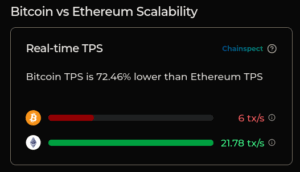
The post Bitcoin Hyper Could Be the Next 1000x Coin: Presale Accelerates to $14M appeared on BitcoinEthereumNews.com. $BTC is the world’s largest cryptocurrency, commanding a head-turning $2.2T market cap. Compared to last year, its price has nearly doubled to $110K, underscoring the strength of renewed institutional and retail demand. Changelly now predicts $BTC to jump to $125K by the end of September, offering investors a potential ROI surpassing 14%. But when $BTC grows, its long-standing network issues often become more apparent. This is where Bitcoin Hyper ($HYPER) shines. Launching a super-fast Layer-2 (L2) solution this quarter, it aims to solve the Bitcoin network’s biggest challenges: cost, speed, and DeFi accessibility. Despite not being live yet, investors already have high expectations for the L2, as evidenced by its native token – $HYPER – nearly attracting $14M on presale. It might even be the next 1000x crypto. Bitcoin Transaction Speeds 18x Slower Than Ethereum Unlike Ethereum, Bitcoin wasn’t built for smart contracts, dApps, or DeFi ecosystems. Instead, it was initially designed as a decentralized system for sending funds. The biggest perk? Not relying on banks or intermediaries. As a consequence, the network still prioritizes security and decentralization over speed and programmability to this day. It’s highly resilient in the blockchain space, thanks to its Proof-of-Work (PoW) mechanism secured by a vast network of miners. Together, they make it virtually impossible for the network to be compromised or manipulated. But the network’s super slow, currently only processing 6 transactions per second (tps), around 80% lower than Ethereum’s 21.78 tps. Its gas fees are also rather pricey. Right now, the average Bitcoin transaction costs $1.703, nearly triple the amount of Ethereum’s $0.588. Ethereum also dominates global DeFi activity, boasting a hefty $91.55B in Total Value Locked (TVL). In comparison, Bitcoin accounts for just $7.899B, a massive $83.401B less. Bitcoin Hyper aims to change all of this. Bitcoin Hyper to Uplift Bitcoin…

Author: BitcoinEthereumNews
Analyst Foresees BTC Reaching $125K This Month – HYPER Presale Nears $14M to Upgrade Bitcoin

Analyst Foresees BTC Reaching $125K This Month – HYPER Presale Nears $14M to Upgrade Bitcoin

$BTC is the world’s largest cryptocurrency, commanding a head-turning $2.2T market cap.

Author: Brave Newcoin
1inch’s Swap API Opens Access to Tokenized Real-World Assets

1inch’s Swap API Opens Access to Tokenized Real-World Assets

1inch upgrades its Swap API to support tokenized RWAs via its dApp, Wallet and partner integrations, powered by Ondo liquidity. Access varies by jurisdiction.

Author: Blockchainreporter
AI Agents to be top stablecoin users: Galaxy’s Novogratz

AI Agents to be top stablecoin users: Galaxy’s Novogratz

The post AI Agents to be top stablecoin users: Galaxy’s Novogratz appeared on BitcoinEthereumNews.com. Galaxy Digital CEO Mike Novogratz said that AI agents will soon become the top users of stablecoins. During an interview with Bloomberg published on Wednesday, Novogratz said that “in the not-so-distant future, the biggest user of stablecoins is going to be AI.” He said he expects users will be able to ask an AI to buy their groceries, and have it independently engage in the necessary transactions: ”Your grocery agent, who knows what you like to eat, knows that you’re on a diet or not on a diet, is going to figure out what groceries to buy from where.” AI agents are autonomous software programs that can perceive their environment, make decisions, and take actions to achieve goals without constant human intervention. The primary feature that distinguishes these systems from most current AI systems is their higher degree of independence. Novogratz highlighted that such an agent would not “send a wire instruction or a Venmo” and instead would rely on stablecoin transactions. He said that he is unaware of whether such systems will be in place in one or five years, but he expects us to “see an explosion of stablecoin transactions.” Michael Novogratz. Source: Wikimedia Related: $1M Bitcoin in 2026 would signal trouble: Galaxy’s Mike Novogratz Stablecoins are on the rise Novogratz’s remarks follow reports suggesting that stablecoin adoption in payments is growing significantly. Early June reports indicated that at least four tech companies, including Apple, X, Airbnb, and Google, were exploring stablecoins as a means to lower fees and improve cross-border payments. Last month, global grocery giant Spar announced support for stablecoin and cryptocurrency payments in its stores across Switzerland. In mid-June, e-commerce giant Shopify rolled out early access to stablecoin payments in Circle’s USDC in collaboration with major US exchange Coinbase. At the end of July, payment company…

Author: BitcoinEthereumNews
Tangem Integrates WalletConnect v5.27 for Safer NFT and DeFi Experience

Tangem Integrates WalletConnect v5.27 for Safer NFT and DeFi Experience

Tangem, an advanced hardware wallet solution provider, has collaborated with WalletConnect, a next-gen connectivity layer. The main purpose of this partnership is to provide an intuitive and secure Web3 experience. As Tangem mentioned in its official announcement, the development attempts to streamline Wallet-to-dApp interactions, apart from guaranteeing user safety while exploring NFTs, decentralized finance (DeFi), and blockchain applications. Hence, the joint effort endeavors to build trust, accelerate Web3 adoption, and improve security. WalletConnect @Tangem Human-readable. Safe. Smart.The way wallets should be. https://t.co/ufcpxRIe6k— WalletConnect (@WalletConnect) September 3, 2025 Tangem and WalletConnect Partner to Bring Safer and Intuitive Wallet-to-dApp Interactions In partnership with WalletConnect, Tangem focuses on offering a simplified interaction between wallets and dApps in a secure environment. In addition to this, the exclusive v5.27 update of the Tangem app incorporates a redesigned WalletConnect interface, offering a relatively secure and seamless connection to top Apps through deep links or QR codes. This ensures the secure storage of private keys on Tangem-based hardware wallets. One of the groundbreaking features of the respective upgrade is transfer simulation, as it permits consumers to witness a transaction’s effects before even signing it. With this remarkable feature, the consumers can validate token movements, balance changes, and smart contract calls. With this, they can substantially minimize the risk of malicious or hidden operations. Apart from that, scam detection led by Blockaid verifies dApps, cautioning clients about likely fraudulent or harmful platforms ahead of establishment of connection. By merging the safe hardware wallet of Tangem with the open protocol of WalletConnect, the partnership unlocks a broad range of dApps, including PancakeSwap, Raydium, Uniswap, and OpenSea, among others. Additionally, the integration offers a human-readable transfer preview and robust verification methods like Verified Transactions (VTX). Simultaneously, the development also introduces Know Your dApps (KYDA) security layer for cross-checking dApp addresses as well as domains against the risk analysis and blacklist systems of Blockaid. How Does This Partnership Benefit Developers? When it comes to developers, the partnership between Tangem and WalletConnect provides huge benefits. Thus, the developers can leverage the improved interface of WalletConnect within Tangem in a relatively reliable setting for the development and testing of dApps for decreased risk of fraudulent interactions and secure user flows. As a result of this, the developers can be completely focused on building cutting-edge Web3 solutions with consumer-friendly and secure wallet infrastructure to drive wider adoption.

Author: Coinstats
Enso Seoul Meetup: Unlocking Exciting Blockchain Opportunities on Sept. 8

Enso Seoul Meetup: Unlocking Exciting Blockchain Opportunities on Sept. 8

BitcoinWorld Enso Seoul Meetup: Unlocking Exciting Blockchain Opportunities on Sept. 8 Are you ready to dive into the future of blockchain technology? The highly anticipated Enso Seoul meetup is set to ignite discussions and foster connections within South Korea’s vibrant tech community. This groundbreaking event promises to introduce Enso’s innovative approach to unifying the often-fragmented blockchain landscape, offering a unique opportunity for enthusiasts and professionals alike. What Makes This Enso Seoul Meetup So Special? Enso, recognized as an integrated execution network, is making its grand debut in Seoul. The team announced it will host its first Enso Seoul meetup on September 8th at the prestigious Hashed Lounge. This isn’t just any event; it’s a collaborative effort with two other prominent names in the decentralized space: EtherFi and Turtle Club. Such partnerships highlight the collective drive towards a more interconnected and efficient blockchain ecosystem. The primary goal of this gathering is to officially introduce Enso’s cutting-edge technology and its ambitious vision to the South Korean community. This market is known for its rapid adoption of new technologies and its passionate crypto audience, making it an ideal launchpad for Enso’s initiatives. Attendees will gain firsthand insights into how Enso aims to bridge the gaps between various blockchain networks, fostering seamless interactions and unlocking new possibilities. Connecting Fragmented Ecosystems: Enso’s Vision The blockchain world, while innovative, often suffers from fragmentation. Different chains operate in silos, making cross-chain communication and asset transfers complex. Enso’s core mission is to address this challenge head-on. By creating an integrated execution network, Enso seeks to simplify these interactions, making the entire ecosystem more accessible and efficient for users and developers alike. Think of it as building a universal translator for blockchains. This vision is particularly crucial as the industry matures and demands greater interoperability. The Enso Seoul meetup will delve into the technical aspects and strategic roadmap for achieving this ambitious goal. Expect to learn about: Enso’s unique technological architecture The benefits of an integrated execution network How collaboration with partners like EtherFi and Turtle Club enhances this vision The potential impact on decentralized finance (DeFi) and beyond How Can You Participate in the Enso Seoul Meetup? While attendance for the Enso Seoul meetup is primarily restricted to pre-approved participants, there’s still a fantastic opportunity to secure your spot. Pre-approved attendees will receive a token reward, adding an extra incentive to be part of this pioneering event. For those not initially pre-approved, Enso has opened an exciting pathway to entry. You can gain consideration for entry by submitting outstanding Enso-related content through the Luma event page. This could be anything from insightful analyses to creative projects that showcase your understanding and enthusiasm for Enso’s mission. The deadline for these submissions is 5:00 a.m. UTC on September 5th, so make sure to get your entries in promptly! This method of entry not only ensures a highly engaged audience but also encourages community participation and content creation, aligning with the decentralized spirit of the blockchain industry. The Significance of Seoul for Blockchain Innovation South Korea has long been a hotbed for technological innovation and blockchain adoption. Its tech-savvy population and proactive regulatory environment make it a crucial market for projects like Enso. Hosting the first Enso Seoul meetup here signifies a strategic move to tap into this dynamic community and foster strong local partnerships. The event at Hashed Lounge, a well-known hub for blockchain activities in Seoul, further solidifies its importance. It’s an excellent platform for Enso to not only present its vision but also to listen to feedback, engage with local developers, and explore potential collaborations that could accelerate its development and adoption in the Asian market. A Glimpse into the Future of Interoperability The integrated execution network that Enso is building holds immense promise for the future of decentralized applications (dApps) and the broader Web3 ecosystem. By reducing friction and increasing efficiency across different blockchains, Enso aims to pave the way for more complex and user-friendly decentralized services. This Enso Seoul meetup is more than just an introduction; it’s a foundational step in building a truly interconnected blockchain world. It represents an actionable insight into how leading projects are tackling some of the industry’s most pressing challenges, offering a glimpse into a future where blockchain fragmentation is a thing of the past. Don’t miss this incredible chance to be at the forefront of blockchain innovation. Whether you’re a developer, investor, or simply curious about the future of decentralized technology, the Enso Seoul meetup is an event that promises valuable insights and networking opportunities. Prepare to witness the unfolding of a more integrated and efficient blockchain future! FAQs About the Enso Seoul Meetup Q1: What is Enso, and what is its main goal? A1: Enso is an integrated execution network aiming to connect and unify the fragmented blockchain ecosystem, making cross-chain interactions seamless and efficient. Q2: Who are Enso’s collaborators for the Seoul meetup? A2: Enso is collaborating with EtherFi and Turtle Club to host its first Seoul meetup. Q3: How can I attend the Enso Seoul meetup if I wasn’t pre-approved? A3: You can submit outstanding Enso-related content through the Luma event page for a chance to be granted entry. The deadline for submissions is 5:00 a.m. UTC on September 5th. Q4: What will be discussed at the meetup? A4: The event will introduce Enso’s technology and vision for connecting the fragmented blockchain ecosystem to the South Korean community, including its architecture and strategic roadmap. Q5: Why is the Enso Seoul meetup significant for the blockchain industry? A5: It marks a crucial step in addressing blockchain fragmentation, fostering interoperability, and engaging with one of the most dynamic tech communities globally, paving the way for a more integrated Web3 future. Did you find this article insightful? Share it with your network and help spread the word about Enso’s exciting initiatives in the blockchain space! Your shares help us reach more enthusiasts and professionals eager to learn about the future of decentralized technology. To learn more about the latest blockchain innovation trends, explore our article on key developments shaping decentralized finance institutional adoption. This post Enso Seoul Meetup: Unlocking Exciting Blockchain Opportunities on Sept. 8 first appeared on BitcoinWorld and is written by Editorial Team

Author: Coinstats
Ark Invest: The Birth of a DeFi Super App

Ark Invest: The Birth of a DeFi Super App

By Lorenzo Valente As the crypto market matures, investors are looking for clues from past tech booms to predict the next big trend or inflection point. Historically, digital assets have been difficult to compare to previous technology cycles, making it difficult for users, developers, and investors to predict their long-term trajectory. This dynamic is changing. According to our research, the “application layer” in the crypto space is evolving, much like the unbundling and rebundling cycles experienced by SaaS (Software as a Service) and FinTech platforms. In this article, I’ll describe how the unbundling and rebundling cycle seen in SaaS and Fintech plays out in DeFi (decentralized finance) and crypto applications. The pattern evolves as follows: The concept of "Composability" is key to understanding the unbundling and rebundling cycle. This is an analytical term used in the fintech and crypto communities to refer to the ability of financial or decentralized applications and services—particularly at the application layer—to seamlessly interact, integrate, and build upon each other like Lego blocks. With this concept at the core, we describe the shift in product structure in the following two subsections. From Verticalization to Modularization: The Great Unbundling In 2010, Spark Capital’s Andrew Parker published a blog post outlining how dozens of startups were capitalizing on the unbundling opportunity presented by Craigslist, the then-horizontal internet marketplace offering everything from apartments and gig work to merchandise sales, as shown in the image below. Source: Parker 2010. For illustrative purposes only and should not be considered investment advice or a recommendation to buy, sell, or hold any specific security. Parker concludes that many successful companies—Airbnb, Uber, GitHub, Lyft—started by focusing on and verticalizing a small part of Craigslist's broad functionality and dramatically improving it. This trend ushered in the first major phase of "marketplace unbundling," during which Craigslist's fully bundled, multi-purpose marketplace gave way to single-purpose apps. The newcomers didn't just improve Craigslist's user experience (UX)—they redefined it. In other words, unbundling broke a broad-based platform into narrowly defined, autonomous verticals, disrupting Craigslist by serving users in unique ways. What made that wave of unbundling possible? Fundamental shifts in technology infrastructure, including advances in APIs (application programming interfaces), cloud computing, mobile user experiences, and embedded payments, lowered the barrier to entry for building focused applications with world-class user experiences. The same unbundling is also evolving in the banking industry. For decades, banks have offered a bundled set of financial services—everything from savings and loans to insurance—under a single brand and app. However, over the past decade, fintech startups have been precisely dismantling this bundle, each focusing on a specific vertical. Traditional banking bundles include: Payments and Remittances Checking and savings accounts Interest-bearing products Budgeting and financial planning Loans and Credit Investment and wealth management Insurance Credit and debit cards Over the past decade, the banking bundle has systematically unbundled into a series of venture-backed fintech companies, many of which are now unicorns, decacorns, or near-centacorns: Payments and remittances: PayPal, Venmo, Revolut, Stripe Bank accounts: Chime, N26, Monzo, SoFi Savings and Earnings: Marcus, Ally Bank Personal finance and budgeting: Mint, Truebill, Plum Loans and credit: Klarna, Upstart, Cash App, Affirm Investing and Wealth Management: Robinhood, eToro, Coinbase Insurance: Lemonade, Root, Hippo Card and expense management: Brex, Ramp, Marqeta Each company focuses on a service it can hone and deliver better than the incumbent, combining its skill set with new technology levers and distribution models to offer growth-oriented niche financial services in a modular manner. In both SaaS and FinTech, unbundling is not only disrupting incumbents but also creating entirely new categories, ultimately expanding the total addressable market (TAM). From modularity back to bundling: The Great Rebundling Airbnb recently launched its new Services & Experiences app and redesigned it to allow users to not only book accommodations but also explore and purchase add-on services such as museum visits, food tours, dining experiences, gallery walks, fitness classes, and beauty treatments. Airbnb, once a peer-to-peer accommodations marketplace, is evolving into a vacation superapp—rebundling travel, lifestyle, and local services into a single, cohesive platform. Furthermore, over the past two years, the company has expanded its product offerings beyond home rentals and is now integrating payments, travel insurance, local guides, concierge-style tools, and curated experiences into its core booking service. Robinhood is undergoing a similar transformation. The company, which disrupted the brokerage industry with commission-free stock trading, is now aggressively expanding into a full-stack financial platform and is re-bundling many of the verticals previously unbundled by fintech startups. Over the past two years, Robinhood has: Launch of payment and cash management features (Robinhood Cash Card) Increase cryptocurrency trading Launch of retirement accounts Launch of margin investing and credit cards Acquired Pluto, an AI-powered research and wealth advisory platform The moves suggest that Robinhood, like Airbnb, is bundling together previously fragmented services to build a comprehensive financial super app. By controlling more of the financial stack—savings, investing, payments, lending, and advice—Robinhood is reinventing itself from a brokerage to a full-service consumer finance platform. Our research shows that this unbundling and rebundling dynamic is impacting the crypto industry. In the remainder of this article, we provide two case studies: Uniswap and Aave. DeFi’s Unbundling and Rebundling Cycle: Two Case Studies Case Study 1: Uniswap — From Monolithic AMM to Liquidity Lego and Back to a Trading Super App In 2018, Uniswap launched on Ethereum as a simple yet revolutionary automated market maker (AMM). In its early stages, Uniswap was a vertically integrated application: a small smart contract codebase with an official frontend hosted by its team. The core AMM functionality—swapping ERC-20 tokens in a constant product pool—existed within a single on-chain protocol. Users primarily accessed it through Uniswap's own web interface. This design proved highly successful, with Uniswap's cumulative on-chain trading volume exploding to over $1.5 trillion by mid-2023. With its tightly controlled technology stack, Uniswap provided a smooth user experience for token swaps, which guided the development of DeFi in its early days. At the time, Uniswap v1/v2 implemented all trading logic on-chain, requiring no external price oracles or off-chain order books. The protocol internally determined prices within a closed system, using its liquidity pool reserves (the x*y=k formula). The Uniswap team developed the primary user interface (app.uniswap.org) to interact directly with the Uniswap contracts. Early on, most users accessed Uniswap through this dedicated front-end, similar to a proprietary exchange portal. Beyond Ethereum itself, Uniswap does not rely on any other infrastructure. Liquidity providers and traders interact directly with Uniswap contracts, with no built-in external data feeds or plugin hooks. The system was simple but isolated. As DeFi expanded, Uniswap evolved into a composable liquidity "Lego" rather than a standalone application. The protocol's open, permissionless nature meant other projects could integrate Uniswap's pools and add layers. Uniswap Labs gradually relinquished control over parts of the stack, allowing external infrastructure and community-built features to play a greater role: Decentralized Exchange (DEX) Aggregators and Wallet Integrations: The majority of Uniswap's trading volume began flowing through external aggregators like the 0x API and 1inch, rather than through Uniswap's own interface. By the end of 2022, an estimated 85% of Uniswap's swap volume was routed through aggregators like 1inch as users sought the best prices across multiple exchanges. Wallets like MetaMask also integrated Uniswap liquidity into their swap functionality, allowing users to trade on Uniswap from their wallet applications. This external routing reduced reliance on Uniswap's native frontend and made AMMs more like a plug-and-play module in the DeFi stack. Oracles and Data Indexers: While Uniswap's contracts did not and still do not require price oracles to trade, the broader ecosystem built around Uniswap does. Other protocols use Uniswap's pool prices as on-chain oracles, and the Uniswap interface itself relies on external indexing services. For example, Uniswap's frontend uses subgraphs from The Graph to query pool data off-chain for a smoother user interface (UI) experience. Rather than building its own indexing nodes, Uniswap leverages community-driven data infrastructure—a modular approach that offloads the heavy lifting of data queries to specialized indexers. Multi-chain Deployment: During its modularization phase, Uniswap expanded beyond Ethereum to numerous blockchains and Rollups, including Polygon, Arbitrum, BSC, and Optimism. Uniswap's governance mandated the deployment of its core protocol on these networks, effectively treating each blockchain as a base-layer plugin for Uniswap's liquidity. This multi-chain strategy emphasizes Uniswap's composability: the protocol can exist on any Ethereum Virtual Machine (EVM)-compatible chain, rather than tying its fate to a single, vertically integrated environment. Recently, Uniswap has been moving back towards vertical integration, seemingly with the goal of capturing more of the user journey and optimizing the stack for its use cases. Key reintegration developments include: Native Mobile Wallet: In 2023, Uniswap released the Uniswap Wallet—a self-hosted mobile application—followed by a browser extension, allowing users to store tokens and interact directly with Uniswap products. The launch of the wallet was a significant step toward controlling the user interface layer, rather than ceding it to wallets like MetaMask. With its own wallet, Uniswap now vertically integrated user access, ensuring that swaps, browsing non-fungible tokens (NFTs), and other activities occurred within an environment it controlled and could potentially be routed to Uniswap liquidity. Integrated Aggregation (Uniswap X): Instead of relying on third-party aggregators to find the best prices, Uniswap also introduced Uniswap X, a built-in aggregation and trade execution layer. Using an open network of off-chain "fillers," Uniswap X sources liquidity from various AMMs and private market makers, then settles trades on-chain. As a result, Uniswap has transformed its interface into a one-stop trading portal that aggregates liquidity sources for the benefit of users—similar to the services provided by 1inch or Paraswap. By running its own aggregator protocol, Uniswap Labs has reintegrated this functionality, keeping users in-house while guaranteeing the best prices. Importantly, Uniswap X is integrated into the Uniswap web app itself—and potentially into the wallet in the future—so users no longer need to leave Uniswap for the aggregator. Application-Specific Chain (Unichain): In 2024, Uniswap announced its own Layer 2 blockchain—dubbed "Unichain"—as part of the Optimism Superchain. Taking vertical integration to the infrastructure level, Unichain is a custom rollup tailored for Uniswap and DeFi trading, aiming to reduce Uniswap user fees by approximately 95% and latency to approximately 250 milliseconds. Uniswap will control the blockchain environment in which its contracts operate, rather than operating as an application on another chain. By operating Unichain, Uniswap will be able to optimize everything from gas costs to maximum extractable value (MEV) mitigation for its exchange and introduce native protocol fee sharing with UNI holders. This full-circle transformation transforms Uniswap from an Ethereum-dependent decentralized application (dApp) to a vertically integrated platform with a proprietary UI, execution layer, and dedicated blockchain. Case Study 2: Aave — From P2P Lending Market to Multi-Chain Deployment and Back to a Credit Super App Aave's origins can be traced back to ETHLend in 2017, a self-contained lending application that gave way to a decentralized peer-to-peer lending marketplace, renamed Aave, in 2018. The team developed smart contracts for lending and provided an official web interface for user participation. During this phase, ETHLEND/Aave matched lenders and borrowers using an order book approach and handled everything from interest rate logic to loan matching. As it evolved toward a pooled lending model similar to Compound, Aave underwent vertical integration. The Aave v1 and v2 contracts on Ethereum incorporated innovations like flash loans—an in-protocol feature that allows for uncollateralized borrowing with repayments in the same transaction—as well as interest rate algorithms. Users primarily accessed the protocol through the Aave web dashboard. The protocol managed key functions, such as interest accrual and liquidations, internally, with minimal reliance on third-party services. In short, Aave's early design was a monolithic money market: a dApp with its own UI that handled deposits, loans, and liquidations in a single location. Aave is part of the broader DeFi symbiosis, integrating MakerDAO's DAI stablecoin as a key collateral and lending asset from the outset. In fact, in its incarnation as ETHLend, Aave launched simultaneously with Maker and immediately supported DAI, reflecting the tight coupling between those vertically integrated pioneers and demonstrating early on that no protocol is an island. Even in its "vertical" phase, Aave benefited from the product of another protocol—its stablecoin—to operate. As DeFi has grown, Aave has unbundled and adopted a modular architecture, outsourcing parts of its infrastructure and encouraging others to build on its platform. Several shifts illustrate Aave’s move toward composability and external dependencies: External Oracle Network: Rather than operating its own price feeds, Aave uses Chainlink's decentralized oracles to provide reliable asset prices for collateral valuation. Price oracles are crucial to any lending protocol, as they determine when loans become undercollateralized. Aave governance has selected Chainlink Price Feeds as the primary oracle source for most assets on aave.com, outsourcing pricing infrastructure to a specialized third-party network. While this modular approach improves security—for example, Chainlink aggregates many data sources—it also means Aave's stability relies on external services. Wallet and App Integration: Aave's lending pools have become the building blocks for numerous other dApp integrations. Portfolio managers and dashboards like Zapper and Zerion, DeFi automation tools like DeFi Saver, and yield optimizers all access Aave's contracts through its open software development kit (SDK). Users can deposit or borrow through third-party frontends that interface with Aave, but the official Aave interface is just one of many access points. Even DEX aggregators indirectly leverage Aave's flash loans for complex, multi-step trades executed by services like 1inch. By open-sourcing its design, Aave allows for composability: other protocols can integrate Aave's functionality—for example, using Aave flash loans within a Uniswap arbitrage bot—all coordinated by external aggregators. As a liquidity module rather than a standalone application, its composability expands Aave's influence in the DeFi ecosystem. Multi-chain deployment and isolated models: Similar to Uniswap, Aave is deployed on multiple networks—such as Polygon, Avalanche, Arbitrum, and Optimism—essentially cross-chain modularity. Aave v3 introduced features such as isolated markets for certain assets—architectural modularity—creating different risk parameters for each market, sometimes operating separately from the main pool. It also introduced permissioned variants, such as "Aave Arc" for Know Your Customer (KYC) institutions, which are conceptually independent "module instances" of Aave. These examples demonstrate Aave's flexibility to operate in a variety of environments, not just one integrated one. During this unbundling phase, Aave relies on a broader infrastructure stack: Chainlink oracles for data, The Graph for indexing, wallets and dashboards for user access, and tokens from other protocols—like Maker's DAI or Lido's staked ETH—as collateral. This modular approach increases Aave's composability and reduces the need to "reinvent the wheel." The tradeoff is a partial loss of control over those parts of the stack, and the risks associated with relying on external services. Lately, Aave has shown signs of returning to vertical integration by developing in-house versions of key components that it previously relied on others. For example, in 2023, Aave launched its own stablecoin, GHO. Historically, Aave has facilitated lending and borrowing of various assets, notably MakerDAO’s DAI stablecoin, which has scaled significantly on Aave. With GHO, Aave now has a native stablecoin on its platform that acts as a distribution channel for other protocol stablecoins. Like DAI, GHO is an overcollateralized, decentralized, USD-pegged stablecoin. Users can mint GHO with their deposits on Aave V3, which allows Aave to acquire a previously outsourced vertical part of the lending stack—stablecoin issuance. Therefore: Aave is an issuer of a stablecoin—not just a lending venue for existing stablecoins—and directly controls the parameters and revenue of the stablecoin. GHO is a competitor to DAI, so now Aave can recycle interest payments into its own ecosystem. GHO interest can benefit AAVE token stakers rather than indirectly increasing MakerDAO fees. The introduction of GHO also requires dedicated infrastructure. Aave has facilitators—including the main Aave pool—that can mint and burn GHO and set governance policies. By controlling this new layer of functionality, Aave has built an internal version of the MakerDAO product to serve its own community. In another notable move, Aave is leveraging Chainlink's Smart Value Routing (SVR), or a similar mechanism, to recapture MEV (maximum extractable value, similar to payment for order flow in stocks) for Aave users. Tighter coupling with the oracle layer to redirect arbitrage profits back into the protocol is blurring the line between the Aave platform and the underlying blockchain mechanisms. This move suggests Aave's interest in customizing even lower-level infrastructure, such as oracle behavior and MEV capture, for its own benefit. While Aave hasn't yet launched its own wallet or chain like Uniswap and others, its founder's other ventures suggest his goal is to build a self-sustaining ecosystem. For example, the Lens Protocol, a social network, could be integrated with Aave for social reputation-based finance. Architecturally, Aave is moving towards providing all key financial primitives: lending, stablecoins (GHO), and potentially decentralized social identity (Lens), rather than relying on external protocols. In my opinion, this product strategy is about deepening the platform: with stablecoins, lending, and other services, Aave's user retention and protocol revenue should benefit. In short, Aave has evolved from a closed-loop lending dApp to an open lego that connects to DeFi and relies on others such as Chainlink and Maker, and is now returning to a more expansive vertically integrated financial suite. In particular, the launch of GHO emphasizes Aave's intention to reintegrate the stablecoin layer it once outsourced to MakerDAO. Our research suggests that the journeys of Uniswap, Aave, MakerDAO, Jito, and other protocols illustrate broader cyclical patterns in the crypto industry. In the early days, vertical integration—building a single, monolithic product with a very specific purpose—was necessary to pioneer new features like automated trading, decentralized lending, stablecoins, or MEV capture. These self-contained designs allowed for rapid iteration and quality control in emerging markets. As the space matured, modularity and composability became priorities: protocols unbundled portions of their stack to launch new features or provide more value to external stakeholders, becoming "money Legos" by leveraging the strengths of other protocols. However, the success of modularity and composability has brought new challenges. Relying on external modules introduces dependency risk and limits the ability to capture value created elsewhere within the protocol. Now, the largest players and protocols with strong product-market fit (PMF) and revenue streams are shifting their strategies back toward vertical integration. While not abandoning decentralization or composability, these projects are reintegrating key components for strategic reasons: launching their own chains, wallets, stablecoins, frontends, and other infrastructure. Their goal is to provide a more seamless user experience, capture additional revenue streams, and protect against dependency on competitors. Uniswap is building a wallet and chain, Aave is issuing GHO, MakerDAO is forking Solana to build NewChain, and Jito is merging staking/re-staking with MEV. We believe that any sufficiently large DeFi application will eventually seek its own vertically integrated solution. in conclusion History doesn't repeat itself, but it does rhyme. The crypto world is humming a familiar tune. Much like the SaaS and marketplace revolutions of the past decade, DeFi and application-layer protocols are focusing on new technical primitives, evolving user expectations, and a desire for greater value capture, all while moving along a trajectory of unbundling and rebundling. In the 2010s, startups specializing in niche segments of the massive Craigslist marketplace effectively atomized it into distinct companies. This unbundling gave rise to giants—Airbnb, Uber, Robinhood, Coinbase—all of which have since embarked on their own rebundling journeys, integrating new verticals and services into cohesive, sticky platforms. The crypto space is following the same path at a revolutionary pace. What started as strictly scoped vertical experiments—Uniswap as an AMM, Aave as a money market, Maker as a stablecoin treasury—became modularized into permissionless Lego blocks, opening up liquidity, outsourcing key functions, and allowing composability to flourish. Now that usage has scaled, the market is fragmenting, and the pendulum is starting to swing back. Today, Uniswap is becoming a trading super-app with its own wallet, chain, cross-chain standards, and routing logic. Aave is issuing its own stablecoin, bundling lending, governance, and credit primitives. Maker is building an entirely new chain to improve the governance of its currency ecosystem. Jito unifies staking, MEV, and validator logic into a full-stack protocol. Hyperliquid merges exchanges, L1 infrastructure, and the EVM into a seamless on-chain financial operating system (OS). In crypto, primitives are unbundled by design, but the best user experiences — and the most defensible businesses — are increasingly rebundled. This isn’t a betrayal of composability, but an implementation of it: build the best possible Lego brick and use it to build the best possible castle. DeFi is compressing the entire cycle into just a few years. How? DeFi operates in a completely different way: Permissionless infrastructure reduces the friction of experimentation: any developer can fork, copy, or extend an existing protocol in hours rather than months. Capital formation is instant — With tokens, teams can fund new projects, ideas, or incentives faster than ever before. Liquidity is highly liquid. Total value locked (TVL) moves at an incentivized pace, making it easier for new experiments to gain traction and successful experiments to scale exponentially. Larger addressable market size. Protocols have access to a global, permissionless pool of users and capital from day one, typically achieving scale faster than their Web2 counterparts that are limited by geography, regulation, or distribution channels. DeFi’s super apps are rapidly expanding in real time. We believe the winners won’t be the protocols with the most modular stack, but rather those that know exactly which parts of the stack to own, which to share, and when to switch between the two.

Author: PANews