DeFi

DeFi eliminates intermediaries by using smart contracts on blockchains to provide financial services like lending, borrowing, and trading. In 2026, the "DeFi 3.0" era is defined by Institutional DeFi and the integration of Real-World Assets (RWA). From liquidity provisioning on Uniswap to advanced lending on Aave, this tag tracks the evolution of autonomous financial systems, yield optimization, and the rise of AI-driven portfolio management in the decentralized economy.

69855 Articles
Created: 2026/02/02 18:52
Updated: 2026/02/02 18:52

Cronos Price Jumps 22% as Trump Family Forms $6.4B CRO Strategy With Crypto.com

Cronos Price Jumps 22% as Trump Family Forms $6.4B CRO Strategy With Crypto.com

Cronos price jumped 22% following the announcement of the Trump Media Group CRO Treasury Strategy announcement, with daily trading volume spiking 850%. The post Cronos Price Jumps 22% as Trump Family Forms $6.4B CRO Strategy With Crypto.com appeared first on Coinspeaker.

Author: Coinspeaker
Presale Ends in Under 24 Hours—BPENGU Mania Dominates Altcoin Season

Presale Ends in Under 24 Hours—BPENGU Mania Dominates Altcoin Season

The post Presale Ends in Under 24 Hours—BPENGU Mania Dominates Altcoin Season appeared first on Coinpedia Fintech News Bitcoin Penguins has emerged as August’s standout presale, with funding closing August 27th and listing confirmed for September 2nd.  The project has raised an incredible $4.5m during a period when Bitcoin’s market share dropped to 58%—a decline that historically signals capital flowing into alt coins, with small-cap projects like Bitcoin Penguins set to benefit.  What …

Author: CoinPedia
Donald Trump Jr.’s VC Firm Invests ‘Millions’ in $1B Crypto Platform Polymarket

Donald Trump Jr.’s VC Firm Invests ‘Millions’ in $1B Crypto Platform Polymarket

                         Read the full article at                             coingape.com.                         

Author: CoinGape
Solana Could Outshine Ethereum in the Future of Stablecoins: REX Financial CEO

Solana Could Outshine Ethereum in the Future of Stablecoins: REX Financial CEO

The post Solana Could Outshine Ethereum in the Future of Stablecoins: REX Financial CEO appeared on BitcoinEthereumNews.com. REX Financial CEO Greg King suggests that Solana could play a more significant role than Ethereum in the future of stablecoins.  King made the assertion during an interview with Bloomberg’s ETF analyst Eric Balchunas. The interview, which was mainly focused on crypto ETFs, took an interesting turn when Balchunas highlighted that most people believe Ethereum to be the leading platform for tokenization and stablecoins.  While mentioning Solana as one of the alternative cryptos gaining traction, Balchunas asked King to educate the average user about SOL’s potential.  – Advertisement – In response, King acknowledged Ethereum’s dominance, emphasizing that the coin ranks as the second-biggest cryptocurrency by market cap. Meanwhile, REX’s CEO positioned Solana as a major contender to ETH, noting that SOL is currently among the top five non-stablecoin cryptocurrencies.  Despite ranking as the fifth non-stablecoin token, King stated that Solana is widely seen as a strong contender that could dethrone Ethereum in the global crypto ranking. However, he declined to participate in that debate, which he referred to as controversial.  Why Solana Could Outshine Ethereum in the Stablecoin Market Comparing both blockchains, King emphasized that Solana is faster than Ethereum. He said that the team behind Solana designed it for high-speed transactions, making the blockchain suitable for stablecoins.  King suggested that people who believe Ethereum will remain the leading blockchain for stablecoins are mistaken. In his view, Solana, not Ethereum, could play a significant role in the future of the stablecoin market.  Essentially, REX Financial’s CEO believes Solana’s speed and scalability will make it the leading platform for stablecoins in the future.  REX Financial CEO Greg King believes Solana is the story of stablecoin’s future over Ethereum. He speaks with @EricBalchunas on “ETF IQ” https://t.co/aVEoiSkzfo pic.twitter.com/iQx9g4oYJg — Bloomberg TV (@BloombergTV) August 25, 2025 The Stablecoin Market Today Currently, Ethereum stands as…

Author: BitcoinEthereumNews
Will Bitcoin Hold the Line? Analysts Highlight the Most Critical Support Levels

Will Bitcoin Hold the Line? Analysts Highlight the Most Critical Support Levels

Bitcoin faces a key test as analysts highlight $100K–107K as the primary support, with $92K seen as the final defensive line.

Author: CryptoPotato
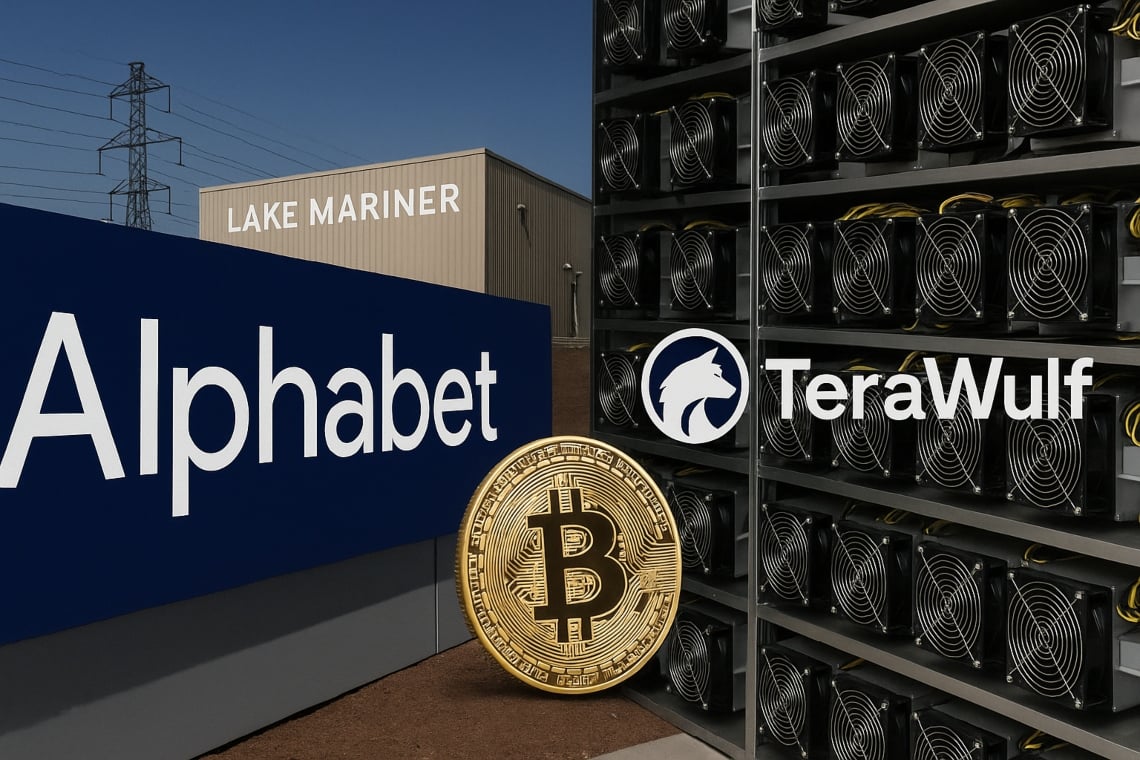
Alphabet pushes on mining: backstop at 3.2 billion and warrants up to 14% in TeraWulf

Alphabet pushes on mining: backstop at 3.2 billion and warrants up to 14% in TeraWulf

Alphabet has extended to approximately 3.2 billion dollars the financial backstop related to the expansion of the Lake Mariner data center campus.

Author: The Cryptonomist
Husky Inu (HINU) Crosses The $0.000200 Mark, Rises To $0.00020037

Husky Inu (HINU) Crosses The $0.000200 Mark, Rises To $0.00020037

Husky Inu (HINU) has crossed the $0.000200 mark after the latest price increase, rising from $0.00019979 to $0.00020037. The price jump is part of the project’s pre-launch phase, which began on April 1.

Author: Cryptodaily
Pantera Capital Targets $1.25B to Create Largest US-Listed Solana Treasury

Pantera Capital Targets $1.25B to Create Largest US-Listed Solana Treasury

Global digital asset fund management Pantera Capital is preparing to raise $1.25 billion for a new Solana-focused treasury firm. The initiative could establish the largest corporate Solana reserve to date. According to The Information, the company plans to convert a publicly traded business into a U.S.-listed Solana treasury vehicle. The new entity, tentatively named Solana Co., is expected to oversee one of the largest institutional holdings of Solana to date. The fundraising plan will take place in two stages. Pantera aims to secure $500 million in the first phase, followed by an additional $750 million through a warrant issuance program. If both rounds succeed, the treasury could reach $1.25 billion, far exceeding existing Solana corporate reserves. Competitive Race Among Institutions The development comes soon after news of another initiative involving Galaxy Digital, Jump Crypto, and Multicoin Capital. Bloomberg reported that these firms are collectively raising $1 billion to establish their own Solana treasury company. Together, these initiatives show a broader shift in the market. Digital asset treasuries (DATs), once led by smaller players, are now attracting multi-billion-dollar commitments from established financial groups. This suggests that Solana is moving beyond retail adoption and into the balance sheets of large corporations. Pantera’s Growing Commitment to Digital Treasuries Pantera has been steadily increasing its involvement in Solana and other digital asset treasuries. Earlier this month, the firm disclosed that it had already invested over $300 million in treasury-focused ventures. Most recently, Pantera participated in a $400 million private placement by Sharps Technology, which aims to build a significant Solana reserve. Beyond Solana, the company's treasury portfolio includes a diverse range of tokens, such as Bitcoin, Ethereum, BNB, Toncoin, Hyperliquid, Sui, and Ethena. According to Pantera, DATs have advantages over simply holding tokens or ETFs. They can generate yield and increase net asset value per share, which allows investors to accumulate more tokens over time. This compounding effect, the firm argues, makes treasuries a more attractive option than static holdings. Growing Adoption Among Nasdaq-Listed Companies While Pantera and other large asset managers are driving the latest wave, smaller Nasdaq-listed firms have also moved into Solana. For instance, DeFi Development Corp pivoted from real estate to digital assets and in July doubled its Solana holdings to more than 163,000 SOL, valued at approximately $21 million. In another case, edtech company Classover acquired 6,500 SOL as part of a $500 million convertible note plan to expand its token holdings and staking activity.  Meanwhile, Canadian firms such as SOL Strategies and Torrent Capital collectively oversee more than $68 million in Solana reserves. Public Solana Treasuries Near $700 Million These corporate moves highlight the larger trend of Solana accumulation across the market. Institutional and corporate buying has already created a sizeable pool of reserves. Data from CoinGecko shows that public treasuries now hold about $695 million worth of SOL, equal to nearly 0.69% of the total circulating supply. If Pantera’s $1.25 billion fundraising is completed, the weight of institutional reserves could grow dramatically. Such an expansion would elevate Solana into the ranks of blockchains with the deepest corporate backing, rivaling established assets like Bitcoin and Ethereum. Solana Market Snapshot The surge in public Solana treasuries is unfolding against a backdrop of ongoing price swings. At the latest update, Solana was trading at $188.67, reflecting a 5.38% daily decline. Over the past week, however, it recorded a 3.97% gain.  These numbers illustrate that, while institutional reserves increase, Solana’s market price remains subject to short-term volatility.

Author: The Crypto Basic
NFT leaders sliding: floor down up to 18% in the last week (week ended August 26, 2023), volumes still robust

NFT leaders sliding: floor down up to 18% in the last week (week ended August 26, 2023), volumes still robust

-18% on the floor of blue-chip collections in the last week, with Pudgy Penguins and Bored Ape Yacht Club (BAYC) among the most affected.

Author: The Cryptonomist
Global Stock Exchanges Urge Crackdown on Tokenized Stocks

Global Stock Exchanges Urge Crackdown on Tokenized Stocks

The World Federation of Exchanges has urged regulators in the U.S., Europe, and beyond to take action against tokenized stocks. The group warns these blockchain-based products may mislead investors, undermine trust in markets, and damage listed companies. A powerful voice representing the world’s largest stock exchanges has stepped into the debate over tokenized equities. The World Federation of Exchanges (WFE), a London-based association of exchanges and clearinghouses, has warned regulators that these products pose new risks to investors and markets. Tokenised equities are digital tokens built on blockchain that mirror traditional shares. While they claim to represent ownership in companies, investors holding them do not become actual shareholders. That means they miss out on voting rights, dividends, and other safeguards that come with real equity ownership. WFE’s Warning to Global Regulators The WFE recently issued a formal appeal urging regulators to respond swiftly. Its letter was directed to three major watchdogs: the SEC’s Crypto Task Force in the United States, the European Securities and Markets Authority (ESMA), and the Fintech Task Force of the International Organization of Securities Commissions (IOSCO). The federation said it is “alarmed” by the number of crypto platforms and brokers offering or planning to offer tokenized U.S. stocks. “These products are promoted as stock tokens or equivalents to listed shares, when in reality they are not,” the group warned. WFE did not disclose the names of platforms involved but cautioned that companies whose shares are copied could face reputational harm if tokenised versions collapse or lose value. Rising Interest from Crypto Platforms Despite these concerns, the sector is drawing increasing interest from major trading platforms. Coinbase, the largest U.S. crypto exchange, has already approached the SEC for approval to launch tokenized equities for its users. Similarly, Robinhood rolled out tokenised shares for customers in the European Union earlier this year. Robinhood also announced plans to release tokens that mimic shares of private companies, including OpenAI. OpenAI, however, clarified it had no role in the offering and did not endorse the products. Proponents argue that tokenised equities offer major advantages. They say tokens can reduce trading fees, enable faster settlement, and allow investors to trade outside traditional market hours. Supporters also highlight that blockchain infrastructure improves transaction transparency and efficiency. Concerns from Traditional Exchanges The WFE and its members remain unconvinced. According to the group, tokenised equities “mimic” stocks but lack the protections of regulated securities markets. That includes investor safeguards, disclosure requirements, and established rules for custody and settlement. The group’s chief executive, Nandini Sukumar, said some listed companies have already raised concerns about the use of their names in these products. She warned that if tokenised equities fail, it could erode confidence not only in the tokens but also in the underlying companies. Push for Stronger Oversight The WFE has asked regulators to strengthen oversight of tokenised assets by applying traditional securities rules. It also urged authorities to provide a clearer legal framework that defines how ownership and custody should work in this new market. Another priority, according to the group, is to stop these tokens from being advertised in a way that makes them appear identical to listed stocks. In July, one SEC commissioner reiterated that even if stocks are tokenised, they remain subject to existing securities law. This indicates regulators are already moving toward stricter control of the space. Balancing Innovation and Investor Protection The debate highlights a growing challenge for financial watchdogs worldwide. On one side, innovation in blockchain and tokenization could modernize capital markets. On the other hand, the lack of legal clarity and investor safeguards poses serious risks. The WFE’s intervention adds weight to the concerns of traditional market operators. As regulators study the issue, the future of tokenised equities will depend on whether rules can strike a balance between encouraging innovation and protecting investors.

Author: The Crypto Basic