DeFi

DeFi eliminates intermediaries by using smart contracts on blockchains to provide financial services like lending, borrowing, and trading. In 2026, the "DeFi 3.0" era is defined by Institutional DeFi and the integration of Real-World Assets (RWA). From liquidity provisioning on Uniswap to advanced lending on Aave, this tag tracks the evolution of autonomous financial systems, yield optimization, and the rise of AI-driven portfolio management in the decentralized economy.

69652 Articles
Created: 2026/02/02 18:52
Updated: 2026/02/02 18:52
Tom Lee’s BitMine Adds $2.2 Billion in Ether, Tops Corporate Holdings

Tom Lee’s BitMine Adds $2.2 Billion in Ether, Tops Corporate Holdings

The post Tom Lee’s BitMine Adds $2.2 Billion in Ether, Tops Corporate Holdings appeared on BitcoinEthereumNews.com. BitMine Inc., the cryptocurrency mining and investment company led by market strategist Tom Lee, said it bought about $2.2 billion worth of Ethereum during the week ended Aug. 24, according to a company statement released Monday. The latest acquisition lifts BitMine’s combined cryptocurrency and cash reserves to roughly $8.82 billion, making it the world’s largest corporate holder of Ether and the second-largest digital-asset treasury overall, trailing only MicroStrategy’s Bitcoin stockpile. BitMine, which trades on Nasdaq under the ticker BMNR, said the purchases were financed through operating cash flow and an existing revolving credit facility. The company reiterated that accumulating major digital assets remains a core component of its capital-allocation strategy. This is an AI-generated article powered by DeepNewz, curated by The Defiant. For more information, including article sources, visit DeepNewz. Source: https://thedefiant.io/news/markets/tom-lees-bitmine-adds-2-2-billion-ether-tops-corporate-holdings-158112e6

Author: BitcoinEthereumNews
Netflix’s Best Comedy Since ‘BoJack Horseman’ Is ‘Long Story Short’

Netflix’s Best Comedy Since ‘BoJack Horseman’ Is ‘Long Story Short’

The post Netflix’s Best Comedy Since ‘BoJack Horseman’ Is ‘Long Story Short’ appeared on BitcoinEthereumNews.com. When a new show gets a 100% Rotten Tomatoes score from two dozen critics, I’m going to check it out, and over the past two days, I have binged the one I just spotlighted in a recent piece. That would be Long Story Short, the new animated series from Netflix that you could argue is its best comedy, animated or otherwise, since BoJack Horseman ended in 2020. And there’s a reason for that. Long Story Short is created by Raphael Bob-Waksberg, who also created BoJack Horseman. Five years later, he’s able to show what he’s been working on, and it could actually be better than BoJack in its initial season here. Unlike BoJack Horseman, it has a different animation style and its tone is not nearly as crude. Little swearing, little sex, no violence. A real TV-14 type experience, opening it up to a wider potential audience. Unfortunately, right now, it does not have a wide audience, it seems. Despite being released on August 22, it has yet to chart on Netflix’s Top 10 shows list at all, when BoJack definitely used to. And it is certainly better than every series on the current list. I binged Long Story Short over the course of two days, which is easy to do given its ten, 25-minute episodes. It’s the story of a family that spans the course of decades. The unique format gives us an out-of-order look at various members of the family, where the children have the widest range from being 5-9 years old to being middle-aged with families. You see their character development and fill in gaps as you go. Long Story Short is the first time I’ve laughed out loud while watching a comedy in many years. I am somewhat jaded when it comes to the endless amount…

Author: BitcoinEthereumNews
The Columbus Sliders Finish off their Cinderella Run To The 2025 Major League Pickleball Title

The Columbus Sliders Finish off their Cinderella Run To The 2025 Major League Pickleball Title

The post The Columbus Sliders Finish off their Cinderella Run To The 2025 Major League Pickleball Title appeared on BitcoinEthereumNews.com. Your 2025 MLP Premier League Champs. From L-R Andrei Daescu, Parris Todd, CJ Klinger, and Lea Jansen. MLP Major League Pickleball (MLP) presented by DoorDash finished off its highly successful 2025 season with its 2025 New York City event, featuring the Semis and Finals of the Premier League playoffs and the Finals of the Challenger division. The best of the best traveled to NYC to play on one of the league’s most successful 2024 venues, the City Pickle Wollman Courts in Central Park South. Key Links for tracking the event this weekend, which featured livestreams from the two primary courts at the facility on MLP’s YouTube channel and on PickleballTV.com. MLP also secured major broadcasting time for parts of the final, including a live broadcast on CBS’ national network Noon Saturday. News and Noteworthy Ahead of the event, here’s some news and noteworthy items for MLP. – As is custom in the MLP, the top seed St. Louis Shock was able to “pick” its semi-final opponent from one of the lower seeded teams, and to no surprise avoided the Ben Johns-led LA Mad Drops and picked Columbus. This is noteworthy since Columbus was also “picked’ by Dallas last week in a failed gambit that led to the defending champion’s ouster in the quarter final round. – From the moment play started, it was clear that the championship court had some “dead spots,” one in the kitchen and another towards the back court line on what would be “stage-right” on the standard side-court camera. These dead spots led to more than a few unforced errors during dink battles, and an uncharacteristic number of service return errors by pros who almost never miss their 2nd shots. – The big news on the MLP front from a business perspective was the announcement that…

Author: BitcoinEthereumNews
Grayscale Seeks SEC Approval for Spot Avalanche ETF on Nasdaq

Grayscale Seeks SEC Approval for Spot Avalanche ETF on Nasdaq

The post Grayscale Seeks SEC Approval for Spot Avalanche ETF on Nasdaq appeared on BitcoinEthereumNews.com. Grayscale Investments has filed an S-1 registration statement with the U.S. Securities and Exchange Commission seeking to convert its Grayscale Avalanche Trust into a spot exchange-traded fund that would track the market price of Avalanche’s AVAX token. The proposed fund, to be listed on Nasdaq, would hold AVAX in custody at Coinbase Custody while Coinbase Inc. would act as authorized participant for share creation and redemption. Grayscale said the structure is designed to give investors regulated access to AVAX price movements without the operational complexities of holding the token directly. This is an AI-generated article powered by DeepNewz, curated by The Defiant. For more information, including article sources, visit DeepNewz. Source: https://thedefiant.io/news/regulation/grayscale-seeks-sec-approval-spot-avalanche-etf-on-nasdaq-4dbe69dc

Author: BitcoinEthereumNews
Polkadot Price Prediction: Short and Long-Term Targets

Polkadot Price Prediction: Short and Long-Term Targets

Polkadot (DOT) has emerged as one of the most innovative Layer-0 protocols in the blockchain sector, offering a framework that […] The post Polkadot Price Prediction: Short and Long-Term Targets appeared first on Coindoo.

Author: Coindoo
Canary Seeks SEC Nod for ‘American-Made’ Spot Crypto ETF

Canary Seeks SEC Nod for ‘American-Made’ Spot Crypto ETF

The post Canary Seeks SEC Nod for ‘American-Made’ Spot Crypto ETF appeared on BitcoinEthereumNews.com. Canary Capital has filed an S-1 registration statement with the U.S. Securities and Exchange Commission seeking approval for the “Canary American-Made Crypto ETF,” a spot exchange-traded fund that would invest exclusively in cryptocurrencies created in the United States and whose mining or other core operations are chiefly conducted domestically. The company positions the product as the first ETF to restrict holdings to “American-made” digital assets, a structure that could appeal to investors looking to align crypto exposure with domestic interests amid heightened scrutiny of overseas mining operations. The application underscores a new phase of product innovation following the success of spot Bitcoin and Ether ETFs earlier this year. Bloomberg ETF analyst Eric Balchunas said the filing illustrates how issuers are experimenting with “every combo imaginable” to capture demand. A wave of leveraged, actively managed and thematic crypto ETF proposals has reached the SEC ahead of an October window when market participants anticipate the next batch of approvals. Canary’s bid adds to that queue, highlighting intensifying competition to differentiate offerings in a rapidly expanding market. This is an AI-generated article powered by DeepNewz, curated by The Defiant. For more information, including article sources, visit DeepNewz. Source: https://thedefiant.io/news/regulation/canary-seeks-sec-nod-american-made-spot-crypto-etf-d656de03

Author: BitcoinEthereumNews
Tom Lee Didn’t Pick Ethereum Randomly: Opinion

Tom Lee Didn’t Pick Ethereum Randomly: Opinion

The post Tom Lee Didn’t Pick Ethereum Randomly: Opinion appeared on BitcoinEthereumNews.com. Here’s why Tom Lee picked Ethereum: Researcher’s take Bitmine adds $2.2 billion to ETH bags in just one week, cements #1 Ether holder status Ethereum (ETH), the second-largest cryptocurrency, was not chosen randomly by Fundstrat’s Tom Lee as a cornerstone of his crypto strategy. Adriano Feria, seasoned Ethereum (ETH) researcher, explains the motivation behind the $8.8 billion strategy of Bitmine Immersion. Here’s why Tom Lee picked Ethereum: Researcher’s take Ethereum (ETH) became the basic asset in Bitmine’s crypto strategy because of its status as default choice for stablecoins, tokenization and DeFi, researcher Adriano Feria pointed out on X. As such, the decision to go with Ethereum (ETH) was not a random pick for the finance heavyweight. I must apologize again for being rude, but the retards who are still hating ETH and trashing Tom Lee need to understand this: Tom Lee didn’t just randomly pick ETH. He picked it because of the position Ethereum has secured in the market as the “default” choice for stablecoins,… — AdrianoFeria.eth 🦇🔊 🛡️ (@AdrianoFeria) August 24, 2025 Bitmine’s initiative gained steam because Ethereum (ETH) morphed into a multi-purpose “Internet of Finance,” and TradFi moguls are seeking opportunities to benefit from it without holding cryptocurrency physically. Products like BMNR are therefore a leveraged proxy for accumulation available for billionaires — and Fundstrat is far from being alone in this segment, Feria opines: ETH treasuries are not just DATs. Look at who is representing them, and who is allocating serious capital.  The researcher stressed that the corporate cryptocurrency treasuries are no longer about “BTC game,” as Ethereum’s “Internet of Finance” is in focus now. Also, Ethereum (ETH) is one of the best-performing assets in recent decades available to institutions. Feria stressed that Ethereum (ETH) accomplished all of this in terms of technology and finance despite being…

Author: BitcoinEthereumNews
Inside Network Marketing Software: How It Supports Team and Data Management

Inside Network Marketing Software: How It Supports Team and Data Management

Network marketing, also known as multi-level marketing (MLM), is a business model where individuals earn income through direct sales and by building a network of distributors. While this model offers opportunities for growth, it also comes with challenges. Managing a large team, tracking sales, calculating commissions, and keeping data organized can quickly become overwhelming. This is where network marketing software comes in. It provides tools to simplify operations, improve efficiency, and support business growth. In this article, we will explore how network marketing software works and how it helps with team and data management. What is Network Marketing Software? Network marketing software is a digital platform designed specifically for MLM businesses. It helps companies manage distributors, track sales, calculate commissions, generate reports, and maintain overall business operations. Unlike general business software, network marketing software is tailored to the needs of MLM, which involves multi-level commissions, team hierarchies, and complex compensation plans. The software can be web-based, mobile-friendly, or both. Modern solutions often come with features like automation, real-time reporting, secure transaction management, and analytics dashboards. These tools allow business owners and managers to focus on growth rather than manual tracking and paperwork. Key Functions of Network Marketing Software Team Management One of the most critical aspects of MLM is managing a large and growing team. Network marketing software helps business owners keep track of every distributor in their network. Key features include: Distributor Profiles: Stores essential information such as contact details, joining date, and role. Team Hierarchy Visualization: Shows the structure of your team, including downlines and uplines. Performance Tracking: Monitors individual and team sales, helping managers identify top performers and those who may need support. Communication Tools: Some software offers messaging systems or integration with email and SMS platforms to connect with team members quickly. Sales and Order Management Tracking sales manually can be time-consuming and prone to errors. Network marketing software simplifies this process by: Recording every sale made by team members. Automatically linking sales to the respective distributor for accurate commission calculation. Generating order summaries, invoices, and receipts. Allowing real-time updates, so the team knows their performance instantly. Commission and Payout Calculation MLM businesses often have complex compensation plans that include multiple levels of commissions, bonuses, and incentives. Network marketing software automates this process by: Calculating commissions based on predefined rules. Managing bonuses, incentives, and rank advancements. Generating payout reports for transparency. Reducing errors that may occur with manual calculations. Data Management and Security Handling large amounts of data manually is risky and inefficient. Network marketing software stores all business and distributor data in a structured and secure environment. Benefits include: Centralized storage of distributor information, sales, and commission records. Easy retrieval of historical data for analysis. Encryption and secure login systems to protect sensitive information. Automated backups to prevent data loss. Reporting and Analytics Understanding business performance is crucial for growth. Network marketing software often comes with reporting and analytics tools that allow managers to: Generate real-time reports on sales, team performance, and commissions. Identify trends in sales and distributor activity. Make informed decisions for marketing strategies and team support. Measure ROI on campaigns and incentives. Automation of Repetitive Tasks Automation is one of the most significant advantages of network marketing software. By automating routine tasks, managers save time and reduce errors. Examples of automation include: Sending welcome emails to new distributors. Automatically updating sales and commission records. Generating monthly performance reports. Triggering reminders for pending tasks or milestones. Benefits of Using Network Marketing Software Using specialized software for MLM businesses provides several advantages: Efficiency: Reduces manual work, allowing managers to focus on strategy and growth. Accuracy: Minimizes errors in calculations, reporting, and record-keeping. Transparency: Distributors can access their performance data and commissions, building trust within the network. Scalability: As the business grows, the software can handle larger teams and more transactions without additional effort. Data-Driven Decisions: Analytics and reports provide actionable insights to optimize sales and team management. Choosing the Right Network Marketing Software Not all MLM software solutions are the same. Businesses should consider the following when choosing a platform: Features: Ensure the software includes essential features like team management, sales tracking, commission calculation, and reporting. User-Friendly Interface: A simple and intuitive design helps team members adopt the software quickly. Security: Look for encryption, secure logins, and data protection measures. Customization: The software should allow adjustments to match your unique compensation plan and business model. Support: Reliable customer support is essential for troubleshooting issues and ensuring smooth operation. Integration: Compatibility with other tools such as accounting software, payment gateways, or CRM systems adds value. Challenges and Considerations While network marketing software offers many benefits, businesses should be aware of potential challenges: Cost: Advanced software solutions can be expensive, especially for small startups. Learning Curve: Teams may need training to use the software effectively. Dependence on Technology: Over-reliance on software means technical issues could disrupt operations. Customization Limitations: Some software may not perfectly match unique business models without modifications. The Future of Network Marketing Software Network marketing software continues to evolve with technology. Trends include: AI and Machine Learning: Predicting sales trends, distributor performance, and customer behavior. Mobile Applications: Allowing distributors to manage their profiles, track sales, and receive updates on the go. Cloud-Based Solutions: Providing secure access from anywhere without complex installations. Integration with Social Media: Enhancing marketing campaigns and lead generation through social platforms. These advancements make managing network marketing businesses more efficient and adaptable to changing market conditions. Conclusion Network marketing software plays a vital role in supporting MLM businesses. By managing teams, automating sales tracking, calculating commissions, and securely storing data, it helps streamline operations and enhance efficiency. With features like reporting, analytics, and automation, businesses can make informed decisions and focus on growth rather than administrative tasks. Choosing the right software depends on business size, requirements, and budget. As technology evolves, network marketing software will continue to offer innovative tools that make team and data management easier, more transparent, and highly effective. In the fast-paced world of network marketing, having the right software is no longer a luxury — it’s a necessity for smooth operations and long-term success. Inside Network Marketing Software: How It Supports Team and Data Management was originally published in Coinmonks on Medium, where people are continuing the conversation by highlighting and responding to this story

Author: Medium
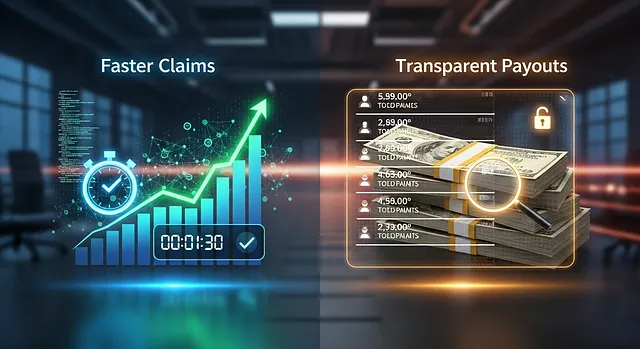
Faster Claims, Transparent Payouts: Spydra’s Blockchain-Enabled Parametric Insurance

Faster Claims, Transparent Payouts: Spydra’s Blockchain-Enabled Parametric Insurance

What is Asset Tokenization? Asset tokenization is the process of converting real-world assets into blockchain-based digital tokens. These tokens can represent real estate, stocks, commodities, or even insurance policies. Tokenization not only enhances liquidity but also democratizes access by breaking down barriers to investment. According to Boston Consulting Group, asset tokenization could unlock $16 trillion in value by 2030, with financial services and insurance at the forefront. By tokenizing assets, industries like insurance can streamline claim verification and payouts — precisely what Spydra is pioneering with blockchain-enabled parametric insurance. Understanding Parametric Insurance Unlike traditional insurance, which requires detailed claims processes and manual verification, parametric insurance uses predefined parameters or triggers. For example, if rainfall drops below a certain level in an agricultural region, the insurance policy pays out automatically. 🔑 Key Features of Parametric Insurance: Predefined Triggers — Based on objective data such as weather events or market indices. Automated Payouts — Claims are executed instantly when conditions are met. No Lengthy Paperwork — Eliminates disputes over loss assessments. This automation is why parametric insurance is forecasted to grow at a double-digit CAGR through 2030, particularly in sectors like agriculture, travel, and natural disaster coverage. Why Blockchain is a Game-Changer for Parametric Insurance Traditional parametric insurance faces challenges in trust, data accuracy, and payout transparency. This is where blockchain reshapes the game. Immutable Records — Blockchain ensures policy terms and data inputs are tamper-proof. Smart Contracts — Automatically trigger payouts when conditions are satisfied. Transparency — Policyholders can verify claim criteria and transactions on a public ledger. Speed — Reduces claim settlement time from weeks to minutes. In fact, claims settlement costs can be reduced by up to 30% with blockchain-enabled automation (Deloitte, 2022). Spydra’s Blockchain-Enabled Parametric Insurance Spydra is bridging the gap between innovation and accessibility. By integrating parametric insurance with blockchain, Spydra ensures that claims are faster, transparent, and trustworthy. 🔎 How It Works: Data Integration — Spydra uses trusted oracles to pull in real-world data (e.g., rainfall, flight delays) Smart Contract Execution — Once conditions are met, the contract auto-executes. Instant Payouts — Beneficiaries receive funds directly into their wallets. This approach eliminates disputes, reduces fraud, and increases user trust — a critical factor in regions where insurance penetration is still low. Benefits of Spydra’s Blockchain-Enabled Parametric Insurance

  1. Faster Claims Processing With blockchain and smart contracts, claims are settled in near real-time, compared to the traditional 2–4 weeks.
  2. Transparent Payouts Every transaction is recorded on the blockchain, creating an auditable trail for both insurers and policyholders.
  3. Reduced Administrative Costs By automating claims, insurers cut down on manual processing, lowering overhead costs by up to 20% (PwC Report).
  4. Trust and Accessibility For underserved markets, especially in agriculture and climate risk zones, blockchain parametric insurance builds trust by removing human bias. Real-World Applications Spydra’s solution is not just theoretical — it has practical use cases across multiple industries:
Agriculture — Farmers automatically receive payouts for droughts or floods without filing lengthy claims. Travel Insurance — Flight delays trigger instant compensation. Natural Disaster Relief — Communities affected by hurricanes or earthquakes get immediate financial aid. Healthcare — Predefined health metrics (like hospital visits or recovery data) can automate reimbursements. Given that natural disasters caused $313 billion in global economic losses in 2022 (AON), parametric insurance powered by blockchain has immense potential to provide quicker relief. Future of Insurance with Asset Tokenization As blockchain adoption accelerates, asset tokenization will merge with parametric insurance to create highly efficient, tradable, and secure policies. By tokenizing insurance products: Investors can trade insurance-backed tokens in secondary markets. Policyholders gain fractional ownership opportunities. Liquidity in the insurance sector increases. The synergy between asset tokenization and parametric insurance could reshape a trillion-dollar industry. Challenges to Consider While promising, blockchain-enabled parametric insurance faces a few challenges: Regulatory Uncertainty — Many jurisdictions are still catching up with digital insurance frameworks. Data Accuracy — Reliance on external data sources requires robust and trusted oracles. Adoption Hurdles — Educating both insurers and customers about blockchain benefits remains essential. Despite these hurdles, the growth trajectory remains positive. 70% of insurance executives surveyed by Accenture believe blockchain will significantly impact claims processing within the next five years. FAQs
  1. What is parametric insurance? Parametric insurance uses predefined conditions, like rainfall levels or flight delays, to trigger automatic payouts without manual claims.
  2. How does Spydra use blockchain for insurance? Spydra integrates blockchain smart contracts to automate claim execution, ensuring faster and transparent payouts.
  3. Can asset tokenization improve insurance? Yes! Tokenization makes insurance products more liquid, tradable, and accessible while enhancing transparency.
  4. Is blockchain insurance secure? Absolutely. With immutable records and smart contracts, blockchain reduces fraud and increases trust. Final Takeaway Spydra’s blockchain-enabled parametric insurance is setting a new benchmark for the industry. By combining asset tokenization, smart contracts, and transparent data, Spydra delivers what traditional insurers often fail to — speed, trust, and accessibility. As the world moves toward digital-first financial services, this model could become the backbone of insurance, unlocking faster claims, lower costs, and broader access. For both insurers and policyholders, Spydra represents the future of a more resilient and transparent insurance ecosystem.
Faster Claims, Transparent Payouts: Spydra’s Blockchain-Enabled Parametric Insurance was originally published in Coinmonks on Medium, where people are continuing the conversation by highlighting and responding to this story

Author: Medium
Sharps Technology raises $400M in private placement to build Solana treasury

Sharps Technology raises $400M in private placement to build Solana treasury

Drug delivery solutions company Sharps Technology, Inc. has announced a private placement financing valued at more than $400 million to support the creation of a digital asset treasury centered on Solana’s native token, SOL.  According to a Monday press release revealing the funding round, the private investment in public equity transaction (PIPE) will include the […]

Author: Cryptopolitan