DeFi

DeFi eliminates intermediaries by using smart contracts on blockchains to provide financial services like lending, borrowing, and trading. In 2026, the "DeFi 3.0" era is defined by Institutional DeFi and the integration of Real-World Assets (RWA). From liquidity provisioning on Uniswap to advanced lending on Aave, this tag tracks the evolution of autonomous financial systems, yield optimization, and the rise of AI-driven portfolio management in the decentralized economy.

69501 Articles
Created: 2026/02/02 18:52
Updated: 2026/02/02 18:52
Telegram founder Pavel Durov slams French case as ‘absurd’

Telegram founder Pavel Durov slams French case as ‘absurd’

The post Telegram founder Pavel Durov slams French case as ‘absurd’ appeared on BitcoinEthereumNews.com. Pavel Durov, the billionaire founder of Telegram, criticized French authorities on Sunday, Aug. 24, over what he described as a baseless criminal investigation that has left him tied up in legal proceedings for more than a year. Durov, who was granted temporary permission to leave the country for Dubai in March, faces multiple charges linked to allegations that Telegram enabled organized crime. In a statement posted Sunday, he argued that holding a CEO accountable for the actions of users on a global messaging platform sets a dangerous precedent. “Arresting a CEO of a major platform over the actions of its users was not only unprecedented — it was legally and logically absurd,” Durov said. According to Durov, French police made “a mistake” by failing to follow proper legal channels before August 2024 when submitting requests for user data. He said the company has consistently responded to every legally binding request and maintains moderation practices in line with industry standards. Durov said he is still required to return to France every 14 days, with no appeal date set. “Sadly, the only outcome of my arrest so far has been massive damage to France’s image as a free country,” he said. The case against Durov highlights the growing tension between law enforcement and tech platforms over responsibility for online content, particularly as governments worldwide intensify their scrutiny of social media and messaging services. This isn’t the first time Durov has criticized French authorities. In September, he responded to his legal troubles in France by criticizing authorities for bypassing official EU channels and questioning him directly. He called holding a CEO liable for user crimes a “misguided approach,” especially under outdated laws. Durov defended Telegram’s moderation efforts, noting its daily removal of harmful content and cooperation with NGOs, while reaffirming his commitment to…

Author: BitcoinEthereumNews
From mNAV Premium to a $100 Billion Vision: Michael Saylor's Journey into a Bitcoin Credit Empire

From mNAV Premium to a $100 Billion Vision: Michael Saylor's Journey into a Bitcoin Credit Empire

By Lesley, MetaEra In the history of Wall Street financial innovation, few have excelled like Michael Saylor, transforming personal beliefs into corporate strategy and, in turn, reshaping the financing model of an entire industry. The chairman of Strategy (formerly MicroStrategy) is driving an unprecedented financial experiment: replacing traditional equity and debt financing with perpetual preferred stock to fund his aggressive Bitcoin accumulation strategy. According to Bloomberg, Strategy has successfully raised approximately $6 billion in capital from the market through four rounds of perpetual preferred stock issuance this year. The latest round, "Stretch" (STRC), raised $2.5 billion. Michael Saylor described STRC as Strategy's "iPhone moment," emphasizing its potential to provide Bitcoin vaults with scalable and low-volatility access to capital markets. This previously obscure business intelligence software company has leveraged such massive capital simply through its unwavering belief in Bitcoin. As of August 18, Strategy held 629,400 Bitcoins, with a total investment of $33.139 billion, worth over $72 billion at current market prices. Top 100 publicly listed companies holding Bitcoin worldwide (Source: bitcointreasuries.net) Even more striking is that retail investors accounted for nearly a quarter of the latest perpetual preferred stock issuance—a figure virtually unimaginable in the traditional corporate preferred stock market. However, behind this financial engineering effort lies a radical evangelist who once urged fans to "sell their kidneys for Bitcoin" and a legion of retail investors willing to follow his convictions. To understand this financial experiment that could reshape the digital asset industry, we need to start from the beginning. The Story and Mechanism of Perpetual Preferred Stocks Perpetual preferred stock is a hybrid financial security with no fixed maturity date, combining the guaranteed returns of bonds with the perpetual nature of stocks. The issuing company does not need to repay the principal, only pays the agreed-upon dividends periodically, allowing the company to use investor funds indefinitely. From an investor's perspective, purchasing perpetual preferred shares is equivalent to obtaining a "permanent right to receive dividends" - the returns mainly come from continuous dividend income, rather than the recovery of the principal at maturity of traditional bonds. The following table compares perpetual preferred stock, convertible bonds, and common stock across several key dimensions: In summary, perpetual preferred stock is a "third type of financing instrument" between debt and equity: For enterprises, it allows them to lock in funds for a long period of time without having to repay the principal, alleviate cash flow pressure with the help of flexible dividend arrangements, and avoid equity dilution caused by the issuance of additional common shares; For investors, although they rank below debt in the capital structure, perpetual preferred stock generally offers higher, more guaranteed returns and is paid out before common stock in the event of a company's liquidation. Because of this, it combines flexibility on the financing side with stable returns on the investment side, and is becoming an increasingly important option in corporate capital operations. Although perpetual preferred shares provide Strategy with a flexible financing method, their market volatility, liquidity and structural risks cannot be ignored. Market volatility and liquidity risk: Bitcoin price volatility directly affects Strategy's ability to repay and refinance. The burden of dividend payments increases with the scale of financing. According to Saylor's "HODL" strategy, selling Bitcoin further limits the company's channels for obtaining cash flow. Structural risks of the financing model: Dividend payments for non-cumulative perpetual preferred shares are at the issuer's discretion, which may lead to refinancing difficulties when market confidence is shaken; there is over-reliance on retail investors, and if retail enthusiasm fades, attracting institutional investors will become a challenge. Market bubbles and systemic risks: The crypto asset treasury company model may show signs of a bubble. Once market demand dries up, companies that rely on this financing model may face the risk of a broken capital chain, which in turn triggers wider market fluctuations. Since the beginning of 2024, Saylor has raised over $40 billion in equity and debt financing. So far this year, Strategy has raised approximately $6 billion through four perpetual preferred stock offerings. Saylor even claims it could theoretically raise as much as $100 billion to $200 billion. These four offerings demonstrate a clear evolution in strategy and distinct market positioning. Last month, Strategy launched STRC (Stretch), a floating-rate perpetual preferred stock designed to provide stable pricing and high returns to income-seeking investors seeking indirect Bitcoin exposure. STRC, with a $100 par value per share, will pay a monthly dividend and initially yield an annualized yield of 9%. Saylor's launch of STRC (Stretch) is centered around its accessibility. Unlike STRK, STRF, and STRD, instruments he earlier championed as innovative but overly complex or volatile, STRC is more like a yield-enhanced savings account. By focusing on short-term investments and low price volatility, it eliminates the risk associated with long-term volatility while offering higher returns than bank deposits. Its overcollateralization with Bitcoin ensures that STRC will trade close to its $100 par value even during Bitcoin price fluctuations, providing investors with a more stable and attractive investment option. Why choose perpetual preferred stocks? A fundamental shift in business models As the bottleneck of traditional financing models becomes apparent, perpetual preferred shares have become a key option for Strategy to fundamentally transform its business model in the context of compressed mNAV premiums and the exploration of new sources of funds. 1. Traditional financing models encounter bottlenecks: mNAV premium compression Strategy’s perpetual preferred stock experiment stems from a real challenge: mNAV premium compression. The so-called mNAV premium refers to the phenomenon in which Strategy's stock price consistently outperforms the net asset value of its Bitcoin. This premium was once the core of Saylor's "financial magic"—the company was able to raise funds at a price higher than the actual value of Bitcoin, effectively "buying the coin at a discount." However, Brian Dobson, Disruptive Technology Equity Research analyst at Clear Street, noted, "The mNAV premium has compressed in recent weeks, and Strategy management is understandably concerned about creating too much dilution." This shift forced Strategy to seek new financing paths. Traditional common stock issuance became significantly less efficient when the mNAV premium narrowed. While the convertible bond market offered lower costs, it eliminated retail investors, a key source of funding. The emergence of perpetual preferred stock was a necessary response to these constraints. 2. Discovering New Sources of Funding: Retail Investors’ “Faith-Driven” Model More importantly, Saylor discovered an unprecedented financing opportunity: directly converting personal influence into corporate capital. Michael Saylor currently has 4.5 million X Followers (Source: X Platform) Michael Youngworth, Head of Global Convertibles and Preferred Strategy at Bank of America, admitted: "As far as I know, no company has ever capitalized on retail investors' enthusiasm like Strategy." In the latest STRC issuance, retail investors accounted for as much as 25%, which is almost unimaginable in the traditional corporate preferred stock market. These retail investors adopt a faith-driven investment model for Strategy, providing the company with a relatively stable source of funding. Compared to institutional investors, they are less susceptible to short-term market fluctuations and are more willing to accept higher risk premiums. This unique investor structure has become a key competitive advantage for Strategy compared to traditional companies. 3. Strategic transformation and upgrading: from equity financing to a hybrid capital structure The introduction of perpetual preferred shares actually marks a fundamental shift in Strategy's business model. Under the traditional Strategy model, financing relies on rising stock prices, but this model is highly dependent on market sentiment and Bitcoin price fluctuations. The new model creates a relatively stable "middle layer" through perpetual preferred stock: preferred stock investors receive relatively certain dividend returns, while common stock shareholders bear more volatility risk. The company then receives perpetual funds with matching maturities to hold Bitcoin, a perpetual asset. This redesign of the capital structure allows Strategy to better respond to market cycles. Even if Bitcoin prices fall and the mNAV premium disappears, the company can still maintain its financing capabilities through perpetual preferred shares. 4. Ultimate goal: building a $100 billion BTC “credit” concept Saylor’s ambitions go far beyond this. He speculates that “in theory, $100 billion… or even $200 billion could be raised,” with the goal of creating a large-scale “credit” system with Bitcoin as the underlying asset. The core logic of this vision completely overturns traditional corporate financing: instead of relying on cash flow from products or services, it builds a self-reinforcing mechanism: "Holding Bitcoin → generating a stock price premium → financing to purchase Bitcoin → forming a positive feedback loop." Through multi-layered financing tools such as perpetual preferred stock and convertible bonds, Strategy seeks to transform volatile digital assets into a stable source of income, leveraging the mNAV premium to achieve arbitrage opportunities by "buying Bitcoin at a discount," ultimately building a financial empire centered around Bitcoin. However, this financial experiment is fraught with risk. If successful, Bitcoin could transform from a speculative asset into a widely accepted financial collateral. But as short-seller Jim Chanos warns, an 8-10% perpetual dividend payout could become a heavy burden if Bitcoin declines. Yuliya Guseva of Rutgers Law School has even bluntly stated, "If market appetite dries up, this model will no longer be sustainable." Saylor is betting on the future of Strategy, betting on whether digital assets can redefine the fundamental rules of the modern financial system. Conclusion: Innovation or Risk? Strategy's perpetual preferred stock experiment represents a significant innovation in the financing model for digital asset companies. Michael Saylor cleverly combined personal influence, market sentiment, and digital asset investment through financial innovation to create an unprecedented path for corporate development. From a broader perspective, Strategy's experiment represents a fundamental restructuring of the relationship between businesses and investors in the digital economy. Traditional corporate valuation systems—based on cash flow, profitability, and balance sheets—are completely ineffective here. Instead, a new value creation mechanism based on asset appreciation expectations and market sentiment is emerging. This is not only a financial innovation, but also a test of the boundaries of modern corporate theory. Regardless of the ultimate outcome, Strategy's experiment has provided a replicable template for subsequent digital asset companies. It also serves as a wake-up call for regulators: When corporate financing increasingly relies on retail investor sentiment and asset bubbles, can traditional risk management frameworks still effectively protect investor interests? The answer to this question will determine the future direction of the digital asset industry.

Author: PANews
Top 3 Cryptos to Add to Your Portfolio Right Now

Top 3 Cryptos to Add to Your Portfolio Right Now

The post Top 3 Cryptos to Add to Your Portfolio Right Now appeared on BitcoinEthereumNews.com. The cryptocurrency market is shifting once again, with investors looking beyond Bitcoin and Ethereum to find the next major growth opportunities. A new wave of layer-1 blockchains is emerging as serious contenders, offering scalability, interoperability, and sustainability as their edge. Among the most promising are Cardano (ADA), Solana (SOL), and Polkadot (DOT), each carving out a unique position in the market. As this momentum builds, many traders are preparing for the next altcoin season. Some investors are also looking at newer projects like MAGACOIN FINANCE, which has been gaining attention as a strong diversifier alongside these major contenders. Cardano (ADA): The “Slow and Steady” Innovator Cardano is built on a peer-reviewed, research-first philosophy, making it one of the most methodical projects in crypto. Its proof-of-stake consensus ensures security and energy efficiency while its governance model gives ADA holders the ability to vote on development funding. Recent upgrades like Project Acropolis and the upcoming Hydra scaling solution highlight its steady but impactful growth path. While not the fastest in terms of transaction speeds, its academic foundation and community-driven treasury system make it a long-term favorite. Solana (SOL): The High-Speed Contender Solana has established itself as one of the fastest blockchains in the industry, capable of handling thousands of transactions per second at negligible costs. This efficiency makes it popular in gaming, DeFi, and NFT applications. The network continues to evolve with new stress tests proving its scalability. Institutional interest is also growing, with multiple Solana-related ETFs under consideration, signaling that Wall Street is watching closely. A Hidden Gem with Big Potential While established blockchains like ADA, SOL, and DOT are solid bets, MAGACOIN FINANCE has quickly become one of the most talked-about tokens of 2025. Early rounds sold out rapidly, attracting both retail and institutional attention. Analysts highlight its strong fundamentals,…

Author: BitcoinEthereumNews
XRP vs. XLM: Difference, Adoption and Long-Term Growth

XRP vs. XLM: Difference, Adoption and Long-Term Growth

In the crowded field of payment-focused cryptocurrencies, XRP and Stellar (XLM) remain two of the most established names. Both were […] The post XRP vs. XLM: Difference, Adoption and Long-Term Growth appeared first on Coindoo.

Author: Coindoo
Bitcoin and Ethereum ETF Outflows: Where Is The Money Going? Is Layer Brett’s Presale The Reason?

Bitcoin and Ethereum ETF Outflows: Where Is The Money Going? Is Layer Brett’s Presale The Reason?

The answer may lie in the explosive presale of Layer Brett, a next-generation memecoin and Ethereum Layer 2 project that […] The post Bitcoin and Ethereum ETF Outflows: Where Is The Money Going? Is Layer Brett’s Presale The Reason? appeared first on Coindoo.

Author: Coindoo
Top 5 Biggest Crypto Losers Today as Market Cap Slips Below $4 Trillion

Top 5 Biggest Crypto Losers Today as Market Cap Slips Below $4 Trillion

The post Top 5 Biggest Crypto Losers Today as Market Cap Slips Below $4 Trillion appeared on BitcoinEthereumNews.com. Altcoins The crypto market is showing signs of weakness today, with the global market capitalization slipping to $3.93 trillion, down 1.44% in the past 24 hours. While Bitcoin and major altcoins remain relatively stable, several well-known projects are taking heavy hits, ranking among the day’s top losers. 1. Sky (SKY) Sky leads the pack of biggest losers, dropping 7.03% in the past 24 hours to trade at $0.06242. Over the last seven days, the token has lost 19.16%, erasing a significant portion of recent gains. Despite maintaining a market cap of $1.32 billion, its low daily trading volume of just $4 million reflects declining interest from traders. 2. Pump.fun (PUMP) The meme-fueled project Pump.fun has been hit hard, falling 6.40% in the past 24 hours and an even steeper 21.27% on the week. Currently priced at $0.002924, Pump.fun maintains a market cap of just over $1.03 billion, supported by a much higher daily trading activity of $224 million. Still, momentum seems to be fading quickly for the token. 3. Lido DAO (LDO) The leading liquid staking protocol token, Lido DAO, is also under pressure, down 6.21% in the last day to $1.42. Its seven-day performance remains slightly positive at +3.27%, but today’s drop highlights ongoing volatility. With a market cap of $1.27 billion and nearly $196 million in daily trading volume, LDO remains a key DeFi token, though sentiment has turned bearish in the short term. 4. Ethena (ENA) Ethena, one of the newer entrants making waves in the DeFi space, saw its price slip 6.08% today, landing at $0.6918. The token has lost almost 4% this week as well, despite boasting a robust market cap of $4.58 billion and high daily trading volume of $788 million. The sell-off suggests investors are taking profits after recent rallies. 5. Pudgy Penguins…

Author: BitcoinEthereumNews
Ripple (XRP) and Moonshot MAGAX Dominate Altcoin Picks

Ripple (XRP) and Moonshot MAGAX Dominate Altcoin Picks

The post Ripple (XRP) and Moonshot MAGAX Dominate Altcoin Picks appeared on BitcoinEthereumNews.com. Crypto News Discover why Ripple (XRP) holds steady at $3 while Moonshot MAGAX’s $0.00027 presale sparks 100x potential in 2025 altcoin picks. Ripple (XRP) Maintains $3 Range Amid Investor Caution Ripple’s XRP is holding steady around the $3.01 level, a key psychological zone that has attracted mixed reactions from traders. On one hand, XRP remains a cornerstone of institutional adoption due to Ripple Labs’ ongoing partnerships with banks and payment providers. On the other hand, many retail investors question whether its upside potential has already been priced in. Analysts highlight that while XRP has strong fundamentals, its growth may be gradual compared to newer, more agile altcoins. Ethereum and Bitcoin Rally Keeps Altcoin Momentum Alive The broader crypto market has seen a strong resurgence in 2025, with Ethereum trading at $4,800 and Bitcoin stabilizing above $114,000. This positive momentum across major assets has fueled confidence in altcoins, which often benefit from spillover investment. While Ethereum continues to dominate DeFi and smart contracts, traders are increasingly looking for the “next big thing” that combines innovation with early-entry affordability. That’s where Moonshot MAGAX enters the spotlight. Why Analysts Still See Potential in XRP Despite Headwinds Despite questions about XRP’s growth speed, experts emphasize that its institutional focus gives it a degree of long-term stability. Ripple’s work in cross-border payments remains one of the most advanced in blockchain, and regulatory clarity has improved its market standing. For conservative investors, XRP offers a safer bet compared to meme coins or untested presales. However, the biggest gains may come from smaller tokens with disruptive potential—tokens like Moonshot MAGAX. The Entry of Moonshot MAGAX: A New Altcoin Turning Heads Moonshot MAGAX has quickly emerged as one of the most talked-about new tokens in 2025. Unlike traditional meme coins, MAGAX merges community-driven hype with real DeFi utility…

Author: BitcoinEthereumNews
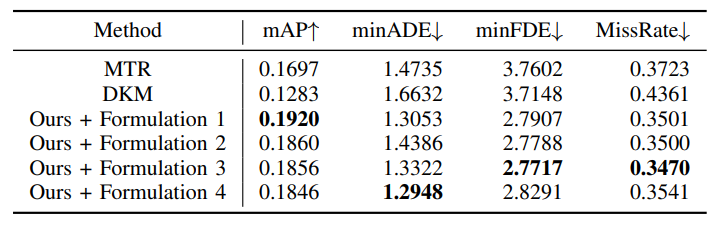
Better Steering with Less Data: Kinematic Priors Guide Trajectory Prediction

Better Steering with Less Data: Kinematic Priors Guide Trajectory Prediction

Experiments show kinematic priors boost trajectory forecasting, with big gains in small or noisy datasets and modest gains in large-scale settings.

Author: Hackernoon
Using Availability‑Throughput Bounds to Improve Blockchain Fee Design and Welfare

Using Availability‑Throughput Bounds to Improve Blockchain Fee Design and Welfare

This section shows how availability‑throughput bounds inform blockchain fee design, improving welfare guarantees in Ethereum, Bitcoin, and beyond.

Author: Hackernoon
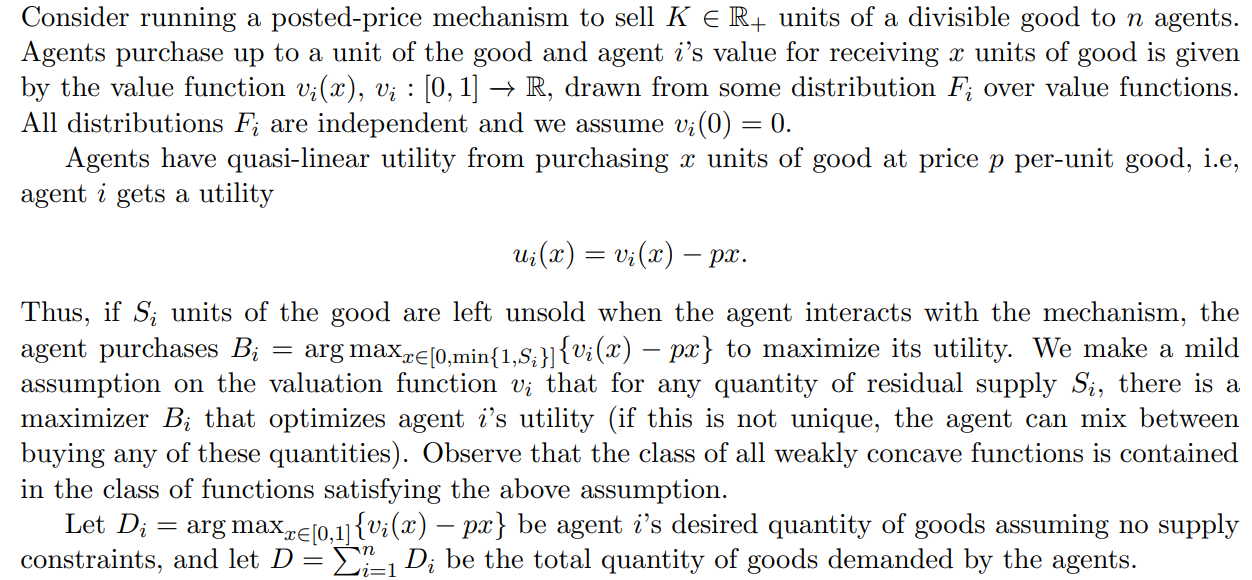
Running Out of Stock? How Mathematics Guarantees Welfare in Posted‑Price Sales

Running Out of Stock? How Mathematics Guarantees Welfare in Posted‑Price Sales

This section applies availability‑throughput bounds to posted‑price mechanisms, deriving prophet inequalities that balance welfare and reliability.

Author: Hackernoon