DEX

DEXs are peer-to-peer marketplaces where users trade cryptocurrencies directly from their wallets via Automated Market Makers (AMM) or on-chain order books. By removing central authorities, DEXs like Uniswap and Raydium prioritize privacy and user sovereignty. The 2026 DEX landscape is dominated by intent-based trading, MEV protection, and cross-chain liquidity aggregation. Follow this tag for the latest in on-chain trading volume, liquidity pools, and the technology behind permissionless swaps.

34972 Articles
Created: 2026/02/02 18:52
Updated: 2026/02/02 18:52
2025 Adoption Index Shows Explosive Growth

2025 Adoption Index Shows Explosive Growth

The post 2025 Adoption Index Shows Explosive Growth appeared on BitcoinEthereumNews.com. AltcoinsBitcoin Chainalysis’ latest Global Crypto Adoption Index reveals a world where digital assets are no longer confined to niche markets. From institutional giants in the U.S. to grassroots adoption across Asia and Latin America, crypto usage has expanded across nearly every income bracket, signaling a new phase of global integration. The index, which ranks 151 countries, combines data from centralized exchanges, decentralized finance (DeFi), and institutional transfers. Scores are weighted against purchasing power, population size, and transaction types, creating a picture of how everyday users, retail investors, and large-scale institutions interact with crypto. India Leads, U.S. Climbs Higher India secured the top spot for the third consecutive year, with activity spanning retail, institutional, and DeFi channels. The U.S. advanced to second place, buoyed by regulatory clarity and surging inflows into spot Bitcoin ETFs, while Pakistan, Vietnam, and Brazil rounded out the top five. Asia Pacific stood out as the fastest-growing region, with transaction volumes soaring 69% year-over-year to $2.36 trillion. Latin America followed closely with 63% growth, fueled by a mix of remittance usage and institutional entry. Even Sub-Saharan Africa, where crypto often serves as a lifeline for payments, posted 52% growth. Methodology Evolves with the Market This year’s index underwent two major changes. Chainalysis dropped its retail DeFi metric, noting that activity there represents a much smaller share of total usage than previously assumed. At the same time, a new institutional activity sub-index was introduced to capture the rising role of hedge funds, custodians, and asset managers, with any transfer above $1 million falling into this category. According to Chainalysis, these adjustments better reflect the balance between grassroots adoption and top-down institutional flows, offering a more accurate snapshot of how crypto has matured. Eastern Europe Tops Population-Adjusted Rankings When measured against population, the leaderboard looks very different. Ukraine, Moldova,…

Author: BitcoinEthereumNews
Historic Bitcoin-S&P decoupling fuels altseason hopes – All the details!

Historic Bitcoin-S&P decoupling fuels altseason hopes – All the details!

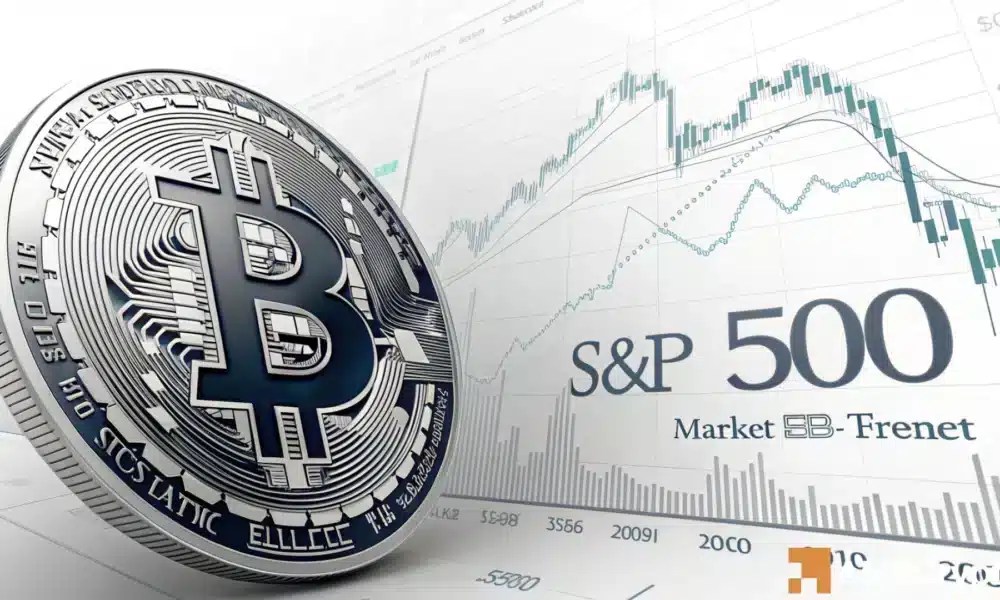
The post Historic Bitcoin-S&P decoupling fuels altseason hopes – All the details! appeared on BitcoinEthereumNews.com. Key Takeaways Bitcoin decoupled from the S&P 500 as inflows lifted BTC and altcoins. Analysts warned ETH’s edge might fade as BTC retests resistance, with Cowen projecting renewed BTC dominance by October. Bitcoin [BTC] and the S&P 500 continued to decouple as of press time. Historically, both assets tended to move in parallel, but the latest 1-day chart showed a clear divergence. Bitcoin, shown in purple, has rallied upward, while the S&P 500 trended lower. Naturally, this hinted that capital rotation into the cryptocurrency was underway. This renewed strength comes after Bitcoin’s weak performance in recent weeks. The asset had dropped from its all-time high of $124,000 to as low as $108,000 before attempting a breakout above the $110,000 resistance zone. Source: TradingView A familiar decoupling pattern This was not the first time Bitcoin and the S&P 500 decoupled. Over the years, Bitcoin often outperformed equities. According to Curvo, between 2020 and 2024, the S&P 500 outperformed Bitcoin only three times, notably during the 2022 decoupling. In that period, Bitcoin fell 62% compared to the S&P 500’s 13% decline. On top of that, liquidity favored Bitcoin more recently. The asset gained 135% in 2024, versus the S&P’s 33%. If capital inflows continued, Bitcoin could break above its current resistance. Having said that, analysts noted that altcoins may also benefit from this rotation. BTC.D drops! Who really gains from it? Altcoins appeared to be gaining from Bitcoin’s reduced dominance. According to CoinMarketCap, Bitcoin Dominance [BTC.D], which measures Bitcoin’s market share against other cryptocurrencies, dropped 3.43% in the past day. Ethereum [ETH] captured the largest share of that liquidity, rising 2.17%. Source: CoinMarketCap In case of a continued decline in BTC.D, suggest that altcoins could extend their gains in the coming sessions. However, analyst Ben Cowen offers a contrarian outlook. He believes…

Author: BitcoinEthereumNews
Ozak AI’s Presale Success Already Mirrors Early Bitcoin Momentum—Can It Deliver 100x Gains?

Ozak AI’s Presale Success Already Mirrors Early Bitcoin Momentum—Can It Deliver 100x Gains?

The post Ozak AI’s Presale Success Already Mirrors Early Bitcoin Momentum—Can It Deliver 100x Gains? appeared on BitcoinEthereumNews.com. Ozak AI, currently in its 5th presale stage at $0.01, has raised over $2.6 million and sold more than 840 million tokens, signaling remarkable early interest from investors. Analysts are drawing parallels between Ozak AI’s presale momentum and the early days of Bitcoin (BTC), when small allocations turned into life-changing returns. With a combination of predictive AI technology, strategic partnerships, and strong investor demand, Ozak AI is shaping up as one of 2025’s most promising high-upside crypto projects. OZ Presale Momentum Reflects Early BTC Potential Bitcoin started as a niche project with minimal adoption, trading for just pennies before exploding in value over the years. Ozak AI is showing similar signs at an early stage. The 5th presale at $0.01 provides a low entry point for investors, creating the potential for exponential growth. With over $2.6 million raised and 840 million OZ tokens sold, early participants are already signaling confidence in the project’s long-term vision and utility. The strong demand indicates that Ozak AI could replicate some of Bitcoin’s early adoption dynamics in the AI and crypto sectors. Ozak AI: Advanced Predictive Technology Ozak AI’s platform leverages machine learning models, inclusive of neural networks and ARIMA, to offer real-time market insights, risk evaluation, and actionable trading signals. Its decentralized infrastructure, powered by means of EigenLayer AVS and Arbitrum Orbit, ensures stable and scalable execution of clever contracts. Additionally, customizable Prediction Agents allow customers to tailor AI insights to personal portfolios, making the platform suitable for retail traders, institutional investors, and automatic trading bots alike. The combination of predictive analytics and decentralized structure gives Ozak AI a sensible edge over traditional cryptocurrencies, which on the whole rely upon speculation and adoption. By integrating AI-powered market intelligence without delay into the investment technique, the platform presents actionable value from day one. OZ…

Author: BitcoinEthereumNews
600 US Economists Make a Big Debut! “Rest Trump, Support the Fed!”

600 US Economists Make a Big Debut! “Rest Trump, Support the Fed!”

The post 600 US Economists Make a Big Debut! “Rest Trump, Support the Fed!” appeared on BitcoinEthereumNews.com. As is known, US President Donald Trump recently announced that he dismissed FED member Lisa Cook for making false statements in mortgage agreements. Lisa Cook filed a lawsuit today challenging President Donald Trump’s decision to remove her from office. Cook argued that the White House lacked the authority to do so and insisted she wanted to keep her position. As tensions between the two continue, nearly 600 US economists signed a letter supporting Lisa Cook against Donald Trump’s impeachment attempt. According to CNBC, 600 US economists said they support Lisa Cook’s independence and the Fed’s institutional independence. “Sound economic policy requires a credible monetary policy institution, and a credible monetary policy institution requires the independence of the Fed. In this context, we support Lisa Cook and the institutional independence of the Fed. Trump’s claim is based on unproven allegations. We believe this is an attempt to undermine the Fed’s independence. Central bank independence has been a cornerstone of the U.S. economy’s vitality for decades. We stand with Lisa Cook and the institutional safeguards that have long been the foundation of American economic strength.” The letter of support for Lisa Cook included the names of scientists such as Nobel Prize winners in Economics Joseph Stiglitz, Claudia Goldin, Alvin Roth, Paul Milgrom and Paul Romer, as well as former Fed economists and former chairs of the White House Council of Economic Advisers (CEA), Christina Romer and Jared Bernstein. *This is not investment advice. Follow our Telegram and Twitter account now for exclusive news, analytics and on-chain data! Source: https://en.bitcoinsistemi.com/600-us-economists-make-a-big-debut-rest-trump-support-the-fed/

Author: BitcoinEthereumNews
Ripple (XRP) Braces for Deep Correction in September as Analysts Predict 7000% Gains for This Crypto

Ripple (XRP) Braces for Deep Correction in September as Analysts Predict 7000% Gains for This Crypto

September is proving to be a turbulent month in the crypto market, with Ripple (XRP) in question as analysts fear it could see a deep correction in the future. In all this commotion, Mutuum Finance (MUTM) is shaping up as a major player that investors are starting to look at, as projections are pointing at […]

Author: Cryptopolitan
Non-Cellular Oncology Immunotherapy with STIP–NAM Traceability, Entering a Global Acquisition Window.

Non-Cellular Oncology Immunotherapy with STIP–NAM Traceability, Entering a Global Acquisition Window.

The post Non-Cellular Oncology Immunotherapy with STIP–NAM Traceability, Entering a Global Acquisition Window. appeared on BitcoinEthereumNews.com. ORLANDO, Estados Unidos, September 3rd, 2025, FinanceWire OGRD Alliance announces PLPC-DB, a non-cellular oncology immunotherapy platform designed to overcome the barriers of cost, scalability, and infrastructure in cancer innovation. Unlike cell- or gene-based therapies, PLPC-DB is a lyophilized phospholipoproteic complex with validated stability for more than 18 months at room temperature, eliminating cold-chain dependency and reducing operational costs by over 60%. FOUNDATION IN REAL-WORLD EVIDENCE For more than a decade, the OncoVix program in Latin America has provided structured patient monitoring and data collection. This Real-World Evidence (RWE) backbone enabled the creation of the Structured Immunophenotypic Traceability Platform (STIP), now enhanced with a Network Access Module (NAM). STIP–NAM extends traceability to interoperable, auditable formats across jurisdictions, supporting regulators, investors, and partners without requiring sequential Phase I–III trials. SCIENTIFIC DIFFERENTIATION PLPC-DB coordinates innate and adaptive immune activation (NK, CD8⁺, CD4⁺ Th1), enhances antigen presentation, and reduces inhibitory cytokines such as IL-10 and TGF-β. Its platform is documented in five PubMed-indexed Q1 publications and eleven Tier-1 oncology congress presentations, under the scientific leadership of Dr. Ramón Gutiérrez-Sandoval M.D., oncopathologist and CSO of OGRD Alliance. “Our priority has been to structure PLPC-DB as a scalable and traceable immunotherapy asset, with a dossier that meets the expectations of global regulators and investors,” said Dr. Ramón Gutiérrez-Sandoval, Chief Scientific Officer of OGRD Alliance. “The STIP–NAM framework ensures that this platform is not only scientifically validated but also financially sound for strategic acquisition.” MARKET AND REGULATORY PROFILE The global oncology immunotherapy market exceeds USD 120B, expanding at ~10% CAGR. Current therapies often demand complex cold chains and costly infrastructure. PLPC-DB bypasses these limitations, offering a reproducible, scalable platform aligned with sustainability goals (UN Agenda 2030, Vision 2030). External validation letters from independent regulatory consultancies confirm dossier maturity, aligned with international regulatory standards (including FDA and EMA…

Author: BitcoinEthereumNews
There is risk tariffs could cause persistent inflation rise

There is risk tariffs could cause persistent inflation rise

The post There is risk tariffs could cause persistent inflation rise appeared on BitcoinEthereumNews.com. St. Louis Federal Reserve (Fed) President Alberto Musalem said on Wednesday that he sees a risk that tariffs could cause a persistent increase in inflation, per Reuters. Key takeaways “Fed needs to balance inflation, job goals going forward.” “Below-trend growth, stable expectations should temper inflation.” “Expecting inflation to ebb back to 2% by second half of 2026.” “Tariffs will work through economy over two to three quarters.” “Expecting tariff inflation impact to fade eventually.” “Expecting job market cooling with downside risks to labor sector.” “Seeing job market holding near full employment.” “Seeing modest GDP growth this year before returning to trend in 2026.” “Uncertainty lifting for economy, fiscal policy may add stimulus.” “Job market break-even level between 30,000 and 80,000 jobs per month.” Market reaction These comments received a neutral/hawkish score of 6.0 from FXStreet Fed Speech Tracker. In turn, the FXStreet Fed Sentiment Index stays near 100, pointing to a neutral stance. In the meantime, the US Dollar Index remains stuck in a tight daily range and was last seen trading flat at 98.32. Fed FAQs Monetary policy in the US is shaped by the Federal Reserve (Fed). The Fed has two mandates: to achieve price stability and foster full employment. Its primary tool to achieve these goals is by adjusting interest rates. When prices are rising too quickly and inflation is above the Fed’s 2% target, it raises interest rates, increasing borrowing costs throughout the economy. This results in a stronger US Dollar (USD) as it makes the US a more attractive place for international investors to park their money. When inflation falls below 2% or the Unemployment Rate is too high, the Fed may lower interest rates to encourage borrowing, which weighs on the Greenback. The Federal Reserve (Fed) holds eight policy meetings a year, where the…

Author: BitcoinEthereumNews
Global Crypto Boom: 2025 Adoption Index Shows Explosive Growth

Global Crypto Boom: 2025 Adoption Index Shows Explosive Growth

From institutional giants in the U.S. to grassroots adoption across Asia and Latin America, crypto usage has expanded across nearly […] The post Global Crypto Boom: 2025 Adoption Index Shows Explosive Growth appeared first on Coindoo.

Author: Coindoo
We should cut at next meeting

We should cut at next meeting

The post We should cut at next meeting appeared on BitcoinEthereumNews.com. In an interview with CNBC on Wednesday, Federal Reserve (Fed) Governor Christopher Waller reiterated that they should cut the interest rate at the next policy meeting. Key takeaways “Don’t need to go in lock-sequence of rate cuts.” “Could see multiple cuts, whether it’s every meeting or every other will need to see what data says.” “We know we’ll have a blip of inflation but it won’t be permanent, 6 months out will be closer to 2%.” “We can always adjust rate-cut pace.” “Fed’s independence is critical, believe we have independent Fed.” “Have not had interview for fed chair job.” “Don’t see recession, but slower growth.” Market reaction These comments received a dovish 3.2 from FXStreet Fed Speech Tracker but failed to trigger a noticeable market reaction. At the time of press, the US Dollar Index was virtually unchanged on the day at 98.30. Meanwhile, stays in neutral territory near 100.00. Fed FAQs Monetary policy in the US is shaped by the Federal Reserve (Fed). The Fed has two mandates: to achieve price stability and foster full employment. Its primary tool to achieve these goals is by adjusting interest rates. When prices are rising too quickly and inflation is above the Fed’s 2% target, it raises interest rates, increasing borrowing costs throughout the economy. This results in a stronger US Dollar (USD) as it makes the US a more attractive place for international investors to park their money. When inflation falls below 2% or the Unemployment Rate is too high, the Fed may lower interest rates to encourage borrowing, which weighs on the Greenback. The Federal Reserve (Fed) holds eight policy meetings a year, where the Federal Open Market Committee (FOMC) assesses economic conditions and makes monetary policy decisions. The FOMC is attended by twelve Fed officials – the seven members…

Author: BitcoinEthereumNews
Michael Saylor’s Strategy May Enter the S&P 500 as Early as Friday

Michael Saylor’s Strategy May Enter the S&P 500 as Early as Friday

Strategy (Nasdaq: MSTR) is one of the few high-performing equities shortlisted for inclusion in what many consider to be the top stock index. Saylor’s Bitcoin Bet Could Land Strategy in the S&P 500 by Friday The S&P 500, which tracks the performance of America’s top 500 companies, will be announcing new additions to its index […]

Author: Bitcoin.com News