DEX

DEXs are peer-to-peer marketplaces where users trade cryptocurrencies directly from their wallets via Automated Market Makers (AMM) or on-chain order books. By removing central authorities, DEXs like Uniswap and Raydium prioritize privacy and user sovereignty. The 2026 DEX landscape is dominated by intent-based trading, MEV protection, and cross-chain liquidity aggregation. Follow this tag for the latest in on-chain trading volume, liquidity pools, and the technology behind permissionless swaps.

34935 Articles
Created: 2026/02/02 18:52
Updated: 2026/02/02 18:52
Coinbase Unveils Mag7 Crypto-Equity Index Futures for Broader Market

Coinbase Unveils Mag7 Crypto-Equity Index Futures for Broader Market

TLDR Coinbase is launching the Mag7 Crypto-Equity Index futures on September 22. The new product will combine exposure to both traditional equities and crypto ETFs. The Mag7 index includes top stocks like Apple, Microsoft, Amazon, and Tesla. Coinbase will include its own stock and BlackRock’s Bitcoin and Ethereum ETFs. The product will follow an even-weighted [...] The post Coinbase Unveils Mag7 Crypto-Equity Index Futures for Broader Market appeared first on Blockonomi.

Author: Blockonomi
Markets caught offside by White House announcement

Markets caught offside by White House announcement

The post Markets caught offside by White House announcement appeared on BitcoinEthereumNews.com. Once again dip buyers have jumped in to avert a wider selloff, says Chris Beauchamp, Chief Market Analyst at investing and trading platform IG. Stocks rebound from their lows Markets often see a burst of volatility after US holidays, but today seemed to have something more about it, as European markets nose dived in early trading and bond yields continued to rise. The start of the US cash session saw a recovery off the lows, a sign that dip buyers remain vigilant for any chance to get in on the action. A seemingly cryptic announcement from the White House was revealed to be merely an update on Space Command, at which point any wild fears about the health of the US president were quietly dropped. Dax endures steep losses One index that didn’t rebound this afternoon was the Dax, which slumped following Fresenius’ sale of its Canadian business, and then took a further knock as eurozone inflation rose. The ECB’s Schnabel didn’t help matters, arguing that further rate cuts were unnecessary. European stocks have enjoyed a brief moment in the sun this year, but as the Fed moves towards rate cuts we might see this wave of fund flows head back to Wall Street and the allure of high growth stocks over their cheap but staid European cousins. Source: https://www.fxstreet.com/news/markets-caught-offside-by-white-house-announcement-202509021557

Author: BitcoinEthereumNews
Euro steadies above 1.1650 as ISM PMI shows contraction, NFP in focus

Euro steadies above 1.1650 as ISM PMI shows contraction, NFP in focus

The post Euro steadies above 1.1650 as ISM PMI shows contraction, NFP in focus appeared on BitcoinEthereumNews.com. EUR/USD rebounds as the US Dollar loses traction after the ISM PMI release. Headline PMI rises to 48.7 but stays in contraction for the sixth month. Employment and production indices weaken, underscoring fragile conditions The Euro (EUR) trims some of its earlier losses against the US Dollar (USD) on Tuesday, as the Greenback loses momentum following the release of mixed US manufacturing Purchasing Managers’ Index (PMI) data. At the time of writing, EUR/USD is trading near 1.1670 in the American session, modestly rebounding from an intraday low of 1.1613. Price action, however, remains confined within a narrow range between 1.1600 and 1.1720, underscoring market indecision ahead of Friday’s highly anticipated US Nonfarm Payrolls (NFP) report. ISM Manufacturing PMI: Headline stays in contraction, new orders surprise higher The Institute for Supply Management’s (ISM) Manufacturing PMI for August came in at 48.7, slightly above July’s 48.0 but still below the 50 threshold for a sixth consecutive month, confirming ongoing contraction in the sector. New Orders: rose sharply to 51.4, signaling expansion for the first time in seven months. Employment Index: slipped to 43.8, highlighting ongoing labor market weakness in the sector. Production Index: dropped to 47.8, keeping output in contraction territory. Prices Paid: eased slightly to 63.7 from 65.3, but remain elevated, pointing to lingering input cost pressure. The data suggest that while demand is starting to stabilize, production and hiring remain under strain. The improvement in new orders contrasts with broader weakness, hinting at tentative signs of recovery but no clear turnaround yet. Market reaction: US Dollar softens, yields edge lower The US Dollar Index (DXY), which tracks the Greenback’s value against a basket of six major currencies, fell back toward the 98.00 handle after briefly spiking to 98.60 earlier in the European session as investors reacted to the mixed PMI…

Author: BitcoinEthereumNews
Solana Meme Coin Launchpad Pump.fun Rolls Out “Project Ascend” – Can It Finally End Rug Pulls?

Solana Meme Coin Launchpad Pump.fun Rolls Out “Project Ascend” – Can It Finally End Rug Pulls?

Solana-based memecoin launchpad Pump.fun has unveiled “Project Ascend,” a sweeping update it claims will transform its ecosystem and address one of the crypto industry’s most persistent issues: sustainability for token creators. The announcement sent Pump.fun’s native token PUMP surging more than 10% as traders reacted to the promise of “100x growth” across the platform. The centerpiece of the rollout is a reimagined creator fee system designed to better align projects with their communities and reduce incentives for short-lived, high-risk token launches. Pump.fun Revamps Creator Fees in Bid to End Short-Lived Token Hype At the heart of Project Ascend is Dynamic Fees V1, a new tiered structure applied exclusively to PumpSwap tokens. Instead of charging flat fees, the system reduces creator fees as a token’s market capitalization grows. Pump.fun says the model will make launching new coins “10x more rewarding,” encouraging fresh talent ranging from streamers to startups, while still allowing successful projects to scale without being weighed down by costs. Additionally, allocations for protocol fees and liquidity providers remain unchanged, ensuring continuity for the broader ecosystem. Pump.fun argues the change directly addresses problems with its earlier Creator Fees initiative, which faced community criticism and proved ineffective in covering the costs of building real projects. According to the team, while the original system offered a proof of concept, it fell short of supporting expensive needs like marketing campaigns, exchange listings, and long-term development. The updated fee model, combined with faster processing of community takeover applications for inactive tokens, is intended to give legitimate builders a clearer path to sustainability. The update comes at a key moment for Pump.fun. In recent weeks, the platform has rolled out a series of expansions designed to strengthen its footprint within Solana’s ecosystem. On July 17, it announced its first acquisition, purchasing wallet-tracking tool Kolscan to integrate advanced analytics and social trading features. Just days later, the project launched its public token sale, seeking to raise up to $600 million, representing 15% of PUMP’s total supply. Pump.fun has also introduced a real-time revenue dashboard, reporting over $58 million in token buybacks to date, equivalent to offsetting 4.26% of the circulating supply. Pump.fun Pushes Beyond Memes With Liquidity Fund and Social Trading Tools In parallel, Pump.fun launched the Glass Full Foundation, a fund dedicated to injecting liquidity into promising community-driven projects. The initiative, revealed on August 8, has already begun supporting several tokens, planning to accelerate the most vibrant and organic communities on the platform. More recently, Pump.fun added a Kolscan-powered leaderboard on August 25, allowing users to track top traders and influencers in real time. Despite the momentum, questions linger about whether Project Ascend can meaningfully curb the plague of rug pulls and failed meme coins. The platform’s promise of becoming “the hub for the most successful projects and creators” rests on its ability to turn structural incentives into long-term value. Critics note that while fee reforms may encourage higher-quality projects, they do not directly eliminate the risks of bad actors launching short-lived tokens. Even so, Pump.fun’s broader strategy appears to be positioning itself as a central hub for Solana startups and meme projects alike. By combining new fee mechanics, social trading features, liquidity injections, and real-time transparency tools, the platform hopes to strengthen its reputation as more than just a generator of fleeting meme coins. Pump.fun Surges Past LetsBonk, Capturing 75% of Solana DEX Revenue Solana’s decentralized exchange (DEX) activity is showing sharp declines after a year of explosive growth fueled by meme coins. August Data from Dune Analytics shows that daily active traders on Solana DEXs have dropped 81%, from 4.8 million earlier this year to just 900,000 in August. Daily transactions have also fallen, sliding from 45 million in July to 28.8 million this month. The slowdown marks the fourth straight day that Solana’s trader count has stayed under one million, indicating what many see as the end of the frenzy that drove record volumes in late 2024. Activity had surged last year as meme coins and experimental tokens dominated trading, with weekly traders peaking above 30 million by October. But inflows collapsed in early 2025, leaving recurring users to sustain activity at a lower baseline of 10–15 million weekly. Amid this downturn, Pump.fun has staged a comeback after losing ground to Solana-based rival LetsBonk.fun in July. LetsBonk led daily volumes and revenue for nearly a month before Pump.fun reclaimed the top spot in early August. On August 6, Pump.fun outpaced LetsBonk across all metrics, including tokens minted, trading volume, and revenue. Fresh Dune data from September 2 shows Pump.fun’s dominance, with $1.13 million in revenue over the past 24 hours. BonkFun followed with $381,730, while Sugar ($52,052), Heaven ($12,615), and Bags ($5,854) trailed far behind.Source: Dune Analytics/ @adam_tehc Combined, Pump.fun and BonkFun account for more than 90% of fee revenue, reflecting a heavily concentrated market. Token creation trends mirror the revenue gap. Pump.fun users minted 16,697 tokens in the last 24 hours, far ahead of LetsBonk’s 6,087. Pump.fun also led in graduations, with 164 compared to LetsBonk’s 32, though graduation rates remain below 1%, showing high churn across platforms.Source: Dune Analytics/ @adam_tehc Meanwhile, PUMP, Pump.fun’s native token, rallied 14% following the launch of “Project Ascend.” The update builds on a buyback program that has lifted the token 25% in the past week and 32% over two weeks

Author: CryptoNews
Bitcoin Gets Ethereum-Style Smart Contracts with BRC-2.0 Upgrade

Bitcoin Gets Ethereum-Style Smart Contracts with BRC-2.0 Upgrade

The post Bitcoin Gets Ethereum-Style Smart Contracts with BRC-2.0 Upgrade appeared on BitcoinEthereumNews.com. A new upgrade introduces programmability to Bitcoin-based tokens, opening the gates for DeFi and NFTs. BRC-20 tokens on the Bitcoin network can now run Ethereum-style smart contracts with a new upgrade, opening the door for apps and DeFi directly on the network. The update, known as BRC-2.0, was activated at Bitcoin block height 912,690, marking another step in the Bitcoin community’s efforts to elevate the cryptocurrency’s status from just a store of value to a platform capable of supporting dApps and DeFi protocols. “BRC-20 2.0 signals a new chapter for Bitcoin, moving it from a passive store of value toward a programmable financial layer,” Leo Fan, co-founder of Cysic, said in a commentary for The Defiant. “The real test will be whether developers can deliver meaningful applications that justify the added complexity in a network where scalability and culture remain difficult hurdles.” BRC-2.0 adds Ethereum-style smart contract support to the BRC-20 indexer, letting blockchain developers build directly on Bitcoin without relying on cross-chain bridges or wrapped tokens. This means Bitcoin-native tokens are becoming programmable and able to work smoothly with other EVM-compatible chains. Edan Yago, CEO and co-founder of BitcoinOS, a framework that adds smart contract functionality, told The Defiant that the upgrade gives developers the ability, for the first time, to create “fully-programmable tokens and smart contracts on Bitcoin, make BTC itself programmable (much as wETH makes ETH programmable), build rollups on Bitcoin and to use ZK to bridge BTC in an effectively trustless manner.” “By unlocking programmability directly on Bitcoin, we are mobilizing dormant capital, enabling institutions and developers alike to innovate on the world’s most secure and valuable network,” Yago added. ‘Digital Golden Fuel’ Dmitry Gusakov, tech lead at Ethereum staking protocol Lido, told The Defiant that for Ethereum, EVM has become “one of the key success…

Author: BitcoinEthereumNews
Crypto Adoption Could Skyrocket In The Next Five Years – Here Are Our 1000x Crypto Predictions

Crypto Adoption Could Skyrocket In The Next Five Years – Here Are Our 1000x Crypto Predictions

We could potentially be entering an era of extreme growth for crypto, as analysts discuss the trends set by internet […] The post Crypto Adoption Could Skyrocket In The Next Five Years – Here Are Our 1000x Crypto Predictions appeared first on Coindoo.

Author: Coindoo
Coinbase's New Futures Index Tracks Bitcoin, Ethereum—Plus 'Mag 7' Stocks Like Nvidia

Coinbase's New Futures Index Tracks Bitcoin, Ethereum—Plus 'Mag 7' Stocks Like Nvidia

Coinbase is debuting futures in the U.S. that will give traders exposure to Bitcoin and Ethereum along with major "Magnificent 7" tech stocks.

Author: Coinstats
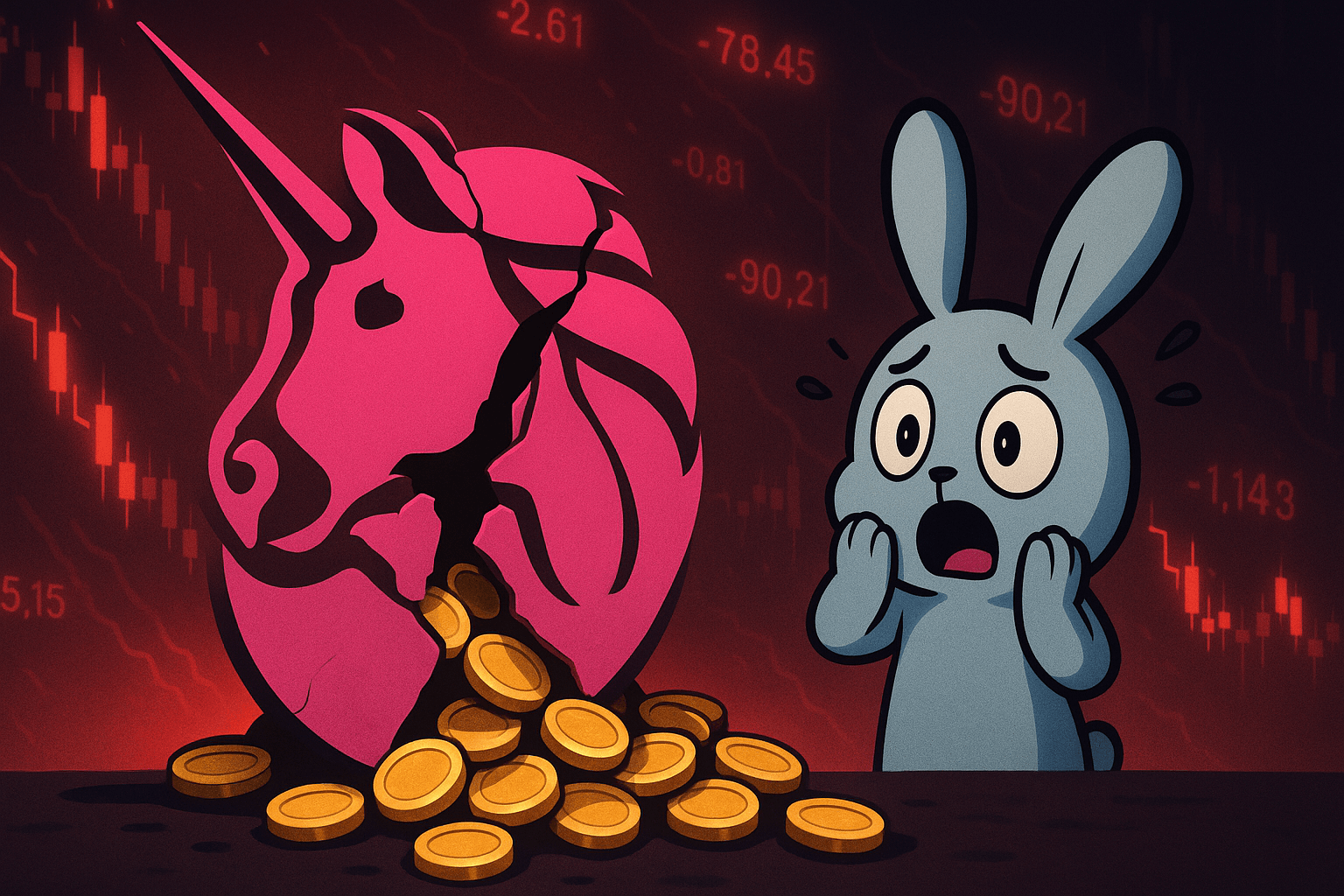
Uniswap V4’s Bunni DEX Suffers Multi-Million Loss — Will UNI Price Face New Pressure?

Uniswap V4’s Bunni DEX Suffers Multi-Million Loss — Will UNI Price Face New Pressure?

Uniswap's latest version has faced a major setback with its Bunni decentralized exchange (DEX) experiencing a hefty financial loss. This incident prompts questions about the potential impact on UNI's market value. Readers will discover which cryptocurrencies are poised for growth amidst this unfolding scenario. Uniswap (UNI) Shows Growth Potential Despite Price Dip  Source: tradingview  Uniswap's current price swings between nine and ten dollars. It's facing a challenge at just over eleven dollars. But this isn't the end for UNI. It's enjoying a decent climb from last month's price, jumping nearly nine percent. Over six months, it has gone up by more than a quarter. If it pushes past the eleven-dollar resistance, it might aim for thirteen dollars, climbing roughly twenty-five percent. The recent dip hasn't shaken its upward move. Analysts think crossing these levels could see further growth. With an RSI of fifty-two, it's in neutral territory, which means it can still rise. Uniswap seems positioned for potential gains ahead. Conclusion The incident at Bunni DEX has created concerns about the stability of the platform. As a result, the UNI token may face downward pressure. Investors might become cautious, potentially affecting the coin's short-term performance. It's crucial to monitor market reactions and investor sentiment closely in the coming days. Disclaimer: This article is provided for informational purposes only. It is not offered or intended to be used as legal, tax, investment, financial, or other advice.

Author: Coinstats
Venus Protocol User Loses $13.5M in Phishing Attack

Venus Protocol User Loses $13.5M in Phishing Attack

The post Venus Protocol User Loses $13.5M in Phishing Attack appeared on BitcoinEthereumNews.com. Update Sept. 2, 11:57  am UTC. This article has been updated to include a correction from PeckShield. A decentralized finance (DeFi) trader lost $13.5 million in crypto after falling victim to a phishing scam, according to blockchain security firm PeckShield.  PeckShield initially reported on Tuesday that a user of the DeFi lending platform Venus Protocol saw crypto assets worth $27 million disappear in a phishing attack.  However, the investigation firm later corrected the amount to $13.5 million, saying they did not consider the user’s debt position in their initial estimate. A phishing attack is a type of scam where attackers trick victims into granting malicious permissions or revealing sensitive information by pretending to be a legitimate source. In this incident, the user approved a malicious transaction, allowing the attacker to drain stablecoins and wrapped assets from its balance.  Source: PeckShield Venus Protocol pauses protocol to investigate Venus Protocol’s official social media account responded to community concerns in an X thread, confirming there was no flaw in its smart contracts.  When a user asked if this was due to the user’s mistake, Venus said it was likely the case. However, Venus said that as a precautionary measure, it would pause the protocol to conduct security reviews.  “Right now, yes, that appears to be the case. We will keep everyone updated as we investigate,” Venus Protocol wrote. “Protocol is paused while security reviews are underway.” Related: Criminals are ‘vibe hacking’ with AI at unprecedented levels: Anthropic Hackers ramp up attacks as September starts The recent phishing attack adds to a list of criminal efforts to steal crypto at the start of September. On Tuesday, World Liberty Financial’s (WLFI) governance tokenholders were hit by a known phishing wallet exploit, according to SlowMist founder Yu Xian. On the same day, decentralized exchange (DEX) Bunni…

Author: BitcoinEthereumNews
Bunni DEX Loses $8.4 Million in Sophisticated Smart Contract Attack

Bunni DEX Loses $8.4 Million in Sophisticated Smart Contract Attack

Bunni DEX, a cutting-edge decentralized exchange built on Uniswap v4, fell victim to a major security breach on September 2, 2025. Hackers drained an estimated $8.4 million from the platform by exploiting a vulnerability in its custom liquidity management system.

Author: Brave Newcoin