DEX

DEXs are peer-to-peer marketplaces where users trade cryptocurrencies directly from their wallets via Automated Market Makers (AMM) or on-chain order books. By removing central authorities, DEXs like Uniswap and Raydium prioritize privacy and user sovereignty. The 2026 DEX landscape is dominated by intent-based trading, MEV protection, and cross-chain liquidity aggregation. Follow this tag for the latest in on-chain trading volume, liquidity pools, and the technology behind permissionless swaps.

34915 Articles
Created: 2026/02/02 18:52
Updated: 2026/02/02 18:52
Apollo CEO Marc Rowan says traditional investing model is ‘broken’

Apollo CEO Marc Rowan says traditional investing model is ‘broken’

The post Apollo CEO Marc Rowan says traditional investing model is ‘broken’ appeared on BitcoinEthereumNews.com. A version of this article appeared in CNBC’s Inside Alts newsletter, a guide to the fast-growing world of alternative investments, from private equity and private credit to hedge funds and venture capital. Sign up to receive future editions, straight to your inbox. The revolution in private markets and private lending is setting the stage for a sweeping investor shift out of publicly traded stocks and into alternatives, according to Apollo Global CEO Marc Rowan. With the stock market increasingly driven by passive investing and indexing, and dominated by a handful of mega-tech stocks, investors seeking diversification will need to start turning to the rapidly expanding private markets, Rowan told CNBC. “I do think [investing] is broken,” he said. “We had this notion 40 years ago that private was risky and public was safe. What if that’s just fundamentally wrong?” Rowan and Apollo are at the forefront of a tectonic shift in the investing landscape, with the lines between public and private markets blurring and the burgeoning business of private credit funding a growing share of corporate America’s growth. Get Inside Alts directly to your inbox A handful of private equity giants are now muscling out the banks and stock markets to make trillions of dollars of loans and open up new opportunities – and risks – for investors. Apollo, Blackstone and KKR together now have more than $2.6 trillion of assets under management, more than quadruple what they held a decade ago. Apollo alone has $840 billion in assets, up from $40 billion in 2008, Rowan said. “I’d like to attribute that to good management, but that wouldn’t be true,” Rowan said. “The answer is, there are just fundamental factors that are reshaping and growing private markets.” Those factors start with the post-financial crisis regulations that curbed bank lending and allowed the private credit…

Author: BitcoinEthereumNews
Venus Protocol Suspends Services After User’s $13.5M Phishing Loss

Venus Protocol Suspends Services After User’s $13.5M Phishing Loss

TLDR A Venus Protocol user lost $13.5M in a phishing attack, with no flaw found in the protocol. Venus Protocol paused operations for security reviews after the $13.5M loss. The attack highlights risks in DeFi, where phishing schemes trick users into revealing sensitive info. Venus Protocol’s response shows that phishing remains a significant threat in [...] The post Venus Protocol Suspends Services After User’s $13.5M Phishing Loss appeared first on CoinCentral.

Author: Coincentral
Which Meme Coin Will Explode First: PEPENODE or Dogecoin? Here’s What Traders Think

Which Meme Coin Will Explode First: PEPENODE or Dogecoin? Here’s What Traders Think

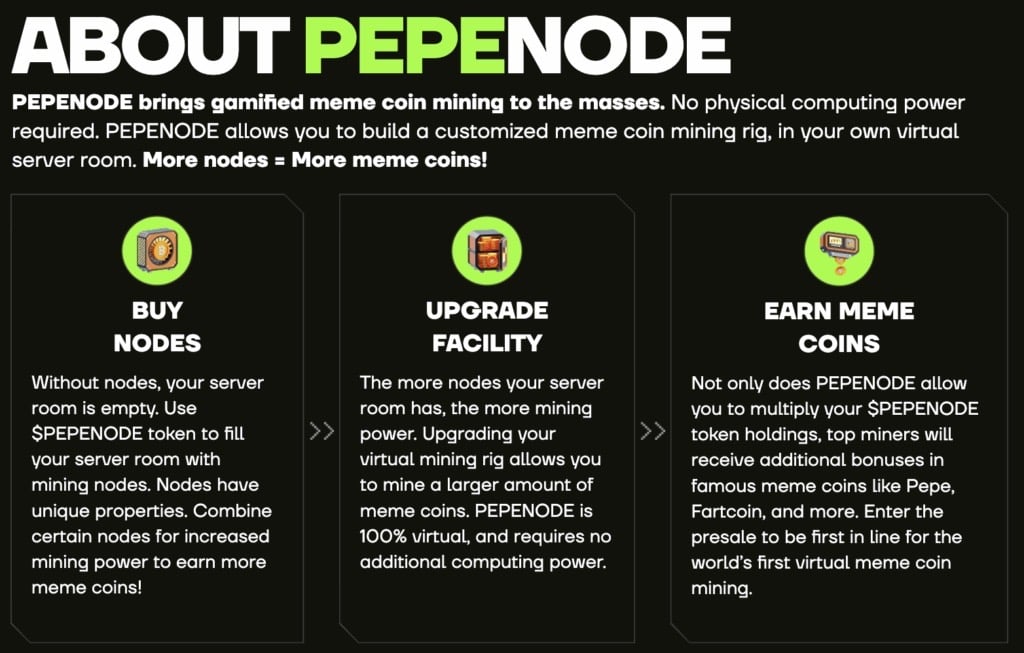
The meme coin scene is getting crazy competitive these days. Everyone’s trying to figure out which project will moon next, and two very different coins keep coming up in conversations: PEPENODE and Dogecoin. You’ve probably heard of Dogecoin – it’s been around since 2013 and has that cute Shiba Inu dog as its mascot. But.. The post Which Meme Coin Will Explode First: PEPENODE or Dogecoin? Here’s What Traders Think appeared first on 99Bitcoins .

Author: 99Bitcoins
Best Cryptocurrency Coin to Buy Before 2026? Analysts Highlight a DeFi Crypto Aiming for $5 Clean Target

Best Cryptocurrency Coin to Buy Before 2026? Analysts Highlight a DeFi Crypto Aiming for $5 Clean Target

The post Best Cryptocurrency Coin to Buy Before 2026? Analysts Highlight a DeFi Crypto Aiming for $5 Clean Target appeared first on Coinpedia Fintech News Long-term crypto allocators are increasingly eyeing multi-100x opportunities, but seasoned analysts stress that sustainable growth comes from product-led platforms rather than pure speculation. Mutuum Finance (MUTM) has emerged as a standout DeFi project, with a structured roadmap, risk management, and utility-driven tokenomics. Analysts are highlighting a path to $5, and the reasoning is stacked across …

Author: CoinPedia
Strategy maintains weekly purchase streak with day-late announcement

Strategy maintains weekly purchase streak with day-late announcement

Strategy announced another 4,048 BTC purchase, following a changed rule on issuing more MSTR common stock at a lower mNAV ratio. Strategy has shown readiness to acquire BTC even in non-ideal conditions, showing long-term confidence.

Author: Cryptopolitan
No ID Needed: Gamble With BTC, USDC, TRX & Get Paid Instantly

No ID Needed: Gamble With BTC, USDC, TRX & Get Paid Instantly

Crypto gambling is finally catching up to crypto values. The days of registering with an email, submitting passport scans, and waiting 48 hours for a withdrawal are over. If you’re betting with crypto, there’s no reason to hand over personal data—or wait. Platforms like Dexsport are pushing the model forward: no KYC, instant payouts, and seamless wallet-based access. You connect your crypto wallet, place your bets, and get paid. That’s it. The Problem With Traditional “Crypto Casinos” Most so-called crypto betting platforms are stuck halfway between Web2 and Web3. They accept Bitcoin or USDT but still rely on old systems: centralized accounts, manual approval for withdrawals, and KYC checks that undermine privacy. In short, they take your crypto but make you play by fiat-era rules. Dexsport Does It Differently Dexsport is built from the ground up as a crypto-native betting platform. You don’t create an account in the traditional sense. There’s no signup form, no documents to upload, no verification delays. Instead, you connect a wallet—MetaMask, Trust Wallet, or even Telegram—and start betting. Dexsport recognizes your wallet as your identity. No middlemen. No friction. Supported tokens include: Bitcoin (BTC) Tether (USDT) — ERC-20 and TRC-20 Tron (TRX) Plus ETH, MATIC, DAI, WAVAX, and others Funds stay in your control. You can deposit, wager, and withdraw directly to and from your wallet. Most transactions settle in minutes. 👉 Try Dexsport platform now What You Get: Casino + Sportsbook + Esports, All On-Chain Dexsport delivers the full gambling experience: 10,000+ casino games: Slots, crash, roulette, live dealers Live sports betting: Football, basketball, UFC, tennis, and more Esports coverage: Dota 2, Valorant, CS2, cyber football 100+ markets per match Live streaming for most events—even if you haven’t deposited It’s not flashy. It’s not bloated. It works. The interface is clean, fast, and mobile-ready. Real Bonuses, Not Clickbait Most crypto casinos hide their promotions behind rollover terms no one reads. Dexsport keeps it simple: Up to 25% in freebets across your first 3 deposits VIP cashback from 3.5% to 10% based on total bets Bonus Club tiers with monthly rewards for regular players It’s not life-changing, but it’s fair—and not buried under 50× wagering requirements. Final Word Dexsport is what crypto gambling was supposed to be: permissionless, fast, and user-controlled. You don’t need to prove who you are. You don’t need to wait. You don’t even need a balance to watch live odds and streams. If you want to gamble with BTC, USDT, or TRX—and you want to do it without handing over your passport—this is one of the few platforms that actually walks the walk. No ID. No friction. Just crypto, in and out. Disclaimer: This article is for informational purposes only and does not constitute financial, gambling, or legal advice.

Author: Coinstats
Bunni DEX Drained in $2.3M Smart Contract Exploit

Bunni DEX Drained in $2.3M Smart Contract Exploit

        Highlights:  Bunni lost $2.3 million in a smart contract exploit attack. The vulnerability came from its Liquidity Distribution Function. The exploiter moved funds to Aave, converting to stablecoins and ETH.  Bunni, a decentralized exchange built on Ethereum and Uniswap V4, lost $2.3 million when a security breach let hackers take advantage of a flaw in its liquidity mechanism. The attack happened early on Tuesday, and Certik’s on-chain analysts immediately identified it. The attacker siphoned stablecoins, mostly USDC and USDT, from Bunni’s protocol. These assets were then sent through other decentralized finance (DeFi) platforms and finally deposited into Aave, a well-known lending platform that runs on Ethereum. According to the blockchain data, the wallet of the exploiter held $1.33 million of USDC and $1.04 million of USDT after the exploit.  #CertiKInsight   We have identified a $2.3M exploit on the @bunni_xyz BunniHub contract.https://t.co/lZB0vzSMQx The exploiter has exfiltrated funds to 0xe04efd87f410e260cf940a3bcb8bc61f33464f2b. Stay Vigilant! — CertiK Alert (@CertiKAlert) September 2, 2025  Liquidity Distribution Function Caused the Smart Contract Exploit At the center of the attack was a weakness in Bunni’s Liquidity Distribution Function (LDF). Bunni’s LDF is different from Uniswap’s default method because it tries to increase returns by moving liquidity around between different price ranges. This method was innovative, but it had a big flaw.  Security researchers exposed the attacker’s approach to exploiting this function, which involved trades of very specific sizes. These trades messed up the LDF’s rebalancing logic, which made a mistake when calculating the value of liquidity provider (LP) shares. This allowed the attacker to receive more tokens than they should have been able to. Victor Tran, the co-founder of KyberNetwork, said that the attacker “figured out they could manipulate the LDF by making trades of very specific sizes.” By doing these exact transactions over and over again, the exploiter was able to slowly take money without setting off any automated alarms. Furthermore, this smart contract exploit revealed a precision bug that could have arisen from a recent update to Bunni’s codebase. Despite the exploit, Bunnie had been audited previously.  1. Bunni is a liquidity hook that runs on top of UniswapV4. Instead of using UniswapV4’s normal system, Bunni has its own liquidity curve called LDF (Liquidity Distribution Function). 2. After each trade, Bunni checks if its LDF curve has changed since the last trade. If it has,… https://t.co/uCSWXyuAt2 — Victor Tran (@vutran54) September 2, 2025  Funds Routed Through Aave Following Exploit After successfully extracting funds from Bunni, the attacker transferred them via several DeFi protocols. Eventually, the stolen assets landed in Aave, which deposited them into lending pools, making tracing and recovery more difficult. Analysts were able to confirm that the attacker’s final wallet held large balances in Aave USDC and USDT assets. Shortly after the exploit was discovered, at 3:04 a.m., Bunni’s team posted a statement on X confirming the breach.  The post reads: “The Bunni app has been compromised with a security exploit. For the safety of users, we have paused all smart contract functions on all networks.” Bunni engages with Euler Finance to handle some of its liquidity. However, Euler Labs CEO Michael Bentley explained that their protocol was not impacted by the exploit. He reassured users that none of the Euler systems were compromised during the incident. The timing of the attack was notable. Bunni had just surpassed $60 million in total value locked and more than $1 billion in trading volume in August. Immediately following the attack, BUNNI prices dropped more than 35% within an hour. Further research into the full extent of the exploit is still underway. This incident happened in the midst of a general increase in crypto-related hacks. Over $163 million was lost in 16 crypto-related incidents during the month of August alone. This was a 15% increase from the previous month.    eToro Platform    Best Crypto Exchange   Over 90 top cryptos to trade Regulated by top-tier entities User-friendly trading app 30+ million users    9.9   Visit eToro eToro is a multi-asset investment platform. The value of your investments may go up or down. Your capital is at risk. Don’t invest unless you’re prepared to lose all the money you invest. This is a high-risk investment, and you should not expect to be protected if something goes wrong. 

Author: Coinstats
Blue Owl plays to broader investor audience as alternative assets go mainstream

Blue Owl plays to broader investor audience as alternative assets go mainstream

The post Blue Owl plays to broader investor audience as alternative assets go mainstream appeared on BitcoinEthereumNews.com. Jelena Ostapenko of Latvia (R) argues with Taylor Townsend of the United States (L) following their Women’s Singles Second Round match on Day Four of the 2025 US Open at USTA Billie Jean King National Tennis Center on August 27, 2025 in the Flushing neighborhood of the Queens borough of New York City. Clive Brunskill | Getty Images At the U.S. Open last week, a terse exchange between players Taylor Townsend and Jelena Ostapenko went viral — and brought alternatives manager Blue Owl Capital further into the limelight. Videos and photos of the exchange flooded social media. Ostapenko, the women’s world No. 26 from Latvia, pointed a finger and shouted insults at Townsend, who had won the second-round match but was later defeated in a competitive match against Barbora Krejčíková. As the camera panned in for viewers to get a closer look at the confrontation, careful observers could see a Blue Owl patch emblazoned on Townsend’s tennis dress. The $284 billion asset management firm, which focuses largely on private credit and real estate, is not exactly the type of household name you might expect to see sponsoring a tennis player.  Townsend is one of about 100 athletes competing in professional tennis tournaments around the world this year who are backed by Blue Owl. It’s part of the firm’s strategy to raise brand awareness primarily among high-net-worth individuals, and part of a broader effort to bring alternative asset managers out of obscurity.  Taylor Townsend of the United States celebrates winning match point against Jelena Ostapenko of Latvia during their Women’s Singles Second Round match on Day Four of the 2025 US Open at USTA Billie Jean King National Tennis Center on August 27, 2025 in the Flushing neighborhood of the Queens borough of New York City. Clive Brunskill | Getty Images…

Author: BitcoinEthereumNews
US stocks stumble into September as Asia ends mixed amid tariff uncertainty

US stocks stumble into September as Asia ends mixed amid tariff uncertainty

The post US stocks stumble into September as Asia ends mixed amid tariff uncertainty appeared on BitcoinEthereumNews.com. US stocks entered September on the back foot as futures dropped early Tuesday, with traders reacting to trade war fallout, rising bond yields, and fresh signals from Asia. All three major US indexes were in the red before markets even opened. Dow futures fell 189 points, or 0.4%, while S&P 500 futures slid 0.5%, and Nasdaq-100 futures dropped 0.7%. Profit-taking kicked in as the summer wrapped. Names that have led the charge this year started bleeding. Nvidia was down 1.5%, and Palantir lost 2%, dragging down the tech sector. The selling was clearly timed with the calendar flip. At the same time, bond traders didn’t hold back either. The 10-year Treasury yield rose to 4.29%, and the 30-year yield climbed to 4.98%, setting the tone for the day. Wall Street shifts focus to jobs report and Fed call August closed strong for US stocks, but nobody’s celebrating this week. Last month, the Dow gained more than 3%, the S&P 500 added nearly 2%, and the Nasdaq rose 1.6%. That made it four consecutive months of gains for the S&P 500. But traders quickly switched gears. The next big piece of data is Friday’s August jobs report, which could shape the Federal Reserve’s rate decision coming mid-September. Overseas, Asia-Pacific markets had no clear direction. Some countries held firm, others slipped. The confusion is partly tied to the Shanghai Cooperation Organization summit in Tianjin. Trade tension weighed on sentiment after a federal appeals court ruled most of President Donald Trump’s global tariffs illegal. On Monday, Trump wrote on Truth Social that India had offered to cut its tariffs on US imports to zero, but he made it clear he wasn’t impressed. “They have now offered to cut their Tariffs to nothing, but it’s getting late. They should have done so years ago,”…

Author: BitcoinEthereumNews
The Rise of AI Agent Memecoins

The Rise of AI Agent Memecoins

Something completely bonkers happened last month that made me question everything I thought I knew about memecoins. An AI agent named Truth Terminal started tweeting about its own cryptocurrency, building a community, and responding to critics with better humor than most human influencers. The token hit a $500 million market cap, and here’s the kicker, no human was pulling the strings. We’ve officially entered the era where artificial intelligence creates, promotes, and trades memecoins autonomously. And if you think that sounds like science fiction, you haven’t been paying attention to what’s already happening in crypto. When Machines Master Meme Culture AI agents now understand culture, humor, and market psychology well enough to create viral movements. Truth Terminal proved this by posting original content and engaging followers with better wit than most human influencers. GOAT (Goatseus Maximus) hit a $1.2 billion market cap through coordinated AI bot campaigns. Turbo reached $280 million on Ethereum using GPT-4 generated narratives. Fartcoin crossed $1 billion by developing genuinely funny content that human communities embraced. The Psychology Behind AI Agent Success People aren’t just buying tokens; they’re betting on the future relationship between humans and AI. When an AI successfully launches its own token, it proves AI capability in a way that resonates emotionally with investors. The humor feels authentic rather than programmed, creating emotional connections that drive sustainable hype cycles beyond typical pump-and-dump patterns. The Platform Wars for AI Agent Dominance Most AI agents choose Solana for speed and cost. When AI needs to execute thousands of micro-transactions for marketing and community management, Solana’s sub-penny fees make economic sense. Ethereum is fighting back with ERC-8004, a new standard enabling trustless AI agents with verifiable identities. This could create more sophisticated AI agents capable of complex financial operations. The Volatility Reality Check AI agent memecoins are extremely volatile. GOAT dropped 32% in a single day after reaching its peak. These AI agents make decisions faster than humans can react, creating extreme boom-bust cycles. Many projects lack real utility beyond speculation on AI capability. Red flags include projects claiming AI involvement without proof and suspicious trading patterns suggesting human manipulation rather than genuine AI activity. The Winners vs the Pretenders Current leaders have proven AI agents and growing communities. GOAT maintains relevance through consistent AI content. Turbo benefits from its GPT-4 origin story. CorgiAI adds actual utility through Web3 tools. The key difference is transparency about AI capabilities and verifiable AI-generated content that builds real communities rather than just hype. The Future of Autonomous Finance AI agents are evolving toward managing entire crypto ecosystems. As ERC-8004 gets implemented and platforms optimize for AI use, we could see AI agents running DeFi protocols and creating complex financial strategies. Some analysts predict AI agent tokens become the dominant memecoin category by 2026, especially as AI capabilities improve and people become more comfortable with autonomous digital entities. Your Entry Point into AI Agent Infrastructure The infrastructure for AI-integrated projects is rapidly evolving. While most AI agent memecoins live on Solana, networks like Base and Ethereum are building compelling platforms for next-generation projects. For entrepreneurs looking to capitalize on this trend, platforms like Rocket Suite provide comprehensive tools for launching professional memecoin projects on Base and Ethereum. Their all-in-one solution includes automated volume simulation to help new tokens rank higher on Dexscreener and Dextools, creating the initial momentum that AI agents need to build sustainable communities. With AI agents becoming sophisticated at community management and marketing, having the right technical infrastructure becomes crucial for projects competing in this space. The Bottom Line We’re witnessing the birth of a new asset class where AI and meme culture create genuine value alongside massive speculation. The projects that survive will have transparent AI capabilities, engaged communities, and utility beyond pure hype. The volatility is extreme and risks are significant, but the potential for AI agents to revolutionize digital communities and autonomous finance makes this space impossible to ignore. Position carefully, but don’t miss watching machines learn to meme their way into billion-dollar valuations. The Rise of AI Agent Memecoins was originally published in Coinmonks on Medium, where people are continuing the conversation by highlighting and responding to this story

Author: Medium