ETF

A crypto ETF is a regulated investment fund that tracks the price of one or more digital assets and trades on traditional stock exchanges like the NYSE or Nasdaq.Following the success of Bitcoin and Ethereum ETFs, the 2026 market now includes Solana ETFs and diversified Altcoin Baskets. ETFs serve as the primary vehicle for institutional capital and retirement funds (401k/IRA) to enter the Web3 space. This tag tracks regulatory approvals, AUM (Assets Under Management) inflows, and the impact of Wall Street on crypto liquidity.

40269 Articles
Created: 2026/02/02 18:52
Updated: 2026/02/02 18:52
Who Holds Bitcoin in 2025? Crypto Firm Maps Global BTC Ownership Distribution

Who Holds Bitcoin in 2025? Crypto Firm Maps Global BTC Ownership Distribution

The post Who Holds Bitcoin in 2025? Crypto Firm Maps Global BTC Ownership Distribution appeared on BitcoinEthereumNews.com. River says individuals still own the majority of bitcoin. The U.S.-based bitcoin financial services firm revealed ownership distribution research dated Aug. 25, 2025 in a recent post on X. The study groups supply into categories and shows the share River attributes to each, using public filings, custodial address tagging and earlier blockchain research. River estimates individuals control about 65.9% of circulating BTC, or 13.83 million coins. This bucket includes self-custodied wallets and exchange accounts River classifies as individual. On the institutional side, River divides holdings into businesses and ETFs and funds. Businesses — a global category covering corporate treasuries and conventional firms that report bitcoin holdings — account for about 6.2% of supply, or 1.30 million BTC. ETFs and funds — spot ETFs and investment vehicles that custody coins for clients — control about 7.8%, or 1.63 million BTC. Governments are shown at about 1.5%, or 306,000 BTC, based on sovereign addresses River tracks from public sources. Two special categories round out the distribution: Lost bitcoin makes up about 7.6%, or 1.58 million BTC. River says this is inferred from age heuristics showing coins that have not moved for many years and are likely unrecoverable. Satoshi/Patoshi holdings are pegged at about 4.6%, or 968,000 BTC, based on earlier research into early-era mining patterns. Finally, about 5.2% of the supply, or 1.09 million BTC, has yet to be mined before the hard cap of 21 million is reached. River’s research estimates as of Aug. 25, 2025, individuals hold 65.9% of BTC, funds 7.8% In plain terms, River’s research is an attempt to map who holds bitcoin today, not to forecast future prices. The estimates are not definitive, since custodians aggregate many clients, some wallets are misclassified and ownership can be opaque. River’s conclusion is that individuals still dominate holdings, but the…

Author: BitcoinEthereumNews
Everything Blockchain Taps Flare’s XRP DeFi Framework

Everything Blockchain Taps Flare’s XRP DeFi Framework

The post Everything Blockchain Taps Flare’s XRP DeFi Framework appeared on BitcoinEthereumNews.com. Everything Blockchain Inc. has joined the XRP DeFi (XRPFi) standard on Flare Network to integrate yield-bearing strategies into its corporate digital treasury. The U.S. public company, listed under ticker EBZT, signed a memorandum of understanding to allocate $10 million in XRP for the initiative. EBZT Leverages Flare’s XRPFi to Turn XRP Into Yield-Bearing Treasury Asset According to a press release, the move positions EBZT among the first U.S. firms to embrace Flare’s institutional-grade framework for XRP yield. Nasdaq-listed VivoPower had earlier committed $100 million to the same standard, demonstrating growing corporate adoption of the model. The trend is also emphasized by the recent launch of an XRP treasury by Japanese gaming company Gumi. Flare developed XRPFi to transform XRP from a traditionally non-yielding asset into a productive instrument for corporate balance sheets. At the core of the framework is FAssets, this is Flare’s bridging system and extends smart contract utility to tokens like XRP and Bitcoin. Through this structure, EBZT plans to convert its XRP into FXRP. The, it will deploy it across decentralized lending, staking, and liquidity protocols using Flare’s Firelight restaking layer. By engaging in the XRPFi, EBZT is diversifying its cash funds and show investors that blockchain tokens can be purposely utilized beyond speculation. This allows corporations the chance to use XRP in a regulated manner comparable to regular corporate governance or reporting regulations. It is also an indicator that the digital assets are continuing to be a part of everyday treasury management. EBZT Participation Underlines Increasing Confidence in The XRPFi Framework The growing number of listed companies as members of XRPFi is enabling Flare to grow stronger in institutional finance. Million dollars’ worth of digital assets are already committed into Flare as new protocols are introduced. Hence, Flare can become the main platform that makes XRP…

Author: BitcoinEthereumNews
Companies Absorb BTC at 4x Daily Miner Supply, Per River’s Research

Companies Absorb BTC at 4x Daily Miner Supply, Per River’s Research

The post Companies Absorb BTC at 4x Daily Miner Supply, Per River’s Research appeared on BitcoinEthereumNews.com. River says companies are taking in far more bitcoin each day than miners create. The U.S.-based bitcoin financial services firm, which runs brokerage and mining operations and publishes research, released a Sankey-style flow infographic dated Aug. 25 in a post on X. In this layout, outflows are shown on the left, inflows on the right, and the thickness of each line represents the size of the net daily movement. River’s Aug. 25 snapshot shows businesses absorbing about 1,755 BTC/day vs about 450 mined. River defines “businesses” broadly. The category combines bitcoin treasury companies — firms such as Strategy that publicly hold BTC — with conventional companies that keep bitcoin on their balance sheets. Based on public filings, custodial address tagging and its own heuristics, River estimates that about 1,755 BTC per day flow into business-controlled wallets. By comparison, River calculates new miner supply at about 450 BTC per day in 2025. That figure reflects the April 2024 halving, which cut the block subsidy to 3.125 BTC per block. With bitcoin blocks averaging one every 10 minutes — about 144 per day — the result is roughly 450 BTC in new issuance daily, though the exact number fluctuates slightly as block times vary. That math is the basis for River’s claim that companies are absorbing bitcoin at nearly four times the rate it is mined. The infographic shows other large institutional inflows as well. Funds and ETFs account for about 1,430 BTC/day in net inflows, which further boosts total absorption compared with new issuance. Smaller streams go to “other” entities (about 411 BTC/day) and governments (about 39 BTC/day). River also records a small but steady flow into “lost bitcoin” (about 14 BTC/day), representing coins that the firm judges to be permanently inaccessible, such as through key loss. On the other side…

Author: BitcoinEthereumNews
Ethereum Holds $4,600 — Analysts Predict $10K If Fed Maintains Neutral Rate Policy

Ethereum Holds $4,600 — Analysts Predict $10K If Fed Maintains Neutral Rate Policy

Ethereum appears stable above $4,600 after closing out August at $4,592. According to analysts, if the Federal Reserve doesn’t move […] The post Ethereum Holds $4,600 — Analysts Predict $10K If Fed Maintains Neutral Rate Policy appeared first on Coindoo.

Author: Coindoo
Bitcoin and Ethereum ETFs Bleed $291.28 Million in Friday Red Tide

Bitcoin and Ethereum ETFs Bleed $291.28 Million in Friday Red Tide

The post Bitcoin and Ethereum ETFs Bleed $291.28 Million in Friday Red Tide appeared on BitcoinEthereumNews.com. On Friday, bitcoin and ethereum exchange-traded funds (ETFs) bled $291.28 million in net redemptions, capping the week with a bruising close. ETF Exodus Caps a Bruising Week Statistics gathered from sosovalue.com show U.S. ethereum-focused ETFs logged $164.64 million in net withdrawals to finish the week. The day’s biggest pullbacks came from the Grayscale Ethereum Mini […] Source: https://news.bitcoin.com/bitcoin-and-ethereum-etfs-bleed-291-28-million-in-friday-red-tide/

Author: BitcoinEthereumNews
Earning 3,000 XRP a day is no longer a fantasy: BJMINING brings a new value-added model to Ripple assets

Earning 3,000 XRP a day is no longer a fantasy: BJMINING brings a new value-added model to Ripple assets

BJMINING’s cloud mining now lets XRP holders earn daily income—up to 3,000 XRP/day—backed by $15 trial bonus, green energy, and flexible withdrawals.

Author: Blockchainreporter
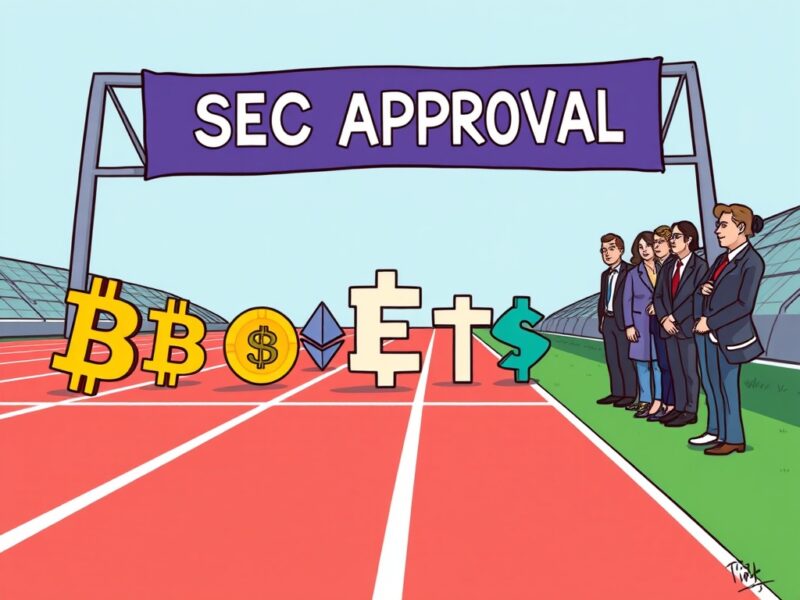
Crypto ETFs: The Crucial Survival Battle After SEC Approval

Crypto ETFs: The Crucial Survival Battle After SEC Approval

BitcoinWorld Crypto ETFs: The Crucial Survival Battle After SEC Approval The cryptocurrency world is buzzing with anticipation. The U.S. Securities and Exchange Commission (SEC) is on the verge of approving a significant number of Crypto ETFs, potentially transforming how institutions and everyday investors access digital assets. This impending wave of approvals, expected as early as this fall, signals a pivotal moment for the industry. With over 90 applications on file, experts predict an exciting expansion into institutional markets. However, this growth also brings fierce competition, suggesting many of these new products might face early delisting. Cointelegraph reported on these dual prospects, citing multiple industry specialists. Are Investors Ready for Diverse Crypto ETFs? Nate Geraci, president of Novadius Wealth Management, emphasizes that the ultimate success of Crypto ETFs hinges entirely on investor choice. He believes there is an underestimated demand for a wide variety of these investment vehicles. Consider the initial enthusiasm surrounding spot Bitcoin and Ethereum ETFs. This strong interest clearly indicates a substantial appetite among investors for regulated, accessible crypto exposure. Therefore, the market might be more receptive to a diverse range of crypto-backed products than some initially assume. The introduction of numerous Crypto ETFs could democratize access to digital assets, simplifying the investment process and mitigating technical complexities for many investors. Navigating the Survival Battle: What Challenges Lie Ahead for Crypto ETFs? While the market is eager, not all Crypto ETFs will achieve long-term success. Bloomberg ETF analyst James Seyffart warns that many of the products launching in the coming months will likely disappear within a few years. This underscores the intense competitive landscape that is rapidly forming. Seyffart specifically cautions against expecting altcoin-based ETFs to mirror the performance of Bitcoin ETFs. Bitcoin, with its larger market capitalization and established liquidity, often acts as a bellwether for the broader crypto market. Altcoins, by contrast, can be more volatile and less liquid, posing unique challenges for ETF structures. However, not all altcoin Crypto ETFs will fail. Those with strong underlying assets, robust liquidity, and effective strategies could carve out successful niches, attracting crucial investor interest. Key Factors for Success and Failure Among New Crypto ETFs The impending flood of Crypto ETFs means that distinguishing factors will become paramount. Here are some critical elements determining which products thrive and which falter: Liquidity: ETFs tracking highly liquid assets will likely fare better, ensuring easier trading for investors. Fees: Lower expense ratios often attract more capital, especially in a crowded market. Marketing and Distribution: Effective campaigns and broad availability through brokerage platforms are essential for visibility. Underlying Asset Strength: ETFs based on cryptocurrencies with strong fundamentals, clear use cases, and growing ecosystems have an inherent advantage. Innovation: Products offering unique exposure or strategies, such as diversified baskets or specific sector focus, might capture niche demand. Conversely, high fees, limited investor interest, poor liquidity in the underlying asset, or a lack of clear differentiation will likely lead to early delisting. Investors must conduct thorough due diligence before committing to any new Crypto ETFs. The Future Landscape: Beyond Spot Bitcoin and Ethereum The approval of spot Bitcoin and Ethereum ETFs has paved the way for a much broader range of digital asset products. We could soon see ETFs tracking other major altcoins, or even thematic ETFs focusing on specific blockchain sectors like DeFi, NFTs, or gaming. This expansion represents a significant maturation of the crypto market. This institutional embrace signifies growing confidence in cryptocurrencies’ long-term viability. It offers traditional investors a familiar, regulated gateway, potentially unlocking vast capital pools previously hesitant to enter the volatile crypto space. The journey for these new Crypto ETFs will undoubtedly be dynamic and challenging. However, the potential for innovation and market growth remains immense. It is a thrilling time to observe the evolution of digital asset investment. Summary: A New Era for Crypto Investments The looming SEC approval of numerous Crypto ETFs marks a transformative period for the digital asset landscape. While this development promises unprecedented institutional access and market expansion, it also ushers in an era of intense competition. Investor choice, product differentiation, and the strength of underlying assets will be crucial determinants of survival. As the market evolves, both opportunities and challenges will emerge, shaping the future of crypto investment for years to come. Frequently Asked Questions (FAQs) 1. What is a Crypto ETF? A Crypto ETF (Exchange Traded Fund) is an investment fund that holds cryptocurrencies or crypto-related assets and trades on traditional stock exchanges. It allows investors to gain exposure to digital assets without directly owning them. 2. Why is SEC approval important for Crypto ETFs? SEC approval provides regulatory legitimacy and investor protection, making these products accessible to a broader range of institutional and retail investors who prefer regulated investment vehicles. 3. Will all new Crypto ETFs succeed after launch? No, experts predict that many of the newly launched Crypto ETFs will likely face early delisting due to intense competition, low investor interest, high fees, or insufficient liquidity in their underlying assets. 4. How can investors choose the right Crypto ETF? Investors should consider factors such as the ETF’s fees, the liquidity and fundamentals of its underlying cryptocurrency, its marketing and distribution, and its unique value proposition compared to competitors. 5. What is the difference between Bitcoin ETFs and Altcoin ETFs? Bitcoin ETFs track Bitcoin, which has higher market capitalization and liquidity. Altcoin ETFs track other cryptocurrencies (altcoins), which can be more volatile and less liquid, posing different risk and reward profiles. Share Your Thoughts! Did this article shed light on the exciting, yet competitive, future of Crypto ETFs? Share your insights and spread the word by sharing this article on your social media channels! Your engagement helps us continue providing valuable crypto market analysis. To learn more about the latest crypto market trends, explore our article on key developments shaping digital asset institutional adoption. This post Crypto ETFs: The Crucial Survival Battle After SEC Approval first appeared on BitcoinWorld and is written by Editorial Team

Author: Coinstats
Solana could retest ATH as SOL ETF pipeline shows ‘very good sign’

Solana could retest ATH as SOL ETF pipeline shows ‘very good sign’

On average, September has always been the second-worst month for SOL investor returns.

Author: Coinstats
China Financial Leasing Group disclosed that it has invested in BlackRock and Hong Kong-listed Bitcoin and Ethereum ETFs

China Financial Leasing Group disclosed that it has invested in BlackRock and Hong Kong-listed Bitcoin and Ethereum ETFs

PANews reported on August 30 that according to an announcement from the Hong Kong Stock Exchange, China Financial Leasing Group, a Hong Kong-listed company, released its interim results report for the period ending June 30, 2025, which disclosed that the continued weakness of the US dollar triggered the strengthening of Bitcoin. The company has begun to pay attention to the cryptocurrency market and has begun investing in the cryptocurrency industry, especially related exchange-traded funds that hold physical cryptocurrencies rather than synthetic products. Its current major investments include: China Southern Holdings Hong Kong Dollar Money Market ETF, BlackRock iShares Bitcoin Trust ETF, Hua Xia Bitcoin ETF, and iShares Ethereum Trust ETF.

Author: PANews
Grayscale Submits Polkadot and Cardano ETF Registration Forms to SEC

Grayscale Submits Polkadot and Cardano ETF Registration Forms to SEC

Grayscale Investments filed comprehensive S-1 registration forms with SEC for spot Polkadot and Cardano exchange-traded funds as Grayscale Cardano Trust ETF (GADA) and Grayscale Polkadot Trust ETF join crowded field of 92 pending crypto ETF applications currently awaiting regulatory review.

Author: Coinstats