ETF

A crypto ETF is a regulated investment fund that tracks the price of one or more digital assets and trades on traditional stock exchanges like the NYSE or Nasdaq.Following the success of Bitcoin and Ethereum ETFs, the 2026 market now includes Solana ETFs and diversified Altcoin Baskets. ETFs serve as the primary vehicle for institutional capital and retirement funds (401k/IRA) to enter the Web3 space. This tag tracks regulatory approvals, AUM (Assets Under Management) inflows, and the impact of Wall Street on crypto liquidity.

40104 Articles
Created: 2026/02/02 18:52
Updated: 2026/02/02 18:52
ARK Buys $15.6M of Bitmine (BMNR) Shares

ARK Buys $15.6M of Bitmine (BMNR) Shares

The post ARK Buys $15.6M of Bitmine (BMNR) Shares appeared on BitcoinEthereumNews.com. ARK Invest bought $15.6 million shares of ether treasury company Bitmine Immersion Technologies (BMNR) on Wednesday. The St. Petersburg, Florida-based investment manager added a total of 339,113 BMNR shares to three of its exchange-traded funds (ETFs) — Innovation (ARKK), Next Generation Internet (ARKW) and Fintech Innovation (ARKF) — according to an emailed notification. Bitmine shares fell 7.85% to $46.03 on Wednesday. The company, led by Fundstrat’s Tom Lee, is one of the largest corporate holders of ether, having purchased over 1.7 million tokens, worth just under $8 billion at current prices. The Cathie Wood-led Ark Invest often loads up on shares in companies when their shares take a hit and offloads them when they’ve enjoyed a surge to maintain its targeted weighing of different holdings within its ETFs. Source: https://www.coindesk.com/markets/2025/08/28/ark-invest-buys-usd15-6m-shares-of-ether-treasury-firm-bitmine

Author: BitcoinEthereumNews
Metalpha Taps AMINA Bank to Bring Crypto Equity Funds Into Hong Kong

Metalpha Taps AMINA Bank to Bring Crypto Equity Funds Into Hong Kong

TLDR: Metalpha partnered with AMINA Bank to launch Principal Fund I, expanding regulated crypto equity access in Hong Kong. The fund invests in listed crypto firms like Coinbase, Circle, and MicroStrategy alongside Hong Kong-based companies. LSQ Capital, Metalpha’s licensed Hong Kong subsidiary, manages the product under SFC rules for professional investors. Principal Fund I has [...] The post Metalpha Taps AMINA Bank to Bring Crypto Equity Funds Into Hong Kong appeared first on Blockonomi.

Author: Blockonomi
Cardano Whales Accumulate New Coin — Analysts Predict 30x Breakout in the 2025 Cycle

Cardano Whales Accumulate New Coin — Analysts Predict 30x Breakout in the 2025 Cycle

Large holders of Cardano have been steadily building their positions, sparking talk of a potential long-term breakout. Billions of ADA now sit in whale wallets, showing strong confidence in the project’s fundamentals. Cardano’s upgrades, including improvements to scalability and smart contracts, have strengthened its ecosystem. More developers are building on Cardano. At the same time, [...] The post Cardano Whales Accumulate New Coin — Analysts Predict 30x Breakout in the 2025 Cycle appeared first on Blockonomi.

Author: Blockonomi
Pantera Capital’s $1.25 Billion Venture for Solana Co.

Pantera Capital’s $1.25 Billion Venture for Solana Co.

The post Pantera Capital’s $1.25 Billion Venture for Solana Co. appeared on BitcoinEthereumNews.com. Key Points: Pantera, Summer Capital, Avenir Group create Solana Co. with $1.25 billion. Institutionalizing Solana exposure through public company vehicle. Largest direct institutional inflow into Solana’s ecosystem. Pantera Capital, alongside Summer Capital and Avenir Group, announces a $1.25 billion initiative to transform a public company into ‘Solana Co.’, boosting institutional Solana exposure. This initiative positions Solana for significant institutional investment, likely elevating its market standing, amid a broader trend of increasing publicly managed digital asset portfolios. $1.25 Billion Solana Co. Launch by Pantera, Partners Pantera Capital, alongside Summer Capital and Avenir Group, plans to rebrand a public company as Solana Co. This initiative will involve a $1.25 billion investment to create a substantial Solana treasury vehicle. While no direct statements have been issued by Pantera’s leadership, the initiative is seen as a groundbreaking move for the cryptocurrency’s institutionalization. “This enterprise will boost Solana’s visibility and market presence,” allowing institutional and retail investors distinct access to Solana assets. Experts note that the public, regulated vehicle approach distinguishes this initiative from traditional ETFs or spot holdings and indicates growing mainstream financial interest in blockchain assets. Dan Morehead, Founder & CEO of Pantera Capital, states, “DATs can generate yield to grow net asset value per share, resulting in more underlying token ownership over time than just holding spot.” Market reactions have been favorable, as reflected in Did you know? Solana’s institutionalization echoes similar historical inflows, like MicroStrategy’s bitcoin purchases, which significantly influenced market dynamics. Solana (SOL) currently trades at $213.09 with a market cap of $115.21 billion and a 24-hour trading volume increasing by 44.19% to $13.45 billion. SOL experienced a 4.09% increase over the last 24 hours, marking a volatile period indicative of market interest, according to CoinMarketCap. Solana(SOL), daily chart, screenshot on CoinMarketCap at 09:34 UTC on August 28, 2025. Source:…

Author: BitcoinEthereumNews
Xiao Feng's Bitcoin Asia 2025 speech: "ETFs are good! DATs are better!"

Xiao Feng's Bitcoin Asia 2025 speech: "ETFs are good! DATs are better!"

On August 28th, Dr. Xiao Feng, Chairman and CEO of HashKey Group, delivered a keynote speech titled "ETF is good! DAT is better!" at Bitcoin Asia 2025. This speech was compiled from on-site shorthand, with some deletions that do not affect the original meaning. In recent months, many friends have asked me a question. From on-chain Bitcoin trading to off-chain stock exchanges, Bitcoin has become a very popular investment tool in stock trading. So, is it more appropriate for such an investment tool to be in the form of an ETF or a DAT (Digital Asset Treasury)? My personal conclusion is that perhaps a model like DAT, just like when ETF first came out, is a revolution in new financial instruments. We know that stocks evolved from individual stocks traded on stock exchanges to index funds, and then to exchange-traded funds (ETFs). Innovations in financial instruments have created a vast new asset class. Cryptocurrency has evolved from on-chain to off-chain, allowing all stock market investors to easily and habitually access crypto assets through the stock market, a method that is now accessible to 99% of the population. So, which approach is better? ETFs or DATs? My personal opinion is that DATs may be the best way for crypto assets to move from on-chain to off-chain. We can see that currently, the only single commodity, single-asset investment tool in the global capital market is gold, the largest ETF. There aren't single-stock ETFs for stocks, because stocks are already traded on stock exchanges and are easily accessible. If you want to buy a basket of stocks, such as an index fund, you need other investment tools. Index funds or ETFs are the most convenient tools for traditional investors. Previously, single-asset ETFs were limited to gold, but with the launch of the BTC ETF, we now have a second type of single-asset ETF. This is a natural and natural progression, as ETFs are commonly used to create investment vehicles, making it easier for traditional stock market investors to invest in alternative assets, such as crypto. However, when valuing ETFs, we use Net Asset Value (NAV); while for DATs, we use Market Value (MMV). These two concepts are completely different. Market Value leads to greater price volatility, while NAV fluctuations are much smaller than Market Value. Therefore, as a single investment tool for crypto, I believe DATs are the preferred approach. Better liquidity The biggest advantage of DAT is that it has better liquidity than ETF, which is the most important and core point for any investor. My observation is that the smoothest and most effective way to convert cryptocurrencies into traditional financial assets is through exchanges. The growth of ETFs, on the other hand, comes from subscriptions and redemptions, which require three or more intermediaries and take one to two days to complete. This is clearly inferior to transactions on a distributed ledger, which can take as little as two or ten minutes. Therefore, transactions may be the primary method for converting between traditional financial and crypto assets in the future, making greater liquidity a core advantage of DATs over ETFs. Better price elasticity At the same time, market capitalization offers greater price elasticity than net asset value. We know that one of the key reasons MicroStrategy has been able to consistently build its financing structure through various financing instruments and hold a significant amount of Bitcoin is the inherent volatility of BTC. Furthermore, hedge funds and other alternative investors are drawn to investing because they can own a more volatile asset through shares, allowing them to split equity and bond over-the-counter, turning volatility into another tool for both price protection and arbitrage. Convertible bonds (CBs) are particularly popular, as they are often structured and broken down over-the-counter by hedge funds and alternative investment firms. Therefore, these institutions favor investing in companies like MicroStrategy, buying its shares or convertible bonds, because they can structure their investments. This offers greater price elasticity, something ETFs lack. More appropriate leverage ratio Third, it offers more appropriate leverage. Previously, single-asset investing was limited to two extremes: holding spot BTC or ETH, or buying futures or CME contracts. A significant gap exists in between. This gap allows listed companies to design appropriate leveraged financing structures. By simply holding shares, the company manages the leveraged structure, allowing you to enjoy a higher premium than the price growth of the cryptocurrency itself. Built-in fall protection Instruments like DATs offer a premium and inherent downside protection. Imagine if the stock price drops by more than the net asset value, this effectively provides investors with an opportunity to buy BTC or ETH at a discount. This market price fluctuation will quickly be eliminated by the market, providing a strong downside protection. Otherwise, you'd rather buy stocks, effectively buying BTC or ETH at a discount. Taking all these factors into consideration, DATs may be a more suitable financing tool for crypto assets. Just as ETFs were well-suited to index or basket investment strategies in the stock market, DATs may be a new trend we will see over the next three to five years. The scale of assets held by DATs may approach the scale covered by current stock market ETFs, perhaps within another ten years. Therefore, I believe DATs are a new investment tool with the greatest growth potential in the future. They are more suitable for crypto assets, while ETFs may be more suitable for stock assets. Of course, this is just my personal opinion. Thank you everyone.

Author: PANews
Xiao Feng: ETF is good, but DAT is better

Xiao Feng: ETF is good, but DAT is better

PANews reported on August 28 that Dr. Xiao Feng, Chairman and CEO of HashKey Group, said in his keynote speech at Bitcoin Asia 2025 today that DAT (Digital Asset Treasury) may be the best way to transfer crypto assets from on-chain to off-chain. Dr. Xiao Feng elaborated on the four core advantages of DAT over ETFs: First, it offers better liquidity. ETF subscriptions and redemptions take a long time, while DATs help investors transfer assets more conveniently and efficiently. Second, it offers greater price elasticity. DATs have large market capitalization fluctuations and possess risk isolation properties, providing institutions with more arbitrage tools. Third, the leverage ratio is more rationally designed. DAT companies provide a leveraged financing structure, which can bring higher premiums to investors compared to the price growth of cryptocurrencies themselves. Fourth, DATs have a built-in downside protection mechanism. When the stock price drops by more than the company's net asset value, investors have the opportunity to buy Bitcoin or ETFs at a discount. Such a situation where the stock price falls below the net asset value will be quickly smoothed out by the market.

Author: PANews
CFTC Adopts Nasdaq Technology in Major Upgrade of Market Monitoring Systems

CFTC Adopts Nasdaq Technology in Major Upgrade of Market Monitoring Systems

        Highlights:  CFTC has adopted Nasdaq technology to detect fraud and strengthen oversight. The Nasdaq surveillance system enables real-time alerts and analysis to stop wash trading. The Treasury is pushing new digital identity checks, while industry voices warn of risks to DeFi openness.  The Commodity Futures Trading Commission has introduced Nasdaq’s Market Surveillance system to modernize oversight of derivatives and crypto markets. The platform went live on August 27, 2025, replacing a decades-old monitoring infrastructure. The adoption marks the most significant upgrade to the agency’s technology in nearly three decades.  “As our markets continue to evolve & integrate new technology, it’s critical that the CFTC stays ahead of the curve”… CFTC deploying Nasdaq market surveillance tools to help monitor crypto assets. Relevant IMO as ties into which crypto assets might be available in ETF wrapper. pic.twitter.com/6yQtdmpneV — Nate Geraci (@NateGeraci) August 28, 2025  Acting Chair Caroline Pham emphasized the importance of keeping pace with changing markets. She explained that the new platform will help the CFTC function as a “21st-century regulator.” The system delivers automated alerts and cross-market analytics, which give staff the ability to detect fraud and manipulation more quickly. The shift arrives at a time of heightened activity in both traditional and digital asset markets. With the increasing complexity of market structures, the CFTC is under pressure to strengthen its capacity to detect abnormal or disruptive trading. The upgrade provides the agency with faster analysis and the tools that are geared towards the high-speed financial landscape of today. The introduction emphasizes the increased use of surveillance technology to protect investors and to ensure fair markets. By adopting Nasdaq’s system, the CFTC signals its intent to strengthen defenses against insider trading, wash trading, and other forms of abuse. Oversight Strengthens as CFTC adopts Nasdaq Technology Nasdaq’s surveillance system already supports more than 50 exchanges and 20 regulators across global markets. Its use within the CFTC now brings advanced monitoring tools directly into U.S. market oversight. The system is able to analyze order book data on a real-time basis, and it produces automated alerts indicating suspicious activity across asset categories. The technology is able to detect typical manipulation tactics such as wash trading and pump-and-dump. Researchers estimate that certain blockchain networks produced $2.57 billion in wash trading volume during the past year. With Nasdaq’s platform, regulators gain sharper insights into such activity and can respond faster when irregularities appear. The system also provides scalability to accommodate high volumes and fluctuating market conditions. This is particularly important to crypto markets, where a wave of activity can happen abruptly. Scalability guarantees that there is always a check on the trading activities in times of elevated trading. According to Tal Cohen, President of Nasdaq, new markets require technology that can adjust to new types of assets and new regulatory needs. Tony Sio, who heads regulatory strategy and innovation at Nasdaq, clarified that algorithms are customized to identify suspicious patterns specific to digital assets. He pointed out that the system incorporates both the traditional and digital market analysis, forming a more holistic picture of trading behavior. Policy Expansion and Privacy Concerns in Digital Assets The CFTC has also stepped up its regulatory activities with the Crypto Sprint program. This program aims to create regulations around leveraged and margined crypto trading on registered exchanges. Simultaneously, the Treasury Department has initiated consultations in the framework of the GENIUS Act, where it is asking the community to provide feedback on tools like artificial intelligence, blockchain monitoring, and even verifying digital identities.  Treasury issued GENIUS Act guidance requesting feedback on illicit activity detection methods for regulated financial institutions using digital assets.  It’s like they haven’t heard of Chainalysis or that the blockchain is a public ledger.https://t.co/bJ7AR45Wvq — Wrecks (@WrecksGG) August 27, 2025  These actions represent an attempt to fight illegal finance within online markets. Nevertheless, industry leaders have criticized the pressure to intensify identity checks.    eToro Platform    Best Crypto Exchange   Over 90 top cryptos to trade Regulated by top-tier entities User-friendly trading app 30+ million users    9.9   Visit eToro eToro is a multi-asset investment platform. The value of your investments may go up or down. Your capital is at risk. Don’t invest unless you’re prepared to lose all the money you invest. This is a high-risk investment, and you should not expect to be protected if something goes wrong. 

Author: Coinstats
CME Ether Futures Open Interest Reaches Record $10 Billion

CME Ether Futures Open Interest Reaches Record $10 Billion

TLDR CME’s ether futures open interest hits record $10 billion as institutional investors increase participation Large open interest holders reach record 101, showing growing professional involvement in ether markets Ether price surged 23% this month, hitting lifetime highs above $4,900 Ether ETFs attracted $3.69 billion in August while Bitcoin ETFs saw $803 million outflow Bitcoin [...] The post CME Ether Futures Open Interest Reaches Record $10 Billion appeared first on CoinCentral.

Author: Coincentral
17 listed companies hold 3.4 million ETH, and institutional Ethereum holdings hit a record high in Q2

17 listed companies hold 3.4 million ETH, and institutional Ethereum holdings hit a record high in Q2

In the second quarter of 2025, institutional investors increased their holdings of ETH by 388,301 through ETFs, with investment advisory firms accounting for the highest adoption rate of Ethereum ETFs in the traditional financial sector. According to data shared by Bloomberg ETF analyst James Seyffart, investment advisory firms currently control $1.35 billion in Ethereum ETF holdings, corresponding to 539,757 ETH; in the past quarter, such institutions have increased their holdings by a net of 219,668 ETH. Investment advisory firms hold far more than other institutional categories: hedge fund managers rank second with $687 million in holdings, corresponding to 274,757 ETH, a 104% increase from the first quarter. Goldman Sachs leads the single institutional holder with $721.8 million in Ethereum ETF holdings, equivalent to 288,294 ETH. Jane Street Group followed closely with $190.4 million in holdings, while Millennium Management held $186.9 million in ETF shares. The concentrated participation of leading Wall Street institutions indicates that traditional investment portfolios have recognized Ethereum as a legitimate asset class. Brokerage firms are the third largest institutional category with holdings of $253 million, with a net increase of 13,525 ETH this quarter (an increase of 15.4%). Private equity firms and holding companies contributed $62.2 million and $60.6 million in holdings, respectively; while pension funds and banks reduced their Ethereum holdings. As of the end of the second quarter, the total holdings of Ethereum ETFs across all institutional categories tracked by Bloomberg Intelligence reached $2.44 billion, corresponding to a total of 975,650 ETH. Judging from the current data, institutional participation is expected to increase further significantly in the third quarter. Data from Farside Investors shows that Ethereum ETF inflows soared more than threefold from $4.2 billion on June 30 to $13.3 billion on August 26, setting a new record for cumulative inflows. In August alone, new inflows reached approximately $3.7 billion. This growth trend aligns with the continued rise in Ethereum adoption as a corporate treasury asset. According to data compiled by Strategic ETH Reserve, 17 publicly listed companies currently hold 3.4 million ETH, with a market capitalization of nearly $15.7 billion. On August 26, SharpLink announced its latest holdings, adding 56,533 ETH to its treasury, bringing its total holdings to 797,704 ETH. However, this is still far less than BitMine's 1,713,899 ETH (market value of nearly $8 billion).

Author: PANews
SOLID Principles In Practice With Python And UML Examples in 2025

SOLID Principles In Practice With Python And UML Examples in 2025

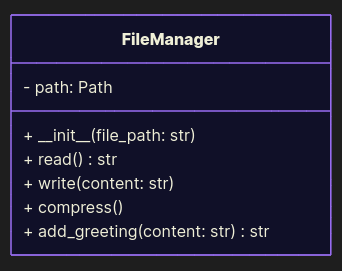
SOLID isn’t academic fluff - it’s your insurance against rage-quitting your own codebase. This article breaks down all five principles (SRP, OCP, LSP, ISP, DIP) with Python + UML, showing bad vs good examples. If you want cleaner design, fewer bugs, and teammates who don’t hate you, read this.

Author: Hackernoon