Index

A crypto Index provides a way for investors to gain diversified exposure to a specific basket of digital assets through a single tokenized product. These indices often track specific sectors, such as DeFi, DePIN, or RWA, and are automatically rebalanced via smart contracts. In 2026, AI-managed thematic indices have become the gold standard for passive investing, allowing users to track the "blue chips" of the Web3 economy without manual portfolio management. This tag covers index methodology, rebalancing frequency, and the benefits of diversified crypto baskets.

26216 Articles
Created: 2026/02/02 18:52
Updated: 2026/02/02 18:52
Hashdex Wins SEC Approval for BTC, ETH, XRP, SOL ETF

Hashdex Wins SEC Approval for BTC, ETH, XRP, SOL ETF

The post Hashdex Wins SEC Approval for BTC, ETH, XRP, SOL ETF appeared on BitcoinEthereumNews.com. Key Notes The Hashdex Crypto Index ETF will comprise top crypto assets like Bitcoin, Ethereum, XRP, Solana, and Stellar in its portfolio. XRP and Solana will represent 6.9% and 4.3% of the ETF, respectively, while Bitcoin and Ethereum remain dominant at 72.5% and 14.8%. The SEC’s updated generic listing rules enable crypto ETFs to bypass lengthy reviews, reducing approval times from up to 270 days to 75 days. In a breakthrough development, the US Securities and Exchange Commission (SEC) approved the expansion of the Hashdex Nasdaq Crypto Index ETF under the new generic listing standards. This ETF comprises the top digital assets such as Bitcoin BTC $111 730 24h volatility: 0.9% Market cap: $2.23 T Vol. 24h: $50.70 B , Ethereum ETH $4 033 24h volatility: 3.5% Market cap: $487.14 B Vol. 24h: $39.43 B , XRP XRP $2.83 24h volatility: 1.5% Market cap: $169.46 B Vol. 24h: $6.70 B , Solana SOL $203.6 24h volatility: 3.4% Market cap: $110.95 B Vol. 24h: $7.91 B , and Stellar XLM $0.36 24h volatility: 2.1% Market cap: $11.55 B Vol. 24h: $227.89 M . Hashdex Crypto Index ETF Will Trade on Nasdaq The crypto ETF will trade on Nasdaq under the ticker NCIQ. This is the second crypto ETF fund launched in a week’s time after Grayscale’s GDLC. The Hashdex Crypto Index ETF is structured in Delaware and classified as an “emerging growth company.” The amended trust agreement was filed as an exhibit, confirming the product’s compliance with Nasdaq’s updated listing requirements. Hashdex Crypto Index ETF | Source: SEC website According to the official data, XRP will represent roughly 6.9% of the index, while Solana (SOL) will account for 4.3%. Bitcoin and Ethereum continue to dominate the portfolio with weightings of 72.5% and 14.8%, respectively, while Cardano (ADA) makes up 1.2%. The…

Author: BitcoinEthereumNews
SEC Announces Second Approval, ETF Approved! Concerning Bitcoin and 4 Altcoins!

SEC Announces Second Approval, ETF Approved! Concerning Bitcoin and 4 Altcoins!

The post SEC Announces Second Approval, ETF Approved! Concerning Bitcoin and 4 Altcoins! appeared on BitcoinEthereumNews.com. The SEC has taken another significant step towards the cryptocurrency sector, announcing that it has approved Hashdex’s Nasdaq Crypto Index ETF under its new public listing standard. Accordingly, the SEC approved Hasdex’s ETF, which includes major altcoins such as Bitcoin (BTC), Ethereum (ETH), Solana (SOL), Ripple (XRP), Stellar (XLM). Nate Geraci, President of The ETF Store, announced this news in a statement. “Here we go… The Hashdex Nasdaq Crypto Index US ETF has been approved under the SEC’s new public listing standards. You can now own crypto assets beyond Bitcoin and Ethereum. Like XRP, Solana (SOL) and XLM…” The SEC previously approved the US’s first multi-cryptocurrency spot ETF, the ‘Grayscale Digital Large Cap Fund (GDLC),’ under the SEC’s general listing standard. *This is not investment advice. Follow our Telegram and Twitter account now for exclusive news, analytics and on-chain data! Source: https://en.bitcoinsistemi.com/sec-announces-second-approval-etf-approved-concerning-bitcoin-and-4-altcoins/

Author: BitcoinEthereumNews
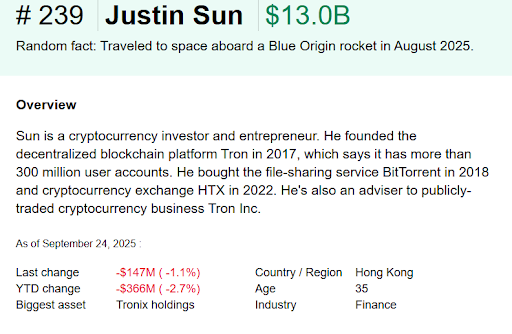
Judge Rejects Justin Sun’s Lawsuit Against Bloomberg Over Crypto Holdings

Judge Rejects Justin Sun’s Lawsuit Against Bloomberg Over Crypto Holdings

A U.S. judge has denied Justin Sun’s lawsuit to block Bloomberg from publishing his crypto holdings, adding to his ongoing legal troubles.   A federal judge has denied Tron founder Justin Sun’s attempt to stop Bloomberg from publishing details of his crypto portfolio.  The case shows both Sun’s large digital asset holdings and his ongoing […] The post Judge Rejects Justin Sun’s Lawsuit Against Bloomberg Over Crypto Holdings appeared first on Live Bitcoin News.

Author: LiveBitcoinNews
GSR Seeks ETF Backed by Crypto Treasury Firms in Bold Wall Street Bid — What to Expect?

GSR Seeks ETF Backed by Crypto Treasury Firms in Bold Wall Street Bid — What to Expect?

Crypto trading firm GSR has filed with the U.S. Securities and Exchange Commission (SEC) to launch its first exchange-traded fund (ETF), betting that Wall Street’s appetite for corporate crypto treasuries remains strong despite a bruising year for the sector. The proposed GSR Digital Asset Treasury Companies ETF would track public firms that hold cryptocurrencies such as Bitcoin, Ether, and other altcoins on their balance sheets, such as Strategy Inc. (MSTR), Upexi, Inc. (UPXI), DeFi Development Corp. (DFDV), CEA Industries Inc. (BNC), SharpLink Gaming, Inc. (SBET), Bitmine Immersion Technologies, Inc. (BMNR), SUI Group Holdings Limited (SUIG), and so on. The timing is striking. Corporate treasuries holding crypto have ballooned to record levels in 2025, with over $1 trillion worth of tokens sitting on balance sheets. Yet valuations for many of those firms have slipped below the value of their reserves, forcing some to turn to debt-funded buybacks and restructuring. Critics argue the model is becoming saturated and increasingly risky, especially as smaller players experiment with altcoin-heavy reserves to differentiate themselves. If approved, GSR’s fund would join a growing crop of Wall Street vehicles designed to package crypto exposure for traditional markets; however, its success may hinge on whether investors view corporate treasuries as a safe innovation or a fragile experiment under stress. ​GSR Unveils Crypto Treasury ETF With Flexible Holdings and PIPE Exposure The GSR Digital Asset Treasury Companies ETF, in which at least 80% of the fund’s holdings would consist of equities in these so-called “digital asset treasury companies” (DATs), expects to hold 10–15 positions across 5 to 10 issuers, primarily companies listed on U.S. exchanges. GSR noted this number may expand as the market evolves. ​ The filing also allows the fund to participate in private investments in public equity (PIPEs), subject to a 15% illiquidity limit under the Investment Company Act of 1940. PIPEs let institutional investors buy discounted shares directly from public companies, offering issuers faster capital access but often with resale restrictions and lower liquidity. Cash raised from portfolio sales may be reinvested in other treasury companies or short-term U.S. government securities. Importantly, GSR emphasized that the ETF is not designed to track crypto prices directly, and its performance may diverge from that of the underlying assets. Notably, the crypto treasury ETF is one of five products GSR has proposed. GSR is also targeting the fast-growing staking market with three separate funds: Ethereum Staking Opportunity ETF and Ethereum YieldEdge ETF, both structured under the restrictive Investment Company Act of 1940, will use offshore subsidiaries to stake ETH and potentially buy overseas ETH staking ETFs. The YieldEdge fund adds a derivatives-based yield strategy on top. Crypto StakingMax ETF, also a 40 Act fund, will focus broadly on proof-of-stake tokens and staking strategies. Rounding out the filing is the GSR Crypto Core3 ETF, structured under the more flexible Securities Act of 1933, which would hold Bitcoin, Ether, and Solana directly, maintaining roughly one-third allocations to each. This puts it in the same regulatory bucket as the now-popular spot Bitcoin and Ether ETFs launched last year. Crypto Treasury Firms Turn to Debt-Fueled Buybacks as Investor Doubts Mount While GSR is preparing to launch ETFs tied to crypto treasury firms, the move comes at a moment when those very firms are facing a downturn. Public companies that once loaded their balance sheets with Bitcoin and Ether are now grappling with market values that have sunk below the worth of the tokens they hold. In response, many are turning to aggressive share buybacks, often funded by debt, in a bid to prop up falling stock prices. At least seven firms, from gaming outfits to biotech rebrands, have recently announced repurchase programs. ETHZilla, formerly 180 Life Sciences, borrowed $80 million from Cumberland DRW to finance a $250 million buyback after its shares plunged 76% from an August peak. “They’re borrowing money to buy time, not tokens,” said Adam Morgan McCarthy, senior analyst at Kaiko. Critics argue that borrowing to fund buybacks undermines the thesis that digital asset appreciation alone would elevate stock value. Still, conviction has not disappeared entirely, as corporations have acquired more Bitcoin this year than U.S. spot ETFs combined, and retail investors continue to absorb liquidity when institutions step back. But as the NAV gap widens and debt-fueled repurchases multiply, the sustainability of the crypto treasury experiment is facing its most serious test yet. At the same time, momentum in the ETF market is accelerating. In recent months, issuers have filed for a wave of products tied to altcoins, token bundles, and staking strategies. As of late August, the SEC was weighing more than 90 crypto ETF applications, according to Bloomberg research. Their odds of approval improved after the regulator adopted new listing standards for commodity-based trusts, streamlining the process. Just last week, Grayscale’s Digital Large Cap Fund (GDLC), which tracks XRP, Solana, Cardano, Bitcoin, and Ethereum, along with the Rex-Osprey DOGE ETF (DOJE), began trading after winning SEC approval. That same day, Tidal Financial Group applied for a leveraged AltSeason ETF excluding Bitcoin and Ethereum, signaling how quickly the next wave of crypto investment vehicles is coming to market. Their prospects improved last week after the regulator approved new generic listing standards for commodity-based trusts, streamlining the approval process. Hashdex’s Nasdaq Crypto Index US ETF became the first to move forward under the SEC’s new generic listing rules

Author: CryptoNews
Hashdex ETF Approved by SEC to Include XRP and Solana in Portfolio

Hashdex ETF Approved by SEC to Include XRP and Solana in Portfolio

TLDR The SEC has approved Hashdex ETF to include XRP and Solana alongside Bitcoin and Ethereum. XRP now represents 7.11% of the Hashdex Nasdaq Crypto Index Fund portfolio. Hashdex initially launched the ETF with Bitcoin and Ethereum, later requesting to include additional assets. Solana has been added to the ETF, accounting for 4.19% of the [...] The post Hashdex ETF Approved by SEC to Include XRP and Solana in Portfolio appeared first on CoinCentral.

Author: Coincentral
Just In: Hashdex ETF First to Hold XRP and Stellar After SEC Approval

Just In: Hashdex ETF First to Hold XRP and Stellar After SEC Approval

The post Just In: Hashdex ETF First to Hold XRP and Stellar After SEC Approval appeared first on Coinpedia Fintech News The U.S. Securities and Exchange Commission (SEC) has approved an amendment to the Hashdex Nasdaq Crypto Index US ETF (NCIQ), allowing the fund to expand beyond Bitcoin and Ethereum under newly adopted generic listing standards. Finalized on September 24, 2025, the approval marks a key step in widening regulated exposure to digital assets. The updated …

Author: CoinPedia
Why ETH Is Going Down? How Low Can Ethereum Price Drop?

Why ETH Is Going Down? How Low Can Ethereum Price Drop?

The post Why ETH Is Going Down? How Low Can Ethereum Price Drop? appeared first on Coinpedia Fintech News Ethereum ($ETH) has recently fallen below the key $4,000 support level, raising concerns among investors about how low the Ethereum price might go in the short term. Several factors, including macroeconomic uncertainty, slowing ETF inflows, and low exchange liquidity, are contributing to the recent drop. Ethereum Liquidation Heatmap  According to Coinglass, in the past hour, …

Author: CoinPedia
The Betrayal at the Heart of Balancer Exploits

The Betrayal at the Heart of Balancer Exploits

As the early 2020s rolled in, DeFi had made a mark with numerous crypto enthusiasts—the innovation grew drastically, and Balancer was a perfect example of what the industry could provide. It surfaced in March 2020, a time when Uniswap was the top dog in the automated market maker (AMM) decentralized exchange (DEX) scene. But that […] The post The Betrayal at the Heart of Balancer Exploits appeared first on Live Bitcoin News.

Author: LiveBitcoinNews
Ripple ‘Month-111%’ Rewards Reached – RMC Strong Gains

Ripple ‘Month-111%’ Rewards Reached – RMC Strong Gains

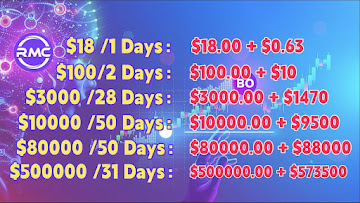
An unprecedented wave is surging in the cryptocurrency market, with major investors increasing their investments. XRP, with a $3.8 billion inflow, has led a frenzy of trading volume, surpassing even Bitcoin and becoming the focus of market attention. This isn’t just a spectacle of numbers; it’s also a deep dive into XRP’s future potential. According […] The post Ripple ‘Month-111%’ Rewards Reached – RMC Strong Gains appeared first on Live Bitcoin News.

Author: LiveBitcoinNews
Why is the Crypto Market Crashing? Understanding the September 2025 Downturn

Why is the Crypto Market Crashing? Understanding the September 2025 Downturn

BitcoinWorld Why is the Crypto Market Crashing? Understanding the September 2025 Downturn The cryptocurrency market has entered a period of significant turbulence, commonly referred to by analysts as “Red September 2025.” As of September 25, 2025, the global crypto market capitalization has seen a sharp decline, with over $162 billion wiped out in a short period. This downturn is not caused by a single event but is a perfect storm of macroeconomic headwinds, market-specific vulnerabilities, and recurring seasonal trends. For investors, understanding these factors is critical for navigating the current volatility.     What Are the Key Factors Driving the Crypto Market Crash? The recent crash is a result of several interconnected issues that have collectively put downward pressure on the entire cryptocurrency ecosystem. These factors are influencing everything from Bitcoin (BTC) and Ethereum (ETH) to smaller altcoins like Solana (SOL) and Dogecoin (DOGE). Macroeconomic Pressures: A strengthening U.S. dollar is a primary driver. As the dollar gains momentum and is sought after as a safe-haven asset during geopolitical tensions, investor appetite for riskier assets like cryptocurrency wanes. Disappointing U.S. jobs reports and broader economic concerns have also contributed to a “risk-off” sentiment. Massive Liquidations from Leveraged Trading: The market has experienced a cascade of liquidations exceeding $1.65 billion. High levels of leveraged trading positions meant that even a small price decline triggered massive sell-offs as traders were forced to close their positions, which amplified the initial downward momentum. Regulatory Uncertainty: Ongoing debates and proposed regulations in key markets like the U.S. and E.U. concerning crypto exchanges and anti-money laundering measures have introduced significant market volatility and investor caution. The “September Effect” Seasonal Trend: Historically, September has been a weak month for Bitcoin and the broader crypto market, a phenomenon sometimes called the “September curse.” This recurring pattern often leads to lower trading volumes and technical selling pressures, which can make the market more susceptible to downturns.     How Have Major Cryptocurrencies Performed in the Downturn? The market-wide sell-off has hit major cryptocurrencies, reversing some of the gains seen earlier in the year. Bitcoin (BTC): The largest cryptocurrency, Bitcoin, has fallen below $112,000 from recent highs above $122,000. Much of this decline is attributed to heavy liquidations in the futures market, where a massive amount of leveraged bets were wiped out. As of September 25, 2025, Bitcoin is trading near the $111,000-$112,000 range. Ethereum (ETH): Ethereum has also experienced a significant drop, falling below $4,200 from its recent peaks. The second-largest crypto is particularly sensitive to market pressures because of its deep integration with the Decentralized Finance (DeFi) ecosystem. Altcoins: While some major altcoins like Solana and Dogecoin have also experienced pressure, the sell-off has been widespread, affecting the entire market and shrinking the global crypto market capitalization to approximately $3.80 trillion. What Is the Current Market Sentiment and Outlook? The current market sentiment, as reflected by the Crypto Fear and Greed Index, has shifted toward “fear,” indicating that investors are becoming more cautious and risk-averse. Despite this short-term negativity, the long-term outlook remains cautiously optimistic for several reasons. Institutional Confidence: Analysts note that institutional inflows into the crypto market remain strong despite the recent sell-off, which signals long-term confidence in the asset class. Strong Fundamentals: Ongoing network upgrades and the continued expansion of ecosystems like Ethereum support a longer-term positive view. Natural Market Correction: Many experts view this downturn as a natural and necessary market correction, which can help flush out over-leveraged positions and set the stage for a healthier, more sustainable recovery in Q4 2025 and beyond.   What is the “September Effect” in cryptocurrency? The “September Effect” refers to the historical trend of negative returns for Bitcoin and the broader crypto market during the month of September. This pattern has been observed in multiple years, with September often showing weaker performance than other months. While the exact causes are debated, it is often attributed to seasonal factors like the end of summer trading, profit-taking, and broader market sentiment that contributes to selling pressure, making the market more susceptible to downturns like the one seen in September 2025.   How do liquidations amplify a crypto market crash? Liquidations play a critical role in amplifying a crypto market crash by creating a domino effect of forced selling. When traders use borrowed funds (leverage) to open a position, they risk losing their collateral if the market moves against them. If the price falls to a certain level, the exchange automatically sells their assets to cover the debt, a process known as liquidation. This forced selling adds immense downward pressure to the market, causing prices to fall even further and triggering more liquidations, leading to a cascade effect that can quickly wipe out billions of dollars.   Is the crypto market outlook for 2025 still positive despite the crash? Despite the crash in September 2025, many analysts maintain a positive long-term outlook for the crypto market. While short-term volatility is expected, the underlying fundamentals of the market remain strong. Factors such as continued institutional adoption, ongoing network upgrades, and the normalization of regulatory environments are seen as strong tailwinds for a potential recovery. The current downturn is largely viewed as a necessary correction that could pave the way for a more sustainable and robust rally later in 2025 and beyond. Conclusion The current crypto market crash in September 2025 is a complex event driven by a convergence of global economic factors and crypto-specific market dynamics. While the short-term outlook is cautious, with the Crypto Fear and Greed Index signaling fear, the sell-off is viewed by many as a healthy correction that cleans out excess leverage and repositions the market for future growth. For investors, understanding these drivers is essential to avoid panic selling and to focus on the long-term fundamentals of the market, which remain supported by institutional interest and technological advancements. This post Why is the Crypto Market Crashing? Understanding the September 2025 Downturn first appeared on BitcoinWorld.

Author: Coinstats