Index

A crypto Index provides a way for investors to gain diversified exposure to a specific basket of digital assets through a single tokenized product. These indices often track specific sectors, such as DeFi, DePIN, or RWA, and are automatically rebalanced via smart contracts. In 2026, AI-managed thematic indices have become the gold standard for passive investing, allowing users to track the "blue chips" of the Web3 economy without manual portfolio management. This tag covers index methodology, rebalancing frequency, and the benefits of diversified crypto baskets.

25728 Articles
Created: 2026/02/02 18:52
Updated: 2026/02/02 18:52
Ark Invest increased its holdings in BitMine by approximately $4.46 million and reduced its holdings in Robinhood by approximately $5.13 million.

Ark Invest increased its holdings in BitMine by approximately $4.46 million and reduced its holdings in Robinhood by approximately $5.13 million.

PANews reported on September 9th that, according to The Block , Ark Invest purchased a total of approximately $4.46 million worth of BitMine Immersion Technologies ( BMNR) shares through its three ETFs on Monday , purchasing 67,700 shares through ARKK , 21,890 shares through ARKW , and 12,360 shares through ARKF . BitMine , an Ethereum treasury company, holds approximately 1.78 million ETH. Its stock price rose 4.16% to $43.79 that day . During the same period, ARKW sold 43,728 shares of Robinhood ( HOOD ) , cashing in approximately $5.13 million. Robinhood's stock price rose 15.8% to $ 117.28 following its inclusion in the S&P 500 index.

Author: PANews
S&P 500 Changes Send HOOD Higher, MSTR Lower

S&P 500 Changes Send HOOD Higher, MSTR Lower

The post S&P 500 Changes Send HOOD Higher, MSTR Lower appeared on BitcoinEthereumNews.com. Robinhood (HOOD) stock soared 15% on Monday following the company’s inclusion in the S&P 500, the widely tracked benchmark for U.S. equities. The announcement was made after markets closed on Friday and takes effect with the index’s September 22 rebalance. The trading platform, which has seen its stock price nearly triple this year, has long been considered a frontrunner for inclusion. It was one of the three largest eligible companies yet to be added to the index. Meanwhile, shares of Strategy (MSTR) slipped lower after the bitcoin BTC$111,661.49 development company was passed over,despite qualifying for inclusion for the first time this quarter. Strategy posted $14 billion in operating income and $10 billion in net income for the second quarter 2025 — eye-popping figures that met the S&P’s requirements. The source of the profit — a sharp rise in the price of bitcoin — likely didn’t set well with the selection committee, which surely was aware that BTC can also move in the opposite direction. MSTR was down 1.5% in late morning U.S. action. Appearing on CNBC Monday morning, Strategy CEO Michael Saylor said he hadn’t expected immediate inclusion. “I don’t think we expected to be selected on our first quarter of eligibility,” he said. “We figured it’ll happen at some time.” Benchmark analyst Mark Palmer echoed that sentiment, writing that Strategy “does not need S&P’s approval as validation of its operating model, as the market scoreboard has already provided it in emphatic fashion.” TD Cowen analyst Lance Vitanca called the committee’s decision unsurprising. “Inclusion was never central to our investment thesis, though it remains a potential positive catalyst,” he wrote. Some observers speculate that the committee may be hesitant to include a company so heavily tied to bitcoin. Vitanca addressed the possibility directly, writing: “To the extent the Committee is…

Author: BitcoinEthereumNews
Calm Ahead of Fed Rate Cut, Storm Later

Calm Ahead of Fed Rate Cut, Storm Later

The post Calm Ahead of Fed Rate Cut, Storm Later appeared on BitcoinEthereumNews.com. Risk assets may face stormier conditions if the Federal Reserve cuts interest rates, as expected, on Sept. 17. That’s the message from futures tied to the VIX index, a measure of expectations of volatility in the S&P 500 over the next 30 days. The index, also called Wall Street’s fear gauge, is calculated in real time from prices of options on the S&P 500, and reflects how much investors expect the market to swing, with higher values indicating greater levels of uncertainty. The spread between the October VIX futures contract (the next-month contract) and the September contract (the front-month contract), has widened to 2.2%, an extreme level by historical standards, according to data source TradingView. The September contract expires the same day as the Fed meeting. Meanwhile, the front-month contract trades only at a slight premium to the cash index. “Cash is fair compared to Sept. … but Sept. is extremely low compared to October futures,” Greg Magadini, director of derivatives at crypto derivatives data analytics firm Amberdata, wrote in the weekly newsletter. In other words, traders are discounting risk ahead of the Fed meeting, wagering that the rate-cut expectation will keep markets steady as they approach the decision. The U.S. central bank is expected to lower its target rate by at least 25 basis points when it meets next week, according to the CME’s FedWatch tool. Some market participants are even positioned for a 50 bps reduction. The October futures, however, tell a different story, suggesting that investors are anticipating increased turbulence once the Fed’s decision is out of the way and rate cuts are priced in. “The VIX futures for September have priced away risk while October could be ugly … A theme to keep in mind for risk assets in my opinion,” Magadini wrote. October VIX futures…

Author: BitcoinEthereumNews
Market at war with itself: why crypto is ignoring a massive Wall Street rally

Market at war with itself: why crypto is ignoring a massive Wall Street rally

The post Market at war with itself: why crypto is ignoring a massive Wall Street rally appeared on BitcoinEthereumNews.com. Crypto is failing to rally with stocks despite growing Fed rate-cut hopes. Traders are cautious and defensive ahead of a key US inflation (CPI) report. A “split-screen reality” exists between short-term fear and long-term adoption. A feast is raging on Wall Street. A dismal US jobs report has sent stocks and bonds soaring, as investors celebrate the near-certainty of a Federal Reserve interest rate cut. But in a strange and unsettling paradox, the cryptocurrency market has refused its invitation to the party. Instead of joining the rally, digital assets are trapped in a nervous, range-bound state, haunted by the specter of a looming inflation report and a deep internal conflict between short-term fear and long-term faith. While the broader markets are buzzing with optimism, crypto traders remain staunchly defensive. Bitcoin is holding steady above 111,600 dollars, but is showing no signs of a breakout. Options markets confirm this cautious stance, with QCP Capital noting that risk reversals are heavily skewed toward puts, a clear sign that traders are paying a premium to protect against a downturn ahead of Thursday’s crucial US Consumer Price Index (CPI) report. The split-screen reality This is the great “split-screen reality” of the 2025 crypto market, a term coined by the market maker Enflux. On one screen, you have the chaotic, headline-driven world of speculative trading, currently paralyzed by fear. On the other, a much quieter but more profound story is unfolding: the slow, steady, and relentless construction of the rails for mainstream institutional adoption. Enflux argues that while traders are fixated on the CPI print, they are missing the more significant developments. The SEC is creating forward-looking rules, and crypto-native firms like Coinbase are being integrated into major indices. This, they contend, is the real story. “Structural legitimacy, not speculation, remains the real story of…

Author: BitcoinEthereumNews
Michael Saylor Enters Bloomberg’s Billionaires Index At $7.37B

Michael Saylor Enters Bloomberg’s Billionaires Index At $7.37B

The post Michael Saylor Enters Bloomberg’s Billionaires Index At $7.37B appeared on BitcoinEthereumNews.com. Michael Saylor Enters Bloomberg’s Billionaires Index At $7.37B – Details Sign Up for Our Newsletter! For updates and exclusive offers enter your email. Christian, a journalist and editor with leadership roles in Philippine and Canadian media, is fueled by his love for writing and cryptocurrency. Off-screen, he’s a cook and cinephile who’s constantly intrigued by the size of the universe. This website uses cookies. By continuing to use this website you are giving consent to cookies being used. Visit our Privacy Center or Cookie Policy. I Agree Source: https://bitcoinist.com/michael-saylor-enters-bloombergs-billionaires-index-at-7-37b-details/

Author: BitcoinEthereumNews
Strategy Buys $217 Million More In Bitcoin After S&P 500 Snub

Strategy Buys $217 Million More In Bitcoin After S&P 500 Snub

The post Strategy Buys $217 Million More In Bitcoin After S&P 500 Snub appeared on BitcoinEthereumNews.com. In brief Strategy has purchased 1,955 BTC for $217.4 million at $111,196 per coin, following Friday’s S&P 500 rejection. The company now holds 638,460 BTC worth $71.5 billion, achieving “BTC Yield of 25.8% YTD 2025” for shareholders. Japan’s Metaplanet also bought 136 BTC for $15.2 million Monday, continuing the global corporate buying trend. Michael Saylor’s Strategy Inc. announced Monday it acquired 1,955 BTC for $217.4 million at an average price of $111,196 per Bitcoin, days after being passed over for S&P 500 inclusion. The Virginia-based company, formerly known as MicroStrategy, now holds a massive 638,460 BTC worth approximately $71.5 billion at current prices, maintaining its spot as the world’s largest public corporate Bitcoin holder. The purchase came just days after Strategy was snubbed from the S&P 500 index despite strong results in Q2, while Robinhood took the spot, with its stock jumping 7% as Strategy fell nearly 3% in after-hours trading on Friday. QCP Capital noted in its latest report that Bitcoin’s ability to maintain levels above $110,000 “despite Strategy’s exclusion from the S&P500” demonstrates “resilience.” Bitcoin is trading around $112,000, gaining 0.9% in the past 24 hours, according to CoinGecko. Strategy’s latest purchase has delivered a “BTC Yield of 25.8% YTD 2025” for shareholders,  according to its Form 8-K filing. The company funded Monday’s purchase through its at-the-market offering programs, selling 591,606 common shares for $200.5 million in net proceeds alongside preferred stock sales totaling $16.9 million during the September 2-7 period. The move follows similar acquisitions by other major corporate Bitcoin holders with Japan’s Metaplanet Inc. announcing Monday it purchased 136 BTC for $15.2 million, bringing its total holdings to 20,136 BTC.  Meanwhile, El Salvador marked the fourth anniversary of its Bitcoin legal tender law by purchasing 21 BTC on Sunday, continuing its daily Bitcoin accumulation strategy.…

Author: BitcoinEthereumNews
Major Hacking Incident Occurs: Large Amount of Solana (SOL) Stolen – Here Are the Details

Major Hacking Incident Occurs: Large Amount of Solana (SOL) Stolen – Here Are the Details

The post Major Hacking Incident Occurs: Large Amount of Solana (SOL) Stolen – Here Are the Details appeared on BitcoinEthereumNews.com. On-chain researcher ZachXBT reports that Switzerland-based cryptocurrency platform SwissBorg experienced a security incident on its Solana network, resulting in the theft of approximately 192,600 SOL (approximately $41.5 million). SwissBorg explained that the incident was caused by a vulnerability in its partner API provider, Kiln, and only affected the SOL Earn program. The platform confirmed that approximately 193,000 SOL were stolen in total. According to the company’s statement: The SwissBorg app and other Earn programs were not affected by this incident. SwissBorg’s own SOL treasury will be deployed to compensate for the losses of the majority of users. Efforts are underway to recover the stolen funds, in collaboration with white hat hackers and their security partners. SwissBorg also stated that affected users will be contacted via email and provided detailed explanations. The platform maintained that its financial health is strong and daily operations have not been affected. CEO Cyrus Fazel will be livestreaming on YouTube today to connect directly with the community. *This is not investment advice. Follow our Telegram and Twitter account now for exclusive news, analytics and on-chain data! Source: https://en.bitcoinsistemi.com/major-hacking-incident-occurs-large-amount-of-solana-sol-stolen-here-are-the-details/

Author: BitcoinEthereumNews
Crucial Altcoin Season Index Holds Steady: What It Means for Your Portfolio

Crucial Altcoin Season Index Holds Steady: What It Means for Your Portfolio

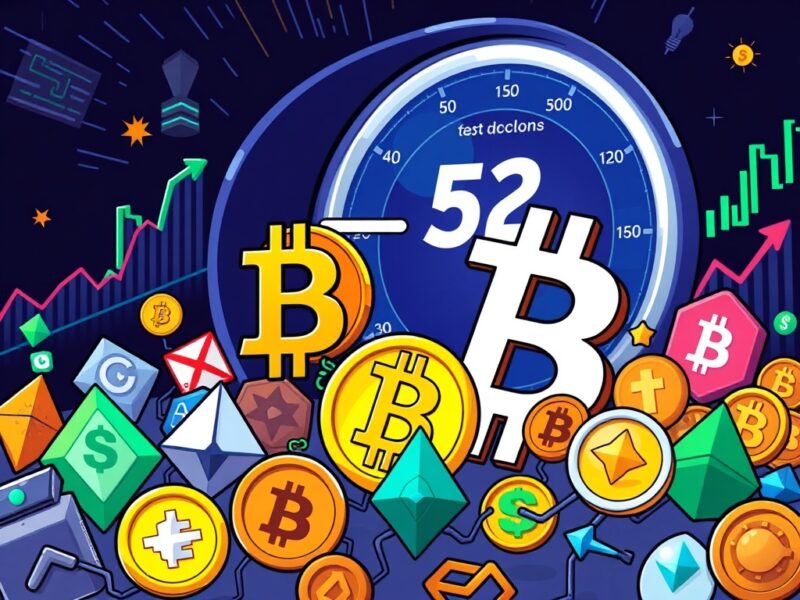
BitcoinWorld Crucial Altcoin Season Index Holds Steady: What It Means for Your Portfolio Are you tracking the pulse of the crypto market? The Altcoin Season Index is a crucial barometer, offering insights into whether smaller cryptocurrencies are outshining Bitcoin. Currently, this vital index stands at 52, a figure that has held steady from yesterday, providing a moment for investors to assess the landscape. Understanding the Altcoin Season Index: A Key Metric What exactly is the Altcoin Season Index, and why should you pay attention? Developed by CoinMarketCap, this index offers a clear snapshot of the broader altcoin market’s health relative to Bitcoin. It’s not just a random number; it’s a carefully calculated metric designed to help you understand market cycles. Here’s how it works: The index tracks the price performance of the top 100 cryptocurrencies by market capitalization. Stablecoins and wrapped coins are excluded to ensure a true representation of market sentiment. An ‘altcoin season’ is officially declared when 75% of these top 100 altcoins outperform Bitcoin over a 90-day period. A score closer to 100 signals a strong altcoin season, indicating that altcoins are broadly performing better than Bitcoin. Conversely, a lower score suggests Bitcoin dominance. Why the Altcoin Season Index at 52 Matters A reading of 52 for the Altcoin Season Index places us in a neutral zone. It means we are neither in a full-blown altcoin season nor a period of overwhelming Bitcoin dominance. This steady state can be interpreted in several ways: Balanced Market: There’s a relatively even performance between altcoins and Bitcoin, suggesting a period of consolidation or indecision. Opportunity for Selection: While the broader market isn’t showing a strong altcoin trend, individual altcoins may still be performing exceptionally well. This requires careful research and selection. Anticipation: A steady index often precedes a shift. It could be building momentum for an altcoin surge or signaling a potential return to Bitcoin’s lead. For investors, this neutral reading underscores the importance of a diversified and well-researched portfolio. It’s a time to observe and strategize, rather than make hasty decisions based on broad market sentiment. Navigating Market Dynamics with the Altcoin Season Index Understanding the implications of the Altcoin Season Index can significantly influence your investment approach. When the index is high, investors might consider rebalancing their portfolios to capitalize on altcoin growth. Conversely, a low index might prompt a shift towards Bitcoin or stable assets. However, challenges persist in this dynamic market: Volatility: Both Bitcoin and altcoins are known for their price swings, which can quickly change the index’s reading. Information Overload: Sifting through hundreds of altcoins to find the next big performer requires dedication and due diligence. Market Psychology: Fear of missing out (FOMO) can lead to poor investment decisions, especially during perceived altcoin rallies. By using the Altcoin Season Index as a guide, you can make more informed decisions, reducing emotional trading and focusing on data-driven strategies. It’s a tool to complement your research, not replace it. Actionable Insights from the Altcoin Season Index So, what should you do when the Altcoin Season Index is at 52? Here are some actionable insights: Deep Dive into Fundamentals: This is an excellent time to research individual altcoins with strong use cases, solid development teams, and active communities. Monitor Bitcoin Dominance: Keep an eye on Bitcoin’s market capitalization dominance. A decline in BTC dominance often precedes an altcoin rally. Consider Risk Management: In a neutral market, re-evaluate your risk exposure. Diversify across different sectors within crypto, not just different coins. Stay Informed: Market conditions can change rapidly. Regularly check the index and other market indicators to adapt your strategy. The index serves as a reminder that the crypto market is cyclical. Periods of altcoin outperformance often follow periods of Bitcoin strength, and vice-versa. Being prepared for these shifts is key to long-term success. Conclusion: Your Guide to Crypto Market Cycles The current standing of the Altcoin Season Index at 52 offers a valuable perspective on the crypto market. It signals a balanced environment, urging investors to remain vigilant, conduct thorough research, and adapt their strategies to evolving conditions. While not a definitive buy or sell signal, it serves as an excellent compass, helping you navigate the complex world of cryptocurrencies and make more strategic investment choices. Stay informed, stay analytical, and be ready for what comes next. Frequently Asked Questions (FAQs) Q1: What does an Altcoin Season Index of 52 mean? A1: An index of 52 indicates a neutral market. It means that roughly half of the top 100 altcoins (excluding stablecoins and wrapped coins) have outperformed Bitcoin over the last 90 days, suggesting neither a strong altcoin season nor a period of dominant Bitcoin performance. Q2: How is the Altcoin Season Index calculated? A2: The index is calculated by CoinMarketCap. It compares the price performance of the top 100 cryptocurrencies by market capitalization (excluding stablecoins and wrapped coins) against Bitcoin over the preceding 90-day period. An altcoin season is declared if 75% of these altcoins outperform Bitcoin. Q3: Should I invest in altcoins when the Altcoin Season Index is at 52? A3: A reading of 52 suggests a balanced market. It’s a good time for careful research into individual altcoins with strong fundamentals, rather than broad market-wide altcoin investments. Diversification and risk management are particularly important. Q4: What typically happens after the Altcoin Season Index holds steady at a neutral level? A4: A steady neutral index can precede a shift in market dominance. It could lead to a renewed altcoin season if conditions become favorable, or a return to Bitcoin dominance. It’s a period of observation and strategic planning for potential future movements. Q5: Does the Altcoin Season Index predict future prices? A5: The Altcoin Season Index is an indicator of past performance and current market sentiment, not a direct predictor of future prices. It helps investors understand market cycles and make informed decisions, but it should be used in conjunction with other research and analysis tools. Enjoyed this insight into the crypto market? Share this article with your friends and fellow investors on social media to help them stay informed about the Altcoin Season Index and make smarter decisions! To learn more about the latest crypto market trends, explore our article on key developments shaping the cryptocurrency landscape and future price action. This post Crucial Altcoin Season Index Holds Steady: What It Means for Your Portfolio first appeared on BitcoinWorld and is written by Editorial Team

Author: Coinstats
Bitcoin ETFs See $246 Million Inflows, But Market Stays Cautious

Bitcoin ETFs See $246 Million Inflows, But Market Stays Cautious

The post Bitcoin ETFs See $246 Million Inflows, But Market Stays Cautious appeared on BitcoinEthereumNews.com. The mixed overall ETF flows are a sign of hesitation beyond Bitcoin, with Ethereum ETFs in particular experiencing recent outflows BTC dominance has eased slightly from its summer highs, which typically opens the door for altcoin rallies The crypto market suffered $162 million in liquidations, which is relatively moderate for an almost $4 trillion market Despite attracting a quarter of a billion dollars in inflows this month, Bitcoin’s ETF market is showing mixed signals. The $246 million inflows into Bitcoin ETFs this month suggest institutional investors are still adding exposure, but at a slower pace compared to July’s and August’s surges. The mixed overall ETF flows are a sign of hesitation beyond Bitcoin, with Ethereum ETFs in particular experiencing recent outflows, showing that not all cryptocurrencies are getting the same attention from investors. BTC dominance has eased slightly from its summer highs, which typically opens the door for altcoin rallies. According to CoinMarketCap, it’s currently at 57.6%. However, CryptoRank notes that capital rotation into altcoins remains tentative, indicating that macroeconomic uncertainty (such as pending Fed rate cuts and weak jobs data) is making investors risk-averse.  Related: Crypto Recap for August 2025: Exchange Tokens Lead Other Sectors Instead of a full-fledged altseason, we’re seeing people slowly and carefully buy a few coins, as opposed to rushing in everywhere. Another noteworthy metric is the fact that the Fear and Greed index is at 51 (at least according to CryptoRank, as some indexes have an even lower number). This shows indecision, where markets aren’t in panic but they’re also not euphoric.  Also, the crypto market suffered $162 million in liquidations, which is relatively moderate for an almost $4 trillion market, suggesting that leverage is being used in a controlled manner and isn’t leading to cascading selloffs. Not an altseason yet At the moment,…

Author: BitcoinEthereumNews
Crypto Fear & Greed Index: Unveiling Crucial Neutral Signals at 48

Crypto Fear & Greed Index: Unveiling Crucial Neutral Signals at 48

BitcoinWorld Crypto Fear & Greed Index: Unveiling Crucial Neutral Signals at 48 The cryptocurrency market is a dynamic arena, often driven by investor emotions. Currently, a crucial barometer for these sentiments, the Crypto Fear & Greed Index, stands at a neutral 48. This reading, a slight dip from yesterday, signifies a balanced state in the market, where neither extreme optimism nor pervasive panic dominates. For many investors, understanding this index is key to navigating the often-volatile world of digital assets. Unpacking the Crypto Fear & Greed Index: How Does It Work? Ever wondered how market sentiment is quantified? The Crypto Fear & Greed Index, provided by Alternative, aggregates various data points to give us a clear picture. It operates on a simple scale from 0 (representing Extreme Fear) to 100 (signifying Extreme Greed). This comprehensive index isn’t just a random number. It’s meticulously calculated based on six key factors, each contributing to its final score: Volatility (25%): Measures the current market’s price fluctuations compared to average values. High volatility often signals fear. Trading Volume (25%): Analyzes current trading volumes and market momentum. Strong, sustained buying volume can indicate greed. Social Media Mentions (15%): Scans various platforms for keyword mentions and sentiment analysis, reflecting public perception. Surveys (15%): While currently paused, these polls historically gauged investor sentiment directly. Bitcoin’s Market Cap Dominance (10%): An increasing dominance often suggests fear, as investors might be moving into the perceived safety of Bitcoin. Google Search Volume (10%): Tracks search queries related to cryptocurrencies, with sudden spikes often indicating panic (fear) or curiosity (greed). Together, these elements paint a holistic picture of the market’s emotional state, making the Crypto Fear & Greed Index an invaluable tool. Why Does a Neutral Crypto Fear & Greed Index Reading Matter? A neutral reading, like the current 48, indicates a period of market indecision. Unlike the extremes of “Extreme Fear,” which often presents buying opportunities, or “Extreme Greed,” which might signal an impending correction, neutrality suggests a wait-and-see approach among investors. During neutral phases: There’s less panic selling or impulsive buying. The market lacks a strong directional bias. It can precede significant moves, as sentiment builds towards one extreme or the other. This balance provides a window for careful analysis rather than reactive trading. It’s a moment for investors to reassess their strategies without the pressure of overwhelming market emotions. Navigating the Market: Actionable Insights from the Crypto Fear & Greed Index So, how can you leverage the current neutral stance of the Crypto Fear & Greed Index? It’s important to remember that this index is a sentiment indicator, not a direct trading signal. However, it offers crucial context for your investment decisions. Consider these actionable insights: Avoid Emotional Decisions: A neutral index helps to keep emotions in check. Instead of chasing pumps or panic selling, focus on your long-term investment plan. Conduct Deeper Research: With no clear market direction, this is an excellent time to research projects, understand fundamentals, and identify potential opportunities without the noise of extreme sentiment. Prepare for Shifts: Neutrality rarely lasts forever. Use this period to prepare for potential shifts towards fear or greed. Having a plan for both scenarios can prevent impulsive reactions. Diversify Your Portfolio: A balanced market sentiment reinforces the importance of a diversified portfolio, reducing exposure to single asset volatility. Ultimately, the Crypto Fear & Greed Index serves as a valuable lens through which to view market psychology, helping you make more informed and rational choices. Challenges and Limitations: What the Index Doesn’t Tell You While the Crypto Fear & Greed Index is a powerful tool, it’s not a crystal ball. It’s crucial to understand its limitations: Lagging Indicator: The index reflects past and current sentiment, not future price movements. It doesn’t predict what will happen tomorrow. Macroeconomic Factors: Global economic news, regulatory changes, or technological breakthroughs can significantly impact crypto prices, and these aren’t directly captured by the index. Bitcoin-Centric Bias: While it uses overall market data, Bitcoin’s dominance heavily influences its calculation. Altcoin-specific sentiments might differ. Therefore, always combine insights from the Crypto Fear & Greed Index with fundamental analysis, technical analysis, and a broad understanding of the macroeconomic landscape. It’s just one piece of a much larger puzzle. Conclusion: Mastering Market Emotions with the Crypto Fear & Greed Index The current neutral reading of the Crypto Fear & Greed Index at 48 offers a unique opportunity for thoughtful engagement with the crypto market. It’s a reminder that while emotions drive much of the short-term price action, informed decision-making based on a blend of tools and analysis remains paramount. By understanding how the index works, interpreting its signals, and recognizing its limitations, investors can navigate the exciting yet unpredictable world of cryptocurrencies with greater confidence and strategic foresight. Use this period of neutrality to refine your approach and prepare for whatever the market brings next. Frequently Asked Questions About the Crypto Fear & Greed Index Q1: What does a “Neutral” reading on the Crypto Fear & Greed Index mean? A1: A neutral reading, like the current 48, suggests that neither extreme fear nor extreme greed is dominating the cryptocurrency market. It indicates a period of balanced sentiment, indecision, or a “wait-and-see” approach among investors. Q2: How is the Crypto Fear & Greed Index calculated? A2: The index is calculated based on a weighted average of several factors: volatility (25%), trading volume (25%), social media mentions (15%), surveys (15%), Bitcoin’s market cap dominance (10%), and Google search volume (10%). Q3: Can I use the Crypto Fear & Greed Index as a direct buy or sell signal? A3: No, the Crypto Fear & Greed Index is primarily a sentiment indicator, not a direct trading signal. While extreme readings can hint at potential opportunities (e.g., “Extreme Fear” for buying), it should always be combined with other forms of analysis, such as fundamental and technical research, for informed decision-making. Q4: What are the limitations of the Crypto Fear & Greed Index? A4: Its limitations include being a lagging indicator (reflecting past/current sentiment, not predicting the future), not directly accounting for broader macroeconomic factors or regulatory changes, and having a slight bias towards Bitcoin’s influence on overall market sentiment. Q5: What should investors do during a neutral Crypto Fear & Greed Index period? A5: A neutral period is ideal for thoughtful analysis rather than impulsive action. Investors can use this time to conduct deeper research into projects, reassess their portfolio strategy, prepare for potential market shifts, and avoid making emotional decisions based on short-term fluctuations. Found this analysis of the Crypto Fear & Greed Index insightful? Share this article with your fellow crypto enthusiasts and help them navigate the market with greater confidence! Your shares help us continue providing valuable market insights. To learn more about the latest crypto market trends, explore our article on key developments shaping Bitcoin price action. This post Crypto Fear & Greed Index: Unveiling Crucial Neutral Signals at 48 first appeared on BitcoinWorld and is written by Editorial Team

Author: Coinstats