Lending

Lending protocols form the backbone of the decentralized money market, allowing users to lend or borrow digital assets without intermediaries. Using smart contracts, platforms like Aave and Morpho automate interest rates based on supply and demand while requiring over-collateralization for security. The 2026 lending landscape features advanced permissionless vaults and institutional-grade credit lines. This tag covers the evolution of capital efficiency, liquidations, and the integration of diverse collateral types, including LSTs and tokenized RWAs.

15427 Articles
Created: 2026/02/02 18:52
Updated: 2026/02/02 18:52
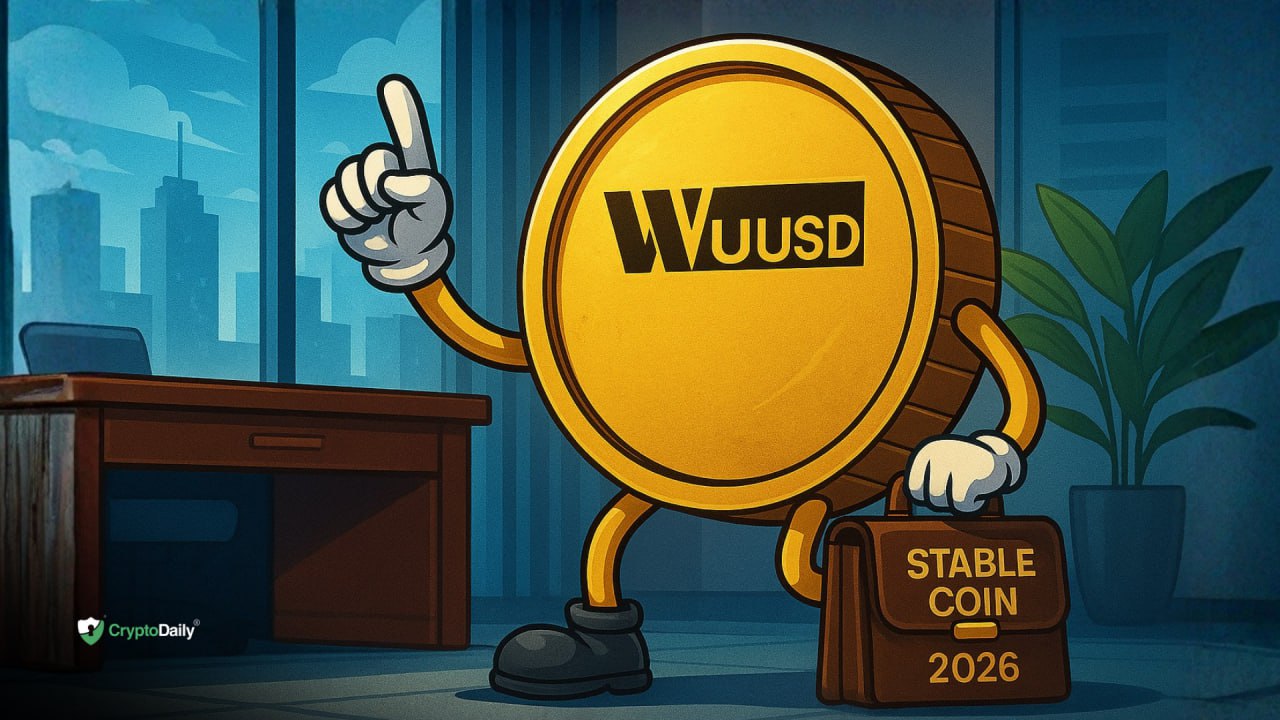
Hot on the Heels of Its Stablecoin Launch, Western Union Files ‘WUUSD’ Trademark

Hot on the Heels of Its Stablecoin Launch, Western Union Files ‘WUUSD’ Trademark

The post Hot on the Heels of Its Stablecoin Launch, Western Union Files ‘WUUSD’ Trademark appeared on BitcoinEthereumNews.com. Just days after announcing the launch of its own stablecoin set for 2026, Western Union has filed another trademark that could encompass a range of cryptocurrency-related services. Western Union — pioneers of the first transcontinental telegraph line — is preparing to introduce a dollar-backed stablecoin, the U.S. Dollar Payment Token (USDPT). Alongside the excitement surrounding this launch, the company appears to be signalling a broader expansion into the crypto space. It’s official:@WesternUnion, the world’s largest money transfer business, is building exclusively on Solana. 🔥 pic.twitter.com/dJMnKN5EY4 — Solana (@solana) October 28, 2025 Western Union Partners with Heavyweights Solana and Anchorage Digital Bank According to an exclusive report by The Wall Street Journal, Western Union revealed its plans to launch the USDPT stablecoin to enable its 100 million customers to send money globally with reduced risk and protection against local currency fluctuations. The USDPT will be built on the Solana blockchain and issued by Anchorage Digital Bank, with the launch targeted for the first half of 2026. Customers will be able to access the digital token through Western Union’s partner exchanges. In a press release, the company stated that its new stablecoin and accompanying “Digital Asset Network” are designed to “bridge the digital and fiat worlds, enabling real-world utility for digital assets.” Western Union emphasised that this collaboration combines its extensive global reach, Solana’s high-performance blockchain technology, and Anchorage’s “industry-leading, federally regulated stablecoin issuance and digital asset custody solutions.”Through this initiative, Western Union aims to give users seamless access to digital assets—allowing them to send, receive, spend, and hold USDPT through an intuitive user experience. Devin McGranahan, President and CEO of Western Union, had the following to say in the press statement: “We are committed to leveraging emerging technologies to empower our customers and communities.” Adding, “As…

Author: BitcoinEthereumNews
Best Altcoins to Buy – Join MoonBull Presale for 1000x Gains

Best Altcoins to Buy – Join MoonBull Presale for 1000x Gains

The post Best Altcoins to Buy – Join MoonBull Presale for 1000x Gains appeared on BitcoinEthereumNews.com. Crypto Presales MoonBull’s Stage 6 presale surpasses $550K with over 1,800 holders, 95% APY staking, and a governance system launching soon. Discover why it’s outperforming other top altcoins to buy now. What if the next crypto rocket isn’t even on your watchlist yet but already fueling up for takeoff? Every bull cycle begins quietly, with early-stage altcoins gathering strength before the spotlight hits. Savvy investors know the game: they hunt presales, community-backed projects, and undervalued tokens before the hype catches up. The best altcoins to buy now aren’t just names; they’re movements powered by strategy, mechanics, and momentum. When others chase pumps, the real gains go to those who spot the buildup early. Timing isn’t luck; it’s conviction. While the big names polish their updates, MoonBull’s presale is building momentum at a pace that’s hard to ignore. 1. MoonBull – The Best Altcoin to Buy Now for 1000x Gains MoonBull’s presale is now in Stage 6 for $0.00008388, with more than $550,000 raised and over 1,800 holders joining the herd. Each new stage pushes the price higher, with a projected 7,244% ROI from Stage 6 to the listing price of $0.00616. Staking rewards reach up to 95% APY, combining passive income with long-term growth potential. Starting at Stage 12, MoonBull introduces an open governance system where each $MOBU token equals one vote. Holders can decide on supply burns, marketing campaigns, and community initiatives. No lockups, no minimums, just pure participation. It’s a transparent, community-driven model where holders actively shape the project’s direction. MoonBull isn’t just another meme coin; it’s a decentralized movement that turns investors into decision-makers, making it one of the best altcoins to buy now. 2. Ton – Telegram’s Blockchain Power Play Toncoin is leveraging Telegram’s massive user base to fuel one of the most active blockchain ecosystems…

Author: BitcoinEthereumNews
Ripple’s Chris Larsen rockets into global top‑200 billionaires club

Ripple’s Chris Larsen rockets into global top‑200 billionaires club

Chris Larsen just broke into the global top‑200 richest people, and it happened fast.The move came after the U.S. government and Wall Street shifted their tone toward crypto. The Securities and Exchange Commission ended its five‑year lawsuit against Ripple back in August, clearing a major weight off the company. Then this Wednesday in San Francisco, investors tied to Fortress Investment Group and Citadel Securities put $500 million into Ripple, valuing the company at $40 billion, according to Bloomberg. The timing was almost rude. The new valuation plus a roughly 9% rise in XRP this year pushed Chris into billionaire territory with a net worth of $15.3 billion, placing him among the world’s richest for the first time. Most of that wealth comes from his 18% stake in Ripple and his 2.7 billion XRP tokens worth about $6.3 billion as of Wednesday. He also holds $1.8 billion in real estate and assorted investments. That breakdown was confirmed directly to Bloomberg. Born in San Francisco and raised in Cupertino, Chris is 64, and has been building companies since the 1990s, long before crypto existed. He went to San Jose State at first to study aeronautics. Chris switched to business, transferred to San Francisco State, and graduated with accounting and business administration degrees in 1984. He then worked as an auditor at Chevron before earning an MBA from Stanford. Building companies and building wealth The first time Chris made real noise was in 1996 when he co‑founded E‑Loan, the first platform to show consumer credit scores online. He sold it nine years later to Popular Inc. for $300 million. After that, he created Prosper Marketplace, a group‑lending platform partly inspired by his wife’s background in Cambodia. He stepped away from Prosper in 2012. A few months later, he co‑founded OpenCoin, which became Ripple. The company focused on cross‑border payments using XRP. Chris led it as CEO until 2016, then moved into the chairman role. His work now also stretches into local issues. With his wife, Lyna Lam, he supports Cambodian community projects, climate efforts, food access, and San Francisco’s neighborhood revival. The pair founded the A Khmer Buddhist Foundation and are helping fund a new temple in San Jose. Locally, Chris has been politically active for years. He funded a private camera network in San Francisco to combat property crime and recently gave $9.4 million to help the city build a real‑time police operations center. Ripple, meanwhile, is not going public anytime soon, as was reported by Cryptopolitan. When asked Wednesday, Ripple President Monica Long said, “No plan, no timeline.” Crypto markets shake while fortunes shift While Chris climbs the billionaire rankings, crypto trading is showing the opposite energy. On Hyperliquid, one wallet opened two heavy short positions against Bitcoin and XRP totaling $140 million. That trader is now up $3.1 million in about nine hours. The wallet was funded with $7 million USDC routed through an Arbitrum wallet that redeemed from a zero address, making the source hard to trace. Observers are already speculating insider knowledge. This reminds traders of the alleged “Trump insider whale” who reportedly made almost $200 million by shorting before the $19 billion liquidation crash on October 10. Someone linked to that wallet denied having inside info, even though the shorts lined up exactly before former President Trump’s tariff threat tanked markets. Bitcoin has been sliding. It dropped 7.4% on Tuesday in New York to $96,794, its first fall below $100,000 since June. That puts it more than 20% below last month’s record high. Ether dropped up to 15%, and several altcoins lost 50% this year. Many traders stayed sidelined after the October liquidation wave. Open interest in Bitcoin futures is still low. Even though funding rates look favorable, few are stepping back in. Bitcoin is up less than 10% this year, trailing stocks and failing to hedge portfolios. Want your project in front of crypto’s top minds? Feature it in our next industry report, where data meets impact.

Author: Coinstats
Remitly’s 25% Stock Selloff Looks Like Trouble From Trump’s Immigration Crackdown

Remitly’s 25% Stock Selloff Looks Like Trouble From Trump’s Immigration Crackdown

The post Remitly’s 25% Stock Selloff Looks Like Trouble From Trump’s Immigration Crackdown appeared on BitcoinEthereumNews.com. Money-transfer app Remitly has taken significant market share from incumbents like Western Union since its 2011 founding, but its stock price has languished this year. SOPA Images/LightRocket via Getty Images Remitly, a financial technology company that lets consumers in places like the U.S. and Canada send money home to countries like Mexico and the Philippines, may finally be seeing the effects of President Trump’s immigration crackdown on its business. The 14-year-old Seattle business announced its third quarter financial results yesterday, and a couple of metrics rattled investors, sending the stock down 25% today and shrinking its market value to $2.5 billion. Chief financial officer Vikas Mehta said the company expects revenue in the fourth quarter to reach about $427 million, representing growth of about 22%. In 2026, sales growth will be “in the high teens range.” These expected rates of expansion are big declines from Remitly’s 24% to 34% quarterly growth over the past year, even though the company has recently released new products, including a send-now, pay-later feature has already attracted 100,000 active customers. Remitly’s profits also fell slightly in the third quarter compared with the second, according to the company’s adjusted earnings before interest, taxes, depreciation and amortization (EBITDA) metric. Its stock decline today marks one of its biggest single-day drops since it went public in 2021 at a $7 billion valuation. Compared with the end of last year, Remitly’s stock is off 45%. Concerns about cryptocurrency-based stablecoins disrupting its business have also likely weighed on the stock. Have a story tip? Contact Jeff Kauflin at [email protected] or on Signal at jeff.273. Remitly has 8.9 million active customers, many of whom are immigrants. They send about $20 billion each quarter through the app, and Mexico is one of the top three markets they send money to. In the…

Author: BitcoinEthereumNews
Solana Ecosystem TVL Grows to $35 Billion

Solana Ecosystem TVL Grows to $35 Billion

The post Solana Ecosystem TVL Grows to $35 Billion appeared on BitcoinEthereumNews.com. TokenTerminal research shows SOL trades at 2.95x ecosystem TVL, down from 14x a year ago. Layer 1 blockchain Solana’s on-chain ecosystem has grown sharply in recent years, with total ecosystem value locked (TVL) rising from $3 billion in December 2023 to $35 billion in 2025, according to research from TokenTerminal. TokenTerminal defines ecosystem TVL as the “sum of funds deposited into the applications on the chain” – including from stablecoin issuers. Over the same period, Solana’s fully diluted valuation (FDV) increased from $40 billion to $100 billion, meaning SOL now trades at roughly 2.95 times the ecosystem’s TVL, down from 14 times a year ago. Solana Ecosystem TVL and FDV Multiple “This measures how much SOL is valued (assuming full dilution) relative to the capital deposited into the applications on the chain,” TokenTerminal’s report noted. SOL is currently trading at $155, up from $98 in December 2023. Stablecoins dominate, accounting for $13.45 billion, or 43% of the total Solana ecosystem TVL. Liquid staking protocols account for $7.1 billion, lending platforms $4.8 billion, and decentralized exchanges (DEXs) another $4.8 billion. Most of the absolute growth has also been driven by stablecoins, the researchers explained, with Circle, Tether, and a small number of protocols holding most of Solana’s on-chain assets, though this could shift in the future. This comes as the broader stablecoin sector has rapidly expanded to a market capitalization of $306 billion, up nearly $100 billion from the start of the year, according to DeFiLlama. SOL Chart TokenTerminal found that Solana’s ecosystem remains about one-tenth the size of Ethereum’s, leaving significant room for growth. They added that “if TVL grows another 10x as more assets move on-chain, and FDV/ecosystem TVL trends toward Ethereum’s ratio and reaches 2x, SOL’s FDV would sit at $700 billion.” Last month, a report by investment…

Author: BitcoinEthereumNews
Google Integrates Polymarket, Kalshi Prediction Market Data into Search Results

Google Integrates Polymarket, Kalshi Prediction Market Data into Search Results

Google now displays real-time prediction market probabilities from Polymarket and Kalshi in search results, making crowd-sourced financial forecasts accessible to billions of daily users. The post Google Integrates Polymarket, Kalshi Prediction Market Data into Search Results appeared first on Coinspeaker.

Author: Coinspeaker
Circle Mints 750 Million USDC on Solana Network

Circle Mints 750 Million USDC on Solana Network

The post Circle Mints 750 Million USDC on Solana Network appeared on BitcoinEthereumNews.com. Key Points: Circle mints 750 million USDC on Solana, totaling 5.25 billion since October 11. USDC now 66% of Solana’s stablecoin pool, impacting DeFi liquidity. No statements from Circle leadership despite significant market attention. Circle minted an additional 750 million USDC on the Solana network on November 7, 2025, bringing the total to 5.25 billion since October 11. This significant liquidity boost in Solana’s ecosystem fosters increased DeFi activities and enhances the network’s financial capabilities. Institutional interest in Solana continues to rise. Circle Expands Solana’s USDC Pool by 750 Million Circle Internet Financial, LLC, responsible for USDC issuance, added 750 million USDC onto Solana, raising on-chain minting totals to 5.25 billion USDC since October 11. USDC makes up approximately 66% of Solana’s stablecoin capacity, enhancing liquidity in various decentralized exchanges and lending protocols. Despite these shifts, Circle’s CEO Jeremy Allaire has not commented directly on this minting. Market analysts suggest the increase in liquidity could boost Solana-native projects, though no immediate response from major financial entities has been documented. This minting event underscores a strategic effort to enhance Solana’s liquidity landscape, with USDC now constituting 66% of Solana’s 15.00 billion stablecoin pool. This action could significantly amplify activity in decentralized finance (DeFi) protocols. Jeremy Allaire, CEO and Co-founder, Circle Internet Financial, LLC, stated, “USDC is a fully reserved stablecoin… redeemable 1:1 for US dollars while benefiting from speed and security of blockchain technology… USDC is issued through regulated affiliates of Circle.” USDC Dominance in Solana: Implications for DeFi Growth Did you know? The recent addition of 750 million USDC by Circle on Solana marks a pivotal point, making USDC a dominating presence in Solana’s stablecoin sector, constituting over 66% of the total pool. Circle has minted an additional 750 million USDC on the Solana network, as revealed by Onchain Lens…

Author: BitcoinEthereumNews
Compound Resumes Withdrawals from USDC, USDS Markets

Compound Resumes Withdrawals from USDC, USDS Markets

The post Compound Resumes Withdrawals from USDC, USDS Markets appeared on BitcoinEthereumNews.com. The DeFi lending protocol had paused withdrawals for three stablecoin markets after risk manager Gauntlet flagged a liquidity squeeze in Elixir’s deUSD token. Decentralized crypto lending platform Compound has resumed withdrawals from two out of three of its stablecoin markets where withdrawals had been paused since yesterday. Withdrawals were temporarily paused after risk manager Gauntlet flagged a liquidity crunch tied to institutional liquidity firm Elixir’s deUSD ecosystem. To prevent potential bad debt, Gauntlet had recommended that Compound institute a temporary emergency pause on withdrawals from the three markets where deUSD and sdUSD are accepted as collateral, namely USDC, USDS, and USDT on Ethereum mainnet. In a fresh comment on the recommendations from Gauntlet originally posted on Nov. 4, Gauntlet said that Ethereum USDC and USDS market withdrawals were unpaused, “allowing users to resume normal activity.” As for USDT, the comment suggests that users transfer more USDT into the affected market in order “fully cover any temporary reserve gap and provide an additional safety buffer.” The pause was proposed as a precaution while voting continued on Gauntlet’s separate risk parameter governance proposal, which passed the evening of Nov. 4, and was executed on-chain around 6 p.m. UTC today. The Pause In its original recommendation post, Gauntlet explained the reason for the pause, saying that Elixir’s synthetic dollar asset deUSD and its staked counterpart sdeUSD were facing a liquidity crunch, with sdeUSD falling to $0.86 while the protocol’s oracle was still showing the price at $1.06. Per Gauntlet, the price discrepancy is “considered a vulnerability” as it could let borrowers take on more than the market could actually back. Compound implemented the halt, blocking new borrows and withdrawals while still allowing users to add liquidity, repay loans, or post new collateral. Compound currently has $2.26 billion locked across its on-chain lending markets,…

Author: BitcoinEthereumNews
‘Shall We Be Concerned?’: PeckShield Alerts of Next Major DeFi Risk Worth $27 Million

‘Shall We Be Concerned?’: PeckShield Alerts of Next Major DeFi Risk Worth $27 Million

The post ‘Shall We Be Concerned?’: PeckShield Alerts of Next Major DeFi Risk Worth $27 Million appeared on BitcoinEthereumNews.com. The decentralized finance market continues to run hot, with TelosC and Euler allegedly experiencing liquidity drain. According to PeckShield, several TelosC vaults launched on the Euler platform have reached 100% utilization. Simply put, all funds have already been lent out, and liquidity providers are currently unable to withdraw their money. Euler is a decentralized lending protocol, sort of a “DeFi bank,” where users deposit tokens and receive interest, while others borrow them against collateral. TelosC is one of the “risk curators” within Euler, managing separate liquidity vaults where it sets the rules for loans and returns. Several assets are under potential attack at once: WETH: $5.5 million. USDC: $14.3 million. WBTC: $7.3 million. At the same time, the yield for providers is only 0.18% per annum, which seems suspiciously low. The system does not encourage borrowers to repay their debts, and liquidity may remain “locked” for a long time. If part of the liquidity is indeed “stuck,” the DeFi ecosystem risks a new chain reaction: rising borrowing rates, liquidity shortages in related pools, possible liquidations of positions and a collapse in the value of synthetic tokens. DeFi contagion in 2025 Analysts believe that the situation may be related to the aftermath of the collapse of Stream Finance, whose assets interacted with TelosC and other DeFi protocols.  For those who missed the news, DeFi protocol Stream Finance temporarily suspended all withdrawal and deposit operations earlier this week after the external fund manager controlling its assets reported an exploit and losses of about $93 million. You Might Also Like The potential DeFi contagion may also be fueled by Balancer’s $128 million exploit and xUSD collapse from $1 to $0.35. One may call it a reflexivity loop — fear of protocol risk driving withdrawals, which materializes an illiquid run. Source: https://u.today/shall-we-be-concerned-peckshield-alerts-of-next-major-defi-risk-worth-27-million

Author: BitcoinEthereumNews
Power Plays for 2026: Ripple (XRP), Bitcoin (BTC), and MUTM at $0.035 Are The Top Cryptos To Buy

Power Plays for 2026: Ripple (XRP), Bitcoin (BTC), and MUTM at $0.035 Are The Top Cryptos To Buy

Analysts point to Ripple (XRP), which is expected to see a sharp price increase in line with peak stock performances like NASDAQ’s ascent, during which stock performance catalyzed crypto price surges. XRP is maintaining a strong stance above the secondary support of $2.50, a point that could see the price move ahead with hundreds of […]

Author: Cryptopolitan