Lending

Lending protocols form the backbone of the decentralized money market, allowing users to lend or borrow digital assets without intermediaries. Using smart contracts, platforms like Aave and Morpho automate interest rates based on supply and demand while requiring over-collateralization for security. The 2026 lending landscape features advanced permissionless vaults and institutional-grade credit lines. This tag covers the evolution of capital efficiency, liquidations, and the integration of diverse collateral types, including LSTs and tokenized RWAs.

14607 Articles
Created: 2026/02/02 18:52
Updated: 2026/02/02 18:52
100M STRK, how it works and risks

100M STRK, how it works and risks

The post 100M STRK, how it works and risks appeared on BitcoinEthereumNews.com. Starknet enables Bitcoin staking with rewards in STRK and an incentive program of 100 million STRK. Non-custodial model, focused on bridge and delegation. Opportunity for DeFi, but technical and market risks remain. Bitcoin staking arrives on Starknet. The initiative, announced in a statement on September 30, 2025, was reported by specialized outlets such as Decrypt and The Block, and allocates 100 million STRK to incentivize activities related to Bitcoin on the network (100M STRK ≈ 12 million dollars at the exchange rate on 09/30/2025 according to reported estimates). According to the data collected by our editorial team through on‑chain dashboards like Dune and analysis reports on L2BEAT, in the hours following the announcement, there was a marked increase in queries and interest in metrics related to BTC bridged on Starknet. Industry analysts observe that an incentive program of this scale can generate spikes in TVL in the short term, but sustainability will depend on liquidity, reward design, and market risks. News in Brief: What’s Changing and for Whom Starknet now allows the use of tokenized BTC to contribute to network security through delegation. Users retain key control and earn rewards in STRK. That said, the initiative extends the use of BTC beyond traditional channels and complements the staking of the native token. According to the Starknet team and the foundation, the planned budget amounts to 100 million STRK to promote Bitcoin products and activities on an Ethereum layer-2. The operational details – official bridge, contracts, and schedule – are still being defined and will be published as soon as they are available. Actors and Products: Who Does What RE7 develops a yield product denominated in BTC on Starknet, designed to integrate “yield” streams with rewards in STRK. StarkWare emphasizes the non-custodial model, which enables delegation without relinquishing ownership of the…

Author: BitcoinEthereumNews
Mutuum Finance (MUTM) Shows Strength at $0.035 While Cardano (ADA) Bulls Nurse Brutal 14% Slump

Mutuum Finance (MUTM) Shows Strength at $0.035 While Cardano (ADA) Bulls Nurse Brutal 14% Slump

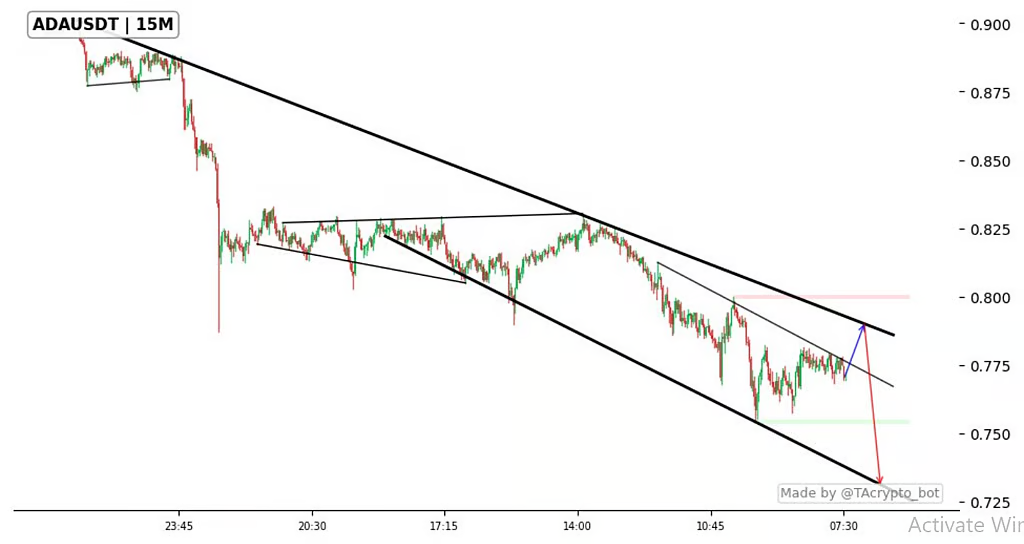
While Cardano (ADA) is basking in a crushing 14% drop, Mutuum Finance (MUTM) is simply standing firm at $0.035. ADA bulls are fighting volatility and temporary crash, while MUTM is convincingly building ground among both retail and institutional investors because of its in-working DeFi utility. Mutuum Finance currently is at stage 6 level of $0.035 […]

Author: Cryptopolitan
Templar Launches Native Bitcoin Lending Without Intermediaries

Templar Launches Native Bitcoin Lending Without Intermediaries

The post Templar Launches Native Bitcoin Lending Without Intermediaries appeared on BitcoinEthereumNews.com. In a significant development for Bitcoin holders, Templar Protocol has announced the launch of its mainnet, introducing the first “Cypher Lending” protocol that enables users to borrow U.S. dollar stablecoins against their native Bitcoin without intermediaries. The launch comes at a time when institutional custody solutions are controlling an increasing share of the Bitcoin supply, with Coinbase alone holding over 10% of the circulating BTC. The protocol, which has already secured $100 million in lending commitments, combines decentralized Multi-Party Computation (MPC) network technology with immutable smart contracts to ensure user collateral remains secure and free from unauthorized intervention. This launch marks a departure from traditional centralized lending platforms and wrapped token solutions that have dominated Bitcoin lending. “The Institutions have arrived and they’re hoovering up BTC using centralized custody of companies like Coinbase,” notes Royal F00l, Templar Protocol’s pseudonymous founder. “With Templar, you send your BTC to an immutable smart contract, running on a p2p network, which then sends you stablecoins.” The protocol introduces several key innovations, including permissionless access without KYC requirements, open-source architecture with no administrative backdoors, and privacy-first design. At launch, Templar supports native assets across Bitcoin and other chains. The technical architecture employs a decentralized MPC network for securing Bitcoin deposits, while smart contracts manage collateralization and repayment processes automatically. This removes the need for traditional custodians while maintaining security and efficiency. “Bitcoin was created to replace banks, not to be a novel toy asset for Wall Street to financialize and control,” adds Royal F00l. “Templar restores Bitcoin to its proper place as a permissionless, censorship resistant asset in the context of borrowing and lending.” While Ethereum’s DeFi ecosystem has flourished, Bitcoin lending has remained largely centralized. Templar’s solution aims to change this dynamic by providing a decentralized lending option for Bitcoin holders. The protocol’s roadmap…

Author: BitcoinEthereumNews
Why Solana (SOL), Ripple (XRP), and Little Pepe (LILPEPE) Are the Top 3 Cryptos to Own as the Bull Run Knocks

Why Solana (SOL), Ripple (XRP), and Little Pepe (LILPEPE) Are the Top 3 Cryptos to Own as the Bull Run Knocks

As the crypto market gets ready for a possible big surge, Solana (SOL), Ripple (XRP), and Little Pepe (LILPEPE) are out front. Each one brings something different to the table, but Little Pepe really shines with its quick rise and large community. Let’s dive into why these three coins look set to do well, with [...] The post Why Solana (SOL), Ripple (XRP), and Little Pepe (LILPEPE) Are the Top 3 Cryptos to Own as the Bull Run Knocks appeared first on Blockonomi.

Author: Blockonomi
Unrivaled Basketball Seals Partnership With Xfinity

Unrivaled Basketball Seals Partnership With Xfinity

The post Unrivaled Basketball Seals Partnership With Xfinity appeared on BitcoinEthereumNews.com. MEDLEY, FLORIDA – JANUARY 17: Angel Reese #5 of Rose battles under the basket against Aliyah Boston #7 of the Vinyl during the second half at The Mediapro Studio on January 17, 2025 in Medley, Florida. (Photo by Carmen Mandato/Getty Images) Getty Images Xfinity has signed a multi-year agreement with Unrivaled, becoming the player-founded basketball league’s official internet, mobile, and entertainment partner. The deal marks Xfinity’s first league-wide sponsorship in women’s sports and will debut with the start of Unrivaled’s 2026 season on January 5. For Xfinity, the partnership is positioned around deepening the fan experience. Plans include behind-the-scenes content driven by players, interactive challenges such as the Free Throw Faceoff, and exclusive discounts for Xfinity customers. In-arena activations like FanFest events and commemorative ticket programs are also part of the package. “As a brand committed to delivering the ultimate experience for sports fans, we are proud to join forces with Unrivaled,” said Jessica Muir, Comcast Senior Director, Brand Partnerships and Engagement. “This partnership not only expands our support of basketball but also allows us to help elevate women’s sports through a league that is innovating women’s basketball to meet the modern sports fan and overall market.” For Unrivaled, the timing of the agreement comes as the league moves into a critical phase of growth. Co-founded by WNBA stars Breanna Stewart and Napheesa Collier, the league launched in 2025 with a 3-on-3, full-court format and a player-ownership model that grants athletes equity alongside salaries. Its debut season drew many of the sport’s top names, a championship won by Rose Basketball Club led by Chelsea Gray, and national attention for its innovative approach on and off the court. That momentum has continued. Earlier this month, Unrivaled announced the first wave of players for its sophomore season, including Paige Bueckers, the 2025…

Author: BitcoinEthereumNews
Starknet Unveils Bitcoin Staking With 100M STRK Incentives for BTCFi Growth

Starknet Unveils Bitcoin Staking With 100M STRK Incentives for BTCFi Growth

        Highlights:  Starknet unveils bitcoin staking with a 100M STRK incentive program. Wrapped BTC assets can now secure Starknet and earn rewards. Re7 introduces an institutional Bitcoin yield fund on Starknet.  Starknet has unveiled Bitcoin staking on its Ethereum Layer 2 network, another major milestone in BTCFi. The migration enables the holders of the wrapped Bitcoin-based assets, such as WBTC, LBTC, tBTC, and SolvBTC, to stake on Starknet. Users are able to gain rewards and be assured of the security of the network without losing ownership of the assets. This launch is based on the BTCFi roadmap approved in August and the Starknet upgrade of September 15. The team states that this is the first trustless Bitcoin staking solution on any Layer 2. The mechanism does not change the base layer of Bitcoin, which is still proof-of-work. Rather, wrapped versions of BTC are part of the Starknet consensus, which is secured through zk-STARK cryptography.  1/ Bitcoin doesn’t change. But what you can do with it just did. From the June 2024 announcement that Starknet would scale Bitcoin, to the product rollouts of March 2025, the path has been clear. BTCFi on Starknet is where that momentum now leads  pic.twitter.com/dznkDJYsK8 — Starknet (BTCFi arc) (@Starknet) September 30, 2025  Incentives and Institutional Integration A 100 million STRK incentive program is being backed by the Starknet Foundation to launch the network. This program, named BTCFi Season, will spur liquidity, lending, and borrowing of stablecoins on Starknet. The foundation seeks to ensure the network is the cheapest to use with BTC as collateral by rewarding borrowing over Bitcoin. In addition to these incentives, Starknet has entered into a partnership with Re7 Capital. The asset management company, which handles more than $1 billion, will launch an institutional-quality Bitcoin yield fund. This product will be made available to retailers via MidasRWA, a tokenized version of Starknet. The combination of this development is derivatives, structured strategies of DeFi, and direct staking.  1/ Announcing the Re7 BTC Yield Strategy Re7 is launching an institutional-grade strategy to transform #Bitcoin from a static store of value into a productive, yield-bearing asset on @Starknet. It’s time to make your BTC work for you. pic.twitter.com/n2URVsxS4t — Re7 Capital (@Re7Capital) September 30, 2025  Re7 will also promote liquidity on Ekubo, a trading platform of Starknet. Ekubo will facilitate the creation of smoother flows between BTC and ETH and STRK and the stablecoins. By doing so, Starknet is establishing itself as a node that can be used by institutions to deploy Bitcoin in a central manner. Partnerships and Ecosystem Growth Starknet has also incorporated such tools as Xverse wallet, Hyperlane, and bridges developed by Atomiq Labs and Garden Finance to enhance connectivity. The partnerships with LayerZero, BitGo, and Stargate Finance will further increase institutional and retail access to the BTCFi ecosystem. The BTCFi rollout is being supported by contributors like WBTC, Threshold, Lombar,d, and Solv. Such initiatives aim to facilitate the shift of Bitcoin to decentralized finance but retain high standards of security and transparency. Moreover, Starknet staking already has thousands of delegators and validators staking on STRK. The network incorporates the most valuable cryptocurrency into its security setup by introducing BTC. Eli Ben-Sasson, the CEO of StarkWare, stated that this breakthrough fulfils the vision of scaling Bitcoin with zero-knowledge technology. As Ben-Sasson also pointed out, this move brings Bitcoin from a static store of value to an active financial instrument. He said that now Bitcoin can yield and defend the security of another decentralized network. The Starknet team feels that this dual role will enable decentralized systems. Furthermore, it will equip Bitcoin to play its part as a global reserve asset. Following the announcement, STRK has surged 10%, indicating a rise in confidence in the growth of BTCFi.    eToro Platform    Best Crypto Exchange   Over 90 top cryptos to trade Regulated by top-tier entities User-friendly trading app 30+ million users    9.9   Visit eToro eToro is a multi-asset investment platform. The value of your investments may go up or down. Your capital is at risk. Don’t invest unless you’re prepared to lose all the money you invest. This is a high-risk investment, and you should not expect to be protected if something goes wrong. 

Author: Coinstats
Which is the Best Crypto to Buy Now: Mutuum Finance (MUTM) Battles Cardano (ADA) For 2025 Gains

Which is the Best Crypto to Buy Now: Mutuum Finance (MUTM) Battles Cardano (ADA) For 2025 Gains

Which is the best crypto to buy now has become a defining question as investors weigh new projects against long-standing tokens. Cardano (ADA) continues to chart steady activity while Mutuum Finance (MUTM) is capturing growing attention in its presale. The two projects stand out in different ways, and in 2025 their competition for capital is [...] The post Which is the Best Crypto to Buy Now: Mutuum Finance (MUTM) Battles Cardano (ADA) For 2025 Gains appeared first on Blockonomi.

Author: Blockonomi
AC's new work Flying Tulip: Wants to use DeFi Treasury bond income to "raise" an exchange giant

AC's new work Flying Tulip: Wants to use DeFi Treasury bond income to "raise" an exchange giant

Author: Lemniscap Compiled by Tim, PANews We are excited to announce our participation in Flying Tulip's $200 million seed round. Flying Tulip is a new project from AC and his team, aiming to build a full-stack exchange encompassing spot, perpetual swaps, options trading, lending, and structured yield farming—a truly ambitious initiative built from the ground up. While the project encompasses a wide range of areas, this article will focus on its groundbreaking fundraising model. Why was Flying Tulip created ? Head-on competition with DeFi giants is daunting. They boast deeper pockets, robust recurring revenue, and established teams, operating at a scale far beyond the reach of smaller, more agile startups. These giants enjoy immense network effects, deeply integrated ecosystems, and loyal user bases. Furthermore, there's the political dimension: the power to influence industry standards and partnerships is often as crucial as the quality of the product itself. Therefore, even small startups with truly innovative technologies face a completely different set of challenges in successfully entering the market. This isn't just a technical challenge, it also involves financial and social challenges. Flying Tulip addresses this challenge by reshaping the crypto space's capital formation model. Instead of relying on short-term profit-seeking liquidity and token mechanisms, it strives to establish a fundraising model that can sustainably support business development, allowing its product pipeline ample time and space to independently grow and mature. Limitations of the current token fundraising model To date, the most successful application model for cryptocurrency has been crowdfunding: raising funds by issuing tokens to support the launch of a project. However, after the initial phase ends, many tokens gradually disappear, their value approaching zero as the project owners struggle to maintain sustained demand. The use of tokens is still an active area of experimentation, but in many cases, tokens primarily serve as fundraising tools, a role that often makes the most sense in the early stages of a project, before it develops into a self-sustaining company. Flying Tulip faces this reality and tries to build a corresponding model based on it. Flying Tulip's unique financing model The core idea is simple: raise large sums of money through token sales, invest the funds in low-risk DeFi strategies, and use the profits generated to maintain operations until the product line achieves self-profitability. Investors receive Flying Tulip (FT) tokens backed by perpetual put options. As long as they hold these tokens, they can redeem them at any time for their original investment value, and the put option never expires. From a rational perspective, investors will only exercise their options when the token price falls below the purchase price, at which point their tokens will be destroyed. In effect, investors incur an opportunity cost: if they had invested this capital directly in certain DeFi strategies, they could have earned a yield of approximately 4%. Instead, they gain the upside potential of the FT token while minimizing downside risk through structural design. Flying Tulip ultimately aims to raise $1 billion. The tokens have no lock-up period, and all tokens will be distributed to investors upon issuance. Based on a 4% yield on the project's treasury, this could generate approximately $40 million in annual revenue, which will be used for operating expenses and to develop its product portfolio until fee income becomes the primary source of revenue. Buyback and Destruction: The Core of the Model The proceeds from the DeFi Treasury bond will be used to cover operating costs and repurchase FT tokens. In the future, fees generated by the core product portfolio will become another source of repurchase demand. It's important to note that if investors sell their FT tokens on the secondary market, their put options will immediately expire. This initial capital will be transferred to the foundation to repurchase and destroy tokens. This means that selling not only deprives investors of protection but also directly reinforces the token's deflationary mechanism. In summary, these designs ensure that there will be constant new buying on the demand side of FT tokens, while the supply side continues to decrease. This deflationary positive cycle will continue to reinforce itself. The impact of token economics Since the entire FT supply is held by investors at the time of listing, market prices may experience significant volatility in the early stages. The limited circulation and ongoing buybacks create a foundation for strong reflexivity. Unlike traditional token issuance, where supply is distributed between the team and investors, the Flying Tulip project initially allocates 100% of tokens to investors. Subsequently, the supply will gradually shift to the foundation, ultimately leading to deflationary destruction. Theoretically, once this token has fulfilled its historical mission, it could be completely withdrawn from circulation. Our thoughts "Flying Tulip" isn't a guaranteed win, but it's a uniquely innovative venture. The success of this model hinges on the team's ability to effectively manage funds, maintain stable returns, and build a competitive product ecosystem. The cost is capital inefficiency, as investors forgo returns they could have earned through direct investment. Only project success can offset this opportunity cost. For a large financing round to be successful, the following elements are crucial: The ability to raise large amounts of capital usually relies on a core person or team who attracts capital through their credibility, influence and trust. A sufficiently mature product line is indeed worthy of large-scale fundraising and expansion. In our opinion, Flying Tulip offers a rare combination of these two factors. AC is one of the most astute builders in the crypto space, both influential and controversial. His track record of pioneering crypto primitives is undeniable, and the "Flying Tulip" project continues this tradition: fundamentally reimagining the token fundraising model with unprecedented mechanisms, while simultaneously launching a product portfolio that directly targets industry giants. We support the Flying Tulip team because it represents a reimagining of the token fundraising model, a core mechanism of the crypto movement. If it works, it will accelerate the launch of ambitious projects, enhance the competitiveness of the ecosystem, and ultimately benefit end users. It’s an experiment full of unanswered questions, but it’s precisely this kind of exploration that drives the crypto industry forward.

Author: PANews
Federal Reserve Continues Balance Sheet Reduction Amid Policy Deliberations

Federal Reserve Continues Balance Sheet Reduction Amid Policy Deliberations

The post Federal Reserve Continues Balance Sheet Reduction Amid Policy Deliberations appeared on BitcoinEthereumNews.com. Key Points: Vice Chair Jefferson emphasizes Fed’s ongoing balance sheet reduction amid policy debates. Impacts crypto markets, affecting BTC and ETH volatility. Continued quantitative tightening may decrease market liquidity. Federal Reserve Vice Chair Philip N. Jefferson emphasized the Fed’s readiness to utilize all available tools to shrink its balance sheet, addressing differences in member opinions, as disclosed on September 30. This ongoing quantitative tightening could heighten volatility in crypto markets, impacting liquidity and sparking fluctuations in key cryptocurrencies like Bitcoin and Ethereum. Crypto Market Trends Amid Federal Reserve’s QT Policies Market reactions from prominent crypto figures have been limited, with the broader crypto community cautious about liquidity-related risk. Notably, on-chain data suggest notable declines in DeFi Total Value Locked (TVL) and shifts in ETH staking volumes, reflecting adjustments to the tightening liquidity environment typically associated with these Federal Reserve actions. The implications of this continued balance sheet reduction are significant. Quantitative tightening reduces liquidity available to financial markets, which can unsettle asset classes globally, including cryptocurrencies. Vice Chair Jefferson noted, “Our commitment to the policy tools at our disposal is unwavering, as we navigate the complexities of the current economic landscape.” With less liquidity, experts often expect increased volatility in risk assets like BTC and ETH. Market participants closely watch these actions, driven by the Fed’s ability to recalibrate liquidity across financial landscapes. While no direct impact on interest rates was noted, the market remains vigilant due to potential downstream effects on lending rates and other financial mechanisms. According to CoinMarketCap, Bitcoin’s price stood at $112,884.27 as of September 30, 2025. Its market cap was reported at $2.25 trillion with a market dominance of 58.10%. The 24-hour trading volume showed a 36.85% change, recording $63.73 billion in transactions. Price movements for BTC noted a 0.80% increase over 24 hours but…

Author: BitcoinEthereumNews
Staking Bitcoin on Starknet: 100M STRK, how it works and risks

Staking Bitcoin on Starknet: 100M STRK, how it works and risks

Starknet enables Bitcoin staking with rewards in STRK and an incentive program of 100 million STRK.

Author: The Cryptonomist