Lending

Lending protocols form the backbone of the decentralized money market, allowing users to lend or borrow digital assets without intermediaries. Using smart contracts, platforms like Aave and Morpho automate interest rates based on supply and demand while requiring over-collateralization for security. The 2026 lending landscape features advanced permissionless vaults and institutional-grade credit lines. This tag covers the evolution of capital efficiency, liquidations, and the integration of diverse collateral types, including LSTs and tokenized RWAs.

14494 Articles
Created: 2026/02/02 18:52
Updated: 2026/02/02 18:52
BlockDAG Presale Surges to $407M as SEI Price Chart Climbs and Tron Holds Steady

BlockDAG Presale Surges to $407M as SEI Price Chart Climbs and Tron Holds Steady

The SEI price chart has been holding steady around $0.32–$0.33, indicating measured yet consistent growth. Its consistent range points to a coin that is not making sharp moves but is slowly climbing. At the same time, Tron (TRX) market analysis reflects a similar trend, with stable trading, modest gains, and network adjustments designed to strengthen […] The post BlockDAG Presale Surges to $407M as SEI Price Chart Climbs and Tron Holds Steady appeared first on Live Bitcoin News.

Author: LiveBitcoinNews
Coinbase Adds USDC Lending With Morpho and Steakhouse Financial

Coinbase Adds USDC Lending With Morpho and Steakhouse Financial

The post Coinbase Adds USDC Lending With Morpho and Steakhouse Financial appeared on BitcoinEthereumNews.com. U.S.-listed cryptocurrency exchange Coinbase (COIN) has rolled out a USDC lending product that allows its customers to earn yield directly from the exchange’s app, deepening its integration with decentralized finance (DeFi). The feature is powered by Morpho, a protocol that routes deposits through curated “vaults” managed by Steakhouse Financial, according to a blogpost on Thursday When users deposit USDC, their funds are lent out to borrowers — including those already tapping Coinbase’s crypto-backed loans secured by bitcoin. The interest borrowers pay generates returns for depositors, who can withdraw anytime without lockups. Coinbase said the setup creates a flywheel effect where its lending and borrowing products reinforce each other. The launch follows more than $900 million in loans originated through Coinbase’s crypto-backed loan service. Together, the two offerings form what the company calls its first complete onchain lending and borrowing ecosystem. By outsourcing the backend to Morpho’s smart contracts while keeping the Coinbase interface, the company is betting on what it calls the “DeFi mullet” approach: a familiar fintech user experience at the front, powered by open, decentralized infrastructure in the back. For users, the product offers an easier way into decentralized lending markets without leaving Coinbase’s platform. For Morpho, it underscores the argument that the future of finance will be built on open networks, but accessed through trusted gateways. Source: https://www.coindesk.com/business/2025/09/18/coinbase-adds-usdc-lending-with-morpho-and-steakhouse-financial

Author: BitcoinEthereumNews
Diana Ross Scored One Of The Most Important Hits Of Her Career 35 Years Ago

Diana Ross Scored One Of The Most Important Hits Of Her Career 35 Years Ago

The post Diana Ross Scored One Of The Most Important Hits Of Her Career 35 Years Ago appeared on BitcoinEthereumNews.com. Diana Ross scored her first solo No. 1 on the Hot 100 in 1970 with “Ain’t No Mountain High Enough,” proving she could succeed outside of The Supremes. LOS ANGELES – 1987: Singer Diana Ross poses for a portrait in 1987 in Los Angeles, California. (Photo by Harry Langdon/Getty Images) Getty Images Diana Ross enjoyed one of the longest careers of any female musician on the Billboard charts. She racked up an astounding 12 No. 1s on the Hot 100 with The Supremes and then another half-dozen on her own. That sum makes her one of the greatest hitmakers of all time. Amidst all of her commercial success, there was a moment when Ross took a major risk. After years fronting The Supremes — even as Diana Ross & The Supremes — she wanted to go out on her own. In 1970, that ambition came true as she released her debut solo album, the simply-titled Diana Ross. She needed a hit, and she got it with the unflappable “Ain’t No Mountain High Enough.” Diana Ross Hit No. 1 with “Ain’t No Mountain High Enough” On the Hot 100 dated September 19, 1970, Ross reached No. 1 with “Ain’t No Mountain High Enough.” Hers was not the original version, or even the take that the American public was already familiar with, but it became one of the most successful tracks in her catalog. The tune needed only a few weeks to soar to the summit and prove Ross could produce smashes without her bandmates. Three Weeks at No. 1 and a Pivotal Transition Three years after Marvin Gaye and Tammi Terrell turned “Ain’t No Mountain High Enough” into a hit, Ross managed to do the same. The track ruled the Hot 100 for three weeks in the fall of 1970, taking…

Author: BitcoinEthereumNews
Top Crypto Presales Of 2025: Tapzi, Lyno, BlockDAG & MetaVault Compete For Spotlight

Top Crypto Presales Of 2025: Tapzi, Lyno, BlockDAG & MetaVault Compete For Spotlight

Tapzi leads 2025’s top crypto presales with $48M+ raised, skill-based Web3 gaming, and mass-market appeal. Lyno, BlockDAG, and MetaVault add balance for diversification.

Author: Blockchainreporter
Top-Ranked Solana Investor Reckons Investing in This Crypto Is Like a Second Chance at SOL’s Level of Gains

Top-Ranked Solana Investor Reckons Investing in This Crypto Is Like a Second Chance at SOL’s Level of Gains

The post Top-Ranked Solana Investor Reckons Investing in This Crypto Is Like a Second Chance at SOL’s Level of Gains appeared on BitcoinEthereumNews.com. When Solana (SOL) first took off, it turned early buyers into millionaires almost overnight. One of those investors, who saw gains of over 27,000% from SOL, is now saying that Little Pepe (LILPEPE) feels like buying Solana when it was just $3. The bold comparison has caught attention because LILPEPE is still in presale at $0.0022, and early backers have already seen 120% gains.  Even at today’s stage 13 price, investors may see about 36.36% growth by launch at $0.0030. That possibility of climbing toward SOL style gains, maybe as high as $0.59 before mid-2026, draws people in. Little Pepe (LILPEPE) The Meme Coin With Real Muscle Unlike many meme coins that rely only on culture and jokes, Little Pepe is building a next-generation Layer 2 ecosystem. It promises ultra-low fees, fast finality, high security, staking rewards, and strong anti-sniper protection for investors. The utility and meme culture mix stands out in a crowded field. The presale has been rolling through stages at a speed. Stage 12 sold out, and now stage 13 is live at $0.0022. Over $25,475,000 has already been raised, and more than 15.75 billion tokens have been sold. Early investors from stage 1 have already seen 120% gains, while those who buy now could still enjoy 36.36% by launch. LILPEPE is also listed on CoinMarketCap and has been audited by CertiK, which adds a layer of trust. The project is not only about fun but also shows credibility. Why People Are Comparing LILPEPE to SOL The comparison between Solana and Little Pepe may sound dramatic, but there are reasons why it makes sense. Solana rose because it offered something better than what was out there. Similarly, LILPEPE is blending meme energy with actual blockchain infrastructure. From June to August 2025, LILPEPE surpassed PEPE, Shiba Inu (SHIB),…

Author: BitcoinEthereumNews
Why Top Analysts Are Calling This Crypto the Next Solana (SOL)

Why Top Analysts Are Calling This Crypto the Next Solana (SOL)

While Solana earned its reputation for high-speed, low-cost transactions, Mutuum Finance is carving out its own lane by addressing one […] The post Why Top Analysts Are Calling This Crypto the Next Solana (SOL) appeared first on Coindoo.

Author: Coindoo
Base coin issuance: a long-planned conspiracy?

Base coin issuance: a long-planned conspiracy?

Author: cole Produced by: Vernacular Blockchain In the crypto world, launching a new coin always sets the market on fire. When Coinbase, the industry's most compliant "regular force," incubated its Layer 2 network, Base, shifted its stance from "never launching a coin" to "exploring the future," everyone knew a major drama was about to unfold. This isn't just another token launch; it's a calculated strategic move by Coinbase, aiming to transform Base from a traffic gateway into a self-sustaining economic hub. Will this yet-to-be-launched token be the rocket fuel that ignites a bull market, or another "launch-and-reach" capital story? To answer this question, we must delve into the fabric of Base and analyze the vulnerabilities behind its glamorous data. 01. From “NO” to “YES” — Why does Base have to issue a token? Once upon a time, Base was a breath of fresh air in the Layer 2 world, with its leadership repeatedly stating that it had "no plans to issue a coin." However, the tide has turned. Base founder Jesse Pollak and Coinbase CEO Brian Armstrong have now publicly stated that the team is "exploring the issuance of a native token," believing it to be an excellent tool for accelerating decentralization and ecosystem growth. The official justification is grand and politically correct: achieving complete decentralization of the network. Currently, Base's core sorter remains centrally controlled by Coinbase. Issuing tokens can attract independent node participation through incentive mechanisms, a necessary step towards true decentralization. This technology-driven rhetoric aligns with the spirit of the crypto world and provides a "compliance" shield against regulatory scrutiny. However, the data reveals a harsher reality: Base is facing severe capital outflows. Data shows that over the past three quarters, Base has experienced a net outflow of $4.6 billion, with the majority of funds flowing back into the Ethereum mainnet. This suggests that while Base has successfully attracted a large number of users thanks to Coinbase's traffic, particularly during the meme coin and SocialFi (social finance) boom, it lacks user stickiness. Capital, like mercenaries, comes and goes with impatience. Base faces the risk of becoming a mere low-cost transit point. Meanwhile, competitors Arbitrum and Optimism have already built strong economic moats using tokens. Therefore, Base's token issuance is more a survival imperative than a philosophical evolution. Its core economic goal is a single one: anchoring capital. Through token incentives, Base aims to transform speculative "tourists" into long-term "residents," creating a self-reinforcing economic closed loop. 02. A Song of Ice and Fire: A Panoramic Scan of the Base Ecosystem To understand the power of the Base token, we must first understand its current state. On-chain data paints a picture of both ice and fire: user activity is in full swing, but capital depth is relatively calm. Judging by the data, Base is undoubtedly a top player. Its TVL exceeds $5 billion. But what's most astonishing is its transaction processing capacity, with an average TPS of 148.77, far exceeding Arbitrum's 22.49. The network has nearly one million daily active addresses, and annualized network revenue is projected to reach $75 million. These data clearly reveal Base's uniqueness: while it is an undisputed giant in user activity, it remains a laggard in terms of capitalization. Base has already solved the "how to attract people" problem; now it needs to use its token to solve the "how to retain people" problem. Base's application ecosystem exhibits a unique "leverage structure." On one end are multi-chain giants like Uniswap and Aave, which contribute the majority of TVL. On the other end are vibrant meme coins. Of greatest strategic value, however, are the "native protocols" sandwiched in the middle—they are Base's true moat and the core goal of future token incentives. DeFi: In the decentralized finance sector, Aerodrome Finance, Base's native automated market maker (AMM), is rising at an astonishing rate, with its TVL exceeding $1.1 billion, aiming to become Base's central liquidity hub. In the lending market, the native protocol SeamlessFi has also made a name for itself. SocialFi: This is Base's unique trump card. The phenomenal emergence of Friend.tech not only brought a massive amount of traffic to Base but also pioneered a new on-chain social monetization model. Furthermore, the decentralized social protocol Farcaster is also thriving here. Games and NFTs: This sector is still in its early stages, with no blockbuster hits yet. However, Base's low gas fee environment is ideal for the development of on-chain games, and its native token can serve as a catalyst to attract top game studios. 03. Redistribution of wealth - who will be the biggest winner? The issuance of Base tokens will be a redistribution of wealth on an unprecedented scale. Ecosystem protocols: For native protocols such as Aerodrome and SeamlessFi, Base tokens will be their ammunition to compete head-on with multi-chain giants. Users and community: Issuing coins will bring about a wealth effect, and tokens will also give the community the power of governance and cultivate a deep sense of "ownership". Base Network: The token treasury will free Base from its dependence on Coinbase and become a self-sustaining and self-developing public product. Coinbase: This might be the most exciting part. Currently, Base directly contributes less than 1% of Coinbase's total revenue. However, the fully diluted valuation (FDV) of a single Base token could reach tens of billions of dollars. This means that Coinbase is performing a brilliant financial trick: giving up a negligible amount of operating income in exchange for a massive asset potentially worth tens of billions of dollars. By issuing tokens and decentralizing the platform, Coinbase not only mitigates regulatory risk but also transforms a small profit into a massive asset. 04. Summary Base's exploration of issuing a token is a deliberate strategic necessity. It marks Base's official transition from a successful "traffic acquisition machine" to a self-sustaining "on-chain economy." Will Base's coin launch, like Arbitrum's, use a "big bang" launch to generate hype but potentially trigger a catastrophic sell-off? Or will it be like Optimism, using a phased, narrative-heavy approach to steadily guide the market and direct the community's attention to long-term development? Considering Base's close ties with Coinbase and its "compliance first" stance, the latter seems more likely. Regardless of which path it chooses, Base holds a trump card: the massive retail user base brought by Coinbase and the unique SocialFi ecosystem. For all participants in the crypto world, this drama is worth your close attention.

Author: PANews
Why Mutuum Finance (MUTM) is the Next Big Altcoin, Surpassing Solana (SOL)

Why Mutuum Finance (MUTM) is the Next Big Altcoin, Surpassing Solana (SOL)

The post Why Mutuum Finance (MUTM) is the Next Big Altcoin, Surpassing Solana (SOL) appeared on BitcoinEthereumNews.com. Each bull cycle has its breakout star, and this time, investors are watching Mutuum Finance (MUTM). As Solana (SOL) had previously blinded the market with speed, Mutuum Finance is rewriting the hype to hard utility. Mutuum Finance is not only currently promising scalability, but is providing a platform on which the future of lending and borrowing can grow sustainably, something that competitors do not pose a threat of doing. Mutuum Finance (MUTM) could outpace Solana (SOL) in performance. Solana Price Maintains Strength Near $236 as Market Monitors Resistance Solana (SOL) is trading at $236.42 with slight improvements of about 1.2% in the last 24 hours with a 1-day range of between $231.88 and $240.55. The token has witnessed an approximate 9% increase in the last one week, which is backed by institutional investors and the high activity of the ecosystem.  Resistance is seen between $250-$260 whereas the support is shaping between $220-$230 which indicates that SOL might require achieving a higher break. A portion of investors, in comparison to the well-established infrastructure and relative maturity of SOL, have been finding that emergent DeFi Mutuum Finance, presents higher growth potential under existing market conditions. Mutuum Finance Presale Rise  Mutuum Finance has had an incredible rate of presale traction and has over 16,400 investors buying coins to raise over $16 million raised so far. During Phase 6, tokens can be purchased at $0.035 a token. Its hierarchical system is a rewards scheme and the ones who come early are set to see maximum rewards. In a bid to provide security within its ecosystem, Mutuum Finance has teamed with CertiK to initiate a formal bug bounty program and a pool of rewards, which amounts to $50,000 USDT. In a way that all the vulnerabilities may be discovered and eradicated, reward is provided in…

Author: BitcoinEthereumNews
The Next Ten Days Will Be Crucial For Crypto, But This Cheap Altcoin Is Poised To Lead The Rest, Here is Why

The Next Ten Days Will Be Crucial For Crypto, But This Cheap Altcoin Is Poised To Lead The Rest, Here is Why

The post The Next Ten Days Will Be Crucial For Crypto, But This Cheap Altcoin Is Poised To Lead The Rest, Here is Why appeared first on Coinpedia Fintech News The next ten days are shaping up as pivotal for the crypto market, as Bitcoin’s consolidation is signaling a potential shift in momentum. Analysts are stressing that this short-term period may decide whether a powerful altcoin season ignites in the fourth quarter of 2025.  Global economic developments are adding to the urgency, since both China’s …

Author: CoinPedia
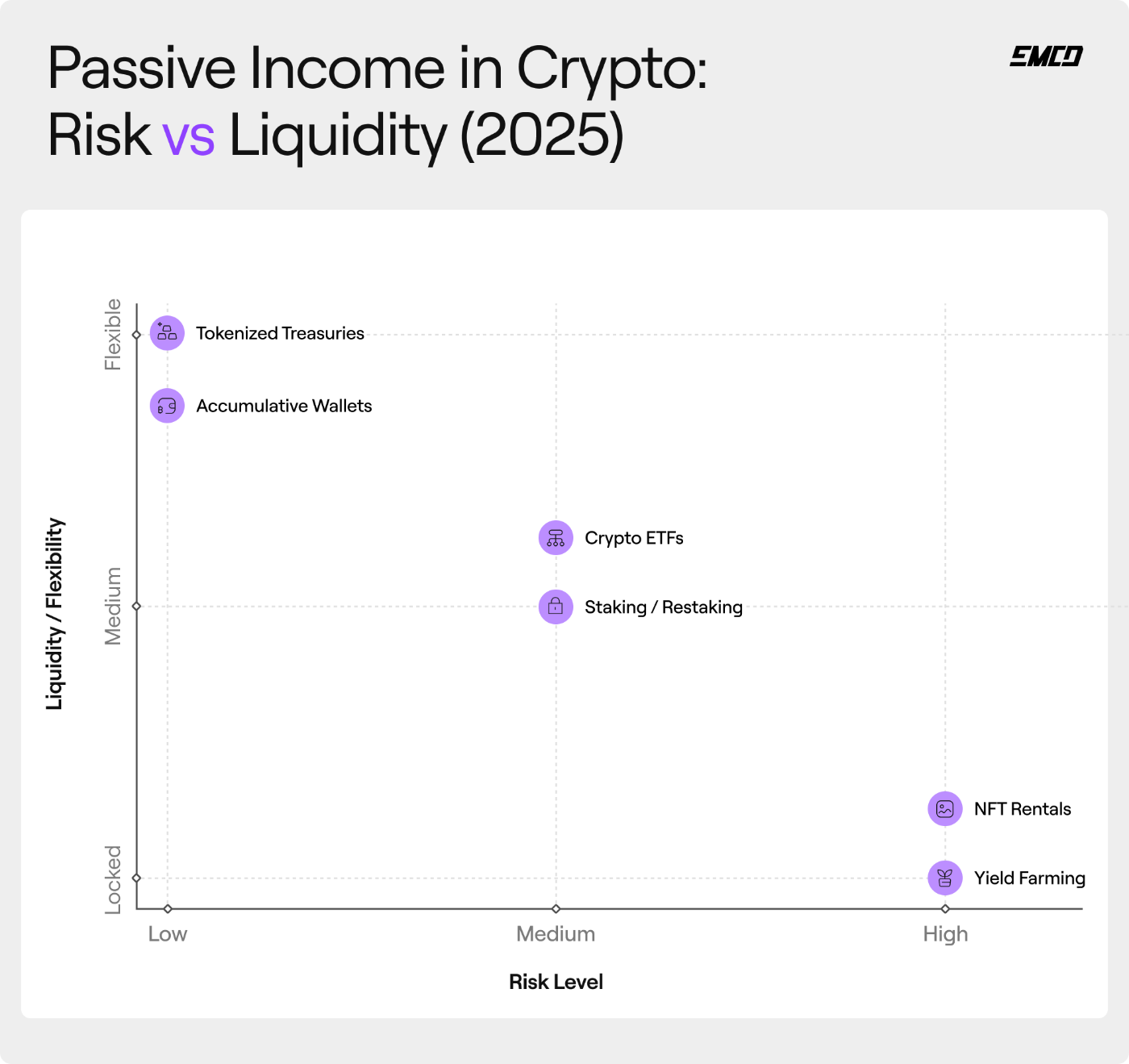
Passive Income in Crypto: Why Waiting for Altseason Is a Bad Strategy

Passive Income in Crypto: Why Waiting for Altseason Is a Bad Strategy

Altseason is tempting, but most investors miss the timing. In 2025, passive income strategies offer steadier growth without relying on hype cycles. Tokenized bonds bring traditional yields on-chain with better accessibility. Crypto savings accounts like Coinhold give up to 14% APY with flexible withdrawals. Staking & restaking unlock extra yield, though risks remain tied to networks and smart contracts. Lending is still the backbone of passive income — now safer and more transparent. Yield farming hasn’t died, it’s just smarter, while NFT rentals and staking ETFs show how mainstream passive yield is becoming. The bottom line: no product is risk-free, but if you match the right tools to your risk appetite and liquidity needs, you can build steady returns in any market.

Author: Hackernoon