Lending

Lending protocols form the backbone of the decentralized money market, allowing users to lend or borrow digital assets without intermediaries. Using smart contracts, platforms like Aave and Morpho automate interest rates based on supply and demand while requiring over-collateralization for security. The 2026 lending landscape features advanced permissionless vaults and institutional-grade credit lines. This tag covers the evolution of capital efficiency, liquidations, and the integration of diverse collateral types, including LSTs and tokenized RWAs.

13963 Articles
Created: 2026/02/02 18:52
Updated: 2026/02/02 18:52
Hacker Turns $53M Heist into $103M, Buys More ETH

Hacker Turns $53M Heist into $103M, Buys More ETH

The post Hacker Turns $53M Heist into $103M, Buys More ETH appeared on BitcoinEthereumNews.com. Key Notes The exploiter previously made huge profits with the stolen assets. Now, they’re buying Ethereum again as the price plunged. The Radiant Capital Hacker is already in profit. The hacker group that stole $53 million from Radiant Capital, a cross-chain lending protocol, is making strong bets on Ethereum (ETH). Exploiter Purchases 2K Ethereum According to data from Lookonchain, the exploiter’s address purchased 2,109.5 ETH on DODO, an on-chain liquidity provider and decentralized exchange, for an average price of $4,096. The Radiant Capital hacker is buying the dip in $ETH! An hour ago, they spent 8.64M $DAI to buy 2,109.54 $ETH at $4,096.https://t.co/ZKHsX1ToIt pic.twitter.com/AuNMJ3O9so — Lookonchain (@lookonchain) August 20, 2025 Data shows that the hackers used DAI to accumulate the ETH early on August 20. Ethereum is currently trading near $4,200, up from its local low of $4,064 earlier today. At this point, the Radiant Capital hacker is already up by over $200,000 on their Ethereum holdings. Radiant Capital Exploit Detailed Radiant Capital was exploited in September 2024 by the North Korean hackers. The cross-chain lender lost $53 million to fraudulent actors, who allegedly socially engineered their way to inject their malware using a PDF document. The protocol has already contacted the Federal Bureau of Investigation and multiple blockchain security firms like SEAL911, Hypernative, ZeroShadow, and Chainalysis to recover the funds. But still, no luck. As the hackers moved the funds into multiple addresses, they also started trading Ethereum to make huge profits. According to an Aug. 14 report, the North Korean hackers turned the stolen $53 million into roughly $103 million, a 93.5% return in around 10 months. next Disclaimer: Coinspeaker is committed to providing unbiased and transparent reporting. This article aims to deliver accurate and timely information but should not be taken as financial or investment advice. Since…

Author: BitcoinEthereumNews
Two Prime, Figment Expand Institutional Bitcoin Yield

Two Prime, Figment Expand Institutional Bitcoin Yield

The post Two Prime, Figment Expand Institutional Bitcoin Yield appeared on BitcoinEthereumNews.com. US investment adviser Two Prime has partnered with staking infrastructure provider Figment to offer institutional clients access to cryptocurrency yield opportunities — highlighting the growing institutional shift toward blockchain-based yield strategies. Through the partnership, Two Prime’s institutional clients will gain access to yield strategies for Bitcoin (BTC) and more than 40 other digital asset protocols, including Ethereum, Solana, Avalanche and Hyperliquid, the companies announced Tuesday. Two Prime, a crypto-native investment adviser registered with the US Securities and Exchange Commission, manages roughly $1.75 billion in assets and operates one of the industry’s larger Bitcoin lending businesses. In July, Bitcoin miner MARA Holdings acquired a minority stake in Two Prime, substantially increasing the amount of BTC the firm manages on its behalf. Several blockchain firms are turning to Bitcoin yield, seeking to tap the underutilized potential of the $2.3 trillion asset. Solv Protocol has introduced a structured vault system designed to generate BTC yield through a mix of decentralized and traditional finance strategies. Bitcoin-focused DeFi startup BOB has raised $21 million to further expand Bitcoin yield opportunities using hybrid models.  Coinbase has also entered the space with its new Bitcoin Yield Fund, targeting non-US investors with returns of up to 8%. The exchange said the fund was launched “to address the growing institutional demand for bitcoin yield.” Related: Bitcoin yield demand booming as institutions seek liquidity — Solv CEO Institutional adoption fuels rising demand for Bitcoin yield Bitcoin’s outsized historical returns are pushing more investors toward yield strategies that generate income on otherwise idle holdings.  As hedge funds, family offices and asset managers move into BTC, they increasingly seek exposure that also delivers predictable returns. Unlike crypto-native “diamond hands,” institutions view Bitcoin as part of a diversified portfolio — where yield is a desired or expected component. Bitcoin price appreciation by quarter.…

Author: BitcoinEthereumNews
Celsius Begins Third Distribution with $220M Payout to Creditors

Celsius Begins Third Distribution with $220M Payout to Creditors

        Highlights:  Celsius begins third distribution, distributing $220.6 million to creditors. The total creditor recovery now stands at 64.9% with a goal of 67–85%. Creditors may also receive equity in Ionic Digital, a Bitcoin mining firm.  Celsius Network officially announced the third distribution to its creditors. According to the announcement, the platform will begin to distribute $220.6 million on August 20, 2025. The payout includes both cash and cryptocurrency settled through PayPal, Coinbase, Venmo, and Hyperwallet. This is part of an ongoing effort after Celsius reached an agreed reorganization plan in 2023, which was supported by 98% of its creditors. Earlier issued distributions were $2.53 billion and $127 million. The overall recovery rate has now risen to 64.9%.  Celsius will begin a third distribution of $220.6 million to eligible creditors. More info here: https://t.co/A5VoaG7CCJ — Celsius (@CelsiusNetwork) August 19, 2025  Celsius Begins Third Distribution as Total Recovery Hits 64.9% This latest round, as per the court filing, brings the creditor recovery of Celsius closer to the target of 67-85%. The funds are distributed in Bitcoin and Ethereum. U.S. dollars may instead be issued to select users, mainly corporate clients. The plan also includes equity in Ionic Digital, the mining firm owned by Celsius. The source of this distribution is demonstrated in legal filings. Celsius tapped into contingent and disputed claims in an $86.4 million capital drawdown. There was also an amount of $46.3 million in forfeited claims. Moreover, expunged claims brought in an additional $7.7 million. The remaining $17 million came about in the form of disallowed claims with former CEO Alexander Mashinsky and related parties.  Approximately $63.2 million has been allocated to the legal and administrative costs. The portal insisted on the importance of users updating their claims portal details. This guarantees prompt payouts and prevents delays in processing. To access their funds, all users have to undergo KYC checks. Furthermore, the date of distribution and eligibility depend on claim status. Mining Firm and Lawsuit Support Broader Recovery Strategy The introduction of Ionic Digital Inc. is one of the essential components of the recovery strategy. Ionic Digital is a Bitcoin mining company that focuses on recovering value from lost creditors. Equity ownership of the firm may be given to some creditors. This strategy would assist in increasing overall recovery up to 85%. Celsius is still engaging in legal issues. A United States bankruptcy judge allowed the litigation of Celsius against Tether to continue. The judge decided that the claims of breach of contract and fraud could proceed. Celsius claimed that Tether cost them billions by selling Bitcoin in early 2022.  Celsius just won a major round in its $4B lawsuit against Tether.  A U.S. judge says the case can move forward over claims that Tether sold 39,500 $BTC early during the 2022 crash, breaking their deal. If Celsius wins, this could set a BIG example for how crypto firms are… pic.twitter.com/JfVmZocNS4 — Greg Miller (@greg_miller05) July 2, 2025  The court ruled that there were enough ties between the operations of Tether and the United States, showing that the case should not be a foreign matter. While not all charges were upheld, the central claims remain active in court. Recovery Approaches Final Phase with Focus on Efficiency As Celsius begins its third distribution, most users are seeing progress in their claims. According to the firm, 93% of the initial money due has been paid out. Moreover, the rest will be managed in phases and are subject to verification and legal clearance. The collapse was preceded by risky lending and the volatility of the crypto market in July 2022. Furthermore, the crisis was worsened by exposure to Terra-Luna and other DeFi protocols. Celsius filed for Chapter 11 bankruptcy after having a $1.2 billion balance-sheet deficit. The present recovery plan has returned much of the user funds lost despite the collapse. With the third distribution in progress, it is now time to focus on final recoveries and equity distributions. Meanwhile, Celsius has warned its users to be aware of phishing attempts and only to use official communications. During the repayment periods, there have been more fraudulent activities.    eToro Platform    Best Crypto Exchange   Over 90 top cryptos to trade Regulated by top-tier entities User-friendly trading app 30+ million users    9.9   Visit eToro eToro is a multi-asset investment platform. The value of your investments may go up or down. Your capital is at risk. Don’t invest unless you’re prepared to lose all the money you invest. This is a high-risk investment, and you should not expect to be protected if something goes wrong. 

Author: Coinstats
Bitcoin Hyper Unveils High-Throughput Bitcoin Layer-2 as Presale See Whales Buy $150K in One Week

Bitcoin Hyper Unveils High-Throughput Bitcoin Layer-2 as Presale See Whales Buy $150K in One Week

Bitcoin Hyper ($HYPER) took a leap forward this week with its plan to bring high-speed, low-cost transactions and smart-contract functionality to Bitcoin via a Solana Virtual Machine (SVM) rollup architecture. The project will position the world’s largest crypto asset for everyday payments and scalable on-chain apps while preserving Bitcoin’s settlement assurances. The $HYPER presale has […]

Author: Bitcoinist
Celsius begins $220.6M third payout to creditors

Celsius begins $220.6M third payout to creditors

The post Celsius begins $220.6M third payout to creditors appeared on BitcoinEthereumNews.com. Celsius Network has started its third repayment, sending $220.6 million to creditors as part of its ongoing reorganization plan. Summary Celsius launched its third payout on Aug. 20, distributing $220.6M to creditors. Total recovery now stands at 64.9%, with a final target of 67–85%. Some creditors may also receive equity in Ionic Digital, its new mining firm. Celsius announced on Aug. 20 that it has started its third round of distributions, totaling $220.6 million. This brings total recoveries to 64.9% of creditor claims. According to the company, the repayment includes both cryptocurrency and cash, distributed through platforms such as Coinbase, PayPal, Venmo, and Hyperwallet. The distribution follows two payment rounds, with $127 million distributed in November 2024 and a $2.53 billion payout to more than 251,000 creditors in early 2024. The reorganization plan, which was approved by 98% of creditors in 2023, aims for a 67%–85% eventual recovery. Celsius’s mining arm may also give some creditors stock in Ionic Digital Inc., a Bitcoin (BTC) mining company. Celsius has requested that eligible creditors update their information through the official claims portal in order to prevent delays in payment. Some claimants may encounter additional delays as a result of ongoing legal and regulatory issues that affect repayment eligibility. From collapse to partial recovery Celsius’s bankruptcy in July 2022 was primarily caused by risky financial practices, market volatility, and poor liquidity management. At its peak, the platform, which relied on unsecured lending and leveraged trading, promised annual returns of up to 18%. The 2022 market crash, worsened by exposure to Terra-Luna and decentralized finance losses, forced Celsius to freeze withdrawals and ultimately file for Chapter 11 with a $1.2 billion deficit. The collapse led to the loss of billions of dollars in customer funds, regulatory crackdowns, and lawsuits against its leadership. Even though…

Author: BitcoinEthereumNews
From $0.035 to $3.50? Analysts Claim Mutuum Finance (MUTM) is the Best Ethereum DeFi Token to Buy in 2025

From $0.035 to $3.50? Analysts Claim Mutuum Finance (MUTM) is the Best Ethereum DeFi Token to Buy in 2025

Mutuum Finance (MUTM) is turning heads across the Ethereum DeFi market after analysts spotlighted its staggering growth potential, from a modest $0.035 to a projected $3.50 in 2025. Mutuum Finance (MUTM) is currently in presale phase 6. Early adopters of the project are set to reap fast 500% returns as soon as the project launches.  […]

Author: Cryptopolitan
Celsius begins $220M distribution in third payout round to creditors

Celsius begins $220M distribution in third payout round to creditors

Celsius repayment update — crypto lender starts $220.6M third payout, bringing creditor recovery close to 65%.

Author: Crypto.news
Basel Crypto Rules: Why Financial Giants Demand a Crucial Pause on 2026 Standards

Basel Crypto Rules: Why Financial Giants Demand a Crucial Pause on 2026 Standards

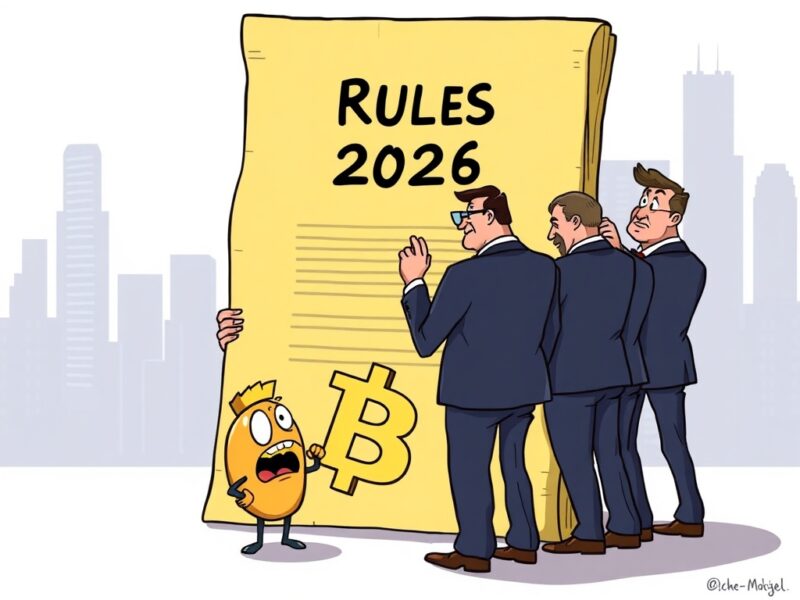
BitcoinWorld Basel Crypto Rules: Why Financial Giants Demand a Crucial Pause on 2026 Standards The global financial landscape constantly evolves, and with the rise of digital assets, regulators face the complex task of integrating cryptocurrencies into traditional banking frameworks. A significant development has emerged as major financial industry associations are now urging the Basel Committee on Banking Supervision (BCBS) to reconsider its impending 2026 Basel crypto rules. This push highlights growing concerns about the feasibility and impact of these stringent regulations on the evolving crypto market. Understanding the Proposed Basel Crypto Rules What exactly are these Basel crypto rules that have the financial world buzzing? The Basel Committee, a global standard-setter for banking regulation, developed a framework to manage banks’ exposure to crypto assets. These rules, initially drafted in 2022, assign significant risk weights to cryptocurrencies held by banks. High-Risk Classification: Under the current framework, popular cryptocurrencies like Bitcoin (BTC) and Ethereum (ETH) carry a 100% risk weight. This means banks holding these assets must set aside capital equivalent to their full value. Extreme Capital Charges: For many other tokens, the rules impose an even more severe 1,250% charge. To put this in perspective, this is substantially higher than capital requirements for traditional assets such as corporate bonds or equities. This extreme charge essentially makes it economically unviable for banks to hold these types of crypto assets. These standards were conceived in a period of market turbulence, specifically following major collapses like the Terra token ecosystem and the FTX crypto exchange. Regulators aimed to protect the financial system from similar shocks by imposing strict capital requirements. Why Are Financial Groups Urging a Pause on Basel Crypto Rules? Eight prominent financial industry associations, including powerful groups like the Institute of International Finance (IIF) and the Global Financial Markets Association (GFMA), recently sent a letter to the BCBS. Their core message was clear: “temporarily pause” the implementation of these Basel crypto rules set for January 2026. Their primary argument centers on a fundamental shift in market conditions. They contend that the policy environment in 2025 is “fundamentally different” from 2022, when the rules were initially drafted. Here’s why they believe a pause is necessary: Market Evolution: The crypto market has matured significantly since the collapses of Terra and FTX. There’s greater clarity, improved risk management practices, and evolving regulatory approaches in various jurisdictions. Innovation Constraint: The current punitive capital charges could stifle innovation within traditional finance by discouraging banks from engaging with digital assets. This might push crypto activities outside regulated banking sectors, potentially increasing systemic risk rather than reducing it. Global Consistency: Financial groups seek a more harmonized global approach. A pause allows for further dialogue and refinement, ensuring the rules align better with emerging national regulations and foster a level playing field. The associations emphasize that a pause would allow for a more thorough review and adjustment of the framework to reflect the current state of the digital asset market, ensuring that the rules are both effective and practical. What Are the Potential Impacts of These Basel Crypto Rules? The implications of the current Basel crypto rules are far-reaching for banks and the broader financial ecosystem. If implemented as planned, these rules could significantly alter how traditional financial institutions interact with cryptocurrencies. Limited Bank Participation: The high capital charges could deter banks from offering crypto-related services, such as custody, trading, or lending, to their clients. This might mean fewer regulated pathways for institutional crypto adoption. Competitive Disadvantage: Banks operating under these strict rules might find themselves at a disadvantage compared to less regulated entities or those in jurisdictions with more lenient frameworks. Impact on Crypto Market: While the rules aim to de-risk banks, they could inadvertently slow down the integration of digital assets into the mainstream financial system, potentially hindering the market’s overall growth and maturation within regulated channels. The industry groups are not against regulation, but they advocate for a framework that is proportionate to the actual risks and does not unduly penalize responsible engagement with digital assets. The Road Ahead: Revisiting Basel Crypto Rules The call for a pause puts the ball back in the Basel Committee’s court. What might happen next for these crucial Basel crypto rules? The BCBS will likely consider the industry’s concerns, weighing the need for financial stability against fostering innovation and ensuring a practical regulatory environment. Dialogue between regulators and the financial industry is crucial to finding a balanced approach. This situation underscores the dynamic nature of cryptocurrency regulation. As the digital asset space continues to evolve, regulatory frameworks must also adapt to ensure they remain relevant, effective, and supportive of responsible innovation. The industry’s plea for a pause is a clear signal that current conditions warrant a fresh look at the rules governing banks’ crypto exposures. In conclusion, the unified call from major financial trade groups to pause the 2026 Basel crypto rules highlights a critical juncture in cryptocurrency regulation. Their argument—that market conditions have fundamentally changed since the rules were drafted—underscores the need for adaptive and proportionate frameworks. The outcome of this appeal will significantly influence how traditional banks engage with digital assets and shape the future integration of crypto into the global financial system. Frequently Asked Questions (FAQs) About Basel Crypto Rules Q1: What are the Basel Committee’s 2026 crypto rules? A1: These rules, drafted by the Basel Committee on Banking Supervision (BCBS), set capital requirements for banks’ exposure to cryptocurrencies. They assign high risk weights (e.g., 100% for BTC/ETH, 1,250% for many other tokens) to ensure financial stability. Q2: Why are financial groups asking for a pause on the Basel crypto rules? A2: Major financial industry associations argue that market conditions have fundamentally changed since the rules were drafted in 2022. They believe the current framework is too punitive, could stifle innovation, and needs reassessment to reflect the evolving digital asset landscape. Q3: Which organizations signed the letter to the BCBS? A3: Eight major financial industry associations sent the letter, including prominent groups like the Institute of International Finance (IIF) and the Global Financial Markets Association (GFMA). Q4: How do these rules impact banks holding crypto assets? A4: The stringent capital charges make it economically challenging for banks to hold crypto assets or offer related services. This could limit bank participation in the crypto market and potentially put them at a competitive disadvantage. Q5: What does a ‘1,250% charge’ mean for crypto assets? A5: A 1,250% charge means banks must hold capital equal to 12.5 times the value of the crypto asset. This makes it extremely expensive and often unfeasible for banks to hold such assets, effectively acting as a deterrent. Q6: Will the Basel Committee likely pause the rules? A6: While the BCBS has not yet formally responded, they will likely consider the industry’s concerns. The outcome will depend on ongoing dialogue and their assessment of the evolving market and regulatory environment. If you found this article insightful, consider sharing it with your network on social media. Your shares help spread awareness about crucial developments in crypto regulation and foster a more informed community. To learn more about the latest crypto market trends, explore our article on key developments shaping digital asset institutional adoption. This post Basel Crypto Rules: Why Financial Giants Demand a Crucial Pause on 2026 Standards first appeared on BitcoinWorld and is written by Editorial Team

Author: Coinstats
Radiant Capital hacker doubles $53M stash via ETH trading

Radiant Capital hacker doubles $53M stash via ETH trading

The post Radiant Capital hacker doubles $53M stash via ETH trading appeared on BitcoinEthereumNews.com. The hacker behind last year’s $53 million Radiant Capital exploit has nearly doubled the value of the stolen funds through a well-timed Ethereum trading strategy. Summary The Radiant Capital hacker increased stolen funds from $53M to $94M through ETH and DAI trading. The October 2024 attack exploited Radiant’s multisig wallet using macOS malware. Attribution points to North Korea-linked AppleJeus, with little chance of recovery. According to on-chain analyst EmberCN’s Aug. 19 X post, the hacker had earlier sold 9,631 Ethereum (ETH) at an average of $4,562 for 43.9 million Dai (DAI), only to buy back 2,109.5 ETH for $8.64 million DAI once prices pulled back to $4,096. The wallet now holds 14,436 ETH and 35.29 million DAI, a portfolio worth $94.63 million. This represents a gain of more than $41 million over the initial value of the stolen funds. Blockchain analytics firm Lookonchain noted that the decision to keep most of the assets in ETH during its rally played a major role in the increased balance. 啊,好家伙,这 Radiant Capital 黑客竟然玩起波段来了😂:他不是在一周前以 $4,562 的均价卖出了 9,631 枚 ETH 换成 4393.7 万 DAI 嘛。这几天 ETH 回调了,他在过去 1 小时里又用 $864 万 DAI 以 $4,096 的价格重新买回了 2109.5 枚 ETH… 现在 Radiant Capital 黑客持有 14,436 枚 ETH+3529 万… https://t.co/hO4MbNPrjd pic.twitter.com/ihLYhpmNAV — 余烬 (@EmberCN) August 20, 2025 From $53 million heist to $94 million stash The October 2024 breach of Radiant Capital, a multi-chain decentralized finance protocol, was one of the most damaging attacks of the year. By compromising the multisignature wallet of its core team through a macOS-specific malware called INLETDRIFT, the attacker siphoned tokens from lending pools on Arbitrum (ARB) and BNB (BNB) Chain.  At the time, the stolen assets were quickly converted into 21,957 ETH, then valued at about $53 million when Ethereum was trading near $2,500. Rather than liquidating the holdings, the hacker held…

Author: BitcoinEthereumNews
The Stablecoin War: USDC vs Decentralized Alternatives

The Stablecoin War: USDC vs Decentralized Alternatives

Stablecoins have quietly become the backbone of the crypto economy. They serve as the bridge between volatile digital assets and the stability of fiat currencies, making them indispensable for trading, lending, and global payments. But the stablecoin space is far from settled. Today, the market is dominated by Tether (USDT) and USD Coin (USDC). Yet a new wave of decentralized alternatives is emerging, challenging the very foundations of what stable digital money should look like. The question is no longer whether stablecoins are here to stay — it’s which model will shape the future of digital finance.USDC: Regulation and Trust as a StrategyUSDC, issued by Circle, positions itself as a transparent, regulated, and institution-friendly stablecoin. Backed by monthly attestations and partnerships with regulated banks, USDC has gained significant traction in the U.S. and among companies that prioritise compliance.USDC has found strong adoption in DeFi protocols and as a preferred on-ramp for institutions. Its temporary depeg during the Silicon Valley Bank collapse in 2023 raised concerns about reliance on the U.S. banking system, yet Circle’s rapid recovery reinforced its commitment to transparency.The strategy behind USDC is clear: it seeks to be the bridge between traditional finance (TradFi) and decentralized finance (DeFi), aligning with regulators and institutional players. Its challenge is scaling globally while remaining compliant in an increasingly fragmented regulatory environment.Decentralized Alternatives: The Crypto-Native ApproachBeyond USDT and USDC, a new generation of decentralized stablecoins is attempting to solve the centralization problem. Projects like DAI (MakerDAO), FRAX, and LUSD (Liquity) offer alternatives that are not dependent on a single entity or traditional banking system.DAI pioneered the model, backed by crypto collateral like ETH. However, over time, DAI itself became partially dependent on USDC, raising concerns about true decentralization.FRAX introduced a hybrid model, partially algorithmic and partially collateralized, showing that experimentation is still alive in stablecoin design.LUSD focuses on pure crypto collateral and immutable rules, offering an uncompromising approach to decentralization.The appeal of these stablecoins lies in their resilience against censorship and banking risks, making them attractive for crypto-native users. Still, they face challenges of scale, liquidity, and sometimes complexity compared to centralized giants.The Strategic Battle: Regulation vs Adoption vs DecentralizationThe stablecoin war is more than a competition of tokens — it’s a clash of visions.USDT bets on ubiquity and liquidity, prioritizing accessibility over regulatory alignment.USDC bets on compliance and institutional trust, aligning itself with the future of regulated digital finance.Decentralized alternatives bet on crypto-native values, resisting central control and censorship.The outcome may not be a single winner but a multipolar stablecoin ecosystem, where different coins serve different audiences: traders, institutions, and decentralized communities. The bigger question is how governments and central banks respond — especially as CBDCs (Central Bank Digital Currencies) loom on the horizon.Stablecoins are no longer just tools for traders; they are becoming the core infrastructure of global crypto markets and potentially, the future of money itself. USDT continues to dominate through liquidity and accessibility, USDC builds trust through regulation and compliance, and decentralized stablecoins push forward with censorship resistance and crypto-native design.The “Stablecoin War” will not be decided overnight. Instead, we are likely heading toward a diverse ecosystem where centralized and decentralized models coexist, shaped by regulation, user demand, and innovation. For crypto enthusiasts, builders, and investors, understanding this battle is crucial — because stablecoins are not just about stability. They’re about who controls the future of money in the digital era.If you found this article insightful, don’t miss out on future content! Subscribe to my Medium profile and follow me for weekly updates. Every other day, I publish new articles exploring the latest trends, innovations, and insights in technology, governance, and beyond. Join me on this journey of discovery, and together, let’s explore the endless possibilities of our rapidly evolving world.The Stablecoin War: USDC vs Decentralized Alternatives was originally published in Coinmonks on Medium, where people are continuing the conversation by highlighting and responding to this story.

Author: Medium