Lending

Lending protocols form the backbone of the decentralized money market, allowing users to lend or borrow digital assets without intermediaries. Using smart contracts, platforms like Aave and Morpho automate interest rates based on supply and demand while requiring over-collateralization for security. The 2026 lending landscape features advanced permissionless vaults and institutional-grade credit lines. This tag covers the evolution of capital efficiency, liquidations, and the integration of diverse collateral types, including LSTs and tokenized RWAs.

16030 Articles
Created: 2026/02/02 18:52
Updated: 2026/02/02 18:52
This Exclusive Cayman Getaway Tastes As Good As It Feels

This Exclusive Cayman Getaway Tastes As Good As It Feels

The post This Exclusive Cayman Getaway Tastes As Good As It Feels appeared on BitcoinEthereumNews.com. 1OAK’s Sand Soleil sits on Grand Cayman’s iconic Seven Mile Beach 1OAK Exhausted and professionally burnt out, I arrived at 1OAK’s Sand Soleil in search of the type of restoration that could still my mind and get me writing again. The seven-day culinary experience was a no-brainer for me as a food writer. The integration of an epicurean getaway with pure Cayman luxury seemed to be the perfect spark for my creativity—private chef dinners, deep dives into Caribbean flavors, and hands-on masterclasses, all located within a serene, oceanfront villa. I had finally arrived. With the last rays of the sun setting behind Grand Cayman’s famous Seven Mile Beach, casting a warm golden glow across the water, I tasted Chef Joe Hughes’ ceviche for the first time—cubes of wahoo cured in lime, with charred pineapple and a subtle, nutty crunch. Chef Joe Hughes’ love for bright, Asian-inspired flavours came through in this wahoo tataki layered with Vietnamese herbs, ripe papaya and mango, cashew and cilantro, all brought together with a nuoc cham. Jamie Fortune Something softened. For the first time in months, I began to feel present. Sophia List, the brainchild of the 1OAK experience, heard me well. With an intuition honed by years of curating luxury, she matched me with what she called “a vision realized.” List told me Sand Soleil—like the other 1OAK homes on Seven Mile Beach and in West Bay—was created to feel like a real sanctuary. For her, it’s the laid-back alternative to a busy hotel, a place where you get privacy and elegance without any fuss. “We wanted to introduce the Cayman Islands to something truly special—an ultra-luxury experience that combines exquisite design, maximum privacy, and a sense of calm,” she shared as she guided me through the four-bedroom villa. “We are so excited to…

Author: BitcoinEthereumNews
UK Tax Shift May Boost DeFi Adoption, Aave Founder Suggests

UK Tax Shift May Boost DeFi Adoption, Aave Founder Suggests

The post UK Tax Shift May Boost DeFi Adoption, Aave Founder Suggests appeared on BitcoinEthereumNews.com. The UK’s HMRC has updated its tax treatment for DeFi interactions, classifying deposits into lending or staking platforms as non-taxable events until assets are sold, paving the way for broader decentralized finance adoption as noted by Aave founder Stani Kulechov. HMRC treats DeFi deposits as neutral transfers, delaying capital gains tax until actual disposal of assets. This clarity resolves long-standing uncertainties for users engaging with smart contracts in decentralized finance. Aave’s innovations, including mobile onboarding, are expected to boost both retail and institutional participation in DeFi protocols. Discover how the UK tax shift on DeFi deposits is unlocking wider adoption for lending and staking. Aave founder Stani Kulechov highlights growth opportunities—explore now! What Is the UK’s New Tax Treatment for DeFi Interactions? The UK’s new tax treatment for DeFi interactions classifies transfers of tokens into lending, staking, or borrowing protocols as non-taxable events, according to guidance from HM Revenue and Customs (HMRC). This means users no longer face immediate capital gains tax when depositing assets like Bitcoin or Ether into decentralized finance platforms. Instead, tax liability is deferred until the assets are disposed of through sale or exchange, providing much-needed certainty in the crypto space. How Does This Change Impact Retail and Institutional DeFi Users? The shift in HMRC’s policy addresses a key barrier that has deterred widespread DeFi participation. Previously, users worried that every interaction with smart contracts—such as depositing funds into a liquidity pool—could be interpreted as a taxable disposal, leading to complex and costly tax reporting. Now, with deposits treated as neutral, retail investors can lend or stake their cryptocurrencies without triggering immediate tax obligations, simplifying compliance and encouraging experimentation with yield-generating opportunities. For institutional players, this clarity is transformative. Large funds and financial institutions, which often navigate stringent regulatory environments, have been cautious about DeFi due…

Author: BitcoinEthereumNews
UK Tax Shift Clears Path for Wider DeFi Adoption, Says Aave Founder

UK Tax Shift Clears Path for Wider DeFi Adoption, Says Aave Founder

The post UK Tax Shift Clears Path for Wider DeFi Adoption, Says Aave Founder appeared on BitcoinEthereumNews.com. Fintech A low-profile decision from Britain’s tax office could have outsized effects on the future of decentralised finance, according to Aave founder Stani Kulechov. Rather than treating every token movement into lending or staking platforms as a taxable disposal, HMRC now views these transfers as neutral events, postponing tax liability until assets are actually sold or exchanged. Key Takeaways HMRC now treats DeFi deposits as non-taxable transfers, delaying capital gains until disposal. Stani Kulechov expects this clarity to encourage institutional and retail participation. Aave is working on mobile-driven onboarding to make DeFi easier for everyday users. For years, crypto users faced uncertainty over whether interacting with smart contracts could unintentionally trigger capital gains. Kulechov said the update resolves a long-running debate and gives both seasoned and new users confidence to participate without fear of immediate taxation. Why This Matters for Retail and Institutions The new stance removes a major friction point. Depositing Bitcoin, ether, USDC or USDT into DeFi protocols no longer counts as “getting rid” of the asset — meaning people can borrow, lend, or stake value without generating an automatic tax bill. Kulechov believes that clarity is particularly meaningful for institutional investors. He argues that large funds were hesitant to engage with DeFi because the tax treatment was undefined, creating compliance headaches. Now, with rules clearer, he expects more regulated participants to explore on-chain lending and collateral markets. Aave’s Approach: Make DeFi Feel Like Banking Kulechov also pointed out that regulation alone isn’t enough — accessibility matters. DeFi has historically appealed to users comfortable with private keys, browser wallets and crypto exchanges. Aave is now developing mobile-first experiences that allow people to move money from traditional bank accounts directly into the protocol while hiding the technical complexity behind the interface. The goal is simple: if interacting with DeFi…

Author: BitcoinEthereumNews
Two Dormant Casascius Bitcoin Coins Activated After 13 Years, Potentially Unlocking $179 Million

Two Dormant Casascius Bitcoin Coins Activated After 13 Years, Potentially Unlocking $179 Million

The post Two Dormant Casascius Bitcoin Coins Activated After 13 Years, Potentially Unlocking $179 Million appeared on BitcoinEthereumNews.com. Two long-dormant Casascius coins, each loaded with 1,000 Bitcoin, were activated on Friday, unlocking over $179 million in value after more than 13 years of inactivity. Minted in 2011 and 2012 when Bitcoin traded at just $3.88 and $11.69, these physical collectibles represent massive potential returns for their owners. Casascius coins activation unlocks $179 million: Onchain data shows two 1,000 BTC physical coins from 2011 and 2012 moved to digital wallets. These rare collectibles, created by Mike Caldwell, feature tamper-resistant holograms hiding private keys for Bitcoin redemption. Historical value explosion: The 2011 coin’s return exceeds 2.3 million percent, based on current Bitcoin prices around $90,000, excluding minting costs. Discover how dormant Casascius coins activation reveals $179 million in Bitcoin value after 13 years. Explore the history and mechanics of these rare physical crypto collectibles today. What Are Casascius Coins? Casascius coins are physical representations of Bitcoin created as collectible metal pieces between 2011 and 2013 by Utah-based entrepreneur Mike Caldwell. These coins and bars embed paper with private keys under tamper-resistant holograms, allowing owners to redeem the stored Bitcoin value digitally. They symbolize early Bitcoin enthusiasm and have become highly valuable artifacts in the cryptocurrency space. Casascius coins ranged in denominations from 1 to 1,000 BTC, making them unique tangible assets in an otherwise digital ecosystem. Their rarity and historical significance drive collector interest, especially as Bitcoin’s price has surged dramatically since their inception. How Do Casascius Coins Work? Casascius coins function by storing actual Bitcoin value through a private key concealed beneath a holographic sticker. To access the funds, the owner peels back the hologram, reveals the key, and transfers the Bitcoin to a digital wallet. Once redeemed, the physical coin loses its monetary value but retains collectible appeal. Production was limited; records indicate only about 16 bars and…

Author: BitcoinEthereumNews
MyItalianCharter names Italy the top destination for classy yacht charters in 2026

MyItalianCharter names Italy the top destination for classy yacht charters in 2026

MyItalianCharter has named Italy the number one classy yacht charter destination for 2026, combining cultural depth, great cruising conditions, elegant settings, and a fleet of stylish, high-quality yachts. With strong demand for Amalfi and Sardinia, and rising interest in Sicily, Italy continues to set the standard for refined charter experiences. Italy oozes class. From the […] The post MyItalianCharter names Italy the top destination for classy yacht charters in 2026 appeared first on TechBullion.

Author: Techbullion
Monet Bank in Texas Explores Crypto-Friendly Lending Amid Regulatory Changes

Monet Bank in Texas Explores Crypto-Friendly Lending Amid Regulatory Changes

The post Monet Bank in Texas Explores Crypto-Friendly Lending Amid Regulatory Changes appeared on BitcoinEthereumNews.com. Monet Bank, a Texas community bank, has received regulatory approval to become a crypto-friendly lender, focusing on serving cryptocurrency firms and digital-asset businesses. This shift highlights the increasing adoption of digital finance by smaller institutions amid supportive U.S. policies. Regulatory Approval: Monet Bank gained Texas Department of Banking clearance to offer services to crypto entities. Strategic Repositioning: The bank is moving away from traditional consumer banking toward innovative digital solutions. Industry Trend: This aligns with broader shifts, including new charters for tech-focused banks like Erebor Bank, backed by Peter Thiel. Discover how Monet Bank is pioneering crypto services in Texas. Explore regulatory changes and implications for digital assets in 2025. Stay informed on banking’s evolution—read more today. What is Monet Bank’s Strategy in the Crypto Space? Monet Bank crypto initiatives center on transforming the Texas-based community bank into a specialized lender for cryptocurrency firms and digital-asset businesses. Formerly known as Beal Savings Bank and briefly as XD Bank, it has rebranded to emphasize modern digital finance solutions. This repositioning, approved by the Texas Department of Banking, allows the bank to provide tailored financial services to the growing crypto ecosystem, moving beyond conventional consumer banking to support the digital economy.The bank’s evolution reflects a deliberate pivot toward cutting-edge technologies, with its website stating ambitions to become the leading financial institution for digital assets. Operating under federal oversight by the Federal Deposit Insurance Corporation, Monet Bank maintains six branches and holds assets under $6 billion, positioning it as a nimble player in this emerging field. How Are Traditional Banks Adapting to the Crypto Ecosystem? Financial institutions across the U.S. are increasingly integrating cryptocurrencies into their operations, driven by evolving regulatory landscapes. Monet Bank’s approval underscores this trend, as smaller banks seek to capture opportunities in digital assets despite their modest scale. State…

Author: BitcoinEthereumNews
Best Crypto to Buy Now – Terra Classic Price Prediction

Best Crypto to Buy Now – Terra Classic Price Prediction

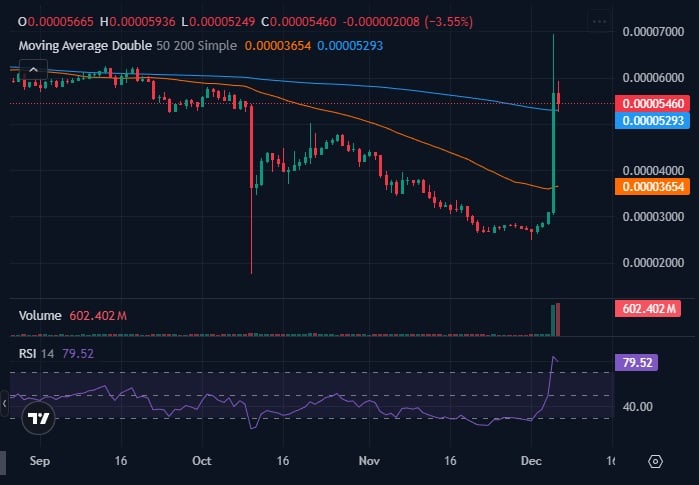
After spending nearly an entire year sliding downward, Terra Classic (LUNC) has shocked the market with an unexpected surge, climbing more than 70% in just a single day. This sudden breakout isn’t without reason, as burn tracker data shows that more than 849 million $LUNC were removed from circulation in the past week. Since May […]

Author: The Cryptonomist
Bitcoin Bull Run Set To Last Until 2027, Analysts Highlight Influential Factors

Bitcoin Bull Run Set To Last Until 2027, Analysts Highlight Influential Factors

Many in the crypto space have echoed a familiar sentiment over recent months: “The four-year crypto market cycle is dead.” Experts from the Bull Theory assert that while the four-year cycle may have come to an end, the Bitcoin bull run itself is merely delayed and could stretch until 2027. Why The Four-Year Cycle May Be Ending In a recent post on social media platform X, formerly known as Twitter, the Bull Theory analysts noted that the concept of Bitcoin adhering to a neat four-year cycle is weakening.  They highlighted that significant price movements over the last decade weren’t solely driven by Halving events; rather, they were influenced by shifts in global liquidity.  The analysts pointed to the current landscape of stablecoin liquidity, which remains high despite recent downturns, indicating that larger investors are still engaged in the market, poised to invest when appropriate macroeconomic conditions arise. Related Reading: XRP Price Predictions: AI Forecasts $4.40 By March 2026, Analysts Target Up To $6 In the US, Treasury policies are emerging as pivotal catalysts. The recent buybacks are notable, but the analysts emphasize that the larger narrative lies in the Treasury General Account (TGA) balance, which is currently around $940 billion—almost $90 billion above its normal range.  This surplus cash is likely to flow back into the financial system, enhancing financing conditions and adding liquidity that typically gravitates toward risk assets. Globally, the trends appear even more promising. China has been injecting liquidity for several months, while Japan recently announced a stimulus package worth approximately $135 billion, alongside efforts to simplify cryptocurrency regulations.  Canada is also moving toward easing its monetary policy, and the US Federal Reserve (Fed) has officially halted its quantitative tightening (QT) measures—a historical precursor to some form of liquidity expansion. Political And Monetary Factors Align To Create Bullish Condition The analysts explained that when major economies adopt expansive monetary policies simultaneously, risk assets like Bitcoin tend to respond more rapidly than traditional stocks or broader markets.  Additionally, potential policy tools, such as the Supplementary Leverage Ratio (SLR) exemption—implemented in 2020 to allow banks more flexibility in expanding their balance sheets—could return, resulting in increased credit creation and overall market liquidity. There is also a political dimension to consider. President Trump has discussed potential tax reforms, including abolishing income tax and distributing $2,000 tariff dividends.  Furthermore, the likelihood of a new Federal Reserve chair who supports liquidity assistance and is constructive toward cryptocurrency could bolster conditions for economic growth. Extended Bitcoin Uptrend Historically, whenever the Institute for Supply Management’s Purchasing Managers’ Index (ISM PMI) surpasses 55, it has been followed by periods of altcoin season. The probability of this occurring in 2026 appears high, according to the Bull Theory. Related Reading: Trend Reversal Puts Dogecoin On A Path To $0.188 The convergence of rising stablecoin liquidity, the Treasury’s injection of cash back into markets, global quantitative easing, the cessation of QT in the US, potential bank-lending relief, pro-market policy shifts in 2026, and major players entering the crypto sector suggests a very different scenario than the old four-year halving model.  The analysts concluded that if liquidity expands concurrently across the US, Japan, China, Canada, and other significant economies, Bitcoin is unlikely to move counter to that trend. Therefore, rather than experiencing a sharp rally followed by a prolonged bear market, the current environment indicates a more extended and broader uptrend that could span through 2026 and into 2027. Featured image from DALL-E, chart from TradingView.com

Author: NewsBTC
Do Kwon Faces 12 Years After 40 billion TerraUSD Market Collapse

Do Kwon Faces 12 Years After 40 billion TerraUSD Market Collapse

The post Do Kwon Faces 12 Years After 40 billion TerraUSD Market Collapse appeared on BitcoinEthereumNews.com. Do Kwon is set for sentencing on December 11, 2025, in Manhattan federal court. Judge Paul Engelmayer will decide his prison term. U.S. prosecutors are seeking the toughest sentence allowed under his plea deal. They argue Do Kwon’s fraud was large enough to shake parts of the crypto market after the Terra collapse. Do Kwon Prosecutors Seek 12 Years Term According to Bloomberg report,  federal prosecutors said the scale of the crime was extreme. They told Judge Engelmayer it reached far beyond one project’s failure. The government said the shock damaged retail holders and sent stress through crypto trading and lending venues. Do Kwon pleaded guilty in August 2025 to one count of conspiracy to commit commodities fraud, securities fraud, and wire fraud, plus one count of wire fraud. The Justice Department said the two counts carry a combined maximum of 25 years. Under the plea arrangement, prosecutors can seek up to 12 years. Prosecutors are asking for that 12-year term. They said Do Kwon lied to users and investors about key claims tied to the Terra ecosystem. They told the court the deception helped trigger the 2022 crash of TerraUSD and Luna, which was widely described as a roughly $40 billion collapse. Kwon is pushing for less time. In a separate filing reported last week, he said a five-year term would be sufficient. The request puts Kwon and the government on opposite sides ahead of the sentencing date. Forfeiture, No Restitution, and the Extradition Path The plea requires Do Kwon to forfeit more than $19 million in proceeds, including an interest tied to Terraform and its cryptocurrencies, according to the Justice Department. Prosecutors have also said they are not pursuing restitution. They argued that losses would be hard to calculate across a large and global group of victims. The…

Author: BitcoinEthereumNews
Ripple’s RLUSD Stablecoin Hits $1 Billion Market Cap in Under One Year

Ripple’s RLUSD Stablecoin Hits $1 Billion Market Cap in Under One Year

Ripple's stablecoin has passed the $1 billion market cap in a short amount of less than one year and is a key player in the enterprise payment space.

Author: Blockchainreporter