Liquidation

Liquidation occurs when a trader’s collateral is no longer sufficient to cover their leveraged position’s losses, triggering an automated forced closure by the exchange's liquidation engine. It is a critical risk-management mechanism that ensures the solvency of lending protocols and derivative platforms. In 2026, the focus has moved toward MEV-resistant liquidation models that protect users from predatory "cascades." This tag provides essential information on maintenance margins, health factors, and how to avoid liquidation in high-volatility environments.

14685 Articles
Created: 2026/02/02 18:52
Updated: 2026/02/02 18:52

Ethereum Price Slips Below $4,200 – Can Bulls Defend $4,000?

Ethereum Price Slips Below $4,200 – Can Bulls Defend $4,000?

The post Ethereum Price Slips Below $4,200 – Can Bulls Defend $4,000? appeared first on Coinpedia Fintech News Ethereum has come under heavy selling pressure, slipping below $4,200 after a sharp daily decline of nearly 7%. The move wiped out more than $44 billion in market value in less than a week and left traders questioning whether bulls can hold the $4,000 psychological zone. With ETH now down over 15% from its all-time …

Author: CoinPedia
Solana cross-chain swaps go live on PancakeSwap

Solana cross-chain swaps go live on PancakeSwap

PancakeSwap’s cross-chain swap feature not supports Solana. Users can swap tokens across the blockchain directly through the PancakeSwap interface using only one transaction. On Sept. 22, the Solana cross-chain swap feature goes live on the PancakeSwap ecosystem, enabling instant swaps…

Author: Crypto.news
Crypto.com Capital invests in Moonlander to boost decentralized derivatives on Cronos

Crypto.com Capital invests in Moonlander to boost decentralized derivatives on Cronos

The post Crypto.com Capital invests in Moonlander to boost decentralized derivatives on Cronos appeared on BitcoinEthereumNews.com. Crypto.com Capital, the venture arm of Crypto.com, has made a strategic investment in Moonlander, a decentralized perpetuals exchange built on Cronos EVM and zkEVM, as per reports shared with Finbold on September 22.  Moonlander aims to expand access to high-leverage on-chain trading, offering up to 1000x leverage, while integrating passive yield opportunities for liquidity providers.  By leveraging Cronos’ dual-chain infrastructure, the platform combines scalability with low transaction costs, supporting both professional traders and passive participants. Liquidity model and social-first design At the core of Moonlander’s design is the Moonlander Liquidity Pool (MLP), a shared pool of assets that acts as the counterparty to all trades.  The model is designed to maximize capital efficiency and minimize slippage for traders, while liquidity providers receive yield paid in Cronos (CRO) and other tokens from platform fees. Security measures include real-time price feeds from PYTH oracles to help prevent manipulation and abnormal liquidations. Beyond trading mechanics, Moonlander is building a “social-first” user experience, including token-specific chat rooms, real-time leaderboards, and narrative-driven markets tied to global events and internet culture. “Moonlander’s team has demonstrated exceptional technical vision and the ability to execute on a sophisticated product that we believe can become a cornerstone of the DeFi ecosystem on Cronos. We are committed to providing the Moonlander team with the resources and network needed to help them reach their full potential.” said Tommy Chan, Head of DeFi Investment at Crypto.com Capital. The investment will support Moonlander’s development team expansion, platform upgrades, and new marketing initiatives to attract users and liquidity. According to the project, Moonlander has already surpassed $33 million in total value locked (TVL) and $2 billion in cumulative trading volume. “We are thrilled to partner with Crypto.com Capital, a team that shares our deep conviction in the future of decentralized finance,” said Athena, co-founder…

Author: BitcoinEthereumNews
Gold Rallies an Hour After BTC Drops, Suggesting a Profit Rotation Into Metals

Gold Rallies an Hour After BTC Drops, Suggesting a Profit Rotation Into Metals

The post Gold Rallies an Hour After BTC Drops, Suggesting a Profit Rotation Into Metals appeared on BitcoinEthereumNews.com. Gold, often seen as an analog for sound money, rose 1% on Monday to set another record high and bring its 2025 gain to 43%. The metal, now trading at $3,721, advanced about an hour after bitcoin BTC$112,534.51, seen by some proponents as a digital form of sound money, posted a 24-hour drop of 3% that cut its price to $112,000 and its year-to-date gain to 17%. The timing suggests the possibility that profits from bitcoin liquidations rotated into gold. The two assets rarely move in tandem, though there are occasional periods when both rise or fall simultaneously, often with a short lag. This time, the divergence is stronger. Gold is not the only metal attracting flows. Silver gained 1.5% on Monday to approach $44, its third-highest level since 1975, and is now up more than 50% year to date. Notably, since the Federal Reserve cut interest rates by 25 bps on Sept. 17, both gold and the S&P 500 are up about 1%. At the same time, U.S. treasury yields have risen, with the U.S. 10-year at 4.125% (up 2.5%) and the U.S. 30-year at 4.7% (up 2%). The dollar strengthened, with the DXY index adding 1% to 97.5. A stronger dollar typically puts pressure on risk assets, and bitcoin has dropped over 3.5% since the Fed’s move. Assets since federal reserve rate cut (TradingView) Source: https://www.coindesk.com/markets/2025/09/22/gold-rallies-an-hour-after-bitcoin-drops-suggesting-a-profit-rotation-into-metals

Author: BitcoinEthereumNews
‘Uptober’ rally in trouble? Why crypto prices are turning red

‘Uptober’ rally in trouble? Why crypto prices are turning red

Crypto prices opened the week under pressure, with traders turning cautious about Uptober as top tokens slide from recent highs. Uptober is just eight days away, a month when Bitcoin has historically logged strong gains, but traders are turning cautious…

Author: Crypto.news
Bitcoin Crashes To $112,000 As ETH, XRP, Dogecoin Get Hit By Over $1 Billion In Long Liquidations

Bitcoin Crashes To $112,000 As ETH, XRP, Dogecoin Get Hit By Over $1 Billion In Long Liquidations

Cryptocurrencies are down significantly on Monday morning, with long liquidations crossing $1 billion.read more

Author: Coinstats
Crypto Markets Shed Over $150 Billion Daily as Altcoins, Bitcoin Bleed Out: Market Watch

Crypto Markets Shed Over $150 Billion Daily as Altcoins, Bitcoin Bleed Out: Market Watch

The crypto market cap is below $4 trillion again.

Author: CryptoPotato
SEC and DeFi lending: Term Finance clarifies Reves and Howey, what changes

SEC and DeFi lending: Term Finance clarifies Reves and Howey, what changes

The regulation of DeFi lending enters a crucial phase, with discussions between SEC staff and Term Finance.

Author: The Cryptonomist
Top 3 Cryptos to Invest in Now Before They Hit $1

Top 3 Cryptos to Invest in Now Before They Hit $1

The race to find the next crypto to explode under $1 is heating up as the 2025 bull run builds up steam. Cardano (ADA) continues to be in the spotlight with its steady network upgrades, and Dogecoin (DOGE) continues to have pull with its massive community and cultural relevance. Yet the real hype is for […]

Author: Cryptopolitan
I Unlocked Cash Without Selling Bitcoin: My OnLock Story

I Unlocked Cash Without Selling Bitcoin: My OnLock Story

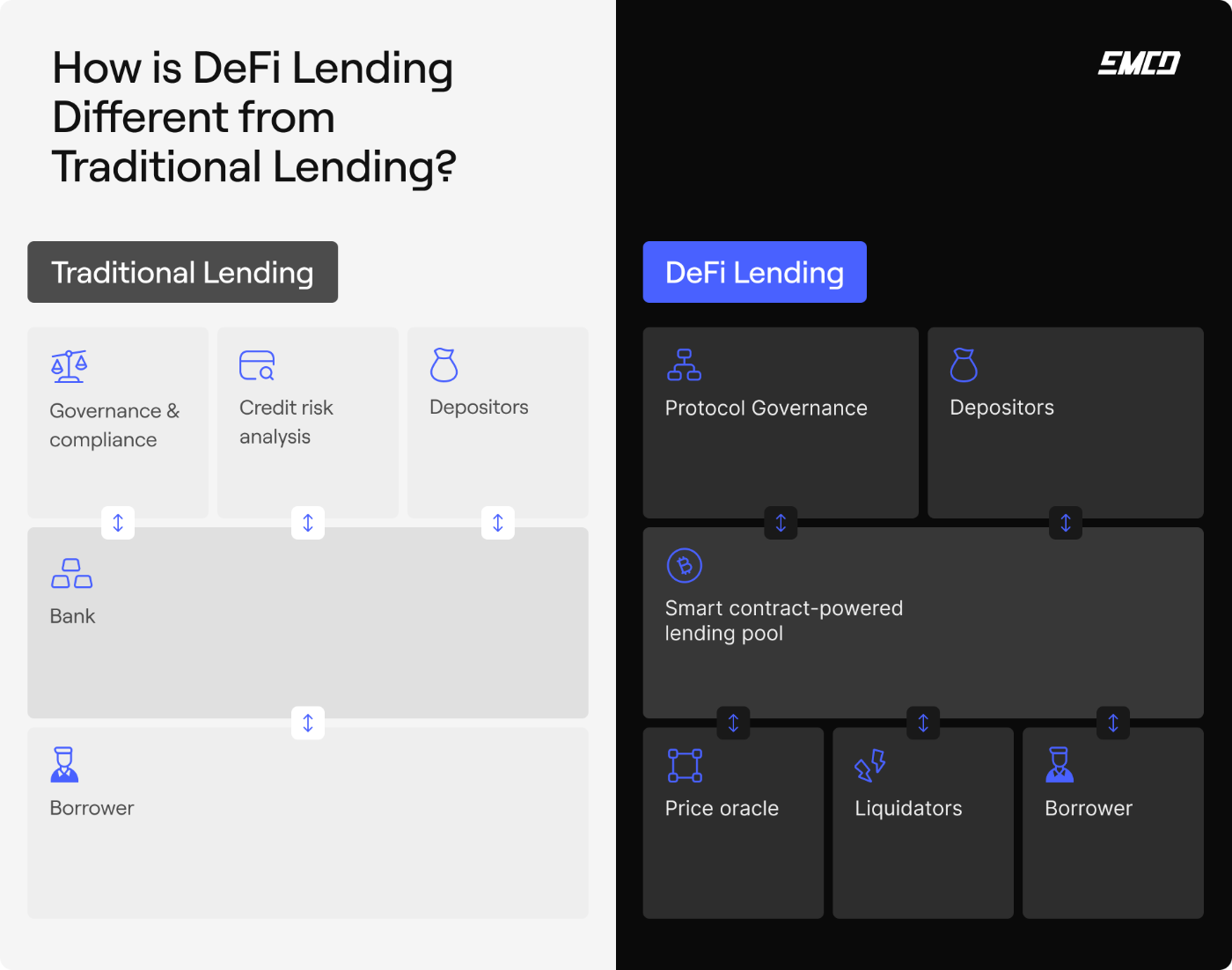
Traditional lending depends on banks, paperwork, and trust in centralized institutions. To borrow money, you need a credit history, you fill in endless forms, and you wait for approval. Depositors rely on banks to manage risk, set interest rates, and decide who gets access to liquidity. The system is slow, opaque, and full of middlemen who take their cut. DeFi lending flips this model. Instead of banks, protocols set the rules. Instead of clerks, smart contracts execute them automatically. Instead of credit scores, collateral (usually in crypto) secures the loan. And instead of waiting days or weeks, users can borrow or deposit in minutes, directly from their wallets. Oracles feed real-time market prices into the contracts, ensuring that loans remain properly collateralized. For borrowers, this means instant liquidity without selling long-term crypto holdings. For depositors, it means earning yield on idle assets without relying on a bank’s decision. The trade-off? Risk is managed differently. If collateral value drops, liquidation happens automatically. Transparency is high, but responsibility shifts onto the user: you control your funds, but you also carry the risks. DeFi lending is still young and volatile, but it shows what finance looks like when code replaces clerks. It removes friction and opens access globally, yet it also demands awareness and caution. In short: fewer middlemen, more control, faster access — and new risks you need to understand before diving in.

Author: Hackernoon