NFT

NFTs are unique digital identifiers recorded on a blockchain that certify ownership and authenticity of a specific asset. Moving past the "PFP" craze, 2026 NFTs emphasize utility, representing everything from IP rights and digital fashion to RWA titles and event ticketing. This tag explores the technical standards of digital ownership, the growth of NFT marketplaces, and the integration of non-fungible tech into the broader Creator Economy and enterprise solutions.

12648 Articles
Created: 2026/02/02 18:52
Updated: 2026/02/02 18:52
Price Increases in Under 48hrs

Price Increases in Under 48hrs

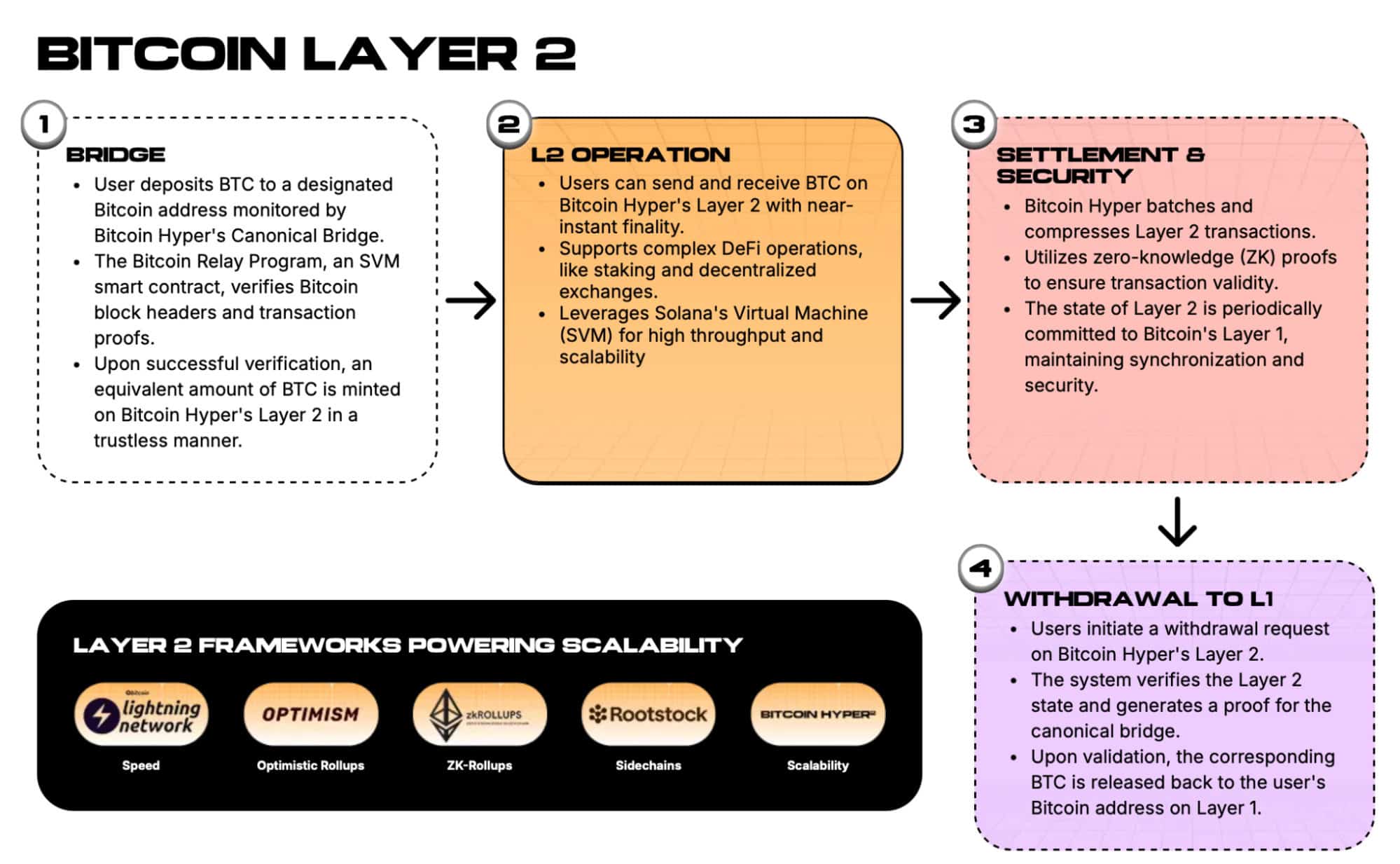
The post Price Increases in Under 48hrs appeared on BitcoinEthereumNews.com. Early backers know the secret to fortune in crypto: Unearth underrated gems. And when they find one, they don’t hesitate to go all in. The latest crypto whale magnet is Bitcoin Hyper ($HYPER)–the upcoming layer-2 solution designed to enhance speed and programmability on the Bitcoin blockchain. The project expands Bitcoin’s reach to the broader Web3 market, including dApps, DeFi, NFTs, and even meme coins. Having raised $15.2M already, the clock is ticking on the $HYPER presale. So here is a closer look at what makes it one of the most promising altcoins this season. $HYPER Mania: Why Bitcoin Hyper is Trending Bitcoin Hyper is building a Layer-2 solution for Bitcoin using the Solana Virtual Machine and a decentralized Canonical Bridge. Although Bitcoin is the world’s largest crypto, the Bitcoin blockchain is outdated. It doesn’t stand a chance against blockchains like Ethereum and Solana that support smart contracts. That explains why $BTC remains a store of value, while Ethereum and Solana keep expanding their ecosystems with Web3 innovation. Bitcoin Hyper addresses Bitcoin’s issues, making it faster, cheaper, and scalable without sacrificing security. The Layer-2 architecture is simple, yet sophisticated, as shown below: Basically, you send your $BTC to a specific wallet address monitored by the Canonical Bridge. Once confirmed, it will be minted on Layer-2 as wrapped $BTC, ready for DeFi, staking, and nearly anything else in Web3. Thanks to the SVM, transactions are extremely fast and inexpensive. In fact, it can sometimes be faster than Solana itself. The best part is, you can withdraw your $BTC back to Bitcoin’s native Layer-1 whenever you want. It’s Not Just a Promise; Tech Progress Inspires Confidence The crypto market is crowded with early-stage coins that promise everything under the sky, only to keep investors waiting for months after the TGE for a product…

Author: BitcoinEthereumNews
Cardano Price Forecast 2025 – 2030: ADA’s Outlook Seems Negative As Prices Could Crash Over 80% Within 5 Years

Cardano Price Forecast 2025 – 2030: ADA’s Outlook Seems Negative As Prices Could Crash Over 80% Within 5 Years

Cardano price predictions have grown increasingly bearish, with some analysts warning the token could collapse by as much as 80% within the next five years. A few even speculate that ADA might drift toward zero by 2030 despite its celebrated ecosystem. While Cardano continues to flaunt technical upgrades, the market hasn’t rewarded it in kind. [...] The post Cardano Price Forecast 2025 – 2030: ADA’s Outlook Seems Negative As Prices Could Crash Over 80% Within 5 Years appeared first on Blockonomi.

Author: Blockonomi
Web3 Game Dev: WASM Solves Limits for Next-Gen On-Chain Logic

Web3 Game Dev: WASM Solves Limits for Next-Gen On-Chain Logic

From On-Chain Bottlenecks to an Off-Chain Superhighway The Core Problem: Why “Fully On-Chain” Games Are Stuck in the Slow Lane Most on-chain games today face a fundamental performance ceiling. The Ethereum Virtual Machine (EVM) and other smart contract platforms, while revolutionary for asset ownership and simple transactions, were not designed for the complex, high-speed computations that engaging games require. This limitation forces developers into a difficult compromise: either build a simplistic game that can run entirely on-chain, or move the core game logic to centralized servers, sacrificing the transparency and verifiability that makes blockchain gaming compelling. The Clear Solution: WASM as a High-Performance Off-Chain Coprocessor WebAssembly (WASM) provides a direct solution to this performance bottleneck. As a portable, high-performance binary instruction format, WASM acts as a compilation target for mature languages like Rust and C++. Instead of replacing the blockchain’s virtual machine, WASM can be used as an off-chain coprocessor. Complex game mechanics, physics engines, and sophisticated AI can be executed at near-native speeds off-chain, with only the verifiable results being posted back to the main blockchain. This hybrid model delivers the performance of a traditional game server with the trust and security of a decentralized ledger. The Proof: Race Protocol as a Pioneer in WASM-Powered Gaming RACE Protocol exemplifies the power of this hybrid approach. By building its architecture around a WASM-based “Game Handler Model,” Race enables developers to write intricate game logic in Rust and execute it in a high-performance off-chain environment run by a network of nodes. The results of this off-chain execution are cryptographically committed to the main blockchain (like Solana, Sui, or an EVM chain) as verifiable checkpoints. This delivers the speed needed for real-time competitive games without sacrificing the decentralized integrity that players demand. The On-Chain Bottleneck: Why Blockchain Execution Can’t Handle Complex Games Defining “True” Verifiable Game Logic Verifiable game logic means that the rules of the game, the state transitions, and the outcome resolutions can be independently proven to be correct and fair. This is a stark contrast to many current “Web3” titles where the blockchain merely acts as a registry for NFTs or in-game currency. While asset ownership is vital, verifiable game mechanics are what guarantee fairness. A game where the core logic runs on a private, opaque server is fundamentally no more transparent than a traditional Web2 game. A Technical Breakdown of On-Chain Virtual Machine Limitations Blockchain virtual machines like the EVM are optimized for security and deterministic settlement, not for the high-throughput computation required by modern games. Computational Inefficiency: The High Cost of Every Step Every computational step on a blockchain costs gas or transaction fees. For a game, which may require thousands of calculations for a single turn or action, the cumulative fees of running this logic directly on-chain would be astronomical. This economic barrier makes it infeasible to deploy games with deep strategic elements, real-time interactions, or fair random number generation directly on-chain. Throughput Limitations: The Blockchain Traffic Jam Blockchains have limited block space and processing capacity. A complex game generating thousands of state updates per second would quickly overwhelm a public blockchain, leading to slow confirmation times and a poor user experience for both players and other users of the network. A Walled Garden for Developers: Niche Languages and Limited Ecosystems Developing for platforms like the EVM requires specialized knowledge of languages like Solidity or Vyper. While powerful for smart contracts, they lack the extensive libraries, mature tooling, and massive developer communities of languages like Rust and C++. This steep learning curve creates a barrier to entry for the millions of developers who could otherwise bring their skills to the web3 space. The Engine for the Next Generation: A Primer on WebAssembly (WASM) What is WASM? From Web Browser Powerhouse to a Universal Standard WebAssembly is a low-level, binary instruction format designed as a portable compilation target for high-level languages. Initially created to bring near-native performance to web browsers, its core features — speed, security, and portability — have made it an ideal standard for verifiable computation. It functions as a stack-based virtual machine that allows code written in languages like C++ and Rust to run efficiently and securely in any compliant environment. Key Characteristics Making WASM Ideal for Off-Chain Game Logic WASM’s design directly addresses the need for performant and secure off-chain computation, making it the perfect choice for the hybrid model. Benefit 1: Near-Native Execution Speed for Complex Calculations Because WASM is a pre-compiled binary format, it can be executed far more efficiently than interpreted languages. It leverages common hardware capabilities and runs at speeds that approach native machine code. This performance is critical for off-chain game servers that handle real-time physics, complex state updates, and dynamic interactions. Benefit 2: Developer Freedom with Rust, C++, and Go WASM breaks down the walled garden of blockchain-specific languages. It allows developers to use established, high-performance languages they already know, including Rust, C++, and Go. As seen in the Race Protocol repository, game logic is written in Rust, leveraging its powerful type system and performance features. This access to a mature ecosystem dramatically accelerates the development of sophisticated applications. Benefit 3: A “Fort Knox” Sandbox for Secure, Isolated Execution Security is paramount. WASM runs code in a sandboxed environment, which means the program has no access to the host system outside of a specific set of imported functions. This memory isolation, a key feature of the Wasmer runtime used in Race Protocol’s transactor, ensures that game logic from different developers can run safely on the same node without interfering with one another or the host system. Benefit 4: Proven in the Wild (Figma, Unity, Cloudflare) WASM is not a theoretical technology; it is battle-tested at a massive scale. Industry leaders rely on it for their most demanding applications. Figma uses WASM to power its high-performance, web-based design tool. Unity’s WebGL platform compiles games to WASM for smooth browser experiences. Cloudflare uses it for its serverless edge computing, demonstrating its efficiency and security in high-stakes environments. Case Study: How Race Protocol Leverages WASM for High-Performance Gaming Introducing Race Protocol: A Serverless Coprocessor for Verifiable Gaming RACE Protocol is a multi-chain infrastructure designed specifically to facilitate secure and fair web3 games. It functions as a serverless coprocessor network, using WASM to handle complex game logic off-chain while anchoring trust and asset management on existing blockchains. This hybrid approach solves the performance-security trade-off for gaming, delivering speed, fairness, and decentralization. The Architecture: Unpacking the “Game Handler Model” At the heart of Race Protocol is its “Game Handler Model,” an architecture that separates high-frequency game logic from slower on-chain transactions. As defined in the race-api crate, developers implement a GameHandler trait in Rust, which is then compiled into a WASM module. Off-Chain WASM Execution for Speed and Low Cost The WASM game logic runs in a secure, sandboxed environment on Race Protocol’s network of community-hosted Transactor and Validator nodes. This off-chain execution happens at near-native speed, enabling real-time gameplay without incurring gas fees for every single in-game action. This is what allows for complex calculations and rapid state changes that would be impossible on a Layer 1 chain. On-Chain Verification for Trust and Security While execution is off-chain, the results and critical state changes are committed to the blockchain as verifiable checkpoints. The GameAccount smart contract (defined in both race-solana and race-sui repositories) stores a cryptographic Merkle root of the settled game state. This ensures that the game’s outcome is transparent and immutable. Players can be certain that the off-chain execution adheres strictly to the publicly available WASM game logic, as any deviation would produce a different state hash and be rejected by the network. Key Features Unlocked by WASM in Race Protocol Executing Complex Logic: Physics, Advanced RNG, and Dynamic Game States The performance of WASM is what empowers Race Protocol to support games with genuine complexity. This includes games that require physics simulations, advanced and fair random number generation, or dynamic game states that change rapidly based on multiple player inputs. These are features largely out of reach for purely on-chain games. Ensuring Provably Fair Play with a P2P Randomization Module Fairness is critical in competitive gaming. Race Protocol includes a dedicated peer-to-peer randomization module that uses a mental poker algorithm for multi-party computation to generate random outcomes. This entire cryptographic process — involving Mask, Lock, and ShareSecrets events — is managed by the off-chain nodes and executed within WASM, ensuring that no single party can predict or manipulate results like a card shuffle. The Developer Advantage: Building with Race’s SDK for Solana, Sui, and EVM To streamline development, Race Protocol offers a specialized Software Development Kit (SDK). This SDK provides a high-level API that abstracts away the complexities of interacting with both the off-chain nodes and the on-chain contracts. As seen in the race-repo file structure, there are dedicated transport layers for Solana, Sui, and EVM, allowing developers to build for multiple ecosystems from a unified logical framework. Proof of Concept: The Race Poker dApp’s Performance in Action The protocol’s capabilities are demonstrated by its flagship application, RACE Poker, a fully functional decentralized poker dApp. This application showcases the performance and security of the P2P randomization module, handling the complex logic of shuffling and dealing cards in a verifiably fair manner. The dApp’s performance serves as a tangible example of how this hybrid WASM architecture can deliver a smooth and responsive user experience. The Next Frontier: Combining WASM with Zero-Knowledge Proofs (zkWASM) What is zkWASM? The Power of Provable Computation Explained zkWASM represents the convergence of WebAssembly and zero-knowledge cryptography. It is a virtual machine that executes WASM code and simultaneously generates a zkSNARK proof of the execution trace. This proof cryptographically guarantees that the program was executed correctly without needing validators to re-run the computation. Case in Point: Blade Games and the “Trustless Game Engine” The blockchain gaming studio Blade Games is a key innovator in this space, building a “Trustless Game Engine” in collaboration with Delphinus Lab. This engine uses zkWASM to power an “off-chain execution, on-chain verification” model — the same architectural pattern as Race Protocol, but with the potential for even greater efficiency. How zkWASM Can Enhance the Off-Chain, On-Chain Model When a game runs in a zkWASM environment, it generates a succinct proof that certifies the game’s outcome. This small proof is then sent to an on-chain smart contract, which can quickly and cheaply verify its validity. This replaces the need for a consensus mechanism among validator nodes with a single, irrefutable cryptographic proof, further streamlining the off-chain component. The Future is Now: What a WASM-Powered Gaming World Looks Like Unlocking New Possibilities: Fully On-Chain Strategy Games & Autonomous Worlds A future powered by hybrid models like Race Protocol, potentially enhanced by zkWASM, enables the creation of fully verifiable, persistent worlds. Complex real-time strategy (RTS) games, intricate simulations, and autonomous worlds with emergent behavior become possible. These are games where the entire universe and its rules are transparent and enforceable on the blockchain, creating truly decentralized and community-owned experiences. Onboarding the Next Wave: Lowering the Barrier for Traditional Game Studios By supporting mainstream languages like Rust and C++, WASM significantly lowers the barrier to entry for experienced game developers. They can leverage their existing expertise and codebases to enter the Web3 space, accelerating innovation and bringing higher production quality to blockchain gaming. Challenges on the Horizon: Adoption, Tooling, and Security Best Practices Despite its potential, the WASM ecosystem for off-chain computation is still maturing. Wider adoption depends on the continued development of developer-friendly tooling, comprehensive debuggers, and established security best practices. As the technology grows, creating robust auditing processes for WASM game logic will be crucial for ensuring the security of this new gaming frontier. Conclusion: Why Developers Should Bet on WASM Today Recap: WASM is the Engine for Complex, Verifiable Off-Chain Logic Blockchain virtual machines pioneered on-chain computation, but WebAssembly is the key to unlocking its true potential for gaming. For the industry to move beyond simple asset management and deliver compelling, complex experiences, it needs a high-performance, secure, and flexible execution environment for its core logic. The hybrid model, using WASM for off-chain computation and the blockchain for verification, provides a clear path forward. Your Next Steps: Exploring the WASM Gaming Ecosystem and Protocols like Race For developers looking to build the next generation of decentralized games, the time to engage with WASM is now. Exploring infrastructure solutions like Race Protocol will provide a significant advantage. By embracing this technology, builders can finally create the rich, performant, and provably fair on-chain games that players have been waiting for. Web3 Game Dev: WASM Solves Limits for Next-Gen On-Chain Logic was originally published in Coinmonks on Medium, where people are continuing the conversation by highlighting and responding to this story

Author: Medium
Crypto.com Launches Champions Collection With UEFA Experiences and Final Tickets Up for Grabs

Crypto.com Launches Champions Collection With UEFA Experiences and Final Tickets Up for Grabs

Crypto.com unveils its Champions collection, offering football fans the chance to claim digital collectibles and win UEFA Champions League tickets and more.

Author: Blockchainreporter
Whales Circle Viral Bitcoin Hyper Presale As Layer-2 Sparks FOMO – Next Price Surge Under 48hrs Away

Whales Circle Viral Bitcoin Hyper Presale As Layer-2 Sparks FOMO – Next Price Surge Under 48hrs Away

Early backers know the secret to fortune in crypto: Unearth underrated gems.

Author: Brave Newcoin
5 leading white label blockchain solution providers for businesses

5 leading white label blockchain solution providers for businesses

White-label blockchain platforms are helping businesses enter the crypto market faster and at lower cost compared to building custom blockchains. Here are some of the leading providers.

Author: Crypto.news
Lendr.fi Partners with BSCS Global to Power Tokenized RWA Assets across DeFi Communities, Web3 Cross-Chain Networks

Lendr.fi Partners with BSCS Global to Power Tokenized RWA Assets across DeFi Communities, Web3 Cross-Chain Networks

Through its collaboration with BSCS, Lendr.fi allows its tokenized assets to be accessible to DeFi investors worldwide, enabling its platform expansion.

Author: Blockchainreporter
Burwick Law can now serve Pump Fun lawsuits via X

Burwick Law can now serve Pump Fun lawsuits via X

The post Burwick Law can now serve Pump Fun lawsuits via X appeared on BitcoinEthereumNews.com. Burwick Law has been given more freedom to serve its Pump Fun lawsuit against Jito Labs and a number of Solana executives after Solana’s CEO ghosted the law firm nine times. Judge Colleen McMahon granted the order on Thursday, expanding Burwick’s available methods of serving the suit to include email, physical mail, and via a direct messages on X.  The remaining defendants that need to be served include Solana CEO Anatoly Yakovenko, Solana co-founder Raj Gokal, and Solana Foundation President Lily Liu. They can all now be served via email and FedEx.  Jito Labs’ CEO Lucas Bruder, COO Brian Smith, and the Jito Foundation can now all be served via email and Fed Ex, as well as a direct message on X. Read more: Burwick Law’s chief is running for NYC mayor It’s not the first time Burwick Law has sought alternative means to serve unresponsive defendants. In one lawsuit accusing a pub landlord turned Dubai property developer of stealing $440 million through a crypto Ponzi, Burwick requested permission to serve the lawsuit with an NFT.  Indeed, Burwick ran into complications serving the Solana and Jito Labs defendants in August despite “diligent efforts.” Yakovenko managed to dodge nine attempts to serve him at his luxury San Francisco abode, three of which took place in one day. Meanwhile, Jito Labs, Pump Fun (as Baton Corporation), and Solana are each attempting to throw the lawsuit out altogether and have filed motions to dismiss the case.  The lawsuit accuses these crypto firms of enabling Pump Fun’s alleged $1.5 billion illegal casino and money transmission services. Got a tip? Send us an email securely via Protos Leaks. For more informed news, follow us on X, Bluesky, and Google News, or subscribe to our YouTube channel. Source: https://protos.com/burwick-law-can-now-serve-pump-fun-lawsuits-via-x/

Author: BitcoinEthereumNews
Ethereum Based Meme Coin Pepeto Presale Past $6.6 Million as Exchange Demo Launches

Ethereum Based Meme Coin Pepeto Presale Past $6.6 Million as Exchange Demo Launches

Dubai, UAE, 12th September 2025, Chainwire

Author: Blockchainreporter
XRP Price Prediction; ADA Latest News & The Top Crypto To Buy Now For Maximum Returns

XRP Price Prediction; ADA Latest News & The Top Crypto To Buy Now For Maximum Returns

While many watch XRP and ADA for market signals, a new contender, Layer Brett, is capturing attention with its next-generation Ethereum Layer 2 solution.

Author: Cryptodaily