NFT

NFTs are unique digital identifiers recorded on a blockchain that certify ownership and authenticity of a specific asset. Moving past the "PFP" craze, 2026 NFTs emphasize utility, representing everything from IP rights and digital fashion to RWA titles and event ticketing. This tag explores the technical standards of digital ownership, the growth of NFT marketplaces, and the integration of non-fungible tech into the broader Creator Economy and enterprise solutions.

12623 Articles
Created: 2026/02/02 18:52
Updated: 2026/02/02 18:52

Chasing the Best Crypto Whitelist? MoonBull Picks Up Speed While Apecoin Rebounds and Baby Doge Gains 10%

Chasing the Best Crypto Whitelist? MoonBull Picks Up Speed While Apecoin Rebounds and Baby Doge Gains 10%

What makes a meme coin stand out in a sea of endless launches? Sometimes it’s the community, other times it’s […] The post Chasing the Best Crypto Whitelist? MoonBull Picks Up Speed While Apecoin Rebounds and Baby Doge Gains 10% appeared first on Coindoo.

Author: Coindoo
Amid Eric Trump’s Bitcoin Push in Japan, This Could Be the Next Crypto To Explode in 2025

Amid Eric Trump’s Bitcoin Push in Japan, This Could Be the Next Crypto To Explode in 2025

Eric Trump, son of the U.S. President, is deepening his role in Japan’s burgeoning Bitcoin treasury scene, giving the market […] The post Amid Eric Trump’s Bitcoin Push in Japan, This Could Be the Next Crypto To Explode in 2025 appeared first on Coindoo.

Author: Coindoo
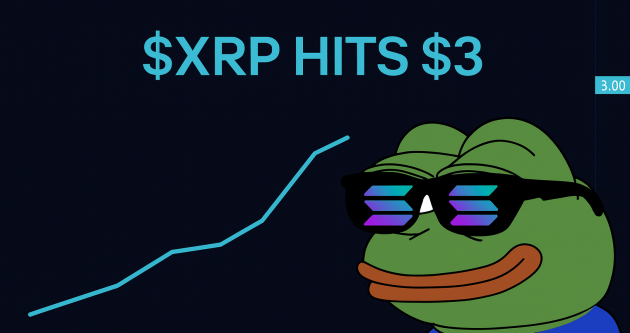
$XRP Nears ATH as ETF Approval Odds Hit 93%; Wall Street Pepe Scales on Solana

$XRP Nears ATH as ETF Approval Odds Hit 93%; Wall Street Pepe Scales on Solana

Ripple’s $XRP just hit $3, edging closer to its $3.60 ATH. A notable driver? The 98% likelihood of US ETF approval, boosting expectations of heightened institutional demand. On the back of this, another altcoin is turning heads. It’s dubbed Wall Street Pepe ($WEPE), and it recently expanded from Ethereum to Solana ahead of new exchange […]

Author: Bitcoinist
Could This Be The Best Coin To Invest In September 2025?

Could This Be The Best Coin To Invest In September 2025?

The post Could This Be The Best Coin To Invest In September 2025? appeared on BitcoinEthereumNews.com. The crypto market in September 2025 is buzzing with anticipation. Bitcoin has stabilized above the $60,000 mark, Ethereum continues its DeFi dominance, and a new wave of presale projects is commanding the spotlight. Among these, one name is standing out with growing momentum: Tapzi. Built as the world’s first skill-to-earn Web3 gaming platform, Tapzi is already being discussed as one of the best coins to invest in this month. Unlike the luck-based models of many play-to-earn projects, Tapzi rewards players purely for their abilities. That innovation, combined with strong tokenomics and a fast-moving presale, has made it a project many in the crypto community are watching closely. A New Kind of Web3 Gaming At its core, Tapzi is designed to tackle the problems that downed earlier GameFi projects. Most blockchain games either relied on constant token emissions, leading to runaway inflation, or turned into thinly veiled gambling apps disguised as games. Tapzi’s creators decided to flip that model. On Tapzi, matches are powered by staked entry fees in the $TAPZI token. Two players join a game, e.g., chess or tic-tac-toe, and stake their tokens into a prize pool. The winner, determined entirely by skill, takes the pot. No randomness, no grind, no token printing. Just straightforward competition. This makes Tapzi feel more like an e-sports platform than a typical blockchain game. Its slogan, “Skill, Strategy & Real Rewards”, sums up the ethos: victory depends on how well you play, not how lucky you get. Why Tapzi Matters in 2025 The timing for Tapzi’s arrival couldn’t be better. Web3 gaming is projected to balloon toward the trillion-dollar mark in the next decade, and users are hungry for more than meme coins and speculative plays. Tapzi’s skill-to-earn structure answers that demand by offering a fair system that can appeal to both casual…

Author: BitcoinEthereumNews
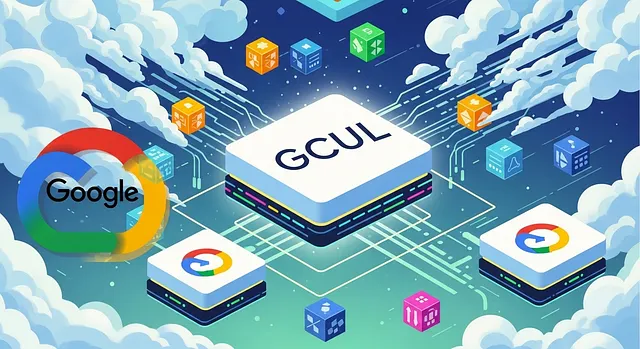
The Leviathan Wakes: Why Google’s L1 Blockchain is a Paradigm Shift, Not Just Another Competitor

The Leviathan Wakes: Why Google’s L1 Blockchain is a Paradigm Shift, Not Just Another Competitor

For years, the crypto world has been defined by a bottom-up revolution — a Cambrian explosion of permissionless protocols built by cypherpunks, anonymous developers, and venture-backed startups, all challenging the established order. The titans of Web2, the “Big Tech” leviathans, have watched from the sidelines, occasionally dipping a toe in the water through partnerships, cloud services, or ill-fated stablecoin projects. They were participants, service providers, but never the foundation itself. That era is now over. The news, dropped with calculated subtlety by Dragonfly partner Omar Kanji, that Google Cloud is launching its own Layer 1 blockchain, codenamed GCUL, is not merely another entry into the crowded L1 race. It is a paradigm shift. It represents the moment the established order stops observing the revolution and starts its own top-down reformation. This is not Google partnering with crypto; this is Google seeking to become the foundational layer upon which a new, institutionally-aligned version of the digital economy is built. The launch of GCUL is arguably the most significant strategic move by a Big Tech company in the blockchain space since Meta’s ill-fated Libra/Diem project. But unlike Libra, which sought to create a new form of money and immediately drew the ire of global regulators, GCUL’s approach is far more insidious and intelligent. It aims to become the “neutral infrastructure,” the new rails for a system that is already being tokenized. Why is Google, the master of information and the apex predator of the digital age, making this move? Why now? And what does this meticulously designed leviathan mean for the incumbent kings — Ethereum’s decentralized nation-state and Solana’s high-speed financial hub? The answers reveal a multi-decade chess game, where the prize is not just the future of cryptocurrency, but the very architecture of 21st-century finance. Part 1: The Calculated Moment — Why Now? Google’s timing is no accident. The company is a famously patient and strategic “fast follower,” not a reckless first mover. It did not invent the search engine, the web browser, or the mobile operating system; it perfected them and achieved market dominance through superior execution, scale, and integration. GCUL’s arrival follows this exact pattern, emerging at a moment of perfect confluence between regulatory maturation, technological readiness, and a proven market need.

  1. The End of the “Crypto Winter” and the Dawn of Regulatory Spring: The chaotic, speculative frenzy of the last bull market and the subsequent crash served as a crucial stress test and cleansing mechanism for the industry. More importantly, it forced the hand of U.S. regulators. The approval of spot Bitcoin ETFs in early 2024 was a watershed moment. It was a tacit acknowledgment from the SEC that this asset class was here to stay, providing a regulated on-ramp for institutional capital. This single event dramatically de-risked the environment for a publicly-traded behemoth like Google. The question for institutions is no longer if they will engage with digital assets, but how. Google is now positioning itself to be the definitive answer to “how.”
  2. The Proven Viability of Tokenization (RWAs): The narrative has decisively shifted from speculative meme coins to the tokenization of Real-World Assets (RWAs). BlackRock CEO Larry Fink’s proclamation that “the next generation for markets, the next generation for securities, will be tokenization” has become the rallying cry for Wall Street. The market is no longer a theoretical concept; it’s a multi-trillion-dollar opportunity in waiting. The partnership GCUL announced with the Chicago Mercantile Exchange (CME) for a tokenized asset pilot is the most potent signal of their intent. They are not chasing DeFi yields; they are chasing the tokenization of the entire global bond, equity, and derivatives markets.
  3. The Maturation and Limitations of Existing L1s: Ethereum has proven the power of decentralized smart contracts but continues to grapple with scalability and high fees, pushing activity to a fragmented landscape of Layer 2s. Solana has proven the demand for high-throughput, low-cost execution but has faced challenges with network stability and is still perceived by many institutions as too “degen” and retail-focused. Google has had a front-row seat to all of this through its Google Cloud services, which are widely used by nodes and developers across these ecosystems. They have seen the successes, the failures, and the massive architectural trade-offs firsthand. GCUL is being designed with the benefit of a decade of hindsight, aiming to solve the problems institutions face, not the problems crypto-natives have been trying to solve for themselves. Part 2: Deconstructing the Leviathan — The Strategic Design of GCUL GCUL is not being built to compete with Ethereum on decentralization or Solana on raw transaction speed for meme coin trading. It is being built to win on three strategic fronts where no existing crypto-native chain can compete: developer accessibility, institutional legitimacy, and unparalleled distribution.
  4. The Weapon of Simplicity: Python-Based Smart Contracts This is perhaps the most underestimated yet brilliant aspect of GCUL’s design. The dominant smart contract languages today are Solidity (niche, with a relatively small developer pool) and Rust (powerful but notoriously difficult to learn). By choosing Python, Google is lowering the barrier to entry to near zero for millions of developers worldwide. Python is the lingua franca of data science, machine learning, AI, and a huge swathe of enterprise back-end development. Every bank, hedge fund, and fintech company has armies of Python developers. Google is not asking the financial world to learn a new, esoteric language; it is bringing the blockchain to the language they already use every day. This is a developer acquisition strategy of unprecedented scale, designed to onboard the institutional world at lightning speed.
  5. The Promise of Compliance: “Neutral Financial Infrastructure” and “Native Commercial Bank Money” This is carefully curated language designed for regulators and Fortune 500 CEOs, not for Crypto Twitter.
“Neutral Financial Infrastructure”: This positions GCUL not as a disruptive upstart, but as the successor to SWIFT, Fedwire, and DTCC. It’s a message of stability, neutrality, and service. They are not building a casino; they are building the foundational rails for a modernized, 24/7 capital market. “Native Commercial Bank On-Chain Money”: This is the killer feature and a direct assault on the existing stablecoin market. The current model for stablecoins like USDC involves a centralized entity (Circle) holding reserves in traditional banks. GCUL’s vision implies a far deeper integration, potentially allowing regulated commercial banks to issue their own tokenized deposits or stablecoins directly on-chain as native assets. This is “compliant-by-design” money, blessed by the existing banking system from day one. It removes the regulatory ambiguity that has perpetually plagued Tether and, to a lesser extent, Circle, offering a product that institutions can use without existential risk.
  1. The Unfair Advantage: Google’s Distribution Network The announcement states a plan to open GCUL to Google’s entire network, which boasts “billions of users” and “hundreds of institutional partners.” This is a level of distribution that no crypto project can even fathom. Imagine a future where:
Every one of the billions of Android users has a native, secure wallet integrated into the operating system, connected to GCUL. Google Pay transactions can be settled instantly on GCUL using regulated, on-chain commercial bank money. The vast ecosystem of businesses using Google Cloud can seamlessly deploy financial applications on GCUL with a few clicks. This is not a battle for developers and users in the crypto niche. This is a plan to onboard the entire global economy onto Google’s proprietary financial layer. Part 3: A Clash of Worlds — GCUL vs. Ethereum vs. Solana GCUL is not entering the L1 race to be a faster Ethereum or a more corporate Solana. It is creating a new category entirely: the Permissioned-by-Default, Institutionally-Governed Ledger. GCUL vs. Ethereum: This is a battle of two fundamentally different value propositions. Ethereum is a digital nation-state with a social contract built on censorship resistance. It is designed to be a check on power. GCUL is the digital arm of the existing power structure. It is designed to make the current system more efficient. An institution using Ethereum is making a radical statement about its belief in a new paradigm. An institution using GCUL is making a pragmatic decision to upgrade its legacy infrastructure. They are not competitors for the same soul; they are competitors for two different futures of finance. GCUL vs. Solana: This competition is more direct on the performance axis, but completely divergent on the market strategy. Solana’s explosive growth was fueled by a vibrant, chaotic, and permissionless ecosystem of DeFi, meme coins, and NFTs. It won by being the fastest and cheapest place for the retail crypto world to experiment. GCUL has no intention of competing for the next dog-themed token. Its strategy is the inverse of Solana’s: start with the most regulated, high-value use cases (like the CME partnership) and slowly work its way down. Solana is capturing the wild frontier; GCUL is building the federal capital. Part 4: The Geo-Political Game — Big Tech, Regulation, and the Web2.5 Stack GCUL cannot be analyzed in a vacuum. It is Google’s strategic move in a much larger chess game being played by Big Tech, Wall Street, and the U.S. government. The Big Tech Arms Race: Meta’s Libra/Diem failed because it tried to challenge the sovereignty of the nation-state by creating its own currency. Google’s approach is far more clever. It is not trying to be the bank; it is trying to build a better plumbing system for the banks. This makes it a partner to the existing system, not a threat. Meanwhile, Apple maintains its iron-fisted control over its App Store payment rails, and Microsoft continues to build out its enterprise blockchain services on Azure. GCUL is Google’s definitive play to ensure that the future tokenized economy runs on Google Cloud, is built with Google’s tools, and is accessed through Google’s services. It is the ultimate platform lock-in strategy. Navigating the U.S. Regulatory Maze: Google is not a crypto startup that asks for forgiveness later. It is a global giant that has armies of lobbyists and a deep, symbiotic relationship with the U.S. government. The entire design of GCUL — from its institutional partners to its “commercial bank money” — is tailored to be palatable to regulators like the SEC, the CFTC, and the Treasury. It is “compliant-by-design” crypto. This provides a stark contrast to the years of legal battles and regulatory uncertainty faced by crypto-native projects. Google is building its fortress on solid, regulated ground from the very beginning. Conclusion: The Great Bifurcation The launch of GCUL is not the death knell for Ethereum or Solana. Instead, it signals the beginning of a Great Bifurcation in the digital asset economy. We are witnessing the formal separation of two parallel universes. Universe A: The Permissionless Frontier. This is the world of Ethereum, Solana, and their crypto-native brethren. It will continue to be the home of true decentralized finance, censorship-resistant applications, DAOs, and the bleeding edge of permissionless innovation. Its value proposition is rooted in its independence from the traditional system. It is a system built on trust in code. Universe B: The Permissioned Institution. This is the world that GCUL is built to dominate. It will be the home of tokenized securities, central bank digital currencies (or their private sector equivalents), and regulated financial products. It will be faster, cheaper, and more efficient than the legacy system, but it will be built on the same foundation of legal contracts, regulatory oversight, and trusted intermediaries. It is a system built on trust in institutions, now running on supercharged new rails. Google is not coming to play crypto’s game. It is inviting the world’s largest financial players to play a new game on its home turf, using its rules. The arrival of GCUL is a validation of blockchain technology, but it is also a profound challenge to the ethos of the community that built it. The Leviathan has woken, and the digital asset landscape will never be the same. The Leviathan Wakes: Why Google’s L1 Blockchain is a Paradigm Shift, Not Just Another Competitor was originally published in Coinmonks on Medium, where people are continuing the conversation by highlighting and responding to this story

Author: Medium
XRP Price Prediction 2025 – 2026: Where Is Ripple Heading?

XRP Price Prediction 2025 – 2026: Where Is Ripple Heading?

XRP price forecasts stay cautious at $1.50–$2.50, while Layer Brett at $0.0055 offers meme energy, 790% APY staking, and real Layer 2 utility for breakout gains.

Author: Blockchainreporter
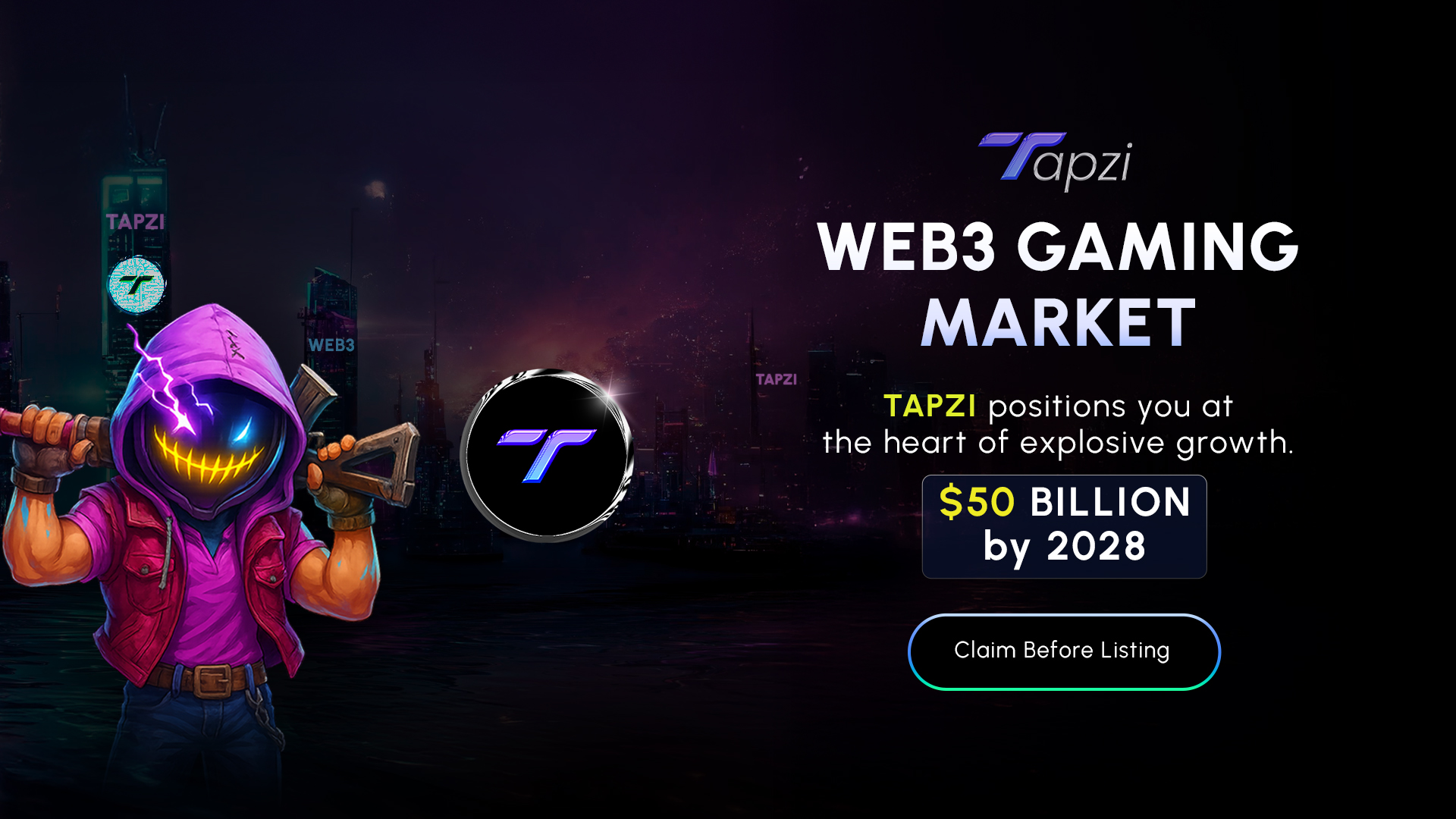
Tapzi Presale Explodes: Could This Be the Best Coin to Invest in September 2025?

Tapzi Presale Explodes: Could This Be the Best Coin to Invest in September 2025?

Tapzi presale gains momentum with skill-to-earn gaming, fixed 5B supply, locked liquidity, and 300% listing potential, making $TAPZI a top pick for Sept 2025.

Author: Blockchainreporter
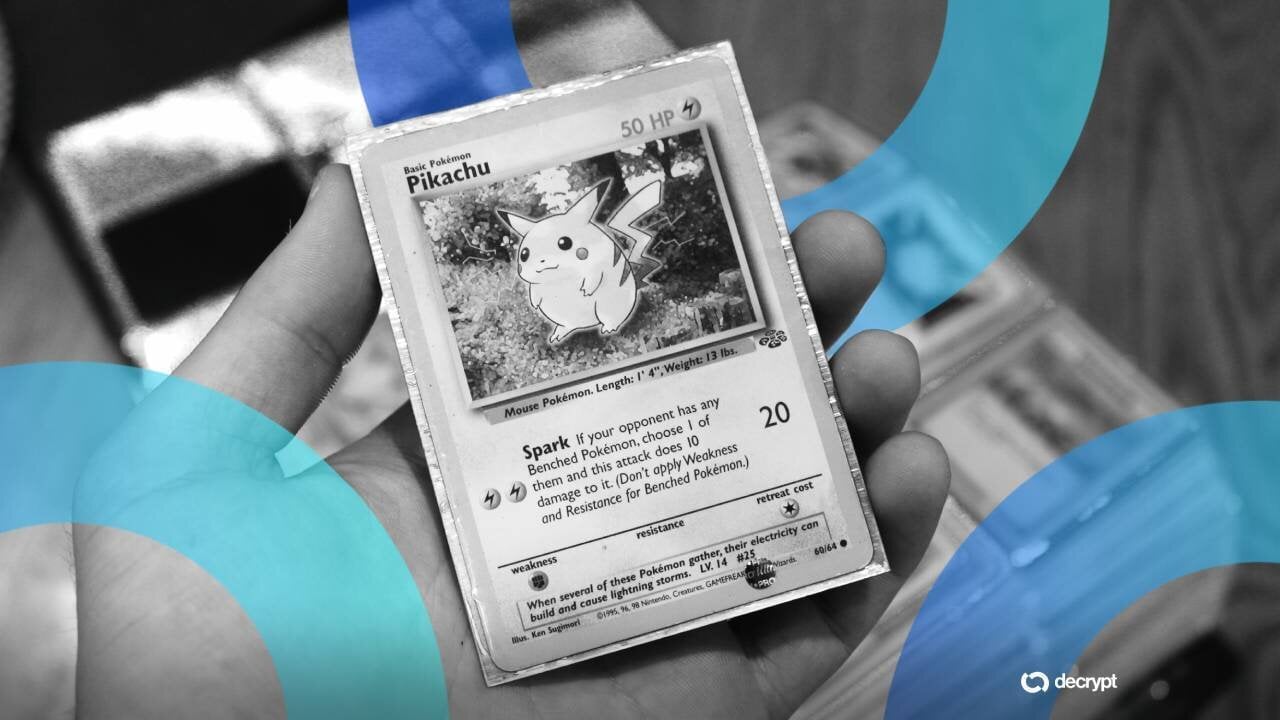
Tokenized Pokémon Cards Are Hot. Lending Them for Crypto Is a Different Story

Tokenized Pokémon Cards Are Hot. Lending Them for Crypto Is a Different Story

NFTs tied to Pokémon cards are seeing renewed interest, but they may have practical limits as collateral on-chain.

Author: Coinstats
Dogecoin ETF Sparks Industry Shift Toward Increased Crypto Speculation

Dogecoin ETF Sparks Industry Shift Toward Increased Crypto Speculation

As cryptocurrencies continue to capture mainstream attention, one of the latest developments involves the growing interest in Dogecoin and its potential inclusion in exchange-traded funds (ETFs). This surge highlights the ongoing debate around whether such financial products serve as genuine investment vehicles or simply amplify market speculation within the crypto space. Dogecoin and the Rise [...]

Author: Crypto Breaking News
Dogecoin-ETF soll am 11. September an den Start gehen, Markt erwartet starke Rally

Dogecoin-ETF soll am 11. September an den Start gehen, Markt erwartet starke Rally

Der erste Dogecoin-ETF soll am 11. September auf den Markt kommen und markiert damit einen kulturellen und finanziellen Meilenstein in der Welt der Kryptowährungen. Analysten sehen diesen Schritt als Wendepunkt, der meme-basierte Token in den finanziellen Mainstream katapultieren könnte. Händler und Institutionen beobachten diesen amüsanten digitalen Vermögenswert aufmerksam, während er seinen Weg an die Wall Street findet. Ein historisches Debüt für den Dogecoin-ETF Der geplante Dogecoin-ETF wird gemäß dem Investment Company Act von 1940 gegründet, wodurch er einige der rechtlichen Hindernisse umgehen kann, mit denen Spot-Kryptofonds konfrontiert sind. Dieser neuartige Ansatz beschleunigte die Genehmigung und ebnete den Weg für einen schnelleren Börsengang. Marktbeobachter glauben, dass dies mehr als nur ein weiteres Finanzinstrument ist, sondern der Beginn dessen, was ein Analyst als „Ära der Meme-Coin-ETFs” bezeichnet. Die Märkte spiegeln bereits die Aufregung wider. Dogecoin stieg in Erwartung des Debüts um bis zu 17 %, wobei das Handelsvolumen an einem einzigen Tag um mehr als 120 % zunahm. „Dogecoin begann als Scherz, und jetzt hat die Wall Street es endlich verstanden”, sagte Jordan Jefferson, CEO von DogeOS und MyDoge, in einem Beitrag auf X. „Die ETF-Zulassung beweist, dass institutionelle Anleger den wahren Wert von Gemeinschaft, Kultur und Zugänglichkeit erkennen.” Die Stimmung der Anleger wird optimistisch Die Einführung des Dogecoin-ETF hat die Erwartung geweckt, dass er neue Zuflüsse sowohl von privaten als auch von institutionellen Anlegern anziehen würde. Technische Experten sagen, dass Dogecoin in der Widerstandszone von 0,25 bis 0,26 US-Dollar gehandelt wird und ein Durchbruch den Preis kurzfristig auf 0,35 oder möglicherweise 0,40 US-Dollar treiben könnte. Ein renommierter Händler auf X wies auf die Absurdität der Situation hin: „Beim Dogecoin-ETF geht es nicht um Nützlichkeit, sondern um Glauben. Dies ist der erste ETF, der Kultur über Code stellt.“ Obwohl die Stimmung unbestreitbar positiv ist, warnen Analysten, dass die Volatilität hoch bleiben wird, da spekulative Überschwänglichkeit mit der Aufsicht durch die Regulierungsbehörden kollidiert. Regulatorischer Kontrast und Auswirkungen auf den Markt Die Genehmigung des Dogecoin-ETF kommt zu einer Zeit, in der andere Anträge Schwierigkeiten haben. Die SEC hat kürzlich eine Entscheidung über den Bitwise Dogecoin ETF auf den 12. November verschoben, was zeigt, dass nicht alle Meme-Coin-Produkte gleich behandelt werden. Der Kontrast zeigt, wie unterschiedliche regulatorische Wege zu unterschiedlichen Zeiträumen für vergleichbare Produkte führen können. Branchenanalysten glauben, dass die Zertifizierung nach dem Gesetz von 1940 die Tür für neue Ansätze für zukünftige Krypto-ETFs öffnen könnte. In einer zunehmend wettbewerbsorientierten Branche können Emittenten First-Mover-Vorteile genießen, indem sie langwierige Genehmigungsprozesse vermeiden. Wie geht es weiter mit Dogecoin und Meme-Assets? Über die unmittelbare Preisbewegung hinaus ergibt sich die größere Relevanz des Dogecoin-ETF aus der kulturellen Akzeptanz. Dogecoin, früher als Online-Humor verspottet, wird nun durch ein reguliertes Finanzinstrument gestützt, das für Mainstream-Anleger zugänglich ist. Institutionen beginnen zu erkennen, was Privatanleger schon lange schätzen: die Beständigkeit von Dogecoin und seine Fähigkeit, weltweite Aufmerksamkeit auf sich zu ziehen. Wie Jefferson sagte: „Diese Einführung zeigt, dass Memes Märkte sind. Bei Dogecoin geht es jetzt um Finanzen, nicht mehr nur um Spaß.“ Wenn sich diese Dynamik fortsetzt, könnten bald weitere Meme-Token ihre eigenen ETF-Ambitionen verfolgen und den Trend noch weiter verbreiten. Fazit Die Schaffung des ersten Dogecoin-ETF ist mehr als nur ein finanzieller Meilenstein. Sie steht für die Legitimität der Meme-Kultur innerhalb der institutionellen Finanzwelt. Angesichts der zunehmenden Preisdynamik und der positiven Stimmung der Anleger ist der Übergang von Dogecoin vom Online-Witz zum Wall-Street-Produkt sowohl historisch als auch bedeutend. Ob dies nun zu einer langfristigen Entwicklung oder zu erhöhter Volatilität führt, eines ist sicher: Der 11. September stellt ein neues Kapitel in der fortlaufenden Geschichte der Kryptomärkte dar. Häufig gestellte Fragen Wann wird der Dogecoin-ETF aufgelegt? Der erste Dogecoin-ETF soll am 11. September aufgelegt werden und Anlegern über ein reguliertes Produkt ein direktes Engagement in dem Token ermöglichen. Wie hat Dogecoin auf die ETF-Nachrichten reagiert? Dogecoin stieg in Erwartung der Auflegung um 7 % bis 17 %, wobei sich das Handelsvolumen in den letzten Sitzungen mehr als verdoppelt hat. Warum ist dieser ETF so bedeutend? Es ist der erste US-amerikanische börsengehandelte Fonds, der sich ausschließlich mit Dogecoin befasst und damit den Übergang der Meme-Kultur in den Mainstream-Finanzsektor symbolisiert. Wie sieht die Preisprognose für Dogecoin aus? Wenn Dogecoin den Widerstand bei etwa 0,26 USD durchbricht, prognostizieren Analysten kurzfristige Gewinne in Richtung 0,35 bis 0,40 USD, wobei jedoch weiterhin mit Volatilität zu rechnen ist. Glossar der wichtigsten Begriffe ETF (Exchange-Traded Fund) – Ein regulierter Investmentfonds, der einen Vermögenswert oder eine Gruppe von Vermögenswerten nachbildet und an Börsen gehandelt wird. SEC (Securities and Exchange Commission) – Die US-Finanzaufsichtsbehörde, die die Wertpapiermärkte und Anlageprodukte beaufsichtigt. Widerstandslevel – Ein Preisniveau, bei dem ein Vermögenswert einem Verkaufsdruck ausgesetzt ist, der es schwieriger macht, weiter zu steigen. Volatilität – Der Grad der Schwankung der Handelspreise, der oft das Risikoniveau am Markt anzeigt. Meme-Token – Eine Kryptowährung, die mit kulturellen oder humoristischen Themen erstellt wurde und oft von Read More: Dogecoin-ETF soll am 11. September an den Start gehen, Markt erwartet starke Rally">Dogecoin-ETF soll am 11. September an den Start gehen, Markt erwartet starke Rally

Author: Coinstats