NFT

NFTs are unique digital identifiers recorded on a blockchain that certify ownership and authenticity of a specific asset. Moving past the "PFP" craze, 2026 NFTs emphasize utility, representing everything from IP rights and digital fashion to RWA titles and event ticketing. This tag explores the technical standards of digital ownership, the growth of NFT marketplaces, and the integration of non-fungible tech into the broader Creator Economy and enterprise solutions.

13168 Articles
Created: 2026/02/02 18:52
Updated: 2026/02/02 18:52
Grayscale Launches Chainlink Trust ETF (GLNK) With Zero Fees as LINK Infrastructure Demand Surges

Grayscale Launches Chainlink Trust ETF (GLNK) With Zero Fees as LINK Infrastructure Demand Surges

The post Grayscale Launches Chainlink Trust ETF (GLNK) With Zero Fees as LINK Infrastructure Demand Surges appeared on BitcoinEthereumNews.com. Grayscale has taken another major step into the tokenized economy. The asset manager has officially launched the Grayscale Chainlink Trust ETF (Ticker: GLNK) on NYSE Arca, giving U.S. investors a new way to access Chainlink’s expanding role across decentralized finance, tokenized markets, and enterprise blockchain adoption. The launch marks the first-ever Chainlink ETF available in the United States, a move that signals growing institutional recognition of Web3 infrastructure, especially the oracle networks powering on-chain data, interoperability, and smart contract automation. The ETF goes live with zero management fees, a notable choice at a time when digital asset exchange-traded products face increasing competition for investor attention. Grayscale Chainlink Trust ETF (Ticker: $GLNK) with 0% fees is now trading¹. The first @chainlink ETP in the U.S. — from Grayscale, the world’s largest crypto-focused asset manager². Gain exposure to $LINK, the core infrastructure for connecting blockchains to the real world.… pic.twitter.com/CjoemYxyEI — Grayscale (@Grayscale) December 2, 2025 A New Access Point for LINK Exposure GLNK provides investment exposure to LINK, the native token of Chainlink. But Grayscale emphasizes a critical point: this is not a direct investment in LINK. The fund is not registered under the Investment Company Act of 1940, which means:  It carries significant investment risks  It behaves differently from traditional ETFs  It may not be suitable for all retail or institutional investors Despite these caveats, the new ETF offers something that traditional financial markets have been slowly warming up to, secure, regulated exposure to digital asset infrastructure without requiring self-custody or direct crypto trading. From Private Trust to Public ETF GLNK has a long history before its official exchange debut.  It was originally launched in February 2021 as a private placement, limited to accredited investors.  It entered OTC trading in May 2022, giving broader market participants indirect access to LINK.…

Author: BitcoinEthereumNews
Metamask shield: $10K/mo loss protection

Metamask shield: $10K/mo loss protection

The post Metamask shield: $10K/mo loss protection appeared on BitcoinEthereumNews.com. MetaMask has launched a new premium safeguard called shield, designed to protect users from transaction-related losses while adding fast-response support. MetaMask introduces premium loss protection for on-chain activity MetaMask has rolled out Transaction Shield, a premium opt-in security upgrade that bundles transaction loss protection with 24/7 wallet priority support for its users. The product, announced on Dec. 2, 2025, aims to reduce the financial impact of risky interactions across decentralized applications and smart contracts. The new subscription service extends MetaMask’s security stack by offering coverage for losses up to $10,000 per month on transactions the platform classifies as safe. However, only actions that pass MetaMask’s automated contract checks and transaction simulations qualify for reimbursement if something goes wrong. Moreover, the company positions Transaction Shield as an added layer on top of its existing threat detection tools, instead of a replacement. That said, users still need to monitor approvals, contract interactions, and spending limits whenever they connect their wallet to on-chain services. Pricing, free trial, and subscription details The Transaction Shield MetaMask subscription service is priced at $9.99 per month or $99 annually, maintaining clear monthly coverage limits tied to approved transactions. Subscribers receive a 14-day free trial, and annual plans include a $20 discount compared with paying month to month. Currently, coverage is available only through the MetaMask Extension in desktop browsers. However, the team plans to extend the feature to the mobile wallet at a later stage, bringing the same transaction loss protection and support package to smartphone users. Supported networks and transaction types Transaction Shield applies to approved transactions on a wide range of supported blockchain networks. Covered chains include Ethereum, Linea, Arbitrum, Avalanche, Optimism, Base, Polygon, BSC, and Sei, giving users protection across major EVM-compatible ecosystems. Moreover, the feature supports common DeFi and NFT interactions. Eligible actions…

Author: BitcoinEthereumNews
Flow has transitioned to DeFi; the confidence and predicament of the former NFT leader.

Flow has transitioned to DeFi; the confidence and predicament of the former NFT leader.

Author: Nancy, PANews After the brutal baptism of market cycles, very few survivors remain in the NFT sector. Even Flow, once a top performer, could not escape the fate of changing times and began to seek new growth points. On December 2nd, Flow announced its transformation into a democratized, consumer-grade DeFi platform, a strategic shift that has attracted significant market attention. Leveraging its large user base and unique technological advantages, Flow is attempting to adapt to market changes and save itself. However, whether it can secure a place in the fiercely competitive DeFi arena remains a huge question mark. Launching DeFi lending and wealth management products, and upgrading to a deflationary token. “Today’s DeFi is hostile; users must possess advanced technical skills to survive, with issues like slippage, MEV, and liquidation cascading effects constantly emerging. Every interface is designed for experts, forcing the rest to the margins. This is precisely the gap we aim to fill,” wrote Roham, CEO of Dapper Labs. In response to this situation, Flow's new goal is to create consumer-oriented DeFi, allowing ordinary users to enjoy the benefits of the crypto world without needing to be technical experts, and truly achieving an easy-to-use experience for mainstream users. Flow is building a series of network architecture components called "built-in protocols," which are more like public financial infrastructure directly embedded in the network layer. In the DeFi space, built-in protocols can provide shared liquidity across the entire ecosystem and integrate liquidity pools from various vertical sectors, avoiding liquidity fragmentation and allowing new projects to avoid the challenges of a cold start. Flow Credit Market (FCM), an automated lending protocol, is the first built-in protocol developed by the Flow Foundation. It utilizes Flow's native on-chain scheduling system to set periodic triggers without the need for external oracles, significantly reducing liquidation risk while increasing loan value (LTV), thereby bringing higher natural returns to both lenders and borrowers. Dapper Labs CEO Roham pointed out that traditional DeFi lending is typically highly punitive, only liquidating and charging penalties when a user's position is close to liquidation. FCM, on the other hand, employs proactive risk management, continuously monitoring each position on-chain automatically and rebalancing it before risks materialize. Internal risk simulations show that FCM has protected user deposits from liquidation during numerous major market crashes, while also reducing costs by up to 99.9% compared to lending protocols on other networks. To accelerate the launch of FCM (Financial Flywheel) services, Dapper Labs has launched Peak Money, a consumer-grade financial flywheel app aimed at becoming the next crypto gateway to 100 million new users. According to Roham, users can deposit cash or crypto assets (such as Bitcoin, Ethereum, and FLOW) into Peak Money and earn higher returns than any bank (APY up to 25% for cryptocurrencies and 10% for cash), while funds can be earned and used at any time. The product has no minimum investment, no gatekeeper, no mnemonic phrase required, and no liquidation risks. Peak Money will release details of coverage for specific loss events upon official launch. Currently, Peak Money has an open waiting list. Furthermore, Flow's built-in protocols may be expanded to perpetual contracts, prediction markets, and other applications in the future, providing more user-friendly DeFi applications for mainstream consumers. To achieve sustainable value capture, Flow upgraded its token, transitioning to a deflationary token. The Flow Foundation's FLIP-351 proposal directly links network usage to network value. Each transaction burns tokens, creating scarcity through network activity and thus increasing token value. When the network consistently operates at approximately 250 TPS, the FLOW token will achieve net deflation. Even so, Flow's transaction costs remain lower than mainstream networks like Solana and Base. It's worth noting that the current price of the FLOW token has fallen by over 90% from its all-time high. What gives Flow the confidence and challenges in its cross-industry transformation into DeFi? The current DeFi market is in a phase of rapid growth and fierce competition. As the regulatory environment becomes more favorable, leading protocols are leveraging their first-mover advantage to solidify their positions, while traditional institutions with both compliance and funding advantages are also accelerating their entry, continuously raising the barriers to entry in the field. As one of the few crypto sectors with proven product-market fit (PMF), DeFi still has enormous growth potential. For Flow, which is attempting to transform from consumer-grade Level 1 to DeFi infrastructure, this is not only an opportunity for strategic restructuring but also a challenging "reboot." As a "newcomer" to the DeFi sector, Flow possesses a certain degree of confidence for its cross-industry transformation. On one hand, Flow didn't start from scratch; its accumulated experience in the NFT field provided a unique starting line. With the phenomenal application NBA Top Shot, Flow amassed a large user base. Although its popularity has declined significantly from its peak, the accumulated traffic remains substantial. According to official data, Flow has over 41 million total accounts and over 1.1 million monthly active users. Meanwhile, according to DeFiLlama data, as of December 3rd, Flow's TVL reached $107 million, a 187.1% increase since the beginning of the year. Meanwhile, Flow boasts technological advantages, being designed specifically for large-scale consumer applications. Its low-barrier, low-cost, and high-throughput on-chain environment naturally aligns with the high-frequency trading needs of DeFi. In October of this year, Flow also launched two key upgrades, Forte and Crescendo, aiming to address scalability, deep innovation in DeFi, and cross-chain interoperability issues, further providing technological support for ecosystem transformation. Forte's core goal is to completely eliminate the reliance on off-chain bots or centralized custody services for complex on-chain financial logic. All automation (limit orders, dynamic interest rates, strategy vaults, etc.) runs securely directly on-chain, making it easier for developers to build complex financial applications. Crescendo upgrades Flow with Ethereum Virtual Machine (EVM) equivalence, enabling seamless interoperability with Ethereum-based applications and protocols. Flow claims to be one of the few blockchains capable of supporting millions of daily active users (DAU) without incurring high or unpredictable gas fees. However, Flow's transformation still faces considerable challenges. On one hand, all new public chains face the challenge of a liquidity cold start. Although Flow has a significant user base, it mainly consists of NFT users, most of whom have already left the market. How to re-attract these users and convert them into DeFi users remains highly uncertain. On the other hand, the ecosystems of leading public chains are already quite rich and have formed barriers. Flow needs to quickly attract high-quality developers and build innovative applications that are recognized by the market in order to form a sustainable positive cycle of ecosystem. More importantly, Flow has long been labeled by the market as an NFT public chain. To break this stereotype, Flow must present a successful DeFi application case to prove its suitability for the financial sector. Overall, the technical architecture and user base add more certainty to Flow's "re-entrepreneurial" endeavor. However, the success of this transformation hinges on Flow's ability to activate dormant NFT users through a compelling DeFi narrative and break down liquidity barriers.

Author: PANews
Strategy Inc Sets $1.44B USD Reserve as Saylor Expands Long-Term Financial Shield

Strategy Inc Sets $1.44B USD Reserve as Saylor Expands Long-Term Financial Shield

The post Strategy Inc Sets $1.44B USD Reserve as Saylor Expands Long-Term Financial Shield appeared on BitcoinEthereumNews.com. Michael Saylor’s Strategy Inc has taken another deliberate step toward long-term financial stability. The company has officially created a $1.44 billion USD Reserve, designed to cover dividends, interest payments, and corporate debt servicing for at least the next twelve months. The reserve will act as a second liquidity buffer alongside its massive bitcoin treasury, now one of the largest corporate crypto holdings in the world. The announcement came directly from @saylor, signaling a stronger defensive posture as the company prepares for multi-year obligations while maintaining its aggressive BTC-focused strategy. $MSTR announces the formation of a $1.44 billion USD Reserve and an increase in its BTC Reserve to 650,000 $BTC. pic.twitter.com/e1tAhDUo9G — Michael Saylor (@saylor) December 1, 2025 A New USD Reserve to Strengthen the Corporate Balance Sheet Strategy Inc describes the new $1.44B reserve as a dedicated pool for predictable expenses. Unlike opportunistic market reserves or general liquidity buffers, this one has a single mission: keep the company solvent, consistent, and stable as it continues expanding its BTC treasury. What the reserve covers:  Dividend payments  Corporate debt servicing  Interest expenses  Proffered dividend obligations The reserve, funded through ATM (at-the-market) share sales, is calibrated to guarantee at least 12 months of runway. But Strategy emphasizes it aims to stretch that coverage to two years, and eventually 24+ months. This is not an emergency fund. It’s a structural cushion meant to give Strategy predictable breathing room as it navigates both BTC cycles and traditional corporate obligations. 23 Months of Dividend Coverage Already Secured The numbers paint a clear picture: Strategy currently owes $750 million in annual dividends. With $1.44B now locked and earmarked, the company has roughly 23 months of coverage, almost two full years of shareholder payouts secured in advance. That level of protection is rare among public companies, especially ones…

Author: BitcoinEthereumNews
Pudgy Penguins Price (PENGU) Jumps 26% Amid Whale Accumulation

Pudgy Penguins Price (PENGU) Jumps 26% Amid Whale Accumulation

The post Pudgy Penguins Price (PENGU) Jumps 26% Amid Whale Accumulation  appeared first on Coinpedia Fintech News Pudgy Penguins ($PENGU) Price has shown a strong rebound over the past 24 hours, climbing more than 26% after hitting a low of $0.00956. The collection, based on 8,888 unique NFTs on Ethereum, currently has a market cap of $645 million and a 24-hour trading volume of $123 million. The surge appears linked to strategic …

Author: CoinPedia
Ethereum’s Trendline Break Hints at Short-Term Pressure, Valuation Suggests Upside Potential Above $4,800

Ethereum’s Trendline Break Hints at Short-Term Pressure, Valuation Suggests Upside Potential Above $4,800

The post Ethereum’s Trendline Break Hints at Short-Term Pressure, Valuation Suggests Upside Potential Above $4,800 appeared on BitcoinEthereumNews.com. Ethereum’s recent trendline break triggered a sharp sell-off, dropping its market cap by $25 billion to $340 billion amid heightened selling pressure. Despite this, advanced valuation models estimate a fair value near $4,837, signaling strong recovery potential above $4,800 if market sentiment shifts positively. Ethereum’s ascending trendline broke decisively, leading to a high-volume sell-off that drove prices toward $2,815 and altered short-term market dynamics. Valuation assessments across multiple models highlight a significant pricing gap, with fair value estimates reaching $4,837 or higher based on network fundamentals. Market capitalization declined from $365 billion to $340 billion, as supply zones between $3,250 and $3,800 capped upward moves and intensified downward momentum, according to on-chain data from platforms like CoinMarketCap. Ethereum trendline break sparks $340B market cap drop but valuation models eye $4,800+ upside. Explore key analysis, price impacts, and recovery signals in this in-depth report. Stay informed on ETH’s path forward. What Caused the Ethereum Trendline Break and Its Market Impact? Ethereum trendline break occurred when the cryptocurrency decisively violated a key ascending support level that had guided its price action for several days, resulting in accelerated selling and a notable decline in market capitalization. This event, observed in early December 2025, pushed Ethereum’s price near $2,815 while highlighting shifts in trader sentiment across short- and medium-term charts. Despite the immediate bearish pressure, underlying network strengths suggest resilience, as evidenced by sustained staking activity and growing decentralized application usage. The breakdown followed a period of price compression near the trendline, where buyers had previously defended higher lows to maintain upward momentum. Technical analysts, including insights from ZAYK Charts, noted that the structure’s integrity was tested multiple times before sellers overwhelmed it with a large-volume red candle. This not only triggered stop-loss orders but also shifted the overall market structure to bearish in…

Author: BitcoinEthereumNews
Trading Moments: Bitcoin rebounds to $93,000 and targets $97,000; Ethereum bulls hope to break through $3,200.

Trading Moments: Bitcoin rebounds to $93,000 and targets $97,000; Ethereum bulls hope to break through $3,200.

Daily market data review and trend analysis, produced by PANews. 1. Market Observation Markets are closely watching the future direction of US monetary policy. US President Trump has made it clear that he plans to nominate a new Federal Reserve Chairman in early 2026, and has hinted that Kevin Hassett, Director of the National Economic Council, is his preferred candidate. Trump has long criticized current Chairman Powell for his slow action on interest rate cuts and hopes his successor will be more proactive in pushing for easing policies. Although the final nominee must be confirmed by the Senate, and the shortlist includes veterans such as Christopher Waller and Michelle Bowman, market focus is already on the potential policy shift. Meanwhile, Amazon Web Services (AWS) unveiled its next-generation AI chip, Trainium 3, at its annual conference and previewed support for Nvidia's NVLink-enabled Trainium 4. AWS also released the Nova 2 series of models and several innovative services, aiming to further challenge Nvidia and Google's market position in the AI field. This move boosted Amazon's stock price, while Nvidia and AMD's stock prices came under pressure. Overall, despite the recent strong performance of US stocks, macroeconomic uncertainties, intensified technological competition, and divergent market sentiment make future trends highly unpredictable. The Bitcoin market has recently experienced significant volatility, rebounding strongly after briefly falling to $83,800 and returning above $93,800, sparking heated debate among analysts about its future direction. Optimists believe a new upward trend may have begun. Analyst Michaël van de Poppe points out that breaking through $92,000 is key to testing the $100,000 mark. Nick Ruck also suggests that, thanks to macroeconomic factors such as expectations of a Fed rate cut and ETF inflows, Bitcoin is poised to return to $100,000 in the coming months. A Bitwise report, analyzing global money supply, argues that Bitcoin's current value is severely undervalued, with its model's fair value approaching $270,000. Technical analysts Man of Bitcoin and Axel Bitblaze also hold positive views; the former sets a target price of $96,965, while the latter believes $80,000 may be the bottom of the cycle, with a potential break above $100,000 by the end of the year, noting that short-selling above $93,000 could provide further upward momentum. However, the market is also filled with cautious and bearish voices. Bloomberg analyst Mike McGlone warned that Bitcoin could retest $50,000. BRN research director Timothy Misir observed that the slowdown in whale wallets' accumulation while retail investors accelerated their buying is a typical sign of late-cycle vulnerability. Analyst Murphy emphasized that if the price falls below $80,000, it will cause a large number of long-term holders to turn into paper losses, triggering price sensitivity risks. Meanwhile, F2Pool data shows that at the current price, most older mining rigs are already shut down at a loss, which poses potential selling pressure on the market. Technically, analysts are generally focusing on the key support area of $86,000-$88,000, and a break below this level could trigger a wider sell-off. In addition, the market is also profoundly affected by the traditional financial sector and the real economy. For example, Strategy updated its fiscal year 2025 earnings forecast based on the Bitcoin price range, and its revenue target is closely linked to whether Bitcoin can stabilize in the $85,000-$110,000 range. The Ethereum market also faces a critical juncture. While its price has rebounded above $3,000, market sentiment remains generally skeptical. Derivatives market data shows that the annualized premium for Ethereum futures remains low at 3%, while the premium for put options relative to call options is widening, indicating that traders are still actively hedging downside risk and lack confidence in further price increases. Fundamentally, the Ethereum network faces challenges, with weekly network fees falling sharply by 49% and DEX trading volume shrinking. Against this backdrop, analysts have offered different price path predictions. The bearish view suggests that a break below key support could lead to a deep correction. Glassnode's MVRV model indicates that a break below the support zone around $2,820 would target $2,500. A bearish pennant pattern on the daily chart points to the $2,200-$2,220 area. However, the market still holds upward hope. Analyst Don points to a descending wedge pattern that preserves the possibility of a rebound to $3,550. According to Fibonacci retracement levels, Man of Bitcoin predicts the price may test $3,216. Analyst Wolf believes the market is approaching a key level: the neckline of a head and shoulders bottom pattern near $3,700. Whether this level can be broken will determine the continuation of the bull market. 2. Key Data (as of 13:00 HKT, December 3) (Data source: CoinAnk, Upbit, Coingecko, SoSoValue, CoinMarketCap) Bitcoin: $93,546 (-0.34% year-to-date), daily spot trading volume $89.26 billion. Ethereum: $3,023 (down 7.12% year-to-date), daily spot trading volume $29.26 billion. Fear of Greed Index: 28 (Fear) Average GAS: BTC: 1.2 sat/vB, ETH: 0.04 Gwei Market share: BTC 58.7%, ETH 11.6% Upbit 24-hour trading volume rankings: XRP, BTC, ETH, SOL, SUI 24-hour BTC long/short ratio: 51.32% / 48.68% Sector Performance: The crypto market rebounded across the board, with most sectors rising by approximately 3% to 12% in the last 24 hours. The NFT sector, in particular, rose by 11.87%. 24-hour liquidation data: A total of 107,343 people worldwide were liquidated, with a total liquidation amount of $415 million. This included $208 million in BTC liquidations, $70.18 million in ETH liquidations, and $19.54 million in ZEC liquidations. 3. ETF Flows (as of December 2nd) Bitcoin ETF: +$58,499,500 Ethereum ETF: -$9,912,100 Solana ETF: +$45.77 million XRP ETF: +$67.74 million 4. Today's Outlook Pandu Ethereum ETF will be listed on the Hong Kong Stock Exchange on December 3, allowing users to directly hold ETH. HumidiFi's WET token will be issued on December 3rd via the Jupiter DTF platform. Ethereum developers have officially set the target date for the Fusaka upgrade as December 3rd. Coinbase will launch Dash perpetual contract trading on December 4th. Today's top 100 cryptocurrencies by market capitalization saw the following largest gains: Sui (up 30.2%), Pudgy Penguins (up 26.4%), Chainlink (up 18.9%), Virtuals Protocol (up 18.7%), and Pepe (up 18.5%). 5. Hot News Binance will delist 15 spot trading pairs on December 5th, including ACH/BTC and WAXP/BTC. BitMine's new wallet received over 30,000 ETH from Kraken, worth approximately $91.75 million. Stable announces its token economic model: total supply of 100 billion tokens, with 10% allocated at genesis. The USDC Treasury minted an additional 500 million USDC on the Solana blockchain. Bank of America recommends that its wealth management clients allocate 1%–4% to crypto assets. CME launches Bitcoin volatility index, similar to the VIX in the stock market. Coinbase has included five new tokens in its listing roadmap, including WET, ZKP, and PLUME. Tether Treasury mints an additional 1 billion USDT on the Tron network. Analysis: Suspected PIPPIN insiders control half of the supply, worth $120 million. The Coinbase 50 Index adds six new projects: HBAR, MANTLE, VET, FLR, SEI, and IMX. Vanguard has launched cryptocurrency ETF trading, supporting major assets such as BTC and ETH. Ethena received over 46.79 million ENA from Bybit, the source wallet of which was previously linked to Coinbase.

Author: PANews
MetaMask unveils new shield security upgrade with transaction loss protection

MetaMask unveils new shield security upgrade with transaction loss protection

MetaMask has launched a new premium safeguard called shield, designed to protect users from transaction-related losses while adding fast-response support. MetaMask introduces premium loss protection for on-chain activity MetaMask has rolled out Transaction Shield, a premium opt-in security upgrade that bundles transaction loss protection with 24/7 wallet priority support for its users. The product, announced […]

Author: The Cryptonomist
PIPPIN Surges 1,000% After Six Months of Silence, On-Chain Evidence Points to Coordinated Manipulation

PIPPIN Surges 1,000% After Six Months of Silence, On-Chain Evidence Points to Coordinated Manipulation

The $PIPPIN token has suddenly roared back to life. After half a year with no posts, no updates, and no visible development, the token exploded more than 1,000% in less than two weeks. The move took the market from confusion to suspicion almost instantly. What’s unfolding now looks nothing like organic demand. On-chain evidence strongly [...]

Author: Null TX
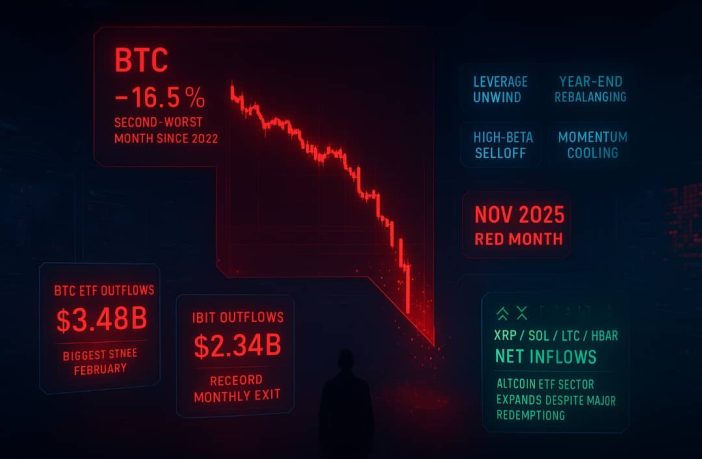
Bitcoin Posts Second-Worst Month in Three Years as November Turns Red Across Crypto

Bitcoin Posts Second-Worst Month in Three Years as November Turns Red Across Crypto

November 2025 is closing with numbers the market didn’t want to see. Bitcoin just recorded its second-worst monthly performance in three years, dropping 16.5% and erasing a large portion of the optimism that built up after its all-time-high run earlier this year. The sharp reversal marks one of the clearest signals yet that momentum is [...]

Author: Null TX