NFT

NFTs are unique digital identifiers recorded on a blockchain that certify ownership and authenticity of a specific asset. Moving past the "PFP" craze, 2026 NFTs emphasize utility, representing everything from IP rights and digital fashion to RWA titles and event ticketing. This tag explores the technical standards of digital ownership, the growth of NFT marketplaces, and the integration of non-fungible tech into the broader Creator Economy and enterprise solutions.

13183 Articles
Created: 2026/02/02 18:52
Updated: 2026/02/02 18:52

Bitmine Accumulates 3.73 Million Ethereum Tokens in Strategic Shift

Bitmine Accumulates 3.73 Million Ethereum Tokens in Strategic Shift

Bitmine has amassed 3.73 million Ethereum tokens as part of a new accumulation strategy, marking a significant shift in the company's investment approach. The substantial holdings position Bitmine among major institutional Ethereum holders, signaling growing corporate confidence in the second-largest cryptocurrency by market capitalization. This strategic pivot reflects broader institutional adoption trends as traditional companies increasingly allocate capital to digital assets beyond Bitcoin.

Author: MEXC NEWS
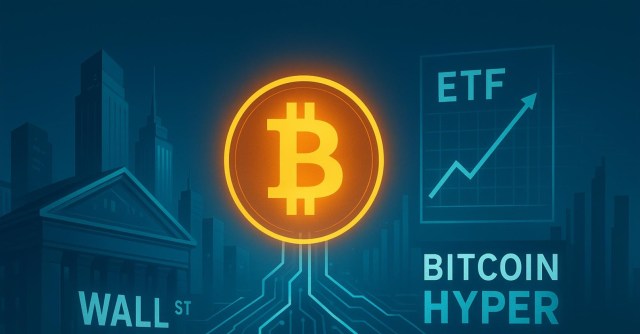
Vanguard Expands to Bitcoin ETFs, Turns Bitcoin Hyper Bullish

Vanguard Expands to Bitcoin ETFs, Turns Bitcoin Hyper Bullish

Quick Facts: ➡️ Vanguard’s move to support trading of major crypto ETFs underlines Bitcoin’s transition from a speculative asset to a mainstream portfolio building block. ➡️ As conservative ETF flows normalize $BTC exposure, traders increasingly look to higher‑beta infrastructure plays built around Bitcoin’s security model and brand. ➡️ Bitcoin Hyper ($HYPER) promises a faster, cheaper, […]

Author: Bitcoinist
Coinbase Adds HBAR, MANTLE, VET, FLR, SEI, and IMX to Its Coinbase 50 Index

Coinbase Adds HBAR, MANTLE, VET, FLR, SEI, and IMX to Its Coinbase 50 Index

Coinbase added six new assets to its Coinbase 50 Index with the removal of six others, as part of its quarterly rebalance. The newly included tokens had mixed market reactions, with IMX and VET gaining and others declining. Coinbase has added six new assets to its Coinbase 50 Index, the benchmark that tracks the largest [...]]]>

Author: Crypto News Flash
7 Best Crypto Presales to Invest in – BFX’s Top Presale Surges Past $11.8M With Price Still at $0.03

7 Best Crypto Presales to Invest in – BFX’s Top Presale Surges Past $11.8M With Price Still at $0.03

BlockchainFX presale surges past $11.8M at $0.03 offering strong upside as investors eye its licensed trading platform and CYBER50 bonus advantage.

Author: Blockchainreporter
Next 1000x Crypto? Bitcoin Hyper’s Presale Reaches $28.8M

Next 1000x Crypto? Bitcoin Hyper’s Presale Reaches $28.8M

Quick Facts: ➡️ Bitcoin’s base layer still struggles with slow finality, high fees during congestion, and almost no native smart contract capabilities for modern dApps. ➡️ As demand grows for Bitcoin-secured DeFi and payments, users face a gap between $BTC’s store-of-value role and real on-chain utility. ➡️ The Bitcoin Hyper ($HYPER) has raised over $28.8M […]

Author: Bitcoinist
Canada’s Stablecoin Rules Can Help Modernize Digital Cash, Says Scotiabank, as SUBBD Token Presale Draws Investors

Canada’s Stablecoin Rules Can Help Modernize Digital Cash, Says Scotiabank, as SUBBD Token Presale Draws Investors

Quick Facts: ➡️ Canada’s stablecoin framework is shaping up as a payments upgrade, tightening rules for digital cash while leaving application-layer crypto projects more room to innovate. ➡️ As stablecoins become more regulated, value may shift to platforms that use them as neutral payment rails for content, AI agents, and communities. ➡️ The SUBBD platform […]

Author: Bitcoinist
Grok Says Blazpay Could Be the Next New Crypto Coin to Buy Before Phase 4 Ends, While WAX (WAXP) Holds Steady

Grok Says Blazpay Could Be the Next New Crypto Coin to Buy Before Phase 4 Ends, While WAX (WAXP) Holds Steady

The 2025 crypto market has renewed interest in early-stage opportunities, making crypto presales an attractive avenue for token holders seeking new crypto coin with strong growth potential. Among emerging projects, Blazpay and WAX (WAXP) stand out for their unique utilities and ecosystem advantages. Blazpay presale Phase 4 allows early adopters to acquire tokens at a […] The post Grok Says Blazpay Could Be the Next New Crypto Coin to Buy Before Phase 4 Ends, While WAX (WAXP) Holds Steady appeared first on TechBullion.

Author: Techbullion
Investor Shift Toward AI And Multichain Assets Pushes Blazpay, BTC, TRON, Flow And Oasis Into Top Crypto to Invest In

Investor Shift Toward AI And Multichain Assets Pushes Blazpay, BTC, TRON, Flow And Oasis Into Top Crypto to Invest In

The crypto landscape as of November 2025 continues to evolve rapidly, powered by advancements in multichain ecosystems, AI integrations, cross-chain SDK tooling, and the renewed rise of new crypto coins offering utility-driven frameworks. Market activity is increasing across DeFi, gaming, and Layer-1 networks, while early-stage token offerings continue gaining traction due to strong community-centric features […] The post Investor Shift Toward AI And Multichain Assets Pushes Blazpay, BTC, TRON, Flow And Oasis Into Top Crypto to Invest In appeared first on TechBullion.

Author: Techbullion
The Mysterious Decline in the Crypto Market

The Mysterious Decline in the Crypto Market

Author: Jeff Dorman Compiled by: Tim, PANews I think this is probably what the risk spectrum refers to as the bottom. The crypto market has been trending down for seven of the past eight weeks. Although there was a brief rebound during Thanksgiving, it plunged again on Sunday night as the Japanese market opened (the Nikkei index fell and yen bond yields rose). Following systemic malfunctions at exchanges like Binance in early October (three weeks before the Federal Reserve meeting), the crypto market began its first decline. However, the market generally attributed the main weakness in November to hawkish comments from Federal Reserve Chairman Jerome Powell. Throughout November, market expectations for a December rate cut plummeted from nearly 100% to as low as 30%, causing both the stock and crypto markets to continue their downward trend throughout the month. However, the last week of November saw an intriguing turn of events. Core PPI inflation fell to 2.6%, below the expected 2.7%, and limited labor market data released after the government shutdown showed that while the job market hadn't collapsed, it was slowing. Market expectations for a December rate cut quickly rebounded to nearly 90%, leading to a strong rebound in US stocks and a broad-based rally by the end of November. Furthermore, Trump hinted that he had his eye on the next Federal Reserve Chairman, suggesting the market had largely priced in Kevin Hassett's appointment. This economist, known for supporting the Trump administration's stance on accelerating rate cuts, is a widely recognized advocate for a macro bull market. Source: CME FedWatch So here's the question: Why do crypto assets plummet when faced with negative news, but struggle to rebound when faced with positive news? I have no idea. Although we have experienced similar phases in the past, where everything was ready except for prices not rising (for example, in May and June 2021 and April 2025), the situation this time is completely different. Currently, most crypto assets seem to be ignored, but no one can definitively explain the underlying reasons, a stark contrast to previous years. Normally, whether we anticipate a major sell-off or react too late, we can at least analyze the motivations through discussions with hedge funds, exchanges, brokers, and key opinion leaders (KOLs). But so far, this sell-off seems utterly illogical. Recently, Wall Street tycoon Bill Ackman mentioned that his investments in Fannie Mae and Freddie Mac suffered setbacks due to their association with the crypto market. While this is difficult to understand from a fundamental perspective—given the vastly different natures of the two asset classes and their entirely different investment logics—it becomes easier to comprehend this interconnectedness when considering the current comprehensive integration of traditional finance, retail investors, and crypto investors. This once relatively isolated industry now intersects with all sectors. In the long run, this is undoubtedly a good thing (it's unreasonable for a completely isolated sector to exist in the financial industry), but in the short term, it has caused serious problems. In any diversified investment portfolio, crypto assets always seem to be the first to be sold off. Furthermore, this helps explain why crypto industry participants struggle to pinpoint the source of sell-offs: they may not even originate within the industry. The crypto world is almost unrecognizable by its transparency, while traditional finance remains more like a black box, and it is precisely this black box that currently dominates market fund flows. Multiple reasons for the weakness in the crypto market Beyond the obvious reasons (lack of investor education and a large amount of bad assets), there should be a more reasonable explanation for why the crypto market has fallen into such a downward spiral. We have long believed that an asset must possess some or all of the attributes of financial value, practical value, and social value to have real value. The biggest problem with most crypto assets is that their value primarily derives from social value, which is also the most difficult to quantify of the three. In fact, in our analysis earlier this year, when we conducted a sum-of-the-parts valuation analysis of L1 tokens (such as ETH and SOL), after calculating the negligible financial and practical value, we had to work backwards to assess the social value component, which constitutes the largest proportion. Therefore, when market sentiment plummets, tokens primarily reliant on social value should theoretically experience a sharp decline (and indeed, this is often the case; consider Bitcoin, L1 tokens, NFTs, and meme tokens). Conversely, assets with a higher proportion of financial attributes and practical value should outperform, although some tokens have shown this (such as BNB), most have not (e.g., DeFi tokens and PUMP). This phenomenon does indeed seem somewhat unusual. Logically, someone should have stepped in to support the market, but this hasn't happened. In fact, we're seeing more investors taking advantage of the decline to short the market, anticipating further weakness, even though this judgment is based solely on price action and technical analysis, lacking any substantial evidence. However, friends at the well-known crypto venture capital firm Dragonfly have stepped in to defend the valuation of L1 tokens. They published a rigorously argued article, which was at least indirectly inspired by our sum-of-the-parts valuation analysis of L1 tokens. (Related article: Dragonfly Partner's Long Article: Reject Cynicism, Embrace Index Thinking ) Dragonfly largely agrees with the last two paragraphs of the article, namely that valuation models based on current revenue and practical value are inapplicable because all global assets will eventually operate on the blockchain. While this doesn't mean individual L1 tokens are undervalued, the total value of all blockchains is indeed low, and investing in any L1 token is essentially a bet on its probability of success. Fundamentally, we must view the future direction of the industry from a broader perspective, rather than focusing solely on current application scenarios. This viewpoint is indeed insightful. If prices continue to fall, we expect to see more of these kinds of "defensive" analyses published. Of course, this crypto sell-off wouldn't be complete without the attacks on Strategy (MSTR) and Tether. Despite our repeated clarifications of all the controversies surrounding Strategy (they are not forced to sell), FUD (fear, uncertainty, and uncertainty) still followed. The panic surrounding Tether was even more timely; for some reason, public opinion shifted dramatically within weeks from "Tether raises $20 billion at a $500 billion valuation" to "Tether is on the verge of bankruptcy." S&P recently downgraded TEDA's credit rating to junk status. TEDA's latest attestation report (as of September 30, 2025) shows that 70% of its USD stablecoin reserves are cash and cash equivalents, while the remaining 30% is supported by gold, Bitcoin, corporate loans, and equity buffers. Source: Tether I believe S&P's actions did indeed cause market panic, but for a privately held company with unregulated asset allocation, such a reserve structure is entirely expected. Moreover, a model almost entirely backed by cash-like assets is clearly much more robust than the operating model of the entire fractional-reserve banking system. However, I will not directly compare USDT with the banking system until the GENIUS Act takes effect. However, it's important to clarify that it's impossible for over 70% of USDT to be redeemed overnight; only such a scenario would trigger a liquidity crisis. Therefore, all doubts about its liquidity are absurd. Solvency issues, however, are a different matter. Assuming 30% of its Bitcoin, gold, and loan investments suffer losses, Tether would have to utilize other assets held by its parent company that are not explicitly used as collateral for USDT reserves. Considering the parent company's impressive profitability, this doesn't actually constitute a substantial problem, and rational investors would not consider it a hidden risk. Even so, Tether CEO Paolo Ardoino still had to personally address the doubts. In fact, USDT has never shown any signs of de-pegging, which once again proves the absurdity of the crisis theory. But perhaps market anxiety does exist? I think the only thing worth considering is: since it is known that the market only wants it to hold cash and cash equivalents, and it can make a fortune just by earning government interest (180 billion USD in assets at an annual interest rate of 3-4%, with an annual profit of over 5 billion USD), why does Tether need to venture into other investment areas? Therefore, in retrospect, we can at least try to find an explanation for some of the market's decline. But this continued weakness is truly perplexing.

Author: PANews
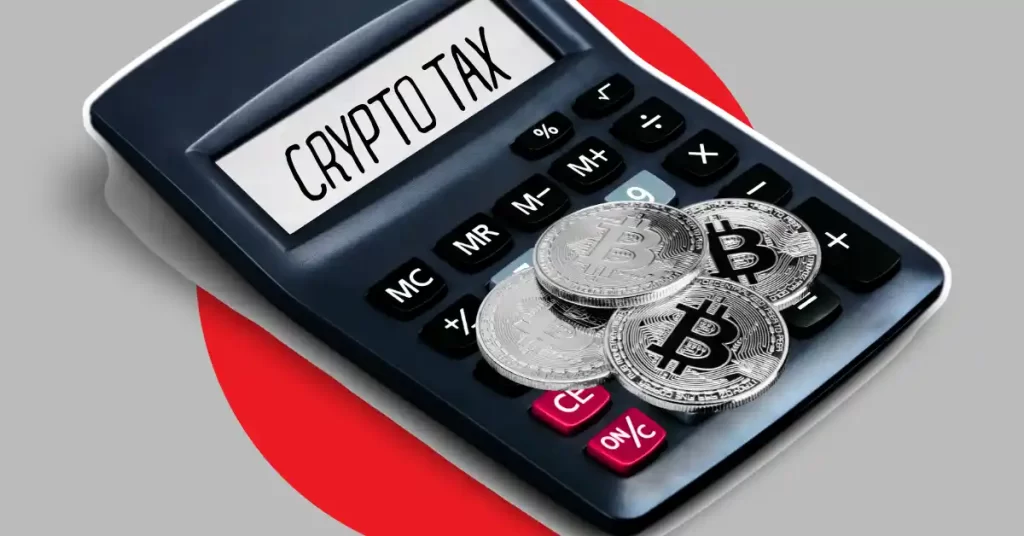
Japan to Introduce 20% Crypto Tax in 2027 Under New FSA Proposal

Japan to Introduce 20% Crypto Tax in 2027 Under New FSA Proposal

The post Japan to Introduce 20% Crypto Tax in 2027 Under New FSA Proposal appeared first on Coinpedia Fintech News Crypto Regulation News: Japan is preparing a major crypto tax change. The government now supports a flat 20% tax on crypto profits, the same rate used for stocks. This is a big shift from today’s system, where taxes can reach 55%. The goal is to simplify rules, reduce the burden on investors, and modernize Japan’s …

Author: CoinPedia