NFT

NFTs are unique digital identifiers recorded on a blockchain that certify ownership and authenticity of a specific asset. Moving past the "PFP" craze, 2026 NFTs emphasize utility, representing everything from IP rights and digital fashion to RWA titles and event ticketing. This tag explores the technical standards of digital ownership, the growth of NFT marketplaces, and the integration of non-fungible tech into the broader Creator Economy and enterprise solutions.

12770 Articles
Created: 2026/02/02 18:52
Updated: 2026/02/02 18:52
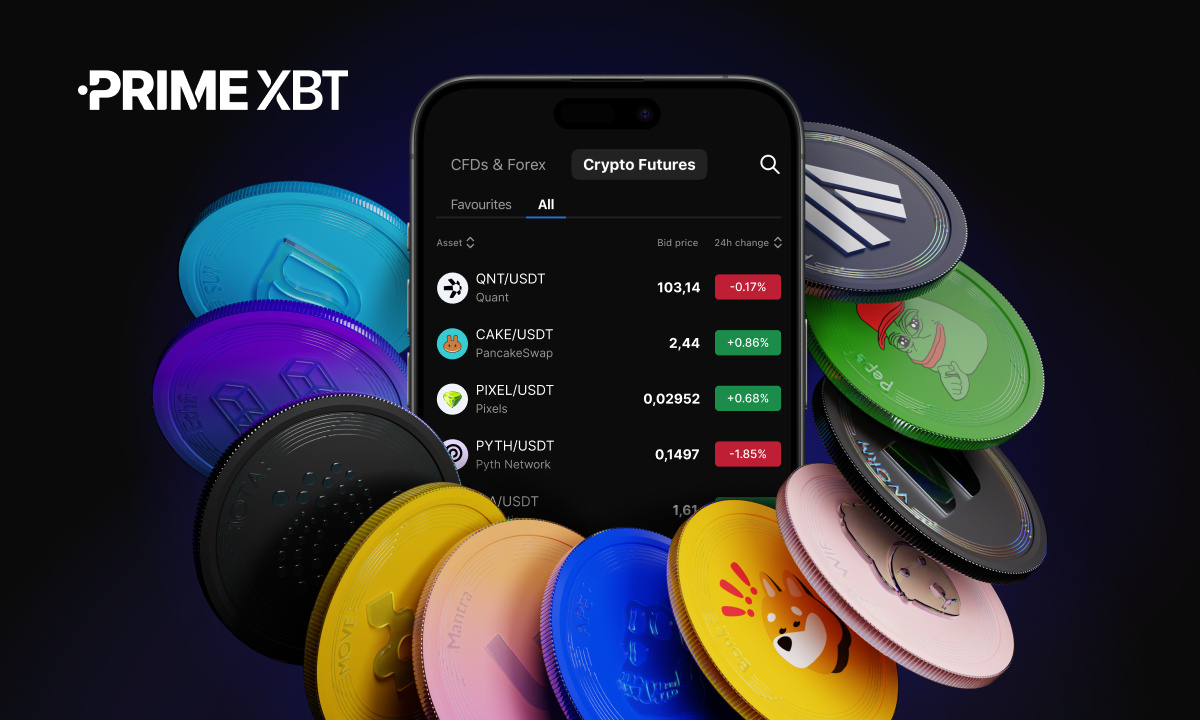
PrimeXBT Expands Crypto Futures with 101 New Coins, Delivering Best-in-Class Trading Conditions

PrimeXBT Expands Crypto Futures with 101 New Coins, Delivering Best-in-Class Trading Conditions

Castries, Saint Lucia, 22nd September 2025, Chainwire

Author: Blockchainreporter
Why Crypto Market is Down Today? BTC Rejection at $117k, ETH Hit by Liquidations

Why Crypto Market is Down Today? BTC Rejection at $117k, ETH Hit by Liquidations

The post Why Crypto Market is Down Today? BTC Rejection at $117k, ETH Hit by Liquidations appeared on BitcoinEthereumNews.com. The post Why Crypto Market is Down Today? BTC Rejection at $117k, ETH Hit by Liquidations appeared first on Coinpedia Fintech News The cryptocurrency market is ailing under pressure today, with the market cap dropping 1.95% to $3.96 trillion. Trading volume stands at $135.69 billion, reflecting reduced participation compared to recent sessions. Bitcoin dominance has edged higher to 57.6%, while Ethereum holds 13.1%. The Altcoin Season Index stands at 67/100, indicating a partial rotation into BTC. Sentiment remains muted, with the Fear & Greed Index at a neutral 47, while the average crypto RSI at 36.18 suggests the broader market is in oversold territory. Why the Market is Falling? The decline comes from a mix of regulatory pressure, leveraged positioning, and weakness across major altcoins. Regulatory Pivot \Markets reacted negatively to the SEC’s updated ETF guidelines issued on September 21. While they clarified the framework for crypto funds, the stricter compliance checks weighed on sentiment, especially for altcoins. In parallel, the U.S. Treasury opened a comment period for the GENIUS Act, which may impose reserve rules on stablecoins. These updates raised caution about XRP and Solana ETF approvals expected later this year. Traders are closely watching the SEC’s ruling on Grayscale’s multi-asset ETF due by September 30. Derivatives Overhang Perpetual open interest surged 18% to $929.3 billion, while futures hit $3.9 billion. However, funding rates turned slightly negative at -0.0038%, pointing to excessive long leverage. This set the stage for a flush-out. The correlation between Bitcoin and Nasdaq-100 dropped to 0.55, weakening macro support. Analysts warn that a break below the $3.93T total market cap level (50-day EMA) could trigger further algorithmic selling. Source: CoinGlass Altcoin Weakness Altcoins are bearing the brunt of today’s move. Dogecoin slumped 7.5% as whale accumulation couldn’t offset retail selling. OpenLedger plunged 15% following an…

Author: BitcoinEthereumNews
Pi Network Price Prediction: Can PI Bounce Back Above $0.40 As KYC & Mainnet Migration Speed Up?

Pi Network Price Prediction: Can PI Bounce Back Above $0.40 As KYC & Mainnet Migration Speed Up?

The post Pi Network Price Prediction: Can PI Bounce Back Above $0.40 As KYC & Mainnet Migration Speed Up?  appeared on BitcoinEthereumNews.com. Pi Network price prediction is drawing investors’ attention. With current community-driven mobile mining model and ongoing mainnet migration, there are hopes of a rebound that could be above $0.40. Amid a potential PI resurgence, investors are also eyeing Layer Brett ($LBRETT), a presale meme coin at $0.0058 for its projected 100x returns.  While PI Network’s grassroots momentum builds, Layer Brett’s Ethereum Layer 2 technology and fast rising adoption could outshine PI’s recovery in 2025. PI Network has captivated millions with its smartphone-based mining, making crypto accessible without energy-intensive hardware. As a result, (PI),has built a massive following through its unique approach to mining via smartphones. The network is preparing for its mainnet launch, which could drive adoption and increase PI’s value. Trading around $0.35 in pre-mainnet estimates, the Pi Network price prediction hinges on its mainnet migration and KYC advancements, which is expected to streamline user verification for broader exchange listings. Data shows growing wallet activity, with over 13 million users engaged, signaling strong community support. Analysts now forecast PI to climb above $0.40 by mid-2026. If mainnet rollout succeeds and listings expand, PI could rise as high as $0.50-$1.00, driven by adoption in everyday transactions. However, delays in migration or regulatory hurdles could temper gains, making PI a steady but not explosive bet compared to high-beta alternatives. Layer Brett: The Meme Coin Powerhouse Layer Brett ($LBRETT) is stealing the spotlight as the top crypto to buy, priced at $0.0058 in presale. Built on Ethereum’s Layer 2 infrastructure, it offers fast transactions, low fees, and staking rewards, blending meme coin virality with scalable tech for NFTs and community governance. Unlike many others, Layer Brett’s technical foundation supports scalable applications, from NFTs to community projects, giving it staying power Onchain metrics show whale accumulation and presale sellouts, reflecting breakout potential. Analysts…

Author: BitcoinEthereumNews
Why Vitalik Thinks Low-Risk DeFi Could Be Ethereum’s Secret Weapon

Why Vitalik Thinks Low-Risk DeFi Could Be Ethereum’s Secret Weapon

TLDR Vitalik Buterin believes low-risk DeFi could serve as Ethereum’s stable revenue source, similar to how Google Search funds Google’s other ventures He sees low-risk protocols like stablecoin lending as a way to balance profit generation with Ethereum’s founding values Current stablecoin lending yields around 5% for blue-chip assets, providing reliable returns without high speculation [...] The post Why Vitalik Thinks Low-Risk DeFi Could Be Ethereum’s Secret Weapon appeared first on CoinCentral.

Author: Coincentral
Which Is The Best Crypto To Buy Now: Pepeto VS BlockDAG VS Layer Brett VS Remittix VS Little Pepe

Which Is The Best Crypto To Buy Now: Pepeto VS BlockDAG VS Layer Brett VS Remittix VS Little Pepe

The post Which Is The Best Crypto To Buy Now: Pepeto VS BlockDAG VS Layer Brett VS Remittix VS Little Pepe appeared on BitcoinEthereumNews.com. The post Which Is The Best Crypto To Buy Now: Pepeto VS BlockDAG VS Layer Brett VS Remittix VS Little Pepe appeared first on Coinpedia Fintech News Are you searching for the best crypto to buy now, in 2025? Presales have the power to transform portfolios quickly turning small investments into big gains and can change lives overnight. But they’re also risky, so this guide begins with proof, not hype or empty promises. Today, we evaluate Pepeto (PEPETO), BlockDAG, Layer Brett, Remittix, and Little Pepe examining how they compare now based on the main criteria that matter: the team’s vision and dedication, what features are live today, independent audits, transparent tokenomics, and actual utility. You’ll see where decentralized exchanges and bridges are operational, which Layer 2 claims are credible, who has PayFi infrastructure, staking features, and upcoming listing plans so your decision on the best crypto to buy now is driven by facts, not hype. Pepeto, The Meme Coin on Ethereum, Built To Revolutionize The Memecoins Market Unlike old memecoins that rode pure hype at launch, Pepeto is built like a project with a mission. The team treats this as legacy work, shipping fast, polishing details, showing up for the community, and pushing forward every week. Where earlier cycles wrote the first chapters, Pepeto aims for the full package: a hard capped design, including PepetoSwap a zero-fee exchange where every trade runs through the Pepeto token, guaranteeing real usage instead of artificial buzz. Already 850+ projects have applied to list, a strong signal for future volume. A built-in cross-chain bridge adds smart routing that unifies liquidity, cuts extra hops, reduces slippage, and turns usage into steady token demand. Because every swap touches the PEPETO token, it’s very hard for the coin’s price not to rise aggressively in the coming years.…

Author: BitcoinEthereumNews
Scamcoin’s radical transparency: How a memecoin built trust by telling the truth

Scamcoin’s radical transparency: How a memecoin built trust by telling the truth

The post Scamcoin’s radical transparency: How a memecoin built trust by telling the truth appeared on BitcoinEthereumNews.com. contributor Posted: September 22, 2025 Crypto has always lived in the tension between promises and delivery. Projects discuss disrupting industries, releasing ambitious roadmaps, and unlocking new utilities. Too often, those promises fade, leaving holders frustrated. Scamcoin ($SCAM), a memecoin on Solana, chose another path. From the first day, it told the truth: it called itself “the only crypto honest enough to call itself a scam.” That honesty, with precise supply numbers and a strong community, has turned a parody into a market story. A transparent start When Scamcoin launched in August 2025, it did not sell itself as the next big platform. It started trading at just $0.0001894. Less than a month later, on September 18, it reached an all-time high of $0.001399, a surge of more than 600% in under four weeks. The growth was supported by a simple fact: the full supply is already in circulation. With 999.95 million tokens live, no hidden allocations or future unlocks exist. Everyone who buys SCAM knows they are entering on equal terms. Honesty as a shield In crypto, accusations can break a project. FUD — fear, uncertainty, and doubt — spreads fast. But Scamcoin turned that weakness into protection. By calling itself a scam, the word was meaningless as an attack. What others would hide, SCAM put in its name. That radical honesty struck a chord. Instead of waiting for a roadmap that may never be delivered, the community rallies around the one promise SCAM can make: to be exactly what it says it is. Culture as value The statistics tell one part of the story. The culture tells the rest. On Twitter (X), hashtags like #Scamcoin fill timelines with memes and jokes. On Telegram, the groups are buzzing with holders who enjoy being part of a shared parody. This community…

Author: BitcoinEthereumNews
Dogecoin and Shiba Inu Bulls Nervous As Analysts Call Layer Brett The Only 100x Meme Play Left This Cycle

Dogecoin and Shiba Inu Bulls Nervous As Analysts Call Layer Brett The Only 100x Meme Play Left This Cycle

The post Dogecoin and Shiba Inu Bulls Nervous As Analysts Call Layer Brett The Only 100x Meme Play Left This Cycle  appeared on BitcoinEthereumNews.com. Dogecoin (DOGE) and Shiba Inu (SHIB) are two meme coins that are increasingly popular among crypto investors. The wild rides in 2021 is one many analysts still point to as a reference for meme coin speculative potentials. But in recent years, both DOGE and SHIB are growing uneasy. Their price trajectory is stalled and not as attractive as wished.  In their place, Layer Brett ($LBRETT) at a presale of $0.0058 is emerging as the top meme coin to buy with over $3.9 million sold already. While Dogecoin (DOGE) and Shiba inu (SHIB) hold strong communities, Layer Brett’s Ethereum Layer 2 technology and viral momentum are stealing the spotlight, promising explosive returns that could outpace the established meme giants. Dogecoin: The Meme Coin Veteran Dogecoin (DOGE), the original meme coin, continues to thrive on its global brand and endorsements from figures like Elon Musk. Trading at around $0.26 with a $40 billion market cap, DOGE benefits from its use in tipping and microtransactions, bolstered by recent ETF speculation. Recent data shows steady retail accumulation, which reflects its enduring appeal.  Analysts also predict DOGE could reach $0.50-$1 by 2026, a 3-5x gain, if institutional inflows materialize. However, Dogecoin’s (DOGE) massive supply and reliance on hype limit its explosive potential, leaving bulls nervous as newer tokens promise higher multiples in this cycle. Shiba Inu: Building Beyond the Meme Shiba Inu (SHIB) has evolved from a meme token to a robust ecosystem with Shibarium. Its Layer 2 network supports DeFi, NFTs, and metaverse projects. With around a $7 billion market cap, SHIB’s growth is driven by token burns and adoption.  Increasing Shibarium transactions reveal widespread utility. Forecasts suggest SHIB hitting $0.00005-$0.0001 by 2026, a 3-5x upside. Despite its progress, Shiba Inu’s (SHIB) trillion-token supply caps rapid gains, fueling anxiety among bulls as analysts pivot…

Author: BitcoinEthereumNews
Looking for the 6 Top Meme Coins to Invest in This Week? One Presale Shows 7,000%+ ROI

Looking for the 6 Top Meme Coins to Invest in This Week? One Presale Shows 7,000%+ ROI

The post Looking for the 6 Top Meme Coins to Invest in This Week? One Presale Shows 7,000%+ ROI appeared on BitcoinEthereumNews.com. Crypto News 22 September 2025 | 08:15 Crypto isn’t just trading anymore—it’s a meme-fueled circus where even fart jokes can turn into million-dollar plays. Fartcoin ($FARTCOIN) keeps proving that bathroom humor has financial bite, Degen ($DEGEN) thrives as the gambler’s token, and BullZilla ($BZIL) is smashing through its presale like a kaiju stomping skyscrapers. Add Gigachad ($GIGA) flexing as the internet’s alpha meme, and the lineup gets even juicier. Together, they’re showing why traders are scrambling for the top meme coins to invest in this week. BullZilla ($BZIL) is roaring the loudest with its presale live in Stage 3 (404: Whale Signal Detected), Phase 4. Every $100,000 raised or every 48 hours triggers an automatic price hike, keeping FOMO levels sky-high. With ROI at 6,565.92% from today’s stage to listing and over $530,000 already raised, it’s a ticking time bomb of opportunity. Every minute delay means a smaller bag at a higher price—so hesitation could be brutal. 1. BullZilla ($BZIL) BullZilla’s presale is a spectacle in itself, designed to punish hesitation and reward conviction. Its Mutation Mechanism ensures the price never stalls, rising automatically whether from investor demand or the march of time. That mechanic is why analysts consistently rank it among the top meme coins to invest in this week. At Stage 3-4, BullZilla trades at $0.00007908. Over $530,000 has been raised, 27 billion tokens are gone, and more than 1,700 holders are roaring in unison. The early hype was explosive: 3 billion tokens vanished in just four hours, while $39,000 was raised in the first 24. ROI numbers are jaw-dropping—1,275.30% for the earliest participants, and 6,565.92% projected from today’s stage to the $0.00527 listing. That’s not hopium, that’s structured math backed by tokenomics that keep feeding the fire. Take a $1,000 investment at current prices, and it lands…

Author: BitcoinEthereumNews
Hyperliquid's success and hidden dangers

Hyperliquid's success and hidden dangers

I've been really busy lately and can't write a 10,000-word research report any more. I'll try to change my writing style and just state my opinions and reasoning. Please forgive me, dear readers. 1. Research Background I have recently researched almost all the Perps (perpetual trading platforms) on the market. The five-fold growth of the hype market proves once again that when I first researched it last year, I still overlooked its core value. Moreover, recently aster, antex, dydxV4, and even Sun Ge's sunPerps, which shook the track, have gradually brought the Perps track into a period of explosive growth. Furthermore, major exchanges are vying to list Hyper and its perpetual trading capabilities. Yesterday, news broke that Metamask, following Phantom, is planning to integrate Hyper's perpetual trading capabilities. Circle has also become a validator, addressing concerns about its core decentralization. Hyperliquid itself is also striving to improve its openness, particularly with the gradual rollout of HyperEVM and HIP2/3/4. 1.1 Three Elements of the New Track At this point, Perps basically has the three key elements of a new track. In fact, if we look back at any huge track wave in history, we can see that it is often the new leading platform, new wealth opportunities, and new narrative background. The trend gathering will bring about peaks, while the subsequent platform's airdrop strategy, the gradual development of platform complexity, and the decline in user perception of freshness will gradually bring about troughs. This process has actually gone through many waves. The typical scenarios are as follows. The following modules have been analyzed in the previous public account articles of "Fourteen Gentlemen". If you are interested, you can check it out yourself: The ICO craze of 2017 was centered on the CEX platform. It's a basic necessity, uncontroversial, and many are doing very well now. In the summer of DeFi in 2021, the corresponding platforms are Uniswap, lending and stablecoins, as above. NFTs, which have been around for 22 years, actually have protocols that existed long before, but only reached their peak thanks to OpenSea. The root of this was pricing through transactions, which then led to dissemination based on price. Its decline stemmed from arrogance, with its airdrop strategy and royalties leading to a death spiral of price increases, a self-inflicted consequence. The 23-year-old inscription, corresponding to the platform Unisat, was ultimately driven by short-sightedness. At its peak, it focused on asset issuance, not application development, resulting in a short lifespan for its narrative. When other new narratives emerged, RWA and perps dominated attention, hindering the recent Alkanes and BRC2.0 from regaining their popularity. This is a self-inflicted failure. The 24-year meme and the corresponding pump platform, as well as this year's dark horse Axiom, have made this wave exceptionally long-lasting. This is due to the advantages of the chain itself in terms of transactions, the constant influx of people who are interested in trading, and the new users brought by the wave of compliance, which has enhanced the life cycle. Finally, in 25 years, there are both RWA (focused on stocks) and Perps (led by hyperliquid). 2. Understanding the key steps in the development of hyperliquid 2.1 Current Development Status Objectively speaking, the system remains relatively centralized, theoretically capable of being disrupted by unplugging the network. Furthermore, hacker funds are siphoned off, creating significant obstacles for many exchanges in terms of compliance and attracting significant attention. However, the data is highly contradictory. Hyperliquid currently has about 10,000 to 20,000 daily active users, out of a total user base of about 600,000. A core group of 20,000 to 30,000 of these users contributes nearly $1 billion in revenue, a significant portion of which comes from the United States. The cumulative trading volume has exceeded 3 trillion US dollars, and the average daily trading volume has reached nearly 7 billion US dollars. Currently supports Perps trading of more than 100 assets. Looking at his data in this way, I can only say that it is really great. Although the number of users seems small, they are the group that can make the most money. 2.2 Major Updates and Interpretations The specific timeline is as follows March 25: HyperCore and HyperEVM were connected, theoretically allowing users to trade core tokens from the EVM (trading only at the time). April 30: Launched the read precompile feature, enabling HyperEVM smart contracts to read state from HyperCore. May 26: Small block time halved to 1 second, increasing the throughput of HyperEVM. June 26: The HyperEVM block was updated to remove the previous ordering of only published orders to improve integration with HyperCore. On July 5, HyperEVM updated a new precompiler called CoreWriter. This enables HyperEVM contracts to be written directly into HyperCore, including functions such as placing orders, transferring spot assets, managing treasury bonds, and staking HYPE. Recently, Builder core and Hip4 have also entered the data prediction market. This step of entry was completely unexpected by the market. This also means that the founders have very unique ideas in thinking about the pain points of the industry, which often leads to polarization of the platform. How do you understand this series of updates? First, compared to last year, Hyperliquid now has open core order operation capabilities. HyperEVM In particular, the dual-chain architecture based on EVM has an outrageous logic. Under the premise that HyperCore is not open (cannot be deployed), a large number of pre-compiled contracts are added through HyperEVM and connected to HyperCore. In theory, it has the access basis of wallets (phantom, metamask) and exchanges, and can theoretically realize EVM transaction operations to execute Core's order asset trading and other capabilities. The official picture shows the positioning of hyperEVM in the system It can be seen that HyperCore and HyperEVM writes and reads are uniformly confirmed by HyperBFT. The specific mechanism of the validator's confirmation information mechanism is not public, and there is no cross-chain bridge or delayed synchronization. The dynamics that can be seen through on-chain transactions are that HyperEVM can affect HyperCore by executing writes through the system contract (0x333…3333, CoreWriter.sendAction(...)), which can perform order placement, liquidation, and lending operations. The status (of the previous block) fed back by HyperCore can be read by the smart contract of HyperEVM. User data — positions, balances, and vault information Market Data — Mark Price and Oracle Price Staking data — delegation and validator information System data - L1 block count and other core metrics The information is essentially received by the EVM system contract, which generates corresponding receipts or events and records them. And in the EVM, the precompiled contract (0x000…0800) can call perp positions or oracle price (oraclePx) Secondly, the implementation of hip2 and hip3 is changing the platform positioning of Hyperliquid. Hyperliquidity This is an on-chain liquidity mechanism built into Hypercore. It automatically places buy and sell orders based on the current price of the token, maintaining a narrow spread of approximately 0.3% without manual intervention. This mechanism allows for native-level liquidity insertion operations built into the block logic without AMMs or third-party bots. For example, when the PURR/USDC spot market launched, Hyperliquidity immediately issued seed transactions with initial depth, allowing real trading before normal user liquidity arrived. Builder core This mechanism is highly valuable for the future, allowing DeFi builders (developers, quantitative teams, and aggregators) to collect additional fees as service revenue when placing orders on behalf of users. The application scenario for this system is clear, and it represents a move to open up profits and embrace ecosystem co-construction. **Quantitative strategy hosting, **The quantitative team helps users place perp position orders and collects management fees through builder fees, forming a compound profit model of "revenue sharing + builder fee" Aggregators/transaction routers, such as 1inch and Odyssey, integrate perp trading services on Hyperliquid and can charge builder fees as a routing revenue model. The initial launch has already brought over 10 million US dollars in dividend income to some projects, which shows the effect of hyper funds being deeply deposited at the platform level. In fact, the issue of opening up depth is not just Hyper. The previous Uniswapv4 also wanted to do this through hooks, but v4 did not take off, and most users are still accustomed to v2 and v3. This may be the influence of having less historical baggage and stronger centralized decision-making. 3 Summary and Comments 3.1 There are many advantages. Let’s go through them one by one. Hyperliquid's primary advantage was its strong early product capabilities, which stemmed from addressing two user pain points: The trading needs of non-compliant users are actually even more rare in this year's wave of compliance. Advanced trading users demand high leverage and high transparency. The former brings KOL exposure, while the latter is often ignored by market incumbents, that is, the dark under the light, thus catching many CEXs off guard. The second is the team background itself. Its biggest advantage here is that it has a small number of people, so the communication gap, wear and tear, and labor efficiency are all very high. With an overall staff of more than a dozen people, excluding 3-4 product operation BDs and deducting the front-end and back-end, it means that only 3-4 people can build a high-performance chain of 20Wtps. Compared with many blockchain teams of traditional large companies, which can also produce a lot of palace fighting dramas, it is much better. In the background, his market maker foundation started in 2020 actually brought good initial depth. He also felt in many details that his matching logic and other order book systems are not simply settled gradually by time and amount. However, the data is insufficient, so I will supplement it later when I do comparative analysis of multiple Perps. Then there's the trend. General projects need to adapt to the market, but when a platform reaches its peak popularity, the market can adapt to it. This is the treatment Hyperliquid is receiving now. On the one hand, the openness of the aforementioned updates creates space for diverse ecosystems to enter. This contrasts with many previous platforms, which often prioritized doing everything themselves, reaping all the benefits, single-handedly criticizing OpenSea, and even imposing mandatory royalty systems, forcing the market to follow the leading platform. Each of these platforms incurs high, fixed costs, interfering with the flow of goods and affecting market pricing, ultimately becoming a family heirloom. In Hype, he opened up EVM and all kinds of DEX PEPS APIs, so soon a bunch of derivatives appeared on the market. Hyperliquid's generosity can also be seen in the airdrop. It was impossible for it to take the compliance route from the beginning. Therefore, he will not try to embrace the so-called expectations of going public, so he will naturally release the profits. Then he will pledge the hype back through the HLP mechanism, release the profits and make profits again, so that the official tokens can be dispersed and the market will gain the most valuable decentralized evaluation and reputation. Its openness has attracted market acclaim. Phantom first integrated its perps capabilities from the perspective of a decentralized wallet. This is not difficult, mainly due to the large amount of adaptation and development costs. Recently, there are rumors that Metamask is also integrating it. From this we can also see that those decentralized wallets that have not been updated for more than half a year have also learned to seize the annual narrative after missing the inscription. Finally, he pushed for the introduction of giants such as Circle to join as validators to bring decentralized security and fill his decentralization gap, so that highly compliant CEX platforms also had the opportunity to access. 3.2 Disadvantages After the most challenging initial phase, the next issue is compliance. Even pure DEXs like Uniswap are embracing compliance, not to mention the European and American Hyperliquid, whose users have also made their fortunes. If a platform is deemed non-compliant or otherwise severely errs, existing CEX/Wallet partnerships will be severed, and former allies will part ways. In addition, the subsequent development of this system will also face the problem of development complexity. Most projects become more and more complicated as they are written, and it is difficult to simplify them and return to the first principles. In the end, novice users cannot understand how to use them and lose fresh blood. Finally, there's the single-point risk. The current claimed 20Wtps, if accessed by multiple global platforms, would create numerous information inconsistencies, placing immense pressure on the core hyperCore module. Building this high performance takes time. The official market maker background may not be able to handle the volume, and if multiple outages trigger liquidation issues (similar to the short squeeze incident in March), this could lead to significant downtime. The reputation that is accumulated with great difficulty is inherently fragile.

Author: PANews
Layer-1 Comparison And Best Crypto To Buy Today

Layer-1 Comparison And Best Crypto To Buy Today

The post Layer-1 Comparison And Best Crypto To Buy Today appeared on BitcoinEthereumNews.com. Ethereum and Solana are still at the forefront of discussions within this blockchain sector. Consequently, these Layer-1 blockchain solutions are on track to become the best-performing crypto assets of 2025. Moreover, due to their institutional and retail adoption, they are worthy of investors’ attention. Following these two Layer-1 giants, MAGACOIN FINANCE has emerged as a breakout altcoin. It combines scarcity with community-driven growth and a Hashex-audited smart contract attracting investors. According to the latest market updates, ETH continues to draw in institutional inflows in large part due to ETF anticipation and significant network adoption across DeFi and enterprise applications. Meanwhile, Solana is witnessing significant whale accumulation and developer activity, indicating confidence in its capacity to accommodate large-end applications and scalable decentralized developments. The rivalry of Ethereum vs Solana is creating a conducive environment for investors assessing Layer-1 fundamentals and emerging altcoins with breakout potential. Ethereum Market Overview Ethereum has strong technical fundamentals and will continue to dominate with adoption. Price pullbacks now tend to halt near $4,400–$4,500 with resistance forming around $4,600–$4,800. ETF-related inflows are adding to liquidity and strengthening institutional investor confidence. Through increasing smart contract adoption and Layer-2 scaling solutions, Ethereum’s ecosystem has become attractive to retail traders. Long-term holders may appreciate ETH as it continues to prove itself as a digital asset with strong store-of-value potential. Solana Market Overview Solana is still seeing advantages from its low fees, fast processing speeds and expanding developer ecosystem. The price currently finds short-term support around $230–$240, with resistance appearing in the $250–$260 range. If adoption continues and whales accumulate, further upside could emerge. Many analysts feel Solana possesses qualities that make it a strong Layer-1 competitor, especially in applications where DeFi and NFTs are concerned. Since these qualities have become widely known, more institutions have started to notice the blockchain.…

Author: BitcoinEthereumNews