RWA

RWA (Real World Assets) refers to the tokenization of tangible assets—such as real estate, private credit, and government bonds—on the blockchain. By bringing traditional financial instruments on-chain, RWA protocols like Ondo and Centrifuge provide DeFi users with stable, real-yield opportunities. In 2026, the RWA sector is a multi-trillion-dollar bridge between TradFi and DeFi, enabling fractional ownership and global liquidity for previously illiquid assets. Follow this tag for insights into on-chain credit markets, regulatory compliance, and asset-backed security innovations.

43115 Articles
Created: 2026/02/02 18:52
Updated: 2026/02/02 18:52
Ripple Expands RLUSD DeFi Utility With Aave Horizon Integration

Ripple Expands RLUSD DeFi Utility With Aave Horizon Integration

The post Ripple Expands RLUSD DeFi Utility With Aave Horizon Integration appeared on BitcoinEthereumNews.com. Key Notes Ripple’s RLUSD has found a crucial role to play in the Aave Horizon Real World Asset (RWA) platform. The stablecoin would ensure that tokenized products are utilized as collateral. RLUSD’s market capitalization is currently pegged at $85.9 million on the XRP Ledger, per data from the XRP market. Ripple’s USD-pegged stablecoin RLUSD has secured a strong position in the Aave Horizon Real World Asset (RWA) platform, which was launched recently by Aave Labs. According to the published statement from the company, RLUSD is joining the project to enable “a new era of efficiency for on-chain finance.” RLUSD in Aave Horizon RWA Market Horizon is a new institutional lending platform by Aave Labs, designed to facilitate the use of tokenized products as collateral. This is another strategy of bridging the gap between Traditional Finance (TradFi) and Decentralized Finance (DeFi) systems. Ripple’s RLUSD has been integrated into this initiative as a very important component. Enabling a new era of efficiency for onchain finance.$RLUSD is a crucial piece of @Aave‘s Horizon platform, allowing tokenized products to be used as collateral and flow more efficiently across markets. https://t.co/KC0D8Wi4zp — Ripple (@Ripple) August 27, 2025 Reece Merrick, Managing Director of Middle East and Africa at Ripple, highlighted this feat, noting that it is “great” to see the stablecoin “play a big role” in Aave Horizon. At the core of RLUSD’s responsibilities is ensuring that tokenized products are utilized as collateral. Moreover, it would allow the free and efficient flow of liquidity across digital markets. Together, Aave and Ripple have lauded the importance of this launch, describing it as a crucial step towards rolling out institutional-grade products into open finance. The Horizon RWA market has gone live on Ethereum, per the announcement made by Aave Labs. As a result, investors can earn yield from…

Author: BitcoinEthereumNews
Best Crypto to Buy Now While Bitcoin (BTC) is Still Under $120,000

Best Crypto to Buy Now While Bitcoin (BTC) is Still Under $120,000

While Bitcoin (BTC) remains below $120,000, market experts hold their breaths waiting to see where the next big wave will come from. One of the newcomers on the list trending today among investors is Mutuum Finance (MUTM), a rising DeFi protocol. Mutuum Finance stage 6 of presale is now underway at the price of $0.035. […]

Author: Cryptopolitan
New Institutional Blood for DeFi! AAVE Launches New Platform Supporting Ripple (XRP) and Many Altcoins!

New Institutional Blood for DeFi! AAVE Launches New Platform Supporting Ripple (XRP) and Many Altcoins!

The post New Institutional Blood for DeFi! AAVE Launches New Platform Supporting Ripple (XRP) and Many Altcoins! appeared on BitcoinEthereumNews.com. As innovations continue in the cryptocurrency sector, the latest news comes from Aave Labs. The company behind Aave, the largest lending and borrowing platform in the decentralized finance sector, has officially launched its new enterprise platform, Horizon. According to Coindesk, thanks to Horizon, Aave Labs’ platform designed for enterprise companies, institutions will be able to obtain loans with stablecoins by using real-world assets (such as tokenized U.S. bonds), also known as RWA, as collateral. Initially, institutions will be able to borrow Circle’s USDC, Ripple’s RLUSD, and Aave’s GHO against a range of tokenized assets. The aim of the platform is to provide qualified institutional investors with short-term financing opportunities through RWA assets and enable them to implement return strategies. “Horizon provides the infrastructure and deep stablecoin liquidity institutions need to operate on-chain, unlocking 24/7 access, transparency, and more efficient markets,” Aave Labs founder Stain Kulechov said in a statement. Organizations investing in and supporting Horizon include major companies like Chainlink (LINK), Ethena (ENA), OpenEden, Ripple, Circle, Securitize, VanEck, and WisdomTree. These companies will support and oversee Horizon’s technical infrastructure, liquidity, tokenized assets, and regulatory compliance. *This is not investment advice. Follow our Telegram and Twitter account now for exclusive news, analytics and on-chain data! Source: https://en.bitcoinsistemi.com/new-institutional-blood-for-defi-aave-launches-new-platform-supporting-ripple-xrp-and-many-altcoins/

Author: BitcoinEthereumNews
ChatGPT Believes Solana (SOL) Price Has Already Topped This Cycle, But Says This New Coin’s Run Is Just Starting

ChatGPT Believes Solana (SOL) Price Has Already Topped This Cycle, But Says This New Coin’s Run Is Just Starting

The post ChatGPT Believes Solana (SOL) Price Has Already Topped This Cycle, But Says This New Coin’s Run Is Just Starting appeared on BitcoinEthereumNews.com. The cryptocurrency world is abuzz, with Solana (SOL) hitting impressive highs; yet, a new contender is quietly stealing the spotlight, preparing for what many believe could be the next epic run.  Forget chasing past pumps; while the Solana price has been remarkable, smart money is looking towards the presale of Layer Brett (LBRETT), a pioneering Ethereum Layer 2 memecoin that promises much more than just hype. This is a genuine disruptor, offering tangible utility and jaw-dropping potential, unlike many of its predecessors that lack utility. Why Layer Brett isn’t your average memecoin Remember the days of Dogecoin and Shiba Inu? Pure meme power, no real tech backing. Even more recent entrants, such as Pepe or Bonk, while capturing attention, often struggled with scalability or lacked an inherent purpose beyond virality.  The original Brett token, for example, originated on Base, but Layer Brett has taken that concept and forged an entirely new path, built on a robust Layer 2 blockchain. This latest iteration isn’t content to simply ride the wave; it’s creating one. Solana price is skyrocketing, but Layer Brett has captured the market’s attention While the Solana price continues to impress, commanding significant market capitalization, investors are increasingly eyeing lower-cap opportunities with higher upside. Layer Brett offers an enticing blend of meme culture and serious blockchain innovation.  This next-generation altcoin leverages the security of Ethereum while delivering lightning-fast transactions and drastically reduced gas fees, a stark contrast to the often congested and costly Layer 1 experience.  That’s something even a powerhouse like Solana can’t always promise during peak network activity. This isn’t just a simple DeFi coin; it’s the next big crypto, poised for explosive growth. What sets Layer Brett apart? Plenty. They include: Built on Ethereum Layer 2: Enjoy high-speed transactions and pennies for gas fees. Huge Staking Rewards:…

Author: BitcoinEthereumNews
Bitcoin And The September Curse: Can This Time Be Different?

Bitcoin And The September Curse: Can This Time Be Different?

Bitcoin heads into the final days of August with choppy, two-way trade and a familiar seasonal question hanging over it: will September once again be a drag—or a reset into Q4 strength? As of Wednesday, August 28, BTC hovers near $112,900 after a stop-start month that has bulls and bears circling the same range rather than breaking conviction. Macro expectations, market positioning and Bitcoin’s own statistical quirks now converge in a narrow window before the Federal Reserve’s September policy meeting, making the next few weeks unusually consequential. The Fed’s rate-setting FOMC convenes September 16–17, and futures markets currently price a high probability of a cut, though officials continue to emphasize data-dependence. Bitcoin’s September Seasonality Seasonality is the first prism through which traders are reading the tape. Daan Crypto Trades captured the prevailing mood on X, noting a “choppy August” and pointing to a historical oddity: “During BTC’s history it has never closed both August & September in the green.” He added a pragmatic caveat about why this matters at all: “Whether you believe in seasonality or not, the thing that matters is if a lot of others do. And if enough people do, it can work as a self-fulfilling prophecy.” Related Reading: Bitcoin Selloff: $2.2 Billion In BTC Floods Exchanges Independent datasets support the caution around September. CoinGlass-based compilations show that across the past 12 years, September has delivered an average negative return for BTC of roughly 3.8%, making it the worst month on the calendar. By contrast, Q4—and especially October and November—has historically outperformed on average, a profile that helps explain why traders often look to buy late-Q3 weakness. However, there is a silver lining. Across Bitcoin’s history, September has closed in the green on four occasions—most notably in 2015 and 2016, and again in recent years. In 2023, BTC gained 3.9%, followed by a 7.3% rise in 2024. Anthony Pompliano offered a broader framing this week, starting with the simple, if stubborn, statistics: “September is actually the only month of the year that historically is negative.” He attributes the late-summer doldrums in part to investor behavior—“Everyone is on vacation… not in front of their screens”—and in part to unresolved macro questions from traditional finance. “There’s a lot of uncertainty still,” he said, even as “Jerome Powell has come out and said that he’s going to likely cut rates in September.” While markets have swiftly moved to price that outcome after the Jackson Hole speech, Fed officials have been careful to say the decision remains data-driven; major brokerages nonetheless shifted their base cases to a September cut following Powell’s labor-market warnings. Pompliano’s second theme is about the path higher. A straight line from last November’s ~$69,000 to six-figure prices, he argued, would risk a “very big dump on the other side.” Instead, the market “wants… some sort of correction and resetting,” flushing leverage and “setting a foundation of the price.” He sketched a broad consolidation band—“call it $125,00 to maybe $110,000”—before buyers return. Why is Bitcoin’s price going down? The answer is simpler than you think. pic.twitter.com/lYqbqQJO9R — Anthony Pompliano 🌪 (@APompliano) August 27, 2025 That sequencing rhymes with the way many systematic funds and discretionary crypto desks treat September: as a month to reduce risk into thin liquidity, then rebuild as Q4 flows approach. It also resonates with Daan Crypto Trades’ tactical lens: “Probably any larger dip in the next 1–2 weeks is the one to bid for the EOY bounce/rally to new all time highs in my opinion. We will see.” All Eyes On The Fed Macro timing could be the deciding factor. The FOMC’s September 16–17 meeting is now the key waypoint, with rate futures implying an ~85–90% chance of a cut and some odds of a second move by year-end. Related Reading: Bitcoin MVRV Compression Signals Pause – Market Digests Recent Volatility Chair Powell signaled at Jackson Hole that labor-market risks have risen even as inflation risks linger, a balance that has pushed several Wall Street houses to bring forward their easing timelines. At the same time, senior Fed officials have stressed that every meeting is “live” and contingent on incoming data—an important caveat for risk assets that have already leaned into the dovish narrative. If a cut materializes, the question for BTC will be whether it validates the existing bid or merely meets expectations and fades. This week’s immediate focus will fall on Friday’s release of the Personal Consumption Expenditures (PCE) price index—the Federal Reserve’s preferred gauge of inflation. The July PCE data will be published on August 29, providing policymakers and markets alike with a crucial read on both headline and core consumer price pressures. From there, attention will pivot to the next major cluster of inflation releases landing just days before the September FOMC. On Thursday, September 11, the Bureau of Labor Statistics will publish the Consumer Price Index (CPI) and the Producer Price Index (PPI) for August. These will represent the final inflation checkpoints before the Fed convenes on September 16–17, meaning they could decisively shape the tone of the meeting. At press time, BTC traded at $113,049. Featured image created with DALL.E, chart from TradingView.com

Author: NewsBTC
Deconstructing WLFI: A trinity of financial cornerstone, market game and macro narrative

Deconstructing WLFI: A trinity of financial cornerstone, market game and macro narrative

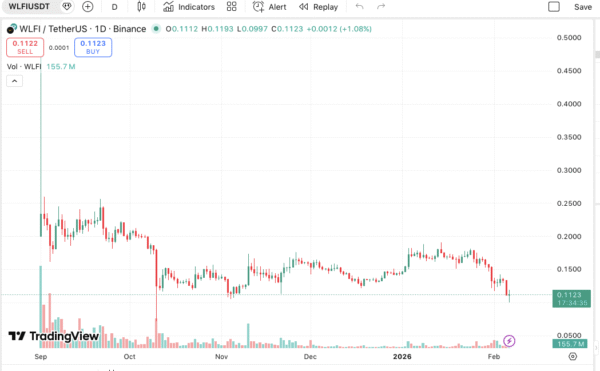
Author: Liu Ye Jinghong On the eve of the official trading launch of the WLFI (World Liberty Financial) token on September 1st, the market was gripped by a complex mix of enthusiasm, anticipation, and deep skepticism. Whether it was viewed as the "next 100x coin" poised to replicate its legendary success, or out of respect for history, cautioned against it becoming a "LUNA-style scam," these simplistic labels failed to capture WLFI's true essence. This article aims to propose and demonstrate a core point based on the official reserve attestation report issued by the world-renowned accounting firm Crowe LLP for its stablecoin USD1: WLFI is not a single-dimensional crypto project, but an unprecedented complex that operates on three different levels: Financial cornerstone layer: an audit-proven, structurally robust RWA (real-world asset) stablecoin system operated by a top institution (BitGo). Market Game Layer: A gaming field where centralized entities leverage asymmetric advantages (US$750 million in flexible funds) to conduct strategic manipulation. Value anchoring layer: a "compliance model" and grand narrative whose long-term value is deeply tied to top-level regulatory guidance. Only by breaking down these three layers one by one can we penetrate the noise of the market and objectively assess its true opportunities and risks. Part I: Financial Cornerstone Analysis – Audit-Verified Robustness and Risk Firewalls Any crypto project with a grand narrative must be built on a solid financial structure. This is particularly critical for an ecosystem that includes stablecoins. Fortunately, regarding USD1, we have not just hearsay but solid evidence. Crowe LLP's independent attestation report on the USD1 reserve managed by BitGo Technologies, LLC, issued on August 1, 2025, adheres to the rigorous standards of the American Institute of Certified Public Accountants (AICPA). The report not only dispels doubts but also reveals the ingenuity of its design. Key Finding 1: The “firewall” separating operations from branding The report clearly states that BitGo Technologies, LLC is responsible for the issuance, redemption, and reserve management of USD1, while WLFI is the brand owner. This is a crucial risk isolation design. It means that the over $2.2 billion in reserves that support the entire ecosystem's value are not directly controlled by the emerging WLFI team, but by BitGo—a professional institution with a strong reputation and long-standing experience in crypto asset custody, strictly regulated within the US financial system. This "firewall" significantly reduces the risk of reserve fund misappropriation, mismanagement, or internal manipulation. Key Finding 2: Reserve Assets Consisting 100% of High-Credit RWAs The report details the composition of the reserve fund. Taking the data as of June 30, 2025 as an example, the reserve assets totaling approximately US$2.207 billion are composed of two parts: Approximately $333 million in cash and cash equivalents (approximately 15%) Approximately $1.874 billion in government money market funds (approximately 85%) This directly confirms that USD1 is a typical RWA stablecoin. Its value is not algorithmically backed by an internally fluctuating governance token like LUNA/UST, but rather by external, highly reputable, real-world assets—primarily short-term US Treasury bonds held indirectly through government money market funds—with a rigid 1:1 backing. This design fundamentally eliminates the "death spiral" systemic risks characteristic of algorithmic stablecoins. Key Finding 3: Sustainable Overcollateralization The report clearly contrasts assets and liabilities in Note C. As of June 30, 2025, the value of reserve assets exceeds the number of USD1 tokens in circulation by $798,768. This surplus demonstrates that USD1 is not only fully collateralized but also overcollateralized. This surplus likely comes from undistributed interest earned on reserve assets (such as Treasury bonds), demonstrating that its value model is not only stable but also has the ability to generate continuous returns, providing an additional safety cushion for the entire system. Conclusion of this chapter: WLFI's financial foundation is extremely solid. Its most fundamental systemic risk—the risk of stablecoin collapse—can be considered effectively eliminated due to its compliant RWA model, professional third-party custody, and audit-verified over-collateralization. Part II: Market Game Analysis - A Worry-Free $750 Million "Strategic Regulator" After confirming that WLFI has an almost impeccable financial foundation, we can now turn our attention to a higher dimension: the market game of the WLFI token itself. To understand this, we must first review a public transaction that attracted great attention from both Wall Street and the crypto world at the time of its release. Background: An unusually large transaction confirmed by news reports The story begins with ALT5 Sigma (ticker: ALTS), a Nasdaq-listed fintech company. According to reports from Reuters and Bloomberg at the time, ALT5 Sigma and the WLFI project issued a joint statement announcing a "broad strategic partnership." The news's significance lies in its financial core: according to an official press release, ALT5 has committed to acquiring up to $750 million worth of WLFI tokens. The size of the deal, significant enough to make it one of the largest single corporate investments in crypto that year, quickly made headlines in industry media outlets like CoinDesk and The Block. However, what truly baffled veteran market analysts and revealed the company's true intentions was a key detail hidden in ALT5's 8-K filing with the U.S. Securities and Exchange Commission (SEC). This legally binding document, describing the acquisition, explicitly stated that it was "subject to no specific time or price limitations." An analyst from The Block commented at the time: "In the capital markets, an investment commitment of this scale without a clear execution window or cost control range is extremely abnormal from a business logic perspective. Conventional investments must be accountable to shareholders, but this looks more like signing an infinitely flexible blank check. It's not an investment; it's a strategic arsenal." This "unusual" clause, repeatedly confirmed in news reports and official documents, is the key to understanding WLFI's market manipulation. It clearly demonstrates that the primary purpose of this $750 million investment isn't to pursue short-term financial returns, but rather to serve WLFI's long-term strategic goals, using it as an asymmetric weapon with immense flexibility. It is in this context that this $750 million fund has evolved into what we call a "strategic regulator." The absolute stability of USD1, demonstrated in Part 1, provides the "worry-free" basis for the use of this regulator. When operating in the market, project developers need not worry that any of their actions will accidentally ignite the stablecoin "powder keg," triggering a chain reaction of collapse across the entire ecosystem. Offensive Strategy: Strategic Bottom Building With a solid backing, the team can more easily allow or even guide the market into deep, panic-driven declines, creating the so-called "gold pit." They know that such fluctuations will not shake the foundation of USD1. Then, when the market panics and floating chips are sold en masse, this $750 million "strategic regulator" can be activated, strategically consolidating market chips at the lowest cost and eliminating unsteady holders in one fell swoop. Defensive Strategy: The Ultimate Deterrent to Short Sellers This commitment itself is a sword of Damocles hanging over the heads of all potential short sellers. Due to its flexible execution (at any time, at any price) and the sheer volume of capital involved, any force attempting to short WLFI must face an unpredictable and powerful adversary. This significantly increases the risk and cost of shorting, thereby invisibly protecting the price floor. Conclusion of this chapter: The WLFI market is not a completely free-for-all, but rather a centralized market with powerful macroeconomic regulation. For ordinary investors, the biggest risk is no longer the risk of a project going bankrupt, but rather the risk of being "washed out" due to extreme information and tool asymmetry during strategic fluctuations driven by the project owners. Part III: Value Anchor Analysis - Strategic Value as a "Compliance Model" If a solid financial structure is the "body" of WLFI and strong market regulation capabilities are its "skills," then its deep alignment with top-level regulatory guidance is its "soul"—the ultimate anchor of its value. Against the backdrop of the US's push for cryptocurrency compliance, the significance of a USD1 stablecoin, hosted by BitGo, audited by Crowe, and backed by RWA, goes far beyond the project itself. It serves as a perfect example of "American compliance innovation" to global regulators and traditional financial markets. This "compliant model" status gives it unparalleled strategic value: Regulatory certainty advantage: Compared with other projects struggling in the gray area, it has a natural and incomparable advantage in obtaining the green light from US regulators (especially the SEC). Grand narrative advantage: It can perfectly fit into grand financial strategic narratives such as "extending the influence of the US dollar to the digital world" and "meeting global competition with compliant digital dollars." System integration advantages: Its transparent, robust and compliant structure is the best bridge for large-scale integration with traditional financial systems (TradFi) in the future, and there is huge room for imagination. Therefore, the value of the WLFI token is largely a pre-priced in scarcity premium brought about by this "regulatory certainty." Investors are not only purchasing the growth expectations of its business ecosystem, but also a scarce resource tied to favorable macroeconomic policies. Conclusion of this chapter: The value of the WLFI makes it behave like a financial derivative of "policy expectations." Its price serves as a barometer of market expectations for a friendly regulatory environment. Consequently, its greatest systemic risk has shifted from the financial sector to the unpredictable macroeconomic policy dimension. Final Summary: Analytical Framework and Key Observation Indicators for Investing in WLFI Comprehensive qualitative analysis: WLFI is a trinity of "solid financial foundations, centralized market competition, and a grand regulatory narrative." It's a new category that requires an interdisciplinary perspective, integrating finance, markets, and policy studies for comprehensive analysis. The ultimate definition of opportunity and risk: Opportunity: It comes from its almost impeccable financial foundation, combined with the unprecedented grand narrative, resulting in a huge Davis double-click effect. Risks: These are clearly identified at two levels: Market game risk (the risk of being cleaned up by centralized manipulators in a game of asymmetric information). Risk of macroeconomic policy shift (the risk of changes in the friendly regulatory environment that forms the foundation of its value, just as some once "crypto-friendly" regions have lost their glory due to tightening policies). Three key indicators for investors to observe: For investors hoping to navigate the turbulent waters, emotionally chasing gains and losses is meaningless. Continuously monitoring the following three levels of signals is key: Financial Foundation Indicators (Verification Layer): Regularly review the latest attestation report issued by Crowe LLP (or equivalent auditor) on BitGo's management of the USD1 reserve. This is the only metric to verify that its foundation remains sound. Market Gaming Indicators (Strategy Layer): Closely monitor any news, SEC announcements, or on-chain activity related to ALT5's $750 million purchase plan. This is a key signal for determining market manipulation and the market's next phase of movement. Macroeconomic policy indicators (narrative layer): Continue to monitor official statements from US regulators (such as the SEC and the Treasury Department) regarding cryptocurrencies, the legislative progress of relevant bills, and clear signals of whether the overall regulatory environment is easing or tightening. These are the core variables that determine the long-term value ceiling of WLFI.

Author: PANews
Aave Unveils Horizon: Permissioned RWA Market for Institutions

Aave Unveils Horizon: Permissioned RWA Market for Institutions

The post Aave Unveils Horizon: Permissioned RWA Market for Institutions appeared on BitcoinEthereumNews.com. DeFi leader Aave has officially launched Horizon Market. The new platform allows institutional investors to borrow stablecoins using tokenized real-world assets (RWAs) as collateral. The move will unlock significant institutional capital for DeFi. Finally, it addresses long-standing regulatory and compliance hurdles that kept many large players on the sidelines. Horizon: First RWA Market for Institutional Investors Announced via a company blog post on Thursday, Horizon will function as an institutional-grade RWA marketplace. Specifically, it’s a service that allows stablecoins like USDC, GHO, and RLUSD to borrow against traditional financial assets such as US Treasuries, corporate bonds, and money market funds (MMFs). The launch addresses a core challenge for institutional adoption. Most DeFi protocols are open and permissionless. Historically, these characteristics have been incompatible with institutional investors’ stringent internal policies and complex regulatory obligations. Aave emphasized that Horizon provides a compliant infrastructure. The team specially designed this infrastructure to meet institutional requirements for collateralized lending. Consequently, this design enabled on-chain lending against real-world assets to become scalable for the first time. The company explained, “Horizon will operate on a permissioned instance of the Aave V3 protocol.” This ensures that only verified participants can supply RWA collateral. Aave stated the platform will offer institutional clients 24/7 real-time lending with enhanced transparency and efficiency. 24/7 Real-Time Lending Service Industry heavyweights like Centrifuge, Circle, VanEck, WisdomTree, and Ripple have joined the platform as initial partners, specifically taking on the role of early asset suppliers. The first supported collateral assets are institutional-grade MMFs and short-term US Treasury-backed tokens. For example, JAAA (by Centrifuge), USYC (by Circle), and USTB (by Superstate) are the representatives. These tokens represent yields from underlying, low-risk assets like short-term US Treasuries and AAA-rated corporate bonds. Once an institution passes the necessary compliance checks, it can seamlessly borrow stablecoins against this collateral…

Author: BitcoinEthereumNews
Ethereum Price Prediction: Why Avalon X (RWA) Presale Is Aiming for 100x

Ethereum Price Prediction: Why Avalon X (RWA) Presale Is Aiming for 100x

Ethereum continues its impressive run and has gained 12% in the past week despite a market downturn that wiped out over $140 billion in the past five days. After setting a new all-time high over the weekend just shy of $5,000, analysts project the top altcoin will maintain its momentum, with some predicting it will

Author: Coinstats
Toshi Price Prediction: $10B Market Cap in Sight, TOKEN6900 Presale Could Be Next to Rally

Toshi Price Prediction: $10B Market Cap in Sight, TOKEN6900 Presale Could Be Next to Rally

The cryptocurrency market is still mainly influenced by Bitcoin and Ethereum. Bitcoin usually sets the overall direction, while Ethereum plays a big role in moving money across the crypto space. Normally, funds flow from Bitcoin into Ethereum and then into large, medium, and small cryptocurrencies, including meme coins like Toshi. In the past few weeks, […]

Author: The Cryptonomist
Aave aims to unlock up to $25 billion in RWA with Horizon: the move that could change banking liquidity

Aave aims to unlock up to $25 billion in RWA with Horizon: the move that could change banking liquidity

Aave Labs launches Horizon, an infrastructure that connects tokenized real-world assets (RWA) to on-chain credit flows.

Author: The Cryptonomist