RWA

RWA (Real World Assets) refers to the tokenization of tangible assets—such as real estate, private credit, and government bonds—on the blockchain. By bringing traditional financial instruments on-chain, RWA protocols like Ondo and Centrifuge provide DeFi users with stable, real-yield opportunities. In 2026, the RWA sector is a multi-trillion-dollar bridge between TradFi and DeFi, enabling fractional ownership and global liquidity for previously illiquid assets. Follow this tag for insights into on-chain credit markets, regulatory compliance, and asset-backed security innovations.

43094 Articles
Created: 2026/02/02 18:52
Updated: 2026/02/02 18:52
Asia FX Faces Uncertainty: Trump’s Fed Shakeup Casts Shadow Over US Dollar and Indian Rupee

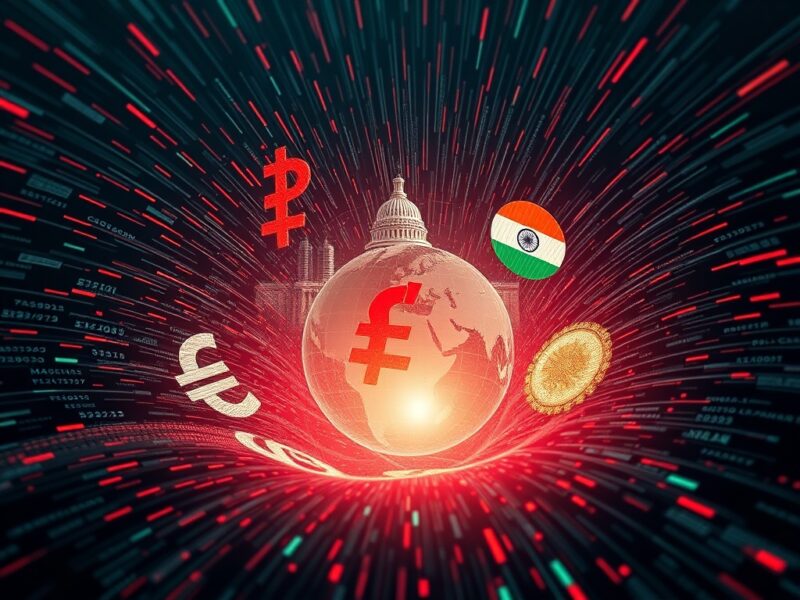
Asia FX Faces Uncertainty: Trump’s Fed Shakeup Casts Shadow Over US Dollar and Indian Rupee

BitcoinWorld Asia FX Faces Uncertainty: Trump’s Fed Shakeup Casts Shadow Over US Dollar and Indian Rupee In the fast-paced world of cryptocurrency, where decentralization often reigns supreme, it is easy to overlook the foundational forces shaping traditional finance. Yet, even crypto investors must pay attention to the macro-economic tides, especially when major political shifts threaten global currency stability. The prospect of a Fed Shakeup under a potential future Trump administration is one such seismic event, with far-reaching implications for global markets, particularly for Asia FX and the mighty US Dollar. Understanding these dynamics is crucial, as traditional financial instability can often ripple into the digital asset space, creating both risks and opportunities. What is the Fed Shakeup and Why Does it Matter for the US Dollar? The Federal Reserve, often simply called the Fed, serves as the central bank of the United States. Its primary roles include managing monetary policy, maintaining price stability, maximizing employment, and supervising banks. The Fed’s independence from political influence is considered a cornerstone of its effectiveness, allowing it to make decisions based purely on economic data rather than short-term political agendas. However, former President Donald Trump has been a vocal critic of the Fed’s policies, particularly its interest rate decisions. His past rhetoric and actions suggest a potential future administration might seek to exert greater political control over the central bank, possibly pushing for lower interest rates or even attempting to replace key officials with those more aligned with his economic views. This is the essence of a ‘Fed shakeup’ – a significant alteration in the Fed’s leadership, mandate, or operational independence. How Could a Fed Shakeup Impact the US Dollar? Interest Rate Uncertainty: A politically influenced Fed might be pressured to cut rates more aggressively or hold them lower for longer, irrespective of inflation data. Lower rates generally make a currency less attractive to foreign investors seeking yield, potentially weakening the US Dollar. Loss of Credibility: If the Fed’s independence is perceived to be compromised, its credibility in the eyes of global investors could diminish. This could lead to a flight from dollar-denominated assets, further pressuring the currency. Inflationary Concerns: An overly accommodative monetary policy, driven by political imperatives rather than economic necessity, could spark inflationary pressures. While some inflation is normal, uncontrolled inflation erodes purchasing power and can destabilize an economy, negatively impacting the dollar’s value. The stability of the US Dollar is paramount, as it is the world’s primary reserve currency and the benchmark for global trade and finance. Any significant weakening or increased volatility could have ripple effects across all asset classes, including commodities and even digital assets. How Does Asia FX Respond to US Dollar Volatility and Monetary Policy Shifts? Asian currencies, collectively known as Asia FX, are highly sensitive to movements in the US Dollar and shifts in US monetary policy. This is due to several factors: Trade Dependence: Many Asian economies are heavily export-oriented, with the US being a major trading partner. A strong dollar can make Asian exports cheaper for US buyers, but a weak dollar can make them more expensive, affecting trade balances. Capital Flows: When US interest rates rise, capital tends to flow out of emerging markets in Asia and into the US, seeking higher returns. Conversely, lower US rates can encourage capital to flow back into Asia. Dollar-Denominated Debt: Many Asian governments and corporations hold significant dollar-denominated debt. A strengthening dollar makes this debt more expensive to service in local currency terms, increasing financial strain. Reserve Management: Asian central banks hold vast reserves, much of which are in US Dollars. Changes in dollar value impact the value of these reserves. Examples of Asia FX Sensitivity: Historically, periods of US dollar strength or significant Fed policy changes have led to noticeable reactions across Asia FX. For instance, during the ‘taper tantrum’ of 2013, when the Fed signaled a reduction in its bond-buying program, several Asian currencies experienced sharp depreciations as capital fled the region. A potential Fed shakeup could introduce a new layer of uncertainty, leading to increased volatility for currencies like the Japanese Yen, Chinese Yuan, South Korean Won, and the Indian Rupee. Central banks in these regions would likely be forced to intervene in their respective markets to stabilize their currencies, potentially burning through foreign exchange reserves or implementing their own defensive monetary policy adjustments. Table: Potential Impact of US Dollar Scenarios on Asia FX US Dollar Scenario (Post-Fed Shakeup) Potential Impact on Asia FX Example Asia FX Response Significant Weakening (due to lower rates/loss of confidence) Asian currencies may strengthen against the USD, making exports more expensive. However, capital inflows could increase. Japanese Yen (JPY) and Korean Won (KRW) could appreciate, potentially leading to central bank intervention to curb strength. Increased Volatility/Uncertainty (due to unpredictable policy) Wider trading ranges, higher risk premiums for Asian assets, potential for sudden capital outflows. Indonesian Rupiah (IDR) and Philippine Peso (PHP) might see sharp, unpredictable swings, requiring active central bank management. Unexpected Strengthening (e.g., if global safe-haven demand overrides policy concerns) Asian currencies would depreciate, increasing dollar-denominated debt burdens and making imports more expensive. Indian Rupee (INR) could face renewed depreciation pressure, as could the Malaysian Ringgit (MYR). The Indian Rupee Under Pressure: Unique Vulnerabilities and Monetary Policy Challenges The Indian Rupee (INR) has historically been one of the more vulnerable currencies in Asia FX, often facing pressure during periods of global uncertainty or US dollar strength. This vulnerability stems from several factors unique to India’s economy: Current Account Deficit: India often runs a current account deficit, meaning it imports more than it exports. This creates a structural demand for foreign currency (primarily USD) and puts downward pressure on the Rupee. Oil Imports: India is a major importer of crude oil, which is priced in US Dollars. Rising global oil prices automatically increase the demand for dollars and weigh on the Indian Rupee. Foreign Institutional Investor (FII) Flows: The Indian market is a significant destination for FIIs. However, these flows can be volatile. If global risk sentiment sours or US interest rates become more attractive, FIIs tend to pull money out of India, weakening the Rupee. Inflation: High domestic inflation, if not adequately addressed by the Reserve Bank of India (RBI) through its monetary policy, can erode the Rupee’s value. How a Fed Shakeup Could Intensify Rupee Pressure: A potential Fed shakeup could exacerbate these existing pressures on the Indian Rupee. If the US Dollar experiences significant volatility or an unpredictable trajectory due to altered Fed policies, the RBI would face a complex challenge. For instance, if the dollar weakens substantially, the RBI might be concerned about imported inflation, but if it strengthens unexpectedly, the pressure on India’s current account and external debt servicing would increase dramatically. The RBI’s monetary policy would need to be nimble and proactive, potentially involving interventions in the forex market, adjustments to domestic interest rates, or capital control measures to stabilize the Rupee. This constant balancing act highlights the delicate position of emerging market currencies in the face of major global economic shifts. Navigating the Storm: Actionable Insights for Investors and Central Banks The prospect of a Fed Shakeup and its potential ramifications for the US Dollar, Asia FX, and the Indian Rupee demands careful consideration from all market participants. For investors, whether in traditional assets or cryptocurrencies, understanding these macro trends is vital for risk management and identifying opportunities. For Investors: Diversify Portfolios: Consider diversifying across different asset classes and geographies to mitigate risks associated with currency volatility. This includes exploring digital assets that may offer a hedge against traditional market instability. Monitor Central Bank Communications: Pay close attention to statements from the Federal Reserve and Asian central banks (like the RBI). Their forward guidance on monetary policy will offer clues about future currency movements. Hedge Currency Exposure: For those with significant exposure to specific currencies, consider hedging strategies to protect against adverse movements. Focus on Fundamentals: In times of uncertainty, strong economic fundamentals (e.g., low debt, stable growth, robust trade balances) will be key differentiators for national currencies and their underlying economies. For Central Banks in Asia: Strengthen Foreign Exchange Reserves: Maintaining robust foreign exchange reserves provides a buffer against sudden capital outflows and allows for market intervention to stabilize currencies. Coordinate Monetary Policy: While independence is key, regional coordination or at least clear communication among Asian central banks could help manage spillover effects from US policy changes. Prudent Fiscal Management: Governments should aim for sustainable fiscal policies to reduce reliance on external borrowing and strengthen economic resilience against global shocks. Develop Domestic Capital Markets: Deep and liquid domestic capital markets can reduce reliance on foreign capital, making economies less vulnerable to sudden shifts in global investor sentiment. Concluding Thoughts: The Interconnectedness of Global Finance The potential for a Fed Shakeup serves as a potent reminder of the profound interconnectedness of global financial markets. Decisions made in Washington D.C. can send ripples across continents, impacting the value of the US Dollar, influencing Asia FX, and putting specific pressure on currencies like the Indian Rupee. While the future remains uncertain, a proactive and informed approach to understanding these macro-economic forces is essential for investors, policymakers, and indeed, anyone navigating the complex landscape of global finance. The interplay between political rhetoric, central bank independence, and monetary policy will continue to shape currency markets for years to come. Staying informed about these developments is not just about forecasting currency movements; it is about understanding the very fabric of global economic stability. To learn more about the latest Forex market trends, explore our article on key developments shaping the US Dollar and global interest rates. This post Asia FX Faces Uncertainty: Trump’s Fed Shakeup Casts Shadow Over US Dollar and Indian Rupee first appeared on BitcoinWorld and is written by Editorial Team

Author: Coinstats
SBI Holdings Leads Funding Round for Tokenized Asset Exchange DigiFT

SBI Holdings Leads Funding Round for Tokenized Asset Exchange DigiFT

Japanese financial giant backs Singapore-based RWA platform as institutional adoption accelerates across Asia

Author: Blockhead
USDT0 and XAUt0 Are Now Live on Polygon

USDT0 and XAUt0 Are Now Live on Polygon

Road Town, British Virgin Islands, 27th August 2025, Chainwire

Author: CryptoPotato
Polkadot Tokenized Shares: Paraguay’s Astounding $6M Investment Fuels Innovation

Polkadot Tokenized Shares: Paraguay’s Astounding $6M Investment Fuels Innovation

BitcoinWorld Polkadot Tokenized Shares: Paraguay’s Astounding $6M Investment Fuels Innovation A remarkable development is unfolding in Latin America, signalling a new era for blockchain adoption. The government of Paraguay has made a groundbreaking move, investing a substantial $6 million into Polkadot tokenized shares. This bold financial commitment is not just about digital assets; it’s a strategic investment aimed at fostering technological advancement and economic growth within the nation. What Are Polkadot Tokenized Shares and Why Paraguay’s Big Bet? You might be wondering, what exactly are Polkadot tokenized shares? Simply put, they are digital representations of traditional shares, secured and managed on a blockchain network – in this case, Polkadot (DOT). This innovative approach allows for greater transparency, efficiency, and accessibility in investment. Paraguay’s government, as reported by Cointelegraph, has allocated these significant funds to develop an ambitious “Innovation Valley” in its capital city, Asunción. This project is set to become a hub for technological advancement, research, and development, positioning Paraguay as a leader in the region’s digital transformation. By utilizing Polkadot tokenized shares, Paraguay is embracing a modern, decentralized method to finance and oversee this crucial national initiative. Unlocking Tremendous Potential: The Benefits of This Investment This strategic investment by Paraguay brings a multitude of benefits, both for the nation and for the broader blockchain ecosystem. It highlights a growing confidence in decentralized finance solutions from traditional government bodies. Economic Growth: The Innovation Valley project, funded by these Polkadot tokenized shares, is expected to create new jobs, attract foreign investment, and stimulate economic diversification beyond traditional sectors. Technological Advancement: By establishing a dedicated innovation hub, Paraguay aims to cultivate a skilled workforce and foster a vibrant ecosystem for startups and tech companies. Transparency and Efficiency: Leveraging blockchain for tokenized shares ensures a high degree of transparency in fund allocation and management, reducing bureaucracy and increasing accountability. Global Credibility for Polkadot: This significant government adoption provides a strong validation for Polkadot’s technology, demonstrating its potential for real-world applications beyond speculative trading. It showcases the robustness and reliability of the Polkadot network. Navigating the Future: What Challenges Might Arise with Polkadot? While the prospects are exciting, any pioneering initiative comes with its own set of challenges. Paraguay’s journey with Polkadot tokenized shares will likely involve navigating several key areas. Regulatory Clarity: As blockchain technology evolves rapidly, governments must adapt existing regulations or create new ones to accommodate innovations like tokenized shares. Clear legal frameworks are crucial for long-term success. Technological Integration: Integrating new blockchain-based systems with existing governmental infrastructure can be complex. Ensuring seamless operation and data security will be paramount. Market Volatility: While the investment is in tokenized shares, the underlying crypto market can experience volatility. Strategic financial management will be essential to mitigate risks. Paraguay’s Vision: Building an Innovation Valley with Polkadot The core of Paraguay’s $6 million investment is the development of the Innovation Valley in Asunción. This ambitious project aims to transform the capital into a bustling center for technological development. Imagine a place where startups thrive, researchers collaborate, and cutting-edge technologies are born. The decision to fund this through Polkadot tokenized shares underscores a forward-thinking approach. It provides a modern, secure, and potentially more efficient way to raise and manage capital for such a large-scale public-private endeavor. This move could inspire other nations in Latin America and beyond to explore similar blockchain-powered financing models for national development projects, paving the way for wider crypto adoption. A Bold Step Towards a Decentralized Future Paraguay’s $6 million investment in Polkadot tokenized shares for its Innovation Valley is more than just a financial transaction; it’s a powerful statement. It signals a governmental embrace of blockchain technology as a legitimate tool for economic development and innovation. This pioneering move positions Paraguay at the forefront of digital transformation in Latin America, offering a compelling case study for how decentralized finance can contribute to national growth and create a brighter, more technologically advanced future for its citizens. It truly is an exciting time to watch these developments unfold. Frequently Asked Questions (FAQs) Q1: What are Polkadot tokenized shares? A1: Polkadot tokenized shares are digital representations of traditional company shares, or in this case, a project’s equity, that are recorded and managed on the Polkadot blockchain. They offer enhanced transparency, security, and efficiency compared to conventional methods. Q2: Why did Paraguay invest in Polkadot tokenized shares? A2: Paraguay invested $6 million in these shares to fund the development of an “Innovation Valley” in Asunción. This strategy leverages blockchain for transparent and efficient capital management for a national development project. Q3: What is the “Innovation Valley” project? A3: The Innovation Valley is an ambitious project in Asunción, Paraguay, designed to become a central hub for technological research, development, and startup incubation, aiming to boost the nation’s digital economy. Q4: How does this investment benefit Polkadot? A4: This significant government investment provides strong validation for Polkadot’s technology, showcasing its practical utility for large-scale, real-world applications and potentially encouraging broader institutional adoption. Q5: Are there risks associated with this type of investment? A5: Yes, like any innovative financial venture, there are risks such as regulatory uncertainties, challenges in technological integration, and potential market volatility. Careful planning and management are essential. *** Did you find this article insightful? Share this groundbreaking news with your network and spark a conversation about the future of blockchain in national development! Your shares help us bring more crucial crypto insights to light. To learn more about the latest crypto market trends, explore our article on key developments shaping Polkadot institutional adoption. This post Polkadot Tokenized Shares: Paraguay’s Astounding $6M Investment Fuels Innovation first appeared on BitcoinWorld and is written by Editorial Team

Author: Coinstats
Crypto update: US stablecoin law prompts China to accelerate its own plans

Crypto update: US stablecoin law prompts China to accelerate its own plans

The post Crypto update: US stablecoin law prompts China to accelerate its own plans appeared on BitcoinEthereumNews.com. China’s stablecoin push is a defensive move against US dollar dominance. The US GENIUS Act is the key trigger for Beijing’s recent policy shift. The experiment will be limited to offshore markets like Hong Kong. A seismic shift is underway in Beijing. The Chinese government, long a staunch opponent of private cryptocurrencies, is now being forced to reluctantly enter the stablecoin arena. But this is not a newfound love for digital assets; it is a calculated and defensive masterstroke in the escalating global war for currency supremacy—a direct response to a power play from Washington that threatens to cement the US dollar’s dominance for a generation to come. The Washington wake-up call The trigger for this dramatic pivot, according to industry leaders, was the passage of the U.S. GENIUS Act, a landmark piece of legislation that formally integrates dollar-pegged tokens into the architecture of global finance. Animoca Group president Evan Auyang told CoinDesk the law is “pressuring China to act a lot faster,” forcing a fundamental rethink in Beijing. Suddenly, stablecoins were no longer viewed as speculative instruments, but as essential infrastructure for global trade and settlement. Now, Reuters reports that China’s State Council is reviewing a roadmap for yuan-backed stablecoins, a move that signals a profound strategic realignment. A tale of two currencies: the global edge of a stablecoin This new direction represents a significant departure from China’s initial strategy, which focused exclusively on its own Central Bank Digital Currency, the e-CNY. According to Dr. Vera Yuen of Hong Kong University’s Business School, the government initially prioritized the e-CNY because it offered what Beijing values most: control, traceability, and profit. But as Dr. Yuen told CoinDesk, the e-CNY has a critical weakness: it was built for domestic use. “For international use of CBDCs, there is a big problem of…

Author: BitcoinEthereumNews
Rwanda kicks off digital ID as US Foods posts record sales

Rwanda kicks off digital ID as US Foods posts record sales

The post Rwanda kicks off digital ID as US Foods posts record sales appeared on BitcoinEthereumNews.com. Homepage > News > Business > Rwanda kicks off digital ID as US Foods posts record sales Rwanda has started registering its citizens for the national digital ID, whose rollout is planned for 2026, local outlets report. Rwanda’s National Identification Agency (NIDA) kickstarted the official registration for the new digital ID in early August in the capital, Kigali. However, according to NIDA Director-General Josephine Mukesha, collection of biometric data will begin in mid-September, with the first digital ID set to be issued next June. NIDA is currently conducting an awareness campaign across the country, educating the public about digital IDs and offering other ID-related services, such as replacement for lost and damaged IDs, reports local newspaper New Times. “We call on all citizens to get ready and embrace the new digital ID,” Mukesha stated. Rwanda has been laying the groundwork for the digital identity program for over three years now. It started by amending the law on registration of persons to pave the way for the Rwanda Single Digital ID system in early 2023. It then secured funding for the project from the World Bank to the tune of $40 million, with the Asian Infrastructure Investment Bank (AIIB) also pitching in. ‘Ultimate control’ The promise of ultimate control over one’s identity has been heavily emphasized by most leaders as they urge citizens to register. Speaking on this, NIDA’s Mukesha pointed out that it allows them to dictate how and when their identity is shared and used. “As we move toward a digital identity system, consent becomes essential. Anytime someone wants to access your information, you will need to approve it. You can also revoke access if you choose,” she stated. Antoine Sebera, the CEO of Rwanda’s Information Society Authority, added that it will be a “foundational tool that will enable…

Author: BitcoinEthereumNews
For Trump DOJ, DEI Is The New Jim Crow. Businesses Should Take Note.

For Trump DOJ, DEI Is The New Jim Crow. Businesses Should Take Note.

The post For Trump DOJ, DEI Is The New Jim Crow. Businesses Should Take Note. appeared on BitcoinEthereumNews.com. November 1939: The Rex Theatre in Leland, Mississippi, which is segregated under the Jim Crow laws. (Photo by Marion Post Wolcott/Library Of Congress/Getty Images) Getty Images On January 21, President Donald Trump signed an executive order taking aim at diversity, equity, and inclusion practices within government agencies. It also directed government agencies to to “enforce our longstanding civil-rights laws and to combat private sector DEI.” To avoid penalties, DEI advocates are rebranding and looking for loopholes. However, the Department of Justice’s isn’t buying the changes, drawing parallels between DEI rebranding and Jim Crow laws that attempted to undermine the civil rights movement. Businesses that buy into the rebrand theory may find themselves in the legal crosshairs. The concept of workplace diversity has existed in the U.S. for decades. Over time, the label changed and the definition broadened to include more groups. Around 2015, language shifted to the term DEI. With the new label came a new focus, away from equality and towards equity. DEI programs became part of a broader environmental, social, and governance movement within the business community. As ESG spiked during the Biden area, so did DEI. Companies released sustainability reports and ESG reports touting DEI alongside climate change actions. Then came the political backlash. First aimed at Bud Light for their Dylan Mulvaney marketing campaign. Following that success, Republicans set their sights on “woke” culture, moving from business to business forcing reforms. Following the 2024 presidential election, companies began abandoning DEI and ESG completely. While DEI advocates will blame the Trump administration, the legal fall of DEI began in the June 2023 Supreme Court opinion Students for Fair Admissions, Inc. v. President and Fellows of Harvard College. The Court addressed two cases relating to college admissions; one against Harvard College and the other against the University of…

Author: BitcoinEthereumNews
Sharplink Gaming’s Bold Move: A Massive $23.5M Ethereum Investment Ahead?

Sharplink Gaming’s Bold Move: A Massive $23.5M Ethereum Investment Ahead?

BitcoinWorld Sharplink Gaming’s Bold Move: A Massive $23.5M Ethereum Investment Ahead? The cryptocurrency world is buzzing with news about a significant move by a publicly traded company. Sharplink Gaming Ethereum strategy is once again in the spotlight as the Nasdaq-listed firm (Nasdaq: SBET), a known strategic investor in Ethereum, has reportedly transferred a substantial 23.46 million USDT to Galaxy Digital. This transfer, highlighted by on-chain analysis firm Lookonchain, strongly suggests that Sharplink Gaming might be gearing up for an additional, massive purchase of ETH. This development is certainly worth watching for anyone interested in institutional crypto adoption and its impact on the market. What is Driving Sharplink Gaming’s Ethereum Ambition? Sharplink Gaming (SBET) is not new to the Ethereum space. They have previously demonstrated a clear interest in the asset, positioning themselves as a strategic investor. This latest transfer of 23.46 million USDT, a stablecoin pegged to the US dollar, indicates a calculated move rather than a speculative gamble. Galaxy Digital, a prominent financial services and investment management company specializing in digital assets, is the recipient of these funds. This partnership underscores the professional and institutional nature of the transaction, providing a secure channel for large-scale crypto operations. The decision to potentially increase their Sharplink Gaming Ethereum holdings aligns with a broader trend of corporations diversifying their treasuries and seeking exposure to high-growth digital assets. Ethereum, with its robust ecosystem, smart contract capabilities, and upcoming scalability improvements, remains a top choice for institutional players looking for long-term value. Moreover, the transparency of on-chain data, as provided by Lookonchain, allows us to observe these significant movements in real-time, offering valuable insights into institutional strategies. How Might This Sharplink Gaming Ethereum Purchase Impact the Market? A purchase of this magnitude by a publicly traded company like Sharplink Gaming could have several implications for the Ethereum market. While 23.46 million USDT is a considerable sum, its immediate impact on ETH price might be limited given Ethereum’s large market capitalization and daily trading volumes. However, the psychological impact could be significant. Key Potential Impacts: Increased Institutional Confidence: This move signals continued confidence from traditional companies in Ethereum’s long-term potential, potentially encouraging other corporate entities to follow suit. Market Sentiment Boost: Positive news about institutional adoption often acts as a catalyst for broader market optimism, attracting both retail and institutional investors. Demand for ETH: A direct purchase of ETH by Sharplink Gaming would contribute to the overall demand, especially if executed in a structured manner through a firm like Galaxy Digital. Furthermore, Sharplink Gaming’s strategic approach to Sharplink Gaming Ethereum investments highlights the growing sophistication of corporate treasury management in the digital age. They are not just buying crypto; they are engaging with established financial intermediaries to execute their vision with precision. What Are the Benefits and Challenges of Sharplink Gaming’s Ethereum Investment? Investing heavily in a volatile asset like Ethereum comes with both opportunities and risks. For Sharplink Gaming, the potential benefits include: Capital Appreciation: If Ethereum’s value continues to grow, their investment could see substantial returns, boosting company assets and shareholder value. Portfolio Diversification: Adding digital assets to their portfolio provides diversification away from traditional asset classes, potentially reducing overall risk. Innovation Alignment: Aligning with cutting-edge technology like Ethereum can enhance a company’s image as forward-thinking and innovative in the rapidly evolving tech landscape. However, challenges are also present: Market Volatility: Cryptocurrency prices can fluctuate wildly, exposing the investment to significant risk and potential losses. Regulatory Uncertainty: The regulatory landscape for cryptocurrencies is still evolving globally, posing potential compliance challenges for corporate holders. Public Scrutiny: As a Nasdaq-listed company, Sharplink Gaming faces public and shareholder scrutiny over its investment decisions, requiring clear communication. Therefore, any move by Sharplink Gaming Ethereum strategy must be carefully considered, balancing potential rewards against inherent risks. Their choice of Galaxy Digital as a partner suggests a professional approach to mitigating some of these challenges and ensuring a secure transaction. In conclusion, Sharplink Gaming’s transfer of 23.46 million USDT to Galaxy Digital for a potential Ethereum purchase is a compelling indicator of ongoing institutional interest in the crypto market. This strategic decision by a Nasdaq-listed entity not only reinforces Ethereum’s position as a preferred institutional asset but also provides a fascinating case study in corporate crypto adoption. As the digital asset space matures, we can expect more such calculated moves from established companies looking to capitalize on the transformative potential of blockchain technology. The future of Sharplink Gaming Ethereum holdings will be closely watched by many in the financial and crypto communities. Frequently Asked Questions (FAQs) 1. What is Sharplink Gaming (SBET)? Sharplink Gaming (Nasdaq: SBET) is a Nasdaq-listed company that operates as a strategic investor, including in digital assets like Ethereum. They are known for their involvement in the gaming and sports betting technology sectors, and increasingly, in the cryptocurrency space. 2. What is USDT and why is it used for such transfers? USDT, or Tether, is a stablecoin whose value is pegged to the US dollar. It is widely used in cryptocurrency transactions for its stability and ease of transfer, making it ideal for large-scale movements of funds that might eventually be converted into other cryptocurrencies like Ethereum. 3. What is Galaxy Digital’s role in this transaction? Galaxy Digital is a diversified financial services and investment management company specializing in digital assets. In this context, they likely act as an institutional intermediary, facilitating the secure and compliant execution of large cryptocurrency transactions for clients like Sharplink Gaming. 4. How might this potential purchase impact Ethereum’s price? While a $23.5 million purchase is significant, Ethereum’s large market capitalization means it might not cause an immediate, drastic price swing. However, such institutional investments contribute to overall demand and can positively influence market sentiment, signaling long-term confidence in ETH. 5. Is this a common practice for publicly traded companies? While not yet mainstream, it is becoming increasingly common for publicly traded companies to explore or directly invest in cryptocurrencies as part of their treasury management or strategic growth initiatives. Companies like MicroStrategy and Tesla have notably invested in digital assets, setting a precedent for others. Did you find this insight into Sharplink Gaming’s strategic crypto move helpful? Share this article with your network on social media to keep others informed about institutional adoption in the digital asset space! To learn more about the latest Ethereum trends, explore our article on key developments shaping Ethereum institutional adoption. This post Sharplink Gaming’s Bold Move: A Massive $23.5M Ethereum Investment Ahead? first appeared on BitcoinWorld and is written by Editorial Team

Author: Coinstats
XRPL Gains Global Traction as Linklogis Expands Cross-Border Trade Finance

XRPL Gains Global Traction as Linklogis Expands Cross-Border Trade Finance

Recently, Linklogis (9959.HK), a leading Chinese supply chain fintech platform, confirmed a new partnership with the XRP Ledger (XRPL). The collaboration will allow Linklogis to deploy its global digital supply chain finance application directly on the XRPL mainnet. This step moves the company into the decentralized financial ecosystem and extends its reach in international trade […]

Author: Tronweekly
Groundbreaking CIMG Bitcoin Acquisition: Nasdaq Firm Swaps $55M Stock for 500 BTC

Groundbreaking CIMG Bitcoin Acquisition: Nasdaq Firm Swaps $55M Stock for 500 BTC

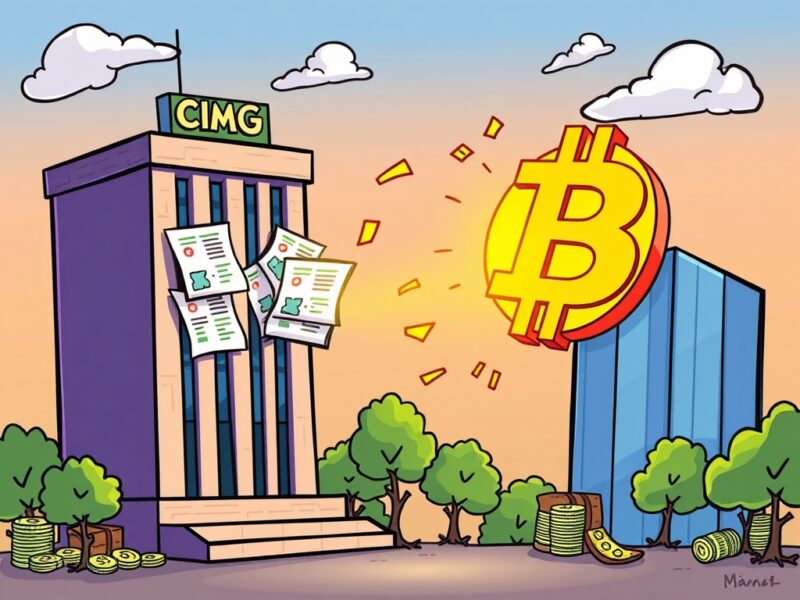
BitcoinWorld Groundbreaking CIMG Bitcoin Acquisition: Nasdaq Firm Swaps $55M Stock for 500 BTC The financial world is buzzing with a truly exciting development! Nasdaq-listed digital healthcare innovator, CIMG, has announced a groundbreaking CIMG Bitcoin acquisition, signaling a significant pivot for the company and sending ripples across both traditional and cryptocurrency markets. This strategic move sees CIMG exchanging a substantial $55 million worth of its common stock for 500 Bitcoin (BTC), a decision that highlights the growing confidence of established firms in digital assets. What Does This CIMG Bitcoin Acquisition Entail? CIMG, a prominent player in the digital healthcare sector listed on Nasdaq, has formally entered into a purchase agreement with a group of nine investors. Under this agreement, the company will issue $55 million worth of its common stock. In return, these investors will provide CIMG with 500 units of Bitcoin. This substantial exchange is not just a simple trade; it’s a strategic shift for CIMG, aiming to diversify its treasury assets and potentially hedge against inflation. The transaction is currently on track to finalize in early September, pending customary closing conditions. For many, this CIMG Bitcoin acquisition marks a clear statement: digital assets are no longer a niche interest but a legitimate component of corporate financial strategy, even for companies outside the direct tech or finance sectors. Why Are Companies Like CIMG Embracing Bitcoin Now? The decision by a Nasdaq-listed entity like CIMG to hold Bitcoin on its balance sheet reflects a broader trend of institutional adoption. Several factors drive this shift: Inflation Hedge: Many companies view Bitcoin as a potential store of value and a hedge against the depreciating purchasing power of fiat currencies, especially in the current economic climate. Diversification: Adding Bitcoin can diversify a company’s treasury holdings beyond traditional assets, potentially offering new avenues for growth and risk management. Innovation and Future-Proofing: Embracing digital assets can position a company as forward-thinking and innovative, appealing to a new generation of investors and customers who are increasingly familiar with cryptocurrency. This strategic CIMG Bitcoin acquisition demonstrates a belief in Bitcoin’s long-term value proposition and its role in the evolving global financial landscape. What Are the Potential Benefits and Challenges of This Move? For CIMG, the benefits could be substantial. A successful Bitcoin holding could appreciate in value, enhancing the company’s balance sheet. It also sends a strong signal to the market about CIMG’s willingness to innovate and adapt. However, this bold step is not without its challenges: Price Volatility: Bitcoin is known for its price fluctuations, which could introduce volatility to CIMG’s financial statements. Regulatory Uncertainty: The regulatory landscape for cryptocurrencies is still evolving, posing potential compliance challenges. Market Perception: While many will view this positively, some traditional investors might be wary of the perceived risks associated with digital assets. Despite these challenges, CIMG’s leadership appears confident in the long-term strategic value of this CIMG Bitcoin acquisition. How Does This CIMG Bitcoin Acquisition Impact the Broader Market? A move of this magnitude from a Nasdaq-listed digital healthcare company is a powerful endorsement for the entire cryptocurrency ecosystem. It reinforces the narrative that Bitcoin is maturing as an asset class and gaining mainstream acceptance. Other companies, observing CIMG’s bold stride, might feel encouraged to explore similar strategies. This institutional interest can contribute to increased liquidity and stability in the Bitcoin market over time. Moreover, it blurs the lines between traditional finance and the burgeoning digital economy, suggesting a future where such cross-asset exchanges become more common. This transaction could very well serve as a case study for other firms contemplating their own ventures into the crypto space. The CIMG Bitcoin acquisition represents more than just a financial transaction; it’s a statement about the future of corporate finance and the undeniable rise of digital assets. By swapping common stock for 500 BTC, CIMG is not only diversifying its treasury but also signaling a proactive embrace of innovation. This move solidifies Bitcoin’s position as a serious institutional asset and opens up fascinating discussions about how other companies might follow suit. It’s an exciting time to watch how this strategic decision unfolds and influences both the digital healthcare and crypto sectors. Frequently Asked Questions (FAQs) 1. What is the significance of this CIMG Bitcoin acquisition? This acquisition is significant because it marks a major move by a Nasdaq-listed digital healthcare company into the cryptocurrency space, highlighting growing institutional confidence in Bitcoin as a treasury asset and a hedge against inflation. 2. Why would a digital healthcare company like CIMG acquire Bitcoin? Companies like CIMG acquire Bitcoin for several reasons, including diversifying treasury assets, potentially hedging against inflation, and signaling innovation and adaptability in a rapidly evolving financial landscape. 3. What are the potential risks for CIMG with this Bitcoin investment? Potential risks include Bitcoin’s inherent price volatility, which could impact CIMG’s financial statements, and the evolving regulatory environment surrounding cryptocurrencies, which may present compliance challenges. 4. When is the CIMG Bitcoin acquisition expected to be finalized? The transaction is expected to close in early September, subject to the fulfillment of customary closing conditions. 5. How does CIMG’s move reflect broader market trends? CIMG’s strategic move reflects a broader trend of increasing institutional adoption of Bitcoin, indicating its maturation as an asset class and growing acceptance among mainstream corporate entities. Did you find this analysis insightful? Share this article with your network to spark discussions about the future of corporate finance and the growing influence of digital assets! To learn more about the latest Bitcoin trends, explore our article on key developments shaping Bitcoin institutional adoption. This post Groundbreaking CIMG Bitcoin Acquisition: Nasdaq Firm Swaps $55M Stock for 500 BTC first appeared on BitcoinWorld and is written by Editorial Team

Author: Coinstats