RWA

RWA (Real World Assets) refers to the tokenization of tangible assets—such as real estate, private credit, and government bonds—on the blockchain. By bringing traditional financial instruments on-chain, RWA protocols like Ondo and Centrifuge provide DeFi users with stable, real-yield opportunities. In 2026, the RWA sector is a multi-trillion-dollar bridge between TradFi and DeFi, enabling fractional ownership and global liquidity for previously illiquid assets. Follow this tag for insights into on-chain credit markets, regulatory compliance, and asset-backed security innovations.

43007 Articles
Created: 2026/02/02 18:52
Updated: 2026/02/02 18:52
XRP Ledger Utility Jumps in Messari Q2 Report, XRP Price Follows

XRP Ledger Utility Jumps in Messari Q2 Report, XRP Price Follows

TLDR: XRP price rose 7.1 percent QoQ in Q2 2025, driven by growing circulation and renewed demand. RLUSD stablecoin soared 49.4 percent QoQ to $65.9M cap, becoming XRPL’s largest stablecoin. RWA market cap topped $131.6M in Q2, led by bonds, real estate and tokenized funds on XRPL. XRPL launched its EVM sidechain on June 30, [...] The post XRP Ledger Utility Jumps in Messari Q2 Report, XRP Price Follows appeared first on Blockonomi.

Author: Blockonomi
Jerome Powell Hints at Rate Cuts

Jerome Powell Hints at Rate Cuts

The post Jerome Powell Hints at Rate Cuts appeared on BitcoinEthereumNews.com. Crypto News Jerome Powell signals possible Fed rate cuts, sending Bitcoin near $120K and Ethereum toward all-time highs. Crypto markets surge in response. The annual Jackson Hole Economic Symposium delivered a shock to global markets after Federal Reserve Chair Jerome Powell signaled the possibility of rate cuts as early as September. His dovish tone, a sharp departure from months of caution, was enough to send the cryptocurrency market into overdrive. Bitcoin is closing in on a new all-time high after briefly dipping to $112,000, while Ethereum staged an even stronger recovery, climbing back toward its all-time highs. Altcoins across the board followed the same explosive pattern, reigniting optimism that the next bull run may already be underway. For investors, the timing couldn’t be more critical. With liquidity set to increase if rate cuts materialize, risk-on assets are preparing for an inflow of fresh capital. Projects like MAGACOIN FINANCE are now being highlighted as the next big opportunity, offering early participants the kind of upside that made legends out of past bull market winners. Powell’s Sudden Shift at Jackson Hole The Fed has kept interest rates steady between 4.25% and 4.5% for months, balancing inflation concerns with steady job growth. But Powell acknowledged that downside risks to employment are growing, hinting that the Fed may need to act soon. His remarks marked a pivot in focus – away from inflation fears and toward safeguarding the labor market. This was the green light traders had been waiting for, sparking a massive repositioning in both equities and crypto. Crypto Reacts With Conviction Bitcoin quickly rebounded, while Ethereum was even stronger, gaining 10% and recovering near its all-time high. Other altcoins surged as well, signaling broad-based strength in the market. The clear link between Fed policy and speculative assets was on full display, with…

Author: BitcoinEthereumNews
Trump Media, Yorkville, and Crypto.com Launch $1B CRO Digital Asset Treasury

Trump Media, Yorkville, and Crypto.com Launch $1B CRO Digital Asset Treasury

The post Trump Media, Yorkville, and Crypto.com Launch $1B CRO Digital Asset Treasury appeared on BitcoinEthereumNews.com. As founding partners, Yorkville, Trump Media, and Crypto.com will hold the majority of Trump Media Group CRO Strategy. Following the completion of the business combination, Yorkville, Trump Media, and Crypto.com have agreed to a required one-year initial lock-up period on their founding shareholdings. To create Trump Media Group CRO Strategy, Inc., a digital asset treasury company focused on acquiring the native cryptocurrency token of the Cronos ecosystem, Yorkville Acquisition Corp. (Nasdaq: YORK), Trump Media & Technology Group Corp. (Nasdaq, NYSE Texas: DJT) (“Trump Media”), and Crypto.com today announced they have reached a final agreement for a business combination (the “Business Combination”). Yorkville Acquisition Sponsor LLC (“Yorkville”) is the sponsor of Yorkville Acquisition Corp., a special purpose acquisition company (SPAC). As founding partners, Yorkville, Trump Media, and Crypto.com will hold the majority of Trump Media Group CRO Strategy after the conclusion of the business combination. In addition to $200 million in cash and $220 million in cash-in mandatory exercise warrants, the digital asset treasury is expected to be funded with $1 billion in CRO (6,313,000,212 CRO, or approximately 19% of the total CRO market cap as of announcement), as well as a $5 billion equity line of credit from YA II PN, Ltd., an affiliate of Yorkville. This would make the digital asset treasury the first and largest publicly traded CRO treasury company, and we believe it to have the largest digital asset treasury company to market cap ratio in history. Additionally, YA II PN, Ltd. has signed a backstop agreement to buy Class A ordinary shares of Yorkville Acquisition Corp. that are legitimately offered for redemption by public shareholders and not withdrawn before the Business Combination closes, with a maximum beneficial ownership of 9.9%. Prior to the Business Combination, Yorkville Acquisition Corp. will request to have its Class A ordinary…

Author: BitcoinEthereumNews
Crypto’s U.S. Policy Aims May Pivot on Resistance from Democratic Senator Warner

Crypto’s U.S. Policy Aims May Pivot on Resistance from Democratic Senator Warner

The post Crypto’s U.S. Policy Aims May Pivot on Resistance from Democratic Senator Warner appeared on BitcoinEthereumNews.com. One of the crypto industry’s central lobbying aims — to protect software developers from being held legally responsible when criminals abuse their technology — may be in jeopardy from Democrats led by U.S. Senator Mark Warner, according to people familiar with legislative negotiations. The Senate is set to return to work in Washington next week, with the completion of a crypto market structure bill as one of its top agenda items. In the discussions over that bill, Warner is said to have held reservations about the approach in the U.S. House of Representatives’ version of the bill known as the Digital Asset Market Clarity Act, which gave developers legal cover, according to three people with knowledge of the negotiation. Warner, a Virginia Democrat who is the vice chairman of the Senate Select Committee on Intelligence, maintains a close focus on national security issues, and he’s said to have balked at the rampant hacks and money laundering concerns that he’s associated with the decentralized finance (DeFi) end of the crypto sector. In the past, he’s raised objections over reports that cryptocurrency may have been used to move assets to terrorist groups, and he pushed a bill in 2023 that looked to saddle DeFi platforms with the same anti-money laundering (AML) requirements that traditional finance firms must meet — a potentially existential threat to the way the decentralized projects operate without core management. Back then, Warner said such an effort would “help maintain the robust AML and sanctions enforcement we need to protect our national security, while allowing participants who play by the rules to continue to take advantage of the potential of distributed ledger technologies,” additionally noting his views that “criminals and rogue states continue to use crypto to launder money, evade sanctions, and conceal illicit activity.” Then he pursued an…

Author: BitcoinEthereumNews
DeFi Development’s Revolutionary Leap: Joining the Global Dollar Network

DeFi Development’s Revolutionary Leap: Joining the Global Dollar Network

BitcoinWorld DeFi Development’s Revolutionary Leap: Joining the Global Dollar Network The world of decentralized finance (DeFi) is constantly evolving, and a recent announcement marks a significant milestone. Nasdaq-listed DeFi Development, a prominent player known for incorporating SOL as a key asset, has officially joined the Global Dollar Network (GDN). This strategic move promises to reshape how we interact with stablecoins and expand accessibility across the digital finance landscape. It’s a powerful step forward for DeFi Development and the broader crypto community. What is the Global Dollar Network and Why Does it Matter for DeFi Development? The Global Dollar Network (GDN) is an ambitious initiative designed to accelerate the global adoption of stablecoins. It’s a collaborative effort launched by industry giants such as Anchorage Digital, Paxos, and Robinhood. Their primary goal? To create a robust infrastructure that supports Paxos’s U.S. dollar-pegged stablecoin, USDG, making it more accessible and usable worldwide. For DeFi Development, joining the GDN means much more than just a new partnership. It signifies a direct integration into a powerful network aimed at standardizing and simplifying stablecoin transactions. This move allows DeFi Development to directly tap into a broader ecosystem of financial institutions and users, enhancing its offerings and solidifying its position in the market. Increased Accessibility: Users of DeFi Development platforms will gain easier access to USDG, a highly liquid and regulated stablecoin. Enhanced Liquidity: Integration with GDN can lead to deeper liquidity pools for USDG within DeFi Development’s systems. Broader Reach: Taps into the established networks of GDN partners, potentially attracting new users and institutional interest to DeFi Development. How Does This Partnership Propel Stablecoin Adoption for DeFi Development? The integration of USDG into DeFi Development‘s systems is a game-changer. Stablecoins are crucial bridges between traditional finance and the crypto world, offering stability amidst volatile markets. By embracing USDG, DeFi Development is not just adding another asset; it’s endorsing a regulated, transparent, and widely supported stablecoin. This partnership underscores a growing trend towards institutional-grade stablecoin solutions within DeFi. Nasdaq-listed companies like DeFi Development bring a level of trust and regulatory compliance that is essential for mainstream adoption. Furthermore, the inclusion of SOL as a key asset within DeFi Development’s framework, now complemented by USDG, creates a compelling blend of high-performance blockchain technology and stable value. The collaboration aims to: Streamline Transactions: Make stablecoin transfers faster and more efficient for DeFi Development users. Boost Trust: Leverage the reputation of GDN partners and Paxos’s regulated USDG to build confidence. Foster Innovation: Open new avenues for financial products and services built on a reliable stablecoin foundation within the DeFi Development ecosystem. What’s Next for DeFi Development and the Global Dollar Network? The future looks promising for this alliance. DeFi Development’s plan to integrate USDG into its systems is just the beginning. This integration will likely involve technical development to ensure seamless user experience and robust security. We can anticipate new features and functionalities emerging from this partnership, designed to maximize the utility of USDG within DeFi Development’s offerings. While the benefits are clear, challenges might include navigating evolving regulatory landscapes and ensuring interoperability across diverse blockchain environments. However, the combined expertise of DeFi Development and the GDN partners positions them well to overcome these hurdles. This strategic alliance sets a precedent for how established financial players and innovative DeFi platforms can collaborate to build a more integrated and accessible global financial system. In essence, this move by DeFi Development isn’t just about joining a network; it’s about actively shaping the future of digital finance. It reinforces the idea that stablecoins are foundational to this future, providing the stability and reliability needed for widespread adoption. In conclusion, DeFi Development‘s decision to join the Global Dollar Network marks a pivotal moment for both entities and the wider crypto industry. By integrating USDG, a regulated dollar-pegged stablecoin, DeFi Development is not only expanding accessibility for its users but also contributing significantly to the mainstream adoption of stablecoins. This collaboration promises a more stable, accessible, and integrated future for decentralized finance, showcasing a powerful synergy between innovation and established financial infrastructure. It’s an exciting time to watch how DeFi Development continues to evolve and lead in this dynamic space. Frequently Asked Questions about DeFi Development and GDN What is the Global Dollar Network (GDN)? The Global Dollar Network (GDN) is an initiative launched by partners like Anchorage Digital, Paxos, and Robinhood to accelerate the global adoption of stablecoins, specifically supporting Paxos’s USDG. Why is DeFi Development joining the GDN significant? This move is significant because it allows Nasdaq-listed DeFi Development to integrate a regulated stablecoin (USDG) into its systems, expanding accessibility, enhancing liquidity, and broadening its reach within the digital finance ecosystem. What is USDG? USDG is a U.S. dollar-pegged stablecoin supported by Paxos, designed to offer stability and transparency in the cryptocurrency market. How will this partnership benefit users of DeFi Development? Users will benefit from easier access to a regulated stablecoin, potentially faster and more efficient transactions, and a more robust and trustworthy platform for their DeFi activities. Does DeFi Development use other assets besides USDG? Yes, DeFi Development has already incorporated SOL as a key asset, demonstrating its commitment to diverse and high-performance blockchain technologies. Found this insight into DeFi Development‘s strategic move compelling? Share this article with your network and spark a conversation about the future of stablecoins and decentralized finance! Your engagement helps us bring more valuable crypto news to the forefront. To learn more about the latest DeFi Development trends, explore our article on key developments shaping DeFi Development‘s institutional adoption. This post DeFi Development’s Revolutionary Leap: Joining the Global Dollar Network first appeared on BitcoinWorld and is written by Editorial Team

Author: Coinstats
Best Altcoins to Buy in 2025: BlockDAG, SEI, SUI, and XRP Set the Standard for Fair Growth

Best Altcoins to Buy in 2025: BlockDAG, SEI, SUI, and XRP Set the Standard for Fair Growth

Sometimes progress is not about moving faster, but moving fairer. The crypto space is full of projects chasing scale, but […] The post Best Altcoins to Buy in 2025: BlockDAG, SEI, SUI, and XRP Set the Standard for Fair Growth appeared first on Coindoo.

Author: Coindoo
From private paper currency to cloud ledger, how does Google GCUL define the next generation of stablecoin network?

From private paper currency to cloud ledger, how does Google GCUL define the next generation of stablecoin network?

Original source: Google Original title: Beyond Stablecoins: The Evolution of Digital Currency Editor's Note: Internet giant Google has officially unveiled its native blockchain network, GCUL (Google Cloud Universal Ledger). The introduction provides a glimpse into Google's thinking: driven by the explosive growth of stablecoins and their potential trillion-dollar potential, Google is eager to capitalize on this next-generation fintech wave. Consequently, it has created GCUL, a network more akin to a stablecoin consortium blockchain. Rich Widmann, Head of Google Web3, stated that this is the culmination of years of research and development at Google, offering financial institutions a high-performance, trusted, neutral network that supports Python-based smart contracts. Google also published an article detailing its thinking on GCUL. The following is the original text from Google: Stablecoins experienced significant growth in 2024, with transaction volume tripling to $5 trillion organically and $30 trillion in total (sources: Visa , Artemis ). By comparison, PayPal's annual transaction volume is approximately $1.6 trillion, and Visa's is approximately $13 trillion. The supply of stablecoins pegged to the US dollar has grown to over 1% of the total US dollar supply (M2) (source: rwa.xyz ). This surge clearly demonstrates that stablecoins have established a presence in the market. The demand for better services is driving a major shift in the nearly $3 trillion payments market. Stablecoins, without the complexity, inefficiencies, and fees of traditional payment systems, enable seamless fund transfers between digital wallets. New solutions are also emerging in the capital markets to facilitate the payment process of digital asset transactions, improving transparency and efficiency while reducing costs and settlement times. This article explores the evolving financial landscape and proposes a solution that can help traditional finance and capital markets not only catch up, but also lead the way. Private Currency: Similarities Between Paper Money and Stablecoins Stablecoins share many similarities with the privately issued paper money that was widely used in the 18th and 19th centuries. Banks issued their own banknotes, with varying degrees of reliability and regulation. These notes made transactions easier because they were easier to carry, count, and exchange, without the need to weigh or assess the purity of the gold. To foster trust in this new form of money, the notes were backed by reserve funds and promised to be redeemable for real-world assets (most commonly precious metals). The number of trading wallets and liquidity increased significantly. Most banknotes were accepted only in the local area near the issuing bank. For interbank settlements, they were exchanged for precious metals or cleared between banks. In exchange for these benefits, users accepted the risk of a single bank default and fluctuations in value based on the issuing bank's perceived solvency. Fractional Reserve Banking and Supervision Remarkable economic growth followed, and financial innovation followed. Economic expansion required a more flexible money supply. Banks, observing that not all depositors would demand redemptions at the same time, realized they could profitably lend out a portion of their reserves. Fractional reserve banking, in which the amount of banknotes in circulation exceeded the reserves held by banks, emerged. Mismanagement, risky lending practices, fraud, and economic downturns led to bank runs, bankruptcies, crises, and depositor losses. These failures prompted increased regulation and oversight of currency issuance. Along with the establishment and expansion of central bank mandates, these regulations created a more centralized system, improved banking practices, established stricter rules, enhanced stability, and engendered public trust in the monetary system. Today's Monetary System: Commercial Bank and Central Bank Money Our current monetary system utilizes a dual currency model. Commercial bank money, issued by commercial banks, is essentially a liability (IOU) of a specific bank and is subject to comprehensive regulation and oversight. Commercial banks utilize a fractional reserve funding model, meaning they hold only a portion of their deposits in central bank money as reserves and lend the rest. Central bank money is a liability of the central bank and is considered risk-free. Interbank liabilities are settled electronically in central bank money (via RTGS systems such as FedWire or Target2). The public can only use commercial bank money for electronic transactions, and the use of cash (physical central bank money) is declining. In a single currency, all commercial bank money is fungible. Bank competition focuses on services provided, not the quality of the money they offer. Today's financial infrastructure: fragmented, complex, expensive, and slow With the rise of computers and the internet, monetary transactions are recorded electronically, allowing them to be conducted without cash. Liquidity, access, and product innovation have reached new heights. However, solutions vary by country, and cross-border transactions remain economically and technically difficult. Correspondent banking, which requires keeping idle funds with partner banks, faces infrastructure complexity that has forced banks to limit their partnerships. Consequently, banks are exiting correspondent relationships ( down 25% over the past decade ), resulting in longer payment chains, slower payments, and higher costs. Convenient solutions that abstract these complexities (such as global credit card networks) are costly for businesses that pay fees. Furthermore, most improvements have been focused on the front end, while innovation in payment processing infrastructure has been slow. The fragmented financial system increases trade frictions and slows economic growth. The Economist estimates that by 2030, the macroeconomic impact of a fragmented payments system on the global economy will be a staggering $2.8 trillion in losses (2.6% of global GDP), equivalent to more than 130 million jobs (4.3%). Fragmentation and complexity are also harming financial institutions. Annual maintenance costs for outdated payment systems were $37 billion in 2022 and are projected to rise to $57 billion by 2028 ( IDC Financial Insights ). Furthermore, the inability to provide real-time payments exacerbates direct revenue losses due to inefficiencies, security risks, and extremely high compliance costs ( 75% of banks struggle to implement new payment services within outdated systems, and 47% of new accounts are with fintechs and neobanks ). High payment fees can hinder a company's international growth, impacting profitability and valuation. Companies that process large volumes of payments have a strong incentive to reduce their processing fees. For example, for Walmart, reducing its approximately $10 billion in annual processing fees (assuming an average processing fee rate of 1.5% on $700 billion in revenue) to $2 billion could increase earnings per share and stock price by over 40%. New infrastructure, new possibilities Experimentation in Web3 has given rise to promising technologies like distributed ledger technology (DLT). These technologies offer a new way for financial systems to transact by providing a global, always-on infrastructure with advantages such as multi-currency/multi-asset support, atomic settlement, and programmability. The financial industry is already shifting from siloed databases and complex messaging to a transparent, immutable shared ledger. These modern networks streamline interactions and workflows, eliminating independent, costly, and slow reconciliation processes and removing the technical complexity that hinders speed and innovation. Disruptor: Stablecoins Stablecoins, operating on a decentralized ledger, enable near-instant, low-cost global transactions, unconstrained by the time and geographic constraints of traditional banking. This freedom and efficiency have fueled their explosive growth. High interest rates also make them highly profitable. Profits, growth, and growing confidence in the underlying technology are attracting investment from venture capitalists and payment processors. Stripe acquired Bridge, enabling online merchants to accept stablecoin payments. Visa also offers the ability to use stablecoins for partner payments and settlements . Retailers (such as Whole Foods) are accepting and even encouraging stablecoin payments to reduce transaction fees and receive payments instantly ( Federal Reserve Bank of Atlanta article ). Consumers can obtain stablecoins in seconds ( Coinbase integrates ApplePay ). Stablecoins face many challenges. Regulation: Unlike traditional currencies, stablecoins lack comprehensive regulation and oversight. The US is increasing its regulatory oversight, and the EU is applying e-money rules to e-money tokens through MICAR. Depositor protections do not apply to stablecoins. Compliance: Ensuring compliance with anti-money laundering and sanctions laws is challenging when anonymous accounts conduct transactions on public blockchains ( 63% of the $51.3 billion in illicit transactions on public blockchains in 2024 involved stablecoins ). Fragmentation: The wide variety of stablecoins operating on different blockchains requires complex bridging and conversions. This fragmentation has led to a reliance on automated bots for arbitrage and liquidity management, with these bot accounts accounting for almost 85% of all trading volume ( $5 trillion in organic volume versus $30 trillion in total volume ). Infrastructure Scalability: To achieve widespread adoption, the underlying technology must be able to handle a large number of transactions. (There were approximately 6 billion stablecoin transactions in 2024, with ACH transactions roughly an order of magnitude higher and card transactions two orders of magnitude higher.) Economics/Capital Efficiency: Currently, banks drive economic growth by expanding the money supply by lending out funds many times their reserves. Widespread use of stablecoins would divert banks’ reserves, significantly reducing their lending capacity and directly impacting profitability. The immediate challenges facing stablecoins (issuer credibility, regulatory ambiguity, compliance/fraud, and fragmentation) are similar to those faced by early privately issued banknotes. The widespread adoption of fully funded stablecoins would disrupt not only the banking and financial sectors but also the current economic system. Commercial banks extend credit, currency, and liquidity to support economic growth; central banks monitor and influence this process through monetary policy to directly manage inflation and indirectly pursue other policy objectives, such as employment, economic growth, and welfare. A large-scale transfer of reserve funds from banks to stablecoin issuers could reduce the supply of credit and increase its cost. This would dampen economic activity, potentially leading to deflationary pressures and posing challenges to the effectiveness of monetary policy implementation. Stablecoins offer clear benefits to users, particularly in cross-border transactions. Competition will drive innovation, expand application scenarios, and spur growth. Increased transaction volume and increased adoption of stablecoin wallets could lead to reduced deposits, lower lending, and lower profitability for traditional banks. As regulation matures, we may see the emergence of stablecoin models that use partial reserves, blurring the lines between them and commercial bank currencies and further intensifying competition in the payments sector. Innovator's Dilemma Institutions and individuals now have a choice between traditional payment systems, which are familiar and less risky, but slow and costly, or modern systems, which are fast, cheap, convenient, and rapidly improving, but come with new risks. Increasingly, they are choosing modern systems. Payment service providers have a choice. They can view these innovations as niche markets that won't impact their core traditional financial customer base and focus on incremental improvements to existing products and systems. Alternatively, they can leverage their brands, regulatory experience, customer base, and networks to dominate the new payments era. By embracing new technologies and forming strategic partnerships, they can meet evolving customer expectations and drive business growth. Better payments through evolution, not revolution There's a way to enable a new generation of payments—global, 24/7, multi-currency, and programmable—without reinventing money, simply by reimagining the infrastructure. Commercial bank money and strong traditional financial regulation address the stability, regulatory clarity, and capital efficiency issues of the existing financial system. Google Cloud can provide the necessary infrastructure upgrade. Google Cloud Universal Ledger (GCUL) is a new platform for creating innovative payment services and financial market products. It simplifies the management of commercial bank currency accounts and facilitates money transfers via a distributed ledger, enabling financial institutions and intermediaries to meet the needs of the most discerning customers and compete effectively. GCUL is designed to provide a simple, flexible, and secure experience. Let's break it down: Simple: GCUL is delivered as a service, accessible through a single API, simplifying the integration of multiple currencies and assets. There's no infrastructure to build and maintain. Transaction fees are stable, transparent, and invoiced monthly (unlike the volatile, upfront fees of cryptocurrency transactions). Flexible: GCUL offers unparalleled performance and is scalable to any use case. It's programmable, supporting payment automation and digital asset management. It integrates with the wallet of your choice. Secure: GCUL is designed with compliance in mind (e.g., KYC-verified accounts, outsourcing-compliant transaction fees). It operates as a private, permissioned system (which may become more open as regulations evolve) and leverages Google's secure, reliable, durable, and privacy-focused technology. GCUL offers significant advantages to both customers and financial institutions. Customers can enjoy near-instant transactions (especially for cross-border payments), along with low fees, 24/7 availability, and payment automation. Financial institutions, on the other hand, benefit from reduced infrastructure and operational costs by eliminating reconciliations, reducing errors, streamlining compliance processes, and reducing fraud. This frees up resources for developing modern products. Financial institutions can leverage their existing strengths (such as customer networks, licenses, and regulatory processes) to maintain full control over customer relationships. Payments as a catalyst for capital markets Similar to the payments sector, capital markets have undergone a significant transformation through the adoption of electronic systems. Initially met with resistance, electronic trading ultimately revolutionized the industry. Real-time price information and wider access to it increased liquidity, leading to faster execution, tighter spreads, and lower per-trade fees. This, in turn, spurred further growth in market participants (especially individual investors), product and strategy innovation, and overall market size. Despite significantly lower per-trade prices, the industry has experienced significant expansion, with advances in areas such as electronic and algorithmic trading, market making, risk management, and data analytics. However, challenges remain in payments. Due to the limitations of traditional payment systems, settlement cycles can stretch out to several days, necessitating working capital and collateral for risk management. Digital assets and new market structures enabled by distributed ledger technology are hindered by the inherent frictions of bridging traditional and new infrastructure. Independent asset and payment systems perpetuate fragmentation and complexity, hindering the industry from fully benefiting from innovation. Google Cloud Universal Ledger (GCUL) addresses these challenges by providing a simplified and secure platform for managing the entire digital asset lifecycle (e.g., bonds, funds, collateral). GCUL enables seamless and efficient issuance, management, and settlement of digital assets. Its atomic settlement capabilities minimize risk and increase liquidity, unlocking new opportunities in the capital markets. We are exploring how to transfer value using a secure medium of exchange backed by regulated, bankruptcy-protected assets, such as central bank deposits or money market funds. These initiatives will help enable true 24/7 capital mobility and drive the next wave of financial innovation.

Author: PANews
PulseChain Hack: Shocking $5 Million Loss Hits Better Bank DeFi

PulseChain Hack: Shocking $5 Million Loss Hits Better Bank DeFi

BitcoinWorld PulseChain Hack: Shocking $5 Million Loss Hits Better Bank DeFi The cryptocurrency world has been rocked by unsettling news: a significant PulseChain hack has targeted Better Bank, a prominent DeFi platform built on the PulseChain network. This alarming incident saw attackers drain approximately $5 million in assets, sending ripples of concern throughout the decentralized finance community and highlighting the critical need for robust security. What Exactly Happened in the PulseChain Hack? According to leading blockchain security firm CertiK, the PulseChain-based Better Bank suffered a substantial exploit, resulting in a staggering $5 million loss. This attack underscores the persistent security challenges faced by even innovative DeFi protocols, regardless of the underlying blockchain. The perpetrator acted swiftly following the breach. They moved to convert the stolen funds, successfully swapping the ill-gotten gains for 215 ETH. This Ethereum is currently valued at approximately $980,000, demonstrating the attacker’s rapid efforts to obfuscate the trail and realize their illicit profits. This quick conversion often makes recovery efforts incredibly challenging. How Did This DeFi Exploit Unfold on PulseChain? While the precise technical details of the Better Bank exploit are still under thorough investigation, such incidents typically stem from vulnerabilities within a protocol’s smart contract code. Common attack vectors include flash loan exploits, reentrancy bugs, or logic errors that allow an attacker to manipulate the system for their benefit. Attackers meticulously identify these weaknesses, often through extensive code analysis or by exploiting complex interactions between different DeFi protocols. Once a vulnerability is found, they execute a series of sophisticated transactions designed to drain funds before the protocol’s defenses or monitoring systems can effectively react. This particular PulseChain hack serves as a stark reminder that even innovative blockchain platforms like PulseChain require continuous, rigorous security assessments. DeFi’s open-source nature, while beneficial for transparency and community development, also means that potential vulnerabilities are visible to malicious actors. Therefore, robust auditing and constant vigilance are non-negotiable for platforms operating in this space. What Are the Broader Implications for PulseChain and DeFi Security? A hack of this magnitude naturally raises serious questions about the security posture of the entire PulseChain ecosystem and, by extension, the broader DeFi landscape. User trust is the bedrock of decentralized finance, and incidents like the Better Bank PulseChain hack can significantly erode that confidence, impacting adoption and investment. For the PulseChain community, this event underscores the critical need for enhanced security measures, proactive monitoring, and a rapid response framework. It challenges developers building on PulseChain to implement even more robust safeguards and encourages users to exercise extreme caution and due diligence when interacting with new or less-audited protocols. The implications extend beyond just the immediate financial loss: Ecosystem Reputation: Major exploits can damage the reputation of the underlying blockchain, making it harder to attract new projects and users. Investor Confidence: Both retail and institutional investors might become hesitant to engage with platforms or assets on the affected chain, fearing similar future incidents. Developer Scrutiny: Projects currently building or planning to launch on PulseChain may face increased scrutiny regarding their security audits and overall resilience. Regulatory Attention: Repeated hacks can draw unwanted attention from regulators, potentially leading to stricter oversight that could stifle innovation. Protecting Your Assets: Actionable Insights Against Future PulseChain Hacks In the wake of this Better Bank PulseChain hack, both users and developers must elevate security to their highest priority. Here are some actionable insights and best practices: For Users to Mitigate Risk: Thorough Due Diligence: Always research a DeFi project extensively before committing funds. Look for comprehensive audit reports from multiple reputable firms, transparent team information, and active community engagement. Diversify Your Portfolio: Avoid putting all your digital eggs into one basket. Spread your investments across various protocols and blockchains to minimize single-point-of-failure risk. Understand Inherent Risks: Acknowledge that DeFi, while offering high potential rewards, carries inherent risks, including smart contract vulnerabilities, impermanent loss, and potential rug pulls. Utilize Reputable Platforms: Prioritize interaction with protocols that have a long-standing track record, strong security practices, and a clear incident response history. Consider Cold Storage: For significant cryptocurrency holdings not actively used in DeFi, transfer them to hardware wallets (cold storage) for maximum security against online threats. Stay Informed: Follow reputable crypto security news outlets and blockchain analytics firms to stay updated on emerging threats and best practices. For Developers to Enhance Security: Mandatory Robust Audits: Conduct multiple, independent security audits by leading firms both before initial deployment and after any significant code updates or feature additions. Implement Bug Bounty Programs: Launching bug bounty programs incentivizes ethical (white-hat) hackers to discover and report vulnerabilities responsibly, preventing malicious exploits. Continuous Monitoring: Employ real-time monitoring tools and analytics to detect suspicious transaction patterns, unusual liquidity movements, or potential attack signatures. Develop an Emergency Response Plan: Have a clear, well-rehearsed plan in place for immediate action in case of an exploit, including communication strategies, pause functions, and recovery procedures. Formal Verification: Explore formal verification methods for critical smart contracts to mathematically prove their correctness and absence of bugs. The Better Bank PulseChain hack is a powerful, albeit unfortunate, reminder that vigilance and proactive security measures are absolutely critical in the fast-evolving world of decentralized finance. While innovation continues to drive the space forward with exciting possibilities, security must always remain at the forefront of both development efforts and user engagement. Learning from these incidents is crucial for building a more secure and resilient DeFi future. Frequently Asked Questions (FAQs) Q1: What is Better Bank? Better Bank was a decentralized finance (DeFi) platform operating on the PulseChain blockchain, offering various financial services to its users. Q2: How much was lost in the Better Bank PulseChain hack? Approximately $5 million in digital assets were stolen during the Better Bank exploit. Q3: What happened to the stolen funds after the PulseChain hack? The attacker swiftly swapped the stolen assets for 215 ETH, which was valued at around $980,000 at the time of the report, likely to obscure the transaction trail. Q4: Who reported the Better Bank exploit? The blockchain security firm CertiK was among the first to report and confirm the details of the exploit. Q5: What can users do to protect themselves from similar DeFi hacks? Users should conduct thorough due diligence on DeFi projects, diversify their investments, understand the inherent risks, use reputable platforms, and consider cold storage for significant holdings. Q6: Does this hack affect the entire PulseChain network? While the hack directly targeted Better Bank, it raises broader questions about security practices within the PulseChain ecosystem and can impact overall user and investor confidence in the network. If you found this article insightful and believe it can help others navigate the complexities of crypto security, please consider sharing it on your social media platforms. Your support helps spread awareness and foster a more secure decentralized future! To learn more about the latest DeFi security trends, explore our article on key developments shaping the crypto market’s future resilience. This post PulseChain Hack: Shocking $5 Million Loss Hits Better Bank DeFi first appeared on BitcoinWorld and is written by Editorial Team

Author: Coinstats
Crypto ATMs: Reborn Coffee’s Bold Move Revolutionizing Retail Access

Crypto ATMs: Reborn Coffee’s Bold Move Revolutionizing Retail Access

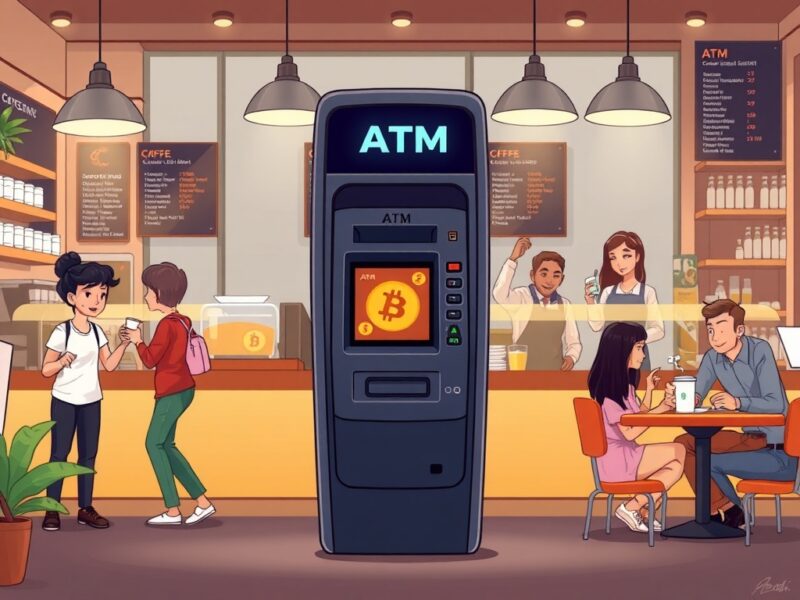
BitcoinWorld Crypto ATMs: Reborn Coffee’s Bold Move Revolutionizing Retail Access The world of cryptocurrency is constantly evolving, and now, a familiar daily ritual is set to intersect with digital finance. Imagine grabbing your favorite latte and, right there, accessing your digital assets. This isn’t a distant future; it’s happening now! Nasdaq-listed coffee chain Reborn Coffee recently announced an exciting pilot program to install crypto ATMs in select Southern California stores, marking a significant step towards mainstream adoption. What Does This Mean for Everyday Crypto Access? Reborn Coffee, known for its commitment to innovation and high-quality coffee, is taking a bold leap into the digital asset space. Following an earlier announcement about trialing cryptocurrency payments at select locations, the introduction of crypto ATMs offers a tangible bridge between the traditional retail environment and the burgeoning crypto economy. This initiative aims to make buying and selling cryptocurrencies more accessible and less intimidating for the general public, moving beyond online exchanges into convenient, physical locations. This pilot program is not just about convenience; it’s about demystifying cryptocurrency for a broader audience. For many, the process of acquiring or selling crypto can feel complex or daunting, often requiring multiple steps on online platforms. However, seeing a dedicated machine in a familiar, trusted setting like a coffee shop can significantly lower the barrier to entry. Customers will soon have the option to: Easily Convert Cash: Seamlessly turn fiat currency into popular digital assets like Bitcoin or Ethereum. Access Digital Wallets: Conveniently manage their crypto holdings, whether buying more or selling for cash, directly from a physical touchpoint. Engage with Crypto: Experience the world of digital finance in a secure, straightforward, and highly accessible manner, encouraging wider participation. This strategic placement aims to integrate crypto transactions into daily life, making them as routine as an ATM withdrawal or a coffee purchase. Why Are Coffee Chains Embracing Crypto ATMs? The decision by Reborn Coffee to integrate crypto ATMs aligns with a broader, forward-thinking trend of businesses exploring new payment methods and innovative customer engagement strategies. Modern companies recognize the rapidly growing interest in cryptocurrencies and actively seek to cater to tech-savvy consumers and those curious about digital assets. For a dynamic coffee chain like Reborn Coffee, this pioneering move can yield several strategic advantages: Attract New Customer Segments: Appeal directly to a demographic that is actively interested in digital assets and cutting-edge technology. Enhance Brand Image: Position Reborn Coffee as an innovative, modern, and customer-centric brand at the forefront of retail technology adoption. Increase Foot Traffic and Sales: Bring in individuals specifically looking to use crypto services, who are then likely to make additional purchases, boosting overall store revenue. Future-Proof Operations: Prepare for a future where digital currencies play a more prominent role in everyday transactions. Moreover, the integration of these machines beautifully complements the existing pilot program for crypto payments. This creates a holistic, user-friendly ecosystem where customers can both acquire and spend cryptocurrencies within the very same retail environment. It’s a powerful statement about the evolving future of retail transactions and consumer convenience. Navigating the Road Ahead: Challenges and Benefits of In-Store Crypto ATMs While the potential benefits of introducing crypto ATMs are clear and compelling, rolling out such technology in a public retail setting also presents unique operational and regulatory challenges. Ensuring robust regulatory compliance with ever-evolving cryptocurrency laws, maintaining stringent security protocols to protect transactions, and providing adequate customer support for a novel financial service are all crucial considerations. Businesses must diligently navigate varying state and federal regulations regarding cryptocurrency, which can often be complex and fragmented. However, successfully overcoming these hurdles can unlock significant, transformative advantages: Increased Financial Inclusion: Providing accessible pathways to digital finance for individuals who may be unbanked or underbanked, fostering greater economic participation. Faster and More Efficient Transactions: Offering quicker and more direct access to cryptocurrencies compared to some traditional banking or online exchange methods. Educational Opportunity: Serving as practical, real-world touchpoints that help to educate and familiarize consumers about cryptocurrencies in a practical, low-pressure setting. Diversified Revenue Streams: Potentially generating additional income through transaction fees or partnerships with ATM operators. Reborn Coffee’s cautious approach, starting with a limited trial in Southern California, is a smart move. This allows them to rigorously assess operational efficiency, gather crucial customer feedback, and refine their processes before considering a wider rollout. This measured strategy is absolutely vital for the successful and sustainable integration of any new financial technology. Is This the Future of Retail and Crypto Integration? The pioneering move by Reborn Coffee is far more than just a novelty; it powerfully signals a potential paradigm shift in how consumers interact with their money and conduct daily transactions. As more businesses, especially those with a high volume of daily customer interactions like coffee shops, restaurants, and convenience stores, begin to seriously consider incorporating cryptocurrency services, the traditional lines between conventional finance and digital assets will continue to blur significantly. This widespread physical presence of easily accessible crypto ATMs could effectively normalize cryptocurrency for millions of people, making it as commonplace and routine as withdrawing cash from a traditional ATM or paying with a credit card. It’s an incredibly exciting time for both dedicated coffee lovers and enthusiastic crypto adopters. Reborn Coffee is not merely serving delicious beverages; it is actively serving a compelling glimpse into a future where digital currency is seamlessly integrated into our daily routines and economic fabric. This bold, pioneering effort could undoubtedly inspire countless other retail chains across various sectors to explore and implement similar innovative initiatives, thereby accelerating the collective journey towards a truly decentralized, efficient, and accessible financial landscape for everyone. Frequently Asked Questions About Crypto ATMs at Reborn Coffee Here are some common questions about Reborn Coffee’s new initiative: What is Reborn Coffee doing with crypto?Reborn Coffee, a Nasdaq-listed coffee chain, is piloting the installation of crypto ATMs in some of its Southern California stores. This follows an earlier trial program for accepting cryptocurrency payments. Where will these crypto ATMs be located?The initial pilot program for crypto ATMs will be rolled out in select Reborn Coffee locations across Southern California. Specific store details are expected to be announced by the company. How do crypto ATMs work?Crypto ATMs function similarly to traditional bank ATMs but deal with digital currencies. Users can typically insert cash to buy cryptocurrencies (like Bitcoin or Ethereum) or, in some cases, sell their cryptocurrencies for cash, often requiring a digital wallet and identity verification. What cryptocurrencies will be available through these ATMs?While specific details from Reborn Coffee are pending, most crypto ATMs commonly support major cryptocurrencies such as Bitcoin (BTC) and Ethereum (ETH). The range may vary based on the ATM operator. What are the main benefits for customers using these in-store crypto ATMs?Customers benefit from increased convenience and accessibility to cryptocurrencies. They can easily convert cash to crypto, manage their digital assets in a physical location, and engage with the crypto economy in a straightforward, user-friendly manner while enjoying their coffee. Is it safe to use crypto ATMs?Reputable crypto ATMs are designed with security features, but users should always exercise caution. It’s important to use legitimate machines, verify transaction details, and ensure your digital wallet is secure. Reborn Coffee is likely partnering with established ATM providers to ensure a secure experience. If you found this article insightful, consider sharing it with your friends, family, and fellow crypto enthusiasts on social media! Let’s spread the word about how everyday businesses are embracing the future of finance. To learn more about the latest cryptocurrency adoption trends, explore our article on key developments shaping digital assets institutional adoption. This post Crypto ATMs: Reborn Coffee’s Bold Move Revolutionizing Retail Access first appeared on BitcoinWorld and is written by Editorial Team

Author: Coinstats
Tazapay Funding: A Powerful Boost from Ripple and Circle for Global Payments

Tazapay Funding: A Powerful Boost from Ripple and Circle for Global Payments

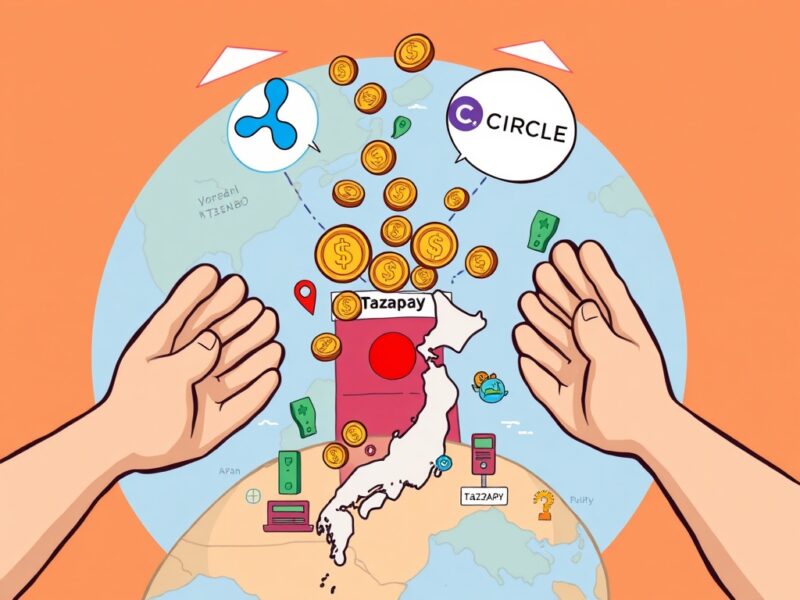
BitcoinWorld Tazapay Funding: A Powerful Boost from Ripple and Circle for Global Payments The world of fintech is buzzing with exciting news! Cross-border payment infrastructure platform Tazapay has just secured significant Series B Tazapay funding, with major participation from industry giants Ripple and Circle Ventures. This strategic investment is poised to dramatically accelerate Tazapay’s growth and innovation in the global payments landscape, especially for those navigating the complexities of international transactions. What Does This Tazapay Funding Mean for Cross-Border Payments? Tazapay operates as a crucial backbone for businesses engaged in international trade, offering a robust platform that simplifies complex payment flows. Their infrastructure supports various payment methods, ensuring secure and efficient transactions across borders. This recent influx of Tazapay funding is a clear vote of confidence in their vision and technological capabilities. Simplified Transactions: Tazapay helps businesses overcome the hurdles of international payments, such as varying regulations and currency conversions. Enhanced Security: The platform prioritizes security, building trust for both payers and recipients. Global Reach: It connects businesses to a vast network of payment options worldwide. Ripple and Circle’s Strategic Investment in Tazapay Funding The participation of Ripple and Circle Ventures in this Series B round is particularly noteworthy. Both companies are at the forefront of digital asset and blockchain-based payment solutions. Their investment in Tazapay funding signifies a shared belief in the potential of modernizing cross-border finance. Ripple is well-known for its enterprise blockchain solutions, especially for international remittances, while Circle is a leading issuer of USDC, a widely adopted stablecoin. Moreover, their combined expertise and resources will undoubtedly provide Tazapay with invaluable strategic guidance and technological synergies. This partnership underscores a growing trend of established crypto firms investing in traditional fintech infrastructure to bridge the gap between legacy systems and decentralized finance. Expanding Horizons: Tazapay’s Focus on Japan with New Funding A key objective for Tazapay, fueled by this latest Tazapay funding, is to significantly expand its operations in Japan. The Japanese market presents a unique opportunity due to its advanced economy and increasing adoption of digital payment solutions. Expanding into Japan will allow Tazapay to: Tap into a vibrant and technologically forward-thinking market. Offer its efficient cross-border payment solutions to Japanese businesses. Strengthen its presence in the Asia-Pacific region, a critical hub for global trade. This geographical expansion is a strategic move, positioning Tazapay to capture a larger share of the lucrative Asian cross-border payment market. Furthermore, it highlights the company’s commitment to becoming a truly global player. Innovating with Stablecoins and Real-Time Payments (RTP) Post-Tazapay Funding Looking ahead, Tazapay intends to invest heavily in stablecoins and real-time payments (RTP). This forward-thinking approach, bolstered by the new Tazapay funding, aligns perfectly with the evolving demands of the global financial ecosystem. Why are stablecoins and RTP so important? Stablecoins: These digital currencies offer the stability of traditional fiat currencies with the efficiency and speed of blockchain technology. They can significantly reduce the volatility risks often associated with cryptocurrency payments, making international transactions more predictable. Real-Time Payments: RTP systems allow for instant settlement of transactions, a crucial feature for businesses requiring immediate fund transfers and improved cash flow management in a fast-paced global economy. By integrating these technologies, Tazapay aims to offer even faster, more cost-effective, and transparent payment solutions, further solidifying its competitive edge and enhancing user experience. The Future of Global Transactions Powered by Tazapay Funding The strategic injection of Tazapay funding from Ripple and Circle Ventures marks a pivotal moment for the cross-border payment sector. It not only validates Tazapay’s innovative platform but also signals a powerful convergence of traditional fintech and the burgeoning crypto economy. Businesses worldwide can anticipate more seamless, secure, and efficient international transactions as Tazapay leverages this investment to expand its reach and technological capabilities. This development is a testament to the ongoing evolution of global finance, where collaboration between established players and innovative startups is driving unprecedented progress. The future of cross-border payments looks brighter and more integrated than ever before, thanks to forward-thinking initiatives like this. Frequently Asked Questions (FAQs) about Tazapay Funding Q1: What is Tazapay? A1: Tazapay is a cross-border payment infrastructure platform that helps businesses facilitate secure and efficient international transactions by simplifying complex payment flows and offering various payment methods. Q2: Who invested in Tazapay’s Series B funding round? A2: Tazapay secured its Series B funding round with participation from prominent industry players, specifically Ripple and Circle Ventures. Q3: How will Tazapay use the new funding? A3: Tazapay plans to use the Series B Tazapay funding to expand its business, particularly in Japan, and intends to invest in stablecoins and real-time payments (RTP) technologies. Q4: Why are stablecoins and real-time payments important for Tazapay’s future? A4: Stablecoins offer transaction stability by linking to fiat currencies, while real-time payments enable instant settlement. Both technologies are crucial for Tazapay to provide faster, more cost-effective, and transparent cross-border payment solutions. Q5: How does this investment impact the broader cross-border payment industry? A5: This investment signifies a growing convergence between traditional fintech and the crypto economy, fostering innovation and potentially leading to more integrated, efficient, and secure global payment systems for businesses worldwide. Did you find this article insightful? Share it with your network to spread the word about the exciting developments in cross-border payments and fintech innovation! To learn more about the latest fintech innovations and cross-border payment trends, explore our article on key developments shaping global finance and digital payment solutions. This post Tazapay Funding: A Powerful Boost from Ripple and Circle for Global Payments first appeared on BitcoinWorld and is written by Editorial Team

Author: Coinstats