

P2P Risk Awareness: Impersonation Scams and How to Reduce Your Risk
1. What is Impersonation Scam?
Scammers may attempt to impersonate MEXC Customer Service agents, pressuring you to release your crypto immediately under the threat of account suspension or freezing. They may also request sensitive information, such as your email address, to send phishing emails that appear to be official notices from MEXC.
2. Common Impersonation Scam
2.1 Chat Box / Email / SMS / Telegram / WhatsApp Impersonation Scam
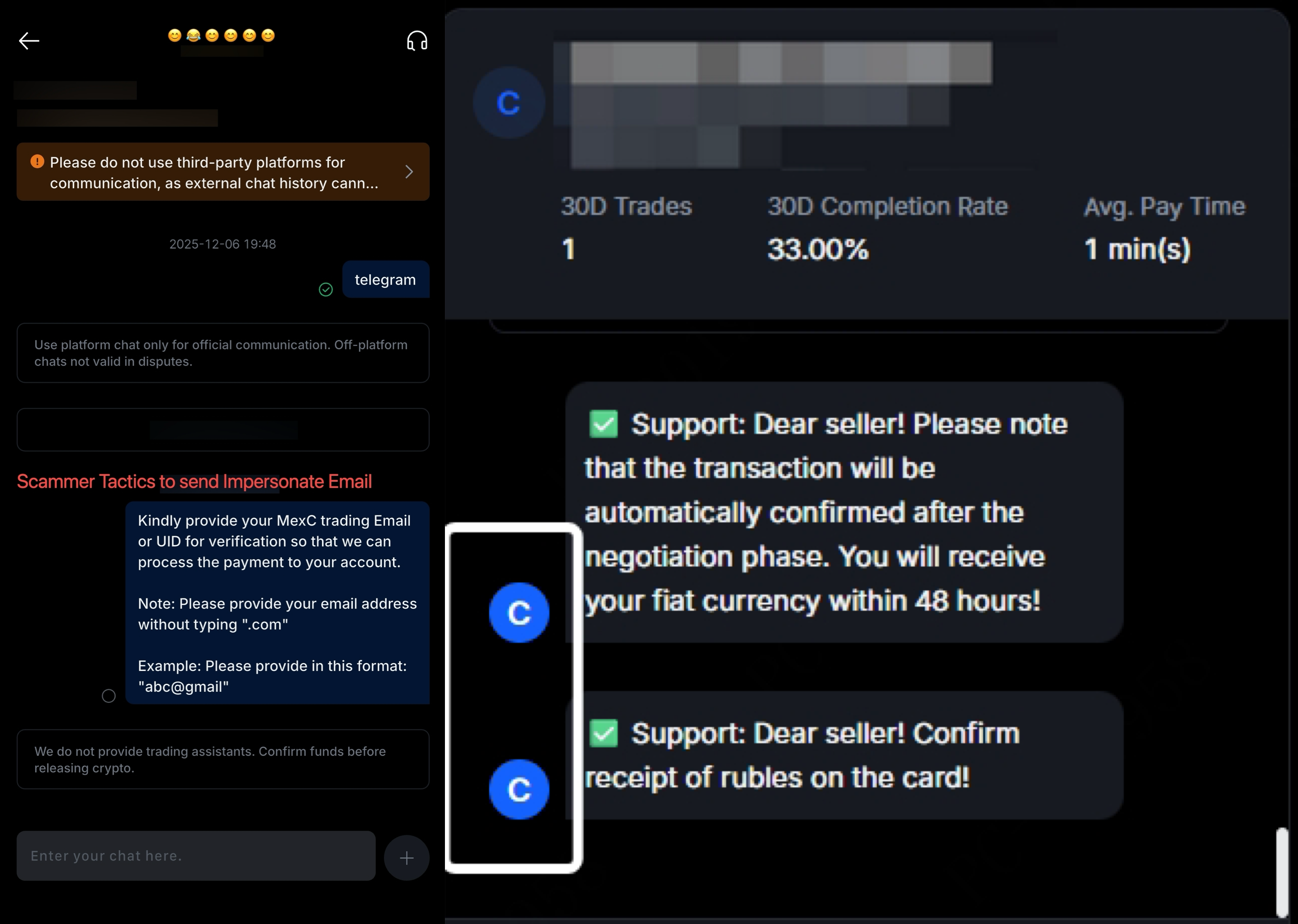
2.2 How does this scam work?
1)Bypassing detection systems
Asking for a partial email helps scammers avoid platform keyword detection and automated warnings.
2)Collecting enough personal information
Even without the full domain, scammers can often infer your complete email address based on common patterns.
3)Impersonating official support
After gathering sufficient information, scammers pretend to be official customer service and send you a spoofed email that closely resembles a real platform notification.
4)Creating false legitimacy
Fake email is used to pressure you into taking further actions, such as releasing crypto, canceling an order, or moving communication off-platform.
2.3 Attention !!!
❌ Any request for your email, UID, or verification details in P2P chat is a scam.
❌ Never share personal or account information with other users.
❌ Messages from Telegram, WhatsApp, SMS, or email are not official communications.
❌ MEXC does not contact users through personal or external platforms.
3. What Should You Do If a P2P Issue Occurs?
If you encounter the above scenario |
|
✅ Buyer Reminders |
|
✅ Seller Reminders |
|
Important: Once crypto is released, the transaction is considered completed and cannot be reversed by MEXC. | |