买币
行情
现货
合约BTC
理财
活动中心
福利中心
更多
0 费狂欢节

MEXC Digest 48: Midterms vs. the Machine


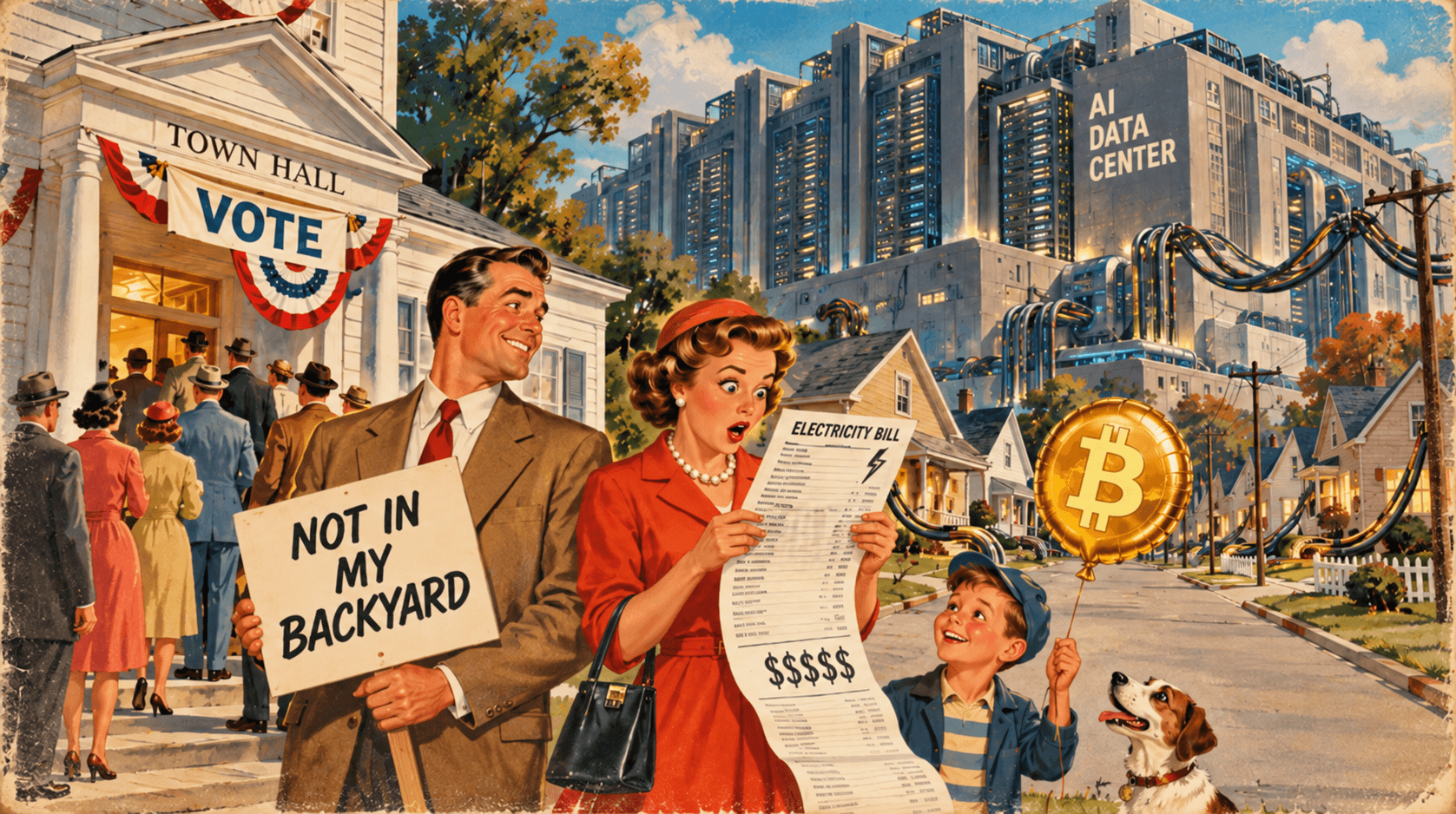
In Ohio, a Senate candidate is running TV ads against a building. The building is a data center, and the argument is simple: households shouldn't have to pick up the electricity bill for the AI boom.


He's not alone. Across this midterm cycle, candidates in both parties have found an opponent that unites voters across party lines: the AI buildout. For markets, that's awkward, because the same buildout has been helping hold stocks up all year.


So what matters more on Nov 3: who wins, or what they ran against?


The Main Character: The New Opponent

Markets Hate Not Knowing

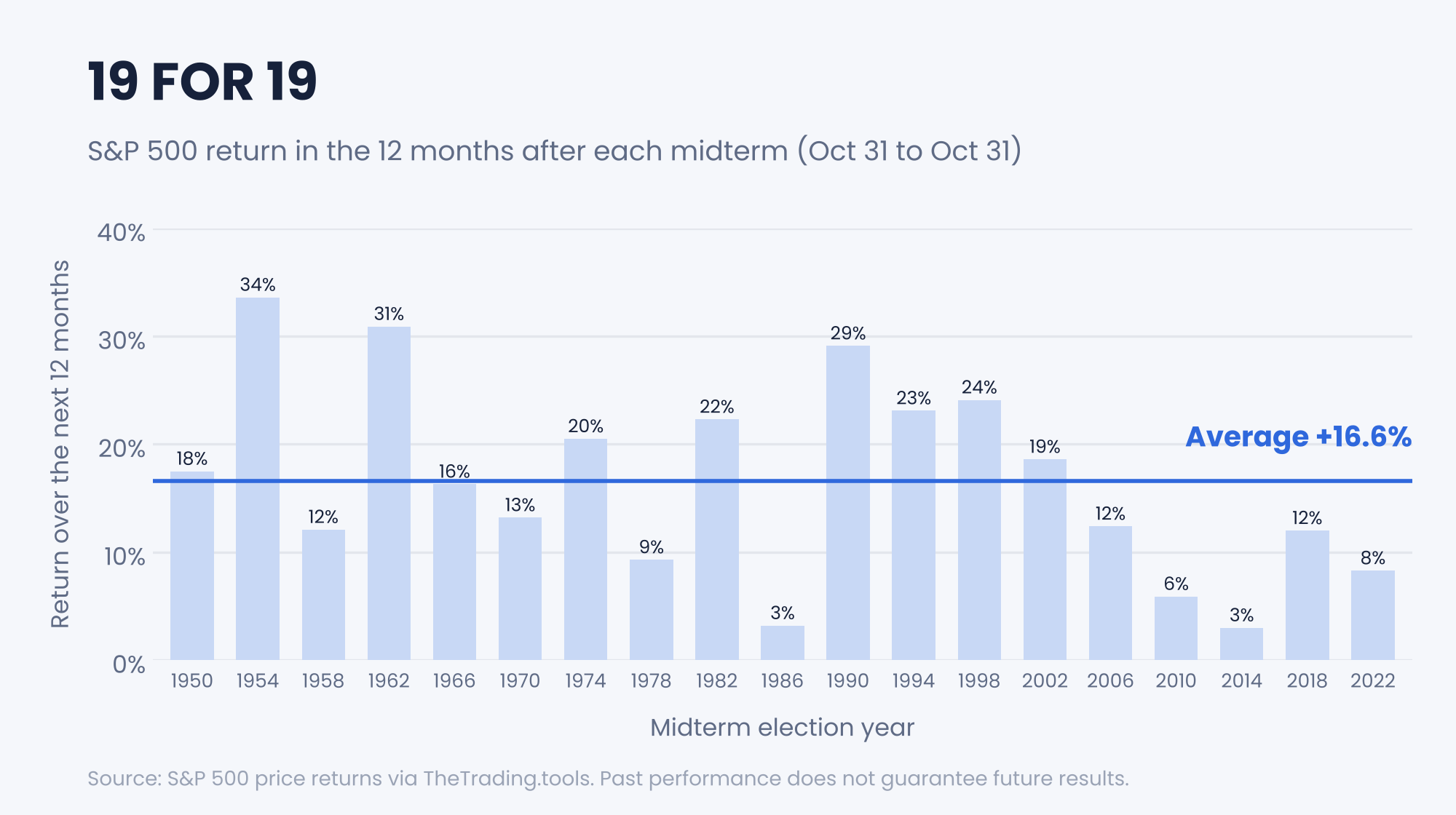
You know the drill: markets get jumpy before a midterm, then exhale once the votes are counted. The S&P 500 has risen in the 12 months after all 19 midterms since 1950, and Bitcoin has rallied after all three of its own. Three elections hardly make a trading rule, but the pattern is hard to ignore.


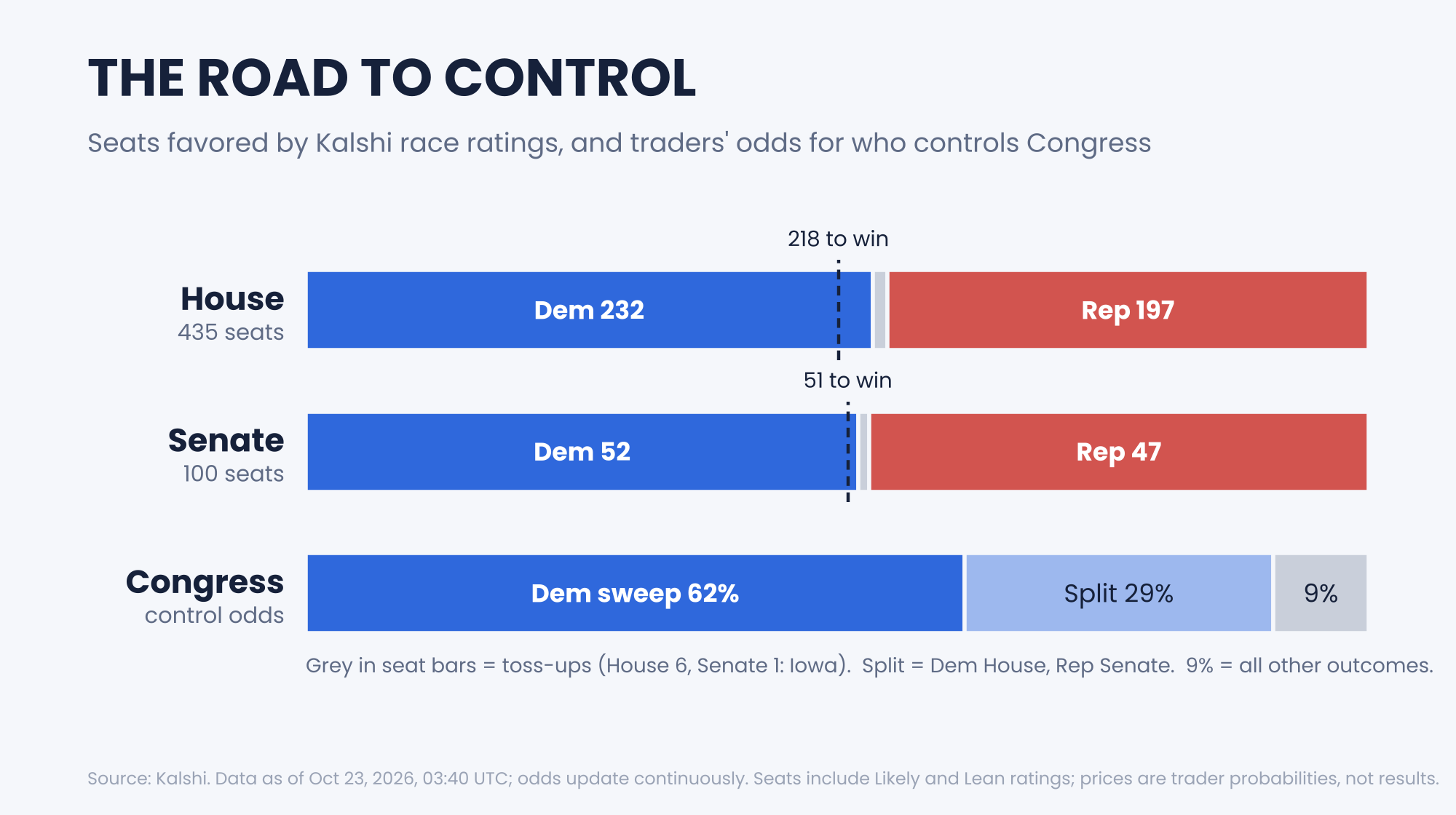
This year's jitters have a specific shape. As of Oct 21, Kalshi traders gave Democrats a 91% chance of taking the House. Stocks had already slid roughly 8% during the Iran conflict in March before AI-related earnings helped carry them back to records. That's where the election gets interesting: the same industry helping support the rally has become one of the campaign trail's favorite targets.


Why Data Centers Became the Easiest Target

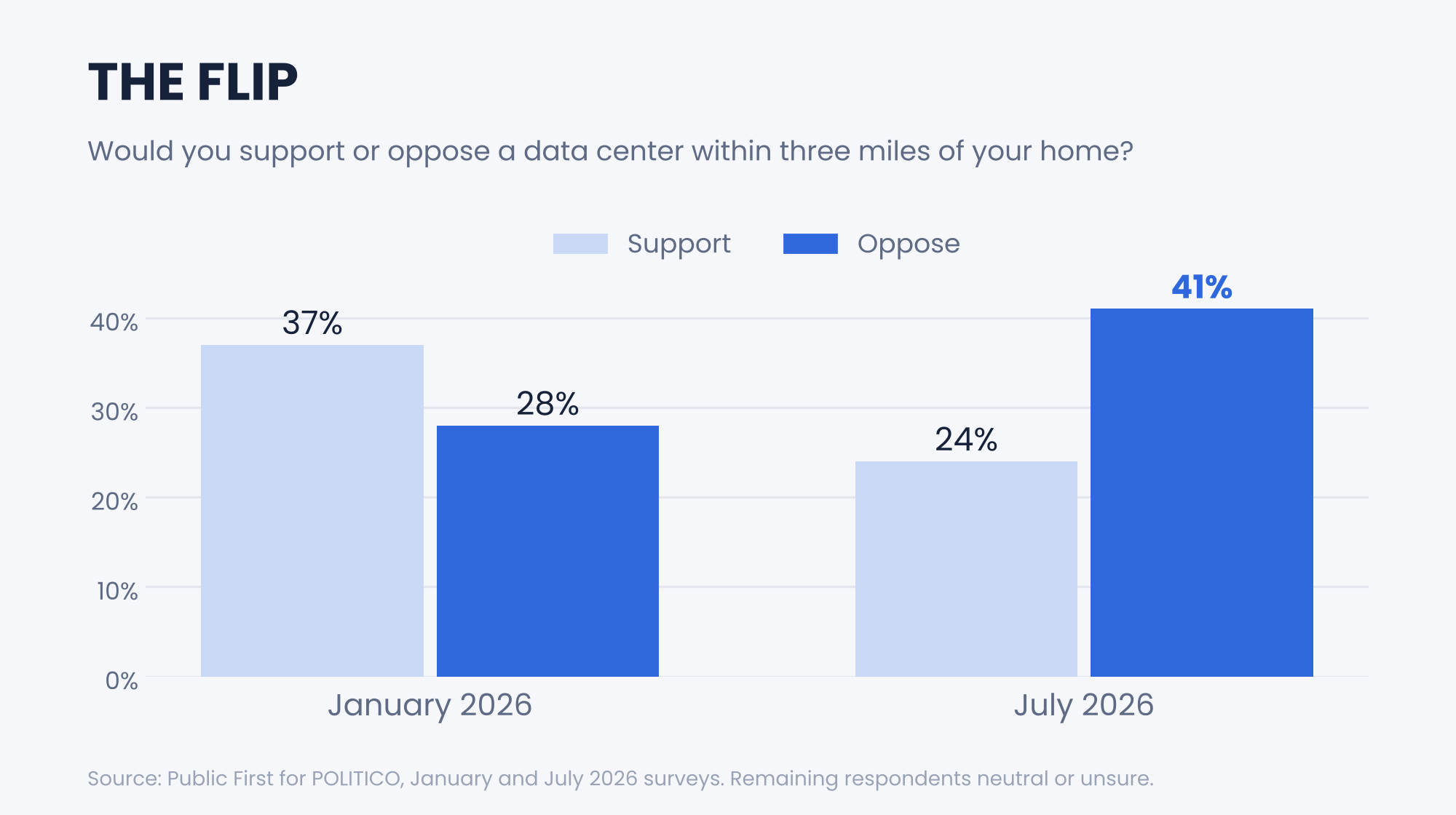
The mood turned fast. According to a Politico survey, the share of Americans who'd oppose a data center within three miles of home jumped from 28% in January to 41% by July. Gallup went further: 71% oppose an AI data center in their area, more than have ever opposed a nuclear power plant in its polling. And the opposition crosses party lines.


The data center is a stand-in for something bigger. The worries aren't just about having a giant building next door. They're about rising power bills, jobs, and a general unease about AI and the people building it. You can't campaign against an algorithm quite as easily as you can campaign against the building that runs it.


Campaigns have noticed. More than 150 midterm ads have focused on AI or data centers, according to reporting cited by The Guardian, and both parties are running them. In Ohio, Democrat Sherrod Brown has targeted Republican Jon Husted over his support for data centers. In Texas, Republican Senate candidate Ken Paxton has called for slowing the buildout, breaking with the White House's pro-AI stance.

The math explains why. In an October Outward Intelligence survey, 42% of voters said strong support for more data centers would make them less likely to back a candidate. Only 27% said more likely.


Tech money is pouring in, though not all on the same side. Technology companies and their leaders have spent more than half a billion dollars across 2026 races and ballot measures. A pro-AI super PAC backed by OpenAI's president and Marc Andreessen has raised over $75 million, while Anthropic has committed $40 million to a group pushing for AI regulation. The pro-AI camp is borrowing the playbook crypto's Fairshake ran in 2024, except the AI industry hasn't quite agreed on what it wants from Washington.


What Nov 3 Could Mean for the AI Trade

Remember that AI-powered earnings cushion? Spending on data centers and related infrastructure is expected to top $1 trillion next year. The market's growth engine and the campaign trail's favorite target are the same thing, which is why investors are reading the midterms through an AI lens.


A Democratic sweep is the outcome market watchers see as the biggest AI-related risk, Reuters reports. Opposition runs higher on that side: a Reuters/Ipsos poll found 69% of Democratic registered voters support limits on building data centers, against 43% of Republicans. But analysts doubt legislation that seriously slows construction would become law. Trump would likely block it, and some Democrats also see the buildout as key to growth and competing with China. The more realistic expectation is additional hearings, investigations and headline-driven volatility.


Any other outcome likely means less federal pressure, though a Democratic House alone would still bring hearings. Either way, the backlash doesn't end. Republican voters share many of the same concerns, and both parties have discovered that questioning the AI buildout can win support. The debate is increasingly about who pays for the power, where the facilities go and how quickly they get approved, rather than whether America should build them at all.


The local races may matter most. States and towns have direct influence over permits and power infrastructure, so investors are watching governors, state legislatures and even utility commissioners. Morgan Stanley is tracking gubernatorial races in Texas, Ohio, Pennsylvania, Georgia, Nevada, Wisconsin and Michigan. This is where the backlash has already cost money: according to Data Center Watch, local opposition delayed or blocked at least 75 projects representing about $130 billion in planned investment in Q1 alone. New York went further in July, imposing a one-year moratorium on new hyperscale data centers.


The consensus among analysts isn't that politics kills the AI trade. It's that uncertainty could change the timing and cost of the buildout without derailing it. A project delayed another year is another year away from generating revenue, and higher grid costs mean more money spent before the first dollar comes in. That matters beyond Big Tech: chipmakers, utilities, industrial suppliers and Bitcoin miners converting their sites into AI hosting facilities all depend on the same infrastructure getting built.


For miners in particular, access to power has become an asset beyond Bitcoin itself. But having the capacity and turning it into a functioning AI business are two different things. The market has spent the year rewarding companies for their exposure to AI demand. The next question is how quickly they can deliver on it, and at what cost.


The election will settle who controls Congress. It won't settle who pays for the AI boom.


Translation

"I feel like I'm tap-dancing through a minefield."

Elon Musk, asked about a possible Tesla–SpaceX merger


Both companies have formed special committees to study a combination potentially valued at roughly $3.5 trillion, but Musk says his conflict of interest keeps him out of the discussions. No deal is guaranteed. The man at the center of the proposal can't sit at the negotiating table, yet every word he says still gets priced.


Quick Hits

Super Wednesday. Oct 28 stacks two big catalysts on one day. The Fed announces its rate decision, with markets weighing the possibility of further tightening. Microsoft and Alphabet also report earnings, with Amazon following on Oct 29. The number to watch isn't just earnings per share, but capex guidance: how much more are they prepared to spend building the AI boom?

The other vote. Nov 3 isn't the only vote on traders' radar. Musk says a Tesla–SpaceX merger would require approval from holders of 50% of all Tesla shares, not just those voting. He called that "quite a high hurdle." Barclays says a deal would need to be announced by late October or early November to reach a vote at Tesla's Dec 3 annual meeting. Nothing is agreed yet, and the clock is running.

18 candles. On Oct 31, 2008, Satoshi Nakamoto posted the Bitcoin white paper to a cryptography mailing list. Eighteen years and several obituaries later, it's a trillion-dollar asset. Happy Halloween, and happy birthday.


New & Noteworthy

  • Predict.fun lands on MEXC. The prediction platform covering politics, crypto and sports is trading as PREDICT Points on Pre-Market, with Pre-Market Futures live too.


  • The data center supply chain, now tradable. Cummins (power systems), Kinder Morgan (natural gas pipelines) and Microchip (embedded chips) are now live as 24/7 Stock Futures.


Before You Go

Trade the midterm buzz. Midterm Market Rush brings 0 fees on selected TradFi pairs like gold, silver and oil, plus a $500,000 reward pool, through Nov 12.


Anthropic Pre-IPO Launchpad is coming. Complete simple missions in the Anthropic Pre-IPO Heatwave for draw chances at an NVIDIA H200 GPU, a year of Claude and up to $1,000 in Pre-IPO allocations.



Coin Icon
现在注册即可获得 10,000 USDT 新人奖励

订阅 MEXC 精选

市场动态、新币上线、行业洞察,每周为您精选送达
订阅即表示您同意接收 MEXC 周报和邮件通讯,并同意我们的《隐私政策》。内容仅供参考,不构成任何投资建议。

加入 MEXC 公告电报群

最新上币、热门活动、重大更新——全部在官方 Telegram 实时推送。

MEXC Digest 48: Midterms vs. the Machine


In Ohio, a Senate candidate is running TV ads against a building. The building is a data center, and the argument is simple: households shouldn't have to pick up the electricity bill for the AI boom.


He's not alone. Across this midterm cycle, candidates in both parties have found an opponent that unites voters across party lines: the AI buildout. For markets, that's awkward, because the same buildout has been helping hold stocks up all year.


So what matters more on Nov 3: who wins, or what they ran against?


The Main Character: The New Opponent

Markets Hate Not Knowing

You know the drill: markets get jumpy before a midterm, then exhale once the votes are counted. The S&P 500 has risen in the 12 months after all 19 midterms since 1950, and Bitcoin has rallied after all three of its own. Three elections hardly make a trading rule, but the pattern is hard to ignore.


This year's jitters have a specific shape. As of Oct 21, Kalshi traders gave Democrats a 91% chance of taking the House. Stocks had already slid roughly 8% during the Iran conflict in March before AI-related earnings helped carry them back to records. That's where the election gets interesting: the same industry helping support the rally has become one of the campaign trail's favorite targets.


Why Data Centers Became the Easiest Target

The mood turned fast. According to a Politico survey, the share of Americans who'd oppose a data center within three miles of home jumped from 28% in January to 41% by July. Gallup went further: 71% oppose an AI data center in their area, more than have ever opposed a nuclear power plant in its polling. And the opposition crosses party lines.


The data center is a stand-in for something bigger. The worries aren't just about having a giant building next door. They're about rising power bills, jobs, and a general unease about AI and the people building it. You can't campaign against an algorithm quite as easily as you can campaign against the building that runs it.


Campaigns have noticed. More than 150 midterm ads have focused on AI or data centers, according to reporting cited by The Guardian, and both parties are running them. In Ohio, Democrat Sherrod Brown has targeted Republican Jon Husted over his support for data centers. In Texas, Republican Senate candidate Ken Paxton has called for slowing the buildout, breaking with the White House's pro-AI stance.

The math explains why. In an October Outward Intelligence survey, 42% of voters said strong support for more data centers would make them less likely to back a candidate. Only 27% said more likely.


Tech money is pouring in, though not all on the same side. Technology companies and their leaders have spent more than half a billion dollars across 2026 races and ballot measures. A pro-AI super PAC backed by OpenAI's president and Marc Andreessen has raised over $75 million, while Anthropic has committed $40 million to a group pushing for AI regulation. The pro-AI camp is borrowing the playbook crypto's Fairshake ran in 2024, except the AI industry hasn't quite agreed on what it wants from Washington.


What Nov 3 Could Mean for the AI Trade

Remember that AI-powered earnings cushion? Spending on data centers and related infrastructure is expected to top $1 trillion next year. The market's growth engine and the campaign trail's favorite target are the same thing, which is why investors are reading the midterms through an AI lens.


A Democratic sweep is the outcome market watchers see as the biggest AI-related risk, Reuters reports. Opposition runs higher on that side: a Reuters/Ipsos poll found 69% of Democratic registered voters support limits on building data centers, against 43% of Republicans. But analysts doubt legislation that seriously slows construction would become law. Trump would likely block it, and some Democrats also see the buildout as key to growth and competing with China. The more realistic expectation is additional hearings, investigations and headline-driven volatility.


Any other outcome likely means less federal pressure, though a Democratic House alone would still bring hearings. Either way, the backlash doesn't end. Republican voters share many of the same concerns, and both parties have discovered that questioning the AI buildout can win support. The debate is increasingly about who pays for the power, where the facilities go and how quickly they get approved, rather than whether America should build them at all.


The local races may matter most. States and towns have direct influence over permits and power infrastructure, so investors are watching governors, state legislatures and even utility commissioners. Morgan Stanley is tracking gubernatorial races in Texas, Ohio, Pennsylvania, Georgia, Nevada, Wisconsin and Michigan. This is where the backlash has already cost money: according to Data Center Watch, local opposition delayed or blocked at least 75 projects representing about $130 billion in planned investment in Q1 alone. New York went further in July, imposing a one-year moratorium on new hyperscale data centers.


The consensus among analysts isn't that politics kills the AI trade. It's that uncertainty could change the timing and cost of the buildout without derailing it. A project delayed another year is another year away from generating revenue, and higher grid costs mean more money spent before the first dollar comes in. That matters beyond Big Tech: chipmakers, utilities, industrial suppliers and Bitcoin miners converting their sites into AI hosting facilities all depend on the same infrastructure getting built.


For miners in particular, access to power has become an asset beyond Bitcoin itself. But having the capacity and turning it into a functioning AI business are two different things. The market has spent the year rewarding companies for their exposure to AI demand. The next question is how quickly they can deliver on it, and at what cost.


The election will settle who controls Congress. It won't settle who pays for the AI boom.


Translation

"I feel like I'm tap-dancing through a minefield."

Elon Musk, asked about a possible Tesla–SpaceX merger


Both companies have formed special committees to study a combination potentially valued at roughly $3.5 trillion, but Musk says his conflict of interest keeps him out of the discussions. No deal is guaranteed. The man at the center of the proposal can't sit at the negotiating table, yet every word he says still gets priced.


Quick Hits

Super Wednesday. Oct 28 stacks two big catalysts on one day. The Fed announces its rate decision, with markets weighing the possibility of further tightening. Microsoft and Alphabet also report earnings, with Amazon following on Oct 29. The number to watch isn't just earnings per share, but capex guidance: how much more are they prepared to spend building the AI boom?

The other vote. Nov 3 isn't the only vote on traders' radar. Musk says a Tesla–SpaceX merger would require approval from holders of 50% of all Tesla shares, not just those voting. He called that "quite a high hurdle." Barclays says a deal would need to be announced by late October or early November to reach a vote at Tesla's Dec 3 annual meeting. Nothing is agreed yet, and the clock is running.

18 candles. On Oct 31, 2008, Satoshi Nakamoto posted the Bitcoin white paper to a cryptography mailing list. Eighteen years and several obituaries later, it's a trillion-dollar asset. Happy Halloween, and happy birthday.


New & Noteworthy

  • Predict.fun lands on MEXC. The prediction platform covering politics, crypto and sports is trading as PREDICT Points on Pre-Market, with Pre-Market Futures live too.


  • The data center supply chain, now tradable. Cummins (power systems), Kinder Morgan (natural gas pipelines) and Microchip (embedded chips) are now live as 24/7 Stock Futures.


Before You Go

Trade the midterm buzz. Midterm Market Rush brings 0 fees on selected TradFi pairs like gold, silver and oil, plus a $500,000 reward pool, through Nov 12.


Anthropic Pre-IPO Launchpad is coming. Complete simple missions in the Anthropic Pre-IPO Heatwave for draw chances at an NVIDIA H200 GPU, a year of Claude and up to $1,000 in Pre-IPO allocations.


Coin Icon
现在注册即可获得 10,000 USDT 新人奖励

订阅 MEXC 精选

市场动态、新币上线、行业洞察,每周为您精选送达
订阅即表示您同意接收 MEXC 周报和邮件通讯,并同意我们的《隐私政策》。内容仅供参考,不构成任何投资建议。

加入 MEXC 公告电报群

最新上币、热门活动、重大更新——全部在官方 Telegram 实时推送。
及时获取 MEXC 最新上币、下币、交易活动与产品更新。探索新代币、Launchpad 项目、Earn 理财机会、AI 工具,以及合约交易优化等更多平台动态。及时获取 MEXC 最新上币、下币、交易活动与产品更新。探索新代币、Launchpad 项目、Earn 理财机会、AI 工具,以及合约交易优化等更多平台动态。