Dapp

Dapps are digital applications that run on a P2P network of computers rather than a single server, typically utilizing smart contracts to ensure transparency and uptime. In 2026, Dapps have achieved mass-market appeal through Account Abstraction, allowing for a "Web2-like" user experience with the security of Web3. This tag covers the entire ecosystem of decentralized software—from social media and productivity tools to governance platforms and identity management.

4985 Articles
Created: 2026/02/02 18:52
Updated: 2026/02/02 18:52

Taiko and Chainlink to Unleash Reliable Onchain Data for DeFi Ecosystem

Taiko and Chainlink to Unleash Reliable Onchain Data for DeFi Ecosystem

Taiko and Chainlink Data Streams to deliver secure, high-speed onchain data by empowering next-generation DeFi protocols and institutional-grade adoption.

Author: Blockchainreporter
VFX vs Snorter vs BlockDAG vs Remittix: Only One Has Live Trading Platform

VFX vs Snorter vs BlockDAG vs Remittix: Only One Has Live Trading Platform

Meanwhile, VFX Token quietly operates a licensed trading platform managing $40 million, processing 1,500 daily trades, and generating $225,000 monthly […] The post VFX vs Snorter vs BlockDAG vs Remittix: Only One Has Live Trading Platform appeared first on Coindoo.

Author: Coindoo
Pi Network Future: Key Upgrades and $100M Fund at TOKEN2049

Pi Network Future: Key Upgrades and $100M Fund at TOKEN2049

TLDR Pi Network is preparing for significant updates at the upcoming TOKEN2049 event in Singapore. The community is eager for transparency on Pi Network’s roadmap, blockchain upgrades, and the $100 million Pi Ventures fund. The Pi Core team is working on upgrading the blockchain to version 23 to enhance scalability and performance. The Pi Network [...] The post Pi Network Future: Key Upgrades and $100M Fund at TOKEN2049 appeared first on CoinCentral.

Author: Coincentral
New Crypto Investors Are Rushing To Back This Viral Meme Coin After 100x Gains Mentioned; It’s Not Dogecoin

New Crypto Investors Are Rushing To Back This Viral Meme Coin After 100x Gains Mentioned; It’s Not Dogecoin

While Dogecoin remains one of the most recognized names in crypto, a fresh contender is now taking center stage: Layer […] The post New Crypto Investors Are Rushing To Back This Viral Meme Coin After 100x Gains Mentioned; It’s Not Dogecoin appeared first on Coindoo.

Author: Coindoo
To Simplify Trading While Reducing The Dependency On Centralized Exchanges

To Simplify Trading While Reducing The Dependency On Centralized Exchanges

The post To Simplify Trading While Reducing The Dependency On Centralized Exchanges appeared on BitcoinEthereumNews.com. Coinidol.com on Bancor’s approach to liquidity provision and token conversion. Bancor (BNT) is a decentralized liquidity protocol and cryptocurrency that aims to provide automated and continuous liquidity for decentralized applications (DApps) and tokens on various blockchain networks. Constant reserve ratio and reduced slippage Bancor’s platform facilitates the creation of liquidity pools and the exchange of tokens without the need for a traditional order book or a centralized exchange. The protocol is designed to enhance liquidity, reduce slippage, and enable easy token conversions. It’s algorithmic model uses a constant reserve ratio to calculate token prices within liquidity pools, enabling predictable and consistent token conversion rates. The automated market-making model used by Bancor helps reduce slippage, which is the difference between the expected and actual price of a token when trading. Token bridge Bancor provides a token bridge that enables the movement of tokens between different blockchain networks, facilitating interoperability. Unlike traditional exchanges, Bancor doesn’t rely on an order book for trading. Instead, it offers liquidity directly from the automated liquidity pools. BNT is the native cryptocurrency of the Bancor network. It is used for staking, providing liquidity. BNT holders can participate in the governance of the Bancor protocol by proposing and voting on changes, improvements, and updates. Disclaimer. This article is for informational purposes only and should not be viewed as an endorsement by Coinidol.com. The data provided is collected by the author and is not sponsored by any company or token developer. They are not a recommendation to buy or sell cryptocurrency. Readers should do their research before investing in funds. Source: https://coinidol.com/bancor-bnt-token/

Author: BitcoinEthereumNews
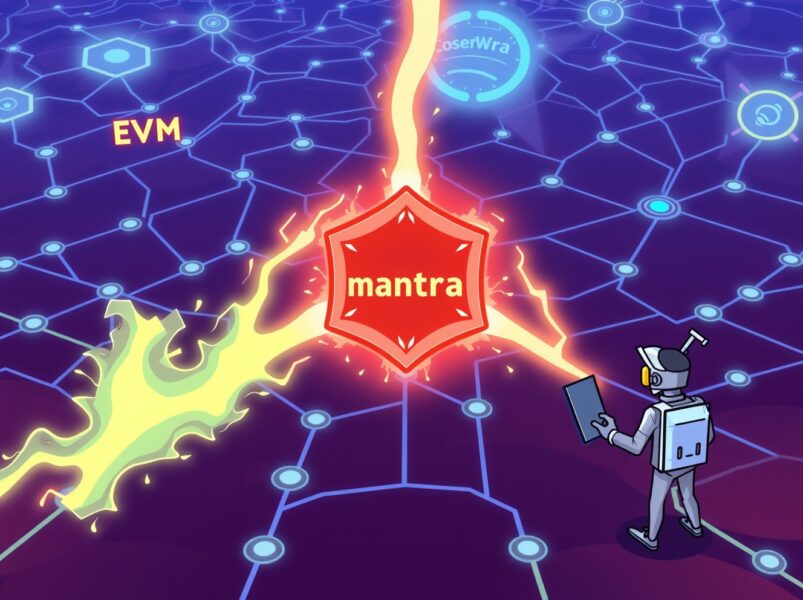
Mantra Native Support: Unlocking Brilliant Interoperability with EVM and CosmWasm

Mantra Native Support: Unlocking Brilliant Interoperability with EVM and CosmWasm

BitcoinWorld Mantra Native Support: Unlocking Brilliant Interoperability with EVM and CosmWasm The blockchain world is constantly evolving, and innovation is key to staying ahead. A significant development has recently emerged from the Mantra ecosystem: the completion of its mainnet upgrade. This crucial update introduces Mantra native support for both the Ethereum Virtual Machine (EVM) and CosmWasm smart contracts, marking a pivotal moment for interoperability and developer flexibility within the Cosmos ecosystem. This move, as reported by CryptoBriefing, positions Mantra as a versatile platform ready to embrace a broader range of decentralized applications (dApps) and foster a more connected blockchain environment. What Does Mantra Native Support Truly Mean for Developers? This upgrade isn’t just a technical tweak; it’s a fundamental expansion of Mantra’s capabilities. By integrating Mantra native support for EVM, the platform now welcomes a vast community of developers familiar with Ethereum’s robust tooling and Solidity programming language. This means dApps originally built for Ethereum can potentially be deployed or adapted on Mantra with greater ease, leveraging existing codebases and expertise. Simultaneously, the inclusion of CosmWasm support caters to the vibrant Cosmos ecosystem. CosmWasm is a powerful smart contract platform built for the Cosmos SDK, offering developers the ability to write secure and efficient smart contracts in Rust. This dual support creates a unique environment where projects can choose the best smart contract execution environment for their specific needs, or even bridge between them. Broader Developer Base: Attracts both EVM and CosmWasm developers. Increased Flexibility: Projects can choose their preferred smart contract language and environment. Enhanced Innovation: Fosters cross-chain development and new use cases. Reduced Migration Barriers: Simplifies bringing existing dApps to Mantra. Why is Dual EVM and CosmWasm Integration a Game Changer for Mantra? The strategic decision to offer Mantra native support for both EVM and CosmWasm addresses a core challenge in the blockchain space: fragmentation. Different blockchain ecosystems often operate in silos, making it difficult for assets and data to flow freely between them. Mantra’s approach aims to break down these barriers, creating a more cohesive and interconnected decentralized landscape. Think of it this way: previously, if you wanted to build an application, you had to pick a side – Ethereum or Cosmos. Now, Mantra offers a bridge, allowing developers to harness the strengths of both worlds. This dual compatibility could lead to innovative hybrid dApps that combine the battle-tested security and liquidity of Ethereum with the scalability and modularity of the Cosmos SDK. It’s about empowering developers to build without compromise. Unlocking Liquidity: Potentially connects Mantra to the massive liquidity pools on Ethereum. Improved Scalability: Leverages Cosmos’s strengths for higher transaction throughput. Future-Proofing: Positions Mantra at the forefront of interoperable blockchain solutions. Diverse Use Cases: Opens doors for complex financial products, gaming, and more. What Opportunities and Challenges Lie Ahead for Mantra? With Mantra native support now live, the opportunities are immense. The platform is poised to attract a wave of new projects and users, eager to explore its enhanced capabilities. Imagine a DeFi protocol built on CosmWasm that can seamlessly interact with ERC-20 tokens on Mantra, or a gaming dApp leveraging EVM compatibility for its NFTs while using Cosmos for its core game logic. These are the kinds of innovative applications that this integration makes possible. However, like any significant technological advancement, challenges remain. Ensuring robust security across both virtual machines, optimizing performance for a growing user base, and effectively educating developers on how to best utilize these new features will be crucial. Mantra will need to continue fostering a strong community and providing excellent developer tools to maximize the potential of this upgrade. The success of this initiative will largely depend on the platform’s ability to onboard projects and users efficiently, demonstrating the tangible benefits of its dual-engine approach. Active community engagement and continuous innovation will be key to solidifying Mantra’s position in the competitive blockchain landscape. The introduction of Mantra native support for both EVM and CosmWasm represents a bold leap forward for the platform and the broader blockchain industry. By fostering greater interoperability and providing unparalleled flexibility for developers, Mantra is paving the way for a new generation of decentralized applications. This strategic move not Pre only enhances Mantra’s appeal but also contributes significantly to the vision of a more connected, efficient, and innovative blockchain ecosystem. The future looks bright for projects building on Mantra, as they can now truly leverage the best of both worlds. Frequently Asked Questions (FAQs) What is Mantra’s mainnet upgrade? Mantra’s mainnet upgrade introduces native support for both Ethereum Virtual Machine (EVM) and CosmWasm smart contracts, significantly expanding its capabilities and developer options. Why is EVM support important for Mantra? EVM support allows Mantra to integrate with the vast Ethereum ecosystem, enabling developers familiar with Solidity and Ethereum tooling to build on Mantra and potentially access Ethereum’s liquidity. What is CosmWasm and why is it included? CosmWasm is a smart contract platform built for the Cosmos SDK, allowing secure and efficient contracts in Rust. Its inclusion broadens Mantra’s appeal to the Cosmos developer community and enhances modularity. How does this dual support benefit users? Users can expect a wider array of dApps, potentially more innovative and robust, benefiting from the combined strengths of both EVM and CosmWasm ecosystems, leading to a richer and more interconnected experience. What kind of projects can now be built on Mantra? A diverse range of projects can be built, from DeFi protocols leveraging Ethereum’s liquidity to gaming dApps using Cosmos’s scalability, and even hybrid applications that combine features from both environments. Did you find this deep dive into Mantra’s latest upgrade insightful? Share this article with your network on social media and spark a conversation about the future of blockchain interoperability! Let’s spread the word about these exciting advancements. To learn more about the latest explore our article on key developments shaping Mantra’s ecosystem future innovations. This post Mantra Native Support: Unlocking Brilliant Interoperability with EVM and CosmWasm first appeared on BitcoinWorld.

Author: Coinstats
Revolutionary: CME SOL XRP Futures Options Set to Transform Crypto Trading

Revolutionary: CME SOL XRP Futures Options Set to Transform Crypto Trading

BitcoinWorld Revolutionary: CME SOL XRP Futures Options Set to Transform Crypto Trading Exciting news is rippling through the cryptocurrency world! The U.S. Chicago Mercantile Exchange (CME), a titan in traditional finance, is reportedly planning to launch CME SOL XRP futures options. This significant development, initially reported by Walter Bloomberg, marks a pivotal moment for institutional involvement in the altcoin market. It signals a new era for how Solana (SOL) and Ripple (XRP) might be traded, potentially opening doors to broader adoption and increased market maturity. What Does the Launch of CME SOL XRP Futures Mean for Crypto? When an institution like CME, known for its rigorous standards and vast trading volume, enters a new market, it brings a wave of legitimacy. The introduction of CME SOL XRP futures options indicates a growing acceptance of these digital assets within mainstream finance. This move could fundamentally change how investors perceive and interact with SOL and XRP. Futures options are financial derivatives that give traders the right, but not the obligation, to buy or sell an underlying asset at a specific price on or before a certain date. For SOL and XRP, this means: Enhanced Price Discovery: More participants and trading volume can lead to more efficient and accurate pricing. Institutional Access: It provides regulated avenues for large institutional investors to gain exposure to SOL and XRP without directly owning the underlying assets. Risk Management: Traders can use these options to hedge against potential price fluctuations in their existing SOL and XRP holdings. Why Are SOL and XRP Chosen for CME SOL XRP Futures? The selection of Solana (SOL) and Ripple (XRP) for these new futures options is not arbitrary. Both cryptocurrencies hold significant positions in the market and offer distinct value propositions: Solana (SOL): Known for its high-performance blockchain, offering fast transaction speeds and low costs. Its robust ecosystem supports numerous decentralized applications (dApps), NFTs, and DeFi projects, attracting considerable developer and user interest. Ripple (XRP): Primarily focused on facilitating fast, low-cost international payments for financial institutions. Despite ongoing regulatory discussions, XRP maintains a strong market presence and a dedicated community, highlighting its potential for cross-border transactions. Their substantial market capitalization and existing liquidity make them attractive candidates for institutional-grade derivative products. This choice reflects a strategic assessment by CME of assets that can sustain significant trading interest and volume. Navigating the Landscape: Opportunities and Considerations for CME SOL XRP Futures The introduction of CME SOL XRP futures options presents a wealth of opportunities, yet it also comes with important considerations. On the opportunity front, we can expect increased liquidity, which benefits all market participants by making it easier to buy and sell without significant price impact. Moreover, it could attract new capital from traditional financial players who prefer regulated products. However, traders and investors should also consider the implications: Market Volatility: While derivatives can offer hedging, they can also amplify market movements. Regulatory Clarity: The regulatory landscape for cryptocurrencies, particularly for XRP, continues to evolve. CME’s move might encourage further clarity but also means ongoing scrutiny. Learning Curve: Understanding futures options requires a certain level of financial literacy, which new entrants to the crypto market may need to develop. These products offer sophisticated tools for managing exposure and speculating on price movements, but they demand a careful approach. What’s Next for the Crypto Market with CME SOL XRP Futures? The reported launch of CME SOL XRP futures options is more than just a new product offering; it represents a significant milestone in the ongoing convergence of traditional finance and the digital asset space. It underscores the growing maturity of the cryptocurrency market and its increasing integration into global financial systems. As institutional interest continues to surge, we can anticipate further innovation and a broader range of regulated products for other altcoins. This development is poised to offer sophisticated tools for investors and traders, potentially stabilizing market dynamics while simultaneously introducing new avenues for growth and investment. The crypto market is evolving rapidly, and CME’s latest initiative is a clear indicator of this exciting trajectory. To learn more about the latest crypto market trends, explore our article on key developments shaping the cryptocurrency market institutional adoption. Frequently Asked Questions (FAQs) What is the Chicago Mercantile Exchange (CME)? The CME is one of the world’s largest and most diverse derivatives marketplaces, offering a wide range of futures and options products across various asset classes, including equities, commodities, and now, expanding into specific cryptocurrencies. What are futures options in the context of SOL and XRP? Futures options for SOL and XRP are financial contracts that give the holder the right, but not the obligation, to buy or sell SOL or XRP futures contracts at a predetermined price on or before a specific date. They allow for hedging and speculation on price movements. Why are Solana (SOL) and Ripple (XRP) chosen for these new options? SOL and XRP were likely chosen due to their significant market capitalization, established liquidity, and distinct use cases within the crypto ecosystem, making them attractive for institutional-grade derivative products. How might CME SOL XRP futures options affect the prices of SOL and XRP? The introduction of these options could lead to increased liquidity and institutional participation, potentially influencing price discovery and stability. However, like all derivatives, they can also contribute to market volatility. When are these CME SOL XRP futures options expected to launch? While Walter Bloomberg reported CME’s plans, an official launch date has not yet been publicly announced by CME. Market participants should monitor official CME channels for updates. If you found this article insightful, please consider sharing it with your network! Help us spread the word about the exciting developments in the crypto space by sharing this article on your social media platforms. This post Revolutionary: CME SOL XRP Futures Options Set to Transform Crypto Trading first appeared on BitcoinWorld.

Author: Coinstats
Best Crypto to Buy as Saylor & Crypto Execs Meet in US Treasury Council

Best Crypto to Buy as Saylor & Crypto Execs Meet in US Treasury Council

The post Best Crypto to Buy as Saylor & Crypto Execs Meet in US Treasury Council appeared on BitcoinEthereumNews.com. Michael Saylor and a group of crypto executives met in Washington, D.C. yesterday to push for the Strategic Bitcoin Reserve Bill (the BITCOIN Act), which would see the U.S. acquire up to 1M $BTC over five years. With Bitcoin being positioned yet again as a cornerstone of national monetary policy, many investors are turning their eyes to projects that lean into this narrative – altcoins, meme coins, and presales that could ride on the same wave. Read on for three of the best crypto projects that seem especially well‐suited to benefit from this macro shift:  Bitcoin Hyper, Best Wallet Token, and Remittix. These projects stand out for having a strong use case and high adoption potential, especially given the push for a U.S. Bitcoin reserve.   Why the Bitcoin Reserve Bill Matters for Crypto Markets The strategic Bitcoin Reserve Bill could mark a turning point for the U.S. approach to digital assets. The proposal would see America build a long-term Bitcoin reserve by acquiring up to one million $BTC over five years. To make this happen, lawmakers are exploring creative funding methods such as revaluing old gold certificates. The plan also leans on confiscated Bitcoin already held by the government, worth an estimated $15–20B. This isn’t just a headline for policy wonks. It signals that Bitcoin is moving from the margins into the core of financial strategy. Industry figures like Michael Saylor, Senator Cynthia Lummis, and Marathon Digital’s Fred Thiel are all backing the bill. They see Bitcoin not just as an investment, but as a hedge against systemic risks. For the wider crypto market, this opens the door for projects tied to Bitcoin and the infrastructure that supports it. 1. Bitcoin Hyper ($HYPER) – Turning Bitcoin Into More Than Just Digital Gold The U.S. may soon treat Bitcoin as…

Author: BitcoinEthereumNews
Traders Rally to This Viral Altcoin that Plans to Upgrade Bitcoin: $HYPER Hits $16.4M

Traders Rally to This Viral Altcoin that Plans to Upgrade Bitcoin: $HYPER Hits $16.4M

The post Traders Rally to This Viral Altcoin that Plans to Upgrade Bitcoin: $HYPER Hits $16.4M appeared on BitcoinEthereumNews.com. The Bitcoin Hyper ($HYPER) presale continues to heat up, breaching the $16.4M price milestone as whales pile in. Big buys of Bitcoin Hyper ($HYPER) tokens amounting to $69.8K since Monday have propelled the crypto fundraiser into the limelight, setting it up as one of this year’s hottest presales. Things should get even more exciting as the project chases its goal to bring speed, low transaction costs, and expanded utility to the Bitcoin ecosystem. Why Bitcoin Needs a Layer 2 Blockchain Since launching in 2009, Bitcoin has cemented itself as the world’s premier cryptocurrency. It continues to dominate with its over $2.3T market cap and price that recently reached as much as $124K. Institutional investors have also begun stockpiling Bitcoins, with corporate treasuries holding over 1M $BTC, or 4.7% of the total supply. In other words, Bitcoin remains the top choice for anyone looking to invest in digital assets. But despite its status, Bitcoin has been bogged down by issues such as slow and expensive transactions. Part of this is due to its underlying code, which has been simplified to make it one of the most secure cryptocurrencies. However, this severely limits the coin’s utility, which is why you can’t use it for smart contracts, dApps, DeFi protocols, and NFTs. Plus, it can only handle up to seven transactions per second (TPS). Blockchains that came after it can do significantly more, with Solana able to handle up to 65K TPS, for example. Fixing these issues requires more than just rewriting the code; doing so would compromise Bitcoin’s robust security. The solution? A Layer 2 blockchain for Bitcoin. Bitcoin Hyper: Building the Bitcoin Fast Lane The Bitcoin Hyper ($HYPER) project, now in presale, is raising funds to develop a Layer 2 that will make Bitcoin transactions faster and cheaper, and expand what a regular…

Author: BitcoinEthereumNews
Sharps Technology (STSS) Stock: Powering Up with $400M in SOL and BONK Staking

Sharps Technology (STSS) Stock: Powering Up with $400M in SOL and BONK Staking

TLDR STSS stakes $400M in SOL via BonkSOL, fueling yield and liquidity growth Sharps Tech powers DeFi with $400M Solana and BonkSOL treasury strategy BONK gains $400M boost as STSS integrates Solana staking into treasury Sharps Technology turns $400M SOL into yield via BonkSOL liquid staking STSS aligns with BONK to unlock $400M in Solana-powered [...] The post Sharps Technology (STSS) Stock: Powering Up with $400M in SOL and BONK Staking appeared first on CoinCentral.

Author: Coincentral