Dapp

Dapps are digital applications that run on a P2P network of computers rather than a single server, typically utilizing smart contracts to ensure transparency and uptime. In 2026, Dapps have achieved mass-market appeal through Account Abstraction, allowing for a "Web2-like" user experience with the security of Web3. This tag covers the entire ecosystem of decentralized software—from social media and productivity tools to governance platforms and identity management.

4980 Articles
Created: 2026/02/02 18:52
Updated: 2026/02/02 18:52
Best Presales to Buy as SEC New Listing Standards Invites ‘Waves’ for Crypto ETFs

Best Presales to Buy as SEC New Listing Standards Invites ‘Waves’ for Crypto ETFs

The SEC has approved generic listing standards for commodity-based trust shares, including digital assets, which could open the floodgates for a heap of ETF approvals in the coming months.

Author: Brave Newcoin
DOGE ETF Updates Show Prices Could Reach $1 In 2026

DOGE ETF Updates Show Prices Could Reach $1 In 2026

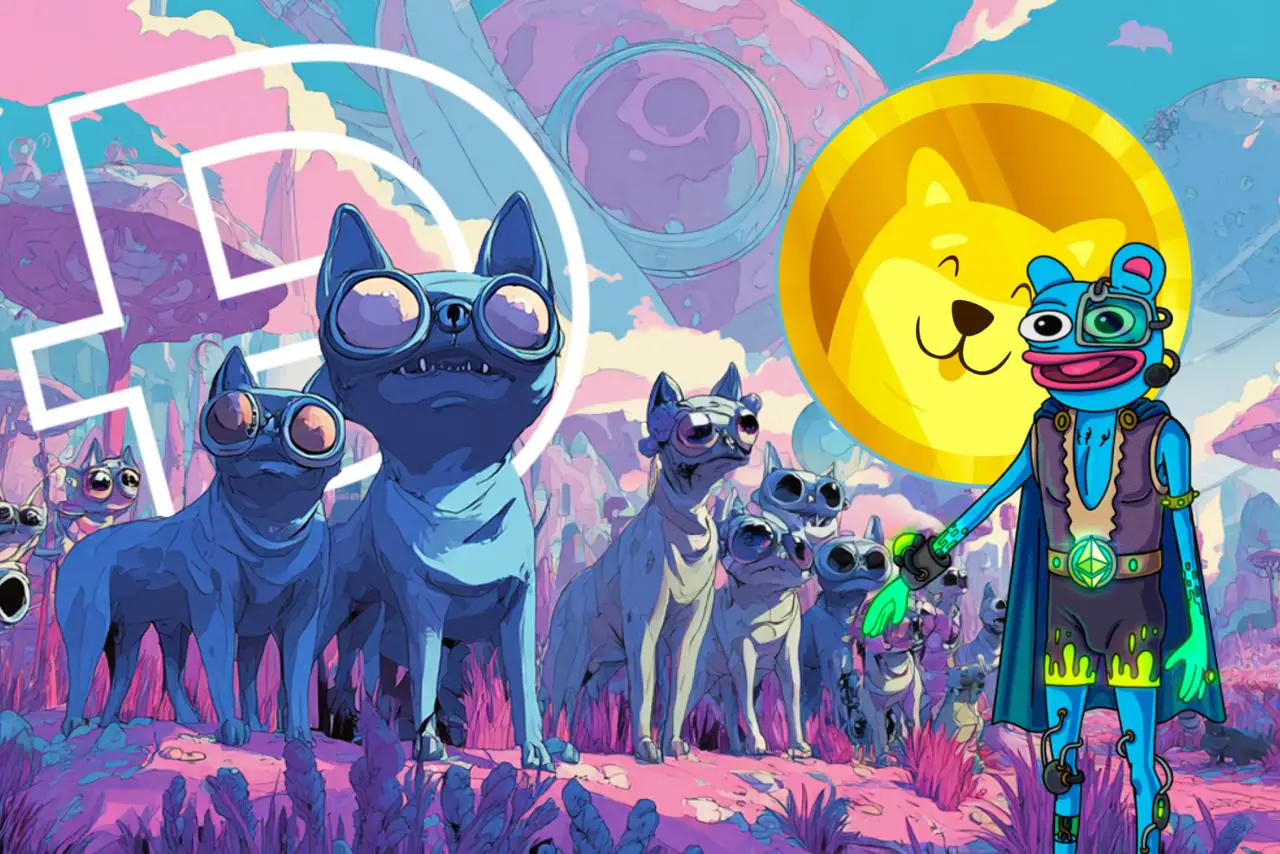
The post DOGE ETF Updates Show Prices Could Reach $1 In 2026 appeared on BitcoinEthereumNews.com. Crypto News 18 September 2025 | 14:13 The REX-Osprey Dogecoin ETF launch could be one of the most pivotal moments in meme-coin history. This development would see massive inflow of institutional funds into Dogecoin and meme coins, and analysts are now suggesting that DOGE could finally test the $1 milestone in 2026. Yet, with the hype reaching a fever pitch, another project—Layer Brett (LBRETT)—is quietly setting up for even bigger gains as savvy investors search for the next 50x crypto. Layer Brett: Meme Innovation Meets Real-World Utility Layer Brett stands out from the sea of meme tokens by bridging viral fun and tangible blockchain utility. Unlike Dogecoin, which grew out of pure memetic energy, LBRETT is built as an Ethereum Layer 2 solution. This helps scale Ethereum via lightning-fast cheap transactions. The coin also has a transparent, capped supply that is designed for sustainable growth. Its presale at $0.00558 has already raised over $3.7 million, signifying strong investor interest in it. But that’s not all. With a live staking dApp paying out APYs that dwarf traditional returns—and tokenomics built to drive scarcity—LBRETT turns community hype into real token value. This formula of meme momentum plus real functionality is attracting a new legion of crypto enthusiasts and early backers. Dogecoin ETF Is Mainstreaming Meme Money The long-anticipated launch of the REX-Osprey Dogecoin ETF is finally here. This groundbreaking ETF, the first dedicated solely to DOGE, opens the doors for both institutional and retail investors to gain streamlined exposure to Dogecoin without owning or transferring coins directly. The ETF, listed alongside XRP, leverages traditional brokerage infrastructure to lower barriers for Wall Street and main street investors into owning crypto assets. The move signals growing regulatory acceptance for meme, following in the footsteps of Bitcoin and Ethereum ETFs approved years ago. Analysts predict…

Author: BitcoinEthereumNews
Dogecoin News Today: DOGE ETF Updates Show Prices Could Reach $1 In 2026

Dogecoin News Today: DOGE ETF Updates Show Prices Could Reach $1 In 2026

This development would see massive inflow of institutional funds into Dogecoin and meme coins, and analysts are now suggesting that […] The post Dogecoin News Today: DOGE ETF Updates Show Prices Could Reach $1 In 2026 appeared first on Coindoo.

Author: Coindoo
Ex-Alipay UK Chief Eva Zhang to Lead Blockscout Into AI-Driven Growth

Ex-Alipay UK Chief Eva Zhang to Lead Blockscout Into AI-Driven Growth

Blockscout, the leading open-source block explorer for EVM chains, has appointed Eva Zhang, former CEO of Alipay UK, as its new chief executive officer.

Author: Blockchainreporter
After Solana’s Surge, BlockchainFX Steps In – Where the Next Wave of Crypto Millionaires Will Come From in 2025

After Solana’s Surge, BlockchainFX Steps In – Where the Next Wave of Crypto Millionaires Will Come From in 2025

The post After Solana’s Surge, BlockchainFX Steps In – Where the Next Wave of Crypto Millionaires Will Come From in 2025 appeared on BitcoinEthereumNews.com. Crypto News 18 September 2025 | 13:26 What if you could go back in time and grab Solana under $1 before it exploded to hundreds? That kind of regret has created countless crypto millionaire stories—and now history is setting up to repeat. BlockchainFX ($BFX) is shaping up as the best crypto presale of 2025, already live, generating revenue, and rewarding early buyers with daily USDT payouts. Meanwhile, coins like Solana are trading above $230, far beyond their presale glory days. This is not just hype—it’s a new crypto presale 2025 with real utility, a working product, and financial incentives that scream urgency. Those who act now could lock in life-changing gains before prices climb higher. Secure your $BFX today—don’t miss your second chance at a 1000x potential presale. BlockchainFX Presale: Why This Could Be the Next 100x Crypto of 2025 BlockchainFX isn’t a whitepaper dream—it’s a live trading super app combining crypto, stocks, forex, and commodities in one place. With 10,000+ daily users, a CertiK audit, and millions already processed in trading volume, BFX is backed by proof, not promises. The presale started at just $0.01. That chance is gone—today it trades at $0.024, with scheduled price increases every Monday until the confirmed launch at $0.05. Over $7.5 million has been raised from nearly 10,000 participants, all chasing explosive presale profits. The rewards are unmatched: up to 70% of platform fees redistributed daily as USDT, generating 4–7% per day returns and 90% APY even during presale. Token holders also unlock BFX Visa cards for real-world spending. Add in a $500,000 giveaway contest and listings confirmed on five centralized exchanges, and the urgency becomes crystal clear. Forecasts project $0.10–$0.25 post-launch, with long-term upside potentially crossing $1. A $5,000 entry at today’s price could balloon into over $200,000 if long-term targets play…

Author: BitcoinEthereumNews
How to Buy Bitcoin Hyper – Easy Guide

How to Buy Bitcoin Hyper – Easy Guide

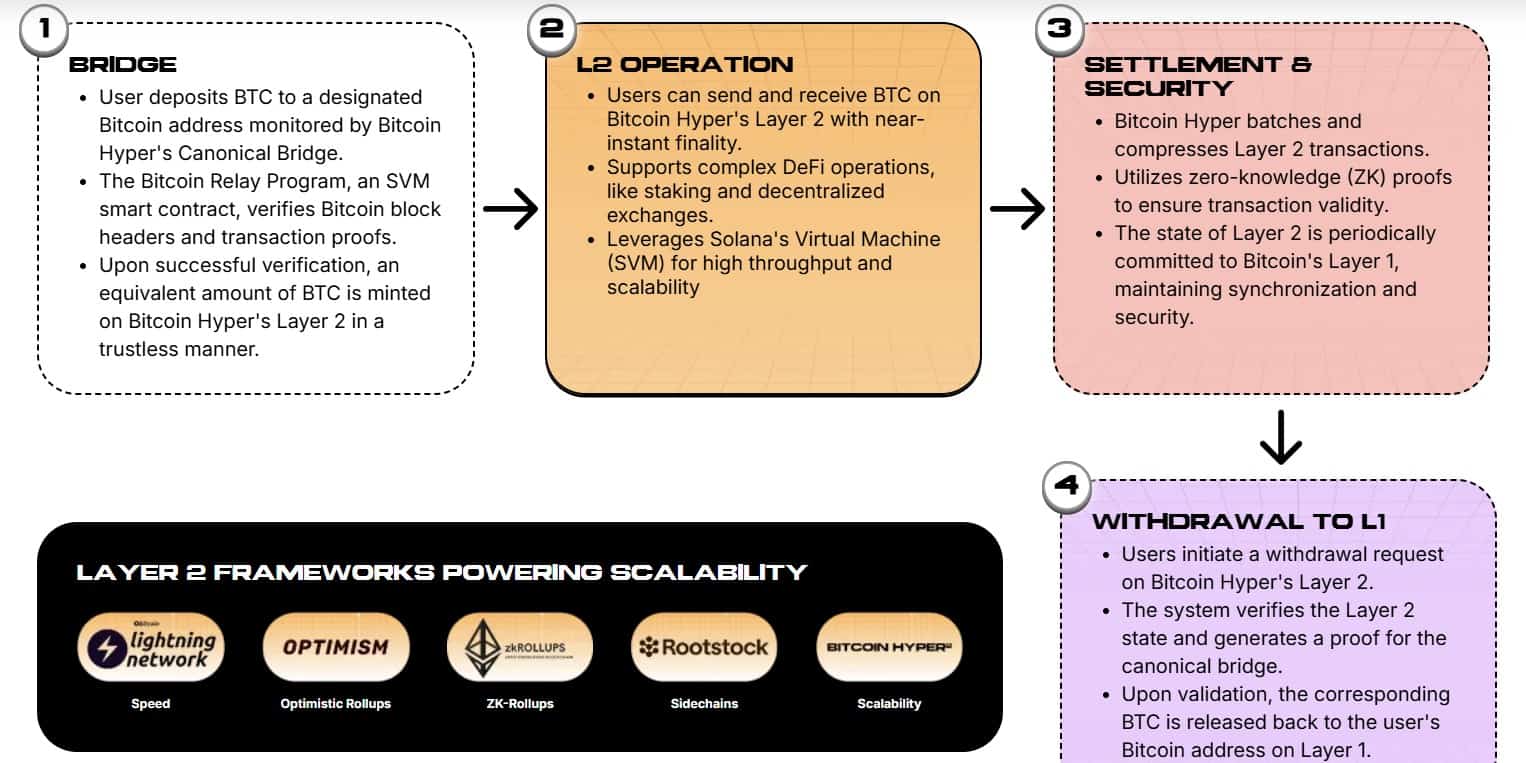
Bitcoin Hyper (HYPER) prides itself as Bitcoin’s first Layer 2, primarily designed to ensure lower fees and grant access to decentralized applications (dApps) such as games, staking and loans.  While being a new entrant, arriving on presale a couple of weeks ago, HYPER has already managed to raise over $16.5 million. This guide explains how […]

Author: The Cryptonomist
MANTRA Chain Positions for $16T Tokenization Opportunity with MultiVM Launch

MANTRA Chain Positions for $16T Tokenization Opportunity with MultiVM Launch

MANTRA Chain introduces MultiVM with EVM and CosmWasm support as positioning for $16T tokenization market and boosting institutional adoption.

Author: Blockchainreporter
Bitcoin, Solana und Dogecoin: So stark hätten sich 1000 Euro in 5 Jahren entwickelt

Bitcoin, Solana und Dogecoin: So stark hätten sich 1000 Euro in 5 Jahren entwickelt

Bitcoin, Solana und Dogecoin im Fokus: Was wären aus 1000 Investition geworden? Was brauchen Investoren, um langfristig Gewinne zu machen? HODL und Diamond Hands – wie wichtig Geduld und Durchhaltevermögen sind Bitcoin Hyper – der neue Stern am Altcoin Himmel? Seien wir mal ehrlich: Investieren ist nicht einfach. Es klingt immer so, als bräuchte man nur […]

Author: Bitcoinist
Crucial ETH Unstaking Period: Vitalik Buterin’s Unwavering Defense for Network Security

Crucial ETH Unstaking Period: Vitalik Buterin’s Unwavering Defense for Network Security

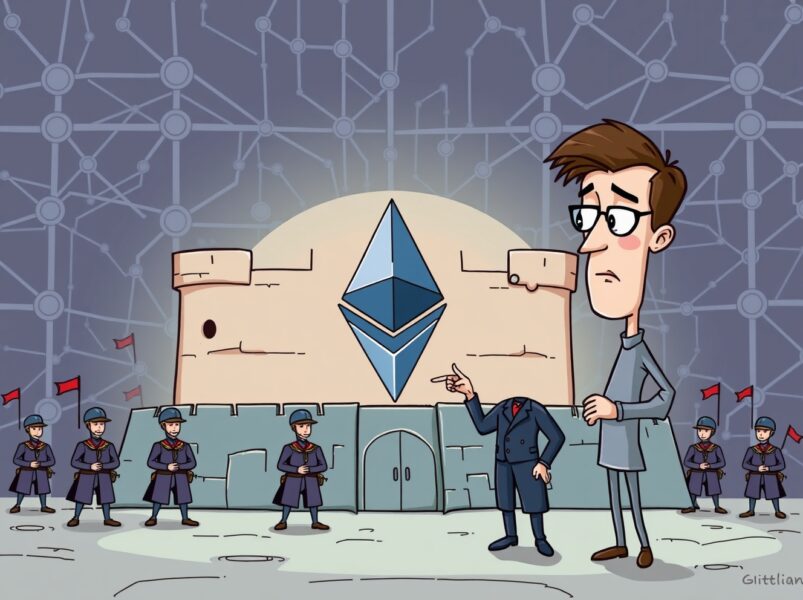
BitcoinWorld Crucial ETH Unstaking Period: Vitalik Buterin’s Unwavering Defense for Network Security Ever wondered why withdrawing your staked Ethereum (ETH) isn’t an instant process? It’s a question that often sparks debate within the crypto community. Ethereum founder Vitalik Buterin recently stepped forward to defend the network’s approximately 45-day ETH unstaking period, asserting its crucial role in safeguarding the network’s integrity. This lengthy waiting time, while sometimes seen as an inconvenience, is a deliberate design choice with profound implications for security. Why is the ETH Unstaking Period a Vital Security Measure? Vitalik Buterin’s defense comes amidst comparisons to other networks, like Solana, which boast significantly shorter unstaking times. He drew a compelling parallel to military operations, explaining that an army cannot function effectively if its soldiers can simply abandon their posts at a moment’s notice. Similarly, a blockchain network requires a stable and committed validator set to maintain its security. The current ETH unstaking period isn’t merely an arbitrary delay. It acts as a critical buffer, providing the network with sufficient time to detect and respond to potential malicious activities. If validators could instantly exit, it would open doors for sophisticated attacks, jeopardizing the entire system. Currently, Ethereum boasts over one million active validators, collectively staking approximately 35.6 million ETH, representing about 30% of the total supply. This massive commitment underpins the network’s robust security model, and the unstaking period helps preserve this stability. Network Security: Ethereum’s Paramount Concern A shorter ETH unstaking period might seem appealing for liquidity, but it introduces significant risks. Imagine a scenario where a large number of validators, potentially colluding, could quickly withdraw their stake after committing a malicious act. Without a substantial delay, the network would have limited time to penalize them or mitigate the damage. This “exit queue” mechanism is designed to prevent sudden validator exodus, which could lead to: Reduced decentralization: A rapid drop in active validators could concentrate power among fewer participants. Increased vulnerability to attacks: A smaller, less stable validator set is easier to compromise. Network instability: Frequent and unpredictable changes in validator numbers can lead to performance issues and consensus failures. Therefore, the extended period is not a bug; it’s a feature. It’s a calculated trade-off between immediate liquidity for stakers and the foundational security of the entire Ethereum ecosystem. Ethereum vs. Solana: Different Approaches to Unstaking When discussing the ETH unstaking period, many point to networks like Solana, which offers a much quicker two-day unstaking process. While this might seem like an advantage for stakers seeking rapid access to their funds, it reflects fundamental differences in network architecture and security philosophies. Solana’s design prioritizes speed and immediate liquidity, often relying on different consensus mechanisms and validator economics to manage security risks. Ethereum, on the other hand, with its proof-of-stake evolution from proof-of-work, has adopted a more cautious approach to ensure its transition and long-term stability are uncompromised. Each network makes design choices based on its unique goals and threat models. Ethereum’s substantial value and its role as a foundational layer for countless dApps necessitate an extremely robust security posture, making the current unstaking duration a deliberate and necessary component. What Does the ETH Unstaking Period Mean for Stakers? For individuals and institutions staking ETH, understanding the ETH unstaking period is crucial for managing expectations and investment strategies. It means that while staking offers attractive rewards, it also comes with a commitment to the network’s long-term health. Here are key considerations for stakers: Liquidity Planning: Stakers should view their staked ETH as a longer-term commitment, not immediately liquid capital. Risk Management: The delay inherently reduces the ability to react quickly to market volatility with staked assets. Network Contribution: By participating, stakers contribute directly to the security and decentralization of Ethereum, reinforcing its value proposition. While the current waiting period may not be “optimal” in every sense, as Buterin acknowledged, simply shortening it without addressing the underlying security implications would be a dangerous gamble for the network’s reliability. In conclusion, Vitalik Buterin’s defense of the lengthy ETH unstaking period underscores a fundamental principle: network security cannot be compromised for the sake of convenience. It is a vital mechanism that protects Ethereum’s integrity, ensuring its stability and trustworthiness as a leading blockchain platform. This deliberate design choice, while requiring patience from stakers, ultimately fortifies the entire ecosystem against potential threats, paving the way for a more secure and reliable decentralized future. Frequently Asked Questions (FAQs) Q1: What is the main reason for Ethereum’s long unstaking period? A1: The primary reason is network security. A lengthy ETH unstaking period prevents malicious actors from quickly withdrawing their stake after an attack, giving the network time to detect and penalize them, thus maintaining stability and integrity. Q2: How long is the current ETH unstaking period? A2: The current ETH unstaking period is approximately 45 days. This duration can fluctuate based on network conditions and the number of validators in the exit queue. Q3: How does Ethereum’s unstaking period compare to other blockchains? A3: Ethereum’s unstaking period is notably longer than some other networks, such as Solana, which has a two-day period. This difference reflects varying network architectures and security priorities. Q4: Does the unstaking period affect ETH stakers? A4: Yes, it means stakers need to plan their liquidity carefully, as their staked ETH is not immediately accessible. It encourages a longer-term commitment to the network, aligning staker interests with Ethereum’s stability. Q5: Could the ETH unstaking period be shortened in the future? A5: While Vitalik Buterin acknowledged the current period might not be “optimal,” any significant shortening would likely require extensive research and network upgrades to ensure security isn’t compromised. For now, the focus remains on maintaining robust network defenses. Found this article insightful? Share it with your friends and fellow crypto enthusiasts on social media to spread awareness about the critical role of the ETH unstaking period in Ethereum’s security! To learn more about the latest Ethereum trends, explore our article on key developments shaping Ethereum’s institutional adoption. This post Crucial ETH Unstaking Period: Vitalik Buterin’s Unwavering Defense for Network Security first appeared on BitcoinWorld.

Author: Coinstats
DKM, Multichain Wallet Control Are ROFL Benefits Every Web3 Dev Should Explore For Future With…

DKM, Multichain Wallet Control Are ROFL Benefits Every Web3 Dev Should Explore For Future With…

DKM, Multichain Wallet Control Are ROFL Benefits Every Web3 Dev Should Explore For Future With Autonomous Agents A fundamental tool for web3 interactions is the wallet that connects with platforms and dApps for token ownership and operations. Without a wallet, no crypto transactions will be possible. Without going into details of what is a cryptocurrency wallet, its most important aspect is the public and private keys. While public keys signify the wallet addresses that are public and needed for any and all token operations, hold or move, private keys are critical for security. As a result, this has been a pain point for everyone involved in the crypto space about the best way to ensure private key security, especially when being involved with multiple chains which means exposure to cross-chain bridges and needing to make trust assumptions that the assets are not at risk. Since on-chain interactions will always invite risks, it is prudent to embrace a solution that promises minimizing the vulnerabilities associated with experiencing the web3, especially now when AI integrations have become so wide-spread. Oasis has developed an intriguing approach with the runtime off-chain logic (ROFL) framework which works in sync with Sapphire as the runtime on-chain logic (RONL). Leveraging trusted execution environments (TEEs) to enable trustlessness and verifiable privacy, it opens up a new avenue of key generation and management. Decentralized Key Management: Securing the Autonomy of DeFi Agents DKM or decentralized key management is ensured by Sapphire’s privacy-first architecture that enables persistent data storage inside a smart contract. This allows access control as keys are stored in confidential state. Using the ConfidentialCell primitive for hardware-level encryption via SGX TEEs ensures that no one can access the keys — not developers, not node operators, nor any external party. This capability is further enhanced with ROFL using SGX + TDX TEEs to run complex, non-deterministic AIs. How does the autonomy of AI agents and DKM go hand in hand? The reason DKM is essential is because unlike Sapphire’s confidential teeEVM, other public blockchains, including Ethereum, cannot manage private keys without exposure. With zero compromises, which means no single point of failure, no backdoor, and no handwaving, DKM promises and delivers true autonomy for the AI agents. Multichain Wallet Control for Agents As building an autonomous agent and integrating it for web3 operations becomes a new normal, the next challenge is multichain agents with multichain wallet functionality. It will involve dealing with multiple SDKs, separate libraries, incompatible transaction and key/account formats, different RPC patterns, and the extremely demanding task of coordinating state across discrete networks. ROFL’s cryptographic key derivation system is a game-changer as generation and management of wallet private keys happen on multiple elliptic curves. Contrast this with traditional cross-chain solutions using bridges and involving assets in the form of wrapped tokens. The ROFL approach creates native wallet control on each target blockchain. For now, the two primary elliptic curves supported are: secp256k1 for EVM-compatible chains or native Bitcoin wallets Ed25519 for Solana and Aptos The USP of this system is that it can derive keypairs across different elliptic curves within the same TEE, which, in turn, means a single ROFL-powered app or agent can control a wallet on Arbitrum while simultaneously controlling one on Solana. One of the most crucial benefits is easily apparent in transaction execution. As apps or agents using Sapphire + ROFL run off-chain in TEEs but have network access, they can use these securely generated keys to submit transactions directly to target chains via RPC calls. So, no more need to build and trust bridges as unified cross-chain wallet management through hardware-secured compute would involve the agent operating native wallets on each chain, with the TEE providing cryptographic security for operations. While this functionality is still getting developed and fine-tuned in real time, practical examples include Talos and zkAGI. Resources: Sapphire a. Docs b. GitHub ROFL a. Docs b. GitHub c. App CLI a. GitHub b. Homebrew Originally published at https://dev.to on September 17, 2025. DKM, Multichain Wallet Control Are ROFL Benefits Every Web3 Dev Should Explore For Future With… was originally published in Coinmonks on Medium, where people are continuing the conversation by highlighting and responding to this story

Author: Medium