DeFi

DeFi eliminates intermediaries by using smart contracts on blockchains to provide financial services like lending, borrowing, and trading. In 2026, the "DeFi 3.0" era is defined by Institutional DeFi and the integration of Real-World Assets (RWA). From liquidity provisioning on Uniswap to advanced lending on Aave, this tag tracks the evolution of autonomous financial systems, yield optimization, and the rise of AI-driven portfolio management in the decentralized economy.

69078 Articles
Created: 2026/02/02 18:52
Updated: 2026/02/02 18:52
Injective, Republic partner to expand tokenized markets

Injective, Republic partner to expand tokenized markets

The post Injective, Republic partner to expand tokenized markets appeared on BitcoinEthereumNews.com. Injective has teamed up with global investment platform Republic in a bid to expand tokenized private market investing and bring institutional-grade finance onchain.  Summary Republic Wallet now supports Injective assets. A new launchpad will enable Injective-based projects to access Republic’s large investor network. The partnership combines Republic’s tokenization expertise with Injective’s finance-focused blockchain to expand real-world asset markets. The news, which was announced in a press release on Aug. 21, represents a new phase in Injective’s plan to integrate blockchain infrastructure with traditional assets. Expanding tokenized investment access Through the integration, Injective (INJ) now supports Republic Wallet, giving its 3 million members in 150 countries direct access to Injective-native assets. Additionally, a launchpad specifically designed for injectable-based projects will be created, giving institutions and startups direct access to Republic’s large network of accredited and retail investors. Republic has built a strong reputation in the tokenization and private markets space, having helped over 3,000 ventures secure over $3 billion in funding. Among the more than two dozen unicorns in its portfolio are SpaceX, Robinhood, and Carta.  Through its new partnership with Injective, Republic expands its previous role as a network validator into a deeper partnership to increase onchain fundraising and tokenized investment product accessibility. Strengthening institutional adoption As a FINRA-registered funding platform with regulatory approvals in the U.S., UK, EU, and Asia, Republic adds significant institutional weight to the Injective ecosystem. The partnership combines Republic’s expertise in tokenization with Injective’s purpose-built blockchain for finance, which already supports real-world asset markets such as tokenized Nvidia chips, equities, and structured products. The tokenization market is expected to be worth $50 billion by the end of the year, up from its current valuation of $35 billion. With the support of Injective’s high-performance infrastructure and Republic’s compliance framework, the integration is expected to accelerate the…

Author: BitcoinEthereumNews
CFTC Launches Next Crypto Sprint for Trump’s Digital Asset Plan

CFTC Launches Next Crypto Sprint for Trump’s Digital Asset Plan

The post CFTC Launches Next Crypto Sprint for Trump’s Digital Asset Plan appeared on BitcoinEthereumNews.com. The Commodity Futures Trading Commission (CFTC) has launched its next crypto sprint. This aims to advance recommendations from the President’s Working Group on Digital Asset Markets. CFTC Launches Immediate Push for Spot Crypto Market Oversight Acting Chairman Caroline D. Pham announced that the initiative will begin immediately, focusing on federal-level trading rules and broader market oversight. Pham said the administration views immediate spot trading of digital assets as a top priority. She confirmed that the CFTC has received strong support for its listed spot crypto trading initiative, which operates along with the SEC’s Project Crypto. Together, the programs respond to President Trump’s call for U.S. leadership in digital finance. According to Pham, the initiative marks a new phase for the industry. She described it as the start of a “Golden Age of innovation” where market participants must seize the opportunity. Therefore, the CFTC will now extend its engagement to all other recommendations outlined in the report Strengthening American Leadership in Digital Financial Technology. The report sets out a roadmap for balancing innovation with oversight. It also highlights areas such as leveraged, margined, and financed retail trading on regulated exchanges, signaling the Commission’s intention to address complex risks without stifling growth. Public participation is central to the process. The CFTC has opened a comment window until October 20, 2025, and invited industry leaders, investors, and innovators to submit feedback via its official website. Pham reaffirmed that the Commission is prepared to evaluate both risks and opportunities as it advances responsible regulation. She emphasized that collaboration with the SEC, market participants, and the White House will be essential to keeping U.S. competitive globally. Regulator Widens Crypto Oversight with Second Sprint, Opens Public Consultation This second crypto sprint follows one launched earlier this month that focused specifically on spot trading rules. That initiative…

Author: BitcoinEthereumNews
Injective partners with Republic to expand on-chain private market access

Injective partners with Republic to expand on-chain private market access

Injective has joined forces with Republic to connect traditional finance with blockchain, enabling tokenized private market access.```````````````

Author: Crypto.news
US CBDC Blocked: Crucial House Vote Halts Federal Digital Dollar Development

US CBDC Blocked: Crucial House Vote Halts Federal Digital Dollar Development

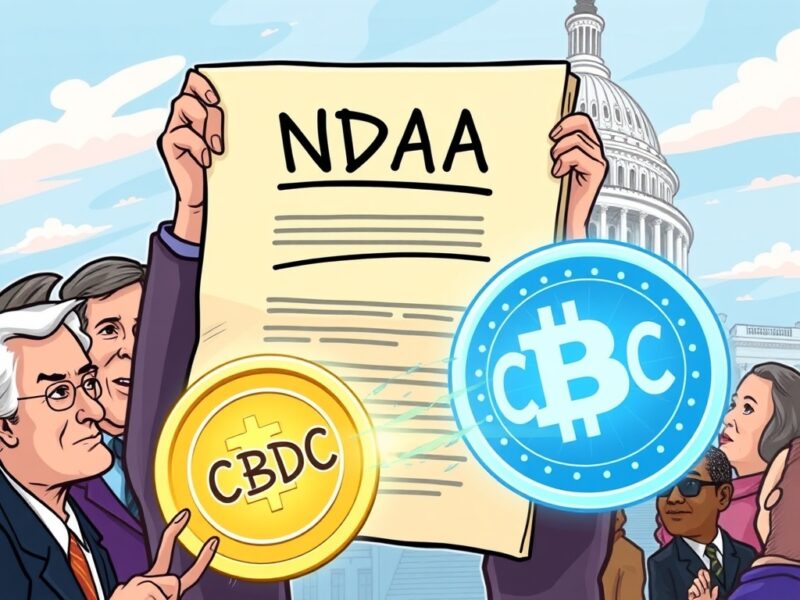
BitcoinWorld US CBDC Blocked: Crucial House Vote Halts Federal Digital Dollar Development The digital currency landscape in the United States just took a significant turn. Lawmakers in the U.S. House of Representatives have made a decisive move regarding the potential for a US CBDC, signaling a strong legislative stance that could redefine America’s financial future. This development is crucial for anyone interested in the intersection of technology, finance, and government policy. What’s Happening with the US CBDC in Congress? The U.S. House recently added a crucial provision to the National Defense Authorization Act (NDAA), a bill that historically passes without much debate. This amendment directly aims to prevent the Federal Reserve from developing or launching a US CBDC. According to reports from Cointelegraph, this strategic placement within a “must-pass” bill significantly boosts the measure’s chances of becoming law. It’s a clear signal from a segment of Congress about their reservations regarding a government-backed digital dollar. This isn’t just about slowing down; it’s about outright preventing the Federal Reserve from engaging in any activities related to a central bank digital currency. Why the Pushback Against a US CBDC? This latest legislative action reflects growing concerns among some lawmakers about the implications of a central bank digital currency. The amendment goes further than just preventing a launch; it blocks the Fed from even testing, studying, developing, creating, or implementing a US CBDC. Key concerns driving this legislative push include: Privacy Concerns: Many fear a CBDC could lead to increased government surveillance over citizens’ financial transactions, eroding personal financial privacy. Government Control: There are worries that a CBDC could give the government unprecedented control over individual spending, potentially allowing for programmatic restrictions. Economic Impact: Critics also question the potential impact on commercial banks, the broader financial system, and the role of private innovation. These points highlight the ideological battle shaping the future of digital finance in the U.S. An Important Exception: Stablecoins and the Future of Digital Dollars Interestingly, while blocking a government-issued US CBDC, the amendment includes a vital exception. It specifically permits U.S. dollar-pegged stablecoins, provided they are “open, permissionless, and private.” This distinction is crucial for understanding the nuanced approach Congress is taking. Stablecoins are privately issued digital assets designed to maintain a stable value relative to a fiat currency, like the U.S. dollar. This exception suggests that while Congress is wary of a Fed-issued digital currency, they may be open to private sector innovation in digital assets, particularly those that uphold principles of openness and privacy. This stance aligns with a desire to foster innovation without perceived government overreach into individual financial lives. What’s Next for the Anti-CBDC Movement? This isn’t the first time the House has acted on this issue. Earlier in July, the Republican-led Anti-CBDC Surveillance State Act narrowly passed the House. However, its path in the Senate remains uncertain. The inclusion of this new provision in the NDAA offers a different, potentially more direct, route to legislate against a US CBDC. The “must-pass” nature of the defense bill means the Senate will have to contend with this amendment. The debate over digital currency’s role in the U.S. financial system is clearly far from over, with significant implications for consumers, businesses, and the future of money itself. The legislative process is often complex, but this move undeniably elevates the discussion and brings the issue to the forefront of national policy. Conclusion: A Landmark Stance on US CBDC Development The U.S. House’s recent move to embed an anti-US CBDC measure within the National Defense Authorization Act marks a pivotal moment in the ongoing debate surrounding central bank digital currencies. By preventing the Federal Reserve from developing a digital dollar, while simultaneously making an allowance for private, permissionless, and private stablecoins, Congress is drawing a clear line. This action underscores deep-seated concerns about privacy, government oversight, and the fundamental structure of the nation’s financial future. As this critical legislation moves forward, the eyes of the digital currency world will be watching closely to see how this crucial decision shapes the landscape of money in America. Frequently Asked Questions (FAQs) 1. What is a Central Bank Digital Currency (CBDC)? A CBDC is a digital form of a country’s fiat currency, issued and backed by its central bank. Unlike cryptocurrencies, it would be centralized and controlled by the government. 2. Why is the U.S. House against a US CBDC? Many lawmakers express concerns over privacy, potential government surveillance, and the expansion of government control over individual financial transactions that a US CBDC might enable. 3. What is the National Defense Authorization Act (NDAA)? The NDAA is a series of U.S. federal laws specifying the annual budget and expenditures of the U.S. Department of Defense. It’s considered a “must-pass” bill, making it a common vehicle for unrelated legislative amendments. 4. How do stablecoins differ from a US CBDC in this context? While a US CBDC would be issued by the Federal Reserve, stablecoins are privately issued digital assets pegged to the U.S. dollar. The House’s amendment permits “open, permissionless, and private” stablecoins, distinguishing them from a government-controlled digital currency. 5. What happens next with this anti-CBDC measure? Since the provision is part of the NDAA, it will move to the Senate for consideration. If the NDAA passes with this amendment intact, it will become law, effectively blocking the Federal Reserve’s ability to develop a US CBDC. If you found this article insightful, consider sharing it with your network! Stay informed about critical developments shaping the future of digital finance by spreading the word. To learn more about the latest crypto market trends, explore our article on key developments shaping digital currencies institutional adoption. This post US CBDC Blocked: Crucial House Vote Halts Federal Digital Dollar Development first appeared on BitcoinWorld and is written by Editorial Team

Author: Coinstats
Starknet to launch Bitcoin staking after SNIP-31 vote passes

Starknet to launch Bitcoin staking after SNIP-31 vote passes

The post Starknet to launch Bitcoin staking after SNIP-31 vote passes appeared on BitcoinEthereumNews.com. Starknet is set to introduce Bitcoin staking after its community ratified Starknet Improvement Proposal 31. Summary Starknet approved SNIP-31 on August 21, enabling Bitcoin staking and governance rights. BTC gets up to 25% staking power, while STRK keeps majority control. The update expands BTC DeFi on Starknet, but STRK fell 6.2% after. Starknet (STRK) will introduce Bitcoin (BTC) staking to its Layer 2 network following the ratification of SNIP-31 on Aug. 21. The proposal outlines a framework for Bitcoin holders to stake tokenized assets on Starknet and take part in its consensus process. It was approved by 93% of voters. Parameters of the SNIP-31 Vote SNIP-31 establishes a unified staking system that allows Bitcoin and STRK, Starknet’s native token, to coexist in governance. BTC staking power is limited to 25% of consensus influence under the framework, with STRK keeping the remaining 75%. Through additional token issuance, the model adds new Bitcoin incentives while maintaining the current STRK rewards. A limited set of BTC wrappers, such as WBTC, LBTC, tBTC, and SolvBTC, will be supported during the initial rollout. In order to ensure security and accountability, governance regulations require that any future wrappers be approved by a community vote and enabled by the Monetary Committee. The upcoming weeks will see the official launch. Expanding DeFi opportunities on Starknet Starknet is positioning itself as a major player in the emerhing “BTCfi” sector by incorporating Bitcoin into its staking system. The move promotes cross-chain participation within the network and deepens liquidity by enabling Bitcoin holders to receive rewards in STRK. Developers expect the mechanism to be simple, secure, and independent of BTC/STRK exchange rates, reducing systemic risks. The timing comes as Starknet continues to push technical upgrades. On Sept. 1, the network will roll out version 0.14.0, introducing decentralized sequencing with Tendermint consensus, faster…

Author: BitcoinEthereumNews
Hyperliquid Now Dominates DeFi Derivatives, Processing $30B a Day

Hyperliquid Now Dominates DeFi Derivatives, Processing $30B a Day

The post Hyperliquid Now Dominates DeFi Derivatives, Processing $30B a Day appeared on BitcoinEthereumNews.com. Data provider RedStone has released a new report on Hyperliquid, the decentralized perpetuals exchange that has quickly become the category leader. In just a year, Hyperliquid has grown to capture more than 80% of the decentralized perps market, with daily trading volumes now topping $30 billion, rivaling some of the largest centralized exchanges, according to the report. RedStone highlighted three structural advantages that underpin Hyperliquid’s surge. The first is its fully on-chain order book that now delivers spreads and execution speeds on par with centralized platforms. Second, HIP-3, Hyperliquid’s new permissionless market creation framework, has created one of the most active builder ecosystems in DeFi, with revenue-sharing economics that pay developers more than the protocol itself. And third, its dual architecture of HyperCore and HyperEVM enables entirely new financial primitives, including tokenized perp positions, delta-neutral strategies, and novel liquidity engineering tools. HyperLiquid volume (DefiLlama) Hyperliquid’s rise is an indication of how a lean, self-funded team can outcompete venture-backed peers by focusing on technical execution and builder-first incentives. By coupling CEX-level performance with permissionless technology, Hyperliquid is positioning itself not just as a trading venue but as a potential backbone for the next phase of on-chain trading. The Hyperliquid network, on which the Hyperliquid DEX is based, currently has around $2.2 billion in total value locked, with the DEX notching $330 billion in cumulative trading volume in the past 30 days, according to DefiLlama. “Hyperliquid is setting a new standard,” the RedStone report notes, arguing that the platform’s dual-layer design and community-driven growth model are creating “unprecedented opportunities for builders and institutions alike.” Source: https://www.coindesk.com/business/2025/08/21/hyperliquid-now-dominates-defi-derivatives-processing-usd30b-a-day

Author: BitcoinEthereumNews
Here’s How BlockDAG’s DAG Architecture, PoW Consensus, & 2.5M Mobile Miners Fueled  $377M Presale

Here’s How BlockDAG’s DAG Architecture, PoW Consensus, & 2.5M Mobile Miners Fueled $377M Presale

In a market crowded with claims of faster and more secure networks, only a few projects manage to deliver real architecture combined with measurable progress. BlockDAG is doing just that. With $377 million raised in its presale, now in Batch 29 at $0.0276, it has already captured attention across the crypto sector. The question many are asking is simple: what makes BlockDAG different, and why are analysts, miners, and adopters aligning with it? This article unpacks BlockDAG’s core technology, its distinction from traditional blockchains, and why its hybrid design, presale strength, and growing ecosystem signal long-term potential. Rethinking Blockchain Architecture At its foundation, BlockDAG is more than a cryptocurrency; it is a redesigned blockchain model. Traditional networks like Bitcoin and Ethereum work sequentially, where each block must be added in order. This approach limits processing capacity, creates congestion, and increases fees during heavy usage. BlockDAG replaces this linear method by incorporating a Directed Acyclic Graph (DAG). This structure enables multiple blocks to be created and confirmed at once. Instead of waiting in line, transactions run in parallel, improving throughput without compromising decentralization or security. With this model, BlockDAG can handle 2,000 to 15,000 transactions per second, depending on activity, making it suitable for payment systems, DeFi, and IoT integrations. A Hybrid Consensus That Enhances Strength What sets BlockDAG apart is its hybrid mechanism. While many projects move away from Proof-of-Work (PoW), BlockDAG adapts it to complement its DAG-based system. The result is stronger security, decentralized validation, and better efficiency while preserving PoW’s resilience. This model also solves the double-spending issue found in some DAG-only systems. By combining PoW with DAG, BlockDAG ensures transparent mining, reliable verification, and scalable operations. It also introduces dual mining paths. Through the BlockDAG X Series Miners and the X1 App, users can mine BDAG from hardware devices or directly from smartphones, creating broader accessibility. User-Friendly Mining Through Hardware and Mobile BlockDAG is designed for more than developers. Its X Series Miners, including X1, X10, X30, and X100, provide simple plug-and-play devices that generate daily BDAG earnings, in some cases more than 200 BDAG per day. For those without hardware access, the X1 Mobile App has become the bridge to participation. With over 2.5 million users worldwide, it allows smartphone mining, offers built-in dashboards for earnings, and provides presale updates. This is all achieved without costly energy demands or specialized equipment. By combining hardware with mobile solutions, BlockDAG expands its reach globally, including regions where mining infrastructure is limited. This strategy ensures millions are already part of the network ahead of exchange listings. A Presale That Outshines Industry Records Raising $377 million places BlockDAG above major historic presales, surpassing Filecoin at $233M, Tezos at $232M, Polkadot at $145M, and Cardano at $62M. This level of support highlights the conviction surrounding its vision. Much of this success comes from a gamified presale structure. Features like Buyer Battles, which reward daily top buyers with bonus BDAG, and batch-based pricing drive urgency and engagement. The Referral Program also strengthens growth. Referrers receive 25 percent commissions, while invitees earn 5 percent bonuses. This approach builds community through organic participation rather than reliance on traditional advertising. Transparency is another defining trait. Dashboard V4 provides real-time presale data, referral statistics, ROI estimates, and even an exchange simulator for post-launch trading. It also integrates a network explorer and a referral leaderboard, reinforcing trust and visibility. Looking Ahead, BlockDAG’s Next Milestones With 20 confirmed exchange listings, including major U.S. platforms, BlockDAG is preparing for global rollout. As the presale aims for its $600M target, analysts forecast valuations between $1 and $20 by 2027, depending on adoption and listing performance. Beyond listings, BlockDAG is launching its on-chain Academy to provide blockchain education and certifications, while further expanding its explorer and mining rewards system. These updates strengthen its position as a user-focused, scalable platform. Wrapping Up BlockDAG is more than another presale. It represents a full ecosystem built on improved architecture, accessible mining, and transparent engagement. With $377 million raised, it has already proven its credibility and established one of the most successful presales in history. For developers, miners, and new adopters alike, BlockDAG offers a clear opportunity to join a project that is already moving from concept to reality. With momentum building, the time to understand BlockDAG is now, before its value climbs far beyond current levels. Presale: https://purchase.blockdag.network Website: https://blockdag.network Telegram: https://t.me/blockDAGnetworkOfficial Discord: https://discord.gg/Q7BxghMVyu Disclaimer: This content is a sponsored post and is intended for informational purposes only. It was not written by 36crypto, does not reflect the views of 36crypto and is not a financial advice. Please do your research before engaging with the products.The post Here’s How BlockDAG’s DAG Architecture, PoW Consensus, & 2.5M Mobile Miners Fueled $377M Presale appeared first on 36Crypto.

Author: Coinstats
Another Celebrity Scam? Kanye West Memecoin Launch Leaves 60% Of Investors In The Red

Another Celebrity Scam? Kanye West Memecoin Launch Leaves 60% Of Investors In The Red

Amid the controversial launch of Kanye West’s official memecoin on Solana, the crypto community has sounded the alarm for another potential celebrity token scam, with insider trading allegations outshining Ye’s party. Related Reading: Chainlink Eyes Crucial Resistance After $25 Reclaim – Breakout Or Breakdown Next? The Rise And Fall Of YZY On Wednesday night, controversial Hip-Hop artist and public figure Ye, better known as Kanye West, launched his official memecoin, YZY, on the Solana blockchain. West announced the token in his X account, posting the contract address (CA) in a picture with the caption “YEEZY MONEY IS HERE. A NEW ECONOMY, BUILT ON CHAIN.” After the announcement, the memecoin skyrocketed to a market capitalization of $3.1 billion before quickly dropping 65% to the $1.1 billion mark in the following hours. Meanwhile, YZY’s price went from an all-time high (ATH) of $3.16 to hover between the $0.95-$1.30 price range. The crypto community reported multiple red flags, including allegations of insider trading and a lawsuit waiver. Notably, the official website has a controversial waiver that raised concerns among investors. In the “What Else Should I Know?” section, the website stated that by purchasing the token, investors agree they “will not bring, join or participate in any class action lawsuit as to any claim, dispute or controversy” that they may have against any of the “Covered Parties.” “if you’re buying this ur literally giving them permission to rug you without consequences,” a community member noted. Nonetheless, investors may opt out of the dispute resolution provision by “providing written notice of your decision within thirty (30) days of the date that you first access the Website,” the page reads. Ye’s Memecoin Supply Owned By Insiders Conor Grogan, director at Coinbase, estimated that at least 94% of the supply was owned by insiders, with 87% of the token being held by a single multisig wallet before it was distributed to multiple wallets. According to the “YZYNOMICS”, 20% of the token’s distribution would be for public supply, 10% for liquidity, and 70% for Yeezy Investments LLC. On-chain analytics firm Bubblemaps affirmed that “the bubble map of YZY mostly MATCHES the distribution on Kanye’s website,” cautioning that “the 17% address ‘public supply’ is UNLOCKED and can sell at any time.” Lookonchain highlighted that only YZY had been added to the liquidity pool, with no USDC, warning that the “Dev may sell YZY by adding/removing liquidity, similar to LIBRA.” Additionally, they noted that multiple insider wallets had prepared funds in advance and bought the memecoin, with one address knowing the CA and attempting to purchase YZY yesterday. The on-chain wallet tracker also cautioned that West had added 30 million YZY, worth $34 million, to the liquidity pool with a price range of $3.17-$4.49, signaling that “once the price climbs above $3.1716, he’ll start earning fees while gradually selling YZY for USDC. If the price rises above $4.4929, all 30M YZY will be sold.” Investors See Red Numbers On-chain researcher Defioasis affirmed that the YZY launch was “more of the same,” revealing that, so far, most wallets holding West’s memecoin are in the red. According to their analysis, 56,050 addresses traded the token in the past 13 hours, with 25,166, or 44.9% of the wallets, engaging in one-sided transactions. Out of these addresses, 23,723 only bought the memecoin, while 1,443 only sold it. They suggested that “some of the former may be dust addresses aimed at increasing the number of addresses, while others are either holding onto their positions or stuck in losses,” adding, “The latter are primarily project teams/large holders using multiple addresses to sell, making it harder to track them directly.” Related Reading: Bitcoin Risks Drop Below $110,000 Despite Bounce – Is A 15% Pullback Coming? Meanwhile, 30,884 addresses had two-way transactions, with 38.07% of addresses registering realized profits. 30% of these wallets had a profit of up to $500, while only 1.31% of them had profits exceeding $10,000. Among this 1%, only 5 addresses had over $1 million in profits, with one of them being identified as an insider. On the contrary, over 60% of participants are still in a loss position, the report noted, with 28.2% of the addresses losing up to $500. By the time of the Defioasis post, one individual had lost over $1 million, while another had lost around half a million. Featured Image from Unsplash.com, Chart from TradingView.com

Author: NewsBTC
MetaMask Unveils mUSD Stablecoin Backed by Stripe Subsidiary Bridge on Ethereum

MetaMask Unveils mUSD Stablecoin Backed by Stripe Subsidiary Bridge on Ethereum

MetaMask, one of the most widely used self-custodial crypto wallets, has officially launched its native stablecoin mUSD, aiming to reshape the decentralized finance (DeFi) landscape. The stablecoin is initially being deployed on Ethereum and Linea, with issuance handled by Bridge, a subsidiary of global payments giant Stripe. According to the announcement, mUSD will be fully […]

Author: Coinstats
The crypto market remains sluggish, with only the SocialFi sector bucking the trend and rising

The crypto market remains sluggish, with only the SocialFi sector bucking the trend and rising

PANews reported on August 22nd that according to SoSoValue data, crypto markets generally fell today, impacted by better-than-expected US PMI data and hawkish Federal Reserve officials, which dampened expectations for a September rate cut. Bitcoin fell 1.54% to below $113,000, while Ethereum dropped 1.80% to around $4,200. Among sectors, SocialFi saw a slight increase of 0.73%, while Toncoin rose 1.92%. CeFi fell 2.32%, but OKB and HT surged 29.43% and 292.01%, respectively. PayFi fell 2.86%, while ULTIMA saw an intraday increase of 19.17%. Meme fell 3.13%, while Pump.fun dropped 7.38%. Layer 1, DeFi, and Layer 2 fell 3.17%, while SKALE rose 3.37%, 3.94%, and 10.86%.

Author: PANews