Lending

Lending protocols form the backbone of the decentralized money market, allowing users to lend or borrow digital assets without intermediaries. Using smart contracts, platforms like Aave and Morpho automate interest rates based on supply and demand while requiring over-collateralization for security. The 2026 lending landscape features advanced permissionless vaults and institutional-grade credit lines. This tag covers the evolution of capital efficiency, liquidations, and the integration of diverse collateral types, including LSTs and tokenized RWAs.

14922 Articles
Created: 2026/02/02 18:52
Updated: 2026/02/02 18:52

Inside Tether’s Open-Source Wallet Push – A Step Toward Cross-Chain Dominance?

Inside Tether’s Open-Source Wallet Push – A Step Toward Cross-Chain Dominance?

Tether, the issuer of the world’s largest cryptocurrency stablecoin, has announced the open-sourcing of its Wallet Development Kit (WDK)—a modular framework designed to simplify the creation of secure, multi-chain, self-custodial wallets. The move is part of Tether’s ambition to strengthen the infrastructure of decentralized finance and widen access to programmable money. The toolkit allows developers, organizations, and even AI agents to build wallets capable of operating seamlessly across devices and blockchains. From embedded systems and IoT devices to mobile, desktop, and server environments, WDK seeks to make digital wallets as universal as email or messaging apps. Empowering Developers, Nations, and Machines According to Tether, the WDK allows anyone—from independent developers to national institutions—to build wallets for a variety of purposes, including DeFi, payments, gaming, savings, and prediction markets. By removing barriers such as licensing fees or proprietary restrictions, the open-source framework gives full control to its users. “Self-custodial wallets are the cornerstone of a free and resilient monetary infrastructure,” said Paolo Ardoino, CEO of Tether. “We imagine a world where humans, autonomous machines, and AI agents have the freedom to control their own finances.” Unlike commercial frameworks that charge usage fees or limit developers to specific ecosystems, Tether’s WDK is entirely open-source and ecosystem-agnostic. It supports Bitcoin, Lightning Network, Ethereum, Polygon, Solana, TON, and other EVM and non-EVM blockchains. Expanding Cross-Chain Capabilities WDK by Tether also integrates USDT0 network-scaling technology, allowing for seamless bridging and highly available liquidity across chains. Developers can easily implement DeFi primitives like lending, swaps, and staking, while offering end-users a simplified interface that abstracts away the complexity of gas fees, bridges, and network switching. The toolkit includes customizable user-interface templates, widgets, and secure key management tools to streamline wallet creation. Its modular design allows developers to tailor solutions for both consumer and institutional use—from mobile wallets and desktop apps to IoT devices and autonomous trading systems. Developing the Next Phase of Digital Finance Tether envisions WDK as a building block for a future where machines and AI systems can autonomously manage and transact digital assets. “From smartphones to smart fridges, from trading bots to spaceships,” the company said, WDK will allow financial sovereignty in every environment. Upcoming projects such as Rumble Wallet and Tether’s own self-custodial wallet are already built on WDK, showcasing its scalability and adaptability. By open-sourcing this framework, Tether is not only inviting innovation but also positioning itself at the center of a rapidly evolving multi-chain ecosystem. Tether Bets Big On Privacy And Non-Custodial Wallets In May, Tether made a strategic investment in Zengo Wallet, a self-custodial, seedless crypto wallet designed to eliminate single points of failure. The stablecoin company invested in Zengo Wallet to help advance its mission of promoting financial inclusion, consistent with Tether’s goal of providing people around the world with access to a stable currency. Aside from wallet integration, Tether has also been expanding its foothold in stablecoin payment for retail transactions

Author: CryptoNews
Billions Lost, Here Are the Top 5 Losers

Billions Lost, Here Are the Top 5 Losers

The post Billions Lost, Here Are the Top 5 Losers appeared on BitcoinEthereumNews.com. The Crypto Crash Context: Why Did It Happen? The latest crypto crash left the market in red across all major tokens. The reason behind the crash ties to global economic tension and heavy liquidations. Renewed US–China trade fears, massive profit-taking after record highs, and algorithmic selling cascades caused over $1 trillion to evaporate from total crypto market capitalization in a few hours. Total crypto market cap in USD over the past week – TradingView $Bitcoin and $Ethereum fell sharply, dragging altcoins and DeFi tokens with them. Let’s take a closer look at the top 5 losers in this crypto crash, their performance, and what these numbers mean. 1. Aster (ASTER) – The Biggest Loser of the Day Price: $1.06 24h Change: ▼18.28% 7d Change: ▼33.95% Market Cap: $2.15B Volume (24h): $1.53B Circulating Supply: 2.01B ASTER $Aster leads the list with an 18% daily drop and nearly 34% weekly loss. The high trading volume — over $1.5 billion — signals massive sell pressure, possibly from institutional profit-taking. Despite the sharp decline, liquidity remains strong, hinting that short-term panic might have exaggerated the move. If the selling persists, Aster could retest the $1.00 psychological level, but recovery depends on broader market sentiment and developer updates within the Astar ecosystem. 2. Aave (AAVE) – DeFi Blue Chip Feels the Pressure Price: $204.79 24h Change: ▼15.09% 7d Change: ▼26.66% Market Cap: $3.12B Volume (24h): $633M Circulating Supply: 15.25M AAVE $Aave, one of DeFi’s oldest and most trusted protocols, wasn’t spared. With a 15% daily decline, AAVE shows how vulnerable even top-tier decentralized lending tokens are during broad sell-offs. The sharp fall in total value locked (TVL) across DeFi platforms and reduced borrowing demand amplified the sell pressure. Still, Aave remains a major player in decentralized finance — and could rebound quickly if liquidity returns…

Author: BitcoinEthereumNews
Crypto Report: BCH Holds Key Levels, TRX Innovates, and BullZilla Presale Emerges as the Top Crypto to Buy This Month

Crypto Report: BCH Holds Key Levels, TRX Innovates, and BullZilla Presale Emerges as the Top Crypto to Buy This Month

Bitcoin Cash and TRON continue to dominate market chatter this October as both coins hold their ground amid volatile trading […] The post Crypto Report: BCH Holds Key Levels, TRX Innovates, and BullZilla Presale Emerges as the Top Crypto to Buy This Month appeared first on Coindoo.

Author: Coindoo
Moody’s says the banking system, private credit markets are sound despite worries over bad loans

Moody’s says the banking system, private credit markets are sound despite worries over bad loans

The post Moody’s says the banking system, private credit markets are sound despite worries over bad loans appeared on BitcoinEthereumNews.com. Despite worries over bad loans at midsize U.S. banks, there’s little evidence of a systemic problem, according to a senior analyst at Moody’s Ratings. Marc Pinto, the agency’s head of global private credit, acknowledged in a interview on CNBC’s “Squawk Box” that there are concerns over loose lending standards and some slack in the conditions that institutions attach to loans. However, he said when looking at the system as a whole, contagion the likes that could trigger a broader financial crisis is not evident. “When we dig deeper here and look to see if there’s a turn in the credit cycle, which is effectively what the market seems to be focusing on, we can find no evidence,” Pinto said. “Now that’s what we’re seeing today. That could always change. But if we look at the asset quality numbers that we’ve seen over the last several quarters, we’re seeing very little deterioration at all.” Bank stocks sold off aggressively across the board Thursday after Zions and Bancorp and Western Alliance Bancorp disclosed holding bad loans related to the bankruptcies of two auto lenders. The worries have dragged down shares of investment bank Jefferies this month since it disclosed some exposure to bankrupt auto parts maker First Brands. Losses swept across the sector Thursday as worries grew that the danger could be more widespread. JPMorgan Chase CEO Jamie Dimon raised some eyebrows earlier this week when he said on the bank’s earnings conference call that “when you see one cockroach, there are probably more.” “One cockroach does not a trend make,” Pinto said. In fact, Pinto said default rates on high-yield debt this year have been relatively low, holding under 5%, and are expected to drift down to below 3% in 2026. By comparison, during the 2008 financial crisis, defaults in high-yield…

Author: BitcoinEthereumNews
Whitelist Window Opens Soon: How Zero Knowledge Proof (ZKP) Gives Retail a First-Mover Edge Before Global Expansion

Whitelist Window Opens Soon: How Zero Knowledge Proof (ZKP) Gives Retail a First-Mover Edge Before Global Expansion

Every major crypto network has that one window: short, early, and unforgettable, when retail can enter before the institutions move in. For Zero Knowledge Proof (ZKP), that window is fast approaching. The whitelist sign-ups will open soon, marking the first time individual investors can position themselves before the project scales into its next growth phase. [...] The post Whitelist Window Opens Soon: How Zero Knowledge Proof (ZKP) Gives Retail a First-Mover Edge Before Global Expansion appeared first on Blockonomi.

Author: Blockonomi
Whitelist Opening Soon: The Global Blockchain Vision of Zero Knowledge Proof (ZKP) AI Crypto!

Whitelist Opening Soon: The Global Blockchain Vision of Zero Knowledge Proof (ZKP) AI Crypto!

Most blockchain projects start with excitement but quickly lose direction. They make promises but never show a path to reach them. Zero Knowledge Proof (ZKP) breaks that pattern by clearly mapping how it will evolve from a strong foundation to worldwide adoption. Every milestone builds on the last, forming a steady progression powered by privacy, […] The post Whitelist Opening Soon: The Global Blockchain Vision of Zero Knowledge Proof (ZKP) AI Crypto!  appeared first on Live Bitcoin News.

Author: LiveBitcoinNews
No More Trade-Offs: How Zero Knowledge Proof (ZKP) Perfected the Blockchain Balance!

No More Trade-Offs: How Zero Knowledge Proof (ZKP) Perfected the Blockchain Balance!

Discover how Zero Knowledge Proof (ZKP) uses zk-SNARKs and zk-STARKs to build a hybrid blockchain balancing privacy, speed, and scalability.

Author: Blockchainreporter
How $218B pension bill makes BTC a state asset this time

How $218B pension bill makes BTC a state asset this time

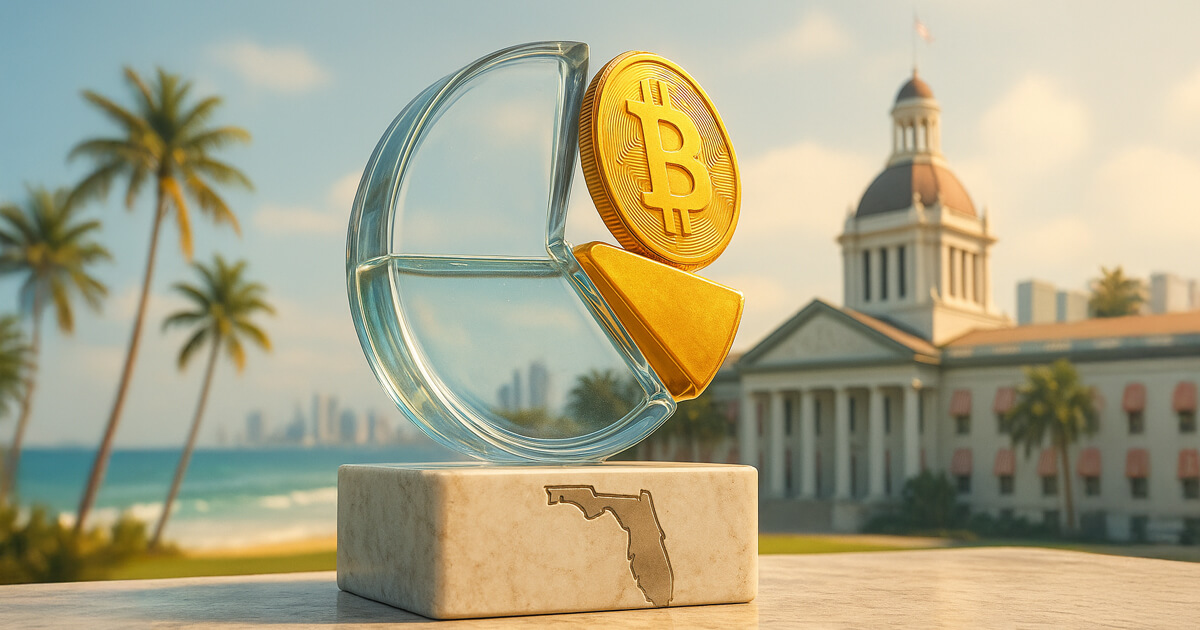
The post How $218B pension bill makes BTC a state asset this time appeared on BitcoinEthereumNews.com. Florida is back with another attempt to put Bitcoin on the state’s balance sheet. The new bill, HB 183, revives last year’s failed effort but with sharper teeth and broader reach. It once again sets a ceiling of 10% of certain state funds that could be allocated to digital assets, including Bitcoin and regulated ETFs. But where the 2025 bill was mostly an aspirational gesture, this one reads like a working blueprint. It spells out how custody would work, who gets to make the calls, and even what happens if the state loses control of its private keys. The bill runs long and detailed, and for good reason: HB 183 is meant to show that Florida can actually hold crypto in a way that passes audit. It defines digital assets to include Bitcoin, tokenized securities, and other cryptographically recorded instruments under Florida’s electronic record laws. It also opens the door to exchange-traded products that hold digital assets alongside stocks or commodities. That expansion means the state isn’t only talking about stacking Bitcoin. It’s positioning itself to own exposure through SEC-registered ETFs or even tokenized securities, as long as they meet custody and disclosure standards. The bill designates the Chief Financial Officer as the central actor. The CFO could allocate up to 10% of each state fund account, from General Revenue to trust and agency funds, into approved crypto or ETF instruments. The same ceiling applies to the pension system, where the State Board of Administration could invest up to 10% of the Florida Retirement System Trust Fund. Those limits mirror last year’s bill but clarify that the cap applies per account, not to all funds collectively, effectively widening the potential pool. None of it is mandatory, as these are ceilings, not quotas, but the legal authorization is sweeping enough to…

Author: BitcoinEthereumNews
Crypto Crash Alert: Billions Lost, Here Are the Top 5 Losers

Crypto Crash Alert: Billions Lost, Here Are the Top 5 Losers

The crypto crash wiped billions from the market in hours. From Aster to Aave, here are the top 5 tokens hit hardest — and what their stats reveal.

Author: Crypto Ticker
Bitcoin Holds Above $100K While AlphaPepe Presale Emerges as 2025’s Top Retail Pick

Bitcoin Holds Above $100K While AlphaPepe Presale Emerges as 2025’s Top Retail Pick

Bitcoin’s dominance is once again being tested — not by weakness, but by evolution. As the world’s first cryptocurrency holds firmly above the $100,000 mark, it’s proving that institutional interest and mainstream acceptance are here to stay. But even as BTC consolidates, retail investors are looking elsewhere for stronger returns. Enter AlphaPepe (ALPE) — the […]

Author: Cryptopolitan