Lending

Lending protocols form the backbone of the decentralized money market, allowing users to lend or borrow digital assets without intermediaries. Using smart contracts, platforms like Aave and Morpho automate interest rates based on supply and demand while requiring over-collateralization for security. The 2026 lending landscape features advanced permissionless vaults and institutional-grade credit lines. This tag covers the evolution of capital efficiency, liquidations, and the integration of diverse collateral types, including LSTs and tokenized RWAs.

14162 Articles
Created: 2026/02/02 18:52
Updated: 2026/02/02 18:52
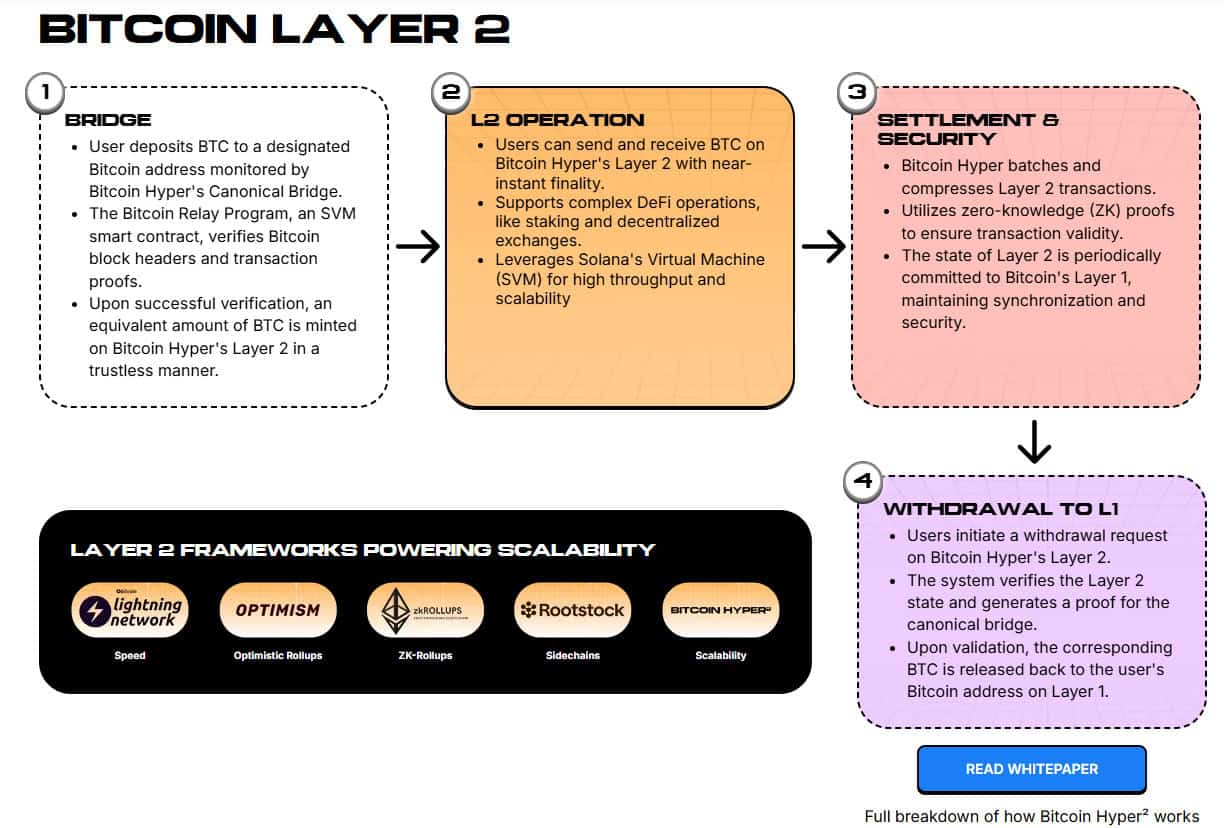
$13M Raised and Counting: Can Bitcoin Hyper Supercharge BTC?

$13M Raised and Counting: Can Bitcoin Hyper Supercharge BTC?

Bitcoin is still the king of crypto: a $2T asset, and the world’s most recognized digital brand. Beneath its dominance, though, cracks are showing. Critics point to its slow transaction speeds, high network fees, and limited scalability.  These challenges reduce Bitcoin's practicality in a space that’s increasingly driven by DeFi, NFTs, and Web3 applications. That’s [...]

Author: Brave Newcoin
Solana Integrates WLFI’s $USD1 Stablecoin, Showing $2.2B Market Cap in Record 90 Days

Solana Integrates WLFI’s $USD1 Stablecoin, Showing $2.2B Market Cap in Record 90 Days

Solana adds WLFI’s USD1 stablecoin resulting $2.2B market cap in just 90 days and ultimately boosting DeFi liquidity, scalability, and adoption.

Author: Blockchainreporter
Mutuum Finance Crypto Price Forecast: How Much $350 Invested Today Will Be By 2026, 2028, and 2030

Mutuum Finance Crypto Price Forecast: How Much $350 Invested Today Will Be By 2026, 2028, and 2030

The post Mutuum Finance Crypto Price Forecast: How Much $350 Invested Today Will Be By 2026, 2028, and 2030 appeared on BitcoinEthereumNews.com. Mutuum Finance (MUTM) is capturing attention as its presale surges past expectations. The project is already in Phase 6, and its token price has risen from $0.01 in the first phase to $0.035, marking a 250% increase.  Current buyers are proactively preempting Phase 7 as the stock could increase 14.3 percent to reach a price of $0.04. The presale has now raised $15,220,000 and gathered 15,880 holders, showing strong community engagement and accelerating momentum.  Since its launch, Mutuum Finance (MUTM) has been viewed by many investors as one of the best cryptos to buy now, thanks to its strong tokenomics, expanding use case, and efficient Layer 2 foundation. Mutuum Finance Price Forecast To 2026 Mutuum Finance (MUTM) is preparing for its launch at $0.06, and early buyers at $0.035 are expected to secure between 300% and 500% returns once trading begins.  Looking further, projections place MUTM near $10 in 2026 as the platform’s dual lending model gains adoption. Its Peer-to-Contract (P2C) system offers steady returns by tokenizing major assets like BTC and ETH, while its Peer-to-Peer (P2P) option caters to lenders targeting higher yields.  The need to have decentralized means of borrowing and lending funds is perpetually on the increase side and Mutuum Finance (MUTM) is developing to that end.   A perspective can be had in Shiba Inu (SHIB), which produced a comparable outrageous wave during February 2020-21. SHIB’s price moved from $0.00000000008 to $0.000088 in just over a year. That shift represented a return of nearly 1,000,000%, creating fortunes for its earliest holders.  Mutuum Finance (MUTM) is not designed as a meme coin, yet the example shows how quickly value can multiply once investor confidence, community size, and token utility align.  Therefore, a $350 investment today could potentially grow into nearly $100,000 by 2026 if MUTM follows through on…

Author: BitcoinEthereumNews
ETH gas spikes as WLFI becomes the busiest smart contract on the network

ETH gas spikes as WLFI becomes the busiest smart contract on the network

The post ETH gas spikes as WLFI becomes the busiest smart contract on the network appeared on BitcoinEthereumNews.com. The launch of the transferable version of the WLFI token put a stress test on the Ethereum network. After weeks of low fees, with gas under 1 gWei, the network jumped to a red-hot 100 gWei per transaction.  The Ethereum network is seeing a day of overheated gas prices, recalling the peak days of 2021. After weeks of normal-level activity, with gas fees under 1 gWei as the network faced a new set of conditions. WLFI may have a more lasting effect on the Ethereum ecosystem, as Trump’s fund intends to roll out lending, voting, and other activities around the token.  ETH gas prices immediately spiked after the launch of a transferable WLFI token, breaking above 100 gWei for the first time in months. | Source: Eth Gas Station Immediately after World Liberty Fi made its token transferable and started trading, the price of gas rose above 100 gWei. This meant that swaps cost over $145 at one point. The Ethereum network showed it was still at risk for high fees and congestion in the case of high-profile events and trader exuberance, though few other tokens or contracts have caused a similar gas spike during the most recent bull cycle. DeFi participants were affected, as Ethereum became more expensive for bridging and borrowing. Even regular operations were priced above $100, with token and ETH transfers at over $10.  Following the gas spike, ETH also recovered to $4,403.56, retaining the expectations of increased usage.  WLFI becomes the top smart contract On-chain data showed the WLFI token became the most active smart contract as the tokens were distributed and traded.  In the hours after the launch, WLFI usage led to 129.22 ETH burned from fees. Ethereum base fees also spiked to an anomalous level, based on validator compensation data. The recent gas…

Author: BitcoinEthereumNews
BlockDAG’s Crypto Presale vs BlockSack’s Meme-Driven Presale Crypto ICO in 2025: Top Crypto Gainer?

BlockDAG’s Crypto Presale vs BlockSack’s Meme-Driven Presale Crypto ICO in 2025: Top Crypto Gainer?

The post BlockDAG’s Crypto Presale vs BlockSack’s Meme-Driven Presale Crypto ICO in 2025: Top Crypto Gainer? appeared on BitcoinEthereumNews.com. BlockDAG’s crypto presale success meets BlockSack’s meme-driven presale crypto ICO in 2025. Explore token presales, presale crypto tokens, and why both projects stand out in the best crypto presale landscape. The crypto world in 2025 is full of innovation, with token presales taking the spotlight as investors explore new opportunities. Among the best crypto presales to buy right now, projects like BlockDAG and BlockSack have sparked widespread discussion. BlockDAG has already made headlines for its large-scale fundraising, while BlockSack enters as a meme-driven presale cryptocurrency with its own unique narrative and community appeal. Both represent different ends of the crypto presale spectrum, showing how diverse the space has become. This comparison explores how each project defines its value in today’s growing list of top crypto presales. BlockSack: Meme Energy Meets Early Presale Opportunity Welcome to the Daddy of All Memes! $BSACK positions itself as a unique entry in the world of presale crypto, drawing attention with a story rooted in blockchain origins. Its design reflects the myth of Sacktoshi, who embodies the raw spark behind decentralized innovation. Unlike other diluted chains, BlockSack claims to represent the original essence, combining humor, culture, and digital creativity in one presale coin. The project builds its foundation around meme-driven energy but extends beyond entertainment. With a starting price of $0.00697 in Stage 1 of its presale cryptocurrency phase, it allows early supporters to engage with a low entry point. The next price jump to $0.00869 highlights how its presale crypto tokens are structured for progressive growth across blocks. Currently, BlockSack has raised over $13,493.30 out of its $126,347.97 target, marking 10.68% completion in its token presale. Each transaction and smart contract is presented as part of a larger narrative, turning its community into co-authors of the meme’s legacy. In a world of crypto presale projects, BlockSack stands…

Author: BitcoinEthereumNews
ETH users see gas spike as WLFI smart contract tops network activity

ETH users see gas spike as WLFI smart contract tops network activity

ETH gas spiked to levels not seen since the Web3 boom in 2021, with fees rising from under 1 gWei in the past months to over 100 gWei, with around $145 for DEX swaps. The WLFI smart contract became the leading user of gas on the Ethereum network.

Author: Cryptopolitan
Institutions Fuel $50M Surge on Aave Horizon, Yet Lending Reveals a Twist

Institutions Fuel $50M Surge on Aave Horizon, Yet Lending Reveals a Twist

TLDR Aave Horizon crossed $50 million in deposits only days after its launch. Borrowing activity has reached $6.2 million with USDC making up almost all of it. RLUSD has attracted the largest share of deposits with $26.1 million. USDC deposits stand at $8 million and it leads borrowing demand at $6.19 million. Other assets like [...] The post Institutions Fuel $50M Surge on Aave Horizon, Yet Lending Reveals a Twist appeared first on CoinCentral.

Author: Coincentral
Why ADA Whales Are Buying Into BlockSack Presale Crypto ICO for Faster Upside Potential

Why ADA Whales Are Buying Into BlockSack Presale Crypto ICO for Faster Upside Potential

ADA whales shift focus toward BlockSack presale crypto tokens, highlighting its momentum. Explore why investors see BSACK as one of the best crypto presale opportunities to buy right now.

Author: Cryptodaily
Fluid: Redefining the capital efficiency benchmark for DeFi lending and trading

Fluid: Redefining the capital efficiency benchmark for DeFi lending and trading

Author: Castle Labs Compiled by AididiaoJP, Foresight News Money markets are at the heart of DeFi, allowing users to gain exposure to specific assets using a variety of strategies. Over time, this vertical has grown in both value locked (TVL) and functionality. With the introduction of new protocols like @MorphoLabs, @0xFluid, @eulerfinance, and @Dolomite_io, the range of functionality available through lending protocols has expanded. In this report, we focus on one of these protocols: Fluid. Fluid has launched several features, the most interesting of which are smart debt and smart collateral. It cannot be regarded as an ordinary lending protocol because it also combines its DEX functionality to provide users with more services. Fluid is showing significant growth in both DEX and lending verticals, with a total market size (in terms of total deposits) exceeding $2.8 billion. Fluid market size, source: Dune, @dknugo Fluid Market Size represents the total deposits in the protocol. This metric was chosen over TVL because debt is a productive asset in the protocol and contributes to exchange liquidity. Overview of Fluid components and how it works This section briefly outlines the components of the Fluid protocol and explains how it operates, with a focus on why it is a capital-efficient protocol. Fluid uses a unified liquidity model where multiple protocols can share liquidity, including the Fluid lending protocol, Fluid Vaults, and DEX. Fluid Lending allows users to provide assets and earn interest. The assets provided here are used throughout the Fluid ecosystem, improving their capital efficiency. It also opens up long-term yield opportunities as the protocol continuously adapts to changes in the borrower and lender market. Fluid Vaults are single-asset, single-liability vaults. These vaults are extremely capital-efficient because they allow for high LTVs (loan-to-value ratios), up to 95% of the collateral value. This number determines a user's borrowing capacity, as opposed to the deposited collateral. Fluid also employs a unique liquidation mechanism that reduces liquidation penalties to as low as 0.1%. The protocol only liquidates the amount necessary to restore a position to a healthy state. Fluid's liquidation process is inspired by the design of Uniswap V3. It categorizes positions by scale or range of their LTV and executes batch liquidations when the collateral value reaches the liquidation price. DEX aggregators then use these batches as liquidity: liquidation penalties translate into discounts for traders when they swap. Fluid DEX earns an additional layer of income for the liquidity layer through transaction fees generated by exchanges, further reducing borrowers' position interest while improving the capital efficiency of the entire protocol. Different DEX aggregators, such as KyberSwap and Paraswap, use Fluid DEX as a liquidity source to obtain deeper liquidity and increase trading volume. On Fluid, users can deposit their collateral into a DEX and earn both lending fees and trading fees, making it a Smart Collateral. If users wish to borrow against their collateral, they can borrow assets or open a Smart Debt Position, making their debt productive. For example, users can borrow from a pool of ETH and USDC/USDT. They can deposit ETH as collateral and borrow USDC/USDT. In exchange, they receive USDC and USDT in their wallets, which they can use as they wish, while the trading fees earned from this liquidity pool are used to reduce their outstanding debt. Fluid's latest progress and expansion Based on trading volume data over the past seven days, Fluid DEX ranks #4, behind only @Uniswap, @Pancakeswap, and @AerodromeFi. Fluid's partnership with Jupiter Lend has launched, a feature that has been in private beta since the beginning of the month, and Fluid DEX Lite has already launched. Additionally, Fluid DEX v2 will be available soon. DEXs ranked by 7-day trading volume. Source: Dune, @hagaetc In addition to this, the protocol also anticipates a token buyback as its annual revenue exceeds $10 million. Fluid recently published a post on its governance forum regarding this, which opened a discussion about the buyback and proposed three approaches. See the different proposed approaches here: https://x.com/0xnoveleader/status/1957867003194053114 Subject to governance approval (after discussion), the buyback will begin on October 1st, with a 6-month evaluation period. Jupiter Lend: Fluid Enters Solana Fluid’s expansion to Solana is in partnership with @JupiterExchange. Jupiter is the largest DEX aggregator on Solana, with a cumulative trading volume of over $970 billion. It is also the leading perpetual contract exchange and staking solution on Solana. The TVL of Solana lending now exceeds $3.5B, with @KaminoFinance being the primary contributor. The lending vertical on Solana offers significant growth potential for Fluid. @jup_lend recently launched its public beta after a few days of private testing. Its TVL has surpassed $250 million, making it the second-largest money market on the Solana blockchain, behind only Kamino. Jupiter Lend, launched in partnership with Fluid, offers similar functionality and efficiencies, with smart collateral and smart debt expected to launch on the platform later this year. Additionally, 50% of the platform's revenue will be allocated to Fluid. Fluid DEX iteration Fluid has already launched its DEX Lite and plans to launch V2 soon. This section will cover both and explain how these iterations will help Fluid grow further. Fluid DEX Lite Fluid DEX Lite launched in August and serves as a credit layer on Fluid, enabling borrowing directly from the Fluid liquidity layer. It has begun providing trading volume services for relevant trading pairs, starting with the USDC-USDT pair. This version of Fluid DEX is extremely gas efficient, reducing the cost of performing swaps by approximately 60% compared to other versions. It was created to capture a larger share of trading volume in the relevant trading pairs, where Fluid is already the dominant protocol. In its first week, Fluid Lite generated over $40 million in trading volume, with initial liquidity of $5 million borrowed from the liquidity layer. Fluid DEX Lite trading volume. Source: Dune, @dknugo Fluid DEX V2 Fluid DEX V1, launched in October 2024, surpassed $10 billion in cumulative trading volume on Ethereum in just 100 days, faster than any other decentralized exchange. To support this growth, Fluid is launching V2, designed with modularity and permissionless scalability in mind, allowing users to create multiple custom strategies. First, V2 will introduce four different types of DEXs within the protocol, two of which are inherited from V1. Fluid will support more DEX types than just these four, with more types being deployable through governance. The two new types introduced are Smart Collateral Range Orders and Smart Debt Range Orders, both of which allow borrowers to help improve their capital efficiency. Smart Collateral Range Orders function similarly to Uniswap V3, allowing users to provide liquidity by depositing collateral within a specific price range while also earning an annualized percentage rate (APR) on the borrowed funds. Smart Debt Range Orders work similarly, allowing users to create range orders by borrowing assets on the debt side and earn an annual percentage rate (APR) on the trade. Additionally, it introduces features like hooks (similar to Uniswap V4) for custom logic and automation, flash accounting to improve fee efficiency for CEX-DEX arbitrage, and on-chain yield accumulation limit orders, which means limit orders can earn annual lending rate (APR) while waiting to be filled. in conclusion Fluid continues to grow and improve by offering a unique set of features to become more capital efficient. Smart Collateral: Collateral deposited on the platform can be used to earn lending interest and transaction fees. Smart Debt: Smart Debt reduces debt by paying off part of it using transaction fees generated by the debt, making the debt borrowed by users productive. Unified Liquidity Layer: Fluid’s unified liquidity layer improves capital efficiency across the ecosystem by providing features such as higher LTV, advanced liquidation mechanisms, and automatic capping for better risk management. Its recent expansion into Solana through its partnership with Jupiter has broadened its market share in the lending category to non-EVM networks. Meanwhile, Fluid DEX Lite and DEX V2 aim to enhance user experience and increase transaction volume on EVM chains. Additionally, DEX V2 is expected to launch on Solana later this year, which will enable Fluid to enter Solana’s lending and exchange verticals.

Author: PANews
Solv and Chainlink integrate Proof of Reserve into SolvBTC: live on-chain anti-manipulation feed on Ethereum

Solv and Chainlink integrate Proof of Reserve into SolvBTC: live on-chain anti-manipulation feed on Ethereum

Solv Protocol and Chainlink have launched a new feed that combines the market price with on-chain verification of BTC reserves for SolvBTC.

Author: The Cryptonomist