Lending

Lending protocols form the backbone of the decentralized money market, allowing users to lend or borrow digital assets without intermediaries. Using smart contracts, platforms like Aave and Morpho automate interest rates based on supply and demand while requiring over-collateralization for security. The 2026 lending landscape features advanced permissionless vaults and institutional-grade credit lines. This tag covers the evolution of capital efficiency, liquidations, and the integration of diverse collateral types, including LSTs and tokenized RWAs.

16171 Articles
Created: 2026/02/02 18:52
Updated: 2026/02/02 18:52
Folks Finance announces xChain V2 with $10m+ incentives: Scaling crosschain DeFi into mainstream use

Folks Finance announces xChain V2 with $10m+ incentives: Scaling crosschain DeFi into mainstream use

The post Folks Finance announces xChain V2 with $10m+ incentives: Scaling crosschain DeFi into mainstream use appeared on BitcoinEthereumNews.com. Folks Finance to launch xChain V2 in H1 2026 with $10M in incentives for crosschain lending users. V2 upgrade brings simpler crosschain DeFi, new strategy vaults, and EVM + non-EVM support. Mobile app integration to enable debit-card borrowing while keeping collateral exposure. Singapore, December 10, 2025 – Folks Finance, the leading crosschain lending protocol backed by Coinbase Ventures, Jump, ParaFi, and Borderless Capital, is entering its next development phase with the release of xChain V2, scheduled for H1 2026. To support the rollout, Folks Finance will allocate 1 million FOLKS (valued at ~$10M at the time of publishing) toward incentives to fuel unified crosschain pools and efficient strategy vaults, rewarding users who explore the upgraded system as it scales toward a $1 billion TVL target. V2 builds on the success of the FOLKS token launch and the first iteration of true crosschain lending with xChain, taking the model to a much wider audience by removing the complexity traditionally tied to crosschain DeFi. The upgrade brings higher efficiency, support for both EVM and non-EVM ecosystems, and new vault-based crosschain loans that enable curated, crosschain yield strategies from a single interface. As part of this vision, xChain V2 will also connect with the upcoming Folks Mobile app to enable debit-card-based borrowing: users can borrow against their collateral, keep their exposure and yield, and spend the borrowed balance directly in the real world. The goal is simple: turn advanced DeFi mechanics into tools anyone can use, both onchain and in everyday life. The FOLKS token will also expand its utility alongside the V2 launch, with further details to be shared as development progresses. xChain V2 is currently in active development. With over a year as the leading crosschain lending protocol on mainnet and extensive market experience across eight chains, Folks Finance is positioned…

Author: BitcoinEthereumNews
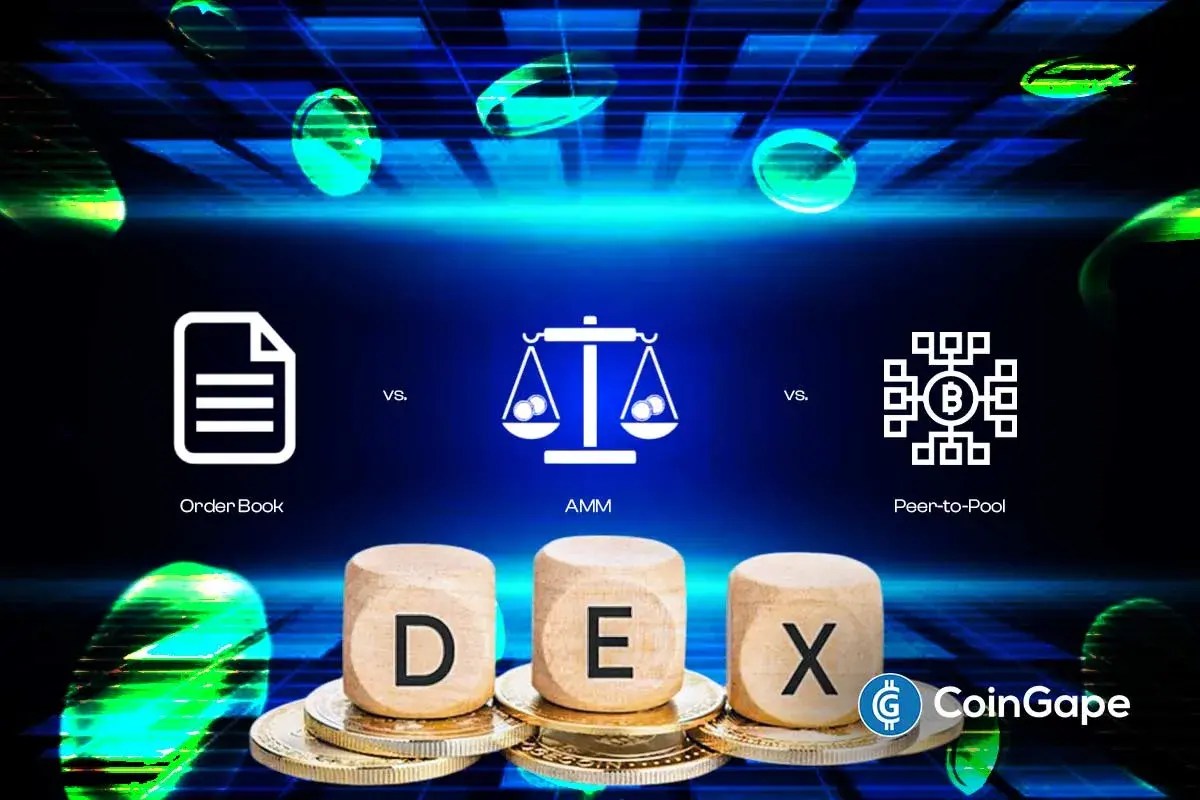
Order Book vs. AMM vs. Peer-to-Pool – DEX Models Explained

Order Book vs. AMM vs. Peer-to-Pool – DEX Models Explained

The post Order Book vs. AMM vs. Peer-to-Pool – DEX Models Explained appeared on BitcoinEthereumNews.com. As crypto investors shift to non-custodial trading platforms, decentralized exchanges continually experiment with new methods to manage trades and enhance security, user experience, and cost efficiency.  The primary liquidity models are strategies used by decentralized exchanges to handle users’ trade requests and execute asset swaps efficiently. How a Dex manages liquidity and handles trade requests is essential to its general operation. Key Takeaways Decentralized trading platforms use different models to create a liquidity layer for traders to execute trades freely. Popular models are the Order Book, AMM, and Peer-to-pool liquidity models. Order Books are similar to centralized exchange trading engines, while AMM Dexs use liquidity pools and an Automated Market Market to serve traders. The Peer-to-pool or intent-based model gamifies trading on a Dex Each model scores a point in terms of usability, security, and cost-efficiency. In this article, we review and compare the three major liquidity models used by centralized exchanges. Liquidity models contribute significantly to an exchange’s cost-efficiency, security, privacy, and overall user experience. AMM Dexs are unarguably the most popular, but other liquidity models are rising to fame. First, let’s understand the primary liquidity models used by contemporary decentralized exchanges. Understanding the Different Decentralized Exchange Models Here, let’s explain the different Dex liquidity models. 1. Order Book Model The order book model is similar to the trading system used on centralized crypto exchanges. To create an order, users specify their trading terms (the amount they wish to swap and the desired price they want their order to be settled).  A central order book holds trade requests created by users and matches the trades using a price and time priority-based system. That is, it displays the highest bid and lowest ask prices at the top, and executes trades automatically when orders are matched. This model is used by…

Author: BitcoinEthereumNews
Etherzilla’s Game-Changing Move: Acquires $21.1M Stake in Zippy Lending Platform

Etherzilla’s Game-Changing Move: Acquires $21.1M Stake in Zippy Lending Platform

BitcoinWorld Etherzilla’s Game-Changing Move: Acquires $21.1M Stake in Zippy Lending Platform In a move that underscores the accelerating maturity of crypto finance, Nasdaq-listed Etherzilla (ETHZilla) has made a strategic power play. The Ethereum-focused investor announced a significant acquisition: a 15% stake in the institutional-grade digital lending platform, Zippy. This $21.1 million deal is more than a simple transaction; it’s a bold statement about the future of […] This post Etherzilla’s Game-Changing Move: Acquires $21.1M Stake in Zippy Lending Platform first appeared on BitcoinWorld.

Author: bitcoinworld
Ethereum (ETH) Price Prediction for 2026 as This Cheap Crypto Gains Market Attention

Ethereum (ETH) Price Prediction for 2026 as This Cheap Crypto Gains Market Attention

Investors evaluating what crypto to buy now have shifted focus toward Ethereum after a turbulent week that forced the market to reassess near-term risks and long-term value. ETH has been retesting the $3,000 support area, and despite technical setbacks and intensified liquidations, participation remains high.  As traders search for the best cryptocurrency to invest in [...] The post Ethereum (ETH) Price Prediction for 2026 as This Cheap Crypto Gains Market Attention appeared first on Blockonomi.

Author: Blockonomi
Revolutionary Infrastructure: How Gravity Blockchain is Powering the Future of Real World Assets and Data-Intensive DeFi

Revolutionary Infrastructure: How Gravity Blockchain is Powering the Future of Real World Assets and Data-Intensive DeFi

BitcoinWorld Revolutionary Infrastructure: How Gravity Blockchain is Powering the Future of Real World Assets and Data-Intensive DeFi The blockchain landscape is about to witness a seismic shift as Gravity, the Layer 1 blockchain from Galxe, announces its ambitious mission: building specialized infrastructure for Real World Assets (RWA) and data-intensive DeFi applications. This isn’t just another blockchain launch—it’s a targeted solution for one of crypto’s most promising frontiers. What Makes Gravity’s Approach to […] This post Revolutionary Infrastructure: How Gravity Blockchain is Powering the Future of Real World Assets and Data-Intensive DeFi first appeared on BitcoinWorld.

Author: bitcoinworld
Ripple Unveils Major XRPL Upgrade to Advance DeFi Strategy

Ripple Unveils Major XRPL Upgrade to Advance DeFi Strategy

The post Ripple Unveils Major XRPL Upgrade to Advance DeFi Strategy appeared on BitcoinEthereumNews.com. Altcoins The upgrade represents a pivot from simple payment functionality toward a ledger designed to host tokenized assets, stablecoins, and eventually lending activity. Ripple’s engineers describe the release – version 3.0.0 of the rippled core – as a foundational update that shores up reliability while clearing space for upcoming features. Key Takeaways Ripple released a major XRP Ledger upgrade aimed at strengthening DeFi capabilities. The update fixes ledger inconsistencies, enhances developer tools, and improves transaction precision. Changes lay groundwork for future features such as tokenized assets and native lending.  Node operators running the network’s validating infrastructure are being encouraged to update immediately, as older software may fall out of sync as new amendments activate. Technical Tweaks With Strategic Intent A central change addresses data inconsistencies within escrow and payment records, tightening how key fields are stored and accessed. Other fixes span liquidity modeling, ledger accounting, and automated market maker precision — areas that will matter more as developers build financial applications on-chain. One of the lesser-known but important adjustments introduces a new integer standard, STInt32, which allows negative values — a capability expected to support more complex financial logic. The upgrade also extends simulated transaction capabilities with expanded metadata output, offering analysts and developers deeper insight into protocol behavior. Ripple’s team says this opens doors for more robust dashboards, auditing systems, and testing environments as DeFi usage grows. Setting the Stage for Native Lending and Tokenization Ripple has been signaling for months that real-world assets and stablecoin issuance are becoming central to its institutional strategy. The latest release is framed as preparation for that shift — cleaning up code, fixing ledger handling quirks, and clearing a technical runway for features such as lending mechanisms to be layered into XRPL. Rather than a cosmetic refresh, the changes suggest that Ripple is…

Author: BitcoinEthereumNews
TenX Protocols TSX Venture Exchange Listing: A Bold Leap for Crypto Staking Infrastructure

TenX Protocols TSX Venture Exchange Listing: A Bold Leap for Crypto Staking Infrastructure

BitcoinWorld TenX Protocols TSX Venture Exchange Listing: A Bold Leap for Crypto Staking Infrastructure The cryptocurrency landscape is witnessing a significant institutional milestone. Blockchain infrastructure firm TenX Protocols has announced its upcoming listing on Canada’s TSX Venture Exchange, marking a pivotal moment for crypto staking services entering traditional public markets. This move follows a successful $22.9 million fundraising round and signals growing mainstream financial acceptance of core blockchain operations. […] This post TenX Protocols TSX Venture Exchange Listing: A Bold Leap for Crypto Staking Infrastructure first appeared on BitcoinWorld.

Author: bitcoinworld
Ripple’s RLUSD Stablecoin Surges Past $1.3B Market Cap Amid Partnerships

Ripple’s RLUSD Stablecoin Surges Past $1.3B Market Cap Amid Partnerships

TLDR Ripple’s RLUSD stablecoin grows by 1,278% in 2025, approaching a $1.3B market cap. Multi-chain deployment on Ethereum and XRPL has driven RLUSD’s rapid expansion. Partnerships with Gemini and Mastercard push RLUSD into institutional payment systems. The XRP Ledger v3.0 upgrade strengthens RLUSD’s DeFi and institutional use cases. Ripple’s RLUSD stablecoin has reached a market [...] The post Ripple’s RLUSD Stablecoin Surges Past $1.3B Market Cap Amid Partnerships appeared first on CoinCentral.

Author: Coincentral
Tether-backed Twenty One Capital jolted as Bitcoin slide hits DAT valuations

Tether-backed Twenty One Capital jolted as Bitcoin slide hits DAT valuations

Tether-backed Twenty One Capital lists via SPAC as Bitcoin cools and DAT mNAV premiums compress, forcing the firm to prove it is more than a BTC hoard. Twenty One Capital, a cryptocurrency treasury firm, experienced market turbulence following its public…

Author: Crypto.news
Robinhood (HOOD) Stock: Falls 0.53% as Insider Selling Rises Despite Strong 2025 Performance

Robinhood (HOOD) Stock: Falls 0.53% as Insider Selling Rises Despite Strong 2025 Performance

TLDRs; Robinhood shares fell 0.53% despite a 164% rally, highlighting valuation concerns and insider selling. Strong 2025 earnings show diversified revenue streams, crypto growth, and surging Robinhood Gold subscribers. Institutional and insider trades suggest caution, with some executives cashing out substantial holdings. Indonesia expansion and prediction market initiatives aim to sustain growth beyond domestic trading. [...] The post Robinhood (HOOD) Stock: Falls 0.53% as Insider Selling Rises Despite Strong 2025 Performance appeared first on CoinCentral.

Author: Coincentral