Lending

Lending protocols form the backbone of the decentralized money market, allowing users to lend or borrow digital assets without intermediaries. Using smart contracts, platforms like Aave and Morpho automate interest rates based on supply and demand while requiring over-collateralization for security. The 2026 lending landscape features advanced permissionless vaults and institutional-grade credit lines. This tag covers the evolution of capital efficiency, liquidations, and the integration of diverse collateral types, including LSTs and tokenized RWAs.

15813 Articles
Created: 2026/02/02 18:52
Updated: 2026/02/02 18:52
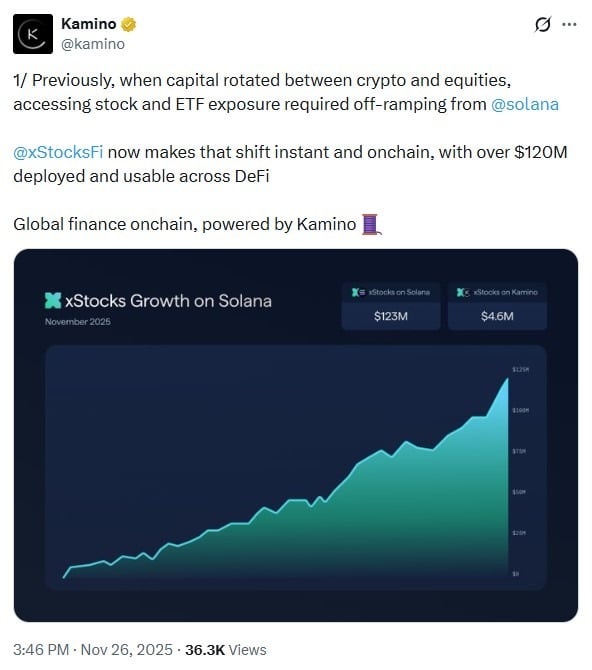
Chainlink Secures Tokenized META, TSLA, NVDA & GOOGL Trading on Solana

Chainlink Secures Tokenized META, TSLA, NVDA & GOOGL Trading on Solana

Kamino Finance integrates with Chainlink Data Streams to power tokenised trading of stocks. Chainlink leads the oracle sector with 63% market control, demonstrating increased demand. Chainlink (LINK) plays an important infrastructure role in the Kamino xStocks ecosystem. Kamino disclosed that Chainlink provides secure, tamper-proof data feeds for tokenised equities, including META, TSLA, NVDA, and GOOGL, [...]]]>

Author: Crypto News Flash
Jupiter introduces Refinance feature for seamless migration of borrowing and lending positions

Jupiter introduces Refinance feature for seamless migration of borrowing and lending positions

The post Jupiter introduces Refinance feature for seamless migration of borrowing and lending positions appeared on BitcoinEthereumNews.com. Key Takeaways Jupiter launches the Refinance feature for seamless migration of lending and borrowing positions from other DeFi protocols. Users can migrate active positions without slippage and keep custody of their funds throughout the process. Jupiter, a decentralized finance platform on Solana, today launched its Refinance feature that allows users to seamlessly transfer their borrowing and lending positions from other protocols directly to Jupiter with improved terms. The new feature enables users to migrate active positions without slippage while offering better rates and higher loan-to-value ratios. All transactions are executed within users’ wallets, maintaining custody of funds throughout the process. Jupiter Lend’s Refinance currently supports multiple token pairs including JLP/USDC, SOL/USDC, JupSOL/SOL, JitoSOL/SOL, mSOL/SOL, INF/SOL, and syrupUSDC/USDC. The platform plans to expand support for additional pairs and protocols. The feature operates without introducing additional protocol fees during the migration process. Source: https://cryptobriefing.com/jupiter-lend-refinance-feature-token-migration-solana-defi/

Author: BitcoinEthereumNews
$HUGS Presale Is Live! Milk Mocha’s Global Fans Ignite a Cute Crypto Revolution With NFTs & Real Rewards

$HUGS Presale Is Live! Milk Mocha’s Global Fans Ignite a Cute Crypto Revolution With NFTs & Real Rewards

Discover the heart of community in the $HUGS presale. Learn how NFTs, staking APY, and fan-powered features make Milk Mocha’s charming story one of Web3’s most delightful new economies.

Author: Blockchainreporter
HMRC backs ‘no gain, no loss’ for DeFi deposits: Aave CEO says it changes everything

HMRC backs ‘no gain, no loss’ for DeFi deposits: Aave CEO says it changes everything

The post HMRC backs ‘no gain, no loss’ for DeFi deposits: Aave CEO says it changes everything appeared on BitcoinEthereumNews.com. Aave’s CEO and cofounder Stanley Kulechov has passed comment on the recently revealed outcome of the UK’s HMRC consultation on taxing DeFi activities that involve cryptoasset lending and staking.  Published on November 27, 2025, the document mentions a proposal tagged the “no gain, no loss” treatment, and it has been gaining traction because of what it means for users.  Stani Kulechov commends HMRC consultation In a post he shared via his X page, Kulechov referenced the official document, highlighting the “no gain, no loss” (NGNL) approach it is offering.  “A particularly interesting conclusion is that when users deposit assets into Aave, the deposit itself is not treated as a disposal for capital gains tax purposes, creating a ‘no gain, no loss’ (NGNL) approach,” he wrote.  As far as he is concerned, it is a major win for UK DeFi users, especially those who have an interest in borrowing stablecoins against their crypto collateral. “I’m proud that our team at Aave Labs participated in the consultation, advocating for DeFi and ensuring that the tax treatment of interactions with lending protocols reflects the economic reality: users are not intending to dispose of their assets when borrowing against their collateral for liquidity needs,” he posted.  He ended the post by emphasizing that he, as well as those at Aave Labs, are fully supportive of the no loss no gain approach and are looking forward to seeing those changes implemented in UK tax legislation.  Kulechov is not the only one pleased with the outcome of the HMRC’s consultation; several other notable figures have also responded positively to the release, with many tagging it a step forward and claiming it could be a catalyst for adoption.  Kulechov’s statement comes not long after he criticized the UK’s BoE  Kulechov’s positive sentiments came after he criticized the…

Author: BitcoinEthereumNews
Hedera Expands Real-World Asset Utility as cSigma Channels Invoice Financing Returns to Stablecoin Holders

Hedera Expands Real-World Asset Utility as cSigma Channels Invoice Financing Returns to Stablecoin Holders

Hedera and cSigma turn blockchain into a tool for the global economy, benefiting stablecoin holders. cSigma picked Hedera for its focus on RWA utility, Cost Predictability, Legal Recourse, and Unified Access. The Hedera (HBAR) network has expanded real-world asset (RWA) utility through an integration with cSigma Finance. According to the Hedera Foundation, cSigma brings invoice [...]]]>

Author: Crypto News Flash
Top Crypto Analysts Track a 900% Upside for This DeFi Coin as Phase 6 Surges 90%, Here’s the Math

Top Crypto Analysts Track a 900% Upside for This DeFi Coin as Phase 6 Surges 90%, Here’s the Math

The crypto market is tightening up once again though there is a new token under $0.04 that is moving at a higher rate than expected by most people. According to analysts the following figures are an indication of an apparent upside and the further the presale goes in Phase 6 and over 90, the more […]

Author: Cryptopolitan
XRP Named Among Most Popular Cryptos on Major US Exchange: Details

XRP Named Among Most Popular Cryptos on Major US Exchange: Details

The post XRP Named Among Most Popular Cryptos on Major US Exchange: Details appeared on BitcoinEthereumNews.com. XRP is currently among the most popular tokens on major crypto exchange Kraken in the last 24 hours. In a tweet, Kraken wrote “most popular on Kraken today,” accompanied by a screenshot outlining five crypto assets, including XRP. XRP is in the spotlight owing to new ETF launches: this week saw the launch of Grayscale and Franklin Templeton XRP spot ETFs in the U.S. This follows the Canary and the Bitwise XRP products, bringing the tally of XRP Spot ETFs in the U.S. to four, with more launches anticipated in the coming days. The launch of Franklin Templeton’s XRPZ and Grayscale’s GXRP on NYSE Arca attracted $164 million, highlighting institutional interest in XRP. Ripple attained a new milestone in the Middle East, with Ripple USD (RLUSD) stablecoin greenlisted by Abu Dhabi’s Financial Services Regulatory Authority (FSRA). Now recognized as an Accepted Fiat-Referenced Token by the FSRA, the move enables RLUSD use as collateral on exchanges, for lending, and on prime brokerage platforms within the ADGM, the international financial center of Abu Dhabi. Reece Merrick, Senior Executive Officer/Managing Director of Middle East and Africa, highlighted this milestone in a tweet, noting that the year 2025 has seen some awesome momentum for Ripple in the Middle East. XRP prepares for Santa rally The crypto market enjoyed a much-needed boost on Thursday as major cryptocurrencies rallied. The altcoin market, in particular, showed signs of strength on Thursday. The gains followed Wednesday’s strong recovery in equities, with Bitcoin surpassing $91,000 and derivatives flows signaling growing optimism for a year-end rally. XRP saw sharp increases at the week’s start before settling in a range between $2.14 and $2.26. At press time, XRP was trading at $2.18, up 2% in the last 24 hours and nearly 4% weekly. The increase in open interest for XRP corresponds…

Author: BitcoinEthereumNews
What The New UK Budget Means For Crypto Tax and DeFi

What The New UK Budget Means For Crypto Tax and DeFi

The post What The New UK Budget Means For Crypto Tax and DeFi appeared on BitcoinEthereumNews.com. The UK’s latest Budget leaves headline crypto tax rules unchanged but tightens the wider environment for traders. Meanwhile, HMRC signals a major rethink on how it taxes DeFi lending and liquidity provision. No New “Crypto Tax,” But Pressure Still Rises Chancellor Rachel Reeves did not introduce any crypto-specific tax in the 2025 Budget. There is no new levy on trading, holding, or spending digital assets. Sponsored Sponsored However, the Budget extends income-tax threshold freezes for three more years. As wages rise, more taxpayers drift into higher bands, including active crypto traders. Summary of the key highlights from the UK budget 👇 -The UK is fck’d and has no money -Labour have zero idea how to fix this and instead have focused on killing productivity and raising unemployment -As the deficit widens, it will just be monetised -GBP will be the escape… — LondonCryptoClub (@LDNCryptoClub) November 26, 2025 The capital gains tax (CGT) allowance remains very low compared to historic levels. That means more crypto disposals trigger reportable gains, even for modest retail portfolios. At the same time, the UK is pushing ahead with global data-sharing under new reporting standards.  Exchanges and platforms will supply more detailed customer information to HMRC from 2026. No tax changes for crypto earnings announced in the UK budget. Seems like regulation there is likely to get stricter, but for now 🇬🇧 looks like a slightly more favorable jurisdiction for crypto than some other European countries (eg Spain & France) — Butian | Bless (@blessbutian) November 26, 2025 Sponsored Sponsored HMRC Backs Away From Its Hard Line on DeFi Alongside the Budget, HMRC published a consultation outcome on DeFi lending and staking. It responds to strong criticism of its 2022 guidance on loans and liquidity pools. Stakeholders told HMRC that current rules create disproportionate administrative burdens.…

Author: BitcoinEthereumNews
Bitcoin holders split into two camps as price tumbles: Sellers vs. borrowers

Bitcoin holders split into two camps as price tumbles: Sellers vs. borrowers

The post Bitcoin holders split into two camps as price tumbles: Sellers vs. borrowers appeared on BitcoinEthereumNews.com. Key Takeaways How are Bitcoin holders responding to the recent price decline? Glassnode’s Hodler Net Position Change indicates a massive distribution (selling), while Nexo platform data shows that Bitcoin consistently represents 53-57% of collateral. Why would holders choose to borrow instead of sell during a downturn? Borrowing against Bitcoin allows holders to access liquidity without triggering capital gains taxes. It also helps maintain their position for potential future appreciation. Bitcoin’s decline from over $100,000 to under $90,000 in late 2025 has exposed a fundamental divide in how holders respond to downturns: some are capitulating, while others are doubling down through strategic borrowing. The sellers: Heavy distribution underway Glassnode’s Hodler Net Position Change metric paints a stark picture. Red bars dominate the chart throughout 2025, indicating long-term holders are actively distributing their Bitcoin.  Source: Glassnode The selling intensified dramatically in late November, with net position changes plunging beyond -60,000 BTC—one of the heaviest distribution periods in recent memory. This behavior follows a familiar pattern: as price drops, holders who bought near cycle tops or those needing immediate liquidity choose to exit positions, creating sustained selling pressure. The borrowers: conviction through leverage Yet platform data from CryptoQuant and Nexo tells a contrasting story.  Despite the price volatility and heavy on-chain distribution, Bitcoin has maintained a remarkably stable 53-57% share of total collateral on the lending platform throughout 2025.  Source: CryptoQuant As of July 2025, BTC accounts for 54.3% of all collateral—essentially unchanged from January’s 53.8%. This reveals a sophisticated subset of holders employing a fundamentally different strategy. Instead of selling Bitcoin when they need cash, they’re using it as collateral to borrow stablecoins or fiat currency. Why the Bitcoin strategy split matters The divergence reflects more than just different risk tolerances—it reveals access to financial tools and long-term conviction levels. Holders who…

Author: BitcoinEthereumNews
South Korea Financial Sector Hit by Qilin Ransomware Linked to Russian, North Korean Actors

South Korea Financial Sector Hit by Qilin Ransomware Linked to Russian, North Korean Actors

The post South Korea Financial Sector Hit by Qilin Ransomware Linked to Russian, North Korean Actors appeared on BitcoinEthereumNews.com. The Qilin ransomware attack in South Korea involved coordinated efforts by Russian and North Korean threat actors, targeting financial institutions and stealing over 2TB of sensitive data through a supply chain compromise of managed service providers. Qilin ransomware surged in South Korea, with 25 incidents in September 2024, far exceeding the average of two monthly cases. The attacks focused on the financial sector, compromising 24 entities and marking South Korea as the second-most affected country globally by ransomware this year. Bitdefender’s analysis revealed over 1 million files stolen in three waves, including potential military and economic intelligence valued at billions. Discover the Qilin ransomware attack details in South Korea: Russian-North Korean hackers stole 2TB from banks. Learn impacts and defenses in this crypto finance security breakdown. Stay informed—protect your assets now. What is the Qilin Ransomware Attack in South Korea? The Qilin ransomware attack in South Korea represents a sophisticated cyber operation blending Ransomware-as-a-Service tactics with state-sponsored elements, primarily targeting the nation’s financial infrastructure. Cybersecurity firm Bitdefender detailed in its October 2024 Threat Debrief how attackers compromised managed service providers to deploy malware across 33 incidents this year, with 25 linked to Qilin. This surge, especially 25 attacks in September alone, highlights vulnerabilities in supply chains that exposed sensitive banking data to extortion. How Did Russian and North Korean Hackers Target South Korean Financial Institutions? The operation leveraged initial access through managed service provider (MSP) compromises, a tactic that allowed rapid lateral movement into financial networks. Bitdefender’s investigation, initiated after detecting the anomaly in September 2024 ransomware reports, confirmed involvement from Qilin, a Russian-rooted group operating under a RaaS model, alongside potential North Korean actors known as Moonstone Sleet. Of the 33 cases identified, 24 affected financial entities, resulting in the exfiltration of over 2TB of data, including documents with…

Author: BitcoinEthereumNews