Liquidation

Liquidation occurs when a trader’s collateral is no longer sufficient to cover their leveraged position’s losses, triggering an automated forced closure by the exchange's liquidation engine. It is a critical risk-management mechanism that ensures the solvency of lending protocols and derivative platforms. In 2026, the focus has moved toward MEV-resistant liquidation models that protect users from predatory "cascades." This tag provides essential information on maintenance margins, health factors, and how to avoid liquidation in high-volatility environments.

14367 Articles
Created: 2026/02/02 18:52
Updated: 2026/02/02 18:52

RedStone to Acquire Credora, Debuts First Oracle-Powered DeFi Risk Ratings

RedStone to Acquire Credora, Debuts First Oracle-Powered DeFi Risk Ratings

RedStone, one of DeFi’s fastest-growing oracle networks, said it will acquire Credora, an on-chain credit-rating platform backed by Coinbase Ventures, S&P and HashKey, in a deal subject to approval. In a press release shared with CryptoNews the firms said the combined product will operate as “Credora by RedStone” and, according to the companies, will introduce the industry’s first oracle-powered risk-rating framework for assets and yield strategies across decentralized finance. The integration aims to give protocols and allocators a single pipe for real-time prices and real-time risk. Company data cited by RedStone indicates DeFi strategies carrying a rating—such as Morpho Vaults—have grown as much as 25%faster than unrated peers, suggesting measurable user demand for standardized risk signals. Deal Details and Product Scope Credora’s ratings methodology is built for crypto markets, assessing collateral composition, liquidity, volatility, governance parameters and market structure. RedStone said it will feed those risk metrics alongside its price oracles, creating a unified interface for protocols to query both price and risk in one call. RedStone explains its feeds have recorded no historical mispricing events, positioning data integrity as a selling point for institutions evaluating on-chain exposure. “This acquisition allows RedStone to expand services for DeFi protocols and users. Today, Credora is the leading DeFi ratings provider, widely used in Morpho and poised to expand across the broader lending ecosystem,” Marcin Kazmierczak, RedStone co-founder, told me. “Ratings are a natural extension of our services: we gather and deliver data on-chain, and transparent ratings transform it into actionable intelligence.” Why It Matters for DeFi DeFi lacks a common language for risk. Traditional ratings firms built models around corporate and sovereign debt; those frameworks often miss crypto-native dynamics like composability, cross-chain bridges and programmatic liquidations. The companies say “Credora by RedStone” is designed for these mechanics, with a Consensus Ratings Protocolintended to update as collateral mixes and liquidity conditions shift. By surfacing standardized scores next to live pricing, lending markets could tune parameters dynamically—for example, adjusting loan-to-value caps, interest bands or reserve factors as underlying risks change—rather than relying on static assumptions or informal heuristics. Institutional Angle Institutional interest in on-chain assets is widening—from stablecoins and tokenized bonds to private credit and reinsurance structures—raising the bar on risk transparency. The firms position the tie-up as a step toward a crypto-native analogue of S&P or Moody’s, with transparency and on-chain verifiability as core design principles. “We’ve always believed that risk transparency is the cornerstone of sustainable DeFi,” Darshan Vaidya, Credora’s founder, said. “Joining forces with RedStone allows us to scale this mission globally for institutions and individuals alike.” Next Steps and Launch Timeline The transition to Credora by RedStone is under way. The companies plan to re-launch public ratings and ship API integrations so risk scores can propagate through RedStone’s feeds to protocols already using its oracles. Credora co-founders Darshan Vaidya and Matt Ficke will join RedStone as strategic advisors to support integration and adoption. If completed, the deal would give on-chain markets a dual lens—price and risk—baked into the data layer, with the goal of making risk management a default feature of DeFi infrastructure rather than an afterthought

Author: CryptoNews
Corporate BTC treasuries are a threat to market stability

Corporate BTC treasuries are a threat to market stability

The post Corporate BTC treasuries are a threat to market stability appeared on BitcoinEthereumNews.com. Disclosure: The views and opinions expressed here belong solely to the author and do not represent the views and opinions of crypto.news’ editorial. Comparing this year’s Bitcoin (BTC) chart to the U.S. dollar’s DXY index makes for a stark contrast. While Bitcoin has soared to new heights, breaching the $120,000 threshold, the DXY has had a rough year — down nearly 10% this year to date — and is predicted to keep falling in the foreseeable future. In this environment, it’s perhaps unsurprising that more and more companies are turning to Bitcoin as an alternative asset to prop up their treasuries. But this seemingly innocuous trend could quickly turn into a threat not only to Bitcoin itself, but to the wider financial market. Summary Bitcoin’s narrative flipped. Once battling regulators, BTC is now embraced by states, institutions, and treasuries, while the SEC softens its stance. Strategy’s playbook is unique. Michael Saylor’s first-mover advantage, low entry price, and favorable debt terms mean he can weather downturns others cannot. If multiple leveraged firms panic-sell, Bitcoin’s entanglement with ETFs, pensions, and governments could amplify market shocks. The lesson: Saylor’s success is not a blueprint. Companies should strengthen fundamentals instead of betting their balance sheets on volatile assets. Only a year ago, $100,000 for Bitcoin was still a distant dream, while crypto was battling U.S. regulators and struggling to recover its image after the disastrous collapse of 2022. But what a difference a year makes. Fast forward to today, and the SEC has dropped or settled the majority of its lawsuits against crypto firms and has signalled a far more accommodating stance. Meanwhile, Bitcoin is increasingly being adopted as a reserve asset by a number of U.S. states and several emerging market governments. The attitude towards Bitcoin has completely changed. Not only that, but…

Author: BitcoinEthereumNews
Bitcoin, ETH, XRP, SOL’s Max Pain Price Ahead of Options Expiry, Key Jobs Data

Bitcoin, ETH, XRP, SOL’s Max Pain Price Ahead of Options Expiry, Key Jobs Data

The post Bitcoin, ETH, XRP, SOL’s Max Pain Price Ahead of Options Expiry, Key Jobs Data appeared on BitcoinEthereumNews.com. Bitcoin, Ethereum, and other altcoins are facing pullbacks amid continued profit booking in the broader crypto market. Traders are bracing for further selloffs ahead of $4.5 billion in crypto options expiry and key U.S. jobs data this week. BTC, ETH, XRP, and SOL prices slip amid liquidations of $115 million in long positions by traders. In addition, rising long-term Treasury yields and gold prices due to fiscal concerns increased selling pressure on Bitcoin price. $3.28 Billion in Bitcoin Options Expiry According to Deribit, more than 29K BTC options with a notional value of $3.28 billion are set to expire on Friday. The put-call ratio is 1.39, which is extremely high and indicates bearish sentiment among traders. Moreover, the max pain price is at $112,000. Derbit revealed that puts have clustered around $105K-110K strike price, with most traders betting on a Bitcoin price fall below $105,000. Bitcoin Max Pain Price. Source: Deribit Analyst Caleb Franzen revealed that Bitcoin broke below its daily Ichimoku cloud for the first time since February 2025, potentially flipping it into resistance. Historical seasonality patterns are playing a key role in bearish sentiment for Bitcoin, with bearish crossover on the weekly MACD.   Bitcoin Breaks Below Daily Ichimoku Cloud. Source: Caleb Franzen $1.28 Billion in Ethereum Options Expiry Over 293K ETH options with a notional value of $1.28 billion are set to expire on Deribit, with a put-call ratio of 0.78. This indicates mixed sentiment among traders due to a neutral put-call ratio. Moreover, the max pain price is at $4,400, higher than the current market price of $4,385 at the time of writing. This signals. Options traders are watching three key levels of $4,500, $4,700, and $5,000. Bitcoin Max Pain Price. Source: Deribit “Flows lean more balanced, but calls build up above $4.5K, leaving upside optionality,” said…

Author: BitcoinEthereumNews
WLFI Crashes Below $0.20, Is $0.10 Next?

WLFI Crashes Below $0.20, Is $0.10 Next?

The post WLFI Crashes Below $0.20, Is $0.10 Next? appeared on BitcoinEthereumNews.com. Key Insights: WLFI breaks $0.20 support, with traders eyeing $0.15 and $0.10 as potential downside levels. Long trader 0x1527 faces $2.2M losses, while short trader 0x92bb gains $1.8M profits. WLFI price drops 22% in 24 hours, trading volume surges to nearly $1 billion daily. WLFI Crashes Below $0.20, Is $0.10 Next? World Liberty Financial ($WLFI) has dropped below $0.20, a price level that had acted as support in recent sessions. The token quickly moved lower, trading around $0.182 after the breakdown. Price charts suggest the token could pause near $0.19 before pushing lower. The next support levels are seen at $0.15 and $0.10. Ali, Commented,  “Unless buyers manage to reclaim $0.20, lower levels remain in play,”. Source: Ali Martinez/X Heavy Losses for Long Positions Wallet 0x1527 is holding a large long position on WLFI. The entry was more than 34.52 million tokens, valued at about $6.56 million with an average price of $0.25449. With WLFI now near $0.19, the position is showing an unrealized loss of about $2.22 million. Funding costs add further strain, totaling more than $17,000. The liquidation level is far below at $0.00059, so the trade is not at risk of immediate closure. Still, the account remains heavily underwater. “The trader is not near liquidation but is carrying large losses,” one tracker noted. Short Positions See Strong Profits While long holders are in the red, short positions have gained. Wallet 0x92bb is reported to be up more than $1.8 million on a short trade against WLFI. The move below $0.19 created sharp differences in outcomes for traders on opposite sides of the market. The contrasting results between the two wallets underline how fast market conditions have shifted after the breakdown of $0.20. Price and Volume Activity At the latest update, WLFI was priced at $0.1764, down 22%…

Author: BitcoinEthereumNews
Corporate Bitcoin treasuries are a threat to market stability | Opinion

Corporate Bitcoin treasuries are a threat to market stability | Opinion

Whether Bitcoin advocates like it or not, BTC is becoming increasingly entangled with traditional finance.

Author: Crypto.news
Cardano’s Hoskinson calls for ‘vote of no confidence’ amid $600M ADA scandal

Cardano’s Hoskinson calls for ‘vote of no confidence’ amid $600M ADA scandal

The post Cardano’s Hoskinson calls for ‘vote of no confidence’ amid $600M ADA scandal appeared on BitcoinEthereumNews.com. Journalist Posted: September 4, 2025 Key Takeaways  Charles Hoskinson called for the dissolution of the Cardano Foundation. Will ADA sentiment suffer amid the chaos?  The Cardano[ADA] community may face division after ADA’s $600 million theft allegation took another twist.  In a recent X (formerly Twitter) space, the chain’s founder, Charles Hoskinson, expressed frustration with the Cardano Foundation (CF) for ‘ruining the integrity’ of the ecosystem.  He added, “At some point, we, as the ecosystem, have to hold them (CF) accountable. An info action with a vote of no confidence, maybe a class action suit with the Swiss government to get them to vacate the board.” Hoskinson said that the CF’s funds can be donated to the Cardano treasury or another organization that can support the ecosystem.  Will the stand-off affect ADA? So, why is the update crucial for the community and ADA? Well, Hoskinson and early insiders were blamed for the misappropriation of over 300 million ADA tokens (worth over $600M based on ADA prices at the time the story hit headlines).  According to Hoskinson, the allegations were being spread by Cardano Foundation employees and affected the ‘integrity’ of the ecosystem.  In response, he instructed an independent audit to verify the claims. The report, released recently, exonerated him and insiders, stating that,  “The investigation determined that each of the allegations related to the topics of investigation does not have any basis.”  Source: ADA redemption report The report added that some of the unredeemed ADA from early investors were directed to a trust fund (Intersect) that helped oversee Cardano’s roadmap. Intersect had two founding members: Input Output and EMURGO, but both contributed capital to fund the project’s roadmap.  This could help clear the allegations that Hoskinson and other insiders stole $600 million.  However, his hard stance on the Cardano Foundation for…

Author: BitcoinEthereumNews
What Is DeFi? Inside MakerDAO, DAI, and the Future of Finance

What Is DeFi? Inside MakerDAO, DAI, and the Future of Finance

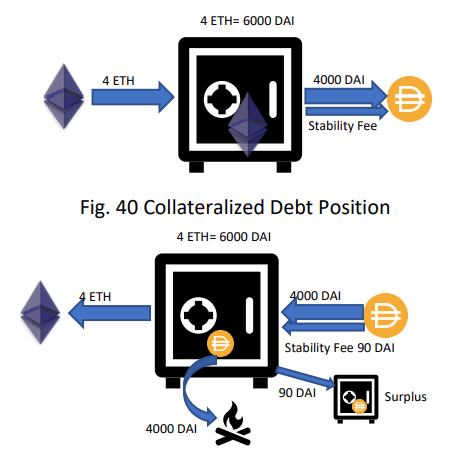
Decentralized Finance (DeFi) is transforming financial intermediation by replacing banks with smart contracts. Platforms like MakerDAO issue DAI, a stablecoin pegged to the US dollar, through overcollateralized crypto loans, governed by MKR token holders. This ecosystem enables lending, savings, and passive income without intermediaries, but also raises challenges for regulation, taxation, and financial stability. MakerDAO’s mechanisms—collateralized debt positions, governance votes, auctions, and external actors like oracles and keepers—keep the system running. Together with platforms like Uniswap, DeFi illustrates both the promise of financial innovation and the complexity of decentralized governance.

Author: Hackernoon
3 Best Cryptos to Buy for 10x ROI — Bitcoin and XRP Named With MAGACOIN FINANCE and AVAX Presale Picks

3 Best Cryptos to Buy for 10x ROI — Bitcoin and XRP Named With MAGACOIN FINANCE and AVAX Presale Picks

The crypto market is once again on fire, and traders are seeking tokens that can generate high returns in the coming cycle. Bitcoin remains the favorite among most, although recent whale-driven price swings are causing some investors to seek alternative avenues of quick growth. This is why names such as Avalanche, with a new presale price of only $0.005, are finding their way onto more watchlists. Analysts believe that these projects have solid fundamentals and the potential to increase, which makes them one of the best cryptos to buy today, offering a chance at returns of 10x. Bitcoin (BTC) Price Struggles With Whale Pressure Bitcoin fell by almost 3% to a low of $109,436 on Friday. Large whale orders raised by traders were also flagged as attempts to manipulate the order book. These were referred to by many as spoofy tricks – maneuvers in which whales change the liquidity to trap retail traders. Notably, the pullback contributed to a week of turbulence in BTC. It announced more than $350 million in long liquidations within 24 hours. Some traders have considered Bitcoin in a capitulation stage, and this normally prepares greater purchasing chances in case history repeats. The next important driver is the US inflation data, or PCE numbers. Bitcoin may be relieved in case inflation subsides. Otherwise, whales might continue pushing the market down until the next recession. Avalanche (AVAX) Building for the Next Rally Avalanche remains popular as a blockchain that is fast and scalable. Its subnets provide flexibility to developers to develop projects without high cost or delay in confirmation. That combination has rendered it widespread among DeFi and enterprise groups. AVAX has a market cap of $9.6 billion and trades at around $23. Its position is considered to be strong, according to analysts, provided that it can overcome resistance in the area of the $2025 range. That could be a clean breakout that would pull the token up sharply. Avalanche is also making upgrades to enhance network efficiency. Along with the growing DeFi and NFT initiatives, these trends continue to put AVAX on the radar of having one of the highest 10x ROI potential outlooks among the medium-cap coins. MAGACOIN FINANCE – $0.005 Presale Secured with Dual Audits MAGACOIN FINANCE is being put alongside Bitcoin and AVAX, its rivals among the giants, due to its potential to grow exponentially. The existing coins are not going away, but MAGA is taking the lead with projections of up to 1200% returns on early investors. The project gained confidence when it passed two CertiK and HashEx audits. Both audits attested to smart contract security and transparency – two aspects that are of great concern to presale buyers. The combination of powerful audits, increased demand, and a fast-growing community, according to analysts, is why it is one of the best cryptos to buy under $1 today. Final Thoughts Bitcoin and Avalanche remain high-profile market choices. However, when it comes to the best crypto to buy in 2025, under $1, MAGACOIN FINANCE is getting the most buzz. It has passed dual audits and is projected to drive an ROI of above 1200%, so it is among the best cryptocurrencies that investors should not miss in their portfolios. To learn more about MAGACOIN FINANCE, visit: Website: https://magacoinfinance.com Access: https://magacoinfinance.com/access Twitter/X: https://x.com/magacoinfinance Telegram: https://t.me/magacoinfinance  Disclaimer: This content is a sponsored post and is intended for informational purposes only. It was not written by 36crypto, does not reflect the views of 36crypto and is not a financial advice. Please do your research before engaging with the products.The post 3 Best Cryptos to Buy for 10x ROI — Bitcoin and XRP Named With MAGACOIN FINANCE and AVAX Presale Picks appeared first on 36Crypto.

Author: Coinstats
What to do after the halving? Decoding the anti-fragility mechanisms and breakthrough codes of DAT companies

What to do after the halving? Decoding the anti-fragility mechanisms and breakthrough codes of DAT companies

In ancient times, there were the demonic sword Muramasa, and today there are the waist-sword coin-share DATs—why have coin-share DATs evolved into "cut in half as soon as the official announcement is made"? (Cut in half? Or demonic slash?) Are early investors dumping their holdings? Is the market simply not buying? This isn't a market failure or a random panic, but a predictable, rational market repricing process. It signals a shift in market sentiment from a frenzy of enthusiasm for a novel story to a sober examination of a company's financing mechanisms, equity dilution, and true per-share value. Part 1: Deconstructing the “Coin-Stock” DAT Model 1.1. Definition and Core Logic: A Bridge Connecting Traditional Finance and the Crypto World In recent years, a new type of publicly traded company has quietly emerged at the intersection of cryptocurrency and traditional finance. Investors often refer to them as "coin stocks" or "digital asset treasury concept stocks." In the professional financial sector, these companies are defined as "Digital Asset Treasury Companies" (DATs). Their core business model relies on strategically accumulating cryptocurrency assets (typically mainstream assets like BTC/ETH/BNB/SOL) on their balance sheets as part of their core business functions. Unlike traditional companies holding cryptocurrencies, DATs operate with the explicit purpose of actively and explicitly accumulating holdings of crypto (digital) assets. In this way, they provide investors in traditional capital markets with a regulated, equity-based vehicle to gain exposure to crypto assets. This model serves a specific market need: many large institutional investors, such as pension funds, sovereign wealth funds, and endowments, are unable to directly purchase and hold cryptocurrencies due to internal compliance, custody complexities, or regulatory restrictions. DATs, whose shares are traded on mainstream exchanges like the New York Stock Exchange and Nasdaq, provide a compliant bridge for these restricted capital to enter the crypto space. A pioneer of this model is Strategy Inc. (formerly MicroStrategy), led by Michael Saylor. Starting in 2020, the company began converting significant cash reserves into Bitcoin, setting a precedent for publicly traded companies to use Bitcoin as a holding tool. This move not only reshaped the market's perception of how companies view Bitcoin—from a purely speculative asset to a strategic reserve asset capable of protecting against the devaluation of fiat currencies—but also provided a replicable template for subsequent companies. Since then, this trend has gradually spread globally. For example, Metaplanet, a Japanese listed company, has adopted a similar strategy, reflecting the demand for such investment tools in capital markets across different regions. The emergence of these companies signals that crypto assets are moving from the margins to the mainstream and becoming increasingly integrated into the global macro-financial system. Table 1: Overview of major cryptocurrency asset finance companies Note: Data is as of August 2025. Market capitalization and crypto asset holdings will fluctuate with the market. 1.2. Key Concepts and Value Propositions: Investors’ Professional Dictionary To accurately evaluate crypto-equities, investors must look beyond traditional metrics like price-to-earnings or price-to-book ratios and master a set of analytical vocabulary specifically designed for this model. These concepts are key to understanding both its value proposition and inherent risks. Net Asset Value (NAV): This is the cornerstone of valuing a DAT and refers to the total value of the company’s digital assets at current market prices. It represents the “true” intrinsic value of the crypto assets on the company’s balance sheet. Equity Premium to NAV (mNAV): This is a core concept in understanding crypto-equity valuation. It quantifies the premium of a company's stock market capitalization relative to the net value of the digital assets contained in each share. This metric is typically expressed as a multiple (mNAV, or multiple of NAV). For example, if a company's mNAV is 2.0x, its stock price is twice the value of the BTC contained in each share. A high mNAV reflects market optimism, expectations of future asset accumulation, the stock's scarcity, and the convenience premium it offers as a compliant investment vehicle. Conversely, a shrinking mNAV signals waning market confidence. Bitcoin Yield (BTC Yield or Crypto Yield): This is a key performance indicator (KPI) proposed and actively promoted by DAT management. It measures the growth rate of BTC (or other crypto assets) per fully diluted share over a specific period. A positive BTC Yield indicates that the company's financing to acquire new assets is outpacing the dilution of equity, resulting in an increase in each shareholder's nominal BTC holdings. However, this metric requires critical examination. If the stock price declines significantly over the same period, shareholders may experience a loss in actual wealth even if the BTC Yield is positive. Therefore, this metric must be analyzed in conjunction with stock price performance and mNAV trends to fully assess its true value to shareholders. 1.3. A leveraged proxy tool: Comparison with BTC ETFs With the approval of US spot BTC ETFs in 2024, investors will have access to a direct, low-cost tool for tracking BTC prices. This makes the difference between DATs and ETFs particularly important, as they offer investors vastly different risk-return profiles. Active Management vs. Passive Tracking: ETFs are designed to replicate the price performance of their underlying asset (i.e., Bitcoin) as accurately as possible, making them passive investment vehicles. In contrast, DATs are actively managed entities. Their management must make key decisions regarding capital allocation, fundraising timing, choice of financing vehicle (equity or debt), and asset acquisition strategy. Investing in a DAT is not only an investment in Bitcoin, but also an investment in the management team's capital management capabilities. Built-in leverage: Investing in DAT stock is essentially a leveraged bet on Bitcoin. This leverage stems from two factors: First, companies may finance Bitcoin purchases through debt instruments such as bonds, which creates financial leverage. Second, the mNAV premium itself has a leverage effect. When market sentiment is high, a 1% increase in Bitcoin price can drive a 2% or more increase in DAT stock price, and vice versa. Unique risk exposure: ETF risks primarily stem from Bitcoin's price volatility. DATs, on the other hand, carry company-specific risks, including execution risk, regulatory challenges faced by listed companies, and, most importantly, financing risk, including equity dilution and debt refinancing. In summary, DATs are not simply "cryptocurrency holding companies" but should be viewed as complex financial instruments. They provide investors with leveraged exposure to cryptocurrencies like Bitcoin through active capital market operations, but this also introduces multiple risks inherent in traditional equity investments and financial engineering. Part II: Capital Flywheel: Financing, Reflexivity, and Market Impact The core driving force of the DAT model lies in its unique financing mechanism, which, under favorable market conditions, can form a powerful, self-reinforcing positive feedback loop, known as a "capital flywheel." However, this flywheel is also bidirectional, its direction of rotation being entirely dependent on market sentiment and capital market liquidity. 2.1. Financing Engine: How Capital is Created DATs primarily raise funds for digital asset purchases through two complex financial instruments that are cleverly designed to maximize the leverage of companies’ high stock prices and market expectations of their future growth. At-the-Market Equity Programs (ATM): This is the most common and efficient financing method for DATs. ATM programs (e.g., directly "withdrawing" from the market) allow companies to sell newly issued shares directly on the open market in small, tranches at the prevailing market price, based on market conditions. This method is extremely flexible and avoids the roadshows and discounted offerings required for traditional large-scale offerings. However, it is also a major cause of dilution of existing shareholders' holdings. Convertible Notes: These are hybrid financing instruments. Essentially, they are low- or zero-interest bonds issued by a company, but they come with an option: under certain conditions, bondholders have the right to convert the bonds into company stock. They are an extremely attractive financing method for companies, as they allow them to borrow large amounts of capital at interest rates significantly below market levels. For example, MicroStrategy has repeatedly issued convertible notes with interest rates as low as 0% or 0.625%, raising billions of dollars. For investors, these bonds offer an asymmetric benefit: a guaranteed downside (at least the principal will be recovered) and upside potential (the option to convert to stock and profit if the stock price rises). However, these instruments also create a potential dilution risk for the company: if the stock price rises significantly and exceeds the conversion price, a large number of bonds will be converted into stock, resulting in a sharp increase in total share capital. 2.2. “Flywheel Effect”: Amplifier of Gains and Losses The operation of the DAT model perfectly illustrates the theory of "reflexivity", that is, there is a dynamic feedback loop between the expectations of market participants and market fundamentals, which influence and reinforce each other. Upward spiral (positive feedback in a bull market): In a bull market, the flywheel generates a strong positive driving force. Its operating logic is as follows: The rise in BTC prices has triggered optimistic market expectations for DAT. Optimistic expectations drive DAT's stock price up with a higher beta coefficient (i.e., a larger increase), thereby widening its mNAV premium. The high mNAV premium makes the company’s financing activities “value-added.” For example, a company can raise $1.5 in cash on the market with $1.5 worth of stock, then use this money to buy $1 worth of BTC, and use the remaining $0.5 as the company’s value-added. A large amount of funds raised through ATMs or the issuance of new bonds were used to purchase more BTC, which further increased the company's net asset value (NAV). The company's asset growth and continued purchasing actions, in turn, reinforce its market narrative as a "BTC growth engine," attracting more investors and further pushing up its stock price and mNAV premium, thus completing a positive feedback loop. Downward spiral (negative feedback in a bear market): The fragility of this flywheel lies in its high dependence on market sentiment. Once the market turns bearish, the flywheel will quickly reverse, forming a "death spiral": The drop in BTC prices triggered pessimism in the market. DAT's stock price fell even more due to its high beta and leverage effect, causing the mNAV premium to shrink rapidly or even turn into a discount. At this point, any financing through the issuance of new shares will be "dilutive", that is, the cash obtained from the sale of shares is not enough to offset the dilution of existing shareholders, which makes financing through ATMs impractical or extremely destructive. The drying up of financing channels shattered the company's growth narrative of continued accumulation of BTC, leading to a collapse in investor confidence and a sell-off of stocks. The further decline in stock prices caused the company's market value to fall far below the value of its BTC holdings, resulting in a severe discount, which in turn triggered a more violent sell-off, forming a vicious cycle. Part III: The Mystery of DAT’s “Official Announcement and Immediate Cancellation”: Multi-factor Risk Analysis The plummeting share prices of most "cryptocurrency stocks" following official announcements weren't simply a fluctuating market sentiment, but rather a concentrated reflection of the inherent risks of their business models. This phenomenon stems from the interplay of multiple factors, including equity dilution, market psychology, leverage mechanisms, and valuation logic. The stock price crash can be understood as a dramatic shift from the market's initial "narrative-driven valuation" to the more stringent "fundamentals-driven valuation." 3.1. Dilution Engine: Quantitative Analysis of MicroStrategy Dilution is the inherent sin of the DAT model and the key to understanding its long-term stock price performance. While management tends to tout the growth of its total assets, the only meaningful metric for stock investors is the value of its assets per share. Take, for example, MSTR (MSTR), the pioneer and largest practitioner of this model. Since implementing its BTC strategy in 2020, the company's total share capital has experienced explosive growth. Data shows that its fully diluted outstanding shares surged from approximately 97 million in mid-2020 to over 300 million by mid-2025, an increase of over 200%. This means that to raise funds for BTC purchases, the company's equity pie was cut into three times more shares than before. At the same time, the company's BTC holdings have grown from zero to over 630,000. So, how did this race between "holding increase" and "dilution" ultimately affect shareholders' BTC exposure per share? The data analysis in the table below clearly illustrates the answer. Table 2: Strategy Inc. (MSTR) Dilution and BTC Per Share Analysis (2020–2025) The above chart clearly reveals a key trend: despite the continued growth of Strategy Inc.'s total BTC holdings, its "BTC per share" has experienced significant fluctuations and has recently shown a clear downward trend. In the early stages of the strategy, the company's BTC accumulation outpaced equity dilution, resulting in an increase in BTC content per share. However, with the expansion of financing and stock price fluctuations, particularly after 2025, large-scale equity financing has caused the denominator (number of outstanding shares) to grow faster than the numerator (BTC holdings), leading to a dilution of the actual BTC content per share. This quantitative conclusion: continued equity financing, even to acquire promising assets, can actually dilute the value of existing shareholders. When the market shifts from a fanatical focus on "total holdings" to a rational examination of "per-share value," downward stock price corrections are inevitable. 3.2. The Psychology of Crashes: Crowded Trading and Narrative Bankruptcy The plunge in "crypto-stocks" is also a typical case of market psychology, the core of which is "crowded trade" and the subsequent "narrative bankruptcy." A crowded trade occurs when a large number of investors, driven by similar logic and strategies, collectively hold the same asset, creating inherent risk—risk stemming not from asset fundamentals but from market structure itself. DATs perfectly fit the characteristics of a crowded trade: a simple, alluring narrative ("the next MicroStrategy," "leveraged BTC stocks") attracts a massive influx of speculative capital with similar views. This crowded structure set the stage for wild price fluctuations. Another user's hypothesis—"early investors needing to cash out"—pointed to the trigger for the collapse of the crowded trade. Early investors, especially institutions that entered at lower valuations through methods like private equity investments (PIPEs), had a strong incentive to sell shares to lock in profits when companies announced their strategies and market sentiment peaked. Their selling behavior created the first wave of selling pressure. When the initial hype subsides, market participants' attention shifts from grand narratives to the dry business of financial statements and SEC filings. Investors will discover that every "successful" financing round and announcement of increased BTC holdings is accompanied by a continuous increase in outstanding shares and a steadily diluting per-share value. This shift in perception from "story" to "numbers" lies at the heart of narrative bankruptcy. Once the market realizes the flaws in the growth story supporting high premiums, crowded trading will quickly reverse, creating a stampede-like exodus and sending stock prices plummeting. 3.3. The Mechanics of Volatility: Leverage and Forced Selling The inherent structure of the DAT model and investors' trading behavior jointly amplify stock price volatility. First, financial leverage at the company level is a major source of volatility. By issuing bonds to purchase Bitcoin, the company's balance sheet is leveraged, which means that its shareholders' equity is more sensitive to changes in the price of the underlying asset. Secondly, while DATs don't face the same "margin liquidation" risks as cryptocurrency derivatives, a similar risk of "forced deleveraging" remains. When stock prices plummet and the mNAV premium shrinks significantly, a company's ability to issue new shares through ATM programs will be severely weakened or even completely eliminated. This is because issuing additional shares at this time would be highly dilutive, tantamount to "drinking poison to quench thirst." The interruption of financing channels means the capital flywheel has stalled, which is a fatal blow to a company that relies on continuous financing to maintain its growth narrative. The market will interpret this as a major negative factor, triggering even more intense selling, creating a self-reinforcing negative feedback loop. Furthermore, investors holding DAT shares may themselves use leverage (e.g., through margin accounts with brokerages). When the stock price declines, these investors may face margin calls, and if they fail to meet the requirements, their positions will be forcibly liquidated, exerting additional downward pressure on the stock price. 3.4. Evaporation of price premium: competition and market maturity The early high mNAV premium enjoyed by DATs' stocks stemmed primarily from their scarcity. Before the advent of spot BTC ETFs, companies like MicroStrategy were among the few channels through which large regulated funds could legally gain exposure to BTC. This unique market position generated a significant "scarcity premium." However, this premium is unsustainable. In addition to the fact that the emergence of ETFs provides a lower-cost, simpler structure, and more risk-free way to invest in digital currencies, the maturity of the market will also allow investors to go beyond the superficial narrative of "increasing holdings of digital currencies" and instead conduct in-depth analysis of its financing mechanism, dilution effect, and leverage risk. Based on the above analysis, we can conclude that coin-share DATs are highly innovative but extremely risky financial instruments. They successfully build a bridge between traditional capital markets and the emerging world of crypto, but the structure of this bridge is full of inherent contradictions and instability. Assuming a crash is inevitable, how should investors respond? What strategies should be adopted? What algorithms and criteria should be used? Are there any successful cases in the market? What are their core competitive advantages? To know what happens next, please listen to the next episode.

Author: PANews
James Wynn's ETH long position was partially liquidated again, with the latest liquidation price at $4,361

James Wynn's ETH long position was partially liquidated again, with the latest liquidation price at $4,361

PANews reported on September 4 that according to Lookonchain monitoring, the ETH long position of whale James Wynn was once again partially liquidated. Its latest liquidation price was adjusted to $4,361, putting it at risk of being liquidated again.

Author: PANews