Oracle

Oracles are essential infrastructure components that feed real-time, off-chain data (such as price feeds, weather, or sports results) into blockchain smart contracts. Without decentralized oracles like Chainlink and Pyth, DeFi could not function. In 2026, oracles have evolved to support verifiable randomness and cross-chain data synchronization. This tag covers the technical evolution of data availability, tamper-proof price feeds, and the critical role oracles play in ensuring the deterministic execution of complex decentralized applications.

5156 Articles
Created: 2026/02/02 18:52
Updated: 2026/02/02 18:52
Step-by-Step Process to Integrate AI into DeFi Aggregators

Step-by-Step Process to Integrate AI into DeFi Aggregators

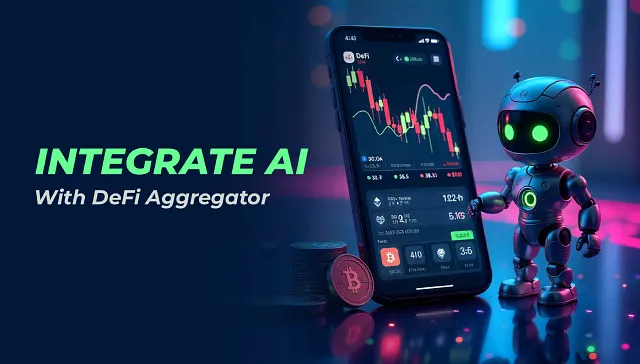
Step-by-Step Process to Integrate AI into DeFi Aggregators Decentralized Finance (DeFi) has revolutionized the financial landscape by eliminating intermediaries and allowing users to trade, lend, and invest directly on blockchain networks. However, with hundreds of DeFi protocols across multiple chains, users often face challenges in finding the best rates, liquidity pools, and yield farming opportunities. At this point, DeFi aggregators become essential. Now, with the rise of Artificial Intelligence (AI), DeFi aggregators can go beyond just providing access to multiple liquidity sources — they can deliver intelligent, predictive, and personalized financial services. By integrating AI, developers can build smarter platforms that analyze market conditions in real time, optimize transactions, and enhance user decision-making. In this guide, we’ll walk you through the step-by-step process to integrate AI into DeFi aggregators, explain its benefits, explore real-world use cases, and outline the challenges and future possibilities. What is a DeFi Aggregator? A DeFi aggregator is a platform that collects liquidity and pricing data from multiple decentralized exchanges (DEXs) and protocols, allowing users to access the best available trading opportunities in one place. Key functions of DeFi aggregators include: Liquidity pooling — pulling liquidity from multiple DEXs. Price comparison — offering users the best swap rates. Gas optimization — minimizing transaction costs. Cross-chain functionality — enabling trades across different blockchain networks. Popular DeFi aggregators include 1inch, Matcha, Paraswap, and Zerion. Why Integrate AI into DeFi Aggregators? AI enhances DeFi aggregators by making them smarter, more efficient, and user-centric. Here are the key benefits: Real-Time Data Analysis — AI algorithms can process vast amounts of blockchain data to identify the best opportunities instantly. Risk Assessment — AI models can predict risks in liquidity pools or lending protocols, helping users avoid bad trades. User Personalization — AI can recommend investment strategies tailored to each user’s risk profile. Fraud Detection — Detects suspicious trading patterns and prevents malicious activities. Predictive Analytics — Forecasts token price movements and liquidity shifts. By integrating AI, DeFi aggregators move from being simple comparison tools to intelligent financial assistants. Step-by-Step Process to Integrate AI into DeFi Aggregators Step 1: Define the Use Cases of AI Before jumping into development, determine where AI will add value in your DeFi aggregator. Some examples include: ✦Best route optimization for token swaps. ✦Yield farming recommendations. ✦Predictive market insights. ✦Automated portfolio rebalancing. ✦Fraud and anomaly detection. This step ensures that your AI integration aligns with your aggregator’s goals. Step 2: Data Collection and Preparation AI relies on large datasets for training. In DeFi, the relevant data sources include: ✦On-chain data (transaction history, liquidity pool activity, smart contracts). ✦Off-chain data (market sentiment from news, social media, and oracles). ✦User behavior data (transaction patterns, portfolio choices). Developers must create pipelines to collect, clean, and normalize data to ensure accuracy and reliability. Step 3: Select the Right AI Models Depending on the use cases, different AI models may be required: Machine Learning (ML): For predicting token prices, optimizing swaps, and yield farming strategies. Natural Language Processing (NLP): For analyzing sentiment from crypto-related news and social media. Reinforcement Learning: For autonomous trading and portfolio optimization. Anomaly Detection Models: For fraud and hack detection. For instance, a DeFi aggregator that wants to optimize swap routes may use reinforcement learning to learn the best trading paths across multiple DEXs. Step 4: Develop AI Training Infrastructure Training AI models requires a robust infrastructure: ✦Blockchain nodes to pull real-time on-chain data. ✦Data storage systems (IPFS, decentralized databases, or cloud-based storage). ✦GPU/TPU clusters for training machine learning models. ✦Data preprocessing pipelines to handle large blockchain datasets. Developers can also leverage AI-as-a-Service platforms or pre-trained models to speed up integration. Step 5: Smart Contract Integration DeFi aggregators rely on smart contracts for executing trades. To integrate AI: Off-chain AI Processing: AI models run off-chain, and their decisions are communicated to smart contracts. On-chain Oracles: Oracles like Chainlink can be used to bring AI-generated insights into the blockchain. Hybrid Approach: A mix of on-chain smart contracts and off-chain AI decision-making for scalability. For example, an AI model could analyze liquidity and then feed swap route decisions into a smart contract router. Step 6: AI-Powered Decision Engine Create an AI-powered decision engine within the aggregator: ✦It continuously monitors liquidity pools, gas fees, and market prices. ✦It identifies the most cost-effective swap route. ✦It generates personalized investment suggestions. This engine acts as the core brain of the DeFi aggregator, turning raw blockchain data into actionable insights. Step 7: User Interface Integration The AI insights should be visible and usable for end users. Key UI features include: Personalized dashboards — showing AI-driven portfolio recommendations.Trade suggestions — highlighting the best swap options.Risk scores — helping users assess protocol risks.Predictive analytics charts — forecasting price trends. A well-designed UI ensures that AI insights are transparent, explainable, and user-friendly. Step 8: Security and Testing AI integration in DeFi requires strict security and auditing: ✦Conduct smart contract audits to prevent vulnerabilities. ✦Test AI models against adversarial attacks. ✦Ensure compliance with data privacy regulations. ✦Run simulations to validate AI predictions against historical data. Security ensures that users trust your AI-powered DeFi aggregator. Step 9: Deployment and Continuous Learning Deploy the AI-enhanced DeFi aggregator and ensure continuous improvement: ✦Use feedback loops where AI learns from real user interactions. ✦Continuously retrain models with new blockchain data.Monitor ✦performance and optimize algorithms. ✦AI should evolve with market trends, ensuring long-term reliability. Real-World Use Cases of AI in DeFi Aggregators 1inch + AI Optimization — AI models could predict gas fee fluctuations and reroute transactions. Portfolio Rebalancing — AI automatically adjusts user holdings for maximum returns. Sentiment-Based Trading — AI analyzes Twitter & Reddit data to guide trading strategies. These examples highlight how AI transforms DeFi aggregators from static tools into dynamic financial advisors. Challenges in Integrating AI into DeFi Aggregators While the benefits are huge, integration comes with challenges: Data quality issues — Blockchain data is vast but unstructured. Scalability concerns — AI computations can be resource-intensive. Security risks — AI-driven decisions must be verifiable and auditable. Regulatory uncertainty — Compliance requirements for AI in DeFi are still evolving. Developers must design systems that balance innovation with trust, scalability, and compliance. The Future of AI-Powered DeFi Aggregators Looking ahead, AI will make DeFi aggregators: More autonomous — with AI executing trades without user input. Cross-chain intelligent — managing assets across multiple blockchains seamlessly. Hyper-personalized — offering financial services tailored to individual goals. Safer — detecting fraud and market manipulation in real time. As AI matures, we may see DeFi aggregators becoming AI-driven super apps for decentralized finance. Conclusion Integrating AI into DeFi aggregators is a game-changing innovation that transforms them from simple liquidity routers into intelligent, predictive, and user-focused financial platforms. The step-by-step process involves: ✦Defining use cases. ✦Collecting and preparing data. ✦Choosing AI models. ✦Building AI infrastructure. ✦Integrating smart contracts. ✦Creating an AI-powered decision engine. ✦Designing a user-friendly interface. ✦Ensuring security and testing. ✦Deploying and enabling continuous learning. By following these steps, developers can unlock the full potential of AI in DeFi, delivering smarter trading, safer investments, and better user experiences. The future of decentralized finance lies in the synergy of AI + DeFi aggregators — a combination that will redefine how users interact with financial ecosystems. Step-by-Step Process to Integrate AI into DeFi Aggregators was originally published in Coinmonks on Medium, where people are continuing the conversation by highlighting and responding to this story

Author: Medium
Nasdaq Proposal Analysis: How Tokenized Securities Will Reshape the U.S. Stock Trading Ecosystem

Nasdaq Proposal Analysis: How Tokenized Securities Will Reshape the U.S. Stock Trading Ecosystem

Author: Aki Wu on Blockchain On September 8, 2025, Nasdaq submitted a landmark proposal to the U.S. Securities and Exchange Commission (SEC), seeking to amend its exchange rules to allow tokenized securities to be traded on its market. This means that Nasdaq-listed US stocks like Apple and Amazon could potentially be listed, traded, and settled on Nasdaq in the form of blockchain tokens. If approved, this proposal would be the first time a major US stock exchange has permitted tokenized stock trading, marking the first large-scale introduction of blockchain technology into the core markets of Wall Street. This article will systematically review the key points of Nasdaq's proposal, the motivations behind it, the potential market shifts it could bring, its impact on the "US stock blockchain" initiative and related sectors, and explore the potential development paths for this innovative initiative. Proposal Highlights: Detailed Explanation of Nasdaq Trading Rules Amendments The core of Nasdaq's 19b-4 Rule amendments submitted to the SEC is to allow member brokerages and investors to choose to trade and settle Nasdaq-listed equity securities and exchange-traded products (ETPs) in tokenized form. Specifically, the rule amendments include the following: 1. Expanding the definition of “securities” to include tokenized forms of securities in Equity 1, Section 1 The proposal first amended the exchange’s definition of “securities,” emphasizing that “tokenized securities are still securities,” rejecting the “isolated” trading model that is decoupled from the main market and expanding it to include two forms: Traditional form: This refers to a digital record of asset ownership and rights, but does not utilize distributed ledgers or blockchain technology. This refers to the electronic record-keeping method currently used in US stocks, which essentially still corresponds to the electronic registration of paper securities. Tokenization: This refers to the digital representation of asset ownership and rights, recorded and transferred using blockchain (distributed ledger) technology. Simply put, the rights associated with a stock are issued on the blockchain and represented as tokens. Nasdaq explicitly stipulates that a tokenized security is considered an equivalent security and can be traded on the same order book as its traditional counterpart only if it is fully homogeneous. This means that the token must be fungible with traditional shares, share the same CUSIP (Uniform Securities Identification Number), and confer upon the holder the same substantive rights and privileges as traditional shares—including rights to equity returns, dividends, voting rights, and the right to distribute residual assets upon liquidation. If the tokenized security does not confer the same rights as the original share (e.g., no voting rights, no shareholder equity), or does not share the same CUSIP, the exchange will not treat it as equivalent to the traditional security and will instead treat it as a different product, such as a derivative or American Depositary Receipt (ADR). Because of this high standard, most so-called "tokenized stocks" currently on the market, such as Robinhood "Stock Tokens" and Xstocks, do not actually meet the above conditions. At best, they are just shadow tokens that reflect stock prices, do not represent real equity, and usually do not confer voting rights; dividends are mostly reflected in the form of reinvestment or cash equivalents; the legal relationship is mostly directed to the SPV or issuing vehicle rather than the listed company itself, and most products are mainly redeemed in cash. Direct "exchange for original shares" will be subject to custody and compliance restrictions. 2. Unified matching and distributed settlement: trading and clearing mechanism Equity 4, Rule 4757 Nasdaq plans to fully integrate tokenized securities with traditional securities at the trading level. The proposal stipulates that as long as the tokenized version of a stock meets the aforementioned homogeneity requirements, it will share the same order book as traditional stocks and be matched according to the same order matching and priority rules. In other words, the exchange's matching engine will treat tokenized and non-tokenized buy and sell orders equally. Indeed, Nasdaq emphasizes that "at the trading stage, there is no difference between the two; the fundamental trade execution process is identical." Equity 4, Rule 4756、4758 The difference lies in the settlement process. Currently, U.S. stock transactions are typically cleared and settled through the Depository Trust Company (DTC). By introducing tokenization, Nasdaq will offer trading participants a new option: they can use tokens for settlement. The specific process is as follows: When brokers enter orders with the exchange, they can choose to specify that they wish to have their orders settled in tokens. If the order is executed and marked as token-settled, Nasdaq will pass the clearing instructions for the trade to DTC, which will then execute the security transfer in the background via blockchain. DTC will register stock ownership as on-chain tokens based on its own business rules and systems (including its currently developing blockchain settlement platform). The entire process will be transparent to front-end investors. Trades will still be matched on Nasdaq, but clearing and settlement will shift from traditional electronic bookkeeping to blockchain-based registration. Ultimately, the shares will be held as tokens on-chain. It's worth noting that Nasdaq's move isn't about creating a new market from scratch. Instead, it's leveraging existing market infrastructure, introducing blockchain as the underlying record-keeping technology without altering front-end trading mechanisms. This ensures that traditional stocks and tokenized shares maintain unified prices during trading, share market depth and liquidity, and maintain consistent information transparency and risk management. As Nasdaq explains in its filing, this plan aims to prevent different versions of tokenized shares from operating independently on multiple blockchains, fragmenting liquidity and ensuring that core mechanisms of the national market system, such as price discovery and best execution, are not impacted. This approach addresses the pain points of tokenized shares, including the lack of liquidity caused by the fragmentation of market-making capital and order books, resulting from multiple chains (ETH/SOL, etc.), multiple markets (regulated on-exchange trading versus crypto exchanges/DEXs), and geographical compliance restrictions. 3. Trading hours: 24/7 trading is not currently available Since their launch, tokenized stocks have been plagued by issues of deep liquidity and high impact during US stock market holidays. This misalignment in trading hours has also contributed to insufficient liquidity and price decoupling. Consequently, many investors are concerned about whether tokenized stocks can transcend existing US stock market trading hours and achieve 24/7 trading. Nasdaq's proposal offers a cautious answer: at this stage, tokenized securities will only be traded during existing trading hours, with no extensions or breaks in trading hours. Tokenized stocks cannot be traded outside of regular or extended trading hours, and will continue to follow US stock market practices, trading only during regular trading hours (9:30–16:00) and pre- and post-market hours, Monday through Friday, Eastern Time. Weekend or late-night trading is not currently supported. 4. Implementation path of on-chain settlement Nasdaq's tokenized stock trading relies on the Depository Trust & Clearing Corporation (DTC), a core clearinghouse in traditional financial markets. Notably, DTC has been exploring distributed ledger technology (DLT) clearing in recent years. Its "Project Ion" is a blockchain-based stock settlement platform designed to achieve T+0 and even real-time delivery. According to public information, Project Ion launched in a parallel pilot environment in 2022 and processes settlement instructions for over 100,000 stock trades daily. DTC developed the platform in collaboration with enterprise blockchain technology provider R3, using R3's Corda distributed ledger software and building a private permissioned blockchain as its underlying architecture. This network is a non-public consortium blockchain. This suggests that Nasdaq's tokenized transactions are more likely to be run on DTC's permissioned blockchain platform, rather than on public blockchains such as Ethereum, which have been widely discussed in the community. This would allow DTC to maintain its legacy system as the authoritative record, running it in parallel with the new DLT system to ensure security redundancy. Therefore, under Nasdaq's proposal, on-chain settlement would likely occur within a controlled "consortium blockchain" environment, with nodes maintained by financial infrastructure operators such as DTC. This ensures transaction privacy, network reliability, and regulatory control, meeting Wall Street's high standards for trade settlement systems. Consortium blockchains allow participants to undergo access control, ensuring greater control over data privacy and transaction speed, thus complying with regulatory requirements. Therefore, it is foreseeable that records of Nasdaq's tokenized shares will not appear on public blockchain explorers, but will instead be stored in a distributed ledger jointly maintained by Nasdaq, DTC, and related custodians. While Nasdaq has not specified the specifics of how its smart contracts will be deployed in its public documents, it is clear that Nasdaq does not intend to introduce a completely open token trading environment. Instead, it intends to utilize blockchain technology as a "behind-the-scenes" tool to enhance efficiency, while front-end transactions will still occur within a controlled system. The only change is to use blockchain records for bookkeeping. This means that investors will hold on-chain records approved by regulators, rather than crypto tokens that circulate freely outside the traditional system. Why did Nasdaq apply for tokenized securities? Blockchain has enormous potential to improve the efficiency of financial market infrastructure. Currently, US stock trades are settled on a delayed basis (T+1) (or T+2 in some markets). Blockchain technology can achieve near-real-time settlement (T+0 or even within seconds), reducing the time it takes for funds and securities to be held, and mitigating counterparty risk. Furthermore, blockchain's transparent and immutable distributed ledger provides a comprehensive audit trail, reducing reconciliation and manual errors. Nasdaq hopes to introduce tokenized settlement to expedite post-trade processes while reducing costs in clearing and custody. This is an attempt to revolutionize securities settlement mechanisms from the ground up. Nasdaq stated in its filing: "Today, securities, including stocks, have evolved from paper to electronic records, and tokenization is simply another method of digitally representing assets." By embracing blockchain, exchanges have demonstrated their determination to promote financial technology innovation so as not to fall behind in the new wave of technology. It is expected that the scale of the asset tokenization market is experiencing explosive growth, and the total market value of global tokenized assets will soar from approximately US$2.1 trillion in 2024 to approximately US$41.9 trillion in 2032, with a compound annual growth rate of 45.8%. Consequently, investors and issuers are showing strong interest in security tokenization, which represents a significant emerging market opportunity. Regulators and market participants in many countries are actively exploring the potential of blockchain-based securities, and the US cannot afford to lag behind. As a market organizer, Nasdaq hopes to capitalize on this trend, offering clients new trading options and thereby attracting more capital to the US market. By taking an early approach, Nasdaq can solidify its competitiveness in the digital asset era, especially as the White House actively promotes crypto-asset innovation and fosters a digital asset-friendly regulatory environment. It is crucial to ensure that tokenized securities develop within a compliant framework and prevent market fragmentation. As mentioned earlier, many tokenized stocks are currently traded on unregulated offshore platforms, lacking investor protections. Different platforms operate independently, leading to fragmented liquidity and market opacity. Nasdaq's proposal aims to incorporate these innovations into the mainstream regulatory system, thereby preventing investors from being drawn into unregulated markets by chasing novel concepts. While exchanges won't aggressively open up dazzling features in the short term, in the long term, stock tokenization opens up new possibilities for financial innovation. For example, stocks can be used as on-chain collateral in decentralized finance (DeFi), and equity tokens can be programmatically integrated into smart contracts to automate dividends, voting, and even the creation of entirely new derivatives and index products. These scenarios, difficult to achieve under traditional architectures, are expected to gradually become possible with tokenization. However, it's important to note that Nasdaq's tokenized securities trading venue remains on Nasdaq, meaning it's brokered within a compliant, centralized environment. This doesn't mean anyone can trade anonymously and freely on-chain. Conclusion: Long-term opportunities and industry outlook Nasdaq's promotion of tokenized securities trading is undoubtedly a major innovation in the underlying technology of securities trading. It marks a crucial step for traditional financial markets towards the blockchain era. From regulatory approval to technological preparation, this transformation will not be achieved overnight. According to Nasdaq's application documents, the relevant blockchain settlement infrastructure may not be ready until the end of the third quarter of 2026. Nasdaq anticipates that, assuming the proposal is approved by the SEC and the DTC's distributed ledger settlement system is launched, US investors could expect to see the first securities transactions settled in token form by the end of the third quarter of 2026. Investors need to recognize that this is a long-term theme. The GENIUS Act ushers in a new era of stablecoin compliance, and Nasdaq tokenized securities could become the next game-changing milestone. In the coming years, policy advancements and technological milestones related to this theme will continue to be a market focus, fostering cyclical investment opportunities in sectors such as oracles and RWAs. As Nasdaq management has stated, innovation should occur within national market systems to protect investors, not in the unregulated offshore wilderness. As Nasdaq tokenized stocks gradually launch, it will unlock greater potential for institutional capital to participate in on-chain equities. For example, large institutions can obtain real stock tokens through official channels and then confidently invest them in DeFi to generate returns. This represents a high level of capital that shadow token platforms currently struggle to attract. For the average user, once sovereign-level exchanges offer compliant stock tokens, holding shadow versions without shareholder rights becomes unnecessary. While the prospects are promising, potential limitations must be addressed. First, in the initial stages, the direct benefits for average investors may be limited. Currently, US retail investors can easily trade stocks through brokerages, and Nasdaq's tokenization will not immediately significantly reduce their trading costs or barriers to entry. While benefits such as 24/7 trading are not necessarily desirable for non-professional investors, they may not want to be constantly trading and experiencing volatility. Smart contracts are also subject to the risk of vulnerabilities and hacking, and if problems arise with tokenized stock contracts, it remains unclear who will bear liability. Furthermore, significant price deviations have been observed in some unregulated tokenized stock transactions abroad, exposing issues of insufficient liquidity and potential manipulation. Under Nasdaq's proposal, these deviations are expected to be reduced because the tokens are backed by real stocks and traditional market makers participate in pricing. Nasdaq's tokenized stock trading will mark a major milestone in the commercial application of blockchain technology. It signifies that blockchain is no longer confined to the cryptocurrency world, but has truly entered the core landscape of mainstream finance. From an industry perspective, this is an authoritative endorsement of the blockchain and Web3 ecosystem, inspiring more companies and developers to invest in this field. From a financial history perspective, this event may be seen as the starting point for the digital transformation of the traditional securities market, similar to the transition of exchanges from paper-based trading to electronic trading decades ago. For the Web3 community, this is an opportunity to put ideals into practice: concepts like decentralization and tokenization can only unlock their greatest value when integrated with the real economy. While this may not be the most utopian outcome for purist decentralization enthusiasts, it has significantly advanced the process of large-scale blockchain adoption.

Author: PANews
Chainlink Reaches Critical Juncture as Saudi Bank Partnership Drives Institutional Adoption

Chainlink Reaches Critical Juncture as Saudi Bank Partnership Drives Institutional Adoption

The post Chainlink Reaches Critical Juncture as Saudi Bank Partnership Drives Institutional Adoption appeared on BitcoinEthereumNews.com. Saudi Awwal Bank partnership opens door for $100 billion banking giant’s blockchain integration Chainlink exchange supply hits multi-year lows amid institutional accumulation patterns Analysts target $52 price level as token sits 56% below previous all-time high Chainlink has reached a pivotal moment as exchange supply drops to multi-year lows while major institutional partnerships gain momentum. Saudi Awwal Bank, one of Saudi Arabia’s largest financial institutions managing over $100 billion in assets, will integrate multiple Chainlink services for next-generation blockchain applications. The banking partnership marks a shift from Chainlink’s original DeFi oracle positioning toward core infrastructure supporting real-world assets and institutional use cases. CryptoQuant data shows LINK tokens disappearing from centralized exchange inventories, indicating long-term institutional accumulation rather than speculative trading activity. LINK Technical Setup Points to Potential Breakout Market analysts identify a classic double bottom pattern formation in LINK’s price structure, with current levels testing key resistance around the pattern’s neckline. A confirmed breakout above this technical level could signal a major trend reversal after extended consolidation. The combination of reduced exchange liquidity and institutional adoption creates conditions that could amplify price volatility once capital inflows return. However, the distinction between partnership announcements and actual revenue generation remains crucial, as integration announcements don’t immediately guarantee trading volume increases. Recent collaborations extend beyond the Saudi banking sector, with Chainlink partnering with UBS and DigiFT to target Chinese real-world asset markets. Additionally, the Polymarket integration utilizes decentralized oracles for faster prediction market settlement, expanding use cases beyond traditional financial applications. Current price action shows LINK trading approximately 56% below its previous all-time high, creating potential upside if institutional adoption translates into sustained demand. One market analyst projects a return to $52 by year-end, matching Chainlink’s historical peak achieved during the previous cycle. The analyst noted that if Bitcoin reaches projected $150,000 levels,…

Author: BitcoinEthereumNews
Apollo secures $50 million in backing to launch new tokenized credit fund

Apollo secures $50 million in backing to launch new tokenized credit fund

PANews reported on September 18 that according to CoinDesk, the blockchain-based RWA institution Centrifuge and Plume jointly launched the "Anemoy Tokenized Apollo Diversified Credit Fund (ACRDX)", which received a $50 million anchor investment from Grove, a credit infrastructure protocol within the Sky ecosystem. The fund enables blockchain investors to participate in Apollo's diversified global credit strategy, covering direct corporate loans, asset-backed loans, and mismatched credit. ACRDX will be issued through Plume's Nest Credit Vault with the token code nACRDX, enabling institutional investors to participate in the strategy on-chain. Chronicle will serve as the oracle provider, and Wormhole will be responsible for cross-chain connections. After approval, Anemoy will serve as the fund's manager.

Author: PANews
Is Hyperliquid the new frontier for innovation?

Is Hyperliquid the new frontier for innovation?

The post Is Hyperliquid the new frontier for innovation? appeared on BitcoinEthereumNews.com. This is a segment from the 0xResearch newsletter. To read full editions, subscribe. One of the key things I like to track in crypto is a subjective criterion I call “where are new interesting developments and proposals taking place.” There are plenty of dashboards and analytics sites for this, the most popular being the Electric Capital site. The issue is that it still shows Polkadot as having a lot of developers. (At Blockworks we solved the noise problem with active users; maybe we can try the same for active developers.) Because of this noise, I prefer to track two simple observations: What is the velocity of new products launching, and how much mindshare are these products capturing? Are many people getting nerdsniped into discussing the novelties and intricacies of the chain? A related point is the caliber of people being attracted to new ecosystems. For example, over the past few years, Solana (and Ethereum) attracted the majority of talent. Talent generally goes where: It can solve interesting problems or create interesting projects. It can make a lot of money. In a podcast I did with Icebergy about a year ago, we discussed how crypto still wasn’t attracting talent at the levels AI was, despite offering faster exits and more money. AI was (and probably still is) more interesting to most talent and seen as more prestigious. After FTX, crypto lost a lot of credibility and has only recently started recovering as larger institutional players re-entered. Apart from FTX, crypto has also been criticized for being full of low-effort forks and limited utility products. This dynamic isn’t unique to crypto though. Many AI companies are also just building wrappers around GPT, which is as uninteresting as some projects in crypto. Anyway, to the point: Historically, Solana has captured the majority of…

Author: BitcoinEthereumNews
How The ByteDance App Survived Trump And A US Ban

How The ByteDance App Survived Trump And A US Ban

The post How The ByteDance App Survived Trump And A US Ban appeared on BitcoinEthereumNews.com. WASHINGTON, DC – MARCH 13: Participants hold signs in support of TikTok outside the U.S. Capitol Building on March 13, 2024 in Washington, DC. (Photo by Anna Moneymaker/Getty Images) Getty Images From President Trump’s first ban attempt to a near-blackout earlier this year, TikTok’s five-year roller coaster ride looks like it’s finally slowing down now that Trump has unveiled a deal framework to keep the ByteDance app alive in the U.S. A look back at the saga around TikTok starting in 2020, however, shows just how close the app came to being shut out of the US – how it narrowly averted a ban and forced sale that found rare bipartisan backing in Washington. Recapping TikTok’s dramatic five-year battle When I interviewed Brendan Carr back in 2022, for example, the future FCC chairman was already certain at that point that TikTok’s days were numbered. For a litany of perceived sins — everything from the too-cozy relationship of the app’s parent company with China’s ruling regime to the app’s repeated floating of user privacy — Carr was already convinced, at least during his conversation with me, that: “The tide is going out on TikTok.” It was, in fact, one of the few issues that Washington lawmakers seemed to agree on. Even then-President Biden was on board, having resurrected Trump’s aborted TikTok ban from his first term and signed it into law. “It feels different now than it did two years ago at the end of the Trump administration, when concerns were first raised,” Carr told me then, in August of 2022. “I think, like a lot of things in the Trump era, people sort of picked sides on the issue based on the fact that it was Trump.” One thing led to another, though, and it looked like Carr was probably…

Author: BitcoinEthereumNews
Taiko and Chainlink to Unleash Reliable Onchain Data for DeFi Ecosystem

Taiko and Chainlink to Unleash Reliable Onchain Data for DeFi Ecosystem

Taiko and Chainlink Data Streams to deliver secure, high-speed onchain data by empowering next-generation DeFi protocols and institutional-grade adoption.

Author: Blockchainreporter
Top Crypto Coins This Month: Why BDAG, LINK, ADA, and DOGE Deserve Attention

Top Crypto Coins This Month: Why BDAG, LINK, ADA, and DOGE Deserve Attention

When momentum meets real proof, the right move is to pay attention early. With countless projects seeking the spotlight, only a select few deliver the groundwork that creates lasting value and position themselves to capture both institutional confidence and widespread retail participation across global markets. As of September 2025, Chainlink, Cardano, and Dogecoin are generating headlines again. Yet one project stands apart when you consider timing, technology, and growth potential: BlockDAG. With almost $410 million raised, millions of miners active, and a presale price still locked at $0.0013, it combines adoption, affordability, and vision few can match. If you are asking which are the top crypto coins worth your focus, here’s where the spotlight belongs. 1. BlockDAG: Awakening Testnet Raises the Bar BlockDAG is not waiting for its mainnet to prove value. The Awakening Testnet, launching September 25, is already delivering features that many full chains only promise. Instead of acting as a placeholder, the testnet is treated as a vital launch stage. Key elements include account abstraction for smart wallets, Stratum miner integration, simplified ledger structure, optimized vesting contracts, and live upgrade support. These are not ideas on a roadmap; they are being tested and validated now. The team emphasizes that those joining at this stage are not simply early adopters; they are the very first participants. That sentiment is reflected in the presale success: nearly $410 million raised and more than 26.3 billion BDAG sold. Early buyers have already enjoyed an ROI of 2,900% since Batch 1. Even though Batch 30 lists BDAG at $0.03, the limited-time presale still allows purchases at $0.0013 until October 1. The infrastructure is tangible. Over 19,900 X-Series miners have shipped, the X1 app is in use by millions daily, and the community already includes 325,000 members across 130 countries. For those who want top crypto coins with both traction and a time-limited entry point, BlockDAG (BDAG) is the standout. 2. Chainlink: CCIP Expansion Secures Its Role Chainlink remains a core name for on-chain data and oracles. In September 2025, it returned to headlines with the growing adoption of its Cross-Chain Interoperability Protocol (CCIP). LINK is trading around $9.80, climbing from $8.70 in late August, and showing strong resistance levels. New partnerships with insurance and digitalized real-world asset platforms are adding momentum, while staking v0.2 continues to attract long-term holders. The steady expansion of CCIP proves that Chainlink is not just maintaining relevance but expanding its role across both enterprise and DeFi. For those looking at top crypto coins with clear institutional and retail adoption, Chainlink continues to earn its place. While not a quick moonshot, its measured progress and established role make it a steady, credible option. 3. Cardano: Hydra Brings Off-Chain Growth Cardano may not dominate daily headlines, but its consistency remains a strength. In September 2025, ADA trades near $0.34, climbing back from $0.29 in August. Recent Hydra updates have unlocked more off-chain scalability for DApps, keeping developer activity steady. The ecosystem is also seeing improvements in governance, with Voltaire and Milkomeda compatibility opening doors for interchain proposals. Critics question the pace of execution, but Cardano has proven its dedication to security and formal verification. Analysts suggest ADA’s long-term value remains intact, with forecasts pointing toward $0.50 to $0.75 by mid-2026, depending on adoption and market recovery. For those seeking structured, long-term Layer-1 exposure, ADA deserves a spot among the top crypto coins right now. 4. Dogecoin: Utility and Brand Power Still Drive Interest Dogecoin’s appeal has always been its community and use in real transactions. As of September 2025, DOGE trades near $0.066, bouncing from a dip to $0.059. Elon Musk continues to hint at integration across X payments, while more retail users adopt Dogecoin for its low fees and ease of transfers. The Dogecoin Foundation recently announced a payment SDK for merchants, giving DOGE practical weight beyond its meme status. Wallet adoption and microtransactions remain central to its story, keeping liquidity high and maintaining strong visibility in the market. For traders and casual users who want top crypto coins with brand recognition, liquidity, and active user adoption, Dogecoin remains relevant. Looking Ahead: BlockDAG Leads the Pack Chainlink, Cardano, and Dogecoin are all proving their staying power in different ways. Yet BlockDAG has shifted the conversation by delivering testnet tools, miner integration, and real-time transparency during presale. This is infrastructure that works before listings or mainnet, a rare and powerful move. With almost $410 million raised, more than 26.3 billion BDAG sold, and a price lock at $0.0013 until October 1 (against a Batch 30 price of $0.03), BlockDAG offers unmatched value. For those looking to secure a position in top crypto coins, BlockDAG provides both the proof of progress and the potential for major upside. Disclaimer: This content is a sponsored post and is intended for informational purposes only. It was not written by 36crypto, does not reflect the views of 36crypto and is not a financial advice. Please do your research before engaging with the products.The post Top Crypto Coins This Month: Why BDAG, LINK, ADA, and DOGE Deserve Attention appeared first on 36Crypto.

Author: Coinstats
Modernizing Legacy E-Commerce Platforms: From Oracle ATG To Cloud-Native Architectures

Modernizing Legacy E-Commerce Platforms: From Oracle ATG To Cloud-Native Architectures

Oracle ATG Commerce was the platform of record for large enterprises for many years. But the e-commerce game has changed, and now, speed, agility, and scalability are the name of the game.

Author: Hackernoon
Ripple (XRP) vs Mutuum Finance (MUTM): Which is the Best Altcoin to Buy Right Now to Turn $420 into $24,000?

Ripple (XRP) vs Mutuum Finance (MUTM): Which is the Best Altcoin to Buy Right Now to Turn $420 into $24,000?

Investors are pitting popular names like Ripple’s XRP against up-and-coming coins like Mutuum Finance (MUTM). While XRP continues to hold its position as a cross-border payments play with safe partnerships, Mutuum Finance is generating fresh interest for its lending and borrowing protocol that has the potential to redefine real-world utility in DeFi. Mutuum Finance is […]

Author: Cryptopolitan