RWA

RWA (Real World Assets) refers to the tokenization of tangible assets—such as real estate, private credit, and government bonds—on the blockchain. By bringing traditional financial instruments on-chain, RWA protocols like Ondo and Centrifuge provide DeFi users with stable, real-yield opportunities. In 2026, the RWA sector is a multi-trillion-dollar bridge between TradFi and DeFi, enabling fractional ownership and global liquidity for previously illiquid assets. Follow this tag for insights into on-chain credit markets, regulatory compliance, and asset-backed security innovations.

43517 Articles
Created: 2026/02/02 18:52
Updated: 2026/02/02 18:52

Underdog and Crypto.com’s CDNA Bring First Prediction Market Exchange to Major Sports Gaming App

Underdog and Crypto.com’s CDNA Bring First Prediction Market Exchange to Major Sports Gaming App

Underdog and Crypto.com’s Derivatives North America partner to launch the first federally regulated prediction market exchange within a major sports gaming app.

Author: Blockchainreporter
Houston Rockets Must Tread Cautiously With A Kevin Durant Extension

Houston Rockets Must Tread Cautiously With A Kevin Durant Extension

The post Houston Rockets Must Tread Cautiously With A Kevin Durant Extension appeared on BitcoinEthereumNews.com. NEW YORK, NEW YORK – JUNE 22: Kevin Durant speaks onstage during Fanatics Fest NYC 2025 at Javits Center on June 22, 2025 in New York City. (Photo by Slaven Vlasic/Getty Images) Getty Images When the Houston Rockets acquired Kevin Durant via trade in early July, it seemed like a foregone conclusion that they’d sign him to a two-year extension shortly thereafter. However, Durant remains on an expiring contract nearly two months later. The Rockets don’t appear to be in any rush to hand him a blank check, either. “By all appearances and by what I’ve heard, they’re not going all-in on an extension for Kevin Durant,” ESPN’s Tim MacMahon said on the Hoop Collective podcast in August. “Now, doesn’t mean it won’t happen, but there’ve been rumblings of, ‘Hey, KD’s not gonna push for the full max.’ I don’t know that the Rockets are going to put anything on the table that’s close to the max.” If the Rockets don’t come to terms with Durant on a new deal between now and June 30, he’ll become an unrestricted free agent next offseason. Unlike this summer, when only the Brooklyn Nets had enough spending power to offer a max contract to a free agent, more than a half-dozen teams are currently projected to have salary-cap space next year. So, what’s the Rockets’ holdup? With the threat of the second apron looming over teams more than ever before, they have to be mindful of their long-term salary commitments. Young Rockets Headed For Big Paydays Soon There’s only one real downside to routinely drafting as high in the lottery as the Rockets have in recent years: The bill eventually becomes due. Once those players’ rookie-scale contracts expire, it’s difficult if not impossible to afford everyone. Jalen Green, whom the Rockets sent to…

Author: BitcoinEthereumNews
Still worried about the fluctuations of XRP and BTC? BTC Miner cloud mining solves this problem.

Still worried about the fluctuations of XRP and BTC? BTC Miner cloud mining solves this problem.

The post Still worried about the fluctuations of XRP and BTC? BTC Miner cloud mining solves this problem. appeared on BitcoinEthereumNews.com. Washington, September 1, 2025—The market is turbulent, and cryptocurrency prices fluctuate. In just a few weeks, XRP has rapidly fallen from a high near $3, once again causing panic among countless investors. Some are torn between euphoria and panic, others’ paper profits evaporate in an instant, and others are torn between buying at the bottom and being trapped. The problem is clear: simply hoarding coins cannot protect against drastic fluctuations. Pain Points: Why does hoarding coins cause anxiety? Price Volatility: XRP, like Bitcoin and Ethereum, can fluctuate by tens of percentage points. Uncontrollable Returns: Hoarding coins is simply a passive wait for appreciation, without a stable cash flow. Emotional Distress: Investors are often forced to watch the market, their emotions fluctuating with the ups and downs of the candlestick chart. In other words, hoarding coins is more like a gamble, with few winners, and the vast majority of people can only passively bear the risk. BTC Miner’s Answer BTC Miner understands the market’s shortcomings and offers a new path: turning crypto assets into true cash flow generators. Through “cloud mining + dual security contracts for principal and returns,” investors are no longer constrained by market fluctuations: Principal Worry-Free: Regardless of XRP’s price fluctuations, your principal is always protected. Stable Returns: Fixed daily returns are automatically credited to your account, no longer dependent on price fluctuations. Easy to Participate: No mining machines or electricity costs required; all you need is a mobile phone to start earning. Under the BTC Miner model, cryptocurrencies like XRP are no longer simply slaves to price fluctuations; they become a source of stable daily cash flow. Using BTC Miner cloud mining is easy. Register → Select a contract → Place an order with one click → 24-hour profit settlement → Link a withdrawal link → Withdraw…

Author: BitcoinEthereumNews
3 Roaring Players For The Best Crypto Coin with 100x Potential

3 Roaring Players For The Best Crypto Coin with 100x Potential

The post 3 Roaring Players For The Best Crypto Coin with 100x Potential appeared on BitcoinEthereumNews.com. Crypto News What sparks a run that turns pocket change into a legend? In every cycle, a small token rises from the noise and writes a bigger story. Traders chase the next flashpoint. Builders race to capture attention. The hunt for the best crypto coin with 100x potential shapes portfolios and late-night charts alike. This cycle has a clear center of gravity. Bull Zilla sets the tone with an aggressive stage system and a spectacle of burns. The promise is straightforward and difficult to overlook. Price steps upward on a clock or on cash. Scarcity tightens as chapters turn. Meanwhile, dogecoin still commands culture, and andy rides a fresh meme current that refuses to slow. These forces collide in a market hungry for the top 100x meme coins and the best ROI cryptos 2025. The presale is live, the window is narrow, and incentives favor speed. BullZilla, dogecoin, and andy each appeal to different instincts. Early entries capture the biggest bite. Join early for maximum perks, because BullZilla rewards decisiveness. BullZilla ($BZIL) — Forged In Fire: Progressive Stages, Roar Burn, Ruthless Scarcity BullZilla ($BZIL) does not tiptoe. The bull charges with a progressive price engine that acts like a metronome. Price rises every 48 hours or instantly when $100,000 is raised. The presale spans 24 stages and began at $0.00000575. The BullZilla presale is currently in its 2nd phase of stage 1. More than $ 13.77 billion BZIL has already been sold, with over $85,662 raised. Anyone can still purchase $BZIL at $0.00001242 in this stage. These numbers speak to momentum, but the design explains the edge. Supply shrinks by design. The roar burn mechanism fires in two layers. Milestone burns destroy tokens at each chapter. Roar surge then turns each burn into a market moment. Scarcity increases. Hype peaks.…

Author: BitcoinEthereumNews
Ether Machine Secures $654M in Ether, Plans Nasdaq Listing

Ether Machine Secures $654M in Ether, Plans Nasdaq Listing

The post Ether Machine Secures $654M in Ether, Plans Nasdaq Listing appeared on BitcoinEthereumNews.com. Key Points: Ether Machine secures 150,000 ETH valued at $654 million. Jeffrey Berns leads investment and joins board, marking confidence in institutional focus. Listing on Nasdaq aims to attract institutional Ethereum investments. Ether Machine has secured 150,000 ether, valued at approximately $654 million, from Jeffrey Berns, joining its board as the company plans to list on Nasdaq. This funding round boosts Ether Machine’s institutional credibility and market exposure, signaling Ethereum’s growing acceptance among major investors. Private Placement: $654M in ETH Secured by Ether Machine Andrew Keys, Co-Founder and Chairman of Ether Machine, emphasized that the capital engaged from someone with Berns’ understanding is transformative. Berns himself expressed excitement to contribute to expanding Ethereum’s market position. Market anticipation is high, reflecting potential implications for Ethereum’s adoption. Andrew Keys, Co-Founder and Chairman, The Ether Machine, “Securing this amount of capital from a single investor – particularly from someone with Jeff’s understanding and leadership in Ethereum – is a transformative milestone as we prepare for our public debut. We are grateful for Jeff’s confidence in our strategy, and I look forward to partnering with him to build the best-in-class ether-producing machine.” Andrew Keys, Co-Founder and Chairman, The Ether Machine, “Securing this amount of capital from a single investor – particularly from someone with Jeff’s understanding and leadership in Ethereum – is a transformative milestone as we prepare for our public debut. We are grateful for Jeff’s confidence in our strategy, and I look forward to partnering with him to build the best-in-class ether-producing machine.” Analyzing Ethereum’s Institutional Growth and Future Listing Did you know? In the past, ether-focused initiatives have boosted market liquidity significantly, mirroring the growth seen with Bitcoin-focused public vehicles like GBTC when they first launched. CoinMarketCap reports that Ethereum’s current price is $4,382.47, with a market cap of $528.99 billion.…

Author: BitcoinEthereumNews
UAE Real Estate Giant RAK Properties Now Accepts Bitcoin & ETH

UAE Real Estate Giant RAK Properties Now Accepts Bitcoin & ETH

The post UAE Real Estate Giant RAK Properties Now Accepts Bitcoin & ETH appeared on BitcoinEthereumNews.com. Leading UAE developer RAK Properties will now accept Bitcoin, Ethereum, and USDT for property payments The move is a partnership with fintech firm Hubpay and aligns with the UAE’s Vision 2030 for innovation This is part of a global trend, as major real estate firms in China are also moving into tokenization The tokenization of real estate just got a massive boost in the United Arab Emirates. RAK Properties, a leading publicly-listed developer in Ras Al Khaimah, is now accepting Bitcoin (BTC), Ethereum (ETH), and Tether (USDT) for property purchases.  The move is a major signal of real-world crypto adoption and comes as the UAE sees broader integration of crypto payments for things like booking flights. How Does the RAK Properties Crypto Payment System Work? The new system is designed to give international investors a seamless way to buy property with crypto while insulating the developer from volatility. Who is the fintech partner? RAK Properties has partnered with the regulated fintech firm Hubpay. All crypto payments are processed through their platform, which instantly converts the digital assets into UAE dirhams. This means RAK Properties never directly holds the crypto, ensuring compliance and security. Why is This a Major Signal for the UAE? This initiative is a key part of Ras Al Khaimah’s strategy to position itself as a global hub for innovation and investment. How does this fit with Ras Al Khaimah’s Vision 2030? The move directly aligns with the emirate’s Vision 2030 strategy. By embracing crypto, RAK Properties, a $1.3 billion publicly traded company, is signaling that the region is open for business to a new, digitally-savvy class of global investors. This follows other major investment news in the region, including the launch of a $2 billion platform by Brevan Howard and Lunate in Abu Dhabi. With a market…

Author: BitcoinEthereumNews
Why Remittix Is A Preferred Investment Than Solana This Month As SOL Meme Coin Trading Volume Crashes

Why Remittix Is A Preferred Investment Than Solana This Month As SOL Meme Coin Trading Volume Crashes

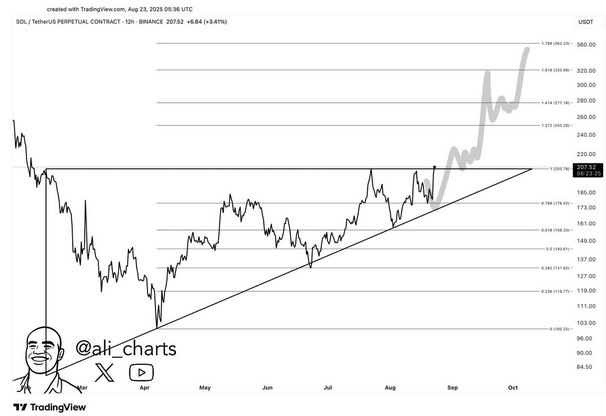
Solana may have broken past $200 recently, but beneath the surface, SOL News shows troubling signs as meme coin trading volume tied to its ecosystem crashes. Meanwhile, Remittix is steadily gaining ground with a $23.3 million raise and a token price of just $0.1030. Unlike Solana’s speculative swings, Remittix offers real-world payment utility, making it [...] The post Why Remittix Is A Preferred Investment Than Solana This Month As SOL Meme Coin Trading Volume Crashes appeared first on Blockonomi.

Author: Blockonomi
Trump’s Blockchain Move Could Reshape How America Sets Interest Rates

Trump’s Blockchain Move Could Reshape How America Sets Interest Rates

Why this quiet revolution in government transparency has Jerome Powell worriedTrump throws blockchain punch at Powell defending Fed policies in symbolic economic policy showdown. Made with Genspark Ai Agent. Trump’s Commerce Department now publishes GDP data on nine blockchains, making economic truth immutable and globally accessible. This bold move threatens the Federal Reserve’s grip on interest rate decisions by enabling real-time market pricing. Despite Fed Chair Jerome Powell’s resistance, blockchain transparency could restore free market principles to monetary policy. The story begins with a simple announcement that sent shockwaves through Washington’s financial establishment. The U.S. Commerce Department quietly posted America’s GDP data on Bitcoin, Ethereum, and seven other blockchains. What seemed like a tech experiment is actually Trump’s most brilliant chess move yet against the Federal Reserve’s stranglehold on our economy. FINANCIAL DISCLAIMER: This is an opinion article I take no responsibility for any financial decisions made based on this content. I AM NOT a financial expert and I am not licensed to provide financial advice. The views expressed are personal opinions only and should not be considered professional investment guidance. Always conduct your own research and consult with qualified financial advisors before making any investment decisions. Why This Is a “Thing”? Simply because blockchain makes data tamper-proof and instantly accessible worldwide. When Commerce Secretary Howard Lutnick declared “We are making America’s economic truth immutable and globally accessible like never before,” he wasn’t just talking about transparency. He was launching a revolution against central banking as we know it. Tech investor Chamath Palihapitiya gets it. Speaking on the All-In Podcast, he explained the bigger picture: “All the GDP data is now going into a blockchain. So can you imagine what this starts?” The answer should terrify Fed bureaucrats everywhere. GDP data shows unexpectedly strong 4.2% growth. Within seconds, smart contracts on DeFi platforms automatically adjust interest rates based on verified blockchain data. Mortgage rates jump from 6.8% to 7.2% instantly, corporate borrowing costs shift across the entire economy, and savers finally get market-determined returns. No waiting for Fed meetings, no political calculations, just pure market efficiency. Compare that to our current joke of a system. Remember September 2024? When Powell surprised everyone with a massive 50 basis point cut just weeks before the election? Market analysts openly questioned whether the timing was designed to help Kamala Harris’s campaign. That kind of political manipulation becomes impossible when markets set rates automatically based on verified blockchain data. When economic data flows directly to markets through blockchain oracles like Chainlink and Pyth, something beautiful happens. Markets can price risk and set interest rates in real-time, based on actual economic performance rather than the political whims of unelected Fed officials. The Fed’s Panic Makes Perfect Sense Think the Federal Reserve is happy about this? Think again. Trump’s blockchain initiative bypasses their traditional gatekeeping role entirely. No more waiting for Fed meetings. No more Jerome Powell press conferences where he dances around basic questions about inflation and employment. “But won’t this create chaos in financial markets?” That’s exactly what Fed defenders want you to believe. The truth is, markets already react instantly to economic data releases. The difference now is that the data comes directly from the source, verified by blockchain technology, instead of filtered through the Fed’s political lens. Palihapitiya nailed the core issue: “All kinds of economic measures scrubbed for anonymity should get published so that you can have pricing oracles that actually tell you what’s happening in real time. And the markets will then react and set rates in real time.” This isn’t about abolishing the Fed entirely. As Palihapitiya clarified, the central bank should stick to what it does reasonably well = banking regulation and payment system operations. But interest rate manipulation? That’s where free markets beat bureaucrats every single time. Powell’s Political Games ExposedJerome Powell / Source: CNN The timing couldn’t be more perfect. Trump’s blockchain transparency push comes as his tensions with Fed Chair Jerome Powell reach a boiling point. Powell’s track record speaks for itself: calling inflation “transitory” when it clearly wasn’t, then surprising markets with aggressive rate hikes that seemed designed to hurt Trump’s re-election chances. David Sacks, Trump’s crypto and AI czar, put it bluntly on the All-In Podcast: “He’ll cut for [Biden]. He’ll cut for [Yellen]. He’ll cut for Kamala [Harris]. He will not cut for Trump.” This isn’t conspiracy theory territory — it’s pattern recognition. When central bankers make decisions based on political calculations rather than economic data, they undermine the entire system’s credibility. Blockchain data publishing eliminates that human bias factor completely. The numbers are what they are, published instantly and immutably for all to see. Why Markets Beat Bureaucrats The Fed doesn’t want you to understand that interest rates are just prices. They’re the price of money over time, and like all prices, they work best when set by voluntary exchange rather than bureaucratic decree. Traditional Fed policy requires educated guessing about economic conditions, often using outdated data and political considerations. Blockchain-enabled market pricing uses real-time information and the collective wisdom of millions of participants making actual financial decisions with their own money. Which system sounds more reliable to you? The Path ForwardCommerce Secretary Howard Lutnick spearheads Trump’s “landmark effort” to make America the blockchain capital of the world Secretary Lutnick already announced plans to expand blockchain data publishing across all government agencies. Employment data, inflation metrics, trade balances — imagine if all these crucial economic indicators flowed directly to markets through tamper-proof blockchain networks. “Won’t this reduce American financial sovereignty?” Actually, it does the opposite. When other countries see America leading in blockchain financial infrastructure, they’ll want to integrate with our systems. The dollar’s reserve currency status gets stronger, not weaker, when it’s backed by transparent, real-time economic data rather than Fed committee meeting minutes. This initiative puts America on track to become the undisputed “blockchain capital of the world,” as Commerce Secretary Lutnick described it. While other nations debate central bank digital currencies and worry about financial privacy, we’re building the infrastructure for truly free market-based monetary policy. The Bottom Line Trump’s blockchain economic data initiative represents something larger than just technological innovation. It’s a fundamental shift toward transparency, market efficiency, and reduced political manipulation of our financial system. The Federal Reserve’s resistance to this change reveals their true priorities. They’d rather maintain their secretive, politically-influenced decision-making process than embrace the transparency and efficiency that blockchain technology enables. (Ed. note: The most telling aspect of this entire controversy is how quickly Fed defenders resort to fear-mongering about market volatility rather than defending the current system’s actual track record.) Will blockchain-based economic data publishing completely replace traditional monetary policy? Maybe not immediately. But it’s already forcing conversations about central bank accountability that Washington’s financial establishment has avoided for decades. And that alone makes Trump’s latest move a victory for anyone who believes markets work better than bureaucrats when it comes to pricing money. The Fed’s days of unquestioned authority over interest rates may finally be numbered. Originally published at https://bitnewsbot.com on September 2, 2025. Trump’s Blockchain Move Could Reshape How America Sets Interest Rates was originally published in Coinmonks on Medium, where people are continuing the conversation by highlighting and responding to this story

Author: Medium
No “MiCA 2.0 for now”: The EU’s focus shifts to tokenizing RWAs

No “MiCA 2.0 for now”: The EU’s focus shifts to tokenizing RWAs

Mica 2.0 EU

Author: Crypto.news
Michael Arrington: Insights Into Tech and Investment

Michael Arrington: Insights Into Tech and Investment

Michael Arrington is best known as the founder of TechCrunch, a popular blog that covered startups and technology news. He quickly gained attention for his early coverage of tech startups and became an important voice in Silicon Valley. His work with TechCrunch helped launch many companies into the spotlight.Arrington is also a serial entrepreneur and a venture investor. He has backed companies like Uber, Airbnb, and Pinterest through his involvement with CrunchFund and Arrington XRP Capital. His career moves from law to blogging to investing show a unique blend of tech insight and business strategy, making him someone worth knowing in the world of technology and startups.Who Is Michael Arrington?Michael Arrington is known as a key figure in the technology world, especially for his work in startups, blogging, and venture capital. He helped shape the way technology news is reported and invested in some of the most recognized tech companies.Background and Early LifeMichael Arrington was born on March 13, 1970, in Orange County, California. He spent his early years living in both California and England, which gave him a broad view of the world at a young age.He graduated from Claremont McKenna College with a degree in economics in 1992. Afterwards, he went to Stanford Law School, earning his law degree in 1993. He worked as a corporate and securities lawyer before shifting his interests to the business and tech world.Core AchievementsMichael Arrington is the founder of TechCrunch, one of the most popular technology blogs covering Silicon Valley startups, new technologies, and the business side of tech. He launched TechCrunch in 2005 and quickly grew it into a major news platform.His work with TechCrunch led to its successful sale to AOL. After leaving TechCrunch, Arrington co-founded CrunchFund, which is a venture capital firm that supports early-stage tech companies.He also founded Arrington XRP Capital, a fund focused on blockchain technology. Arrington was one of the first to use cryptocurrencies like XRP for venture capital investments. His investment track record includes early stakes in Uber, Airbnb, and Pinterest.Influence in TechnologyArrington’s work had a large impact on the tech startup ecosystem. Through TechCrunch, he gave early attention to new startups, which helped many gain attention and funding. His writing style and coverage became the standard for tech journalism.His influence goes beyond media. Arrington’s venture funds provided money to startups that later became famous companies. This made him a well-known name in both startup circles and among investors.Arrington has been recognized by major publications. For example, Time Magazine named him to the ”World’s 100 Most Influential People” list, due to his broad impact on technology news and venture capital.TechCrunch and Media LeadershipMichael Arrington changed how people learn about technology startups by founding TechCrunch. His leadership helped shape online tech journalism and brought attention to up-and-coming companies. Founding TechCrunchIn 2005, Michael Arrington founded TechCrunch as a blog to cover technology startups and news. The site started with a focus on profiling young tech companies and highlighting their innovations.TechCrunch quickly became a trusted source for startup news, attracting readers from the tech industry, entrepreneurs, and investors. Arrington wrote many of the early articles himself, often sharing uncensored opinions and inside stories.The straightforward format and focus on new companies filled a gap in traditional media coverage. As the site grew, it also started hosting events like Disrupt, where startups could pitch ideas and connect with investors. This community involvement turned TechCrunch into more than just a news blog.AOL AcquisitionIn 2010, AOL purchased TechCrunch for about $25 million. This sale marked the transition of TechCrunch from an independent startup to a part of a larger media company.Arrington stayed on after the acquisition, but his role became less defined as AOL took more control. The deal raised questions about editorial independence and the future direction of the site. Some staff members worried that joining a large corporation could change what made TechCrunch unique.On the other hand, the sale to AOL gave TechCrunch new resources and a larger audience. AOL also expanded the brand by supporting international growth and new features. However, the transition period included leadership changes and discussions about keeping the original vision of the site.Transition to Venture CapitalMichael Arrington moved from technology journalism to investing in startups, drawing on his experience in the tech world. He played a key part in launching new venture funds and data platforms focused on supporting innovative companies.Creation of CrunchFundArrington founded CrunchFund after leaving TechCrunch. This venture fund was designed to back early-stage startups, particularly in the technology sector.Some high-profile investments made by CrunchFund include Uber, Airbnb, and Pinterest. The fund worked closely with entrepreneurs, using Arrington’s network and insight to identify promising opportunities.CrunchFund set itself apart by keeping its focus on new tech companies. It helped startups grow by providing not just money, but also expert guidance and industry connections.The fund’s approach matched Arrington’s background in media and startups. Its investment choices reflected a focus on disruption and growth in tech industries.Crunchbase InitiativesWhile at TechCrunch, Arrington launched Crunchbase as a comprehensive database for tracking startups and investors. Crunchbase made it easier for users to discover information about companies, investments, and industry trends.The platform quickly became an important tool for entrepreneurs, investors, and journalists. It offered free and paid features, supporting both basic research and deeper analysis.Crunchbase gathered data on thousands of startups and venture funds. This allowed users to track funding rounds, company founders, and market activity in real time.Arrington’s efforts helped establish Crunchbase as a valuable resource in the venture capital community. The platform encouraged transparency and networking across the industry.Arrington XRP Capital and Crypto InvestmentsArrington XRP Capital is a crypto-focused hedge fund started by Michael Arrington. The fund stands out for using XRP as its base currency and invests broadly across blockchain technology and digital assets.Establishing Arrington XRP CapitalMichael Arrington founded Arrington XRP Capital in 2017. The hedge fund launched with an initial $100 million and is one of the first funds to be fully denominated in XRP rather than traditional fiat currencies.This approach makes it easier for investors already holding cryptocurrency to participate. The fund is based in Seattle, Washington and led by a team that has experience across technology and finance.Key facts:Founded: 2017Base currency: XRPFounder: Michael ArringtonInitial size: $100 millionMany early investors in the fund have backgrounds in crypto, tech startups, or fintech sectors. Arrington XRP Capital’s presence marked a significant step in connecting traditional hedge fund models with digital assets.Focus on Blockchain TechnologyArrington XRP Capital invests in a wide range of blockchain projects. Their focus is not limited to cryptocurrencies like Bitcoin and Ethereum, but extends to emerging blockchain-based businesses and protocols.The fund targets early-stage ventures, seed rounds, and initial coin offerings (ICOs). They look for startups developing solutions for finance, payments, and decentralized applications. The fund often supports projects that address key fintech challenges using blockchain.Arrington XRP Capital’s portfolio includes investments in both established and up-and-coming blockchain teams. By backing blockchain infrastructure, crypto exchanges, and DeFi platforms, the fund helps foster the growth of the broader digital asset ecosystem.Main investment areas include:Blockchain payments and remittanceCrypto infrastructure servicesDecentralized finance (DeFi)Early-stage fintech innovationCryptocurrency Hedge Fund ModelArrington XRP Capital uses a hedge fund structure but manages assets using digital currencies. This means investments are bought, held, and settled in cryptocurrencies, with a focus on XRP, Bitcoin (BTC), and Ethereum (ETH).The fund participates in spot markets for major cryptocurrencies and takes positions in smaller coins when there is strong potential. It also allocates capital to private equity, ICOs, and token sales when opportunities arise.Using XRP as the fund’s base currency is a defining feature. This reduces friction for crypto-native investors and allows for faster transactions. The model reflects changing attitudes in the investment world as traditional finance incorporates digital assets and blockchain-based models.Arrington XRP Capital demonstrates how hedge funds can operate in the evolving fintech landscape using cryptocurrencies as both investment vehicles and operational currencies.Notable Investments and Portfolio HighlightsMichael Arrington is recognized for his influential role in technology investing. He has backed several major tech companies and played an important part in the growth of startup ecosystems, especially through his work in digital assets and venture capital.Major Tech Company InvestmentsArrington’s venture investments include early stakes in Uber, Airbnb, and Pinterest. These companies have grown into industry leaders, making his investments highly significant. Arrington’s vision in supporting such startups early has helped cement his reputation within venture capital circles.He also co-founded CrunchFund after selling TechCrunch. This fund broadened his reach, allowing him to invest in a wider range of promising startups. His portfolio spans sectors from ride-sharing and hospitality to online content and social platforms.The returns from these investments not only affirmed his investing skills but also gave him the ability to support even more startups over time. His focus has consistently been on disruptive companies with the potential to redefine entire industries.Support for Startup EcosystemsBeyond funding big tech names, Arrington has championed growth in the startup world through his leadership at Arrington XRP Capital (also known as Arrington Capital). This venture firm primarily invests in blockchain and digital asset markets. Since founding it in 2017, Arrington has backed hundreds of startups globally, offering both capital and mentorship.Arrington XRP Capital’s investments include companies such as Arweave, BlockFi, SKALE Labs, and CasperLabs.Perspective on Blockchain and CryptocurrencyMichael Arrington has spent years in cryptocurrency and blockchain technology. His work spans investing, building funds, and influencing trends in fintech, digital assets, and new financial systems.Views on Blockchain AdoptionArrington sees blockchain technology as a key driver of change in finance, healthcare, and identity management. He believes public blockchains make transactions more transparent and efficient.He often points to Bitcoin and Ethereum as valuable experiments that prove blockchain’s value beyond digital cash. Arrington’s focus on XRP comes from its use in fast, cross-border payments.He thinks companies need to do more than just adopt blockchain in name. Actual use cases, such as remittances and supply chain tracking, matter most. He also stresses that public awareness is critical. New users need education, not just technology, to speed up adoption in fintech.Stance on Crypto LendingArrington has watched crypto lending grow as more people borrow and lend digital assets. He cautions against ignoring the risks. Price swings in assets like Bitcoin and Ethereum can hurt both lenders and borrowers.He advises investors and platforms to have strong risk controls. He thinks regulation can help protect users but warns it should not slow down innovation. He points out the need for clear transparency on how loans are secured and managed.Arrington sees lending and borrowing as good for the market when done right, bringing more liquidity and giving investors flexible options with cryptocurrencies like XRP and ETH.Frequently Asked QuestionsWhat is Michael Arrington's role in the foundation of TechCrunch?Michael Arrington founded TechCrunch in 2005. He started the site to cover startups and new technology products at a time when tech blogs were still rare. He built TechCrunch into one of the most popular tech news websites.How has Michael Arrington impacted the venture capital industry?Arrington became a venture capitalist after his success with TechCrunch. He launched Arrington XRP Capital and has invested in a range of startups. His early interest in cryptocurrency and his network in Silicon Valley gave him a strong reputation in venture funding.What are some of the notable investments made by Michael Arrington?Some of Arrington’s most well-known investments are in companies like Uber and Pinterest. He has also invested in Ripple and other cryptocurrency projects. His fund looks at both traditional tech startups and companies focused on blockchain.What controversies has Michael Arrington been involved in?Arrington has faced criticism for some of his blog posts and business tactics. Allegations of personal misconduct became public but did not lead to criminal charges. The controversies led him to step back at times from public roles.How did Michael Arrington contribute to the development of CrunchBase?He created CrunchBase as a database for startups, investors, and funding rounds as part of TechCrunch. It became a widely used tool in the tech industry for tracking companies and investment activity.

Author: Coinstats