RWA

RWA (Real World Assets) refers to the tokenization of tangible assets—such as real estate, private credit, and government bonds—on the blockchain. By bringing traditional financial instruments on-chain, RWA protocols like Ondo and Centrifuge provide DeFi users with stable, real-yield opportunities. In 2026, the RWA sector is a multi-trillion-dollar bridge between TradFi and DeFi, enabling fractional ownership and global liquidity for previously illiquid assets. Follow this tag for insights into on-chain credit markets, regulatory compliance, and asset-backed security innovations.

43506 Articles
Created: 2026/02/02 18:52
Updated: 2026/02/02 18:52

UAE’s RAK Properties now lets international clients buy real estate with crypto

UAE’s RAK Properties now lets international clients buy real estate with crypto

UAE RAK Crypto

Author: Crypto.news
Starknet restores block production after multi-hour outage

Starknet restores block production after multi-hour outage

Starknet has restored block production after a multi-hour outage, with a detailed post-mortem on the incident expected soon. Starknet is back up Starknet (STRK), a zero-knowledge rollup for Ethereum, has resumed block production after experiencing a multi-hour outage on Sept.…

Author: Crypto.news
Avalon Labs Launches on Bitcoin Layer 2 Rootstock

Avalon Labs Launches on Bitcoin Layer 2 Rootstock

The post Avalon Labs Launches on Bitcoin Layer 2 Rootstock appeared on BitcoinEthereumNews.com. Rootstock looks to continue its growth with the addition of Avalon’s lending infrastructure. Bitcoin lending market Avalon Labs is now live on Rootstock, the fourth largest Bitcoin sidechain by total value locked (TVL), according to a press release viewed by The Defiant. The integration will see Avalon expand to Rootstock, and compete to be the chain’s largest lending market by providing access to Bitcoin-collateralized lending for digital assets such as Rootstock’s RBTC and RIF, as well as stablecoins like USDC.E and Tether’s cross-chain stablecoin protocol USDT0. Avalon is the latest major integration for Rootstock, which already boasts support for USDT0, LayerZero, and Solv Protocol. These additions to Rootstock are meant to boost the chain’s capabilities as a leader in Bitcoin DeFi, also known as BTCFi, and are intended to help the network continue to scale to new highs. Jason Twu, Avalon’s head of ecosystem, commented on the announcement, telling The Defiant: “This is a partnership between two BTCFi powerhouses and signals a leap forward for scaling all sorts of useful applications that use Bitcoin.” Avalon’s current TVL sits at $752 million, a 113% increase over the last year. However, TVL in the lending market is still down 62% from its all-time high of $2 billion in January 2025. “We’re both laser-focused on this shared vision of providing industry-leading financial products not just for retail users but also the growing number of institutional-size actors that desire to do more with their Bitcoin.” Twu concluded, referring to the partnership. The Rootstock integration may help Avalon reclaim its strong growth trajectory from Q4 2024, as Rootstock has been steadily growing over the last two years, and commands a $255 million TVL today, compared to just $42 million at the beginning of 2023. Rootstock TVL in USD. Source: DeFiLlama While the Rootstock network has…

Author: BitcoinEthereumNews
Top New Crypto to Buy Today as Ripple (XRP) Crashes Again

Top New Crypto to Buy Today as Ripple (XRP) Crashes Again

With Ripple (XRP) under the crucial level of $3, attention is moving to new prospects, and Mutuum Finance (MUTM) can be a project to consider. MUTM is at presale Stage 6 at 0.035, and the price will increase by 14.29 percent to $0.04 in Stage 7.  The minimum returns that can be realized by investors […]

Author: Cryptopolitan
Suni Lee Talks Leadership, Legacy, And Her New Partnership With The LEGO Brand

Suni Lee Talks Leadership, Legacy, And Her New Partnership With The LEGO Brand

The post Suni Lee Talks Leadership, Legacy, And Her New Partnership With The LEGO Brand appeared on BitcoinEthereumNews.com. PARIS, FRANCE – JULY 30: Sunisa Lee of Team United States competes in the floor exercise during the Artistic Gymnastics Women’s Team Final on day four of the Olympic Games Paris 2024 at Bercy Arena on July 30, 2024 in Paris, France. (Photo by Naomi Baker/Getty Images) Getty Images At just 22, Olympic champion Suni Lee has already achieved gymnastics greatness, winning six Olympic medals. Her remarkable comeback from severe kidney issues to earn a second Olympic berth and three more medals at the Paris 2024 Games has cemented her legacy. But with nearly every gymnastics accolade under her belt, what’s next? For the Minneapolis native turned New York City transplant, the answer is constant motion—and a new mission. Since the Paris Games, Lee has been in demand. She’s secured major brand partnerships with Lululemon, HOKA, and American Eagle Outfitters, and was even named a rookie headliner for the 2024 Sports Illustrated Swimsuit Edition. In May 2025, she was honored with an ESPY for Best Comeback Athlete, one of the highest honors in sports. She even stepped into the world of professional broadcasting, interviewing players at the 2025 NBA Draft. Overall, 2025 has been a landmark year for the gymnastics icon. Forbes‘Champion Of Terror’ To Compete: Ukraine Fights Russia’s Return To GymnasticsBy Caroline Price A New Partnership With The LEGO Brand But now, it’s time to talk blocks. Suni will be a mentor for two days for the LEGO She Built That Sports Club on September 6 and 7, held at STORIED NYC. The event supports the LEGO Group’s initiative to “challenge gender stereotypes in building,” and “each club features fireside chats and hands-on LEGO building that empowers kids to explore their interests and kick off the school year feeling confident, inspired and ready to build their world.” Lee will…

Author: BitcoinEthereumNews
Broadcom to pay dividends on September 30; Here’s how much 100 AVGO shares will earn

Broadcom to pay dividends on September 30; Here’s how much 100 AVGO shares will earn

The post Broadcom to pay dividends on September 30; Here’s how much 100 AVGO shares will earn appeared on BitcoinEthereumNews.com. Investors in American semiconductor giant Broadcom (NASDAQ: AVGO) are set to be rewarded when the company continues its tradition of dividend payments on September 30. According to the company, shareholders of record will receive $0.59 per share, the same amount as the previous payout on June 30, 2025. AVGO stock dividend payment date. Source: Dividend.com Broadcom maintains a forward dividend payout ratio of 28.73%, leaving room for reinvestment while still providing shareholders with a return. Based on the declared dividend, AVGO currently offers a yield of 0.79%, below the technology sector’s average yield of 1.37%. For income-seeking investors, Broadcom has now increased its dividend for 15 consecutive years, ranking as a reliable dividend growth stock.  At the current dividend rate, an investor holding 100 shares of Broadcom will earn $59 in cash dividends this quarter. On an annualized basis, that translates to $236 in dividend income. Regarding the stock performance, at the close of the last trading session, AVGO shares were valued at $297.39, down 3.65%, though the stock has still rallied over 28% year-to-date. AVGO YTD stock price chart. Source: Google Finance AVGO stock fundamentals  Looking ahead, Broadcom is strengthening its growth outlook with major product updates and strong financial performance. For instance, on August 26, the technology firm announced that VMware Private AI Services will become a standard feature in VMware Cloud Foundation 9.0, making the platform AI-native. Broadcom also launched VMware Tanzu Data Intelligence, a data lakehouse for analytics and AI development, along with VMware Cloud Foundation Advanced Cyber Compliance to bolster security for regulated industries. Adoption is accelerating, with nine of the top 10 Fortune 500 companies already committed to VMware Cloud Foundation and more than 100 million cores licensed worldwide. From a fundamentals perspective, the company’s earnings per share are projected to grow 36.3% this…

Author: BitcoinEthereumNews
“September is Seasonally Weak” – Jim Cramer Predicts Bumpy Markets Ahead

“September is Seasonally Weak” – Jim Cramer Predicts Bumpy Markets Ahead

The post “September is Seasonally Weak” – Jim Cramer Predicts Bumpy Markets Ahead appeared on BitcoinEthereumNews.com. August has not been very favorable for the market, which Jim Cramer has already anticipated, citing historical records. However, now as September begins, investors have optimistic hopes, especially around the FOMC Meeting time, but Cramer leaves a serious warning, adding that “September Is Seasonally Weak.” Jim Cramer Predicts Bumpy Market Due to Macroeconomic Factors In an X post, Mad Money show host Jim Cramer has left an indirect prediction for investors, asking them to anticipate volatility ahead. He openly adds that September is seasonally weak, and historically, this month is considered the weakest for U.S. equities. Source: X, Jim Cramer Even analysts call it the post-summer portfolio rebalancing and similar names, suggesting that it’s not a new trend. Since 1950, the S&P 500 has seen more negative returns in September compared to others, earning the nickname “the September Effect.” Notably, this prediction also works for the crypto market, since the Bitcoin price has also declined this month historically. With his X post, Cramer has presented a look into the history and has reminded investors of the volatility, especially as inflation numbers and a tough Labor number may bring turbulence. Jim Cramer Unveils Top 2 Factors for Bumpy Market The U.S. The Fed’s decision on the interest rate cut is a major factor that always impacts the financial markets. The prime example is the multiple crypto market crashes in August due to the Fed’s unchanged rate decision in July, followed by various macroeconomic events like PCE, which could affect their upcoming decision. Today, the CME FedWatch data shows almost 90% chances of interest rate cuts in September, which is why the financial market is up. It includes Gold and Bitcoin price rallies; however, the upcoming inflation data and labor market numbers can make or break it. Source: CME FedWatch Interestingly, Jim…

Author: BitcoinEthereumNews
Urgent Alert: Venus Protocol Suspension Rocks Crypto Lending After Suspected $30 Million Exploit

Urgent Alert: Venus Protocol Suspension Rocks Crypto Lending After Suspected $30 Million Exploit

BitcoinWorld Urgent Alert: Venus Protocol Suspension Rocks Crypto Lending After Suspected $30 Million Exploit The crypto world is currently navigating a significant event, as Venus Protocol, a prominent decentralized lending platform operating on the BNB Chain, has announced a temporary halt to its operations. This urgent Venus Protocol suspension comes after the detection of suspicious transactions, prompting an immediate investigation by the protocol’s team. This development follows a previously suspected exploit on the platform, which reportedly amounted to a staggering $30 million. What Triggered the Urgent Venus Protocol Suspension? The decision to implement the Venus Protocol suspension was made public via the protocol’s official X account. This immediate action was a direct response to unusual activity identified within the system. While specific details of the suspicious transactions are still under wraps, the protocol’s quick response highlights their commitment to security. This incident is particularly sensitive given the earlier reports of a suspected $30 million exploit. Although the exact connection between the current suspension and the previous exploit is still being investigated, the pattern of security challenges raises concerns within the decentralized finance (DeFi) community. The protocol’s team is working diligently to uncover the root cause and ensure the integrity of the platform. Understanding the Broader Impact of a Crypto Protocol Suspension A Venus Protocol suspension, or any halt in operations for a major DeFi platform, sends ripples throughout the broader crypto ecosystem. For users, it means immediate cessation of lending, borrowing, and withdrawing funds, potentially locking up significant capital. This can cause considerable stress and uncertainty. Moreover, such events can impact market sentiment, leading to increased volatility for associated tokens, like XVS, and even affecting the overall perception of the BNB Chain’s security. Trust is a cornerstone of DeFi, and incidents like this underscore the critical need for robust security measures and transparent communication from protocol teams. How Venus Protocol is Addressing This Critical Challenge In response to the detected anomalies, Venus Protocol has confirmed that a thorough investigation is underway. Their primary focus remains on safeguarding user assets and restoring normal operations as swiftly and securely as possible. The team has committed to providing updates through their official communication channels. Here’s what we know about their approach: Immediate Action: Operations were suspended promptly to prevent further potential compromise. Dedicated Investigation: A specialized team is actively analyzing transaction data to identify the nature and source of the suspicious activity. User Asset Security: The protocol emphasizes that protecting user funds is their top priority during this challenging period. Users are strongly advised to monitor Venus Protocol’s official announcements for the most accurate and up-to-date information regarding the investigation and the potential resumption of services. Navigating DeFi Safely: Lessons from the Venus Protocol Suspension The ongoing Venus Protocol suspension serves as a powerful reminder of the inherent risks in the rapidly evolving DeFi landscape. While DeFi offers incredible opportunities, it also demands vigilance from its participants. Here are some actionable insights for staying safe: Diversify Your Portfolio: Avoid putting all your assets into a single protocol or chain. Conduct Due Diligence: Thoroughly research any protocol before committing funds. Understand its security audits, team, and community sentiment. Stay Informed: Follow official channels of protocols you use and reputable crypto news sources. Understand Smart Contract Risks: Be aware that even audited smart contracts can have vulnerabilities. These practices can help mitigate potential losses during unexpected events like protocol suspensions or exploits. In conclusion, the Venus Protocol suspension is a significant event that highlights the ongoing security challenges within the DeFi space. While concerning, such incidents often catalyze stronger security protocols and greater transparency across the industry. Users must remain vigilant, informed, and proactive in managing their digital assets. The crypto community will be closely watching as Venus Protocol navigates this complex situation, hoping for a swift and secure resolution. Frequently Asked Questions (FAQs) What is Venus Protocol? Venus Protocol is a decentralized money market and stablecoin protocol built on the BNB Chain. It allows users to lend and borrow various cryptocurrencies and mint VAI, its synthetic stablecoin, by supplying collateral. Why was Venus Protocol suspended? Venus Protocol suspended its operations after detecting suspicious transactions. This action was taken to investigate the anomalies and protect user funds, following a previous suspected exploit valued at $30 million. Are user funds safe during the Venus Protocol suspension? Venus Protocol has stated that safeguarding user assets is their top priority during the investigation. However, users currently cannot access or move their funds until operations resume. The safety of funds ultimately depends on the outcome of the investigation and the resolution implemented by the protocol. What should Venus Protocol users do now? Users should monitor Venus Protocol’s official X account and other official communication channels for updates. Avoid interacting with unofficial sources or scams. Do not attempt to bypass the suspension as it could lead to further risks. When will Venus Protocol resume operations? The timeline for resuming operations is currently unknown, as it depends on the duration and findings of the ongoing investigation into the suspicious transactions. Venus Protocol will likely announce the resumption once the security issues are fully resolved. Did you find this update helpful? Share this crucial information with your network to keep the crypto community informed about the latest developments regarding the Venus Protocol suspension! To learn more about the latest crypto market trends, explore our article on key developments shaping blockchain security in 2024. This post Urgent Alert: Venus Protocol Suspension Rocks Crypto Lending After Suspected $30 Million Exploit first appeared on BitcoinWorld and is written by Editorial Team

Author: Coinstats
Ukraine Crypto Money Laundering: Alarming Report Reveals Emerging Hub

Ukraine Crypto Money Laundering: Alarming Report Reveals Emerging Hub

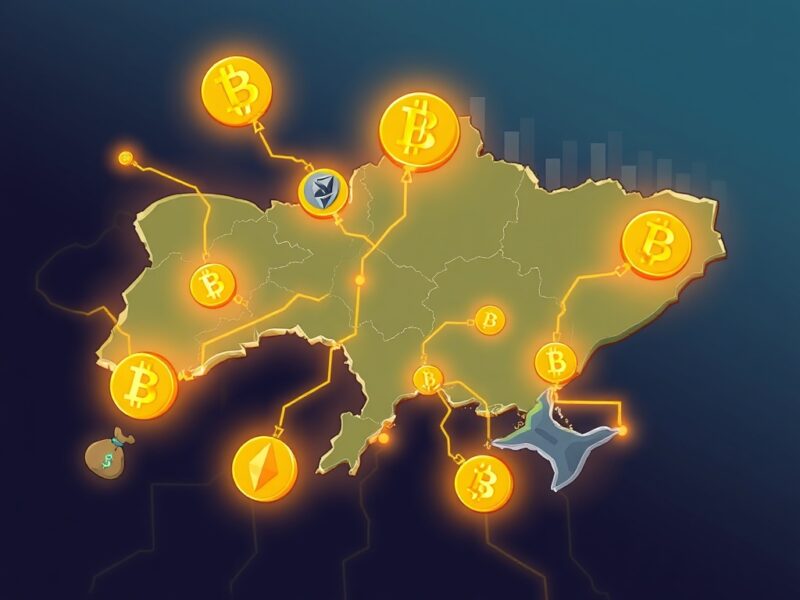
BitcoinWorld Ukraine Crypto Money Laundering: Alarming Report Reveals Emerging Hub The digital financial landscape is constantly evolving, and with its rapid growth comes a unique set of challenges. Recently, a significant report has cast a spotlight on an alarming trend: Ukraine crypto money laundering. This issue is not just a concern for the nation itself but has broader implications for global financial security. What’s Fueling Ukraine Crypto Money Laundering? A recent report from the UK’s Royal United Services Institute (RUSI) has identified Ukraine as an emerging hub for illicit financial activities within the cryptocurrency industry. This isn’t merely an observation; it’s a stark warning about the country’s vulnerability. RUSI’s findings highlight several critical points: Emerging Hub: Ukraine is increasingly being used as a center for money laundering operations involving digital assets. Sanctions Evasion: Russia has reportedly exploited cryptocurrency networks in Ukraine to bypass international sanctions and move illicit funds. Lack of Framework: The absence of a robust regulatory framework contributes significantly to this problem, creating loopholes for criminals. These factors combine to create an environment ripe for exploitation, making the fight against Ukraine crypto money laundering a pressing matter. The Staggering Cost of Unchecked Illicit Flows The financial implications of widespread crypto money laundering in Ukraine are immense. The RUSI report estimates that with proper regulatory measures, Ukraine could potentially recover at least $10 billion. This substantial sum represents stolen funds and lost tax revenues that could otherwise benefit the nation’s economy and citizens. Beyond the direct financial losses, there are other significant repercussions: Damaged Reputation: Remaining a money laundering hub can severely tarnish Ukraine’s international standing. Business Avoidance: Legitimate businesses, both domestic and international, are likely to avoid investing in or operating within a country perceived as high-risk for illicit financial activities. This stifles economic growth and innovation. Security Risks: Illicit financial flows often fund other criminal enterprises, including terrorism and organized crime, posing a direct threat to national and global security. The report serves as a clear call to action, emphasizing that inaction carries a heavy price. Why is Combating Ukraine Crypto Money Laundering So Crucial Now? The urgency to address Ukraine crypto money laundering cannot be overstated, especially given the current geopolitical climate. Cryptocurrency, by its nature, offers a degree of anonymity and speed that can be attractive to those seeking to move funds discreetly. The challenge lies in striking a balance: Innovation vs. Regulation: How can Ukraine foster a thriving crypto ecosystem while simultaneously implementing effective anti-money laundering (AML) and counter-terrorist financing (CTF) measures? International Cooperation: Given the cross-border nature of cryptocurrency, international collaboration is essential to track and disrupt illicit networks. Ukrainian authorities face a complex task. They must develop a regulatory approach that is both comprehensive and adaptable, capable of keeping pace with technological advancements and criminal ingenuity. Actionable Steps to Counter Ukraine Crypto Money Laundering The path forward, while challenging, is clear. Establishing a proper regulatory framework is paramount. This involves more than just drafting new laws; it requires a holistic approach that includes: Clear Legislation: Enacting robust laws that define cryptocurrency, establish licensing requirements for virtual asset service providers (VASPs), and outline AML/CTF obligations. Enhanced Oversight: Empowering financial intelligence units and law enforcement agencies with the tools and training needed to investigate and prosecute crypto-related financial crimes. Technological Solutions: Investing in blockchain analytics tools and other technologies that can help identify suspicious transactions and trace illicit funds. Public-Private Partnerships: Collaborating with cryptocurrency exchanges, financial institutions, and tech companies to share information and best practices. International Standards: Aligning Ukraine’s regulatory framework with international standards set by bodies like the Financial Action Task Force (FATF). By taking decisive action, Ukraine can transform from an emerging hub for illicit activity into a leader in responsible crypto innovation. A Pivotal Moment for Ukraine’s Digital Future The RUSI report on Ukraine crypto money laundering presents a critical juncture for the nation. It highlights a significant vulnerability but also offers a clear roadmap for recovery and progress. By embracing a strong, well-defined regulatory framework, Ukraine stands to not only reclaim billions in lost revenue but also to bolster its reputation, attract legitimate investment, and strengthen its overall financial security. The time for action is now. A proactive approach will not only combat illicit flows but also pave the way for a more secure and prosperous digital future for Ukraine. Frequently Asked Questions About Ukraine Crypto Money Laundering Q1: What is the main concern regarding Ukraine and crypto money laundering? A: A report by the UK’s Royal United Services Institute (RUSI) identifies Ukraine as an emerging hub for crypto money laundering, with concerns that Russia is using these channels to evade sanctions. The lack of a proper regulatory framework is a significant contributing factor. Q2: How much money could Ukraine potentially recover by addressing this issue? A: The RUSI report suggests that by establishing a robust regulatory framework, Ukraine could recover at least $10 billion in stolen funds and lost tax revenue, which is currently being lost due to illicit cryptocurrency activities. Q3: What are the broader consequences if Ukraine fails to act? A: Inaction could lead to a tarnished international reputation, deter legitimate businesses and foreign investment, and potentially exacerbate national security risks by allowing illicit funds to support other criminal enterprises. Q4: What key steps can Ukraine take to combat crypto money laundering? A: Ukraine can implement clear legislation for virtual assets, enhance oversight for financial intelligence and law enforcement, invest in blockchain analytics, foster public-private partnerships, and align its regulations with international standards like those from the FATF. Q5: Why is cryptocurrency often used for money laundering? A: Cryptocurrencies can offer a degree of anonymity and enable rapid, cross-border transactions, making them attractive to individuals and groups seeking to move funds discreetly and evade traditional financial oversight. Understanding the challenges of Ukraine crypto money laundering is the first step toward a more secure digital future. If you found this article insightful, please consider sharing it with your network. Your support helps raise awareness and encourages informed discussions on critical financial security topics. To learn more about the latest crypto market trends, explore our article on key developments shaping the cryptocurrency industry and its future regulatory landscape. This post Ukraine Crypto Money Laundering: Alarming Report Reveals Emerging Hub first appeared on BitcoinWorld and is written by Editorial Team

Author: Coinstats
Malaysian Chinese, the shadow army of the crypto world

Malaysian Chinese, the shadow army of the crypto world

Authors: Yanz, June, TechFlow When people talk about the protagonists of the crypto world, they always think of Silicon Valley geeks, Wall Street capital, investment institutions in Singapore and Hong Kong, and mainland developers, but few people turn their attention to Malaysian Chinese. They didn’t appear on the cover of Fortune like SBF, nor were they labeled as the “richest Chinese” like Changpeng Zhao. They rarely accept spotlight interviews and are often even "invisible" on Twitter. However, when you really dismantle the landscape of the encryption industry, you will be surprised to find that: Coingecko, the world's largest encrypted data platform, was born in Kuala Lumpur; Etherscan, an indispensable component of the Ethereum ecosystem, was built by Malaysian Chinese; Virtuals Protocol, which is the hottest narrative in the bull market, "AI+Crypto", also comes from a Malaysian Chinese team. Solana Ecosystem Liquidity Center Jupiter, from Malaysia. These projects are not scraps that can be replaced at any time, but have become the infrastructure of the crypto industry and the spark of new narratives. Without the Chinese in Malaysia, today's crypto industry would lose a pair of "eyes", a "map", and even a future "road of exploration". Central China Real Estate In 2014, Mt. Gox collapsed, plunging the crypto world into darkness. Amidst the market's turmoil, Bobby Ong and TM Lee founded Coingecko with $100 in seed capital. Source: Fintechnews One studied economics, the other was a programmer. Their chance encounter led them to a shared vision: the market desperately needed a transparent, reliable data platform. Thus, Coingecko was born amidst a market crisis. "We want to be a company that serves everyone in the world," they summed up their original aspirations years later. This direction has proven to be correct. With its Trust Score algorithm and coverage of marginal markets, Coingecko quickly became a daily must-have for investors. Ten years later, it now tracks over 17,000 tokens, and its API is widely used by platforms like Trezor and Metamask. Around the same time, another young Malaysian, Matthew Tan, was also interested in Ethereum. He previously ran a blockchain search engine called Blockscan. When Ethereum smart contracts emerged, he keenly identified a key issue that had been largely overlooked: block explorers at the time could only handle simple peer-to-peer transactions and were completely unable to cope with the complexities of smart contracts. So, he almost took a gamble and reshaped Blockscan into Etherscan. “It’s no longer about transferring value from point A to point B. There’s so much more that needs to be surfaced by search engines.” He decisively transformed and upgraded Blockscan, an early blockchain search engine that had been in operation for two years, into Etherscan, and redesigned the underlying architecture specifically to address the complexity of smart contracts. Today, Etherscan has evolved from a simple tool into the de facto standard in the Ethereum ecosystem, indispensable to nearly every Ethereum user. With the advent of the multi-chain era, the successive launch of products like BscScan, PolygonScan, and ArbiScan has further solidified this Malaysian-Chinese company's dominance in the blockchain explorer space. It’s 2021. As the heat of DeFi’s summer lingers, a young man named TN Lee sets his sights on a more complex problem: how to make yields more predictable and tradable? With a background in computer science and a deep understanding of the logic of financial derivatives, he proposed a seemingly crazy concept at the time: tokenized returns. He separated future returns into principal tokens (PT) and return tokens (YT), allowing users to trade these two components independently. The seemingly simple innovation actually took several years. In 2021, Pendle Protocol was born. Also in 2021, young developer Siong set his sights on Solana. He saw the potential for high performance, but also the challenges of fragmented liquidity and excessive slippage. So, he and his team created Jupiter, a transaction aggregator that automatically finds the optimal path using an intelligent routing algorithm. From humble beginnings, by 2024, both Pendle and Jupiter had achieved significant success in their respective ecosystems. Pendle became the leading DeFi protocol with over $10 billion in total value locked (TVL), while Jupiter became a liquidity hub within the Solana ecosystem, with daily trading volume regularly exceeding $1 billion and a total token market capitalization exceeding $10 billion. The entrepreneurial story doesn't end there. In 2024, Weekee Tiew, formerly of Boston Consulting Group, set his sights on AI. He previously founded the gaming guild PathDAO, which was valued at $600 million. However, the company hit rock bottom during the bear market, leaving him struggling to find a way forward. In 2024, he pivoted and launched Virtuals Protocol, focusing on the creation and distribution of AI agents. Source: LinkedIn Virtuals Protocol's token $VIRTUAL hit a new high of over $4.5 billion in market capitalization in January 2025, becoming one of the most representative projects in the field of AI and Crypto integration. It was not until Weekee Tiew became a hit and appeared on many podcasts that people were surprised to find out that it was actually a Malaysian project. Not only that, Pendle, Jupiter, Aevo, and Drift are also from Malaysia. On Twitter, everyone seems to have reached a consensus that this cycle is a bull market for Malaysian entrepreneurship. Bridge Builder "I still have many Malaysian friends who don't talk much on social media." Compared with well-known entrepreneurs, more Malaysian Chinese in the crypto industry are scattered in the industry like tendons and veins, stringing together flexible limbs, and their roles are like meridians, stringing together markets with different cultural backgrounds. Malaysian Chinese are natural bridge builders. Cova, a Malaysian Chinese, has been involved in the crypto industry for five years. As she communicated more with practitioners from all over the world, she truly realized the unique advantages of Malaysian Chinese in the industry. "I think Malaysian Chinese are natural customer service professionals. Normally, a Malaysian Chinese person speaks at least three languages, not including dialects - Chinese, Malay, and English. Some even speak Japanese and Korean." Since kindergarten, they have lived in an environment where Chinese, English and Malay are intertwined. In addition to their different backgrounds, they also speak Cantonese, Teochew, Hakka... This "multi-threaded" language ability allows them to thrive in the team - they can follow hot trends in Europe and the United States, take care of the Southeast Asian market, cooperate with international teams, and connect with customers from all over the world. This linguistic talent is particularly valuable in the crypto world. Virtuals Protocol founder Weekee Tiew can demonstrate to European and American listeners in his English podcast how Virtuals truly integrates AI and crypto, and he can also directly explain Virtuals' grand vision to Chinese audiences at offline events. This multilingual ability allows him to simultaneously serve developer communities from diverse cultural backgrounds. At the intersection of cultures, Cova also believes that Malaysian Chinese and Singaporeans will integrate faster. "For example, Malaysian Chinese and Singaporeans are quick to assimilate and understand American projects, meme culture, and cultures from lesser-known countries." The cultural DNA of Malaysian Chinese is like a master key, opening the door to multiple international markets. However, this unique multilingual advantage also brings an unexpected side effect: the blurring of identity. Whenever Malaysian Chinese start their own Twitter accounts or create crypto projects, they face a crucial decision: should they use English or Chinese as the primary medium of communication? This choice often determines the audience and market scope they can reach. A typical example is that if you didn’t specify, you might be hard to guess that the well-known Chinese KOL @Wolfy_XBT is actually Malaysian Chinese. Similarly, well-known English KOLs @ahboyash and @sandraaleow are also from Malaysia. More importantly, in order to gain wider recognition and acceptance in the global market, many Malaysian Chinese entrepreneurs will intentionally or unintentionally downplay their regional identity. They hope that their products will be seen as "international" solutions rather than projects from a specific country. This strategy is often smart business-wise, but it also leads to an unfortunate consequence: most users have no idea that these world-changing products actually come from Malaysia. When you use Etherscan to query Ethereum transactions, you may not think that this is the work of a Malaysian Chinese team; when you trade tokens on Jupiter, when you study Pendle's profit strategy, you may be more likely to think that this is the masterpiece of an elite European and American team. Their "invisible" identity precisely illustrates the adaptability of Malaysian Chinese in the context of globalization, but it also reflects their complex situation in identity recognition and market positioning. Behind this blurred identity lies a deeper problem: brain drain. Many Malaysian Chinese have chosen to leave their homeland to pursue careers. This fertile land continues to cultivate batches of talent, but due to various practical factors, whether it is the policy environment, market size, or the degree of internationalization, these talents are often forced to flow to overseas markets. They shine brightly on the global stage, yet few know their true origins. This "invisible success" illustrates the adaptability of Malaysian Chinese in the context of globalization, but also the price this group has paid for globalization. They are the best bridge builders, but also the builders whose identities are most easily forgotten. Changemaker Seriousness, practicality, and contentment are the common traits of most Malaysian Chinese. They rarely publicize their achievements on social media, preferring to let their solid work speak for itself. This low-key personality trait is deeply connected to their historical experiences. During the "Southeast Asia" migration of the late Qing Dynasty, Chinese people migrated from China's southeastern coastal areas to the Malay Peninsula. Faced with a completely unfamiliar environment and culture, they relied on diligence and ingenuity to find a place to survive within the British colonial economy. However, even though they achieved commercial success through their efforts, the colonial government's "divide and rule" policy consistently excluded Chinese people from political power. After Malaysia's independence in 1957, the political ideology of "Malay supremacy" and the subsequent implementation of the New Economic Policy further restricted opportunities for Chinese in education, employment, and business through a quota system. University admissions were limited, government jobs were restricted, and even starting a business faced various policy barriers. This long-term institutional pressure has shaped the unique survival philosophy of the Chinese in Malaysia: since they cannot change the broader environment, they focus on doing well in the things they can control. They have learned to survive in the cracks, to prove their worth through their own strength, and to remain resilient in the face of adversity. “Malaysian Chinese have always been oppressed by policies, so most of them just keep their heads down and work hard, just to make money.” This resilience, fostered by these past experiences, has become a distinct advantage in the challenging crypto industry. When the market plummets, they don't panic; when projects encounter difficulties, they find solutions rather than complain; and when opportunities arise, they quietly seize them rather than hype them up. However, the process of focusing on work, making profits from pursuing dreams, proving strength through successful projects, and changing the outside world's inherent impression of the Malaysian Chinese community is not smooth sailing. Early on, Malaysian crypto projects had a less than favorable reputation, with many suspected of market manipulation and pyramid schemes. Cova noted that Malaysian Chinese were easily perceived by partners as "sponsors" of the project, a bias that created an additional cost of trust when establishing a business. The formation of this negative impression has historical roots. Malaysia's lack of early fintech regulation created numerous gray areas, allowing some criminals to exploit these gaps to engage in illegal fundraising and fraud. Many projects touted as "blockchain innovation" profited from repeated losses, harming investors and casting a shadow over Malaysia's tech startup ecosystem. Worse still, these negative stories often spread faster and more widely than positive ones. When people hear the term "Malaysian project," their first reaction might not be technological innovation but rather "beware of being ripped off." This stereotype has become an invisible obstacle that all Chinese Malaysian entrepreneurs must face. But times are changing. The global success of projects like CoinGecko, Etherscan, Pendle, Jupiter, and Virtuals Protocol is putting high-quality Malaysian projects in the spotlight on the international stage, gradually improving global users' perception of Malaysian tech projects. "I think these down-to-earth builders have also proved in the past two or three bull markets that they are not the stereotypical project parties who play the pyramid game, but that they are big international projects at the first try." said a Malaysian Chinese practitioner. Across cycles, this shadow army has been doing its thing in the industry, building businesses, building bridges, and realizing dreams... until they are seen, until they are recognized, or "just make money."

Author: PANews