

👨🏿🚀TechCabal Daily – Uber orders a Delivery Hero
Welcome to another week. 
When news broke that MTN Nigeria CEO Karl Toriola received $335,000 in performance-tied shares set to vest over three years, what many people probably missed is that the company’s group CEO, Ralph Mupita, received significantly more at $2.4 million.
The reactions online were, expectedly, entertaining. Many Nigerians wondered how a 9–5 job could pay that much, while others argued that corporate careers do reward patience over time. We got into this debate in last week’s Headlines by TechCabal.
At its core, the conversation often turns into a familiar comparison between corporate careers and entrepreneurship. The same debate resurfaced in December when BUA rewarded long-serving employees—emphasis on long-serving—with ₦30 billion ($22.3 million). At the time, my colleague Frank argued that loyalty pays when the employer values it. (You can hold Frank’s shirt if you disagree.)
It is also worth noting that both Toriola and Mupita have put in the years. Toriola has spent about 20 years at MTN, while Mupita has been there for nearly a decade.
I am mindful that many early-career professionals reading this, particularly Gen Z entrants into the workforce, may lean towards quicker wins when thinking about career satisfaction (not my words, see the data). Yet, the broader point holds.
My view remains: do what sets your soul on fire.
—Emmanuel
- Prosus sells Delivery Hero stake to Uber
- Nigerian telcos temporarily suspend airtime lending
- Absa to launch mobile virtual network
- Kenya’s proposed rules for lenders
- World Wide Web 3
- Job Openings
M&A
Naspers-owned Prosus trims Delivery Hero stake as Uber buys in
 Image Source: TechCentral
Prosus, the Naspers-backed investment company with a habit of collecting global tech assets like Thanos, has sold a 4.5% stake in German food delivery group Delivery Hero for €270 million ($318 million). The buyer is Uber, the US-based ride-hailing company, which is steadily building its position in the global food delivery race.
Prosus first bought shares in Delivery Hero in 2018, and gradually increased its interest until it became a majority shareholder. The Dutch-based investment company also holds shares in Brazilian car rental service Kovi (acquired by Nigerian-founded Moove), e-commerce company OLX, China’s Tencent, and 77 other investments across 100 countries.
The sale is not exactly a change of heart. It is compliance. Prosus is under orders from the European Commission to reduce its stake in Delivery Hero after its €4.1 billion ($4.43 billion) acquisition of Just Eat Takeaway.com in February 2025. This deal is one of several concessions required to keep regulators comfortable with how much influence Prosus can wield across Europe’s food delivery market.
Between the lines: Prosus is not exiting entirely. After the sale, it still holds a 21.8% stake in Delivery Hero and has signalled it will continue trimming that position within a set timeframe. The goal is to meet regulatory demands while extracting as much value as possible.
What is really happening? This is less about Delivery Hero and more about consolidation pressure in food delivery. Prosus, owned by South African conglomerate Naspers, now sits across iFood in Latin America, Swiggy in India, Meituan in China, and Just Eat in Europe. Regulators are watching closely and forcing it to loosen its grip where overlap or influence becomes too strong.
Uber’s move is also telling. While it already competes globally through Uber Eats, buying into Delivery Hero gives it a financial foothold in markets where it does not fully dominate operationally. It is an expansion play that benefits from compliance pressure, just not the usual boots-on-the-ground version.
Zoom out: The global food delivery market is no longer just about who delivers fastest. It is about who owns what. Stakes, cross-holdings, and regulatory trade-offs are shaping the battlefield, and Prosus is learning that building a global empire comes with instructions to sell parts of it.
20+ Markets. One API.

Fincra connects your business to Africa’s payment rails without building market by market. For collection, payout, FX, and settlement through a single integration. See what this means for your business.
Telecoms
MTN and Airtel temporarily suspend airtime lending in Nigeria
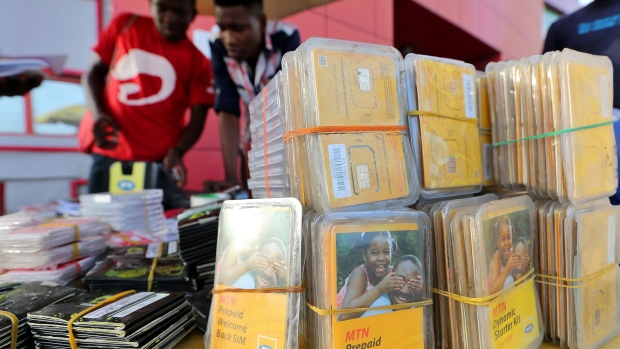 MTN and Airtel SIM card retailer. Image Source: Bloomberg
Dear Nigerians, if you’ve ever run out of airtime and quickly dialled *303# to borrow extra credit to complete that call, send that urgent text message, or, in some cases, borrow data to join that Zoom call, this one will hit.
MTN and Airtel, Nigeria’s largest telecom operators, have both temporarily suspended airtime and data borrowing services, pausing offerings that covered Nigerians during rainy days.
Airtime borrowing is in its regulation era: In July 2025, the Federal Competition and Consumer Protection Commission (FCCPC) introduced new rules to regulate digital and non-traditional lending, including airtime advances.
Why? According to the regulator, there have been growing customer complaints about hidden charges, unclear deductions, aggressive recovery tactics, and generally poor transparency across broader lending products. In the telecom sector, the regulator said that operators engaged in “exclusionary third-party technical arrangements in clear disobedience” to its 2018 Act, making the latest rules a sweeping provision that affected telecom firms.
MTN Nigeria and Airtel said that they suspended the products to comply with the new rules.
A valuable side hustle: MTN Nigeria reported ₦191.3 billion ($142.5 million) in fintech revenue in 2025, with a significant portion tied to airtime lending and other value-added services. For Airtel, airtime credit sits inside its other revenue bucket, which brought in about $113 million in just nine months. Pausing such service puts a sizable income on hold for both telcos.
Convenience just got a bit… less convenient: For users, airtime borrowing was the fastest workaround to getting airtime without navigating banks or going through transfer delays. Now, that option is gone (for now), and while buying airtime is still possible, it removes that instant fallback people relied on, especially during urgent moments.
Will it come back? Very likely, but only with more structure. Both MTN and Airtel say the suspension is temporary. To restart, they’ll need to meet FCCPC requirements, which will entail getting licenced or receiving permits, disclosing their pricing models, and meeting consumer protection standards before continuing these services.
20+ Markets. One API.
Breet is offering a $10,000 equity-free grant to growth-stage fintech, crypto and payments startups in Africa. Integrate the API, submit your product, and pitch live at ATE Lagos. Two winners get $5,000 each. Deadline by May 31. Learn more.
Banking
South Africa’s Absa plans to become an MVNO
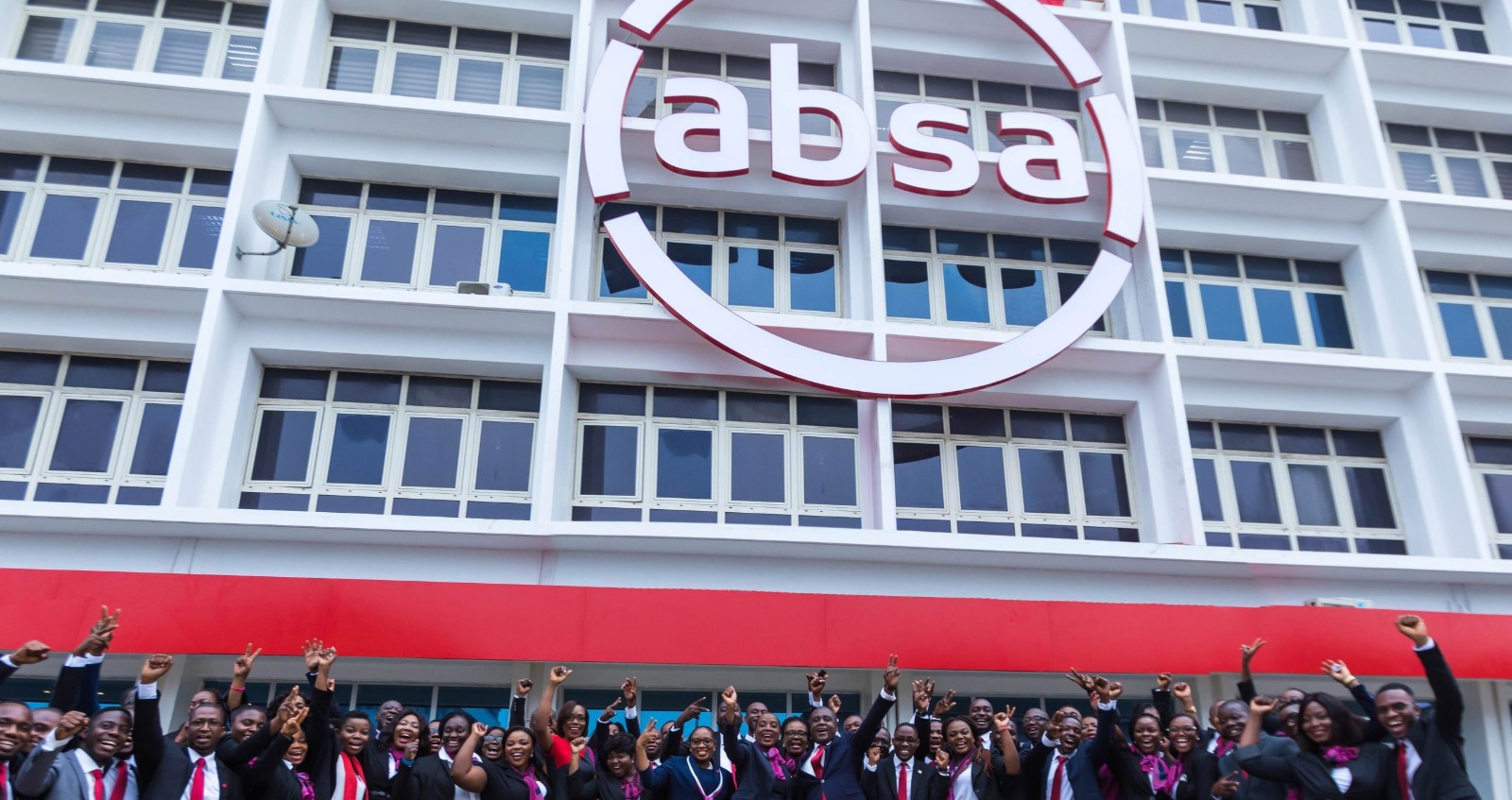 Image Source: Absa
Absa, South Africa’s third-largest bank by assets, is finally stepping into telecoms with its own mobile virtual network operator (MVNO), making it the last of South Africa’s ‘Big Four’ banks—including Standard Bank, FirstRand (First National Bank), and Nedbank—to do so. FNB was the first to go this route in 2015. Standard Bank followed suit in 2018; Nedbank in August 2025.
What exactly is an MVNO? An MVNO is a mobile service that doesn’t own network infrastructure; rather, it rents capacity from existing operators like MTN or Cell C and sells it under its own brand. As an MVNO, Absa would plug into another operator’s network and focus on packaging, including pricing, bundles, and other perks.
Why banks are getting into this: Banks are following user behaviour. Customers already live on their phones with banking, payments, transfers, and bill payments. Adding mobile services means putting another layer to capture users. It also helps banks keep customers inside their ecosystem longer and create new revenue streams without heavy infrastructure costs.
Absa is late to the party, so it has work to do: There are already over 2.45 million South Africans using banking MVNOs. Being last means Absa doesn’t get the benefit of novelty. Customers already have options and are already locked into ecosystems that reward them for staying.
Absa’s real challenge lies in convincing users to jump into its ecosystem. It needs to offer something that feels meaningfully better, such as cheaper data, stronger rewards, tighter integration with banking, or a smoother experience that makes switching for consumers feel worth the stress.
TECHCABAL 4.0
In March 2013, TechCabal published its first article. Thousands of stories later, the work continues, and today, it goes deeper.
TechCabal has always been free. That’s not changing.
We’ve opened a new layer. Reporting that goes further, built on sources you won’t find anywhere else, and told in ways we haven’t tried before. You’re among the first to see it.
Getting in takes less than 15 seconds.
You’re one step away from the other side.
Click the button below to see what TechCabal 4.0 looks like and what it means for you.
Regulation
Kenya moves to unify consumer protection rules across banks, lenders, and telecoms
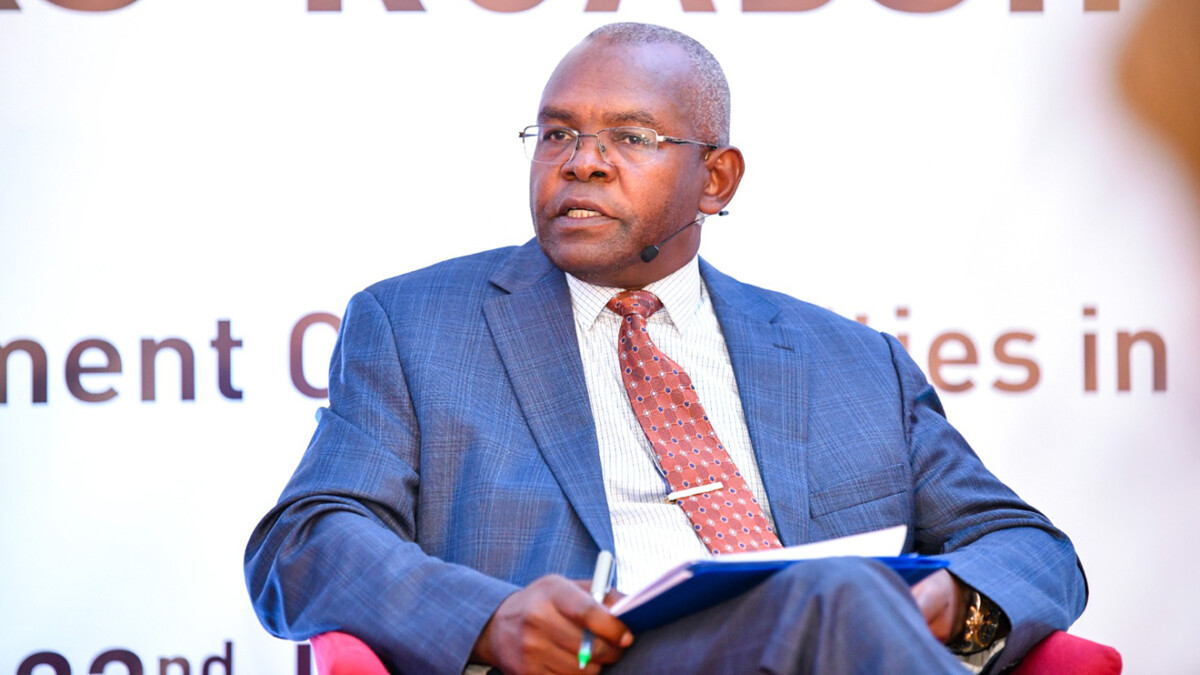 Central Bank of Kenya (CBK) governor Kamau Thugge. Image source: CBK
If you have ever taken a loan, filed a complaint, or simply tried to understand a financial product in Kenya, you have probably dealt with a system where the rules depend on who you are dealing with. A bank says one thing, a lender app does another, and somewhere in between, your data is doing its own rounds.
Kenya now wants to clean that up.
On April 14, the Central Bank of Kenya (CBK), working with six other regulators, published a draft Financial Consumer Protection Framework that attempts to bring the entire financial system under one set of conduct rules. Banking, insurance, capital markets, pensions, savings and credit co-operatives (SACCOs), and even telecom-linked financial services will now be expected to follow the same playbook.
The framework is trying to standardise how customers are treated. It sets out six principles: fairness, transparency, product suitability, asset protection, complaints handling, and data privacy.
The proposal, out for public comment until April 28, mandates lenders to stop selling financial products, especially loans, to people who cannot afford them, clearly explain the terms, and have a proper system for when things go wrong.
Between the lines: This did not come out of nowhere. As of 2025, Kenya’s data protection office received over 4,000 complaints tied to digital lenders, many involving misuse of personal data.
Kenyan borrowers reportedly received over 1,000 calls from more than 60 different spam numbers during debt recovery efforts. The same unethical spam-calling tactic also mirrors South Africa, where regulators are now fighting back.
What makes this attempt different is who is involved. Alongside the usual financial regulators, Kenya has pulled in the Communications Authority (CAK) and the Competition Authority. That matters because much of the harm has happened where finance meets telecoms, especially in mobile money and digital credit, where oversight has historically been split.
Zoom out: This is part of a broader shift. Kenya is moving away from its earlier, more permissive approach to fintech innovation towards something stricter and more coordinated. The real test, as always, will not be in writing the rules, but in enforcing them consistently across a system that has long thrived on fragmentation.
CRYPTO TRACKER
The World Wide Web3
Source:

|
Coin Name |
Current Value |
Day |
Month |
|---|---|---|---|
| Bitcoin | $74,215 |
– 1.92% |
+ 4.86% |
| Ether | $2,268 |
– 2.92% |
+ 5.67% |
| Aave Ethereum WETH | $2,244 |
– 2.98% |
+ 2.94% |
| Solana | $83.91 |
– 2.01% |
– 7.01% |
* Data as of 06.50 AM WAT, April 20 2026.
JOB OPENINGS
- Big Cabal Media — Senior Motion Designer, YouTube Growth Strategist, Quality Assurance Engineer, Editor-in-Chief (TechCabal) — Lagos, Nigeria
- Babban Gona — Machine Learning Engineer — Lagos, Nigeria
- Moniepoint — Data Analyst — Lagos, Nigeria
- Sun King — Product Operations Associate — Lagos, Nigeria
- M-KOPA — Business Intelligence Manager — Nairobi, Kenya
There are more jobs on TechCabal’s job board. If you have job opportunities to share, please submit them at bit.ly/tcxjobs.
- “I didn’t quite understand the extent of what I was working on”: Day 1-1000 of Citizens’ Gavel
- NSA using Anthropic’s Mythos despite blacklist
Written by: Emmanuel Nwosu and Opeyemi Kareem
Edited by: Emmanuel Nwosu and Ganiu Oloruntade
Want more of TechCabal?
Sign up for our insightful newsletters on the business and economy of tech in Africa.
- The Next Wave: futuristic analysis of the business of tech in Africa.
- Francophone Weekly by TechCabal: insider insights and analysis of Francophone’s tech ecosystem
P:S If you’re often missing TC Daily in your inbox, check your Promotions folder and move any edition of TC Daily from “Promotions” to your “Main” or “Primary” folder and TC Daily will always come to you.



Ayrıca Şunları da Beğenebilirsiniz

PRC names topnotcher in doctors’ board exam after delay

Dow Jones futures plunge as risk aversion increases after Trump’s comments




