Recently, emerging MEME coins such as RFC, House and TROLL have quickly become popular. These meme cultures, which are full of nonsense, absurdity and even black humor, have not only become a favorite speculative tool for Generation Z, but also carry the young people's rebellious emotions against the traditional financial system and social rules, reflecting an alternative financial cultural landscape with a unique imprint of the times.Recently, emerging MEME coins such as RFC, House and TROLL have quickly become popular. These meme cultures, which are full of nonsense, absurdity and even black humor, have not only become a favorite speculative tool for Generation Z, but also carry the young people's rebellious emotions against the traditional financial system and social rules, reflecting an alternative financial cultural landscape with a unique imprint of the times.

The "financial rebellion" of young Americans: betting on MEME to turn things around, satirical meme coins become popular

2025/05/06 16:32
Okuma süresi: 7 dk
Bu içerikle ilgili geri bildirim veya endişeleriniz için lütfen [email protected] üzerinden bizimle iletişime geçin.

Author: Nancy, PANews

Recently, emerging MEME coins such as RFC, House and TROLL have quickly become popular. These meme cultures, which are full of nonsense, absurdity and even black humor, have not only become a favorite speculative tool for Generation Z, but also carry the young people's rebellious emotions against the traditional financial system and social rules, reflecting an alternative financial cultural landscape with a unique imprint of the times.

The "financial rebellion" of Generation Z, betting on MEME coins to turn things around

A few days ago, a report in The Washington Post revealed a financial trend that is quietly emerging among young Americans: more and more Generation Z are viewing MEME coins as an alternative path to realize the "American Dream". Under the realistic pressure of high housing prices, heavy student debts, and slow wage growth, traditional ways to get rich (such as buying a house and saving for retirement) are becoming increasingly out of reach for them. This disappointment with the existing financial system is driving a grassroots wealth "rebellion". Compared with traditional financial management tools, this generation is more willing to invest in the highly volatile MEME coin market, even if they only bet a few hundred dollars, they hope to get rich overnight.

The article cited data showing that young Americans are significantly more involved in the field of cryptocurrency than their elders: 42% of men aged 18 to 29 have participated in crypto activities (investment, trading or use), compared with 17% of women; while among people over 50, the figure was 11% for men and only 5% for women.

The report outlines the reality of this trend through multiple real cases. For example, 25-year-old Yuvia Mendoza hopes to become the next "Roaring Kitty" and creates related tokens to save the bankrupt Hooters restaurant chain. She once used cryptocurrency to buy T-shirts from waiters in an attempt to "empower" the tokens. Although the price of the coin eventually plummeted, she continued to be active in the MEME coin circle and switched to other projects in an attempt to capture potential wealth explosion points.

Joe McCann, founder and CEO of crypto hedge fund Asymmetric, pointed out that the "financial nihilism" of some Generation Z is pushing them into the crypto world. Burdened with high student loans and more likely to live with their parents, this generation considers 401(k) pension savings less than their predecessors, and they would rather bet a few hundred dollars on a MEME coin because they feel they have "no choice."

At the recent ETHDenver conference, 27-year-old Veronica Sutton, wearing a bright red "Make America Great Again" hat, said that today's "American Dream" is different from the past. After seeing her parents' long-term debt and feeling that she was "wasting money" to go to college during the COVID-19 pandemic, she chose to drop out of college in her senior year. "I like college and don't regret going to school, but I regret the $20,000 student loan."

A similar situation also occurred in South Korea. The "mud spoon tribe" who have long faced high housing prices, debt pressure and employment difficulties also regard MEME as an opportunity to counterattack. Not long ago, a survey report on 3,108 Korean crypto investors by local Korean institutions DeSpread and CoinNess showed that after the crypto market rebounded in 2024, new investors entering the Korean crypto market accounted for about 33%. Although most Korean investors are not familiar with DEX, the investment proportion of MEME coins has exceeded half, which is largely due to the active listing of such currencies by CEX (centralized exchanges). For example, mainstream Korean exchanges such as Bithumb and Upbit have launched popular MEME coins such as DOGE, TRUMP, PENGU, PEPE, and BONK. (Related reading: Crypto investment frenzy: Why has South Korea become one of the hottest markets in the world?)

Today, fueled by social media and the Trump administration's deregulation, this form of "entertainment hype" investment continues to heat up, including Trump himself attending a dinner this month specifically for millionaires holding TRUMP MEME coins.

From irony to rebellion, the emotional financial narrative of MEME coin

In the fast-moving digital world, MEME coins carry and convey complex emotional resonance and collective ideas in a minimalist and efficient way. In the latest meme craze, many popular MEME coins quickly resonate with Generation Z with their heart-touching narratives. These MEME coins not only show strong narrative tension and high community participation, but also reflect the cultural rebellion of young Americans who use crypto culture to fight against systemic injustice and express their own attitudes.

RFC

The "financial rebellion" of young Americans: betting on MEME to turn things around, satirical meme coins become popular

RFC was launched by the political satire account Retard Finder and quickly became popular due to Musk's high-frequency interactions. Its narrative is rooted in the rebellious spirit of Internet meme culture, encouraging users to "report" stupid remarks by tagging @IfindRetards and express doubts about mainstream narratives in a humorous way. The account content is mainly right-wing political satire, mocking immigration policies, environmentalism and the "woke left". In a sense, RFC has gone beyond a simple financial asset and evolved into a digital "cultural rebellion" against mainstream media and elite discourse.

GMGN data shows that within less than two months of its launch, RFC’s market value peaked at nearly US$150 million.

House
The "financial rebellion" of young Americans: betting on MEME to turn things around, satirical meme coins become popular

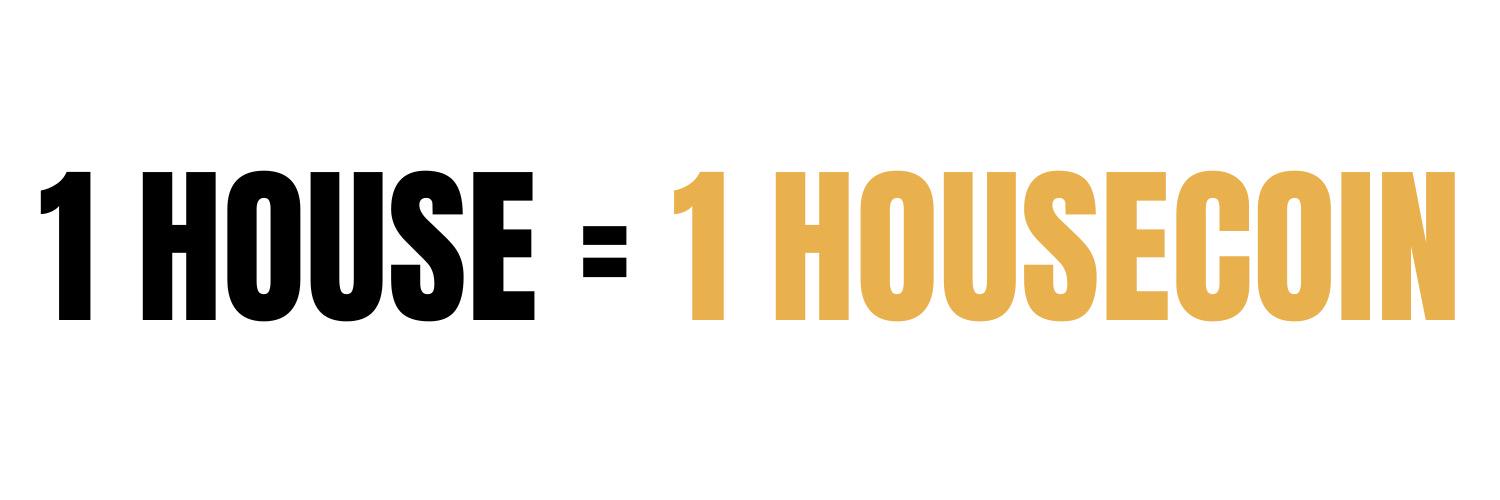
"1 House = 1 Housecoin" is the iconic slogan of the MEME coin House on Solana. Its core narrative focuses on the increasingly severe housing crisis around the world, especially touching on the real difficulties faced by contemporary young people. With high housing prices, stagnant income growth and increasingly solidified class structure, young people generally feel the heavy pressure of "difficulty in buying a house". House uses an absurd but straightforward narrative method to satirize the systemic injustice of the current real estate market, attracting a large number of young investors who are disappointed with the current situation and eager to express their attitudes.

GMGN data shows that as of May 6, House’s market value reached a peak of US$120 million within more than a month of its launch.

TROLL

The "financial rebellion" of young Americans: betting on MEME to turn things around, satirical meme coins become popular

TROLL originated from Trollface, one of the most iconic memes in the history of the Internet. It is a symbol of the freedom, chaos and anti-authoritarian spirit of the early Internet. It was created by artist Carlos Ramirez (nickname "Whynne") in 2008. It first appeared in his angry comic called "Trolls" to satirize the behavior of Internet "trolls" and became a classic symbol of online spoofs and humor. TROLL cleverly captures this retro feeling and attracts young users who are familiar with the history of memes and are keen on Internet subculture.

GMGN data shows that as of May 6, TROLL’s market value peaked at nearly $42 million.

neet

The name NEET comes from "Not in Education, Employment, or Training", which is used to describe young people aged 16-24 who are not employed, not receiving education or training. In Japan, this concept has been expanded to cover people aged 15-34 who are not working, not studying, and not seeking jobs, and is often associated with "house culture" or "recluses" (Hikikomori). The core of the $neet narrative is a rebellion against traditional work and social norms, transforming this social phenomenon into an ironic cultural symbol, representing the life attitude of "lying flat and rotten" or "living off parents", which caters to the psychological resonance of some young people under modern economic pressure.

GMGN data shows that since its launch at the end of April, $neet’s market value has peaked at over $21 million.

DRA

The "financial rebellion" of young Americans: betting on MEME to turn things around, satirical meme coins become popular

DRA is also a humorous expression focusing on socioeconomic issues. Its narrative revolves around the Decentralized Retirement Account, which is a satirical response to the traditional pension system. It reflects the younger generation’s distrust of the pension system in the traditional financial system (such as the 401K plan in the United States) and their critical sentiment towards the "pension scam."

GMGN data shows that since its launch on May 4, DRA’s market value has peaked at over $7.6 million.

Piyasa Fırsatı
TROLL Logosu
TROLL Fiyatı(TROLL)
$0.000000001321
$0.000000001321$0.000000001321
-0.22%
USD
TROLL (TROLL) Canlı Fiyat Grafiği
Sorumluluk Reddi: Bu sitede yeniden yayınlanan makaleler, halka açık platformlardan alınmıştır ve yalnızca bilgilendirme amaçlıdır. MEXC'nin görüşlerini yansıtmayabilir. Tüm hakları telif sahiplerine aittir. Herhangi bir içeriğin üçüncü taraf haklarını ihlal ettiğini düşünüyorsanız, kaldırılması için lütfen [email protected] ile iletişime geçin. MEXC, içeriğin doğruluğu, eksiksizliği veya güncelliği konusunda hiçbir garanti vermez ve sağlanan bilgilere dayalı olarak alınan herhangi bir eylemden sorumlu değildir. İçerik, finansal, yasal veya diğer profesyonel tavsiye niteliğinde değildir ve MEXC tarafından bir tavsiye veya onay olarak değerlendirilmemelidir.

Ayrıca Şunları da Beğenebilirsiniz

Facts Vs. Hype: Analyst Examines XRP Supply Shock Theory

Facts Vs. Hype: Analyst Examines XRP Supply Shock Theory

Prominent analyst Cheeky Crypto (203,000 followers on YouTube) set out to verify a fast-spreading claim that XRP’s circulating supply could “vanish overnight,” and his conclusion is more nuanced than the headline suggests: nothing in the ledger disappears, but the amount of XRP that is truly liquid could be far smaller than most dashboards imply—small enough, in his view, to set the stage for an abrupt liquidity squeeze if demand spikes. XRP Supply Shock? The video opens with the host acknowledging his own skepticism—“I woke up to a rumor that XRP supply could vanish overnight. Sounds crazy, right?”—before committing to test the thesis rather than dismiss it. He frames the exercise as an attempt to reconcile a long-standing critique (“XRP’s supply is too large for high prices”) with a rival view taking hold among prominent community voices: that much of the supply counted as “circulating” is effectively unavailable to trade. His first step is a straightforward data check. Pulling public figures, he finds CoinMarketCap showing roughly 59.6 billion XRP as circulating, while XRPScan reports about 64.7 billion. The divergence prompts what becomes the video’s key methodological point: different sources count “circulating” differently. Related Reading: Analyst Sounds Major XRP Warning: Last Chance To Get In As Accumulation Balloons As he explains it, the higher on-ledger number likely includes balances that aggregators exclude or treat as restricted, most notably Ripple’s programmatic escrow. He highlights that Ripple still “holds a chunk of XRP in escrow, about 35.3 billion XRP locked up across multiple wallets, with a nominal schedule of up to 1 billion released per month and unused portions commonly re-escrowed. Those coins exist and are accounted for on-ledger, but “they aren’t actually sitting on exchanges” and are not immediately available to buyers. In his words, “for all intents and purposes, that escrow stash is effectively off of the market.” From there, the analysis moves from headline “circulating supply” to the subtler concept of effective float. Beyond escrow, he argues that large strategic holders—banks, fintechs, or other whales—may sit on material balances without supplying order books. When you strip out escrow and these non-selling stashes, he says, “the effective circulating supply… is actually way smaller than the 59 or even 64 billion figure.” He cites community estimates in the “20 or 30 billion” range for what might be truly liquid at any given moment, while emphasizing that nobody has a precise number. That effective-float framing underpins the crux of his thesis: a potential supply shock if demand accelerates faster than fresh sell-side supply appears. “Price is a dance between supply and demand,” he says; if institutional or sovereign-scale users suddenly need XRP and “the market finds that there isn’t enough XRP readily available,” order books could thin out and prices could “shoot on up, sometimes violently.” His phrase “circulating supply could collapse overnight” is presented not as a claim that tokens are destroyed or removed from the ledger, but as a market-structure scenario in which available inventory to sell dries up quickly because holders won’t part with it. How Could The XRP Supply Shock Happen? On the demand side, he anchors the hypothetical to tokenization. He points to the “very early stages of something huge in finance”—on-chain tokenization of debt, stablecoins, CBDCs and even gold—and argues the XRP Ledger aims to be “the settlement layer” for those assets.He references Ripple CTO David Schwartz’s earlier comments about an XRPL pivot toward tokenized assets and notes that an institutional research shop (Bitwise) has framed XRP as a way to play the tokenization theme. In his construction, if “trillions of dollars in value” begin settling across XRPL rails, working inventories of XRP for bridging, liquidity and settlement could rise sharply, tightening effective float. Related Reading: XRP Bearish Signal: Whales Offload $486 Million In Asset To illustrate, he offers two analogies. First, the “concert tickets” model: you think there are 100,000 tickets (100B supply), but 50,000 are held by the promoter (escrow) and 30,000 by corporate buyers (whales), leaving only 20,000 for the public; if a million people want in, prices explode. Second, a comparison to Bitcoin’s halving: while XRP has no programmatic halving, he proposes that a sudden adoption wave could function like a de facto halving of available supply—“XRP’s version of a halving could actually be the adoption event.” He also updates the narrative context that long dogged XRP. Once derided for “too much supply,” he argues the script has “totally flipped.” He cites the current cycle’s optics—“XRP is sitting above $3 with a market cap north of around $180 billion”—as evidence that raw supply counts did not cap price as tightly as critics claimed, and as a backdrop for why a scarcity narrative is gaining traction. Still, he declines to publish targets or timelines, repeatedly stressing uncertainty and risk. “I’m not a financial adviser… cryptocurrencies are highly volatile,” he reminds viewers, adding that tokenization could take off “on some other platform,” unfold more slowly than enthusiasts expect, or fail to get to “sudden shock” scale. The verdict he offers is deliberately bound. The theory that “XRP supply could vanish overnight” is imprecise on its face; the ledger will not erase coins. But after examining dashboard methodologies, escrow mechanics and the behavior of large holders, he concludes that the effective float could be meaningfully smaller than headline supply figures, and that a fast-developing tokenization use case could, under the right conditions, stress that float. “Overnight is a dramatic way to put it,” he concedes. “The change could actually be very sudden when it comes.” At press time, XRP traded at $3.0198. Featured image created with DALL.E, chart from TradingView.com
Paylaş
NewsBTC2025/09/18 11:00
Shiba Inu Leader Breaks Silence on $2.4M Shibarium Exploit, Confirms Active Recovery
Shiba Inu Leader Breaks Silence on $2.4M Shibarium Exploit, Confirms Active Recovery

The lead developer of Shiba Inu, Shytoshi Kusama, has publicly addressed the Shibarium bridge exploit that occurred recently, draining $2.4 million from the network. After days of speculation about his involvement in managing the crisis, the project leader broke his silence.Kusama emphasized that a special ”war room” has been set up to restore stolen finances and enhance network security. The statement is his first official words since the bridge compromise occurred.”Although I am focusing on AI initiatives to benefit all our tokens, I remain with the developers and leadership in the war room,” Kusama posted on social media platform X. He dismissed claims that he had distanced himself from the project as ”utterly preposterous.”The developer said that the reason behind his silence at first was strategic. Before he could make any statements publicly, he must have taken time to evaluate what he termed a complex and deep situation properly. Kusama also vowed to provide further updates in the official Shiba Inu channels as the team comes up with long-term solutions.Attack Details and Immediate ResponseAs highlighted in our previous article, targeted Shibarium's bridge infrastructure through a sophisticated attack vector. Hackers gained unauthorized access to validator signing keys, compromising the network's security framework.The hackers executed a flash loan to acquire 4.6 million BONE ShibaSwap tokens. The validator power on the network was majority held by them after this purchase. They were able to transfer assets out of Shibarium with this control.The response of Shibarium developers was timely to limit the breach. They instantly halted all validator functions in order to avoid additional exploitation. The team proceeded to deposit the assets under staking in a multisig hardware wallet that is secure.External security companies were involved in the investigation effort. Hexens, Seal 911, and PeckShield are collaborating with internal developers to examine the attack and discover vulnerabilities.The project's key concerns are network stability and the protection of user funds, as underlined by the lead developer, Dhairya. The team is working around the clock to restore normal operations.In an effort to recover the funds, Shiba Inu has offered a bounty worth 5 Ether ($23,000) to the hackers. The bounty offer includes a 30-day deadline with decreasing rewards after seven days.Market Impact and Recovery IncentivesThe exploit caused serious volatility in the marketplace of Shiba Inu ecosystem tokens. SHIB dropped about 6% after the news of the attack. However, The token has bounced back and is currently trading at around $0.00001298 at the time of writing.SHIB Price Source CoinMarketCap
Paylaş
Coinstats2025/09/18 02:25
BlackRock and Marvel Studios Acquire Big Stakes in Mutual Capital

BlackRock and Marvel Studios Acquire Big Stakes in Mutual Capital

BlackRock and Marvel Studios acquire major stakes in Mutual Capital, boosting its role as a leader in asset tokenization.]]>
Paylaş
Crypto News Flash2025/09/18 17:10