The Bitcoin post-halving cycle, which is now underway, has historically shown similar price action over time. However, the cycle may be undergoing changes. Institutional interests in BTC have impaced the economic climate for cryptocurrencies, as we’re about to dive into…The Bitcoin post-halving cycle, which is now underway, has historically shown similar price action over time. However, the cycle may be undergoing changes. Institutional interests in BTC have impaced the economic climate for cryptocurrencies, as we’re about to dive into…

BTC price prediction: Why this post-Halving cycle could be different

Summary
  • BTC price trades around $114,600, roughly 18 months after the 2024 halving.
  • Analysts note this post-halving phase looks very different. Less explosive, more institutional, and increasingly tied to macro conditions.
  • The BTC price prediction now depends less on miner dynamics and more on liquidity, ETF inflows, and broader market risk sentiment.

The Bitcoin post-halving cycle, which is now underway, has historically shown similar price action over time. However, the cycle may be undergoing changes. Institutional interests in BTC have impaced the economic climate for cryptocurrencies, as we’re about to dive into below.

Current BTC price scenario
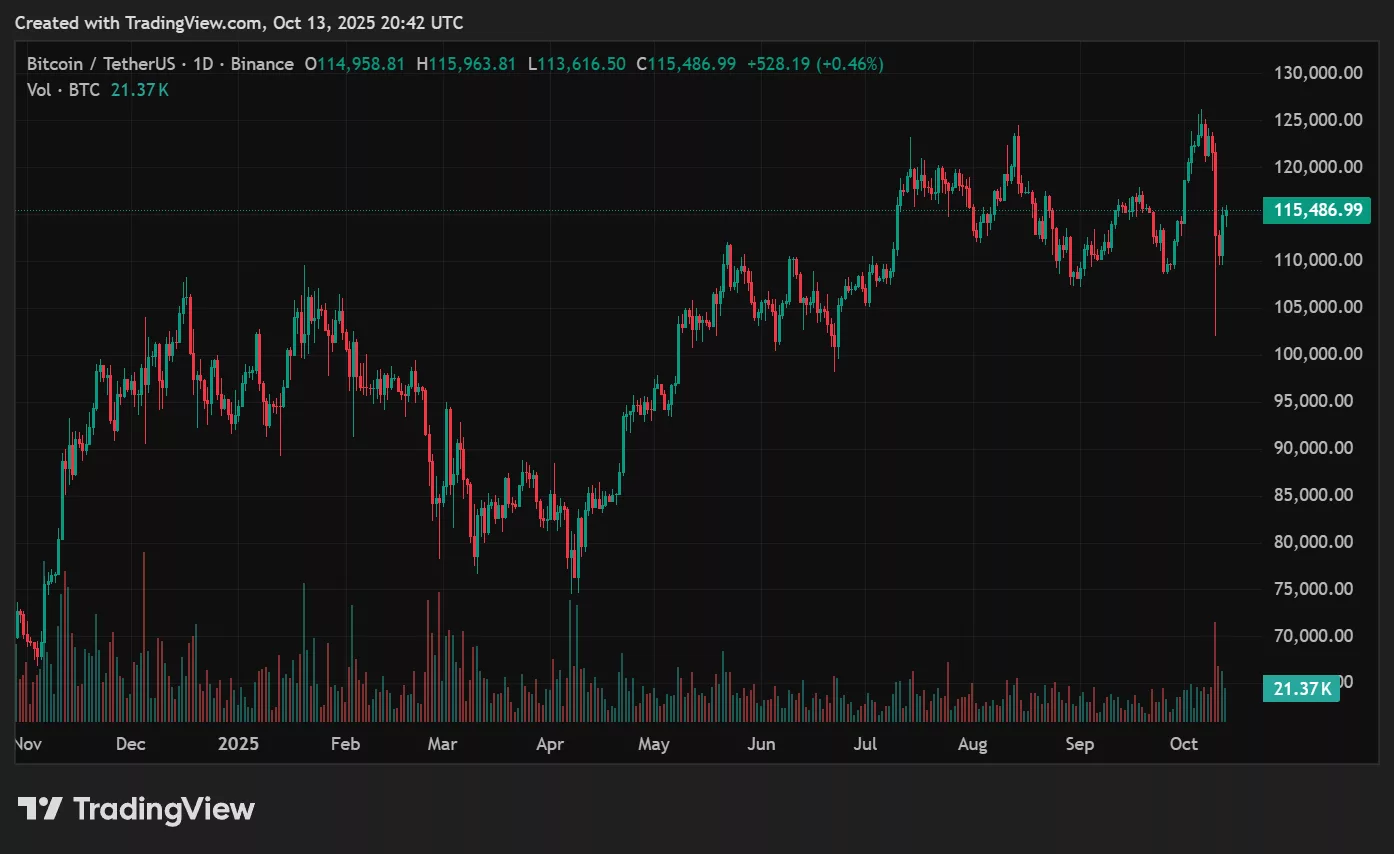
BTC price prediction: Why this post-Halving cycle could be different - 1

Bitcoin (BTC) is changing hands near $114,600 at press time, holding steady after a volatile few sessions. The world’s largest cryptocurrency remains up roughly 43% since the 2024 halving, far below historical averages that typically saw 200%+ surges in the same period.

Trading volumes have cooled, and retail enthusiasm appears muted compared to earlier cycles. However, the underlying network remains strong: hash rate continues to climb, miner revenues are stabilizing, and institutional inflows through spot ETFs are providing a steady demand base.

This mix of slower retail momentum and stronger institutional presence has many wondering whether the 2024–2025 cycle marks the end of Bitcoin’s traditional four-year rhythm.

Positive factors on BTC price

Optimists argue that while this cycle may be slower, it could ultimately prove more sustainable. ETF inflows, sovereign adoption, and corporate balance sheet exposure are all reshaping Bitcoin’s market structure. If liquidity conditions improve and central banks continue easing, BTC could build on its base toward $130,000–$150,000 in the months ahead.

Institutional buying has also changed the post-halving dynamic. Where retail speculation once drove parabolic moves, consistent inflows from funds and ETFs are now supporting a steadier, more resilient price structure. This suggests the next leg higher could come through accumulation rather than hype.

Macro conditions remain key, falling yields, stable inflation, and a weaker dollar would all provide tailwinds for Bitcoin heading into 2026.

Negative factors for BTC price

Still, not everyone is convinced the cycle has simply “evolved.” Some analysts warn that the muted post-halving performance may signal fading structural strength. Bitcoin’s gains since April 2024 have been the weakest of any post-halving period on record.

If macro conditions tighten through renewed inflation, higher rates, or liquidity stress, risk assets could retrace, and Bitcoin might revisit the $100,000–$95,000 zone. A break below that range would likely trigger a deeper correction, potentially toward $80,000, as leveraged longs unwind.

Skeptics also highlight that institutional accumulation can work both ways: when ETF demand slows, price corrections can accelerate, amplifying downside moves.

BTC price prediction based on current levels

Bitcoin’s near-term range sits between $100,000 and $130,000, with both sides tightly contested. A sustained move above $130,000 could open the door to $150,000+, confirming a new leg of the bull market. Conversely, a breakdown below $100,000 would likely bring renewed volatility and broader risk-off sentiment.

Overall, this Bitcoin price prediction reflects a cycle in transition. The halving’s traditional impact has been diluted by ETF demand, macro liquidity, and institutional positioning. Whether this marks a permanent shift or a temporary pause in Bitcoin’s boom-bust rhythm remains the key question, but one thing is clear: the rules of the old halving playbook no longer apply.

Disclosure: This article does not represent investment advice. The content and materials featured on this page are for educational purposes only.


Piyasa Fırsatı
Bitcoin Logosu
Bitcoin Fiyatı(BTC)
$86,412.91
$86,412.91$86,412.91
-1.78%
USD
Bitcoin (BTC) Canlı Fiyat Grafiği
Sorumluluk Reddi: Bu sitede yeniden yayınlanan makaleler, halka açık platformlardan alınmıştır ve yalnızca bilgilendirme amaçlıdır. MEXC'nin görüşlerini yansıtmayabilir. Tüm hakları telif sahiplerine aittir. Herhangi bir içeriğin üçüncü taraf haklarını ihlal ettiğini düşünüyorsanız, kaldırılması için lütfen [email protected] ile iletişime geçin. MEXC, içeriğin doğruluğu, eksiksizliği veya güncelliği konusunda hiçbir garanti vermez ve sağlanan bilgilere dayalı olarak alınan herhangi bir eylemden sorumlu değildir. İçerik, finansal, yasal veya diğer profesyonel tavsiye niteliğinde değildir ve MEXC tarafından bir tavsiye veya onay olarak değerlendirilmemelidir.

Ayrıca Şunları da Beğenebilirsiniz

Visa Expands USDC Stablecoin Settlement For US Banks

Visa Expands USDC Stablecoin Settlement For US Banks

The post Visa Expands USDC Stablecoin Settlement For US Banks appeared on BitcoinEthereumNews.com. Visa Expands USDC Stablecoin Settlement For US Banks
Paylaş
BitcoinEthereumNews2025/12/17 15:23
North America Sees $2.3T in Crypto

North America Sees $2.3T in Crypto

The post North America Sees $2.3T in Crypto appeared on BitcoinEthereumNews.com. Key Notes North America received $2.3 trillion in crypto value between July 2024 and June 2025, representing 26% of global activity. Tokenized U.S. treasuries saw assets under management (AUM) grow from $2 billion to over $7 billion in the last twelve months. U.S.-listed Bitcoin ETFs now account for over $120 billion in AUM, signaling strong institutional demand for the asset. . North America has established itself as a major center for cryptocurrency activity, with significant transaction volumes recorded over the past year. The region’s growth highlights an increasing institutional and retail interest in digital assets, particularly within the United States. According to a new report from blockchain analytics firm Chainalysis published on September 17, North America received $2.3 trillion in cryptocurrency value between July 2024 and June 2025. This volume represents 26% of all global transaction activity during that period. The report suggests this activity was influenced by a more favorable regulatory outlook and institutional trading strategies. A peak in monthly value was recorded in December 2024, when an estimated $244 billion was transferred in a single month. ETFs and Tokenization Drive Adoption The rise of spot Bitcoin BTC $115 760 24h volatility: 0.5% Market cap: $2.30 T Vol. 24h: $43.60 B ETFs has been a significant factor in the market’s expansion. U.S.-listed Bitcoin ETFs now hold over $120 billion in assets under management (AUM), making up a large portion of the roughly $180 billion held globally. The strong demand is reflected in a recent resumption of inflows, although the products are not without their detractors, with author Robert Kiyosaki calling ETFs “for losers.” The market for tokenized real-world assets also saw notable growth. While funds holding tokenized U.S. treasuries expanded their AUM from approximately $2 billion to more than $7 billion, the trend is expanding into other asset classes.…
Paylaş
BitcoinEthereumNews2025/09/18 02:07
Will Ozak AI Outperform DOGE, SHIB, and PEPE in Risk-Adjusted Returns?

Will Ozak AI Outperform DOGE, SHIB, and PEPE in Risk-Adjusted Returns?

The post Will Ozak AI Outperform DOGE, SHIB, and PEPE in Risk-Adjusted Returns? appeared on BitcoinEthereumNews.com. While DOGE, SHIB, and PEPE continue to dominate
Paylaş
BitcoinEthereumNews2025/12/17 15:06