

Stablecoins power 75% of crypto payments across Europe, report shows
A new report by Oobit reveals that crypto payments are on the rise in Europe, with stablecoins dominating spending habits.
Retail users are increasingly turning to crypto for everyday purchases, and stablecoins are leading the charge. On June 2, Oobit released a report analyzing the crypto spending behavior of its European users. According to the data, over the past 30 days, stablecoins accounted for more than 75% of purchases made through Oobit across several EU countries.
Most of the purchases fell into two categories: retail and travel. In Germany, Spain, and Poland, crypto spending was concentrated on goods from retail stores, particularly food and beverages. Meanwhile, travel-related expenses were the leading category in France, Italy, Greece, and Ireland.
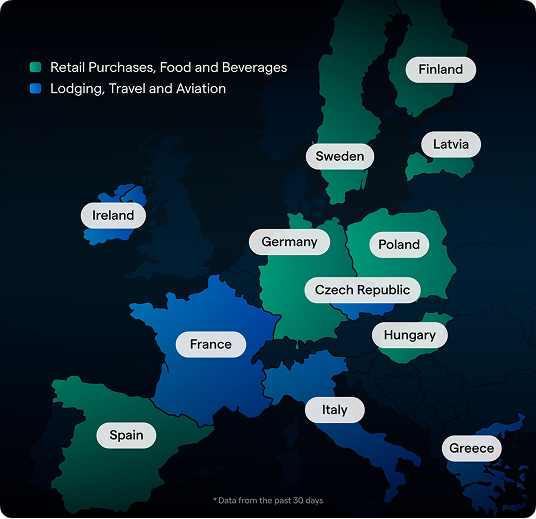
Across all countries surveyed, retail, food, and drink purchases made up 55% of total crypto spending. Notably, one-third of these transactions occurred in Poland, signaling a disproportionate rate of crypto adoption in the country.
Poland leads in stablecoin purchases
Poland, Lithuania, and Estonia emerged as key stablecoin adopters. Poland alone accounted for over 30% of all retail purchases made with stablecoins on Oobit, with the majority settled in USDC. This trend aligns with Poland’s regulatory environment, as the country has introduced new laws to comply with the EU’s Markets in Crypto-Assets stablecoin framework.
Regulatory clarity is also driving adoption in the Baltic states. Lithuania, in particular, has seen a sharp increase in Euro-backed EURR transactions, which doubled in the past month. The country is home to over 580 licensed crypto businesses, and Robinhood Europe recently acquired its MiCA license from Lithuania’s central bank.
The study underscores a broader shift: crypto is increasingly being used as a functional payment method, not just a speculative asset. Users across Europe are integrating digital currencies into daily life, highlighting crypto’s growing real-world utility.
Ayrıca Şunları da Beğenebilirsiniz

Nasdaq-listed iPower reaches $30 million convertible note financing agreement to launch DAT strategy.

SelectCam AI Launches Flagship AI-Powered Video Telematics Solutions for Global Fleet Safety
